

Siding Installation in Eagle, ID: Costs, Ideas & Options
From James Hardie fiber cement to LP SmartSide engineered wood — we handle material selection, weather barrier installation, and precision siding application from foundation to soffit.
Quick answer
Iron Crest Remodeling Group LLC provides siding installation in Eagle, ID. Most Eagle siding installation projects cost $18,000 – $72,000. Eagle siding costs reflect the city's larger average home sizes, the complexity of architectural profiles in premium subdivisions, and the labor premium that high-specification installation commands.
Eagle homeowners expect more from every contractor and every product they put on their homes — and when it comes to siding, that expectation is entirely justified. In neighbourhoods like Banbury Meadows, Legacy Ridge and Downtown Eagle, the exterior of a house is a design statement and a maintenance commitment at the same time. Builder-grade siding is not an acceptable long-term answer there, and the combination of Treasure Valley freeze-thaw cycling — about 87 cycles a year at the nearest long-record station (NOAA KBOI daily records, 1996–2025, via the Iowa Environmental Mesonet) — a dry high-desert sun, foothills wind exposure and Eagle's architectural expectations makes material selection and installation craftsmanship non-negotiable. Iron Crest Remodel brings the premium siding knowledge Eagle homeowners deserve — James Hardie fiber cement, LP SmartSide engineered wood, and the installation discipline that separates a 30-year result from a 10-year disappointment.
Protect your home and transform its curb appeal with professionally installed siding built for Idaho weather.
Siding is your home's first line of defense against wind, rain, snow, UV exposure, and temperature extremes — and in the Treasure Valley, those conditions are intense. Boise homes experience summer temperatures exceeding 100 degrees, winter lows well below freezing, rapid temperature swings of 40-50 degrees in a single day, and occasional wind-driven rain and hail. Professional siding installation includes removal of old siding, inspection and repair of the underlying sheathing and framing, installation of a code-compliant weather-resistive barrier (house wrap), proper window and door flashing, precision siding application with manufacturer-specified fastening and gapping, trim and corner finishing, and caulking. The three dominant siding materials in the Boise market — James Hardie fiber cement, LP SmartSide engineered wood, and vinyl — each offer distinct performance characteristics, aesthetics, and price points that should be matched to the homeowner's priorities.
Eagle homeowners pursue siding installation for a variety of reasons. Here are the most common situations we see:
- ✓Homeowners with failing, damaged, or deteriorated siding that no longer protects the home from weather
- ✓Anyone looking to upgrade from vinyl to fiber cement or engineered wood for improved durability and appearance
- ✓Homeowners who want to dramatically change their home's exterior look with new siding, trim, and color
- ✓Property owners dealing with moisture intrusion, rot, or pest damage behind existing siding
- ✓Homeowners building additions or making exterior modifications that require new siding to match or replace existing
Not every siding installation project is the same. Here are the most common project types we complete in Eagle:

James Hardie Fiber Cement Siding
Installation of HardiePlank lap siding, HardieShingle, or HardiePanel vertical siding. Fiber cement is non-combustible, rot-proof, termite-proof, and available in ColorPlus factory-finished colors with a 15-year color warranty.

LP SmartSide Engineered Wood Siding
Installation of LP SmartSide treated engineered wood siding in lap, panel, or shake profiles. Offers authentic wood grain texture, impact resistance, and a 5/50 year limited warranty. Lighter weight and easier to cut than fiber cement.

Vinyl Siding Installation
Installation of insulated or standard vinyl siding. The most budget-friendly option with zero painting maintenance. Modern vinyl comes in a wide range of styles and colors including board-and-batten and shake profiles.

Partial Siding Replacement
Replace siding on damaged sections, additions, or specific elevations while matching the existing siding profile and color. Includes weather barrier repair and flashing integration.

Siding and Trim Package
Complete siding replacement with coordinated trim — fascia, soffits, corner boards, window and door surrounds, and frieze boards. Creates a fully unified exterior appearance.

Eagle's housing stock is primarily post-1990 construction with a higher proportion of custom-built homes than other Treasure Valley cities. Larger lot sizes, custom floor plans, and premium original finishes are common.
1990s (Banbury, older neighborhoods)
Even Eagle's oldest neighborhoods run toward the high end of the range. These were custom and semi-custom homes to begin with, so budgets reflect replacing aging natural stone, hardwood, and custom cabinetry with materials that match the quality owners expect here.
2000s–2010s (Legacy, foothills development)
These large custom homes sit at the top of the cost range. Square footage is substantial and the original finishes are premium, so even a design-focused refresh of select rooms carries a high materials budget — though sound systems mean little goes to structural work.
2015–present (new subdivisions)
Costs here split by home type: production homes need the least investment and concentrate spending on finish upgrades, while custom homes built to owner specifications carry budgets as high as the owner's chosen materials demand.
Common issues in Eagle homes
- •Premium but dated finishes from the Tuscan-style era (2000s-2010s) that homeowners want modernized
- •Large kitchens with good layouts but outdated cabinets, countertops, and backsplash
- •Custom homes with unusual layouts that require thoughtful remodel design
- •Large primary bathrooms with garden tubs that homeowners want converted to walk-in showers
- •HOA design guidelines that constrain exterior material and color choices

Material selection affects the look, durability, and cost of your siding installation. Here are the most popular options we install in Eagle:

James Hardie HardiePlank Lap Siding
$10–$16 per sq ft installedThe gold standard in fiber cement siding. Made from cement, sand, and cellulose fibers. Non-combustible, rot-proof, termite-proof, and dimensionally stable. ColorPlus factory-applied finish provides superior color consistency and a 15-year color warranty.
Best for: Homeowners who want maximum durability, fire resistance, and long-term value

LP SmartSide Engineered Wood Siding
$8–$13 per sq ft installedTreated engineered wood siding with authentic wood grain texture. Made from wood strands bonded with resins and treated with SmartGuard process for moisture, fungal, and termite resistance. Lighter than fiber cement and easier to install.
Best for: Homeowners who want wood-grain appearance with engineered durability and lower cost than fiber cement

Vinyl Siding
$5–$10 per sq ft installedPVC-based siding that requires no painting, does not rot, and is immune to insect damage. Modern vinyl comes in many styles and colors with improved fade resistance. Insulated vinyl adds R-value and rigidity.
Best for: Budget-conscious projects, rental properties, and homeowners who want zero exterior painting maintenance

Weather-Resistive Barrier (House Wrap)
$0.50–$1.50 per sq ft installedTyvek, Henry Blueskin, or equivalent moisture barrier that wraps the exterior sheathing. Allows interior moisture to escape while blocking exterior water and wind. Critical component of a proper siding installation.
Best for: Required component beneath all siding installations for moisture and air management

PVC or Fiber Cement Trim
$4–$10 per linear foot installedRot-proof trim boards for window surrounds, corner boards, fascia, and decorative elements. PVC (Azek, Versatex) and fiber cement trim will not rot, warp, or require replacement due to moisture damage.
Best for: All exterior trim applications — especially in areas prone to moisture exposure

Here is how a typical siding installation project works from first contact to final walkthrough:
Exterior Assessment and Material Consultation
We inspect your existing siding, sheathing, flashing, and trim. We identify areas of damage, moisture intrusion, rot, and insulation deficiencies. We discuss material options, styles, and colors, and provide a detailed written estimate.
Material Selection and Design
You select your siding material (fiber cement, engineered wood, or vinyl), profile style, color, and trim details. We create an exterior design plan showing siding layout, trim placement, and color coordination with your roof, windows, and other fixed elements.
Permitting and Material Ordering
We pull any required building permits and order siding, trim, weather barrier, flashing, and fasteners. Lead times for factory-finished James Hardie products can run 4-8 weeks; LP SmartSide and vinyl are typically faster.
Old Siding Removal and Sheathing Inspection
Existing siding is carefully removed and disposed of. We inspect the underlying sheathing, framing, and insulation for damage, rot, pest activity, and moisture issues. Any damaged sheathing or framing is repaired before new siding goes on.
Weather Barrier and Flashing Installation
A code-compliant weather-resistive barrier (house wrap) is installed over the sheathing. All windows, doors, penetrations, and transitions receive proper flashing with manufacturer-approved materials and techniques to prevent water intrusion.
Siding and Trim Installation
Siding is installed from the bottom up with manufacturer-specified fastening, gapping, and overlap. Corner boards, window and door trim, frieze boards, and soffit panels are installed. All cuts, joints, and transitions are sealed and finished.
Caulking, Touch-Up, and Final Inspection
All joints, penetrations, and trim connections are caulked with premium exterior sealant. Touch-up paint is applied where needed. A final walkthrough verifies installation quality, flashing integrity, and overall appearance.
Here is what to expect for project duration when planning siding installation in Eagle:
| Phase | Duration | Details |
|---|---|---|
| Assessment and Material Selection | 1–2 weeks | Exterior inspection, material consultation, color selection, and detailed estimate. Factory-finished color samples are available for review. |
| Material Ordering and Permitting | 2–6 weeks | Material ordering (factory-finished James Hardie can take 4-8 weeks), permit application and approval, and trade scheduling. |
| Old Siding Removal and Sheathing Repair | 2–5 days | Removal and disposal of existing siding, inspection and repair of sheathing and framing, and preparation for weather barrier installation. |
| Weather Barrier and Flashing | 1–2 days | House wrap installation, window and door flashing, and sealing of all penetrations and transitions. |
| Siding and Trim Installation | 5–12 days | Siding installation from foundation to soffit, trim and corner board installation, and detail finishing. Duration depends on home size, material, and architectural complexity. |
| Caulking, Touch-Up, and Inspection | 1–2 days | Final caulking, touch-up painting, cleanup, and walkthrough inspection with the homeowner. |
Eagle range: $18,000 – $72,000
Most Eagle projects: $36,000
Eagle siding costs reflect the city's larger average home sizes, the complexity of architectural profiles in premium subdivisions, and the labor premium that high-specification installation commands. James Hardie fiber cement siding installed on a typical Eagle home (2,400 to 3,600 square feet, two stories) runs $28,000 to $52,000 depending on architectural complexity, with custom board-and-batten or mixed-profile work adding 20 to 30 percent over standard HardiePlank lap. LP SmartSide comes in at $22,000 to $40,000 for the same scope. Large-format custom homes in Legacy Ridge, Banbury Meadows, or estate developments with stone veneer transitions, multiple roof plane complexity, and extensive decorative trim work can approach or exceed $72,000 for complete fiber cement systems. Vinyl sits at the bottom of the range above for standard Eagle home sizes but is rarely the appropriate specification here. Substrate remediation — common when removing original builder siding from homes in the 2005 to 2015 build window — adds $4,000 to $15,000 depending on sheathing condition and the extent of moisture damage found during removal, and it is a large part of why the upper end of the range exists.
The final cost of siding installation in Eagle depends on several factors. Here are the biggest cost drivers:
Siding Material Selection
high impactThe material choice is the largest cost variable. Vinyl is the least expensive at $5-10/sq ft installed, LP SmartSide is mid-range at $8-13/sq ft, and James Hardie fiber cement is the premium option at $10-16/sq ft installed.
Home Size and Exterior Surface Area
high impactThe total square footage of siding surface — determined by the home's footprint, number of stories, and architectural complexity — is the primary quantity driver. A two-story home has significantly more surface area than a single-story.
Old Siding Removal and Disposal
medium impactRemoving existing siding, especially multiple layers or materials with asbestos content in older homes, adds labor and disposal costs. Single-layer vinyl removal is fast; multi-layer or cement-asbestos removal is slower and more costly.
Sheathing and Framing Repair
medium impactDamaged or rotted sheathing and framing discovered after old siding removal must be repaired before new siding goes on. The extent of hidden damage is often unknown until the old siding comes off.
Trim and Detail Complexity
medium impactHomes with many windows, doors, corners, gables, and decorative trim elements require more cutting, fitting, and finish work. Simpler facades with fewer interruptions install faster and cost less.
Window and Door Flashing
low impactProper flashing around every window, door, and penetration is essential for preventing water intrusion. The number and size of openings directly affects flashing material and labor costs.
These are the real-world projects we see most often from Eagle homeowners:
Legacy Ridge Estate — Mixed-Profile Fiber Cement Upgrade
Legacy Ridge and Eagle's comparable premium foothills communities contain custom and semi-custom homes where the original builder-specified siding — frequently LP SmartSide or early-generation fiber cement from the mid-2000s — is now 15 to 20 years old and showing the wear of two decades of Treasure Valley climate cycling. These projects involve more than a straight replacement: they are design-driven upgrades that add mixed-profile texture — horizontal lap on the main body combined with board-and-batten accents on gable ends and garage elevations — updated color palettes in deep contemporary tones, and premium trim detailing at corners, windows, and roofline transitions. The result transforms a home that has aged into its neighborhood into one that resets its visual position as a standout property. James Hardie's full product ecosystem — HardiePlank, HardiePanel, and HardieTrim in coordinating factory finishes — allows these mixed-profile installations to be executed under a single manufacturer warranty.
Banbury Meadows Two-Story — Full LP SmartSide Replacement
Many Banbury Meadows homes built between 2000 and 2010 were sided with LP SmartSide during initial construction. At the 15-to-20-year mark, edge swelling at horizontal joints, paint adhesion failure at cut ends, and occasional insect pressure on ground-level courses signal that the material has reached the end of its reliable service life in Treasure Valley conditions. These projects involve complete removal of existing LP SmartSide, inspection and remediation of any sheathing moisture damage, installation of a new housewrap moisture barrier, and replacement with either upgraded LP SmartSide in premium grade or James Hardie fiber cement depending on the homeowner's priorities and budget. For Eagle homeowners with long ownership horizons and premium resale expectations, the fiber cement upgrade is the standard recommendation.
Downtown Eagle Craftsman — Period-Appropriate Fiber Cement Replacement
Downtown Eagle contains older homes — some dating from the early 1900s, others from the 1970s and 1980s — with original or previously replaced wood siding that has reached end of life. These homes benefit from fiber cement replacement that matches the architectural profile of the original while delivering modern moisture and UV protection. HardiePlank in 6-inch and 7-inch exposure widths reproduces the original lap proportions accurately. Corner boards, window surrounds, and frieze details are reproduced in HardieTrim. Unlike the foothills estate market, Downtown Eagle siding projects are often as much about historic character preservation as material performance — the craftwork required to reproduce original millwork details in fiber cement is a core competency that distinguishes Iron Crest from contractors primarily experienced in production subdivision work.
Eagle Foothills Home — Fire-Rated Siding and WUI Compliance
Homes in Eagle's northern neighborhoods and foothills-adjacent developments sit close to wildland terrain, and fire-rated exterior materials are a common homeowner priority there. James Hardie fiber cement is non-combustible and Class A rated for flame spread, which is why it is the usual specification for these locations; LP SmartSide is Class C (Class III) under ASTM E84 per LP and is not an IWUIC Section 503.2 ignition-resistant material, so it is not a substitute where non-combustible cladding is called for. These projects typically involve replacing existing wood or LP SmartSide with fiber cement and addressing vent openings and soffit penetrations with ember-resistant vent products in the same scope. What a given address is actually required to use is set by the governing jurisdiction, and whether any of it affects your policy is a question for your carrier — we do not represent that it will.
Eagle New Construction Style-Out — Contemporary Board-and-Batten Look
Eagle's post-2015 construction has trended strongly toward contemporary and transitional exterior aesthetics characterized by board-and-batten profiles, dark color palettes, and mixed horizontal and vertical siding planes. Homeowners who purchased new construction with builder-standard horizontal vinyl lap in a neutral tone increasingly want to update to the contemporary look that dominates Eagle's current design environment. These projects replace all exterior siding with a combination of James Hardie lap siding on primary elevations and HardiePanel vertical installations with batten strips on gable ends, garage elevations, and accent walls. Dark factory finishes — Hardie's Iron Gray, Midnight Black, and Cobblestone — are the dominant color choices in this segment and photograph exceptionally well for listing photos in Eagle's premium real estate market.

Problem: Moisture intrusion behind siding causing rot and mold
Solution: We remove old siding, repair damaged sheathing and framing, install a proper weather-resistive barrier with correct lapping and sealing, and flash all openings to create a watertight exterior shell.
Problem: Fading, warping, or cracking in old vinyl or wood siding
Solution: We replace failed siding with modern materials rated for Idaho's UV and temperature extremes. Fiber cement and engineered wood hold their color and shape far longer than older vinyl or untreated wood.
Problem: Gaps and failed caulking allowing air and water infiltration
Solution: We install siding with manufacturer-specified gapping, use backer rod and premium caulk at all joints and penetrations, and ensure every seam and transition is properly sealed.
Problem: Woodpecker damage or pest intrusion in wood or foam-backed siding
Solution: We replace damaged sections and install fiber cement or other pest-resistant materials. James Hardie siding is immune to woodpecker damage, termites, and rot.
Problem: No weather barrier or inadequate flashing under existing siding
Solution: Many older Treasure Valley homes have siding installed directly over sheathing without house wrap or proper flashing. Our complete re-side includes a full weather barrier and flashing system as a standard component.

Eagle shares the Treasure Valley's semi-arid climate. Foothills properties may experience slightly colder winter temperatures and more wind exposure than valley-floor locations.
Foothills Exposure
Properties in Eagle's foothills areas experience more wind, greater temperature variation, and more UV exposure. Material selections for these properties should prioritize durability.
Larger Lots and More Exterior Surface
Eagle's larger homes and lots mean more siding, more roof area, and longer utility runs for ADUs and additions. This affects both material quantity and project cost.
Irrigation and Landscaping
Many Eagle properties have extensive landscaping and irrigation. Addition and ADU projects must plan around existing landscape investments.
Legacy
An upscale master-planned community with custom and semi-custom homes. Homeowners here invest in premium kitchen and bathroom remodels with high-end materials.
Common projects in Legacy:
- •Luxury kitchen remodels with custom cabinetry and premium appliances
- •Spa-style bathroom remodels with heated floors and custom tile
- •Outdoor living spaces with covered patios and outdoor kitchens
- •Basement entertainment spaces
Banbury
An established neighborhood with homes from the 1990s and 2000s, many on larger lots with river or canal proximity. A mix of custom and production homes.
Common projects in Banbury:
- •Whole-home remodels updating 1990s-2000s finishes
- •Home additions for primary suites
- •Kitchen renovations with open-concept conversion
- •ADU construction on larger lots
Downtown Eagle / Historic Core
A walkable downtown area with a mix of older homes, renovated properties, and newer infill development. The downtown core has a distinct small-town character.
Common projects in Downtown Eagle / Historic Core:
- •Full home renovations of older properties
- •Kitchen and bathroom remodels in character homes
- •Home additions sensitive to the downtown aesthetic
- •Interior updates maintaining neighborhood character
Every Eagle neighborhood has different housing stock, homeowner priorities, and project considerations. Here is what siding installation looks like in each area:
Legacy Ridge
Banbury Meadows
Downtown Eagle
Permit authority: City of Eagle Building Department
Online portal: www.cityofeagle.org/building
- ✓Permits required for all remodeling involving plumbing, electrical, or structural changes
- ✓Some areas have specific design guidelines or overlay districts
- ✓HOA approval is commonly required before city permits for exterior work
- ✓ADU construction is subject to zoning review and specific lot requirements
- ✓Standard permit processing is typically 1-2 weeks
Helpful ID resources
- City of Eagle Building Department — permit applications, inspections, and code resources
- Idaho DEQ — Asbestos Program — testing and abatement requirements for pre-1980 homes
- EPA Lead Renovation, Repair and Painting (RRP) Program — required certification for work in pre-1978 homes
- ●Siding profile selection — lap (horizontal), board-and-batten (vertical), shake (shingle-style), and panel each create a different architectural character
- ●Mixed materials — combining two siding profiles (e.g., lap siding on main walls with board-and-batten on gable accents) adds visual depth and architectural interest
- ●Color coordination — choose siding color to complement your roof, stone or brick elements, and front door; test large samples on the house in natural light
- ●Trim proportions — wider trim boards around windows and doors create a more substantial, custom look; standard narrow trim is more economical but less distinctive
- ●Reveal and exposure — the amount of siding visible between horizontal rows (the reveal or exposure) affects shadow lines and overall appearance
- ●Regional style — Boise neighborhoods range from modern farmhouse to craftsman to contemporary; your siding choice should complement your home's architecture and neighborhood context
Here are the design trends we see most often in Eagle siding installation projects:
- →Transitional and contemporary design replacing Tuscan and traditional styles
- →Natural materials — real wood, stone, and metal accents
- →Premium appliance packages with professional-grade ranges
- →Heated bathroom floors and smart shower systems
- →Custom cabinetry with integrated storage solutions
- →Statement lighting — large pendants, linear fixtures, and sculptural elements
- →Outdoor kitchens and covered living spaces
- →Whole-home smart technology integration
Eagle has some of the highest property values in the Treasure Valley, with many homes valued at $500,000 to $1,000,000+. This premium market supports higher-end remodeling investments. Homeowners in Eagle expect quality craftsmanship, premium materials, and design-forward results. ROI on well-executed remodels is strong because buyers in this market pay a premium for updated, modern homes.
Costs and permit requirements differ by jurisdiction across the Treasure Valley. These guides cover Eagle specifically.
Avoid these common pitfalls Eagle homeowners encounter with siding installation projects:
Mistake: Specifying field-painted fiber cement instead of ColorPlus on foothills sun exposures
Better approach: Whatever is saved by field-painting instead of specifying ColorPlus is given back at the first repaint, and on south and west foothills exposures that repaint arrives sooner than the 15 years Hardie's ColorPlus finish warranty runs. The factory finish advantage on those elevations is a real difference, not a marginal one. Specify ColorPlus as the standard on all foothills-exposed elevations.
Mistake: Submitting an incomplete HOA package and assuming approval will be granted quickly
Better approach: Eagle's HOA architectural review committees return incomplete submittals for revision, resetting the review clock entirely. A complete first submittal includes manufacturer specification sheets, a color sample evaluated in direct sunlight at the property, elevation drawings showing profile distribution, and the contractor's license and insurance documentation. The time spent preparing a complete, professional submittal package is always recovered in reduced HOA review cycles and avoided project start delays.
Mistake: Underestimating the substrate remediation scope on foothills properties
Better approach: Foothills homes that have experienced even minor flashing failures at windows or roof-to-wall intersections often have more water damage behind the siding than is visible from the exterior. The combination of wind-driven moisture events and inadequate original flashing details creates moisture pathways that allow water to accumulate in wall cavities over years. Every Eagle siding project should include a thorough substrate inspection after siding removal, and the project budget should include a contingency allowance for sheathing replacement in the $4,000 to $15,000 range quoted in the cost section above.
Mistake: Choosing a color from an indoor chip sample without on-site evaluation
Better approach: Direct foothills sun is a very different light than an indoor showroom. Colours that appear deep and saturated on a chip sample indoors frequently appear washed-out or harsh on a large exterior wall under it. Request a large-format sample board from the manufacturer, evaluate it at the property in direct sunlight at multiple times of day, and — where possible — identify a completed Eagle installation in the same color to evaluate in person.
Mistake: Beginning siding work before receiving written HOA approval
Better approach: In Eagle's planned communities, beginning exterior work without written HOA approval is a compliance violation with consequences that are disproportionately expensive relative to the time saved. Stop-work orders, mandatory restoration of work to original condition, and HOA fine exposure are all possible outcomes. The HOA review window is set by each association, and it is knowable in advance — confirm it and build it into the project schedule from the initial consultation. A contractor who proposes starting work before HOA approval is received is creating liability that will fall on the homeowner.
Most popular remodeling projects in Eagle
- ✓Luxury kitchen remodels with custom cabinetry
- ✓Spa-style primary bathroom remodels
- ✓Outdoor living and entertainment spaces
- ✓Whole-home remodels updating 2000s finishes
- ✓Home additions for primary suites or bonus rooms
- ✓ADU construction on larger lots
- ✓Basement entertainment and living spaces
- ✓Home office conversions

See Your Remodel Before You Build.
Upload a few photos of your kitchen, bathroom, flooring, or exterior and get AI-generated concept visuals tailored to your space, style, and materials — free, no obligation, in about five minutes. Then request a real estimate from our Idaho registered Boise team.
Free concept preview · No credit card · Licensed Idaho contractor
What siding products perform best in Eagle's foothills UV exposure?
James Hardie fiber cement with the ColorPlus factory finish system is the clear recommendation for Eagle foothills properties. The combination of an inorganic substrate — impervious to UV degradation in the way organic materials are not — and a factory-applied, oven-baked finish system produces color and surface stability that field-painted systems cannot match over the 15-to-20-year ownership horizon most Eagle homeowners evaluate. ColorPlus carries a 15-year limited finish warranty against peeling, cracking and chipping — a finish warranty, not a fade warranty — over Hardie's 30-year non-prorated substrate warranty. Both are Hardie's terms; confirm them with the manufacturer. On south and west foothills elevations, where the sun works hardest on any exposed surface, a factory-baked finish is the right starting point.
How detailed is the HOA approval process for siding in Legacy Ridge?
Legacy Ridge has one of the most thorough architectural review processes in Ada County, and for good reason — the community's property values depend in part on the visual consistency and quality standards that HOA oversight maintains. A complete siding submittal for Legacy Ridge includes manufacturer product data sheets, a colour sample board evaluated under direct sunlight at the property, elevation drawings showing the proposed colour and profile scheme in context with adjacent homes, and a written description of the scope. Iron Crest prepares all of this documentation as a standard component of our Legacy Ridge project management. The review window is set by the committee and we confirm it before committing to a start date. We do not initiate any site work before written approval is received — and we advise any homeowner working with any contractor to hold to the same standard.
Does wind in Eagle's foothills affect what siding profiles I should choose?
Yes — wind exposure influences both material selection and profile choice for Eagle foothills properties. Smooth and lightly textured profiles such as standard HardiePlank lap and HardiePanel are easier to clean and less likely to trap wind-blown grit than deeply textured surfaces. More importantly, installation details matter more in a wind environment than in sheltered locations: joint sealant selection, window flashing integration, and housewrap taping details at penetrations must be executed to a higher standard on wind-exposed Eagle elevations. Deeply textured profiles on windward gable peaks can collect debris and trap moisture against the wall surface — we address this by ensuring proper drainage space and using smoother-faced profiles on the most exposed elevations.
Is fiber cement over LP SmartSide worth the premium for Eagle homes?
For Eagle homes, the answer is almost always yes. The performance differential between fiber cement and LP SmartSide is more pronounced in Eagle's UV and wind environment than in lower-exposure Treasure Valley locations. LP SmartSide is a premium engineered wood product whose limited warranty is a 5/50 — five years at 100% of labour and material, then 50 years prorated on material only, with a separate 15-year finish warranty on the ExpertFinish line — but its substrate is organic, it wants repainting during its service life, and it is more sensitive to moisture at cut ends and joints than fiber cement. On exposed Eagle elevations a factory-baked ColorPlus finish holds colour better than field paint. Fiber cement carries an installed cost premium over LP SmartSide on a whole-home project; the figures in the cost range above bracket both, and we price the actual scope rather than quote a fixed differential.
Can I change my Eagle home's siding profile if I'm in an HOA?
Profile changes — adding board-and-batten on gable ends, transitioning from horizontal lap to vertical panel accents — require HOA design review committee approval in most Eagle planned communities, but they are approved regularly when the submittal demonstrates that the proposed profile is consistent with the neighborhood's architectural character. Eagle's design-forward HOA communities have become more receptive to mixed-profile exteriors as this aesthetic has become prevalent in the market — it reads as custom and elevated rather than as a departure from community standards. The key to approval is submittal quality: showing the proposed profile in context with the home's specific architecture and neighboring properties, with documentation from a recognized manufacturer. Iron Crest has navigated profile-change approvals in Legacy Ridge, Banbury Meadows, and other Eagle HOA communities and can advise on what approaches are most likely to receive committee support.
What is the best siding material for homes in Boise?
James Hardie fiber cement siding is the top choice for durability, fire resistance, and long-term value in the Boise climate. LP SmartSide offers similar performance at a lower cost with a more wood-like texture. Vinyl is the most budget-friendly but offers less impact resistance and aesthetic quality.
How long does new siding last?
James Hardie fiber cement siding lasts 40-50+ years. LP SmartSide engineered wood lasts 30-40 years. Quality vinyl siding lasts 20-30 years. Factory-applied color finishes on fiber cement and engineered wood extend the interval between repainting.
Does siding replacement require a permit?
In most Treasure Valley jurisdictions, full siding replacement requires a building permit — especially if the project involves sheathing repair or weather barrier installation. We handle all permit applications and inspections.
How much does siding replacement cost in Boise?
Most Boise siding projects run $8,500-$32,000, with a typical project around $16,500. Installed rates are roughly $5-$10 per square foot for vinyl, $8-$13 for LP SmartSide, and $10-$16 for James Hardie fiber cement. Costs depend on home size, material, trim scope, and repair needs found once the old siding is off.
Can you install new siding over existing siding?
In some cases, new siding can be installed over existing siding — but we generally recommend removing old siding so we can inspect and repair the sheathing, install a proper weather barrier, and ensure a flat, secure substrate for the new material.
How long does siding installation take?
A typical full re-side of a single-story home takes 2-3 weeks of on-site work. Two-story homes and complex projects take 3-4 weeks. Material lead times (especially factory-finished colors) add 2-6 weeks before construction starts.
Is James Hardie siding worth the extra cost?
For most Boise homeowners, yes. Hardie siding offers superior fire resistance, impact resistance, color retention, and lifespan compared to alternatives. The higher upfront cost is offset by lower maintenance, fewer repairs, and longer intervals between repainting.
Talk to a real project manager
Have Questions? Call Now for a Free In-Home Consultation.
Mon–Fri 7 AM–6 PM · Idaho registered & insured · No obligation
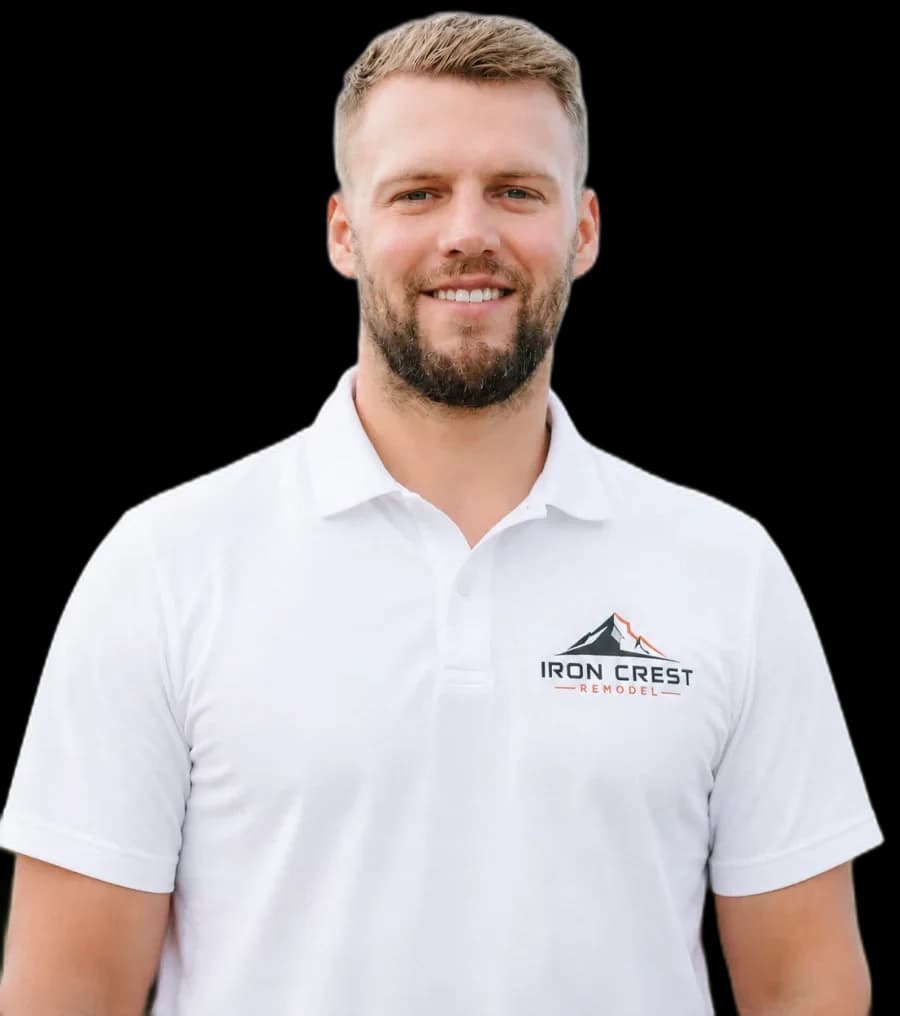
Russ Shloma — Project Manager
Russ Shloma — Project Manager
Start your siding installation in Eagle
Get a free, no-obligation estimate for siding installation in Eagle, ID. We handle design, permits, and every detail of construction.
Get Your Free Estimate