
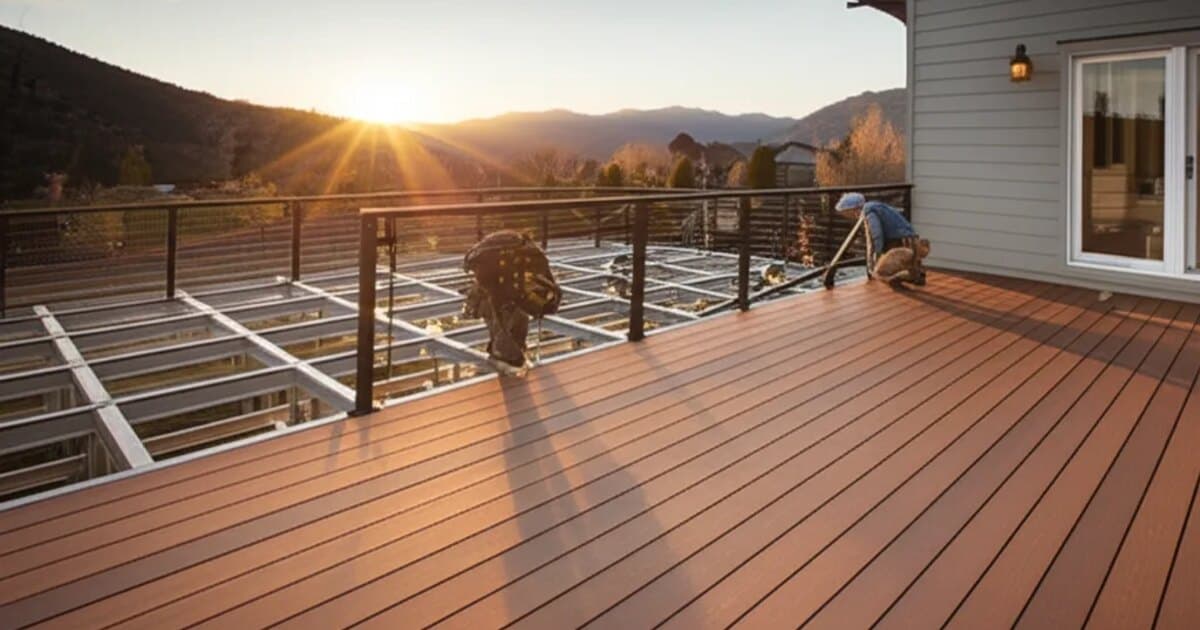
Best Materials for Deck Builder in Garden City
Explore the most popular material options for deck building in Garden City, with pricing, durability, and style comparisons to help you choose.
Quick answer
Quality composite decking from brands like Trex, TimberTech, and AZEK typically lasts 25-50 years with minimal maintenance. The boards resist fading, staining, scratching, and moisture damage. The pressure-treated framing underneath should be inspected periodically.
Garden City, ID · Deck Builder
Planning deck building in Garden City?
Read the full guide below — or get your project priced now. Free, no-obligation estimates from an Idaho registered local team, backed by a 1-year workmanship warranty.
- Licensed Idaho RCE-6681702
- 1-Year Workmanship Warranty
- $2M Liability Coverage
- Free, No-Obligation Estimates


Deck material selection in Garden City requires elevated moisture specifications for Greenbelt Corridor properties and the design-forward expectations consistent with the community's creative culture. Composite decking is the most appropriate surface choice for the majority of Garden City deck projects, and particularly for any property within two or three blocks of the Boise River. Premium lines — Trex Transcend, TimberTech AZEK Advanced PVC, or Deckorators Voyage — provide the colour range, dimensional stability, and low-maintenance performance that Garden City's design-conscious homeowners expect. Unlike pressure-treated lumber, which weathers to grey and requires annual maintenance to maintain appearance, composite decking retains its color and texture without staining, sealing, or sanding for its entire service life. For river-adjacent properties, composite decking's resistance to moisture cycling is a significant practical advantage over wood alternatives. Structural framing for Garden City decks should use materials appropriate for the moisture environment. Pressure-treated lumber for structural members is appropriate when the correct treatment level is specified: above-grade framing in a standard residential location can use .15 or .25 retention level ACQ-treated lumber, while ground-contact and near-moisture applications in the Greenbelt Corridor should use .40 retention level minimum. Alternative structural materials — steel framing systems, aluminum framing products — provide superior moisture resistance and are worth specifying for premium applications near the river where long-term structural durability justifies the cost premium. Railing systems in Garden City deck projects trend strongly toward aluminum powder-coat systems and cable railing over standard wood or vinyl railings. Aluminum and cable railings are maintenance-free in ways that wood railings are not — there is no painting, staining, or sanding required — and they provide the clean, contemporary visual that Garden City's design-forward homeowners prefer. Cable railing systems are particularly popular because they maximize view preservation while meeting code requirements for fall protection — an important consideration on any deck that overlooks a greenbelt corridor, river view, or attractive landscape. Fastener specifications matter more in Garden City than in drier inland communities. Standard galvanised deck screws corrode faster in an elevated-humidity environment than in dry ground, leaving rust stains on composite decking surfaces and eventually compromising the connection between decking and joists. All Garden City deck projects should use stainless steel decking screws or hidden fastener systems with stainless steel hardware — the cost premium is modest and the performance difference is substantial. Pergola and shade structure materials for Garden City outdoor rooms range from pressure-treated or cedar wood to aluminum extrusion systems. Aluminum pergola systems — such as those from Struxure, Pergola Concepts, or Aluminum Pergola Depot — provide fully maintenance-free structures with louvered roof panels that can be opened or closed to control light and weather exposure. These systems are particularly popular among Garden City's design-conscious homeowners because they provide genuine weather protection, eliminate maintenance entirely, and have a clean contemporary profile that complements the community's modern aesthetic sensibility.
Choosing the right materials is one of the most important decisions in any deck building project. The materials you select affect the look, durability, maintenance requirements, and overall cost of the finished project. Here is a detailed look at the most popular material options for deck building in Garden City and the Treasure Valley.
These are the most commonly used materials for deck building projects in Garden City. Each has different characteristics that affect cost, durability, and style:

Trex Composite Decking
$8–$16 per sq ft (material only)The most popular composite decking brand in the Treasure Valley. Made from recycled materials, available in multiple color lines (Enhance, Select, Transcend), fade- and scratch-resistant with a 25-year limited warranty.
Best for: Homeowners who want a low-maintenance, long-lasting deck surface with consistent color

TimberTech / AZEK Composite Decking
$10–$22 per sq ft (material only)Premium composite and PVC decking with realistic wood grain patterns, excellent fade and stain resistance, and industry-leading warranties up to 50 years. AZEK PVC boards offer superior moisture resistance.
Best for: Premium projects where appearance, longevity, and warranty are top priorities

Cedar Decking
$6–$12 per sq ft (material only)Natural western red cedar provides a warm, beautiful deck surface with natural resistance to rot and insects. Requires staining or sealing every 2-3 years to maintain its color and prevent graying.
Best for: Homeowners who prefer natural wood appearance and are willing to maintain it

Pressure-Treated Lumber (Framing and Economy Decking)
$3–$6 per sq ft (material only)Chemically treated pine or fir that resists rot and insect damage. Used for all deck framing (posts, beams, joists) and available as an economy decking surface option. Requires staining or sealing.
Best for: Deck framing, budget-conscious projects, and utility decks

Aluminum or Composite Railing Systems
$30–$80 per linear foot installedPre-engineered railing systems that provide clean lines, code-compliant baluster spacing, and low maintenance. Available in multiple colors and styles including cable rail, glass panel, and traditional baluster designs.
Best for: All deck railing applications — especially with composite decking for a unified low-maintenance design

Garden City shares Boise's climate. River-adjacent properties may have slightly higher humidity near the waterway.
River Proximity
Properties near the Boise River may have higher moisture levels affecting foundations and exterior materials.
Urban Heat
Being surrounded by Boise means slightly warmer summer temperatures in developed areas.
In Garden City, the combination of dry summers, cold winters, and variable humidity levels means that material selection should prioritize durability and climate resistance. We recommend choosing materials rated for the temperature extremes and moisture conditions typical of Ada County.
Material availability affects both timeline and cost. Standard materials are typically available within 1-2 weeks from local suppliers in Garden City. Custom or specialty materials may have lead times of 4-14 weeks. We recommend selecting materials early in the design phase to avoid schedule delays.
Typical lead times
- ● Standard/stock materials: 1-2 weeks
- ● Semi-custom orders: 3-6 weeks
- ● Full custom/specialty items: 6-14 weeks
- ● Imported or artisan materials: 8-16+ weeks
Local factors — Garden City's housing stock and typical construction eras, the climate conditions that drive material and scheduling choices, and permitting through City of Garden City Building Department — are covered in full on our Garden City page for this service, alongside 5 common project types.
Deck Builder in Garden City: housing stock, climate & permits →How long does a composite deck last?
Quality composite decking from brands like Trex, TimberTech, and AZEK typically lasts 25-50 years with minimal maintenance. The boards resist fading, staining, scratching, and moisture damage. The pressure-treated framing underneath should be inspected periodically.
Is composite or wood decking better?
Composite costs more upfront but requires virtually no maintenance and lasts 25-50 years. Wood costs less initially but requires staining or sealing every 2-3 years and typically lasts 15-25 years. Most Boise homeowners choose composite for the long-term value and low maintenance.
Planning deck building in Garden City?
Get expert guidance and a free estimate for your deck builder project in Garden City, ID.
Get Your Free Estimate