
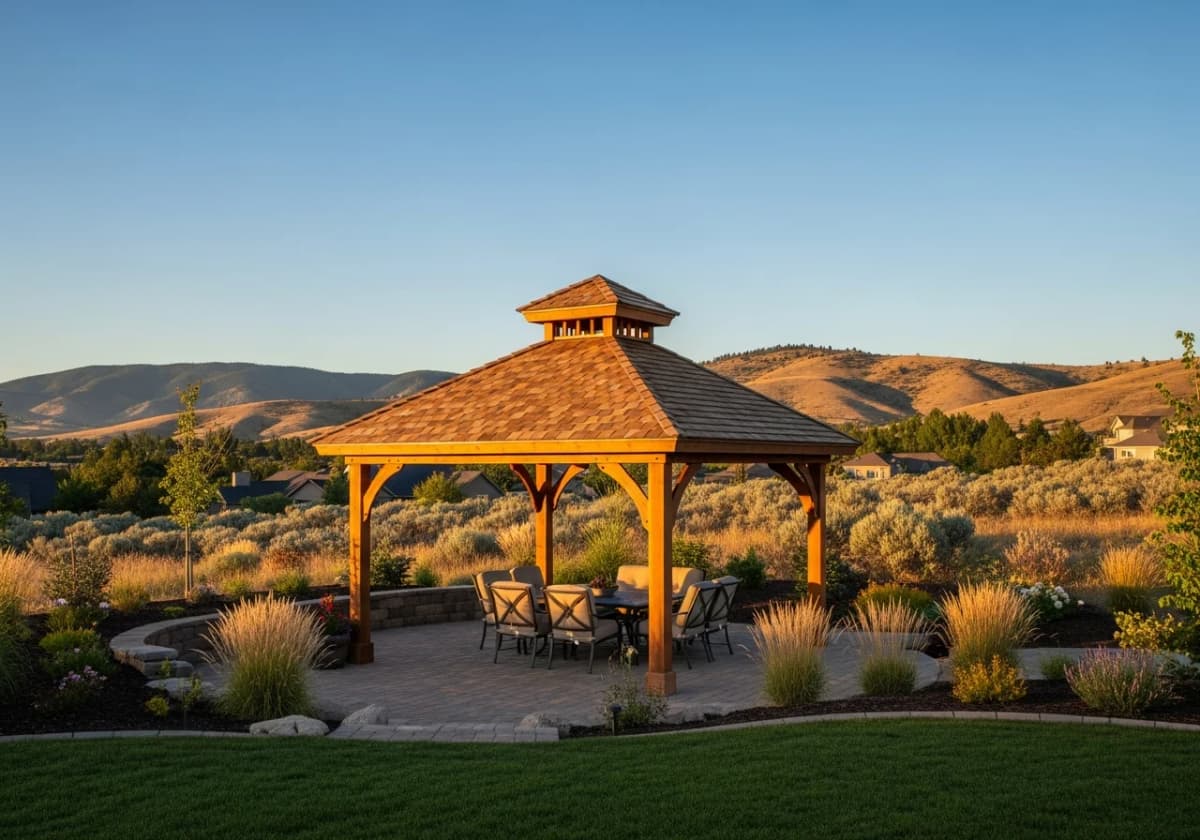
A well-built gazebo or pavilion does something a patio alone can't: it gives you a defined, shaded place to actually live outside. In the Treasure Valley, where summer afternoons climb hot and dry and winters bring real snow, a solid-roof structure turns an exposed slab of concrete into a usable outdoor room — a spot for a dining table, an outdoor kitchen, a hot tub, or simply a shaded place to escape the midday sun. Done right, it becomes the part of the yard everyone gravitates to from late spring through the first cold snap.
These are also permanent structures, not pop-up canopies, so the details that don't show up in a photo are the ones that determine whether you're happy in ten years: footings set below the frost line, posts and rafters sized for our snow load, a roof that sheds water away from the house, and a foundation that won't shift. Iron Crest Remodel designs and builds gazebos and pavilions as part of a complete outdoor-living plan — coordinating the structure with your existing or new patio, deck, and landscaping so it looks intentional rather than bolted on.
The sections below explain the real differences between a gazebo, a pavilion, and a pergola so you choose the right one; compare wood and metal honestly; walk through the foundation and snow-load engineering that Idaho weather demands; cover roof styles and materials; and lay out the factors that actually drive the cost. Our goal is to give you enough to make a confident decision before you ever sign anything.
People use these three words interchangeably, but they describe genuinely different structures. The roof is the easiest way to tell them apart, and that difference drives how much shade and rain protection you get, how the structure looks, and how it's built. Here's how they compare.
Pergola
An open roof of beams and rafters with no solid surface overhead. It casts dappled shade and defines a space, but lets sun and rain through. Usually rectangular and four-post — the most decorative and the lightest of the three.
Gazebo
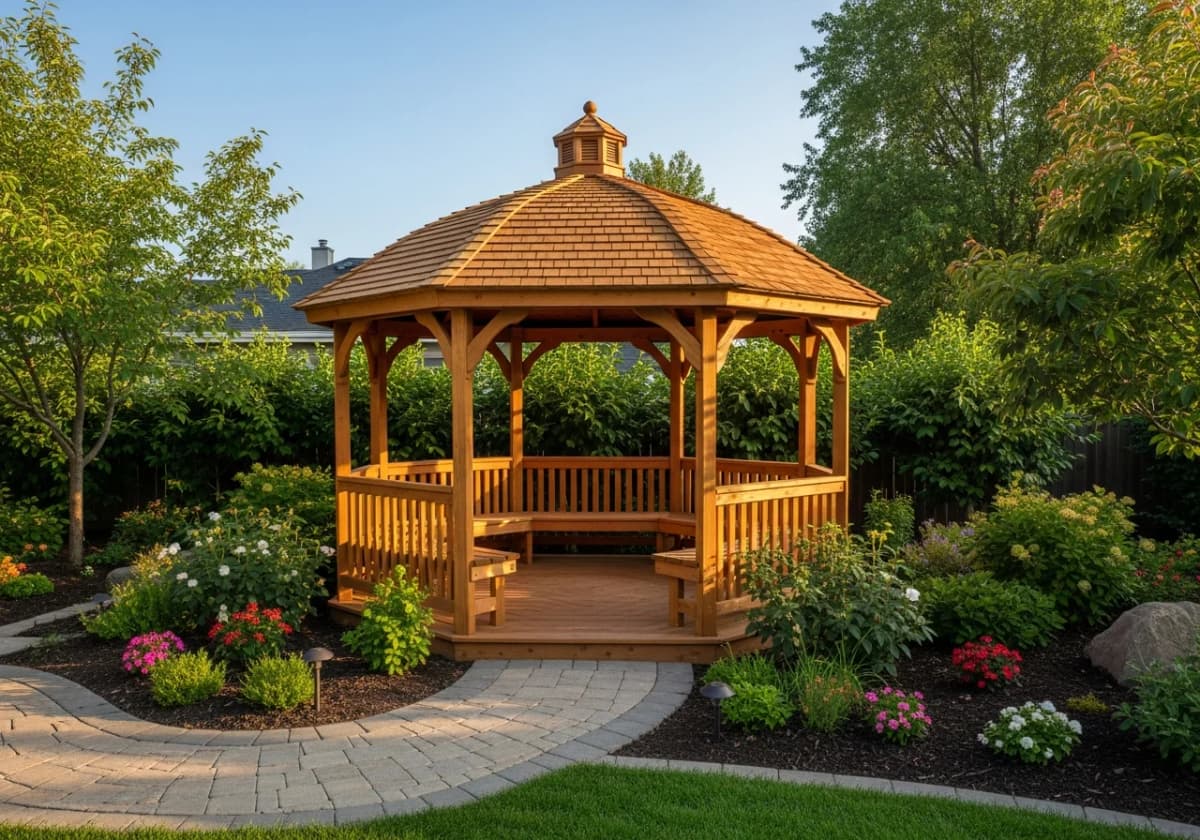
A solid-roof structure, often octagonal or round with a domed or peaked top and sometimes a raised floor. It blocks sun and sheds rain and reads as a focal-point destination in the yard.
Pavilion
A solid-roof structure — typically a gable or hip shape — with fully open sides and a larger footprint. It gives the most complete sun, rain, and wind cover and works as a true outdoor room for entertaining.
In short: choose a pergola when you want architectural shade and airflow over a patio or walkway and don't need to stay dry in a downpour. Choose a gazebo when you want a charming, enclosed-feeling focal point — a hot-tub cover, a quiet garden retreat, or a centerpiece for the backyard. Choose a pavilion when you want a big, fully covered space to host meals, shelter an outdoor kitchen, or extend your living area year-round. Many Treasure Valley homeowners combine them — a pavilion over the dining and cooking zone with a pergola softening an adjacent lounge area.
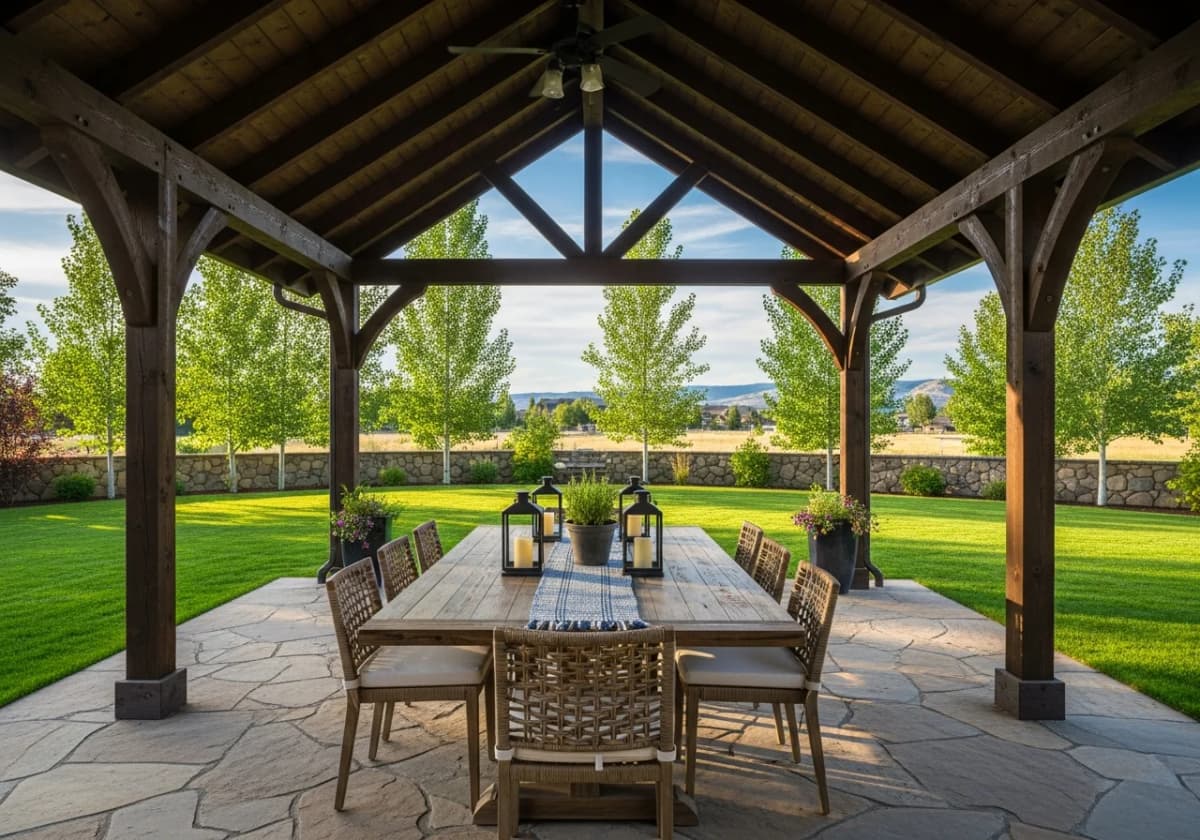
The frame material shapes the look, the upkeep, and the price. Neither is "better" in the abstract — it's about matching the structure to your home and how much maintenance you want to sign up for. Here's how wood and metal really compare for a gazebo or pavilion.
Wood
Cedar, redwood, pressure-treated lumber, and hardwood give the warm, classic timber look most people picture for a backyard structure, and a timber frame can be left natural, stained, or painted to match your home. As a reference, the material for a wood gazebo typically runs about $4,000 to $7,000 depending on species, with cedar near the top of that range. The trade-off is upkeep: wood needs periodic cleaning and re-staining or sealing to look its best and resist Idaho's sun and snow.
Metal
Aluminum, steel, and wrought iron offer clean lines and very low maintenance — they won't rot, and powder-coated finishes hold up for years. As a reference, the material for a metal gazebo runs roughly $2,900 to $8,300, with aluminum and wrought iron the most affordable and steel the most expensive. Metal suits modern and transitional homes and is a strong pick if you'd rather not stain a structure every couple of seasons.
Whichever frame you choose, the foundation, fasteners, and roof structure matter just as much as the posts you see — and that's where the next two sections come in. Many of our outdoor structures pair naturally with a new or existing deck or patio, so we plan the material and finish to coordinate across the whole space.
This is where cheap kits and weekend builds fail in the Treasure Valley. A permanent structure has to be anchored on footings that reach below the frost line and framed for our snow load. Skip either and you get frost heave, sagging roofs, and a structure that shifts over time.
Footings & frost heave. When water in the soil freezes and expands, it can push a shallow footing upward — a process called frost heave that cracks concrete and tilts a structure. The fix is to set footings below the frost line. The City of Boise lists a minimum frost depth of 24 inches in its building design criteria, and the 2018 International Residential Code (§R403.1.4) requires footings to sit below the local frost line. Concrete pier footings for these structures are commonly 10 to 16 inches in diameter, with depth and size scaling to the weight of the structure. We engineer the foundation to the load and to local code rather than dropping posts into a few inches of dirt.
Below the frost line
Footings extend below the local frost line (24 inches minimum under City of Boise criteria) so freezing soil can't heave the structure.
Properly sized piers
Concrete piers, commonly 10–16 inches in diameter, are sized to the weight and footprint of the gazebo or pavilion.
Snow-rated roof framing
Rafters, posts, and connections are sized to Boise's 25 psf design roof snow load — more for higher-elevation sites.
Water shed away from the house
Roof pitch and drainage are planned so snowmelt and rain move away from your foundation and patio.
Snow load. A solid roof has to carry winter weight. The City of Boise's design criteria call for a ground snow load of 20 psf and a design roof snow load of 25 psf on the valley floor. Boise's criteria also list a 90 mph wind design speed and Seismic Design Category C, all of which factor into how a permanent structure is framed and connected. Sites up in the foothills or at higher elevation can see larger snow loads that require a site-specific value — we confirm the right number for your address rather than assuming. The result is a roof that sheds and carries snow safely instead of one that sags or fails after a heavy winter.
A hip roof, with slopes on all four sides, is often a strong choice in areas that see wind and snow because the geometry braces itself well — one of several roof options covered below.
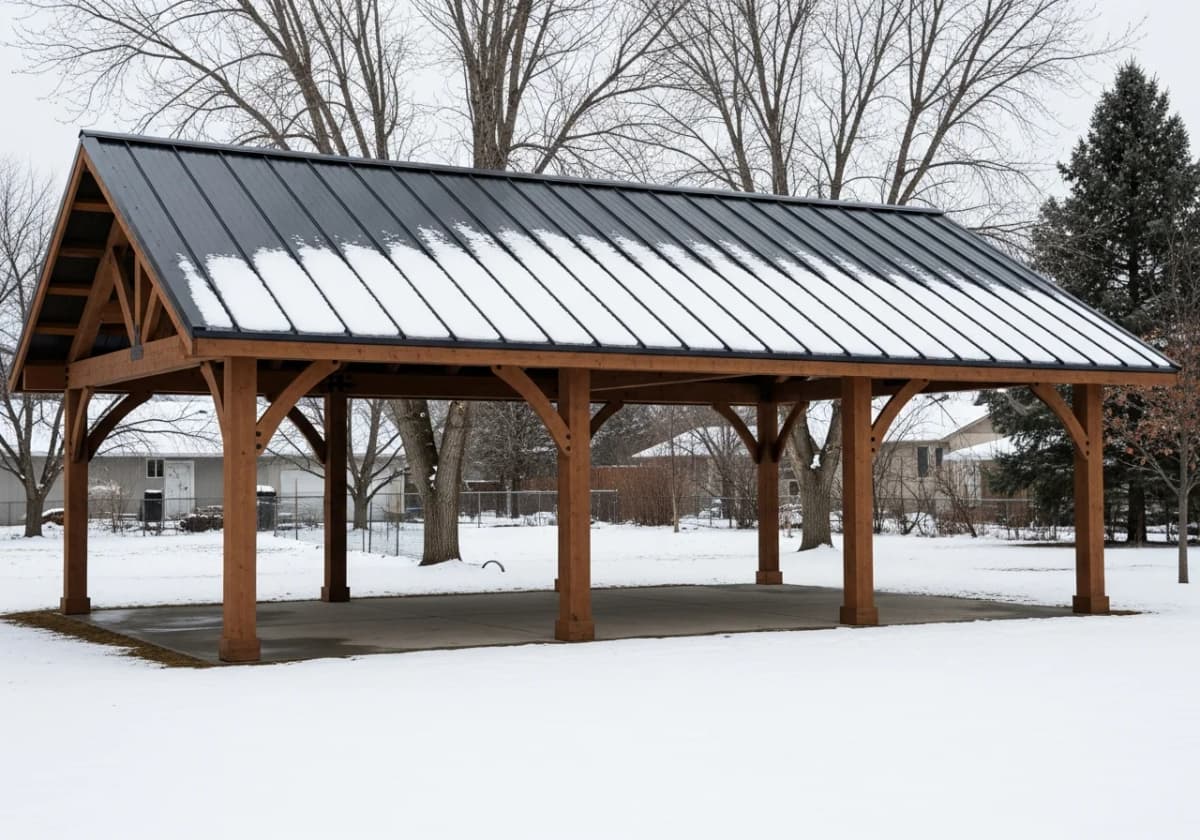
The roof sets the character of the structure and how it handles weather. Here are the styles we build most, and how to think about them.
Gable roof. Two slopes meeting at a ridge, with open triangular ends that aid ventilation. A classic, versatile look for pavilions.
Hip roof. Slopes on all four sides meeting at a peak or short ridge. Self-bracing and well-suited to wind and snow.
Monoslope / shed roof. A single clean slope for a modern profile that directs snow and rain efficiently to one side.
Domed or peaked gazebo roof. The signature octagonal or round gazebo top that makes the structure a focal point.
For the roof covering on the structure we build, the two most common choices are metal — durable, long-lived, and excellent at shedding snow — and architectural shingles, which let the new structure read as a visual match for your home's existing roof. (We roof the gazebo or pavilion we build; we do not re-roof houses.) Metal roofing typically runs about $5 to $16 per square foot. We'll match the roof style and material to your home's architecture, your snow-shedding needs, and your budget.
Foothills and hillside lots: the roof covering is regulated. Properties inside the City of Boise's Wildland-Urban Interface overlay must use non-combustible roof coverings and siding under the Boise Fire Prevention Code. That rule covers roof coverings and siding — it is not a rule about decking, and no decking product is non-combustible. If a fire feature or an outdoor kitchen is going under the structure, its clearances are a separate question again. We check the WUI classification for your parcel during design and specify accordingly.
Whatever covering you choose, the framing underneath is sized for the snow load described above — the covering keeps water out, the structure carries the weight.
Every project is different, so we price after seeing your site. As industry reference ranges, a built gazebo commonly runs about $70 to $100 per square foot, a gazebo kit roughly $30 to $70 per square foot installed, and a pavilion about $35 to $60 per square foot. These are the factors that move your number within and beyond those ranges:
Size and complexity. Square footage is the biggest driver; bigger spans and custom shapes mean more material and engineering.
Material. Cedar and steel cost more than pressure-treated wood or aluminum; the material alone can run a few thousand dollars either direction.
Foundation. A basic concrete slab floor starts around $4 per square foot, while premium composite or hardwood decking runs $40 to $50 per square foot.
Roof style and material. A metal roof adds roughly $5 to $16 per square foot; shingle-matching and complex roof geometry change the labor.
Site and snow load. Deeper frost-depth footings, sloped sites, and higher-elevation snow loads add foundation and framing work.
Add-ons. Electrical, lighting, fans, screens, and outdoor-kitchen rough-ins add cost and may require a permit.
We give you a firm, itemized quote after inspecting your yard so there are no surprises — and we show you where the money goes so you can prioritize the choices that matter most to you.
Design & site visit
We meet at your home, talk through how you'll use the space, and choose between a gazebo, pavilion, or pergola — coordinating it with your patio, deck, and landscaping.
Engineer & permit
We size footings, posts, and roof framing to Boise's frost depth and snow load, and confirm permit and setback requirements with the City of Boise or Ada County.
Footings & foundation
We set concrete footings below the frost line and pour the slab or build the floor your design calls for.
Frame the structure
Posts, beams, and the snow-rated roof structure go up in your chosen wood or metal, with connections built to carry the load.
Roof & finish
We install your chosen roof style and material, then finish the structure — stain, paint, or powder-coat — to match your home.
Clean up & walk-through
We clear the site and walk the finished structure with you, backed by our workmanship warranty.
Every Iron Crest project is backed by a 3-year workmanship warranty — the structure and the workmanship stand behind you well after the last inspection.
What's the difference between a gazebo, a pavilion, and a pergola?
All three are freestanding outdoor structures, but the roof is what sets them apart. A pergola has an open roof of beams and rafters with no solid surface, so it gives dappled shade but little rain protection. A gazebo has a solid roof — often octagonal or round with a domed or peaked top and sometimes a raised floor — and works as a focal-point destination in the yard. A pavilion also has a solid roof, usually a gable or hip shape, but with fully open sides and a larger footprint, making it the best choice for an outdoor 'room' you can entertain under. We help you pick based on how you want to use the space, the look you're after, and your budget.
How deep do the footings need to be in the Treasure Valley?
Deep enough to sit below the frost line, which the City of Boise and Ada County design criteria set at a minimum of 24 inches; Canyon County and each city publish their own criteria, which we confirm at permit time. Footings have to extend below that line so freezing groundwater can't lift them in a process called frost heave, which cracks and tilts a structure over time. Concrete pier footings are commonly 10 to 16 inches in diameter, and the depth and size grow with the weight of the structure. A pergola, a heavy timber pavilion, and a metal gazebo can all call for different footing details, so we engineer them to the load and to local code rather than guessing.
Will a gazebo or pavilion hold up to our snow?
It will when it's framed for the load. The City of Boise's design criteria call for a ground snow load of 20 psf and a design roof snow load of 25 psf on the valley floor. A solid-roof gazebo or pavilion has to be built and, where required, engineered to carry that, while higher-elevation foothill sites can see larger loads that need a site-specific value. We size the rafters, posts, and connections to the snow load for your address so the roof sheds and carries winter weather safely.
Should I build in wood or metal?
Both are good choices and the right one depends on the look and maintenance you want. Wood — cedar, redwood, pressure-treated, or hardwood — gives the warm, traditional timber look most Treasure Valley homeowners picture, and the material typically runs about $4,000 to $7,000 depending on species, with cedar near the top of that range; it needs periodic cleaning and re-staining or sealing. Metal — aluminum, steel, or wrought iron — runs roughly $2,900 to $8,300 in material, with aluminum and wrought iron the most affordable and steel the priciest; it resists rot and asks for very little upkeep. We'll walk you through both in your own yard.
Do I need a permit for a gazebo or pavilion in Boise?
Often, but not always. The 2018 International Residential Code, which Idaho has adopted, exempts a one-story detached accessory structure under 200 square feet from a building permit. But that is the unamended baseline and Boise amends model-code thresholds — its deck and patio permit trigger, for example, is 12 inches above grade rather than the model code's 30 — and a permanent concrete footing or slab, any 120-volt electrical, or attaching the structure to your house typically triggers a permit regardless of size. Low-voltage landscape lighting needs no electrical permit in Boise. Setbacks and HOA rules apply too; Boise sets no maximum lot coverage, so the setback is the real constraint on placement. We confirm the current requirements with the Boise Building Division at (208) 608-7070, or with Ada County, for your specific project before we build — we don't assume.
What does a custom gazebo or pavilion cost?
It depends on size, material, roof, and foundation, so we give a firm itemized quote after seeing your site. As industry reference ranges, built gazebos commonly run about $70 to $100 per square foot, gazebo kits roughly $30 to $70 per square foot installed, and pavilions about $35 to $60 per square foot. A basic concrete slab floor starts around $4 per square foot while premium composite or hardwood decking runs $40 to $50, and a metal roof adds roughly $5 to $16 per square foot. Your final number lands within or beyond these ranges based on the choices you make.