
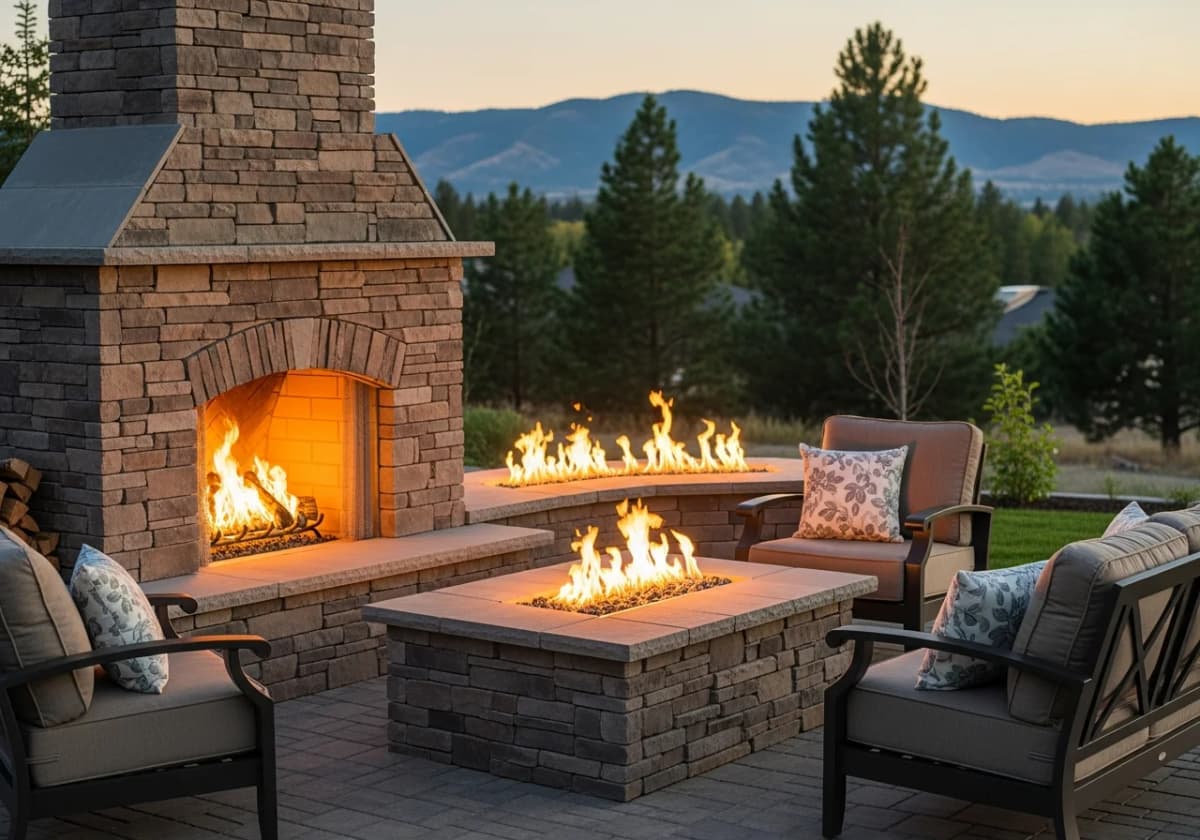
Idaho gives you real seasons, and a well-built fire feature lets you enjoy your backyard through more of them. From cool spring evenings to crisp fall nights, a fire pit or outdoor fireplace extends the time you actually spend outside — and it does something a patio set alone never will: it pulls people together. Across Boise, Meridian, Eagle, and the rest of the Treasure Valley, homeowners are turning ordinary patios and decks into true outdoor living rooms, and a fire feature is almost always the anchor that makes the space work.
The trouble is that "fire feature" covers a huge range of projects — a simple gas bowl, a stone gathering pit, or a full masonry fireplace with a chimney — and each one carries different costs, fuel options, clearance rules, and material choices. Get those decisions right and you have a durable, code-compliant centerpiece that adds genuine usability and curb appeal to your home. Get them wrong and you have a safety hazard, a permitting headache, or a feature that cracks and weathers within a few seasons.
Iron Crest Remodel designs and builds fire features as part of a complete outdoor living plan — coordinated with your patio, deck, seating, and stonework so the finished result looks intentional rather than bolted on. The sections below walk through the real decisions: fire pit versus fireplace, gas versus wood, the local codes and clearances that keep your family safe, the materials that hold up to Idaho weather, and what actually drives the cost. Cost figures here are national planning ranges, not Treasure Valley quotes, and we say so where they appear; where local fire rules can change, we tell you to verify rather than publishing a threshold as settled fact, and we confirm the rules for your specific lot before we build.
These two features create very different experiences. A fire pit is a low, open structure that people gather around on all sides — a 360-degree heat source that's casual, social, and ideal for larger groups, conversation, and roasting marshmallows. An outdoor fireplace is a taller, permanent structure with an enclosed firebox and a chimney; it acts as a vertical focal point, directs smoke up and away from the people seated near it, and creates a more intimate, formal setting — essentially an outdoor version of the hearth inside your home.
The Fire Pit
Low and open, with seating all the way around. The most social option and generally the most budget-friendly, and widely viewed as a cost-effective, high-appeal addition. Best for casual entertaining and bigger groups. Smoke from a wood pit drifts toward whoever is downwind, so placement and fuel choice matter.
The Outdoor Fireplace
A taller, permanent masonry structure with a firebox and chimney. The chimney carries smoke up and away from the seating area, and the structure becomes a dramatic backdrop and windbreak. More formal and intimate, it takes less floor space than a pit but costs considerably more to build.
For many Treasure Valley yards, the deciding factors are space, budget, and how you entertain. Tight patios and large gatherings often favor a pit; a generous patio where you want a true outdoor-room feel — and want to keep smoke out of the conversation — leans toward a fireplace. We'll show you how each option lays out in your actual yard before you commit.
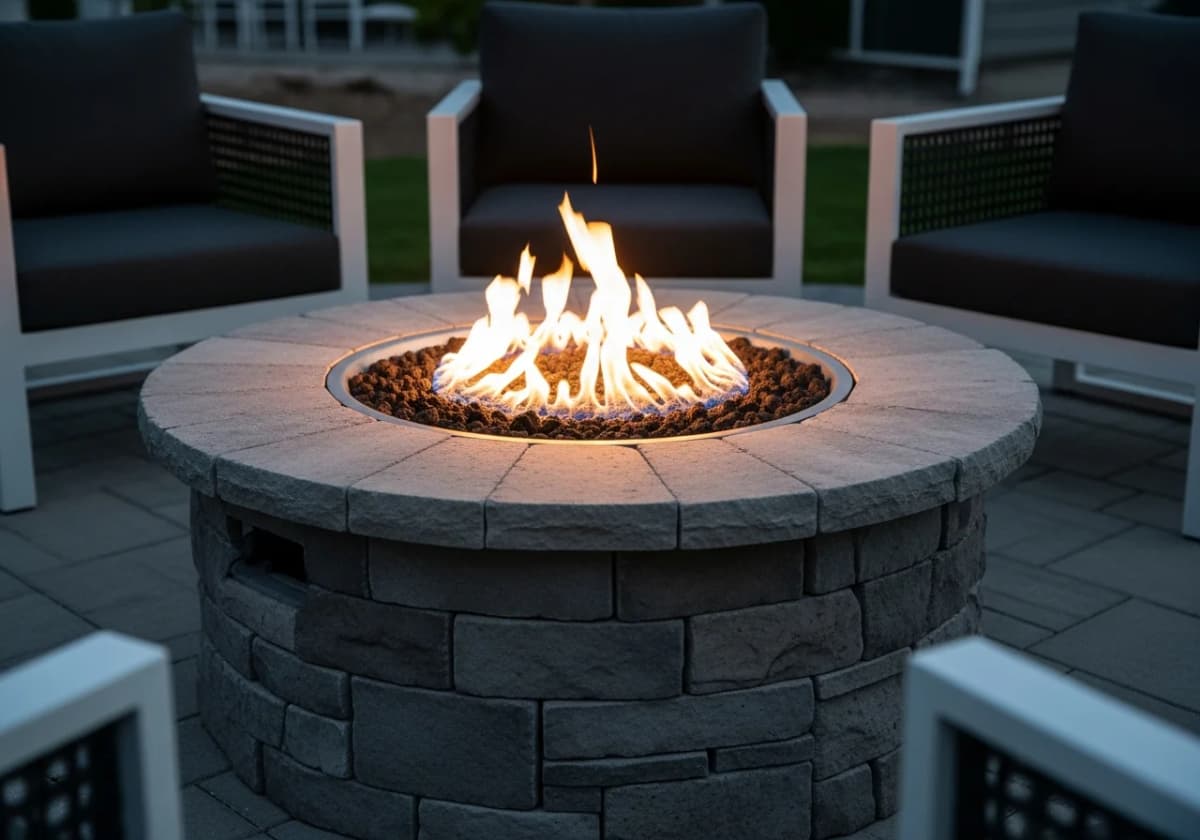
Fuel is the single biggest decision after the form of the feature, because it shapes the experience, the install cost, and the day-to-day convenience. Here is how the three common options compare.
Wood-Burning
The classic crackle, glow, and high heat output, with a low up-front cost. The trade-offs are smoke and ash, regular cleanup, and the highest risk of a fire spreading if left unattended — so clearances and supervision matter most here.
Natural Gas
Lights instantly, burns cleanly with minimal smoke or odor, and never needs refueling. The trade-off is a higher install cost — a gas line must be trenched and run — and a fixed location. Often the lowest fuel cost to run over time.
Propane
Clean-burning, with an adjustable flame, and movable since it runs off a tank rather than a plumbed line. The trade-offs are higher fuel cost over time and the need to refill or swap tanks.
There's no universally "best" fuel — it depends on how you'll use the feature. Homeowners who want push-button convenience on an attached patio tend to choose natural gas, while those chasing the campfire experience favor wood. We'll talk through your priorities and, if you go with natural gas, handle the gas-line work the right way (see the codes section below).
Fire and gas-line rules are safety-critical and can change. The points below reflect the codes and local guidance as we understand them, but we always confirm the current requirements with Boise Fire and your jurisdiction — and check Idaho DEQ air-quality status — before any fire feature is built or used.
Permits for the fire itself. Open-burning and recreational-fire rules are set by Boise Fire and by the authority having jurisdiction for your address, and they are revised from season to season — so we do not publish a size threshold here as settled fact and you should not rely on one you read online. We confirm the current rules with Boise Fire and your jurisdiction before the feature is built, and we recommend checking Idaho DEQ air-quality status before you burn.
Clearances. Under the International Fire Code, a recreational (wood) fire generally must be at least 25 feet from any structure or combustible material, and must be constantly attended until it is out. For gas appliances at a single-family home, combustible construction and vegetation must stay clear of the vertical column above the fire feature, and a portable solid-fuel pit with a spark arrestor must sit at least three feet from combustible construction. We design placement to meet the clearances in the code as adopted by your jurisdiction, and confirm the specifics for your lot with Boise Fire.
A fire feature does not belong on a deck. All decking is combustible — that includes composite, PVC, and dense tropical hardwoods such as ipe. None of them is a “Class A fire-rated” or non-combustible surface, whatever a product brochure implies. We set fire features on concrete, stone, or pavers, which is also why a ground-level patio is usually the right home for one. If your property sits in the Boise foothills or another hillside area inside the City's Wildland-Urban Interface overlay, additional requirements apply to attached decks and to roof coverings and siding, and we check the WUI classification during design.
Gas-line work. If you choose natural gas, the gas piping is the part that must be done by the book. In Idaho, new gas piping and alterations require a permit and must be performed by a licensed contractor; natural-gas piping is regulated under Idaho's adopted fuel-gas code and administered by the Idaho Division of Occupational and Professional Licenses (DOPL), separately from standard plumbing. We pull the proper permits and coordinate the licensed gas work so your fire feature is connected safely and passes inspection.
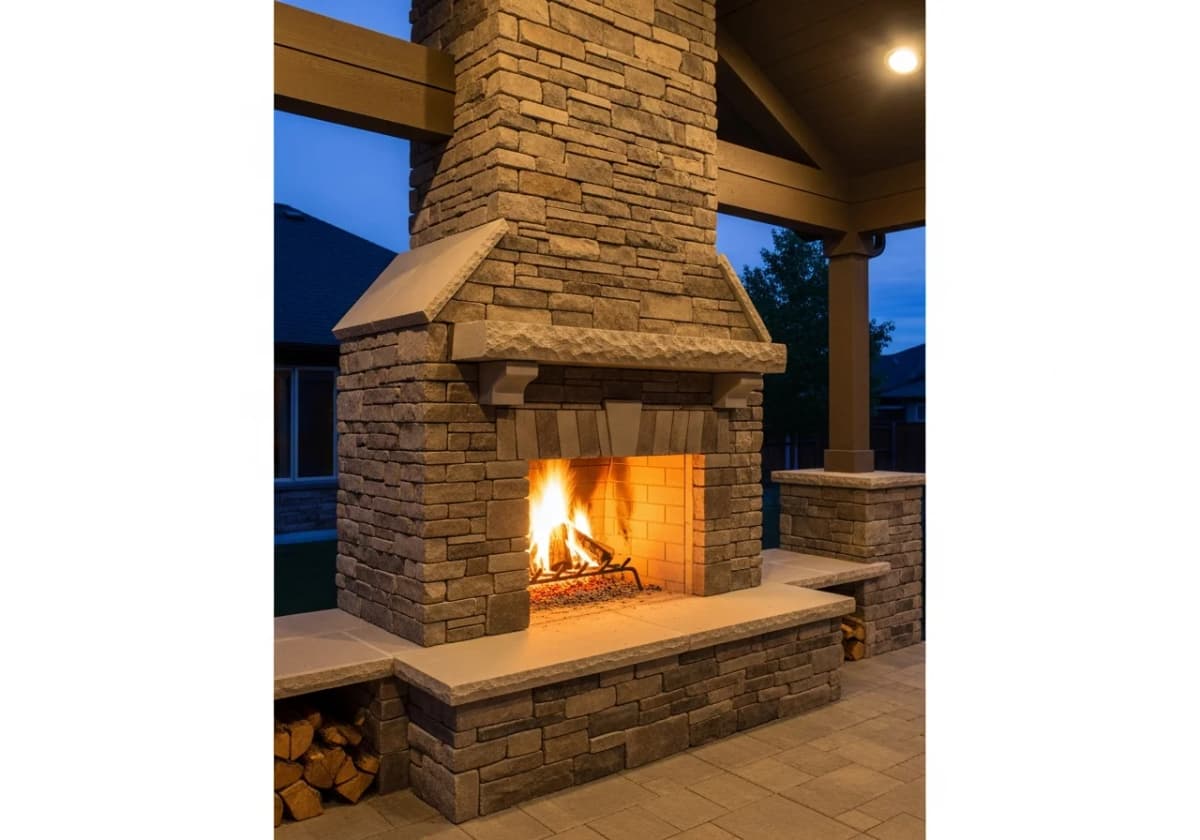
The materials you choose determine both the look of your fire feature and how well it stands up to Treasure Valley weather and high heat. These are the most common, durable options we build with:
Natural stone. The premium look and the most weather-resistant choice, with the highest material cost — roughly $35 to $100-plus per square foot. Ideal for a statement fireplace or a high-end pit surround.
Manufactured stone veneer. Delivers a similar stacked-stone appearance at a lower material cost — about $25 to $75 per square foot — and is lighter and easier to install.
Brick. A timeless, durable option that pairs well with traditional homes and integrates cleanly into many patio designs.
Poured & precast concrete. Versatile and modern, concrete can be formed, colored, and finished for a clean, contemporary fire pit or fireplace base.
Pavers. Great for tying a fire pit into an existing or new paver patio so the feature reads as part of the overall hardscape.
Refractory firebrick. Used to line the firebox where heat is most intense, protecting the structure and extending the life of the feature.
The right material balances appearance, budget, and how the feature ties into the rest of your outdoor space. Because we build patios, decks, and stonework too, we can match your fire feature to existing finishes so everything looks like it was planned together.
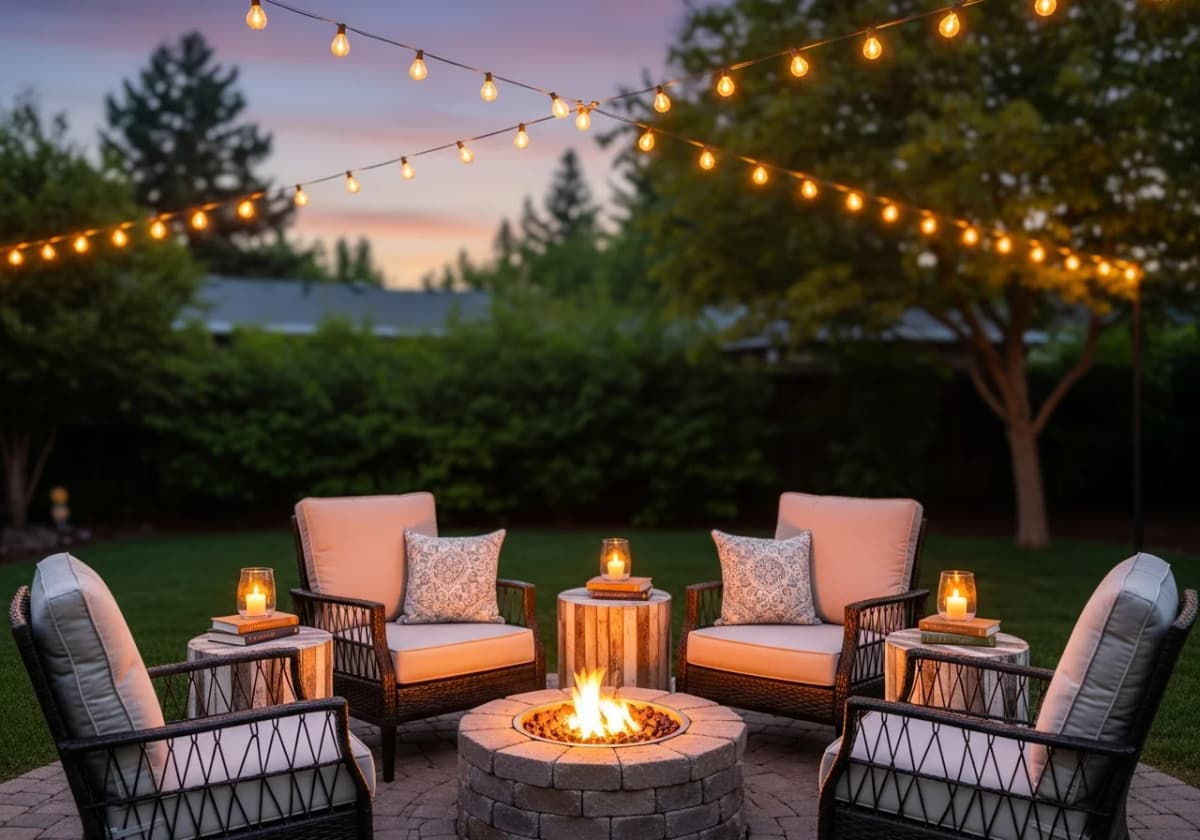
Fire-feature pricing covers a wide range because the projects do. As national reference ranges, gas fire pits commonly run $400 to $3,000, with custom built-in pits with integrated seating exceeding $8,000. Outdoor fireplaces typically run $5,000 to $20,000 installed, and fully custom builds can go higher. These are planning ranges, not a quote, and not a local figure. Several factors move your number within those ranges:
Fire pit vs. fireplace. A masonry fireplace with a firebox and chimney is far more involved than a fire pit, so it sits at the upper end of the cost range.
Fuel and gas-line work. Choosing natural gas typically adds about $1,500 to $3,000 for the gas line (roughly $15 to $25 per linear foot), plus the permit fee your jurisdiction charges under its adopted fee schedule.
Materials. Natural stone costs more than manufactured veneer or concrete — fireplaces clad in natural stone run roughly $8,000 to $20,000, versus about $4,000 to $10,000 with manufactured stone.
Size, seating, and site prep. Larger features, integrated seat walls, and site preparation (often $500 to $2,000) all add to the total, as does skilled masonry labor at roughly $50 to $100-plus per hour.
Integration with the patio or deck. Tying the feature into new or existing hardscape, and coordinating it with a patio or deck build, affects both scope and price.
These are national reference ranges, not a quote. Every yard, fuel choice, and material mix is different, so we provide a firm, itemized estimate after seeing your space. Our workmanship is backed by a 3-year workmanship warranty, and any manufacturer warranties on components pass through on their own published terms — verify those on the manufacturer's site.
Should I build a fire pit or an outdoor fireplace?
It comes down to how you use the space. A fire pit is a low, open structure you gather around on all sides — casual, social, and great for larger groups roasting marshmallows. An outdoor fireplace is a taller, permanent structure with an enclosed firebox and a chimney that becomes a dramatic focal point; it directs smoke up and away from the seating area and creates a more intimate, formal setting. Fire pits are generally far less expensive and take less space vertically, while a fireplace anchors a patio like an outdoor living room. We help you weigh your yard size, budget, and how you like to entertain before choosing.
Do I need a permit for a fire pit in Boise or Ada County?
Open-burning and recreational-fire rules are set by Boise Fire and by your jurisdiction, and they change — so we do not publish a permit threshold as settled fact. We confirm the current requirements with Boise Fire and the authority having jurisdiction for your address before we build, and we recommend checking Idaho DEQ air-quality status before you burn. What does not change is the placement: the feature has to sit on a non-combustible surface, clear of structures, decking, fencing, and overhanging vegetation at the clearances the International Fire Code requires. A gas fire feature is a separate question — the gas piping itself requires a permit and licensed trade work regardless of how the fire is classified.
Gas or wood — which fuel is better?
Wood-burning gives you the classic crackle, glow, and high heat, with a low up-front cost, but it produces smoke and ash, needs regular cleanup, and is the most likely to spread if unattended. Natural gas lights instantly, burns cleanly with minimal smoke or odor, and never needs refueling — the trade-off is a higher install cost because a gas line has to be trenched and run, and the feature stays in a fixed spot. Propane sits in between: clean-burning and movable, but the fuel costs more over time and tanks need refilling. Many Treasure Valley homeowners choose natural gas for an attached patio and keep a wood option for the campfire feel.
How far does a fire feature have to be from my house?
Clearances depend on the fuel and the device. Under the International Fire Code, a recreational (wood) fire generally must be at least 25 feet from any structure or combustible material and must be constantly attended until it is out. For gas appliances at a single-family home, combustible construction and vegetation must stay clear of the vertical column above the fire feature, and a portable solid-fuel pit with a spark arrestor must sit at least three feet from combustible construction. Note that a deck is combustible construction: all decking is combustible, including composite, PVC, and hardwoods such as ipe, so a fire feature belongs on concrete, stone, or pavers rather than on a deck surface. We design placement to meet the clearances in the code as adopted by your jurisdiction and confirm the specifics with Boise Fire for your lot.
How much does an outdoor fire feature cost in the Treasure Valley?
Costs vary widely with size, fuel, and materials. As national planning ranges rather than local quotes, gas fire pits commonly run $400 to $3,000, with custom built-in pits with integrated seating exceeding $8,000. Outdoor fireplaces typically run $5,000 to $20,000 installed — roughly $4,000 to $10,000 with manufactured stone and $8,000 to $20,000 with natural stone, and fully custom builds can go higher. If you choose natural gas, expect the gas line to add about $1,500 to $3,000, plus the permit fee your jurisdiction charges, which is set by its adopted fee schedule. We give you a firm, itemized quote after seeing your yard so there are no surprises.
What materials hold up best for an Idaho fire feature?
The most common and durable choices are natural stone, manufactured stone veneer, brick, poured or precast concrete, and pavers, with refractory firebrick lining the firebox where the heat is most intense. Natural stone is the premium look and the most weather-resistant, while manufactured veneer delivers a similar appearance at a lower material cost. The right pick balances appearance, budget, and how the feature ties into your existing patio, deck, and stonework. We match materials to your home and to Treasure Valley conditions so the feature looks great and lasts.