
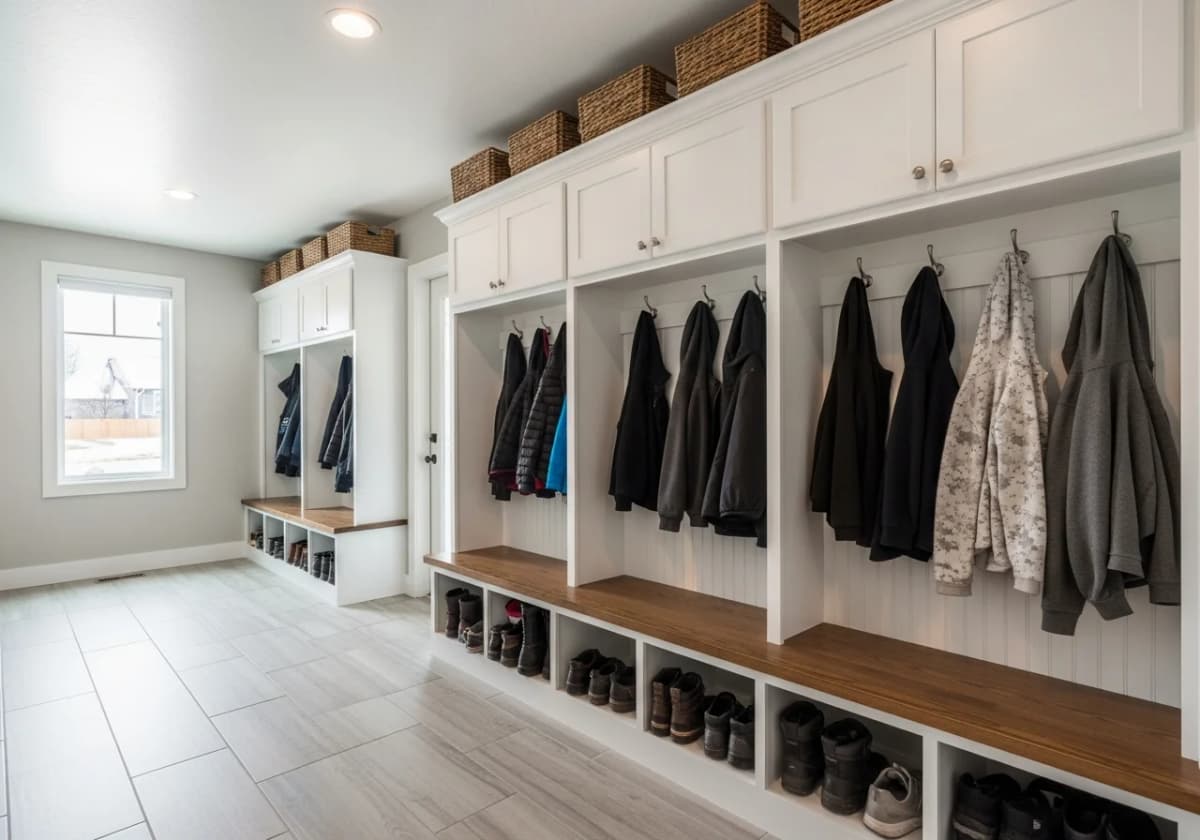
In an Idaho home, the back door, garage entry, or side hall is where real life lands first. Snowy boots from Bogus Basin, muddy cleats from a spring soccer game, backpacks, dog leashes, ski helmets, fishing tackle, work coats, and the daily avalanche of shoes all hit the same few feet of floor. When that space has no plan, the clutter spills into the kitchen and the entry and never really goes away. A well-designed mudroom solves that — it gives every item a home within arm's reach of the door, so the rest of the house stays calm.
Great mudroom storage is not about buying more bins. It is about matching the storage to how your family actually moves: open hooks and cubbies for the coat and shoes you grab every morning, closed cabinets for the bulky seasonal gear you only touch a few months a year, and durable, water-shedding materials that survive Idaho weather. The sections below walk through the storage systems we build most often, the dimensions that actually work, how we plan for shoes and four-season gear, and the materials that hold up to mud, snowmelt, and dogs.
Whether you have a generous dedicated room off the garage or a narrow three-foot stretch of wall by the back door, the same principles apply. Iron Crest Remodel designs and builds the whole solution — layout, cabinetry or custom millwork, flooring, lighting, and finish — as part of our mudroom remodeling service for Boise and the surrounding Treasure Valley.
A built-in system is what separates a real mudroom from a row of hooks. Custom built-ins can combine doors, drawers, shoe cubbies, hanging sections, and adjustable or fixed full-height shelves — even a full-height pantry-style cabinet — so the entire wall earns its keep from floor to ceiling. The add-ons are where a built-in starts to fit your life: hooks at every height, baskets for gloves and hats, a counter for keys and mail, drip trays for boots, and charging stations so phones and devices land in one spot instead of the kitchen counter.
The smartest move is to combine open and closed storage on the same wall. Open storage — hooks, baskets, and open cubbies — keeps the daily grab-and-go items visible and instant, so nobody is rummaging for a backpack at 7:40 a.m. Closed storage — cabinets and drawers — hides the bulky, the seasonal, and the unsightly so the room still photographs well with the doors shut. We design the proportions of open-to-closed around your household: more hooks and cubbies for a busy family with kids, more closed cabinetry for a couple who wants a clean, gallery-quiet entry.
Full-height cabinets
Floor-to-ceiling doors and adjustable shelves swallow seasonal gear, cleaning supplies, and overflow so nothing stacks on the floor.
Drawers and pull-outs
Soft-close drawers contain gloves, leashes, and small gear; pull-out trays and even tucked pet-bowl stations keep the floor clear.
Hooks at every height
A tiered hook-and-shelf system organizes everything from heavy backpacks down to small accessories, with low hooks kids can actually reach.
A drop-zone counter
A short run of countertop becomes the landing pad for mail, keys, and a charging station so the kitchen island stops collecting clutter.
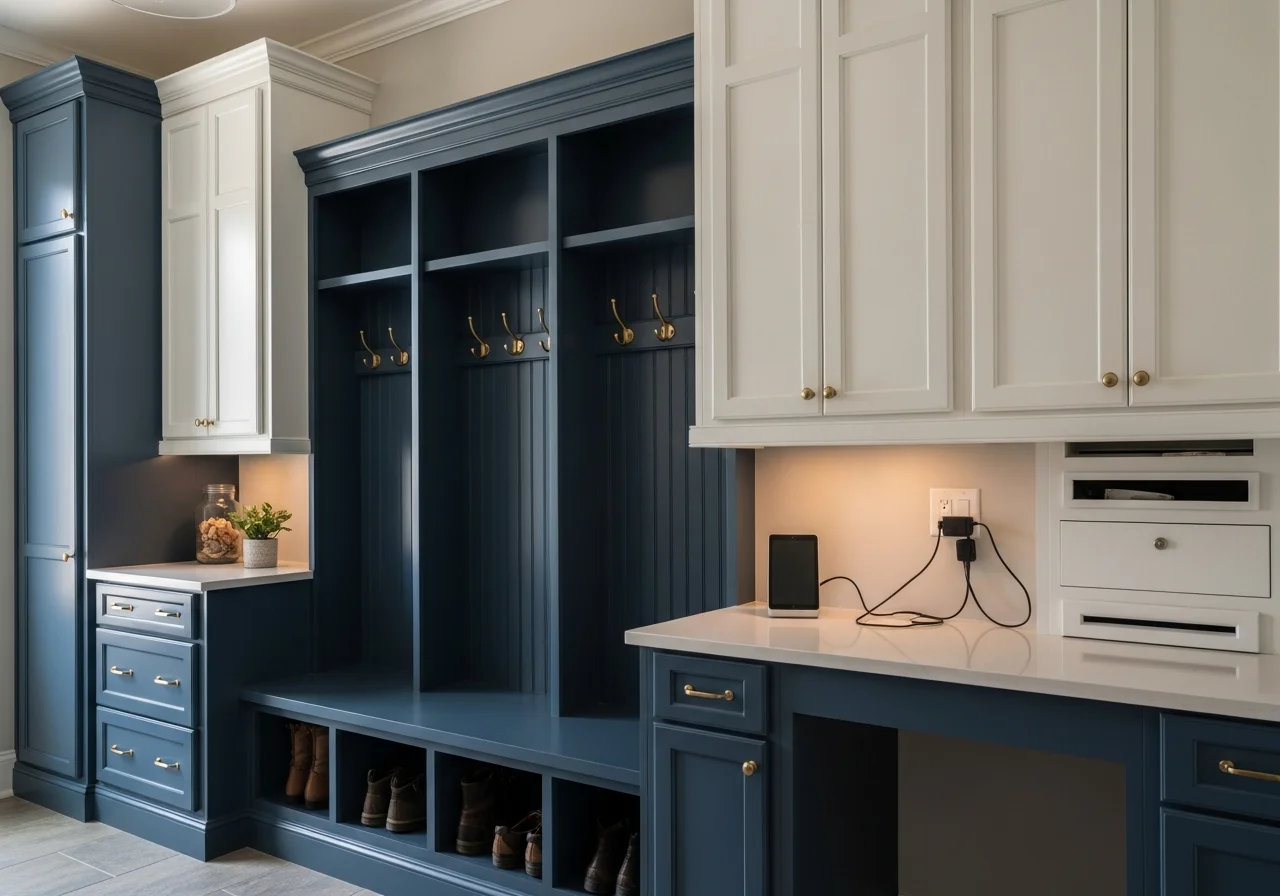
The locker-bench-cubby combo is the workhorse of family mudrooms because it stacks three jobs into one footprint. A single "station" typically gives one person an upper shelf for hats and bags, a column of hooks for coats and backpacks, a bench seat to sit on while taking shoes off, an open cubby below the bench for those shoes, and a lower shelf or basket for sports gear. Give every family member their own station and the morning scramble largely disappears — everyone knows exactly where their things live.
Getting the dimensions right is what makes it comfortable rather than cramped. The numbers below are the ranges we design around, then fine-tune to your wall length, ceiling height, and the people who'll use it. Build a bench too shallow and no one sits on it; build cubbies too tight and they collect nothing but dust.
Lockers
Most lockers run 14–26 inches wide and 16–22 inches deep(about 18 inches deep is common), with an optimal full-unit height near 70 inches so the top shelf stays reachable.
Benches
Benches are typically about 18 inches deep and range 15–20 inches — deep enough to sit on comfortably while pulling on boots. Add hinged-seat or open-cubby storage underneath.
Cubbies
A useful cubby is at least 12–18 inches deep so it can actually hold shoes, helmets, and bags rather than just looking the part. Size openings to the gear they'll hold.
One detail we never skip on a bench: drainage and airflow. An open-back bench with a boot cubby below, paired with a removable boot tray, lets snowmelt and mud drip and dry instead of soaking into the seat and floor. We size each station so the bench, hooks, and shelf line up into a clean, repeating rhythm across the wall.
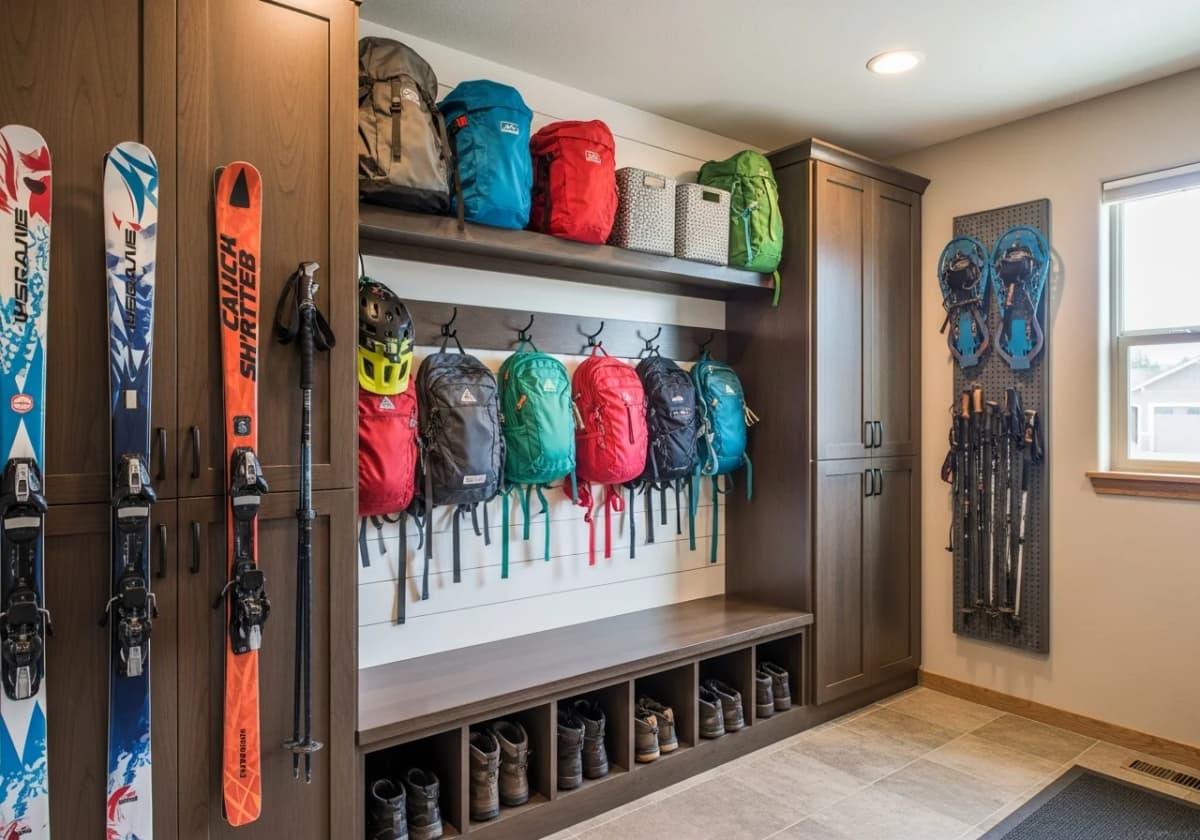
Treasure Valley families tend to own a lot of gear, and it changes with the seasons: ski and snowboard equipment for Bogus Basin and the Sawtooths, mountain and road bikes for the Greenbelt and foothills trails, hunting and fishing gear, camping kits, and an ever-growing pile of shoes for everyone in the house. A mudroom that only handles coats and shoes tends to be overwhelmed by October. The fix is to plan storage in three vertical zones so each item lands at the right height for how often it is used.
High zone (above ~72 inches). Reserve the top of the wall and the upper cabinets for seasonal and rarely used gear — ski bags in summer, camping gear in winter, holiday overflow.
Middle zone (~36–72 inches). This is prime real estate at eye and hand level: daily coats on hooks, frequently grabbed bags, the drop-zone counter, and charging.
Low zone (below ~36 inches). Shoes, boots, and children's belongings live down low where kids can reach them and where a boot tray catches the mess.
Shoes deserve their own strategy because they multiply faster than anything else. Beyond open cubbies, vertical shoe storage — wall-mounted racks or back-of-door racks — maximizes height in a tight mudroom, and rail-style wall racks that suspend pairs by the sole keep shoes off the floor while they drip and dry. For the bulky four-season gear, tall full-height cabinets flanking a boot bench are the cleanest answer: they hide off-season equipment behind doors so the room stays composed year-round.
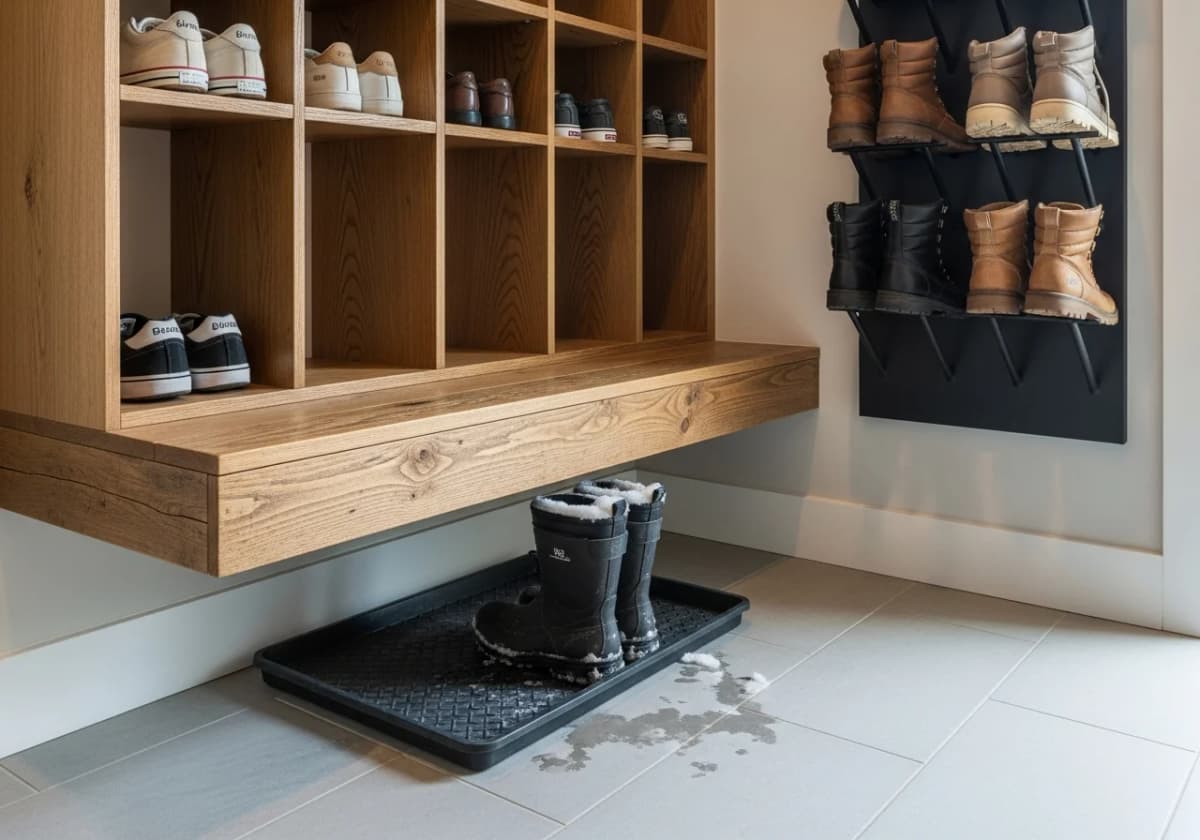
Most Treasure Valley mudrooms are not huge, so the trick is to build up and tuck things away. Going vertical — taking cabinetry and shelving all the way to the ceiling — captures the dead space above head height for the items you rarely reach for, and it makes a narrow room feel taller and more deliberate. Stackable racks and floating benches free up the floor, which both looks cleaner and makes the room far easier to sweep and mop after a muddy week.
Floor-to-ceiling cabinetry
Carry storage to the ceiling so the high zone works for you; cap a built-in with closed uppers for the seasonal overflow.
Floating benches
A wall-hung bench leaves open floor underneath for a boot tray and baskets, and makes cleaning the floor effortless.
Back-of-door and wall racks
Vertical shoe racks on a door or wall reclaim space that would otherwise be wasted in a tight footprint.
Hidden drawers and trays
Closed drawers, pull-out trays, and a tucked charging cubby keep cords, gloves, and small items out of sight.
Even a three-foot stretch of wall can become a real drop zone with this approach: a single full-height locker, a floating bench with a boot cubby, a column of hooks, and an upper shelf. The goal is always the same — every item visible or hidden by design, and nothing left to pile on the floor.
A mudroom is, by definition, the wettest and dirtiest interior room in the house, so material choices matter more here than almost anywhere else. The two priorities are water resistance and easy cleaning — anything that absorbs moisture or stains will look tired within a couple of Idaho winters.
Porcelain or PEI-rated tile. Dense, non-porous, and highly water-resistant, tile is a top choice for mudroom floors and shrugs off mud and snowmelt. For heavy traffic, a higher PEI rating holds up best.
Waterproof luxury vinyl plank (LVP). LVP delivers a warm wood look that handles serious moisture and dogs; choose a higher wear layer for a busy entry that takes daily abuse.
Sealed concrete. Properly sealed, concrete resists moisture, mud, and heavy traffic — a practical, low-maintenance option, especially for garage-adjacent mudrooms.
Avoid hardwood and laminate. Standing water from boots and wet gear damages both over time, so we steer clients away from them in a true mudroom in favor of waterproof flooring.
A boot tray under the bench. A rubber or plastic tray catches snowmelt and mud that would pool on the floor; plan to rinse it weekly through the wet season.
For the built-ins themselves, durable cabinet boxes, scrubbable painted or laminate finishes, and solid hardware stand up to wet coats and constant use far better than bargain materials. We spec the cabinetry, hardware, and finishes alongside the flooring so everything wears evenly and cleans up with a wipe. Whatever we install, the work is backed by our 3-year workmanship warranty, with a 10-year warranty on structural elements, and any manufacturer warranties on cabinetry or flooring pass through on their own terms.
How deep should a mudroom bench, locker, and cubby be?
Plan around the proven ranges. Most mudroom benches are about 18 inches deep — enough to sit comfortably while pulling boots on — and typically run 15 to 20 inches. Lockers usually measure 14 to 26 inches wide and 16 to 22 inches deep (about 18 inches is common), with an optimal full-unit height around 70 inches so an upper shelf stays within reach. Cubbies should be at least 12 to 18 inches deep to actually hold shoes and bags. We confirm exact dimensions against your wall length, door swings, and ceiling height before anything is built.
Is open shelving or closed cabinets better in a mudroom?
The best mudrooms use both. Open storage — hooks, baskets, and open cubbies — is ideal for the daily grab-and-go items you reach for every morning, because nothing slows you down. Closed storage — cabinets and drawers — hides bulkier and seasonal items so the room still looks tidy when the doors are shut. A common approach is to organize the wall into three zones: a high zone above roughly 72 inches for seasonal gear, a middle zone from about 36 to 72 inches for daily coats and frequently grabbed items, and a low zone below 36 inches for shoes and kids' belongings.
How do I store wet, snowy boots and outdoor gear?
Drainage and airflow are the keys. A rubber or plastic boot tray under the bench catches snowmelt and mud that would otherwise pool on the floor — plan to rinse or wipe it weekly during wet Treasure Valley winters. Open-back benches and ventilated (slatted) shelving let wet gear dry instead of trapping moisture. For shoes, wall-mounted or back-of-door vertical racks keep pairs off the floor, and rail-style racks suspend shoes by the sole so they drip and dry without taking up walking space.
What is the best flooring and material for a Boise mudroom?
Choose for water resistance and easy cleaning. Porcelain or PEI-rated tile is dense, non-porous, and highly water-resistant, and waterproof luxury vinyl plank (LVP) gives a warm wood look that shrugs off boots and wet dogs — both are top picks. Properly sealed concrete is another practical option. We steer clients away from hardwood and laminate in a true mudroom, because standing water from boots and gear damages both over time. For heavy use and pets, we favor higher LVP wear layers and PEI-rated tile.
How do I fit ski, bike, and hunting gear into a mudroom?
Treasure Valley homes carry a lot of four-season gear, so we design vertically. Tall, full-height cabinets flanking a boot bench swallow off-season equipment, while the high zone above eye level holds items you only touch a few months a year. Sturdy hooks and a tiered hook-and-shelf system handle heavy backpacks, helmets, and coats; deep cubbies and baskets corral cleats, gloves, and fishing tackle. For bikes and skis we can plan wall rails or a dedicated tall bay so the bulk stays off the floor and out of the daily path.
How long does a mudroom storage build take, and is it warrantied?
Timeline depends on whether we're installing modular cabinetry or building fully custom millwork, plus any flooring, paint, and electrical for charging stations or lighting. We give you a firm schedule with your itemized quote after measuring the space. Iron Crest Remodel backs the work with a 3-year workmanship warranty, and structural elements carry a 10-year warranty; any manufacturer warranties on cabinetry or flooring pass through on their own terms.