
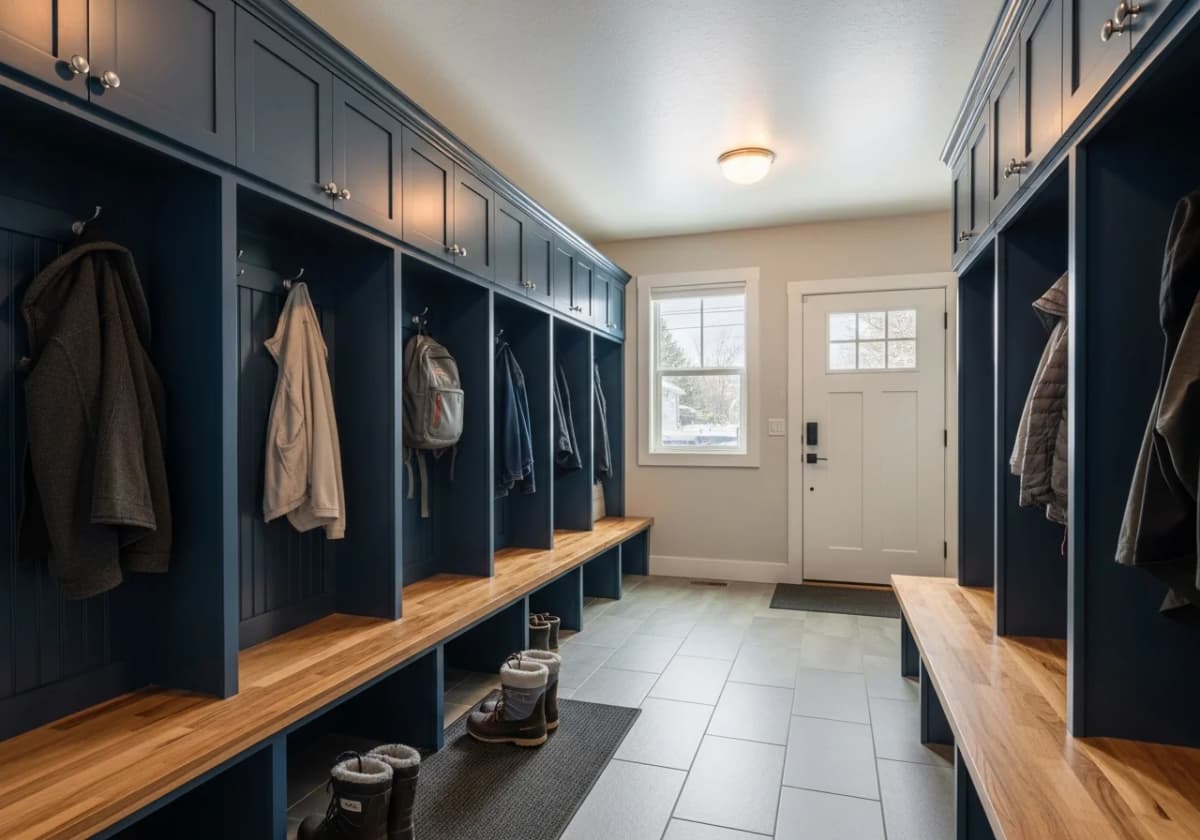
In the Treasure Valley, the seasons are hard on the spot where you walk in the door. Winter brings snow, slush, and salt; spring brings genuine mud season; and the region's irrigation and farm surroundings track fine grit indoors all year long. Without a dedicated landing spot, all of that ends up on your floors, your furniture, and in a tangled pile of coats and boots by whichever door your family actually uses. A well-designed mudroom solves the problem at its source — it catches the mess, the wet gear, and the daily clutter before any of it reaches the rest of your home.
A mudroom is fundamentally different from a formal entry. A foyer exists to manage first impressions for guests; a mudroom exists to manage daily life. Its entire job is containment and transition: a place to peel off wet boots, hang a coat, drop a backpack, and set down the groceries so none of it migrates onto the kitchen floor. That difference in purpose drives every design decision we make — from where the room goes, to how the built-ins are laid out, to which flooring can shrug off an Idaho winter.
Iron Crest Remodel designs and builds mudrooms across Boise and the Treasure Valley as part of our interior remodeling work. Most of what we build is a conversion — turning a corner of the garage, a wide hallway, an underused closet, or a laundry nook into a hardworking drop zone — though we can also design a small bump-out addition when a home has no space to spare. The sections below walk through how to place a mudroom, what goes into the built-ins, how to choose flooring that survives the season, and what the project typically costs.
The single most important decision is placement, and the rule is simple: a mudroom belongs at the door your household actually uses every day. For most Treasure Valley families that is the garage entry, side door, or back door — not the formal front door that mostly sees guests. Putting the drop zone where the boots and backpacks come in is what keeps the mess from ever reaching your living space.
Garage / Side Entry
The most common and most effective location. It catches gear at the threshold and is often right next to the kitchen, so it can double as a grocery drop with extra cabinets, counter space, or even a second fridge or freezer. Some layouts pair it with a powder bath for a complete family entrance.
Front Entry Drop Zone
When the front door is the only realistic option, we design a tidy, contained drop zone rather than letting shoes and bags spill into the foyer. It keeps the first-impression appeal of the entry while still giving everyone a spot for coats and shoes.
Because garage-entry mudrooms so often sit between the cars and the kitchen, they're also a natural place to extend kitchen utility. We frequently work a few extra cabinets, a short stretch of counter, or pantry overflow into the design so the room earns its keep beyond just coats and boots. Wherever your mudroom lands, the goal is the same — a single, dedicated transition space that absorbs the daily mess.
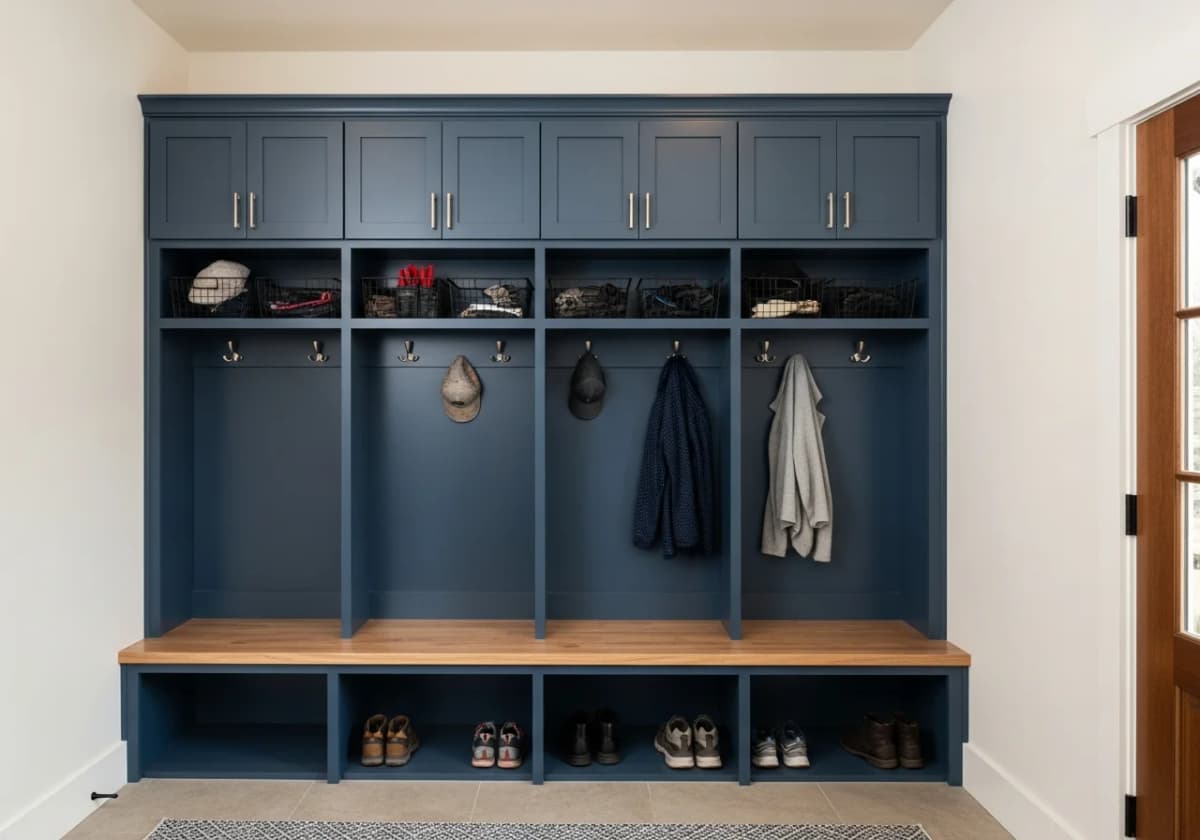
The heart of any mudroom is a set of per-person bays — one zone for each family member to hang a coat, stash shoes, and drop a backpack. Done right, the built-ins are dialed in to real-world dimensions so everything has a comfortable, reachable home. Here is how we size the core components:
Tall lockers. Typically about 14 to 26 inches wide and 16 to 22 inches deep — enough for a coat, a backpack, and a shelf above for hats and gloves. One bay per person keeps the morning rush organized.
Built-in bench. Around 14 to 18 inches deep so it's comfortable to sit on while pulling boots on and off, with drawers or open cubbies underneath for shoes and seasonal items.
Hooks at two heights. Adult hooks mounted roughly 60 to 66 inches high and spaced about 6 to 12 inches apart, plus a lower row around 42 to 54 inches for kids and bags to double hanging capacity.
Cubbies and shelves. Open cubbies for the items your family grabs daily, and a top shelf for less-used gear. Spacing things out lets wet outerwear breathe and dry instead of piling up.
Getting the spacing right is what separates a mudroom that stays tidy from one that turns back into a heap within a week. Hooks too close together bunch coats into a damp wad; a bench too shallow is uncomfortable and goes unused; lockers too narrow won't hold a winter parka. We lay out the bays around your family — how many people, how much gear, and how the kids actually use the space — before we build anything.
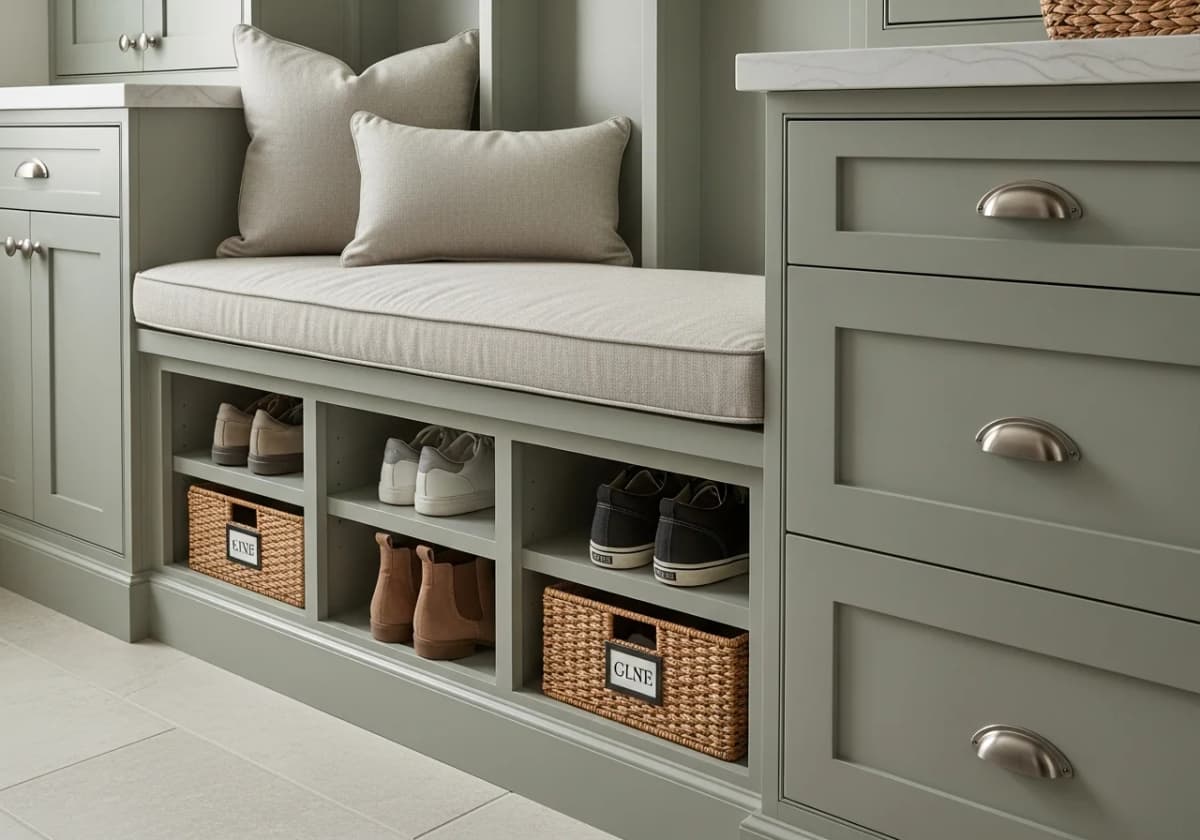
The most functional mudrooms combine open and closed storage rather than committing to one or the other. Open cubbies and hooks handle the everyday essentials your family reaches for on the way out — they're fast, and they're far easier for kids to actually use and keep tidy. Closed cabinets hide the bulkier and seasonal items, which keeps visual clutter down so the room still reads as part of your home.
Open cubbies & hooks
Best for daily-use shoes, coats, and bags. Easy for everyone to grab and go, and easier for kids to put things back in the right place.
Closed cabinets
Conceal backpacks, sports gear, and cleaning supplies behind doors so the space looks clean and organized.
Ventilated shoe storage
Fully sealed shoe cabinets trap moisture and odor, so we use slatted shelves or ventilated panels to keep air moving around wet boots.
Baskets, bins & drawers
Labeled bins for hats, gloves, sports gear, and pet supplies, plus pull-out trays and under-bench drawers to tuck footwear and small items out of sight.
The ventilation detail is one most homeowners overlook until it's a problem. Wet boots and damp shoes shut behind solid doors create exactly the musty smell a mudroom is supposed to prevent. Designing in slatted shelving or vented panels for the shoe zones — while keeping solid doors elsewhere for a clean look — gives you the best of both worlds in an Idaho climate where footwear comes in wet for months at a time.
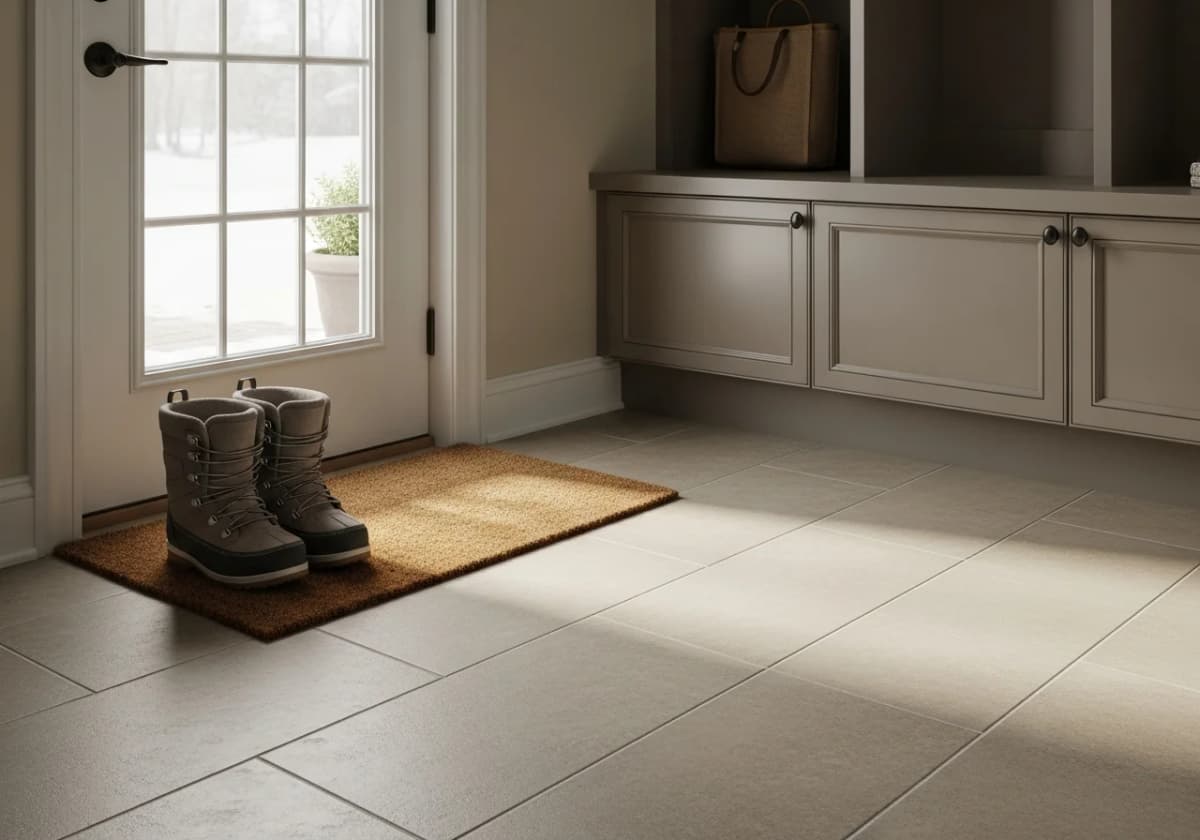
Flooring is the hardest-working surface in the room. It takes the snow, slush, salt, and mud first, so it has to be genuinely water-tolerant and tough — this is not the place for the wrong material.
Porcelain Tile
The most durable option. Dense and very low in porosity, it resists water and mud, holds up to heavy use without chipping or cracking, and can last 50-plus years. It feels cold underfoot in winter, so we often pair it with radiant floor heat for comfort and to help dry wet boots. Grout and seal need occasional care.
Luxury Vinyl Plank
Warmer and softer underfoot with a fully waterproof core, low maintenance, and easy to install in a wood-look finish. Its lifespan is shorter — about 15 to 25 years — and it can dent under a heavy dropped object, but it's a comfortable, budget-friendly choice.
A practical approach many homeowners love is a hybrid: lay porcelain tile right at the exterior door where the wettest, muddiest traffic lands, then transition to LVP or wood-look flooring as the space opens into the rest of the house. Whichever direction you go, our team handles the substrate prep and waterproofing so the floor performs for the long haul. If you want to dig deeper into tile options, our tile installation page covers materials and finishes in detail.
Nationally, most mudroom remodels run about $6,000 to $20,000, with the average around $15,000 including labor. Where your project lands within (or beyond) that range comes down to a handful of factors:
Converting space vs. adding it. Reworking an existing nook or hallway typically runs roughly $50 to $100 per square foot, while a new addition or bump-out runs about $100 to $250 or more per square foot because of new foundation and exterior walls.
Custom cabinetry and built-ins. The lockers, bench, and cubbies usually fall between $4,000 and $10,000, or roughly $500 to $1,200 per linear foot depending on the design, storage features, and finish.
Lockers plus a built-in bench. A typical four-bay locker-and-bench setup runs about $1,250 to $4,000 on its own, before flooring and finishes.
Flooring and radiant heat. Porcelain tile costs more up front than LVP, and adding radiant floor heat increases the figure — but both pay off in durability and winter comfort.
Overall build level. A mid-range mudroom with a built-in bench, custom cabinetry, tile flooring, and solid finishes generally runs about $80 to $150 per square foot.
Those are national ranges — useful for planning, but not a substitute for a real quote. Local labor, the condition of the space, and your material choices all move the number, so we don't throw out a single Boise figure sight unseen. Instead, we measure your space, talk through how your family uses it, and give you a firm, itemized quote so there are no surprises. A mudroom also pairs naturally with other projects — many homeowners build one as part of a whole-home remodel or a kitchen-adjacent refresh.
Plan around your family
We start with how many people use the door, how much gear comes in, and which space makes the most sense — usually the garage or side entry — then lay out per-person bays.
Design the built-ins
We size lockers, the bench, hooks, and cubbies to real dimensions and balance open and closed storage with ventilated shoe zones.
Prep & build
We frame or modify the space as needed, run any electrical for lighting or outlets, and prep the substrate for the new floor.
Floor it for the climate
We install durable porcelain tile or waterproof LVP — with radiant heat if you choose it — and handle the waterproofing underneath.
Install & finish
We set the cabinetry, bench, hooks, and shelving, then paint and finish so the room blends seamlessly with the rest of your home.
Clean up
We remove all debris and protective materials and leave you a ready-to-use drop zone.
Every mudroom we build is backed by our 3-year workmanship warranty. Manufacturer warranties on cabinetry, flooring, and hardware apply per each product's terms. Built-ins take daily abuse from wet gear and busy families, so we build them to hold up.
How much does a mudroom remodel cost in Boise?
Nationally, most mudroom remodels run about $6,000 to $20,000, with the average landing near $15,000 including labor. The biggest variable is whether we work within an existing space or add square footage: converting an existing nook or hallway typically runs roughly $50 to $100 per square foot, while a new addition or bump-out runs about $100 to $250 or more per square foot. Custom cabinetry alone — the lockers, bench, and cubbies — usually falls between $4,000 and $10,000, or roughly $500 to $1,200 per linear foot depending on the storage features and finish. We don't quote a one-size local number sight unseen; we measure your space and give you a firm, itemized price.
Where should my mudroom go — by the garage or the front door?
Almost always the door your family actually uses every day, which in most Treasure Valley homes is the garage entry or a side/back door — not the formal front door. A foyer is for first impressions; a mudroom is for managing daily mess, so it works best right where the boots, backpacks, and grocery bags come in. Garage-entry mudrooms are frequently next to the kitchen, which lets them double as a grocery drop with extra cabinets or counter space. If your only practical spot is near the front entry, we can still design a clean, contained drop zone there.
What's the best flooring for an Idaho mudroom?
Porcelain tile is the most durable choice — it's dense, has very low porosity, resists water and mud, and can last 50-plus years without chipping or cracking under heavy use. Its one drawback is that it feels cold underfoot in winter, which is why we often pair it with radiant floor heat so it's comfortable and helps dry wet boots. Luxury vinyl plank (LVP) is the warmer, softer, lower-maintenance alternative with a fully waterproof core; it installs easily and looks like wood, though it has a shorter 15-to-25-year lifespan and can dent under heavy drops. A common approach is porcelain tile right at the exterior door where the mess lands, transitioning to LVP or wood-look flooring as you move into the house.
What should built-in lockers and a bench actually include?
A good per-person bay combines several elements at the right heights. Tall lockers usually run about 14 to 26 inches wide and 16 to 22 inches deep — enough for coats and backpacks. The bench sits around 14 to 18 inches deep so it's comfortable to sit on while pulling boots on, with drawers or open cubbies beneath for shoes. Adult hooks are mounted roughly 60 to 66 inches high and spaced about 6 to 12 inches apart, and we add a lower row around 42 to 54 inches for kids and bags to double the hanging capacity. Spacing the hooks out lets wet outerwear breathe and dry instead of piling up.
Should I use open cubbies or closed cabinets?
The most functional mudrooms use both. Open cubbies and hooks are best for the daily essentials your family grabs on the way out the door, and they're easier for kids to use and keep tidy. Closed cabinets hide bulkier or seasonal items — backpacks, sports gear, cleaning supplies — and cut down the visual clutter so the space still feels like part of the home. One important detail with shoes: fully sealed cabinets can trap moisture and odor, so we use slatted shelves or ventilated panels for wet boots to keep air moving.
Can you turn an existing space into a mudroom?
Yes — most of the mudrooms we build in the Treasure Valley are conversions rather than additions. A corner of the garage, a wide hallway off the garage door, an underused closet, or a laundry nook can all become a hardworking drop zone with custom built-ins and the right flooring. Converting existing space is also the more budget-friendly path, since you avoid the cost of new foundation and exterior walls. If your home truly has no room to spare, we can discuss a small bump-out addition as well.