
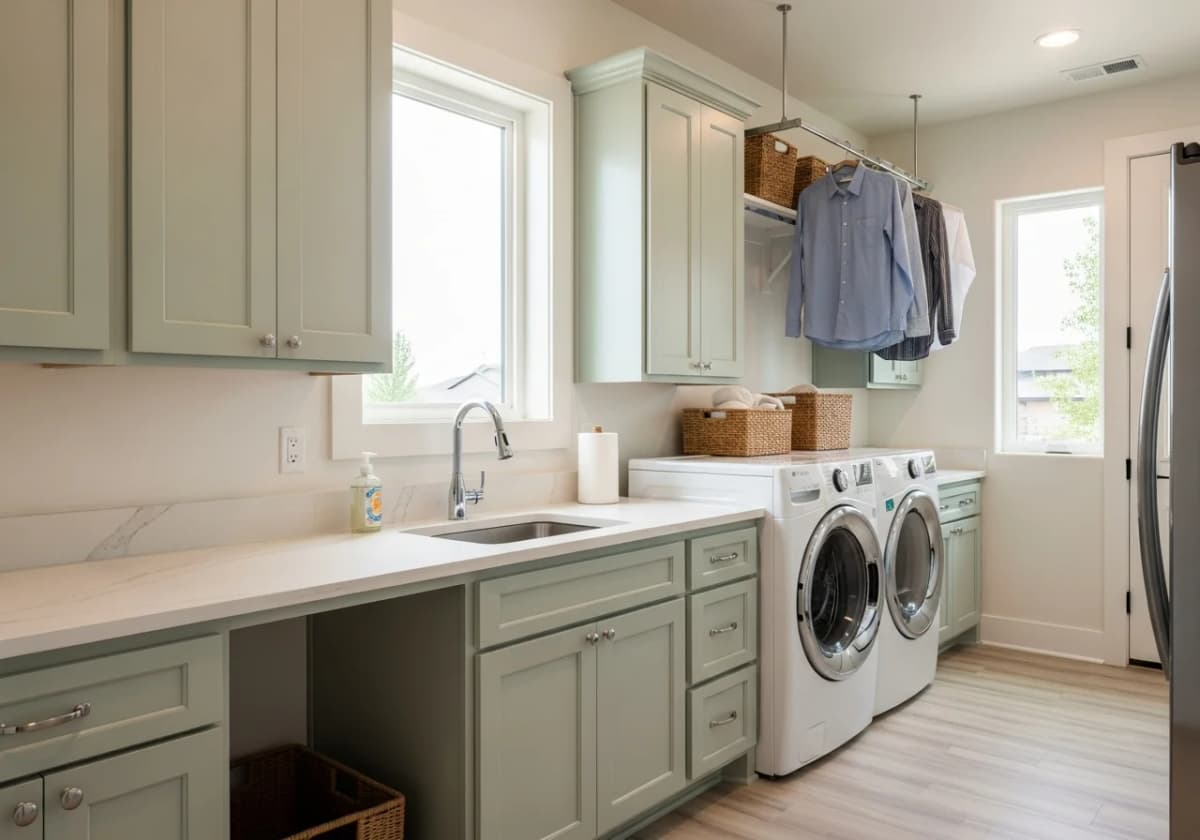
For years the laundry room was a place to hide — a stack of machines behind a bi-fold door, a wire shelf sagging under detergent bottles, and a basket on the floor waiting to be folded somewhere else. That is changing fast. The defining laundry trend heading into 2026 is intentionality: designers now treat the laundry room as a room worth designing rather than a utility to bury, and wire shelving is being swapped out for proper closed-door cabinetry that actually hides the clutter.
That shift fits Treasure Valley homes especially well, because the laundry footprint here runs the full range. Older bungalows on the Boise Bench and in the North End often have a closet-sized laundry tucked under the stairs or off the kitchen, where every inch has to earn its keep. Newer builds in Meridian, Eagle, and Star frequently have a dedicated room with space for a folding counter, a hanging rod, a utility sink, and even a pet wash. The good news is the same set of ideas scales up or down — what changes is how many of them fit.
Below we walk through the laundry room ideas we use most often, organized the way you would actually plan a remodel: making a small room feel bigger, getting storage and cabinetry right, building dedicated drying and folding stations, adding a pet wash and utility sink, and finally choosing the flooring, lighting, and color that pull it all together. Every recommendation here is grounded in current design guidance, and we are happy to adapt any of it to the room you actually have.
Most Boise laundry remodels we are asked about start small — a closet, an alcove, or a narrow run along one wall. The strategy for these rooms is consistent: expand the space visually and functionally with vertical stacking, light colors, and strategic lighting. Small laundry rooms reward a vertical workflow, so instead of spreading out you build upward — stack the appliances, hang a drying rail overhead, and keep a slim utility sink for cleanup without surrendering floor space.
Stack the washer and dryer
A stacked front-load pair cuts the appliance footprint in half and opens the wall above for cabinets, a counter, or a drying rail — the single biggest space win in a closet laundry.
Go light, top to bottom
Keep walls, cabinets, and floor pale. A dark floor visually swallows a 6-by-8 room; white penny tile, pale vinyl plank, or cream ceramic bounces light back up and enlarges the space.
Add an overhead drying rail
A rail or rod mounted above stacked machines turns dead vertical space into hang-dry capacity for delicates and shirts that should never see the dryer.
Slim utility sink
A compact sink gives you a place to soak, rinse, and clean up without eating the foot space a full cabinet run would need.
Full-height cabinetry
Run cabinets to the ceiling so seasonal and rarely used items live up top and the everyday supplies stay within reach — vertical storage instead of a sprawling footprint.
Treat a closet like a designed detail
Even a tiny laundry closet can read as intentional with a tidy door, integrated lighting, and a consistent finish rather than exposed shelving.
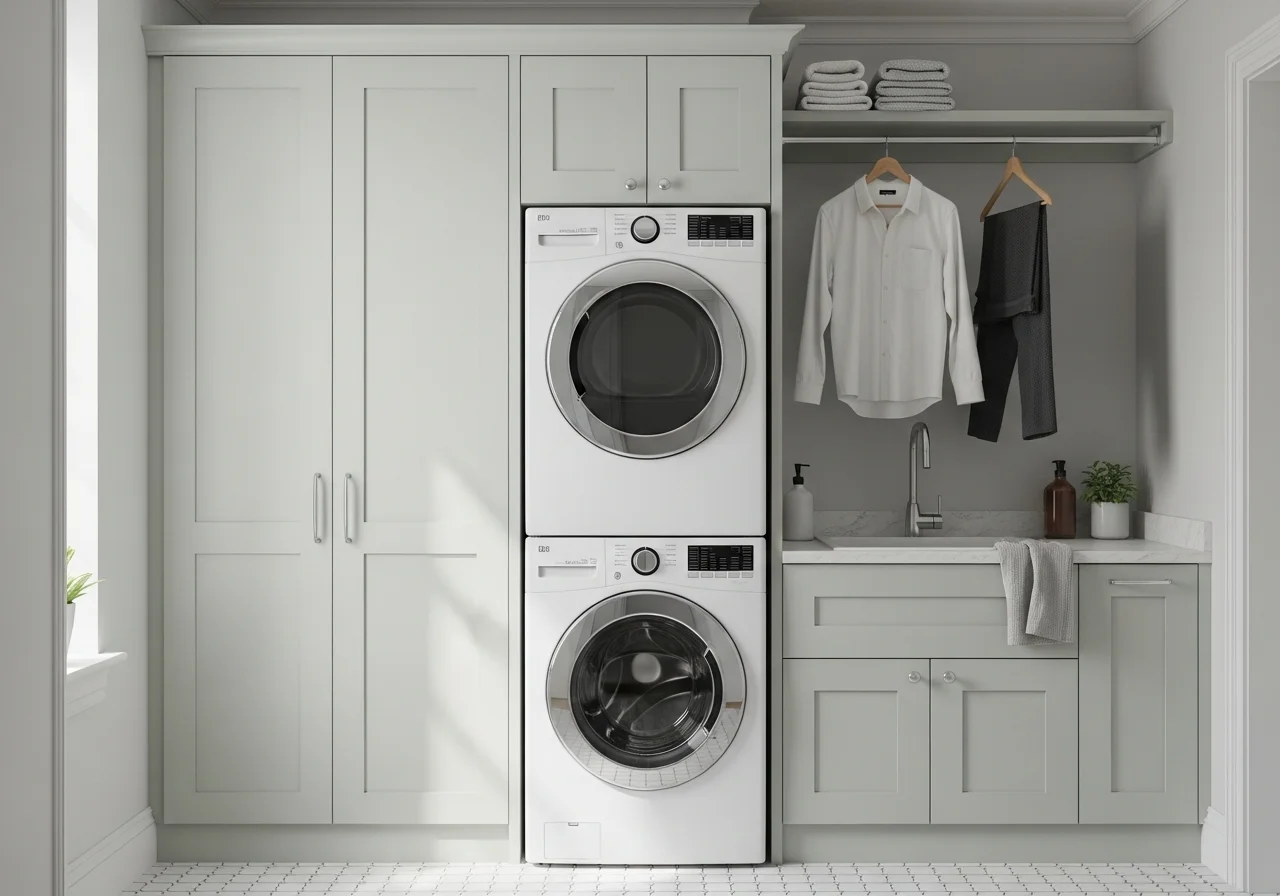
The fastest way to make a laundry room feel finished is to get the bottles, boxes, and baskets out of sight. That is why the move away from open wire shelving toward closed-door cabinetry is the heart of the current trend. Upper cabinets with doors hide detergent, cleaning supplies, and seasonal items, while a base run keeps a hamper, drying rack, and the vacuum behind a clean front. For door style, Shaker-style fronts in white, sage green, or warm grey are the most popular choices right now, and warm white and warm wood cabinetry are both coming back into favor for 2026.
Closed uppers over open shelves. Doors hide the visual noise of detergent and supplies so the room reads calm instead of cluttered — the single biggest before-and-after in most laundry remodels.
Pull-out hampers and bins. Tip-out or pull-out hampers built into the cabinetry sort lights and darks at the source and keep baskets off the floor.
A tall broom and supply closet. A single full-height cabinet swallows the mop, broom, vacuum, and ironing board so they are not leaning in a corner.
Shaker doors in a soft color. White, sage green, or warm grey Shaker fronts are the most popular look, with warm white and warm wood tones returning for 2026.
A dedicated sorting and supply zone. Group detergent, stain treatment, and dryer supplies near the machines so the whole wash-dry-fold loop happens in one place.
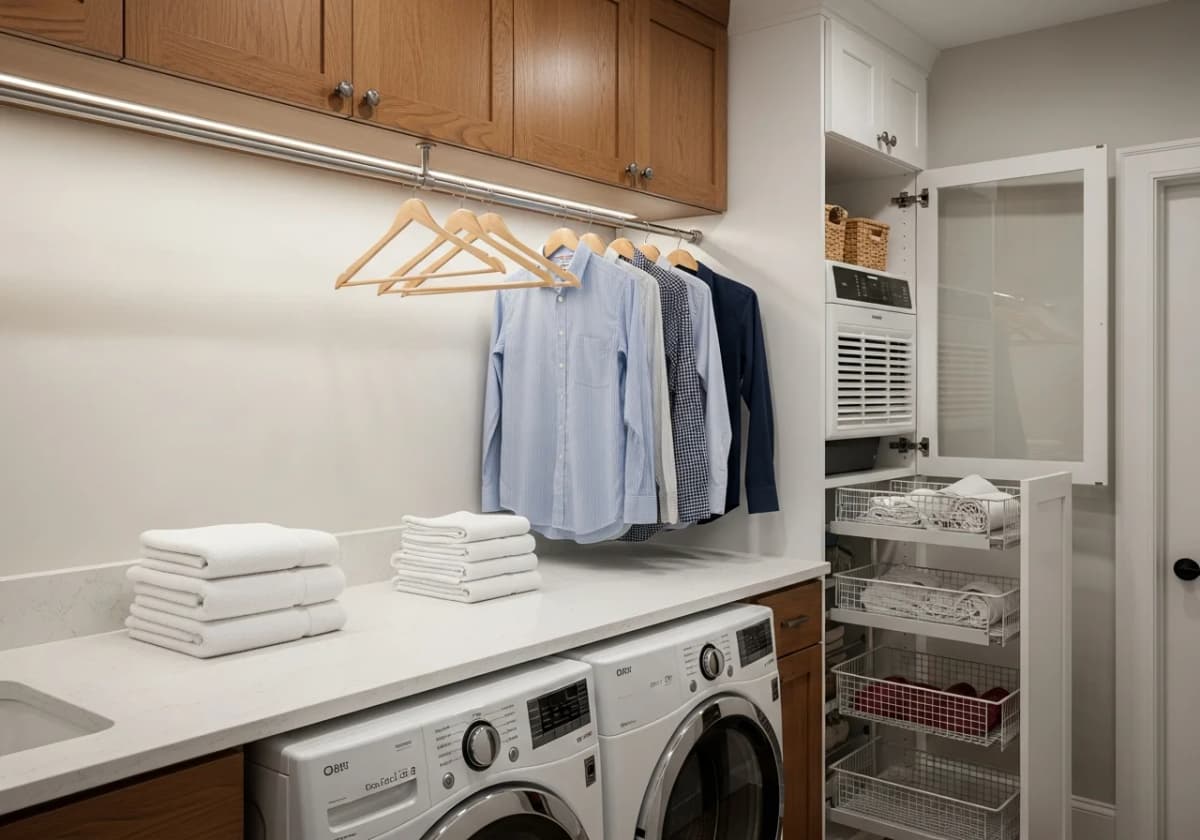
The two tasks that actually happen in a laundry room — drying flat or hanging, and folding — deserve dedicated spots. Designing them in is what separates a true laundry room from a room that just holds the machines. A continuous folding counter above front-loading machines is a major 2026 priority, and pairing it with real drying capacity keeps clothes off the backs of dining chairs.
Folding Counter
A continuous counter over front-loaders gives you a folding surface and hides the machines. Specify quartz or solid-surface — it resists water staining, takes hot items from the dryer without scorching, and wipes clean.
Drying Cabinet & Rod
A vented drying cabinet can combine a hanging rod for air-drying with pull-out mesh racks for tees and delicates, so wet items dry out of sight instead of draped around the house.
Overhead Rail
In tight rooms, a simple rail or rod mounted overhead turns unused vertical space into hang-dry capacity — the core small-space drying move when a full cabinet will not fit.
When all three work together — a quartz folding counter, a vented drying cabinet, and an overhead rail for overflow — the laundry loop finally happens in one place. Clothes come out of the dryer, get folded on the counter, and anything hang-dry goes straight onto the rod, none of it migrating to the kitchen table or the spare bed.
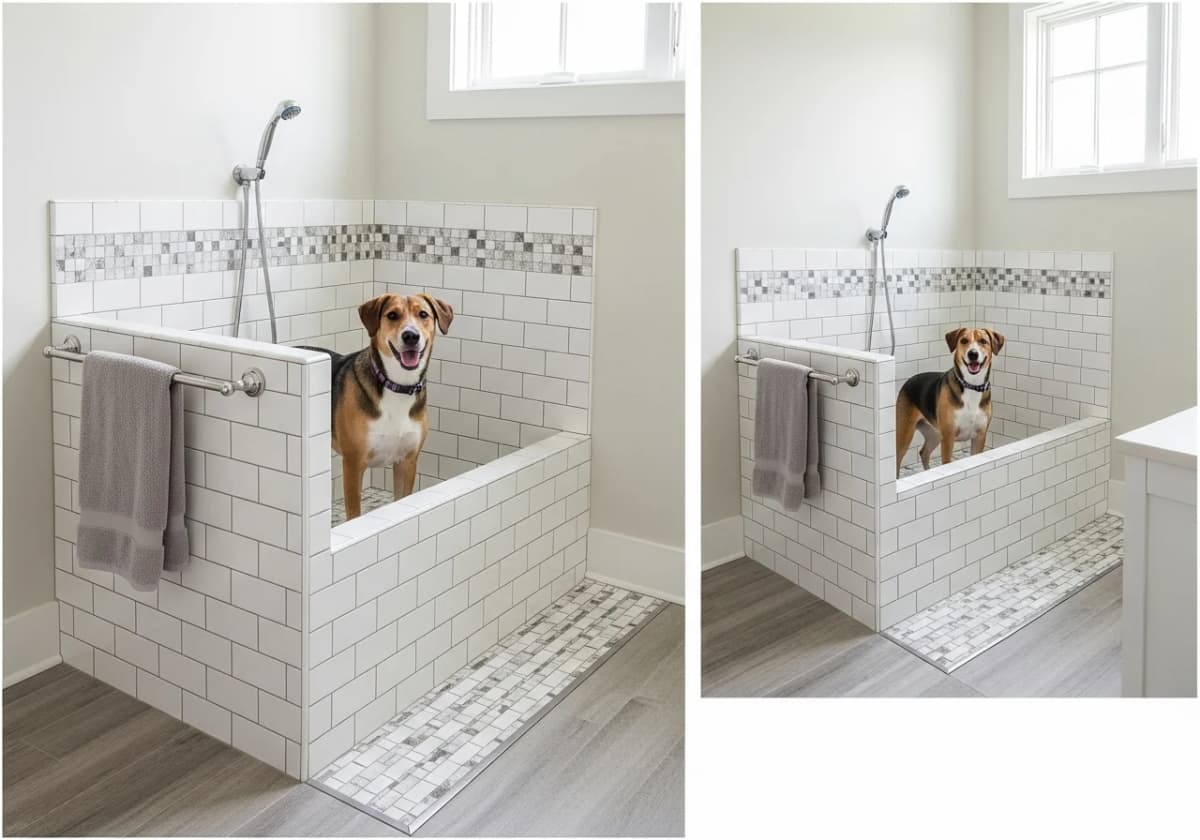
One of the most requested upgrades in Treasure Valley laundry remodels is a built-in dog wash. The laundry room is one of the ideal places for it because it already has plumbing nearby to tie into — the same reason mudrooms, garages, and basements work well. Done right, it keeps muddy paws out of the tub upstairs and the hair out of the shower drain.
Sizing a dog wash: plan for at least three square feet of clear bath space — roughly 36 inches wide by 27 inches deep is a common target. Set the basin 12 to 18 inches off the floor for small and medium dogs to save your back, or keep it at floor level for large breeds. Use a nonskid surface — smaller tile gives more grout lines for traction — or add a rubber mat, and include a towel bar or a wall-mounted pet dryer nearby.
Even without a pet, a utility sink earns its place. It gives you a spot to soak stained clothing, hand-wash delicates, water plants, fill a bucket, or clean up after a project — the workhorse fixture that makes a laundry room genuinely multi-purpose. In a small room a slim apron or drop-in sink does the job without dominating the counter run; in a larger room it can anchor a dedicated utility zone alongside the dog wash.
The finishes are where a laundry room goes from functional to genuinely pleasant. Because the room is moisture-prone, waterproof luxury vinyl plank or luxury vinyl tile is a practical, popular floor that shrugs off drips and the rare overflow. Tile is the other durable route — and pale tile such as white penny tile or cream ceramic doubles as a way to bounce light around a small room. For pattern, 2026 leans toward checkerboard, terrazzo-inspired, and herringbone or chevron layouts in warm beige, taupe, and stone tones.
Waterproof, light flooring
LVP or LVT handles moisture; pale tile bounces light. Skip dark floors in small rooms — they make the space read smaller.
High-CRI lighting
Use a 2700–3000K LED at 90+ CRI. A cheap 80-CRI bulb flips yellow toward green and lavender toward gray, making it hard to judge clean from stained.
A cheerful, soft palette
Sage, warm white, sky blue, seafoam, soft coral, mint, and lavender turn a chore room into one you do not mind spending time in.
Pattern in moderation
A checkerboard or herringbone floor adds character; keep cabinets and walls calm so the room feels styled, not busy.
Lighting deserves more attention than it usually gets in this room. Because you are sorting colors and treating stains, color rendering matters: a high-CRI fixture at 2700–3000K renders fabrics accurately, while a standard 80-CRI bulb can shift yellow toward green, coral toward salmon, and lavender toward gray — exactly the wrong thing when you are trying to tell whether a stain is gone. Pair good light with a soft, cheerful color and a clean floor, and the laundry stops feeling like a chore room.
How do I make a small Boise laundry room feel bigger?
Three moves do most of the work in a tight room: stack the washer and dryer to free the footprint, keep colors light, and add good lighting. Designers consistently point to vertical workflows in small laundry spaces — stackable appliances with an overhead drying rail above them, plus a compact utility sink — so you build upward instead of outward. Keep the floor pale, too; a dark floor will visually swallow a 6-by-8-foot room no matter how bright the walls are, while white penny tile, pale vinyl plank, or cream ceramic bounces light back up and makes the space feel larger.
What is the best countertop for a folding station?
A continuous counter above front-loading machines is one of the most useful upgrades you can make, and the material matters. Designers specify quartz or solid-surface for folding counters because they resist water staining, can handle hot items straight out of the dryer without scorching, and wipe clean easily. That combination of moisture resistance and heat tolerance is exactly what a laundry surface gets put through every week, so it tends to outlast laminate in this room.
Can I add a dog wash to my laundry room?
Often, yes. Laundry rooms are one of the ideal spots for a pet wash because they already have plumbing nearby to tie into, alongside mudrooms, garages, and basements. Plan for at least three square feet of clear bath space — roughly 36 inches wide by 27 inches deep is a common target — and set the basin 12 to 18 inches off the floor for small and medium dogs, or at floor level for large breeds. Use a nonskid surface (smaller tile gives more grout lines for traction) and add a towel bar or wall-mounted pet dryer nearby.
What flooring holds up best in a laundry room?
Because a laundry room is moisture-prone, waterproof luxury vinyl plank or luxury vinyl tile is a popular, practical choice — it shrugs off the occasional overflow and drips from a drying rack. Tile is the other durable route, and pale tile (white penny tile or cream ceramic) doubles as a way to bounce light around a small room. On the style side, 2026 favors checkerboard, terrazzo-inspired, and herringbone or chevron patterns in warm beige, taupe, and stone tones.
What lighting should a laundry room have?
Use a high-CRI LED at roughly 2700–3000K and 90+ CRI. Color rendering matters more here than in most rooms because you are sorting colors and treating stains: a standard 80-CRI bulb can flip yellow toward green, coral toward salmon, and lavender toward gray, which makes it hard to judge what is actually clean or stained. A single well-chosen high-CRI fixture renders colors accurately and makes the whole space feel brighter.
What colors and finishes are popular for laundry rooms right now?
The 2026 direction is intentional and a little cheerful. Shaker-style cabinetry in white, sage green, or warm grey leads the way, with warm white and warm wood tones returning. For paint, a productive, upbeat palette of sage, warm white, sky blue, seafoam green, soft coral, mint, and lavender turns a chore room into a space you actually want to spend time in. We will walk through samples in your own light before anything is ordered.
When Iron Crest Remodel builds your laundry room, the work is backed by a 3-year workmanship warranty. We will help you turn the ideas on this page into a plan that fits your room, your routine, and your budget across Boise, Meridian, Nampa, Eagle, and the Treasure Valley.