
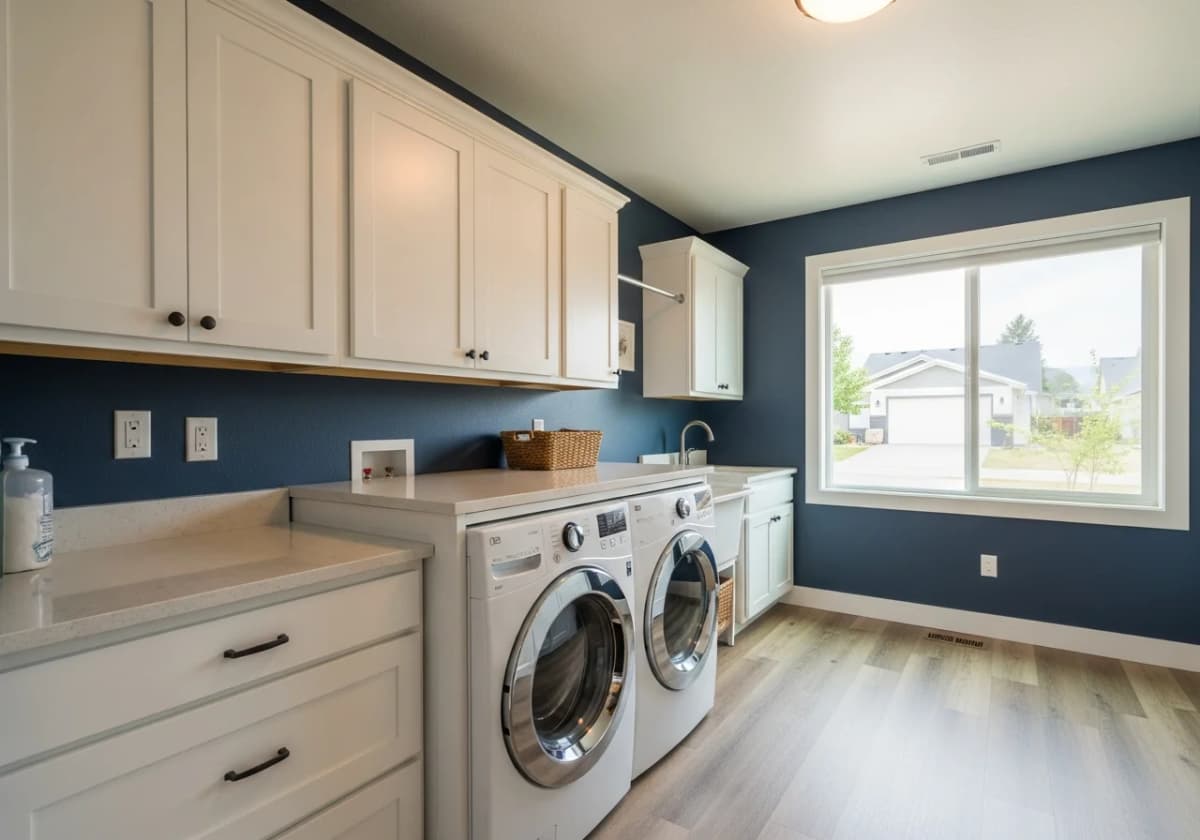
The laundry room is the room nobody designs and everybody uses. In most Treasure Valley homes it's an afterthought — a narrow closet off the garage, a corner of the basement, or a hallway nook where the washer and dryer barely fit and a single wire shelf sags under detergent bottles. Yet you stand in it several times a week. A thoughtful laundry room remodel returns that time in convenience: a place to fold instead of piling clothes on the bed, real storage so supplies aren't crowding the floor, and a layout that actually works for the way your household runs.
It's also one of the smartest dollar-for-dollar upgrades in a home. Most of the laundry projects we quote in Boise land between $6,000 and $17,000. We publish no cost-recovery percentage and no buyer-survey figure, because we have no Boise data behind either — what we do see is that main-level laundry is what most clients ask for, and that the room gets used every week. Whether you want to refresh the room you have or move laundry to a more convenient spot, Iron Crest Remodel handles the whole project — design, cabinetry, countertops, plumbing, electrical, venting, flooring, and finishing — under one roof here in Boise.
The sections below walk through the layouts that work in real Treasure Valley homes, how to think about cabinets, folding counters, and a utility sink, the plumbing and dryer-venting details that have to be done right, the stacked-versus-side-by-side decision, what's involved in relocating laundry to the main floor, and the honest cost factors so you can budget with confidence.
The best layout depends almost entirely on the room's shape and width. The typical laundry room is small — averaging around 35 square feet (about 5' × 7') — so every inch has to earn its place. The goal is a natural flow: dirty clothes in, wash, dry, fold, sort, and out, without backtracking across the room. These are the configurations we build most often.
Single-wall (galley closet)
Washer, dryer, and a run of cabinets on one wall — the go-to for narrow closets and stacked sets. Compact, efficient, and easy to hide behind doors.
Two-wall / facing
Machines and tall storage on one wall, a utility sink, open shelving, and a folding station on the opposite wall. Great when the room is wide enough to walk between.
L-shaped with counter
Side-by-side machines under a continuous counter that wraps a corner, giving you an uninterrupted folding and sorting surface plus base storage.
Laundry + mudroom combo
Pairs the laundry with a drop zone near the garage or back door — lockers, hooks, and a bench — a layout buyers love near a secondary entry.
Island for larger rooms
If the room allows, a center island is a perfect spot to sort and fold clean laundry while adding hidden storage underneath.
Stacked-set nook
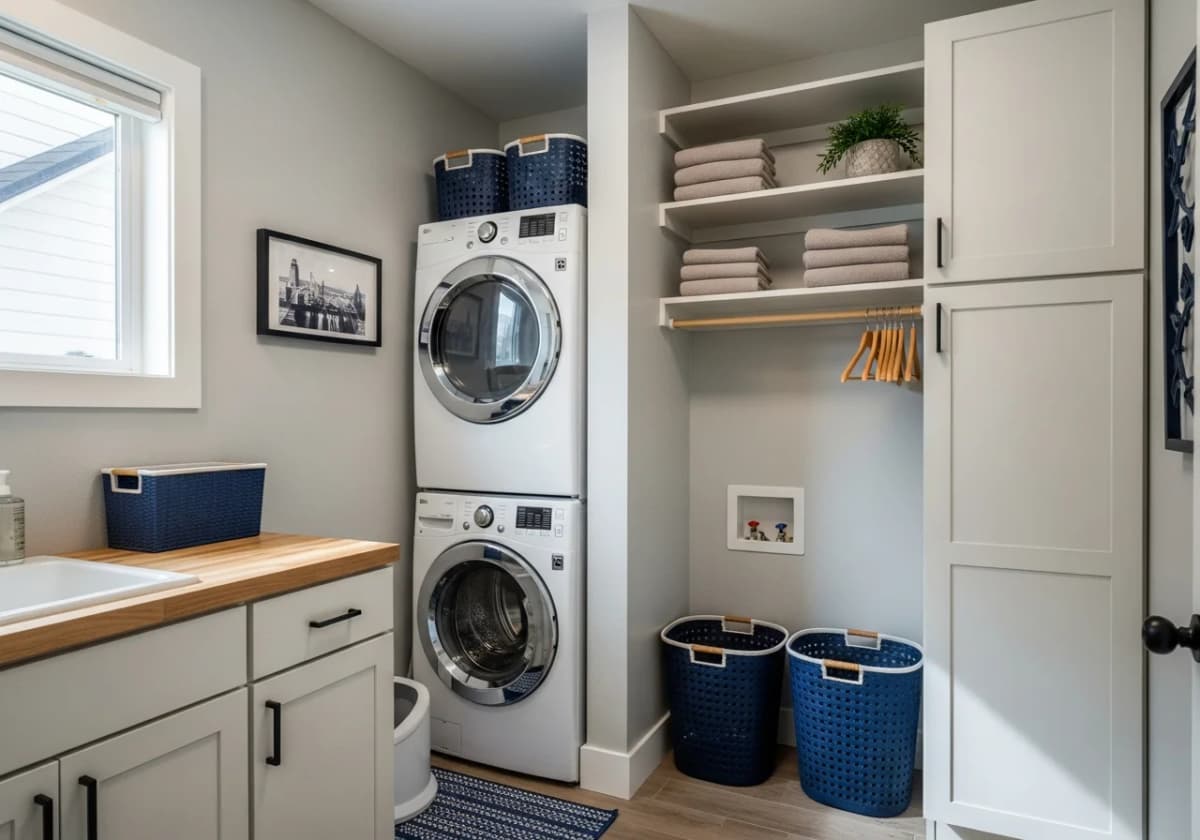
Stacking the machines frees a full wall for a sink, hanging rod, and cabinets — the smartest move when floor space is at a premium.
A reliable rule of thumb for tight rooms: keep the machines, hanging rod, and primary cabinets on one wall, and reserve the opposite wall or a corner for the sink and folding surface. We design around the door swings, window placement, and existing plumbing stack so the finished room feels open rather than crammed.
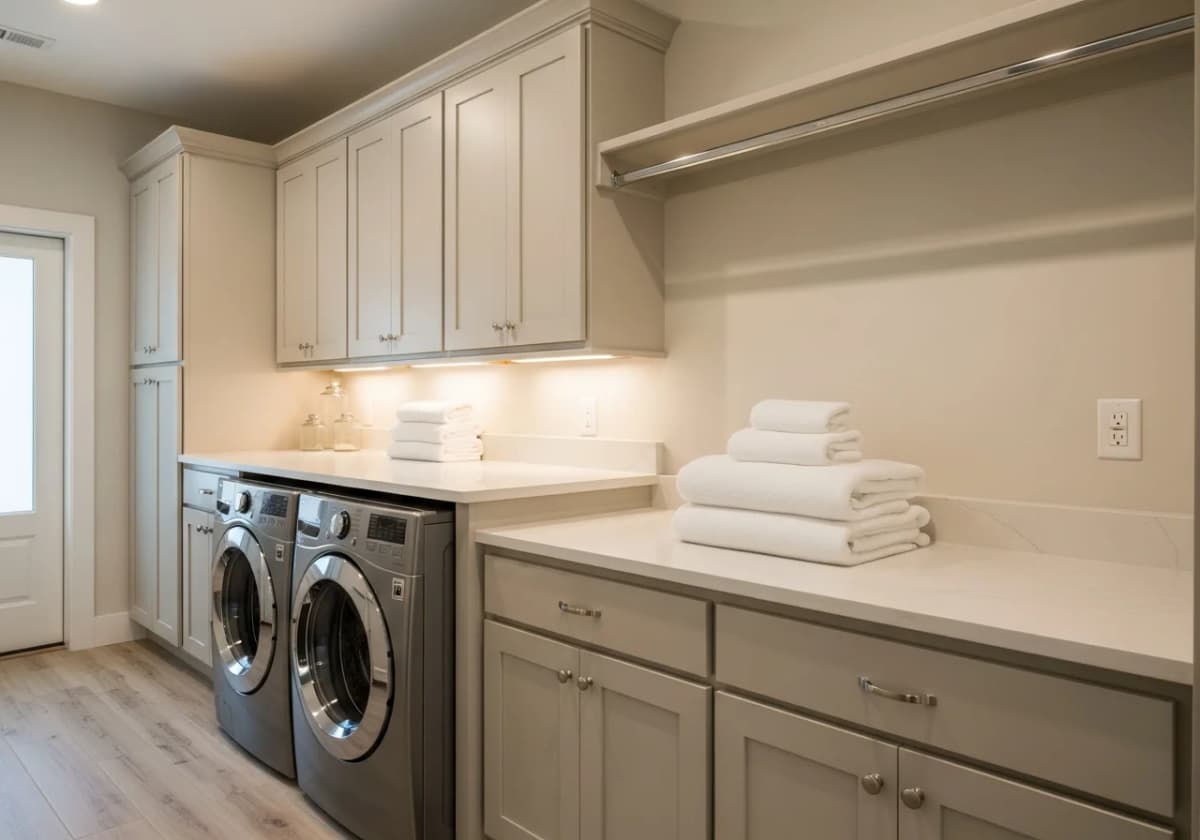
Storage and work surface are what separate a laundry closet from a laundry room. Custom and semi-custom cabinets let you use every inch — floor-to-ceiling uppers that swallow bulky supplies, narrow pull-outs that fill awkward gaps, and corner shelves that would otherwise be dead space. Because a laundry room is a humid environment, we use moisture-resistant construction such as painted MDF or quality veneer that holds up over time.
Smart Cabinets
Floor-to-ceiling and corner cabinetry with built-in hampers, pull-out ironing boards, and soft-close drawers. Installed cabinetry typically runs about $100–$300 per linear foot, with custom work at the higher end.
Folding Counter
A durable countertop over base cabinets gives you a folding station plus storage below. We set it at an ergonomic 36–38 inches high with roughly 24 inches of depth so folding doesn't strain your back.
Utility Sink
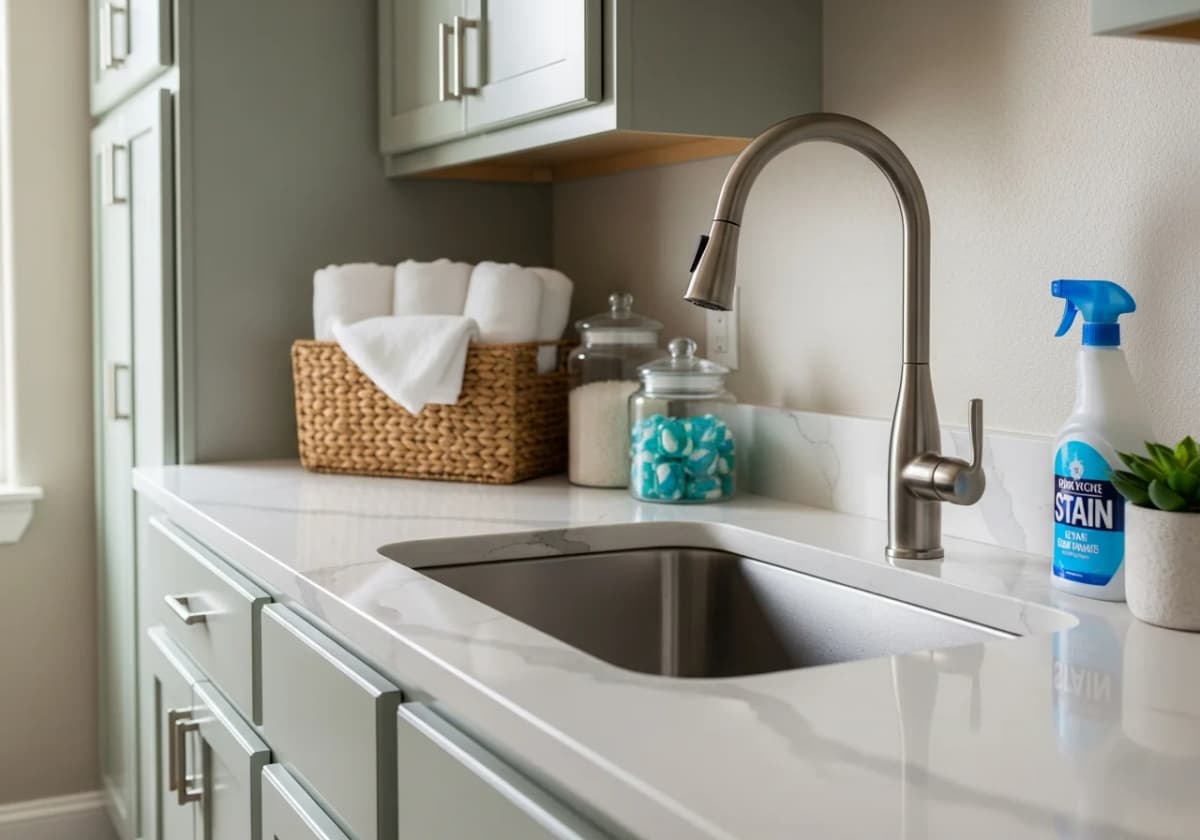
Ideal for pre-treating stains, soaking, and hand-washing delicates. We surround it with coordinating cabinets and counter for a built-in look. Recommended wherever the room has space for it.
Beyond the basics, the details are what make a laundry room a pleasure to use: a wall-mounted drying rod or retractable line for air-dry items, a tall broom-and-mop cabinet, an integrated tip-out hamper, under-cabinet lighting, and durable, water-friendly flooring such as luxury vinyl plank or tile. We'll plan the storage around your real supplies so nothing ends up living on the floor or the top of the dryer.
The parts of a laundry room you can't see are the parts that cause the biggest problems when they're wrong: water supply, drainage, and the dryer exhaust. We handle all of it to current code so your remodel is safe, dry, and inspection-ready.
Dryer venting is a safety item, not a detail. Under the International Residential Code, a dryer exhaust duct's maximum developed length is 35 feet, reduced by 2.5 feet for each 45-degree bend and 5 feet for each 90-degree bend. The duct must be rigid metal at least 0.016 inches thick with a smooth interior, must terminate outside the home at least 3 feet from any opening, and needs a backdraft damper with no screen at the end. We never vent into an attic or crawlspace, where the moisture would feed mold and wood decay.
Hot and cold supply with a clean shutoff. We install proper hammer-arrestor valves so the washer fills quickly and the lines don't bang, plus an accessible shutoff box recessed in the wall.
Proper drain and overflow protection. The washer standpipe and trap are sized and vented correctly, and we can add a drain pan or leak sensor for peace of mind on upper floors.
Dedicated electrical circuits. Modern washers and electric dryers need their own circuits; running a new dedicated circuit typically costs about $400 to $800 depending on distance from the panel.
Gas line for gas dryers. If you run a gas dryer, we coordinate a properly sized and tested gas connection alongside the exhaust.
One of the first decisions in any laundry remodel is how the machines sit. There's no universally right answer — it depends on your wall space and how you use the room.
Stacked
Occupies about the footprint of a single machine — roughly 27 inches wide — but stands 74 to 80 inches tall. Frees up floor space for a sink or cabinets and makes the wash-to-dry transfer easy. Downsides: the top dryer can be hard to reach for shorter users, capacity may be slightly smaller, and installation is more involved. Best for closets and tight rooms.
Side-by-Side
Needs a wider wall — generally more than about 6 feet — but keeps both machines at waist height, usually offers larger capacity, and lets us run a continuous counter on top for folding. The trade-off is simply the floor space it consumes. Best for dedicated laundry rooms with room to spare.
We measure your space, factor in door and machine clearances, and walk you through the trade-offs before anything is ordered — including front-load versus top-load, since front-loaders are what allow a counter or a stacked configuration in the first place.
Moving laundry out of the basement and onto the main level is one of the most requested upgrades we do. We publish no buyer-survey percentage behind that — it is simply what clients ask for, usually near a secondary entry like a mudroom or garage. The everyday payoff is real — you can hear cycles finish, and you skip carrying baskets up and down stairs, which matters more as a household ages in place.
Relocating laundry is a bigger project than a refresh because it touches plumbing, electrical, and venting. Moving washer and dryer plumbing typically costs about $1,200 to $5,000, and moving the laundry up one floor averages roughly $1,500 to $3,500. Complex relocations can climb toward $15,000 when drain water has to be lifted upward — sometimes requiring a pump or special drainage — or when structural work is involved. The most cost-effective approach is usually to place the new laundry near an existing bathroom water line so the supply and drain runs stay short.
Permits matter here. Any time we modify plumbing, add or move electrical circuits, or change the dryer vent, a permit is required so the work is inspected against code. Fees for adding or modifying appliance utility lines commonly run about $50 to $300, though broader remodel permits can cost more. We pull the permits and confirm current City of Boise and Ada County requirements before we start, so the finished room passes inspection without surprises.
There are trade-offs to weigh, and we'll be straight with you about them: a main-floor laundry uses square footage that could otherwise be living space, and a leak on a finished floor can do more damage than one in an unfinished basement. That's why we build in protection — a drain pan, a leak sensor, and quality supply lines — when we move laundry to a living level.
Laundry remodels span a wide range — from about $1,500 for a paint-and- appliance refresh to $30,000 or more for a full relocation with custom cabinetry — because the scope varies so much. Remodeling generally costs about $140 to $250 per square foot. These are the factors that move your number within that range:
Scope of work. A cosmetic refresh runs $1,500 to $5,000; an average remodel with new flooring and cabinets typically lands around $5,000 to $15,000.
Cabinetry and counters. Installed cabinets run about $100 to $300 per linear foot, with custom designs at the high end, and countertop material adds to that.
Appliances. A new washer-and-dryer set typically costs $1,000 to $2,300 depending on brand, capacity, and features like steam or smart controls.
Moving plumbing or hookups. Relocating washer hookups runs roughly $500 to $2,000, and a full main-floor relocation costs more once drainage and venting are involved.
Electrical. A new dedicated circuit for the washer or an electric dryer typically adds about $400 to $800 depending on the run from the panel.
Finishes and extras. A utility sink, tile or LVP flooring, specialty lighting, and built-in features (hampers, ironing boards, drying rods) each add to the total.
The figures above are national ranges to help you budget — we don't quote a one-size Boise price because your room, your finishes, and any plumbing or electrical changes all affect it. After we walk the space with you, we provide a firm, itemized quote so there are no surprises, and our work is backed by a 3-year workmanship warranty (structural work carries a 10-year warranty).
How much does a laundry room remodel cost in Boise?
Costs vary widely with scope. Nationally, the average laundry room remodel runs about $11,000, with most projects landing between $6,000 and $17,000. A minor refresh — paint, a new countertop, and updated appliances — can run roughly $1,500 to $5,000, while an average remodel with new flooring and cabinets typically falls around $5,000 to $15,000. Per square foot, remodeling generally costs about $140 to $250. We don't publish a single Boise number because every room is different; after we see your space we give you a firm, itemized quote for your specific layout, materials, and any plumbing or electrical changes.
Should I choose a stacked or side-by-side washer and dryer?
It comes down to how much room you have. A stacked pair occupies roughly the footprint of a single machine — about 27 inches wide — but stands 74 to 80 inches tall, which is ideal for closets and tight Treasure Valley utility spaces. The trade-off is that the dryer sits up high, so shorter users may need a step stool, and stacked sets can hold slightly smaller loads. Side-by-side machines need a wider wall — generally more than about 6 feet — but keep everything at waist height, usually offer larger capacity, and give you a continuous counter on top for folding. We help you measure and pick the configuration that fits both the room and the way you do laundry.
Do I need a permit to remodel or move my laundry room?
If the project is cosmetic — new cabinets, counters, paint, and like-for-like appliances — you usually don't. But the moment you modify plumbing, add or move electrical circuits, or change the dryer vent, a permit is required so the work is inspected against building code. Permit fees for adding or modifying appliance utility lines commonly run about $50 to $300, though broader remodel permits can cost more. We pull the necessary permits and confirm current City of Boise and Ada County requirements before work begins, so the job passes inspection.
Can I move my laundry from the basement to the main floor?
Yes, and it's one of the most popular upgrades we do — main-level laundry is what most of our clients ask for. We publish no buyer-survey percentage behind that. Relocating washer and dryer plumbing typically costs about $1,200 to $5,000, and moving laundry up a floor averages roughly $1,500 to $3,500. Complex moves can reach $15,000 because lifting drain water upward sometimes requires a pump or special drainage, and the cleanest path is usually to locate the new laundry near an existing bathroom water line. We also run a new dedicated electrical circuit where needed, often about $400 to $800.
What are the rules for venting a dryer correctly?
Dryer venting is a safety and code item we never shortcut. Under the International Residential Code, the exhaust duct's maximum developed length is 35 feet, reduced by 2.5 feet for each 45-degree bend and 5 feet for each 90-degree bend. The duct must be rigid metal at least 0.016 inches thick with a smooth interior, it has to terminate outside the home at least 3 feet from any opening, and it needs a backdraft damper with no screen at the end. We never vent a dryer into an attic or crawlspace, where the moisture would invite mold and wood decay.
Is a utility sink worth adding to my laundry room?
If you have the space, almost always. A utility sink is invaluable for pre-treating stubborn stains, soaking, and hand-washing delicate items, and it keeps that mess out of your kitchen or bathroom. It pairs naturally with a folding counter and base cabinets so detergents and supplies stay tucked away. In a very small closet-style laundry it may not fit, but in most medium and large Treasure Valley laundry rooms a sink is one of the upgrades homeowners are happiest they added.