
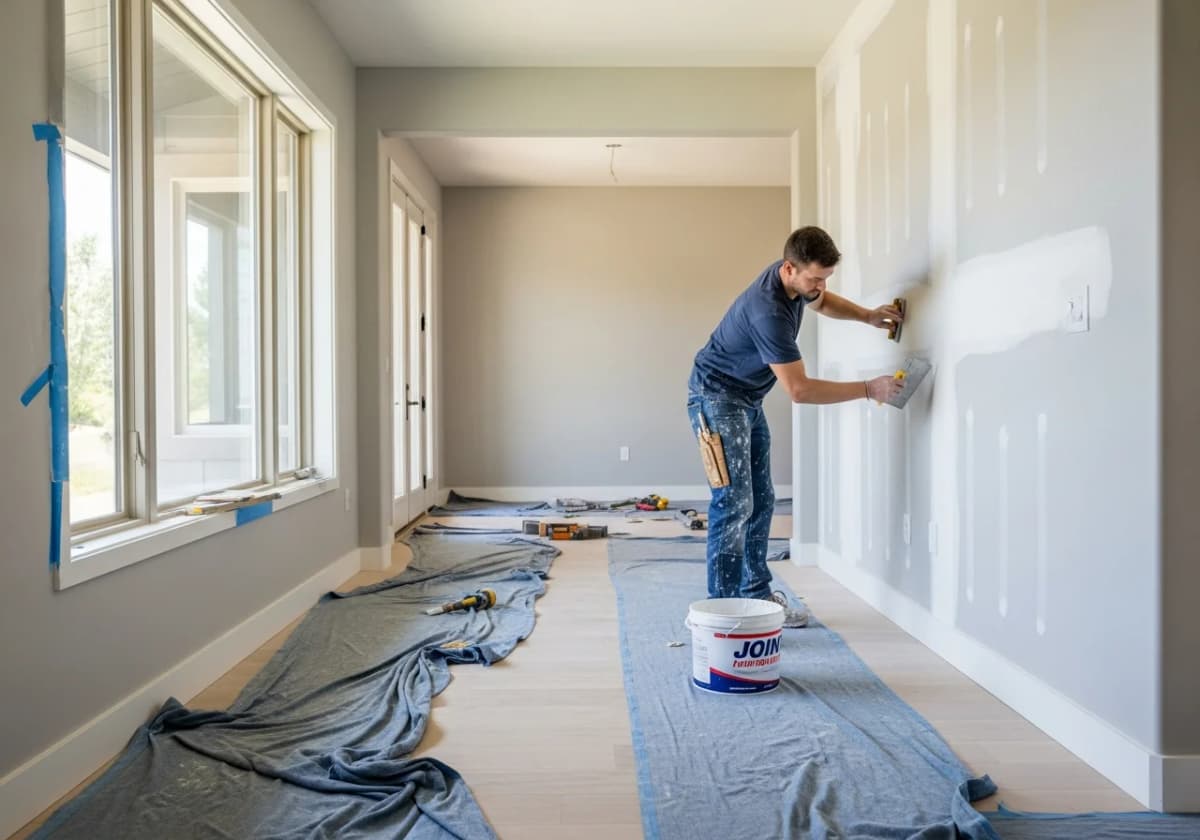
Every home collects drywall damage over time. A doorknob punches through a wall, a picture-hanger leaves a row of holes, a slow roof leak blooms into a brown stain, or a hairline crack creeps out from the corner of a doorway. None of it is unusual — drywall is gypsum sandwiched in paper, and it dents, cracks, and absorbs water by design. The problem is rarely the damage itself. The problem is a repair that still looks like a repair: a patch that telegraphs through the paint, a texture that doesn't match, or a crack that comes right back a season later.
Iron Crest Remodel repairs drywall throughout Boise and the Treasure Valley with one standard in mind — when we're done, you shouldn't be able to tell where the damage was. That means diagnosing the actual cause before we touch the surface, choosing honestly between patching and replacing, blending the repair into the surrounding texture, and priming and painting so the wall reads as one continuous plane. Whether it's a single hole in a hallway or water-damaged sheets across a ceiling, the goal is the same: a clean, flat, invisible result.
The sections below walk through the most common types of drywall damage we see in Treasure Valley homes, how we decide between a patch and a full sheet replacement, how texture matching actually works, why so many local cracks keep reopening, and what drives the cost. Our promise on every job is the honest version of the answer, not the one that sells the biggest scope.
The vast majority of repair calls fall into a handful of categories: holes, cracks, dents, nail pops, water stains, and failing joint tape. Knowing which one you're dealing with matters, because the right fix for a cosmetic dent is completely different from the right fix for water damage hiding mold behind it.
Holes
Small holes come from nails, screws, and picture hangers; large holes from doorknobs, furniture, and impacts. Larger holes weaken the panel itself, so they need a backed patch, not just filler.
Cracks
Caused by settling, humidity and temperature swings, or poor finishing. They show up most in ceilings, corners, and above doors and windows. A crack that keeps returning points to movement behind the wall.
Nail pops
Fasteners backing out of the framing as wood moves or moisture swells the panel. Rusted or improperly driven nails and screws pop more easily. Mudding over the bump alone won't last.
Water damage
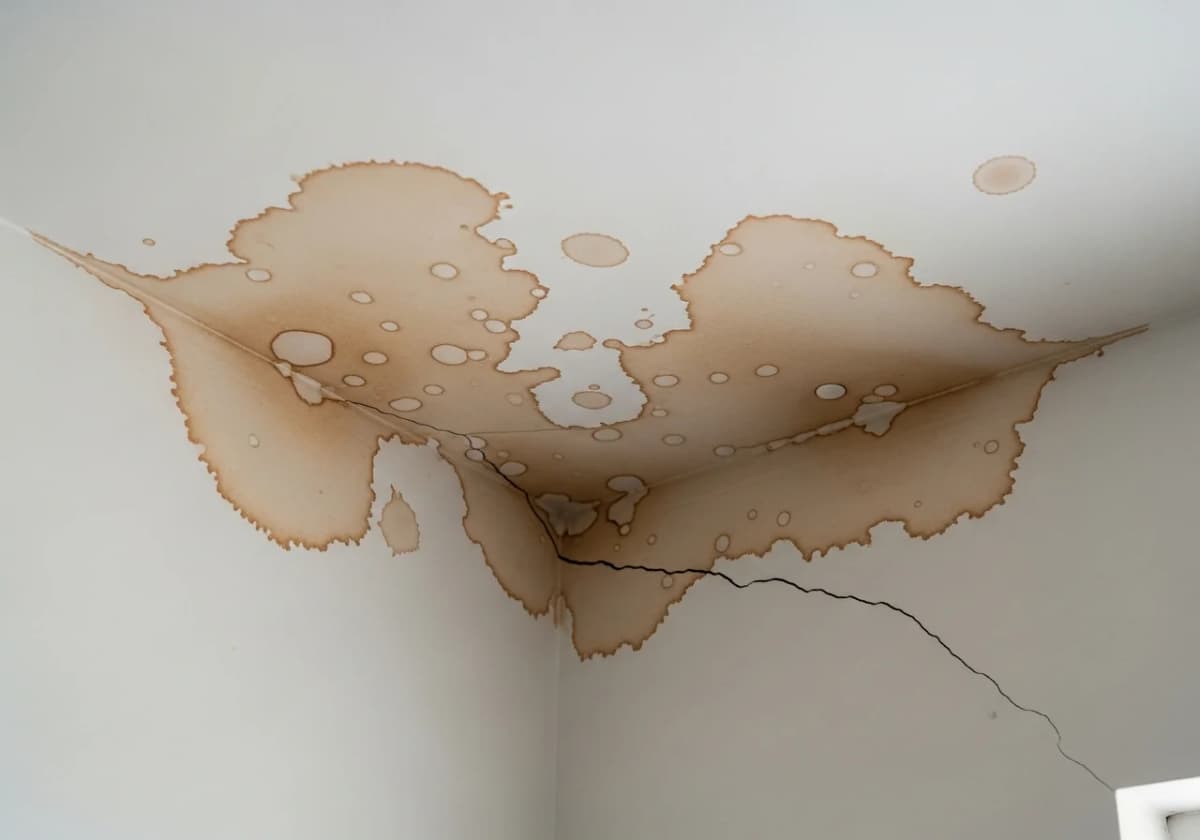
Leaks from roofs, pipes, or appliances make drywall bubble, warp, and stain — and, left alone, grow mold. The leak has to be stopped before any repair, and soft or moldy sections must be cut out.
Dents and gouges
Surface-level impacts that haven't broken through the panel. These are the most straightforward repairs — fill, sand, texture-match, and paint.
Failing joint tape
Seams that bubble, peel, or crack along a taped joint, often from a poor original installation or moisture. We cut out the failed tape and re-tape the seam rather than patching over it.
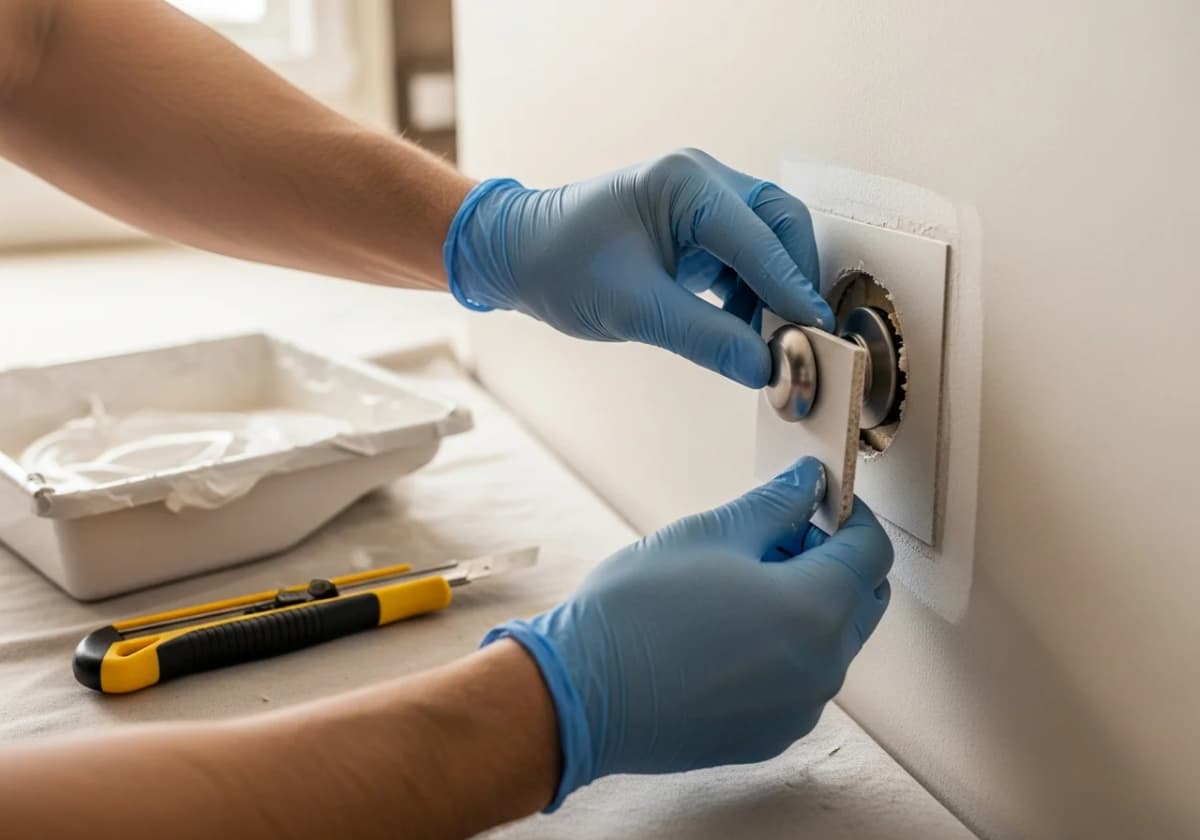
The most important call on any drywall job is whether to patch the damage or replace the sheet — and it's the one where homeowners are most often oversold. Here is the honest framework we use, drawn from standard industry guidance.
When We Patch
When the damage is small — under about six inches — cosmetic, and shows no water or mold. Small holes get a mesh patch; medium and large holes get a backed patch cut in and secured to studs or furring. Patching is the right, more economical choice for isolated damage like a single hole or a few nail pops.
When We Replace
When there's water damage, mold, or sagging, a hole larger than roughly six to eight inches, an area that feels soft, or a panel patched so often it looks uneven. Once more than about half a sheet is compromised, replacing it is faster, cleaner, and more durable than another patch.
One caution we won't skip: if there's framing or foundation movement behind the drywall, replacing the panel alone won't solve anything — the new sheet is likely to crack in the same place. When we see the signs of active movement, we tell you the underlying cause should be evaluated first, rather than selling you a repair that we know won't hold.
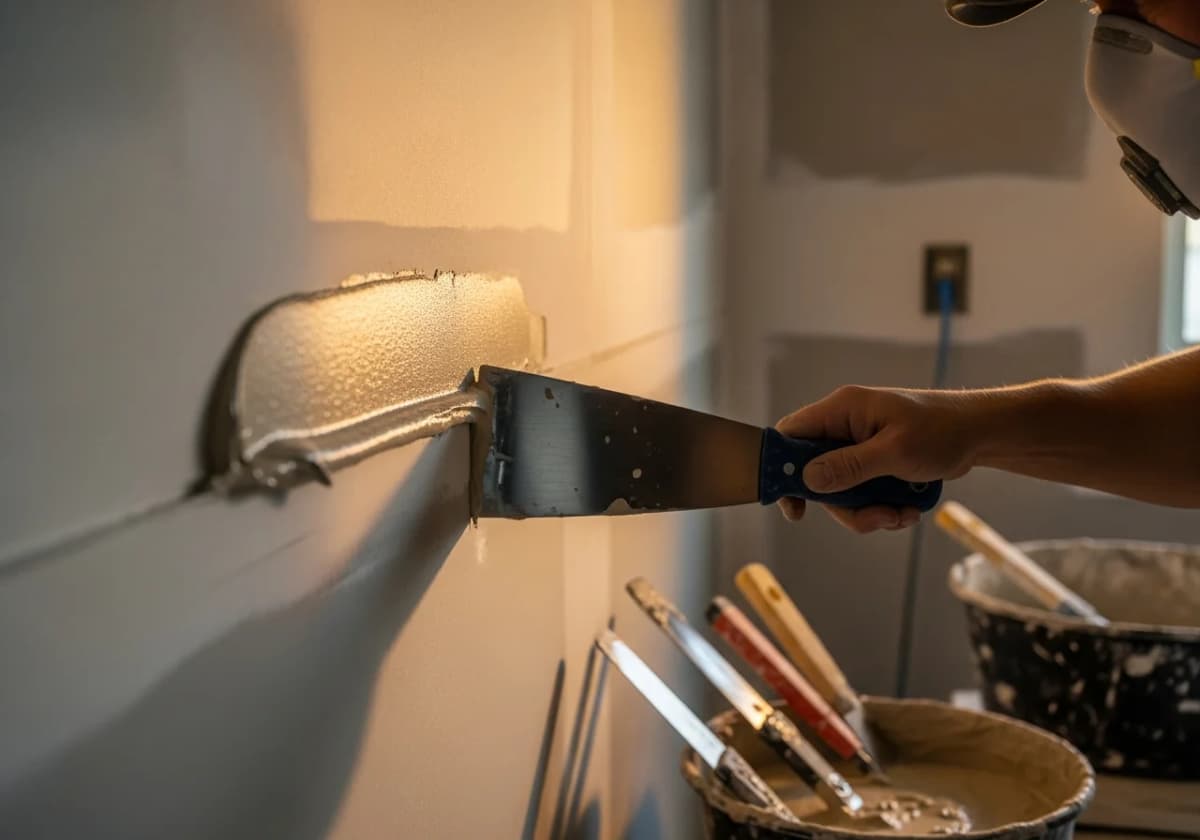
A patch can be structurally perfect and still look terrible if the texture doesn't match. This is the single most common reason a do-it-yourself or rushed repair stands out — the patch is flat and smooth while the wall around it carries a texture, so the eye catches the difference the moment light rakes across it. Matching that finish is a skill, and it's the part we obsess over.
Smooth
A flat finish hides nothing, so the patch has to be feathered out wide, sanded glass-flat, and primed evenly before paint. The most demanding texture to blend invisibly.
Orange-Peel
A fine spatter texture sprayed to match the surrounding droplet size and density, then blended into the existing wall so the repaired area reads identically.
Knockdown
Sprayed compound that's flattened with a knife once it sets, mimicking the mottled pattern of the rest of the wall. Timing and pressure have to match the original.
Whatever your walls and ceilings carry — smooth, orange-peel, or knockdown — we reproduce it across the repair, feather the compound into the surrounding surface, and then prime and paint. Spot-priming matters here too: bare patched compound absorbs paint differently than the painted wall around it, so without a proper primer coat the repair can flash even when the texture is perfect. Done right, you can run your hand across the wall and not find the seam.
If you've filled the same crack twice and it keeps reopening, the drywall isn't the real problem — something behind it is moving. Cracks come from settling, from humidity and temperature swings, and from framing that shifts as a house ages. They show up most predictably in ceilings, in corners, and above doors and windows, where stresses concentrate.
There's a local wrinkle worth understanding. Parts of the Treasure Valley sit on expansive clay soils that swell when they get wet and shrink as they dry out. That cycle puts seasonal pressure under a foundation, and that movement can travel up into the structure and reopen drywall cracks — a pattern that sometimes worsens after irrigation season, when soils around a home have taken on and then released a lot of water. It doesn't affect every property, but it's common enough across the valley that we never assume a recurring crack is purely cosmetic.
Here's how we handle it honestly: a fresh, one-time crack from normal settling or a seasonal swing we repair, tape, texture, and paint with confidence that it will hold. But when a crack keeps returning in the same spot, that's a signal of active movement, and refilling it is a temporary fix at best. In those cases we tell you the underlying cause should be evaluated before we make the cosmetic repair — because a beautiful patch over a moving wall is just a countdown to the next crack. Iron Crest repairs the drywall; we'll be straight with you about when the structure itself needs a closer look first.
Every repair is quoted on its own merits, but national benchmarks set realistic expectations. Most drywall repairs run about $295 to $925, with an average near $609, or roughly $1.50 to $3.50 per square foot. Small holes tend to land around $50 to $150 and medium holes around $150 to $400. We did not have a verified Boise-specific per-square-foot rate to publish, so we won't invent one — your written estimate reflects your actual room. Several factors move the number:
Patch versus full replacement. Patching isolated damage is far cheaper than removing and rehanging sheets, which adds demolition, hauling, hanging, taping, and finishing labor.
Whether water or mold is involved. Water-damage repairs commonly run $500 to $2,500 or more, because the source has to be fixed and any soft or moldy material cut out and, if needed, remediated.
Texture and finish. Matching a smooth Level-5 finish takes more feathering and sanding than a light orange-peel or knockdown, and a perfect blend takes skilled labor.
Access and ceiling height. Vaulted ceilings, stairwells, and tight spaces need staging and slow the work down, which adds labor — the largest share of any drywall bill.
Number and spread of repairs. A single hole is quick; many scattered nail pops, cracks, and dings across a house take longer to chase down, match, and paint than the square footage alone suggests.
Because labor is the largest part of a drywall repair, the most cost-effective move is often to bundle several small fixes into one visit rather than calling someone back repeatedly. We give you a firm, itemized quote after seeing the work, so the price you approve is fixed for that scope, and any changes are documented and approved before work proceeds.
Diagnose the cause
Before we touch the surface we figure out why the damage happened — a one-time impact, a leak, framing movement, or settlement — so the repair actually lasts.
Protect the room
Floors, furniture, and adjacent surfaces are covered and we set up containment, because cutting and sanding drywall makes fine dust.
Repair or replace
We patch small, isolated damage with a backed patch or mesh, or cut out and rehang full sheets where water, mold, or large damage calls for it.
Tape, mud & sand
Seams are taped and coated, then each coat of joint compound is feathered wide and sanded flat so the repair disappears into the wall.
Texture match
We reproduce your existing finish — smooth, orange-peel, or knockdown — and blend it into the surrounding surface.
Prime, paint & clean up
We spot-prime the repair so it won't flash, paint to blend, and remove all debris and dust so the room is left clean.
Our drywall repairs are backed by a 3-year workmanship warranty. If a repair we made fails because of our workmanship, we come back and make it right. The honest caveat: a warranty on a patch can't override an active structural or moisture problem we flagged and you chose to defer — which is exactly why we diagnose the cause before we repair the symptom.
How much does drywall repair cost in Boise?
We give a firm, itemized quote after seeing the damage, but national pricing is a useful benchmark: most drywall repairs run about $295 to $925, with an average near $609, and roughly $1.50 to $3.50 per square foot. Small holes typically fall around $50 to $150 and medium holes around $150 to $400. We have not published a Boise-specific per-square-foot figure because we did not have a verified local number to cite — your written estimate reflects your actual room, access, and texture.
Should you patch my drywall or replace the whole sheet?
It depends on the size and cause. Small, cosmetic damage under about six inches with no water or mold is usually patched: small holes with a mesh patch, medium and large holes by cutting in a backed patch secured to the studs or furring. We replace the sheet when there is water damage, mold, sagging, a hole bigger than roughly six to eight inches, an area that feels soft, or a panel that has been patched so many times it looks uneven. As a rule of thumb, once more than about half a sheet is compromised, replacing it is faster and cleaner than patching.
Why do my drywall cracks keep coming back in the same spot?
A crack that reopens after it has been filled usually means something behind the wall is still moving — framing shrinkage, vibration, or foundation settlement. Parts of the Treasure Valley sit on expansive clay soils that swell when wet and shrink when dry, and that seasonal movement can put pressure on a foundation and telegraph cracks up into drywall, often worsening after irrigation season. Cosmetically refilling the crack will not hold if the underlying cause is active, so we look at whether the movement needs to be evaluated before we make the repair permanent.
Can you match my existing wall texture?
Yes. Texture matching is the difference between an invisible repair and an obvious patch. We feather new joint compound into the surrounding area and reproduce your existing finish — whether that is smooth, orange-peel, or knockdown — then prime and paint so the corner-to-corner result reads as one continuous surface rather than a blotch.
Does water-stained drywall always have to be replaced?
Not always, but the leak has to be stopped first. Once the source is fixed, drywall that is only lightly stained but still firm can sometimes be sealed, repaired, and repainted. Drywall that is soft, bubbling, warped, sagging, or showing mold needs the affected section cut out and replaced, because mold and compromised gypsum will keep causing problems. Water-damage repairs commonly run $500 to $2,500 or more depending on how far the moisture spread and whether mold remediation is involved.
What causes nail pops, and how do you fix them for good?
Nail pops are fasteners backing out of the framing, usually from wood movement or moisture making the drywall swell, and sometimes from rusted or improperly driven nails and screws. Simply mudding over the bump does not last. We refasten the panel to the framing — typically with a screw set just above and below the popped fastener — drive the offending nail back or remove it, then patch, sand, and texture-match so it stays flat.