
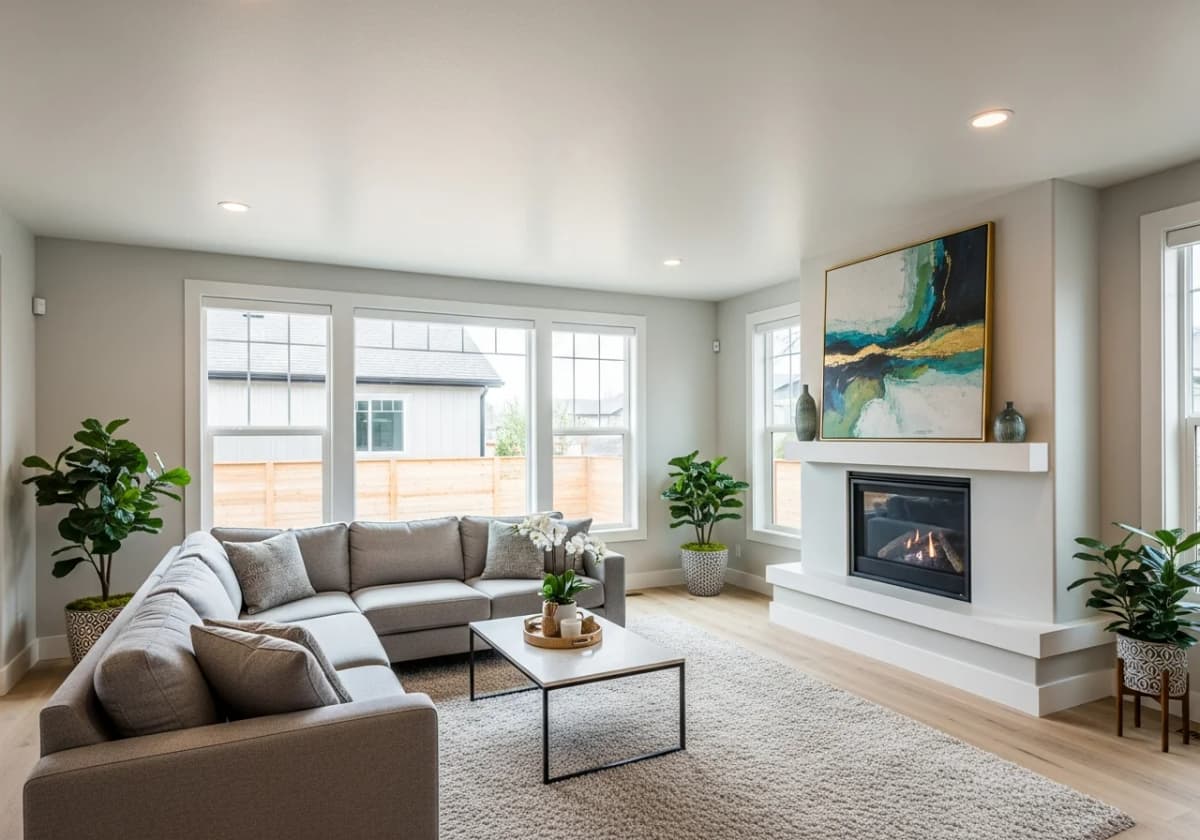
The Treasure Valley is full of homes built from the 1960s through the 1990s — across the Boise Bench, the North End's post-war pockets, and established neighborhoods in Nampa, Caldwell, and Meridian. A huge share of those homes still wear their original popcorn (acoustic) ceilings. The bumpy texture was once prized for hiding imperfections and dampening sound, but today it does the opposite for a room: it collects dust and cobwebs, yellows over time, is almost impossible to clean or repair invisibly, and instantly dates an otherwise updated home.
Removing it — or covering it with a fresh, flat surface — is one of the most cost-effective ways to modernize a space. Smooth ceilings reflect more light, make rooms feel taller and larger, and are a frequent pre-sale upgrade because today's buyers strongly prefer them. Iron Crest Remodel handles the whole job: testing where it's warranted, protecting your home, removing or encapsulating the texture, and delivering a finished, painted ceiling.
Done well, the transformation is dramatic and surprisingly affordable relative to its impact. Done poorly — or without testing an older ceiling first — it can create dust everywhere, leave a wavy and patchy surface, and in pre-1980 homes risk disturbing asbestos. The sections below walk through exactly how we approach the work, what it costs in the Treasure Valley, and how to choose between scraping, covering, and skim-coating.
Popcorn texture doesn't just look dated — it actively causes problems as a home ages. These are the most common reasons Boise homeowners call us to have it removed or covered:
Yellowing and staining
Decades of dust, cooking residue, and smoke discolor the texture, and it cannot be wiped clean without crumbling.
Water stains and sagging
Old roof or plumbing leaks leave brown rings; once the texture is disturbed it rarely patches invisibly, so a fresh ceiling is the clean fix.
Cracking and flaking
Settling and age cause hairline cracks and shedding flakes that land on floors and furniture.
Impossible to repair invisibly
Patching a small area of popcorn almost never matches the surrounding texture, leaving an obvious blotch.
Dated, low-feeling rooms
The bumpy surface absorbs light and visually lowers ceilings, making rooms feel smaller and older than they are.
Preparing to sell
Smooth ceilings are a strong buyer preference and a common, high-return update before listing a Treasure Valley home.
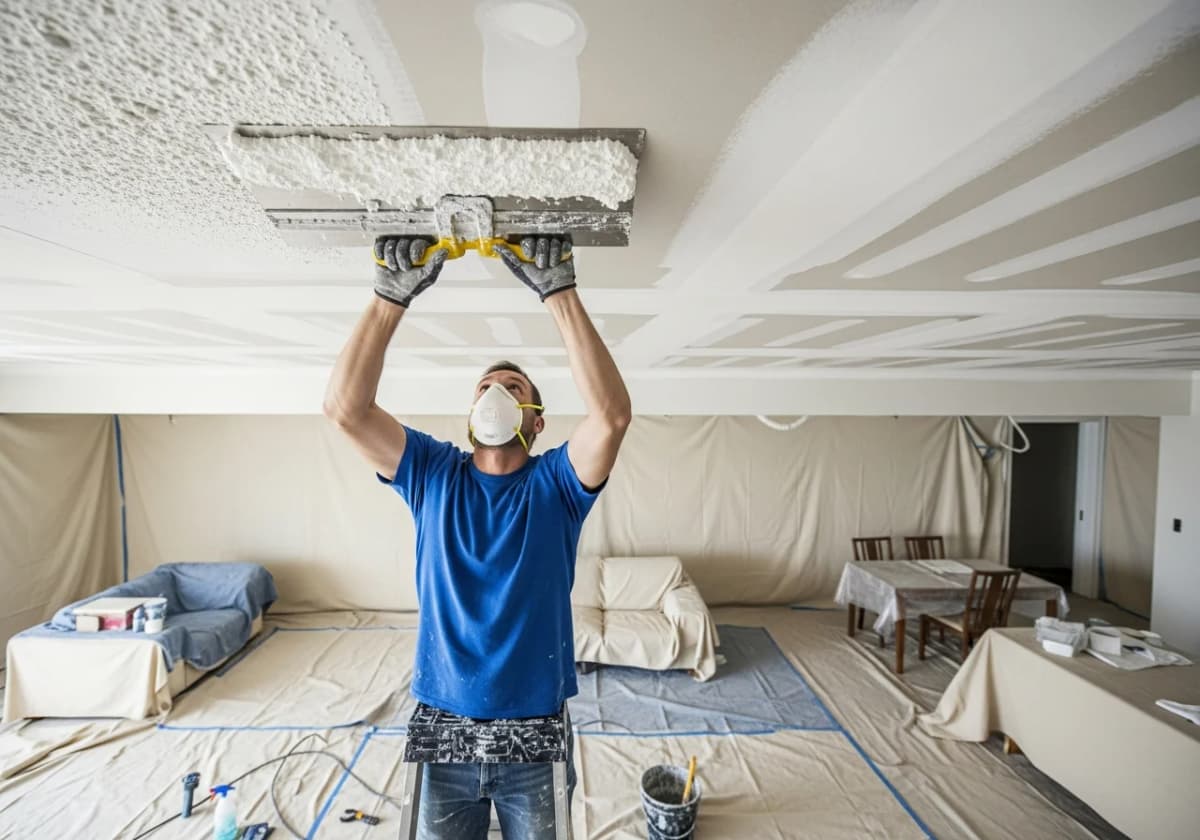
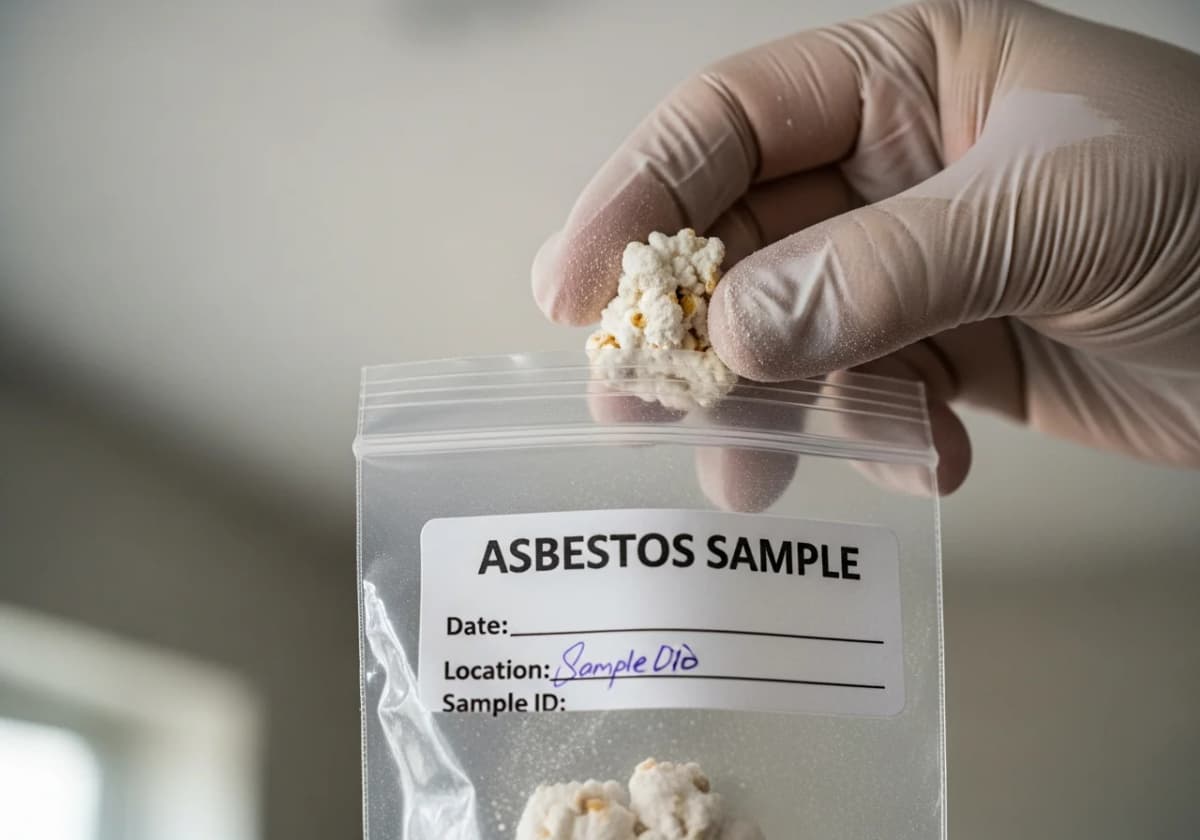
If your home was built or textured before about 1980, the ceiling must be tested before anyone disturbs it. Asbestos was a common ingredient in popcorn ceilings of the 1960s and 1970s. You cannot tell whether a ceiling contains it by looking — a laboratory test of a small sample is the only reliable way to know, and the EPA and CPSC recommend a professional test before the material is touched.
A test typically costs between $120 and $850. If it comes back negative, the ceiling can be scraped or finished like any modern surface. If it comes back positive, we do not perform a dry scrape — instead we either encapsulate the ceiling by covering it with new drywall (sealing the material in place) or bring in a licensed asbestos abatement professional. Federal air-toxics rules under the EPA's Asbestos NESHAP set work practices for renovation and demolition; single-family residences are treated differently from larger facilities, and small quantities fall under specific thresholds. We help you understand the right path for your home and recommend confirming any current state disposal and licensing requirements before work begins.
One practical note that saves homeowners money: have the sample pulled before you schedule anything else. A positive result changes the method, the timeline, and the price, so testing first means you price the job once instead of re-quoting it. If you are removing texture from several rooms, ask the lab about testing each ceiling separately — homes that were remodeled in phases can carry material from more than one era under a single roof, and one negative result does not clear the whole house.
There is no single "right" method — the best choice depends on your ceiling's condition, whether it's painted, and the asbestos test result. Here is how the three common approaches compare.
Skim-Coat Over
Joint compound is troweled directly over the texture and sanded perfectly flat. Best when the ceiling is sound and well-bonded. The most economical route — roughly $1–$1.50 per square foot.
Cover With Drywall
A new layer of quarter-inch drywall is installed over the popcorn, sealing it in place. This encapsulates asbestos without disturbing it and avoids abatement — about $1.50–$5 per square foot.
Full Scrape & Refinish
The ceiling is wet-sprayed, scraped clean, repaired, and refinished smooth or with a light texture. The cleanest result for negative-tested, sound ceilings — about $2–$6 per square foot.
Once the texture is gone you also get to choose the final look. Most homeowners go with a dead-flat, smooth ceiling for the cleanest modern result, but a subtle knockdown or orange-peel texture is a great option if you want to match adjoining rooms or soften minor surface imperfections. We'll walk you through real samples in your own light and recommend the finish that best fits your home, your style, and your budget before any work starts.
Locally, standard popcorn removal in Boise and Ada County generally runs about $1.25 to $2.50 per square foot, but several factors move the number within and beyond that range:
Whether the ceiling is painted. Paint blocks the water that softens the texture for scraping, so painted popcorn takes longer and costs more — often closer to $7 per square foot versus about $5 for unpainted.
The method you choose. Skim-coating and drywall-cover are usually cheaper than a full scrape-and-refinish, which involves more labor, repair, and finishing.
Asbestos test result. A positive test means encapsulation or licensed abatement rather than a standard scrape, which changes the scope and cost.
Ceiling height and condition. Vaulted or two-story ceilings need staging and add labor; ceilings with prior water damage or cracks need more repair before finishing.
Finish level. A dead-flat Level-5 smooth finish takes more skim and sanding than a light knockdown or orange-peel texture.
As a real-world example, a 500-square-foot living-room ceiling typically lands around $500–$750 for a skim coat, $750–$1,500 for a drywall cover, or $1,000–$3,000 for a full removal and refinish. We give you a firm, itemized quote after inspecting your ceiling so there are no surprises.
Test (pre-1980 homes)
We coordinate an asbestos test before disturbing any older ceiling and choose the safe path based on the result.
Protect the room
Floors, walls, fixtures, and HVAC vents are masked and covered, and we set up dust containment to keep the rest of your home clean.
Wet-spray & scrape
The ceiling is misted with a water solution to break the adhesive bond, then the texture is scraped away with wide drywall knives — or covered or skim-coated per your chosen method.
Repair & sand
We patch gouges, re-tape seams where needed, and sand the surface perfectly flat before finishing.
Finish, prime & paint
You get a smooth ceiling or a light modern texture, primed and painted so it blends seamlessly with the rest of the room.
Clean up
We remove all debris and protective materials and leave the space clean and move-in ready.
Does my Boise popcorn ceiling contain asbestos?
It might, if your home was built or the ceiling was textured before about 1980. Asbestos was common in acoustic 'popcorn' ceilings of the 1960s and 1970s and was later phased out of these products. The only way to know for certain is a laboratory test of a small sample — you cannot tell by looking. The EPA and CPSC recommend having a professional test the material before it is disturbed. A test typically costs between $120 and $850. We never scrape a pre-1980 ceiling until it has been tested.
How much does popcorn ceiling removal cost in Boise?
Local Boise and Ada County pricing generally runs about $1.25 to $2.50 per square foot for standard removal, though the figure depends heavily on the method and condition. As a rule of thumb across the industry, skim-coating runs roughly $1 to $1.50 per square foot, covering the ceiling with new drywall about $1.50 to $5, and a full scrape-and-refinish about $2 to $6. For a 500-square-foot living-room ceiling that works out to roughly $500 to $3,000 depending on the approach.
Should I scrape the popcorn off, cover it, or skim-coat over it?
It depends on the ceiling's condition and whether asbestos is present. A full scrape gives the cleanest result and is ideal when the ceiling tests negative and is in sound shape. Covering with a new layer of quarter-inch drywall encapsulates the texture safely — a common choice for ceilings that test positive for asbestos because it avoids disturbing the material. Skim-coating is the most economical option when the existing ceiling is flat and well-bonded. We recommend the method after inspecting your specific ceiling.
Why does a painted popcorn ceiling cost more to remove?
Paint seals the texture and blocks the water that normally softens the adhesive for wet-scraping. A painted ceiling has to be scored, soaked repeatedly, or scraped dry — all slower and messier — so contractors typically charge more for painted popcorn than for unpainted. In some cases covering or skim-coating a painted ceiling is more cost-effective than fighting to scrape it.
What finish can I have after the popcorn is gone?
Most Treasure Valley homeowners choose a smooth, flat ceiling for a clean modern look, but you can also have a light contemporary texture such as knockdown or orange-peel applied to match the rest of your home. Either way we repair any gouges, re-tape seams as needed, sand, prime, and paint so the finished ceiling looks seamless.
Do you handle the testing, containment, and cleanup?
Yes. We coordinate asbestos testing for pre-1980 ceilings, protect your floors, walls, fixtures, and HVAC vents before any work begins, manage dust containment, and clean up completely afterward. If a ceiling tests positive for asbestos, we use the appropriate encapsulation approach or a licensed abatement professional rather than a standard scrape.