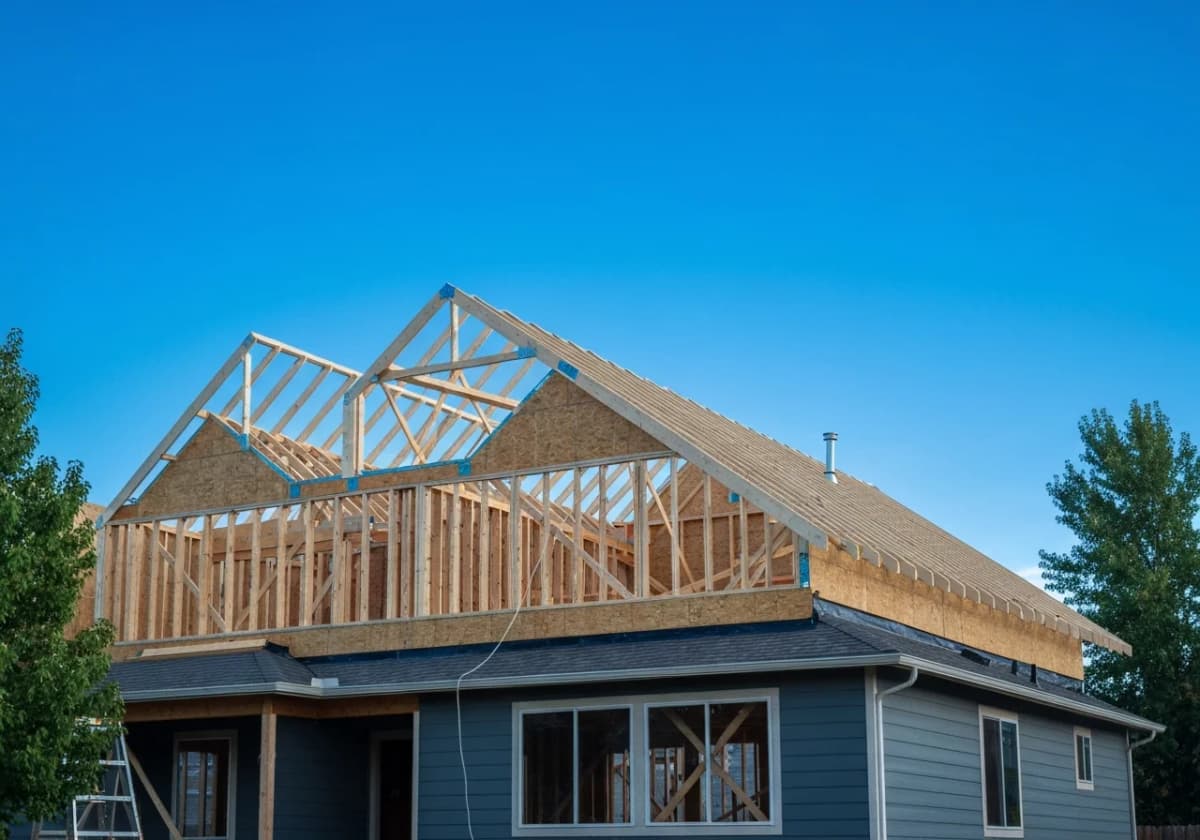
Home Additions in Boise, ID
Whether you need an extra bedroom, a primary suite, a home office, or expanded living space — we handle design, engineering, permitting, and construction.
In Boise's fast-moving real estate market — where the median home value has climbed past $450,000 and inventory stays stubbornly low — moving to a larger house often costs more than adding onto the one you already love. Iron Crest Remodel specializes in thoughtfully engineered home additions that expand your living space without forcing you out of the neighborhood, school district, or community you've built your life around. From a modest kitchen bump-out in the Boise Bench to a full second-story addition atop a West Boise ranch, every project begins with the question that matters most: what does your family actually need, and how do we build it to last in Idaho's demanding climate? With Ada County's 36-inch frost depth, semi-arid summers that push past 100°F, and architectural styles ranging from 1900s North End Craftsman bungalows to 2010s Harris Ranch contemporaries, Boise home additions require a level of local engineering knowledge that generic contractors simply can't match.
Expand your home with a well-planned addition designed around flow, structure, and long-term livability.
Licensed general contractor with home addition experience in IdahoStructural engineering partnerships for safe, code-compliant designComplete project management from design through certificate of occupancyDetailed architectural plans included in every addition project
A home addition is one of the most significant and valuable improvements you can make to your property. Unlike a remodel that works within existing walls, an addition expands the building footprint — which means foundation work, structural engineering, roofline integration, exterior finish matching, and careful connection to existing mechanical systems. The most common additions in the Treasure Valley include primary suite additions (bedroom + bathroom + closet), family room or great room additions, second-story additions over existing structures, bump-out additions for kitchens or dining rooms, and sunroom or four-season room additions. Every addition project requires careful planning around your existing home's foundation type, roof structure, siding material, and HVAC capacity. A well-designed addition looks like it was always part of the house — matching rooflines, siding profiles, window styles, and interior finishes so there is no visible seam between old and new.
Boise is one of the fastest-growing metros in the United States, and that growth has created a housing paradox: the city homeowners moved to for affordability has become genuinely expensive, yet those same homeowners have watched their equity soar. The result is a population that is deeply invested — financially and emotionally — in staying put, but increasingly cramped in homes that were sized for a different chapter of life.
The math is brutally clear. When the median Boise home sits above $450,000 and you factor in 6–7% mortgage rates, selling a 1,400-square-foot ranch and buying a 2,200-square-foot replacement means adding hundreds of thousands of dollars in debt, paying real estate commissions on both sides of the transaction, and absorbing the emotional cost of leaving neighbors, schools, and routines behind. A well-executed addition — even a $120,000 second-story build — frequently delivers more usable space at a fraction of that cost while keeping your existing low-rate mortgage intact.
Boise's housing stock amplifies this dynamic. The North End is filled with charming early-twentieth-century Craftsman bungalows on compact 50-foot lots where moving laterally requires navigating historic character standards and tight setback requirements. The Boise Bench is packed with post-war ranches from the 1940s through the 1970s — single-story homes that were well built but were never designed to accommodate three-bedroom families working from home. West Boise's 1980s and 1990s two-stories have good bones but frequently lack the bonus room, home office, or in-law suite that today's multigenerational families need. Harris Ranch and Southeast Boise's newer developments sit on larger lots but in HOA-governed communities where any exterior change demands architectural review board approval — a process Iron Crest navigates regularly.
Idaho's climate adds another layer of complexity that makes Boise additions genuinely different from additions in milder markets. Ada County's frost depth reaches 36 inches, which means every new foundation pour — whether for a full room addition or a cantilevered bump-out — must account for frost heave. Boise summers regularly exceed 100°F, pushing ventilation and insulation requirements well beyond what a simple square-footage calculation would suggest. The 300-plus annual sunny days that make Boise so livable also mean that west-facing additions need careful window specification to avoid turning new rooms into greenhouses by August.
The demographic push toward multigenerational living is perhaps the strongest local driver. Idaho's population skews toward families with children, and the high cost of senior care facilities combined with a strong cultural preference for keeping aging parents close has made in-law suite additions one of the most-requested projects in Iron Crest's portfolio. Whether that means a ground-floor suite with a private entrance and kitchenette added to a North End bungalow or a detached accessory dwelling unit in a West Boise backyard, these projects require navigating Boise's ADU ordinance, utility connection requirements, and accessibility standards simultaneously — which is exactly the kind of complexity that separates experienced local contractors from out-of-state franchise operations.
Boise homeowners pursue home additions for a variety of reasons. Here are the most common situations we see:
- ✓Growing families who have outgrown their current floor plan but love their neighborhood and lot
- ✓Homeowners who need a primary suite addition — separate bedroom, walk-in closet, and bathroom
- ✓Remote workers who need a dedicated home office with separation from living spaces
- ✓Homeowners caring for aging parents who need an in-law suite or ground-floor bedroom addition
- ✓Anyone who would rather add square footage than sell and move in the current housing market
Not every home addition project is the same. Here are the most common project types we complete in Boise:
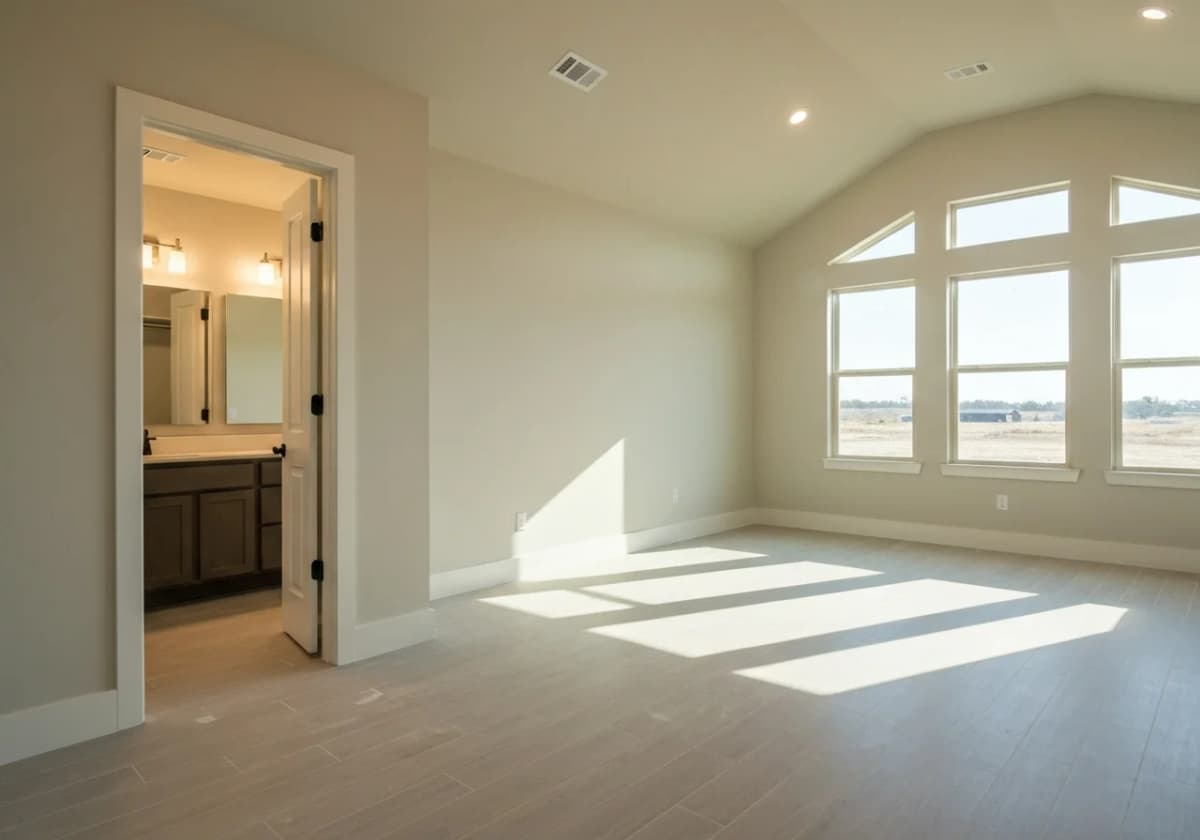
Primary Suite Addition
Add a new primary bedroom, walk-in closet, and private bathroom. This is the most popular addition type and typically adds 400-700 square feet to the home.
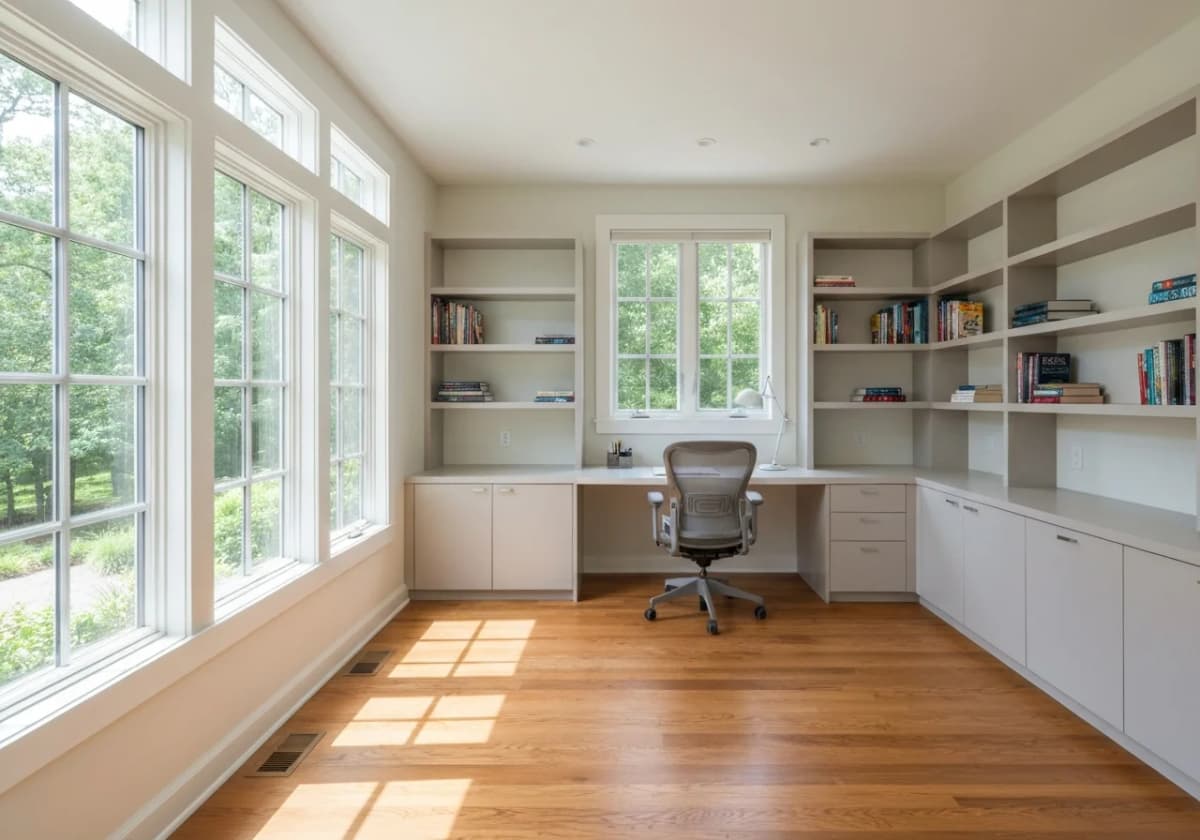
Room Addition (Bedroom, Office, Family Room)
Add a single room or open living space to the home. Room additions range from 150-500 square feet and can be configured as a bedroom, office, playroom, or flex space.
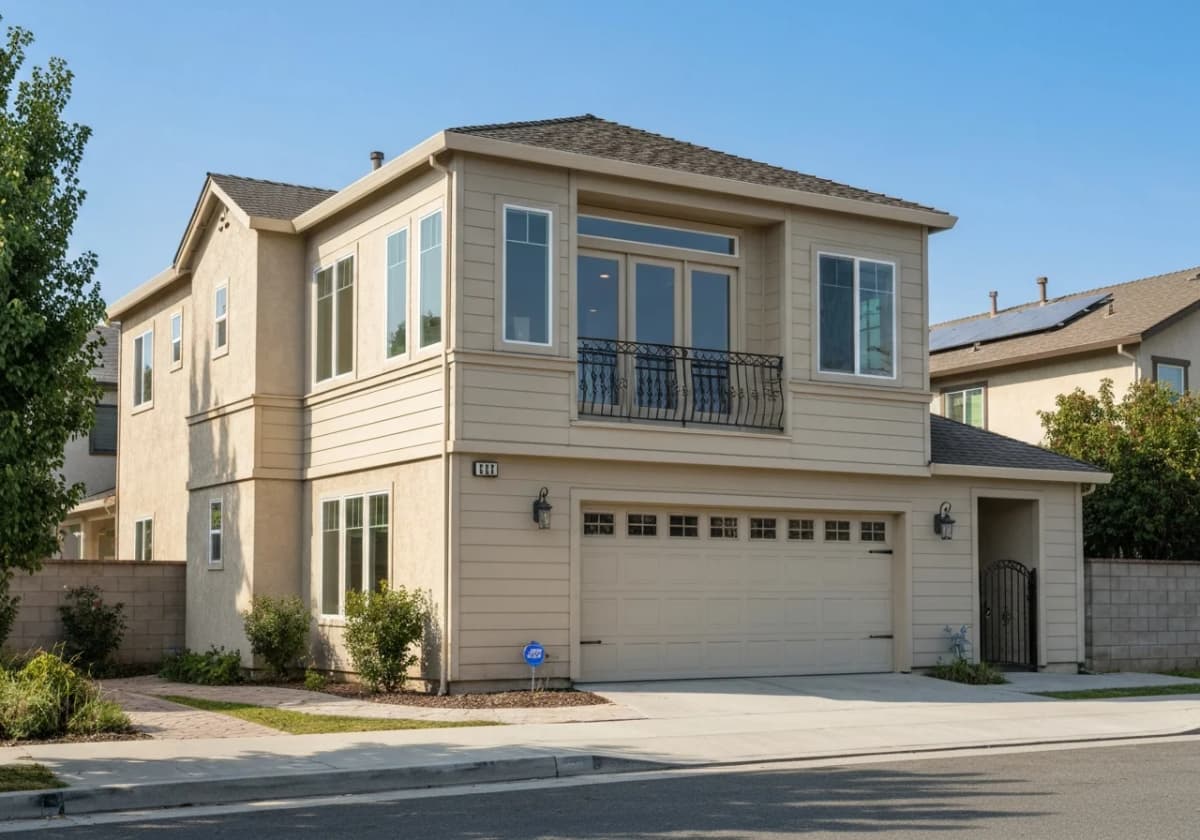
Second-Story Addition
Build up instead of out by adding a second floor over an existing single-story structure. Requires structural evaluation of the existing foundation and framing to ensure they can support the additional load.
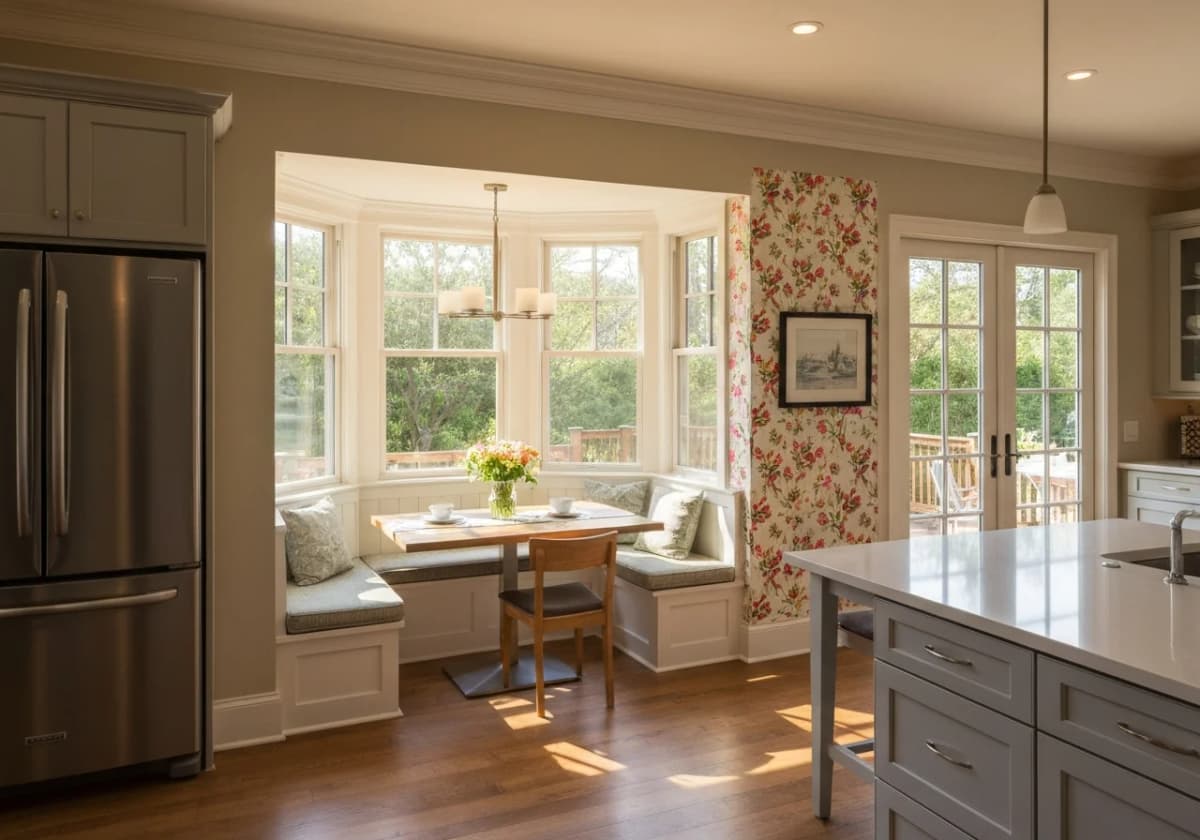
Kitchen or Dining Bump-Out
Extend an exterior wall by 4-12 feet to create more kitchen counter space, a breakfast nook, or a larger dining area. A bump-out is less complex than a full addition and can transform a cramped kitchen.
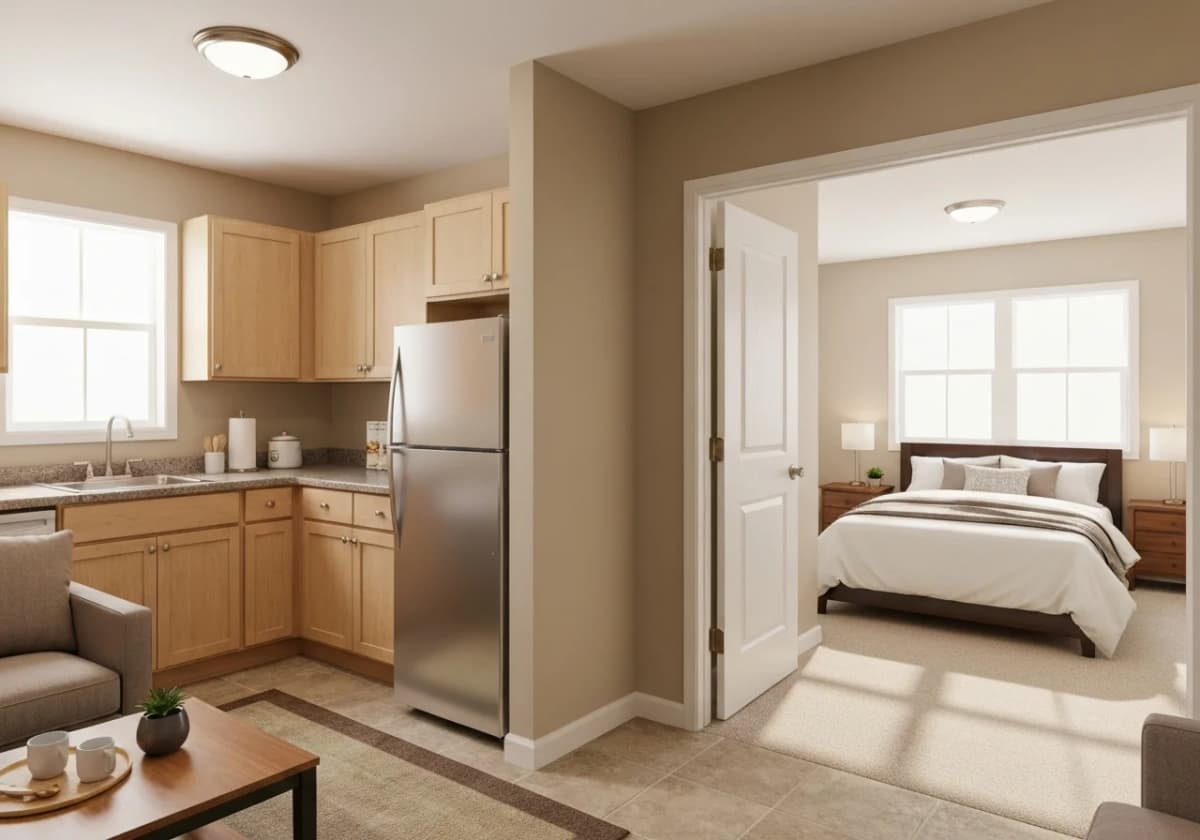
In-Law Suite or Multigenerational Addition
A semi-independent living space with a bedroom, bathroom, kitchenette, and separate entrance designed for aging parents or adult family members. May include accessibility features.
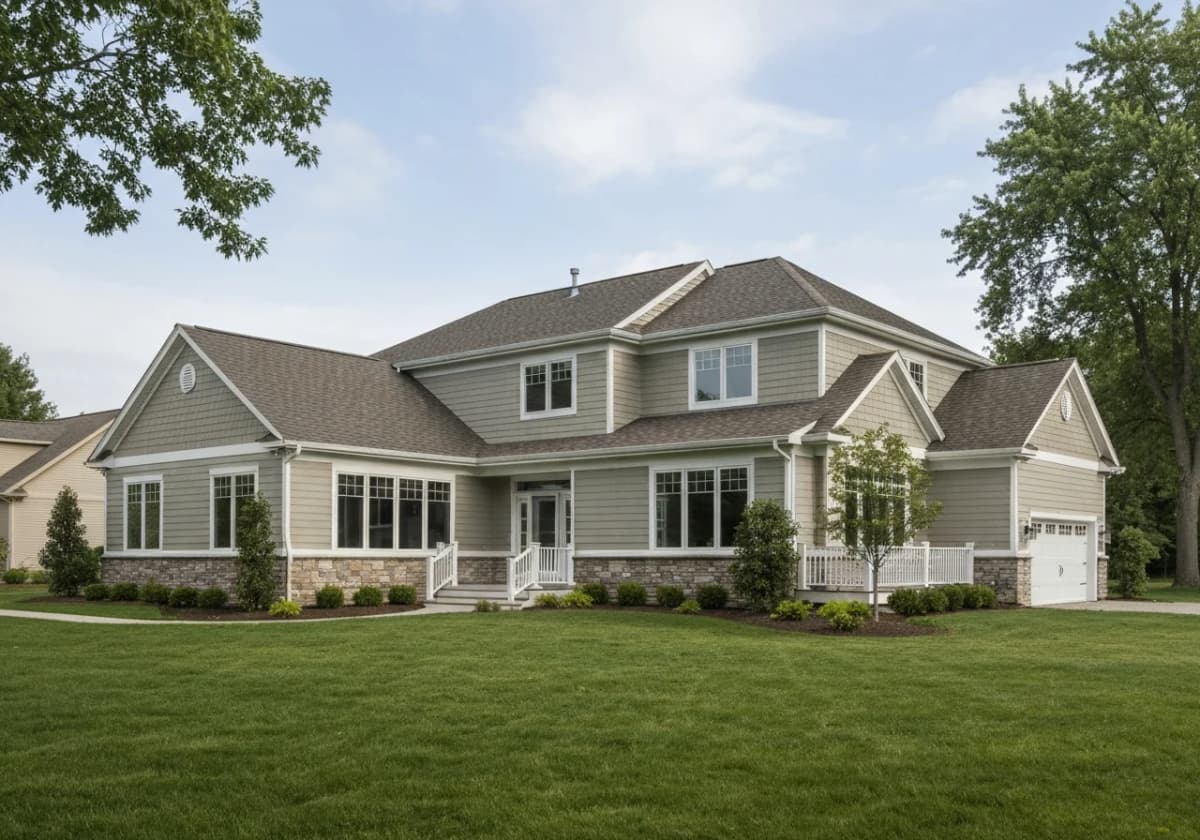
Boise has over a century of residential construction, from 1900s Craftsman homes in the North End to 2020s new construction in West Boise and Southeast Boise. This diversity means remodeling contractors encounter a wide range of structural systems, plumbing types, electrical standards, and finish materials.
Pre-1940 (North End, Downtown)
Craftsman bungalows, Tudor revivals, and foursquare homes with plaster walls, old-growth fir floors, knob-and-tube wiring (in some), galvanized plumbing, and brick or stone foundations. Remodeling these homes requires sensitivity to historic character while updating systems.
1940s–1960s (Bench, Central Boise)
Post-war ranch homes and split-levels with hardwood floors, original tile bathrooms, copper plumbing, and 100-amp electrical panels. These homes often need kitchen and bathroom updates, electrical upgrades, and insulation improvements.
1970s–1990s (West Boise, South Boise)
Subdivision homes with drywall, builder-grade cabinets, laminate countertops, carpet throughout, and basic builder fixtures. Most plumbing is copper or early PEX. These are the most common candidates for kitchen and bathroom remodels.
2000s–present (SE Boise, Harris Ranch, West Boise)
Modern construction with PEX plumbing, 200-amp panels, energy-efficient windows, and open floor plans. Remodeling in these homes typically focuses on upgrading builder-grade finishes rather than updating systems.
Common issues in Boise homes
- •Galvanized plumbing in pre-1970 homes causing low water pressure and corrosion
- •Insufficient electrical capacity (100-amp panels) for modern kitchen and bathroom demands
- •Poor or missing bathroom ventilation leading to moisture and mold issues
- •Closed-off floor plans in 1970s-1990s homes that homeowners want opened up
- •Cracked or settling foundations in some older Bench and North End homes
- •Builder-grade materials reaching end of life in 1990s-2000s subdivision homes
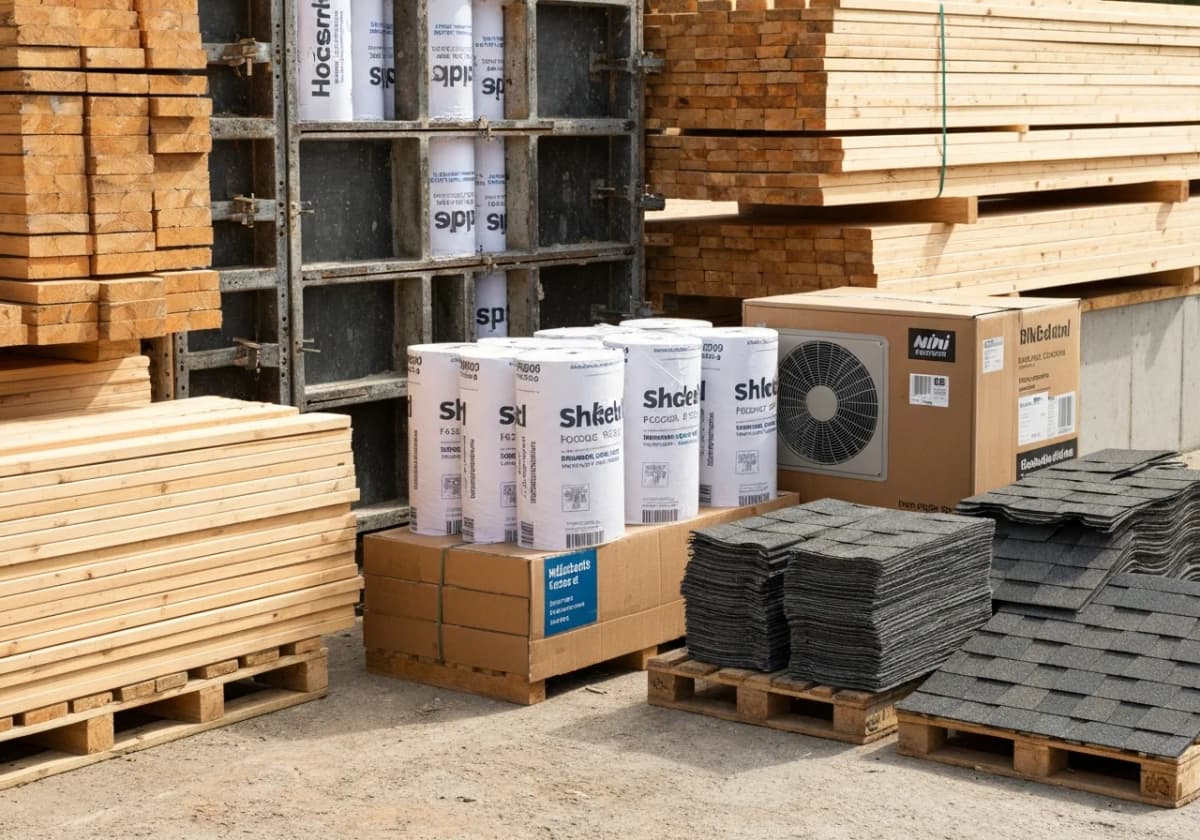
Material selection affects the look, durability, and cost of your home addition. Here are the most popular options we install in Boise:
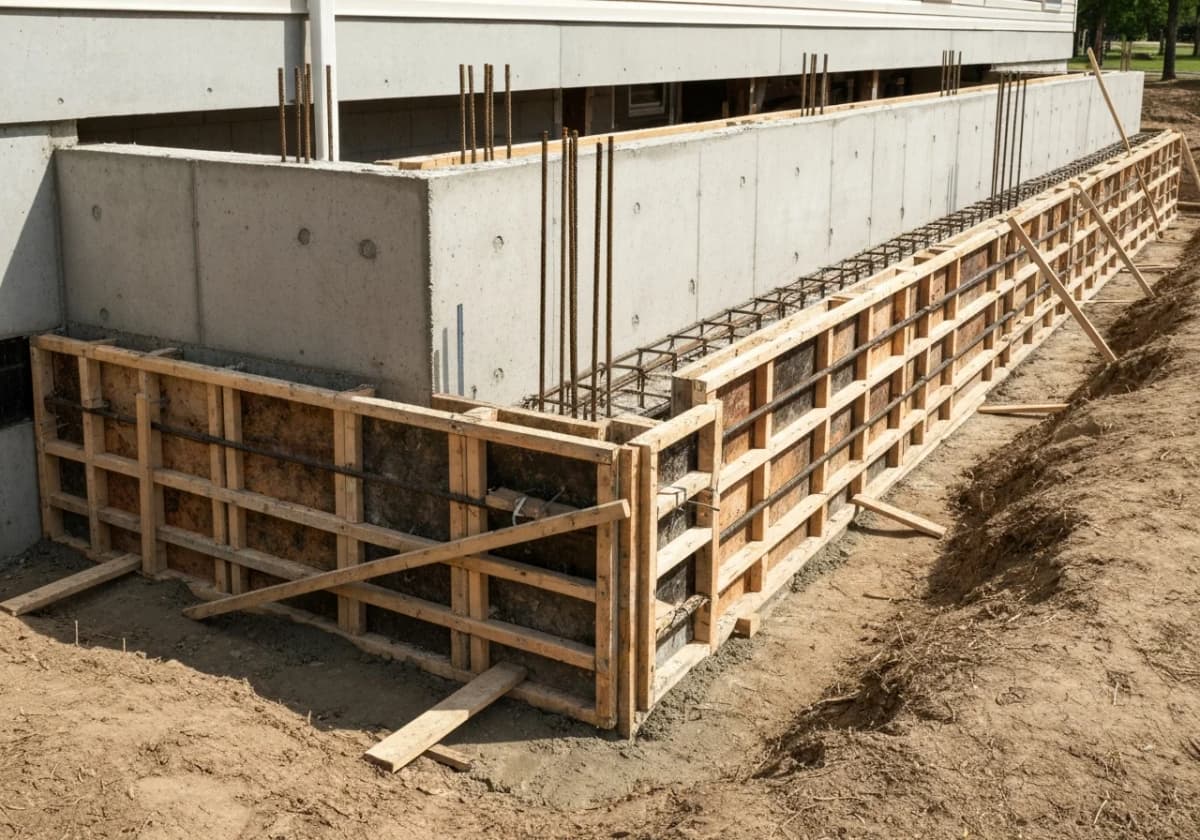
Concrete Foundation (Stem Wall or Slab)
$8,000–$25,000 depending on sizeMost Idaho home additions use a concrete stem wall foundation with a crawl space, matching the existing home's foundation type. Slab-on-grade is used in some applications. The foundation must be engineered to match soil conditions and frost depth requirements.
Best for: All home additions in Idaho
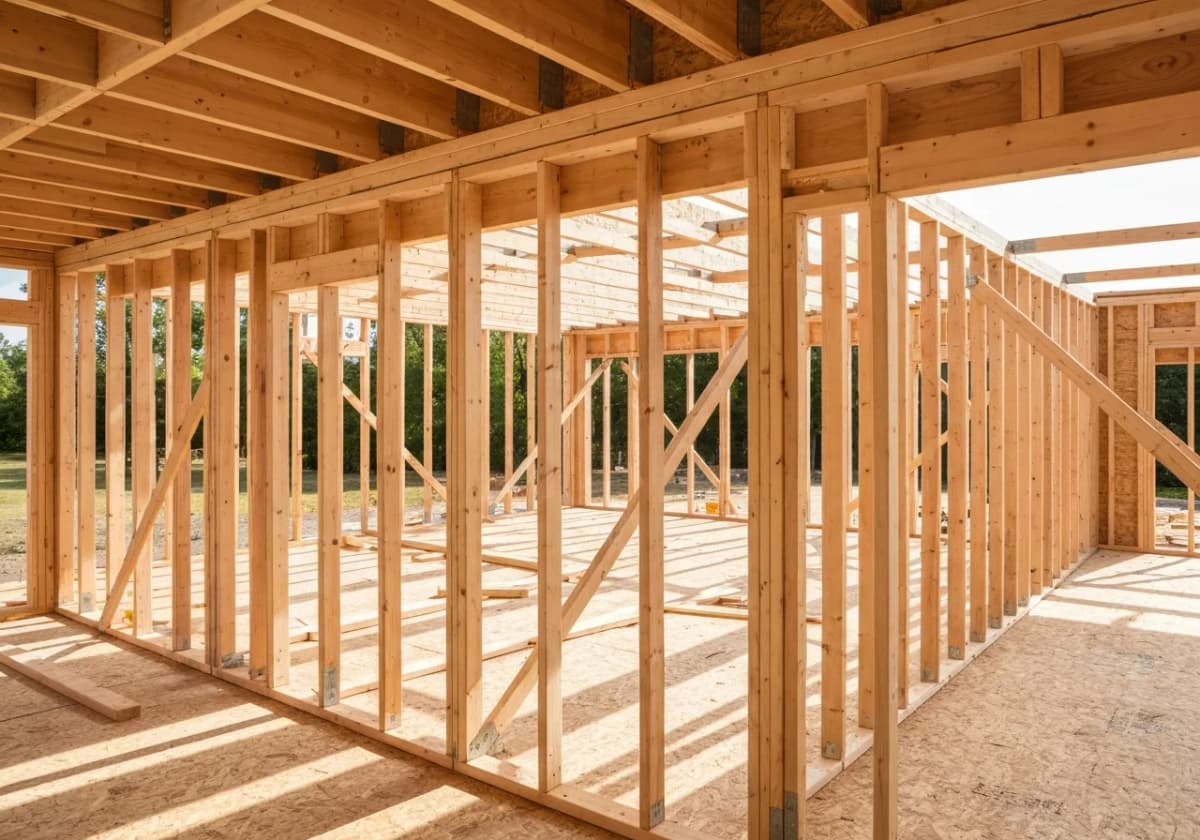
Dimensional Lumber Framing
$15–$25 per sq ft framedStandard 2x4 or 2x6 wood framing for walls, with engineered trusses or rafters for the roof. The framing system must integrate with the existing home's structure at the connection point.
Best for: Standard room additions and second stories
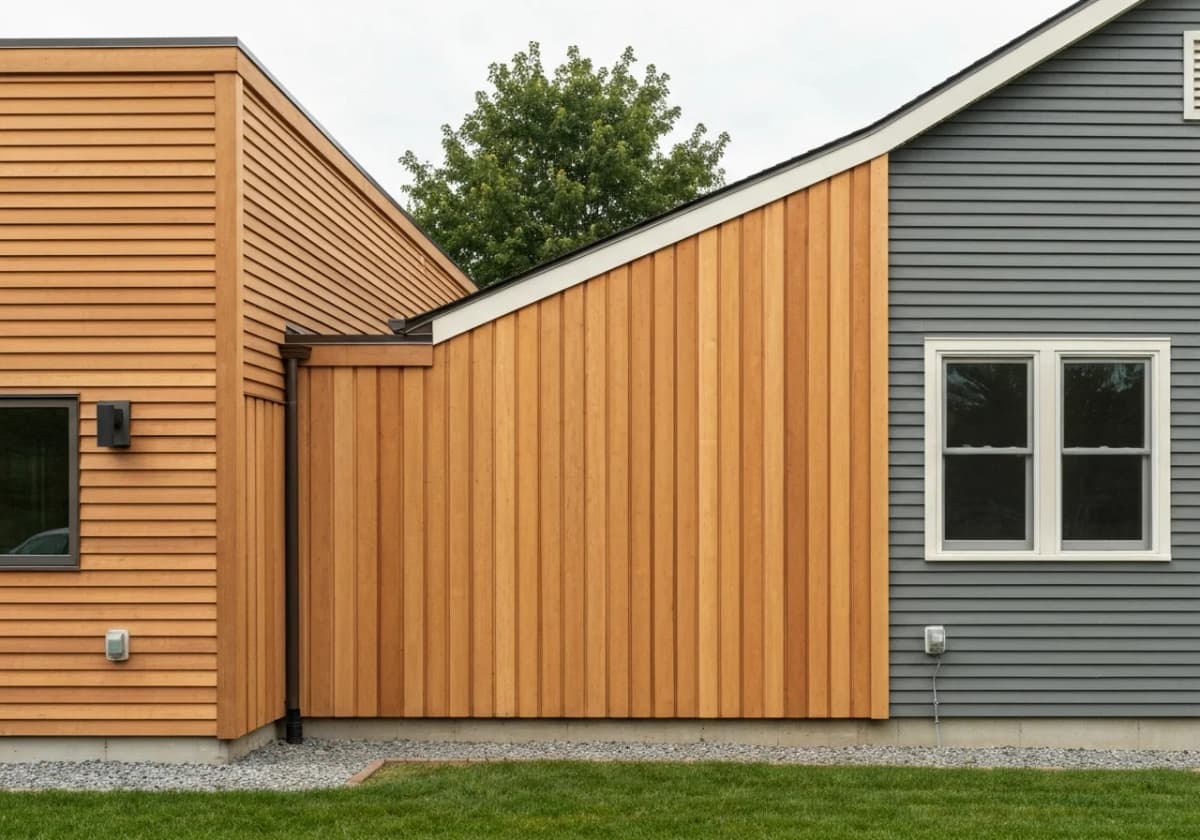
Matching Exterior Siding
$5–$15 per sq ft installedThe addition's exterior must match the existing home. This may involve ordering the same siding profile, doing a partial re-side to blend old and new, or selecting a complementary material for a planned contrast.
Best for: Seamless visual integration
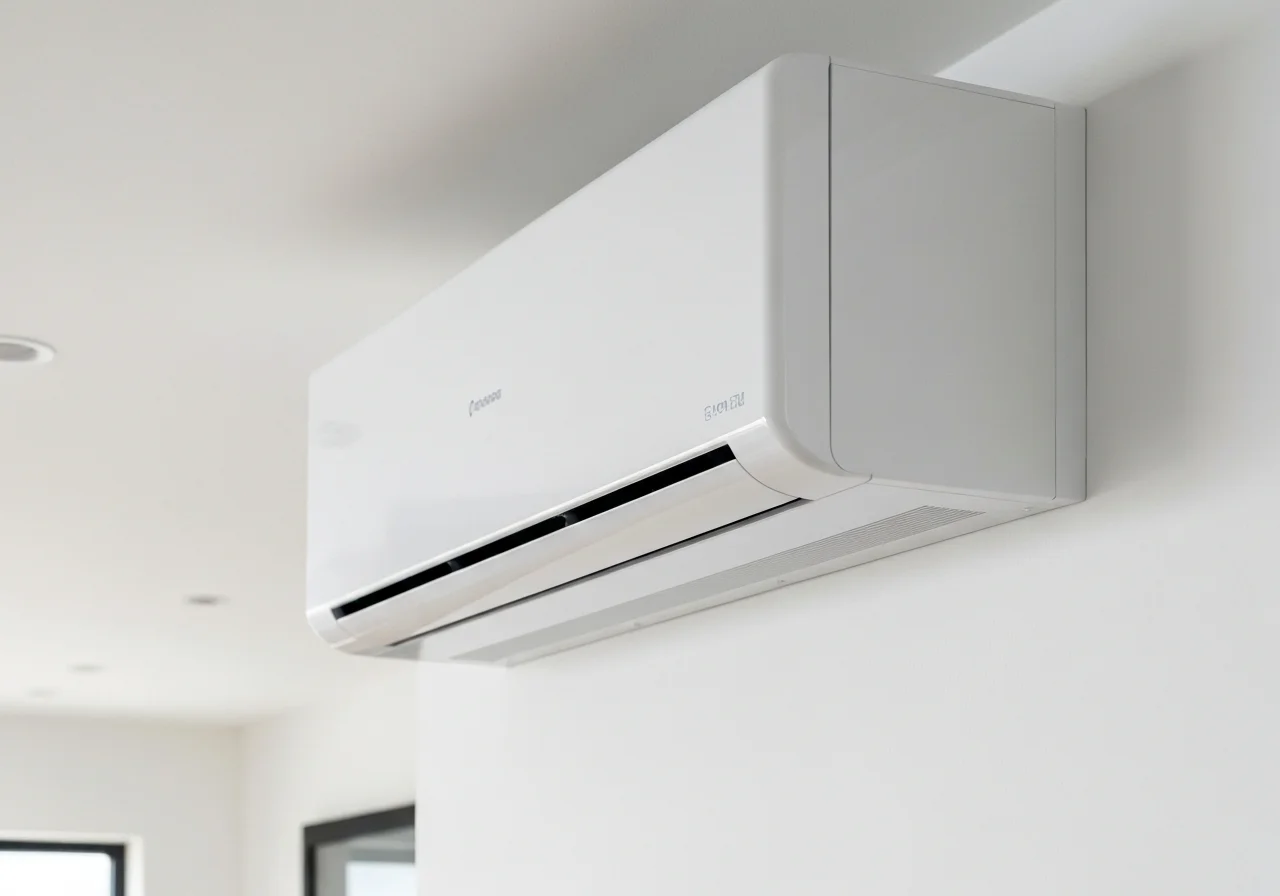
Mini-Split HVAC System
$3,000–$6,000 per zone installedA ductless mini-split system is often the most practical way to heat and cool an addition without extending the existing HVAC system. Mini-splits are efficient, quiet, and provide independent temperature control for the new space.
Best for: Additions where extending existing ductwork is impractical
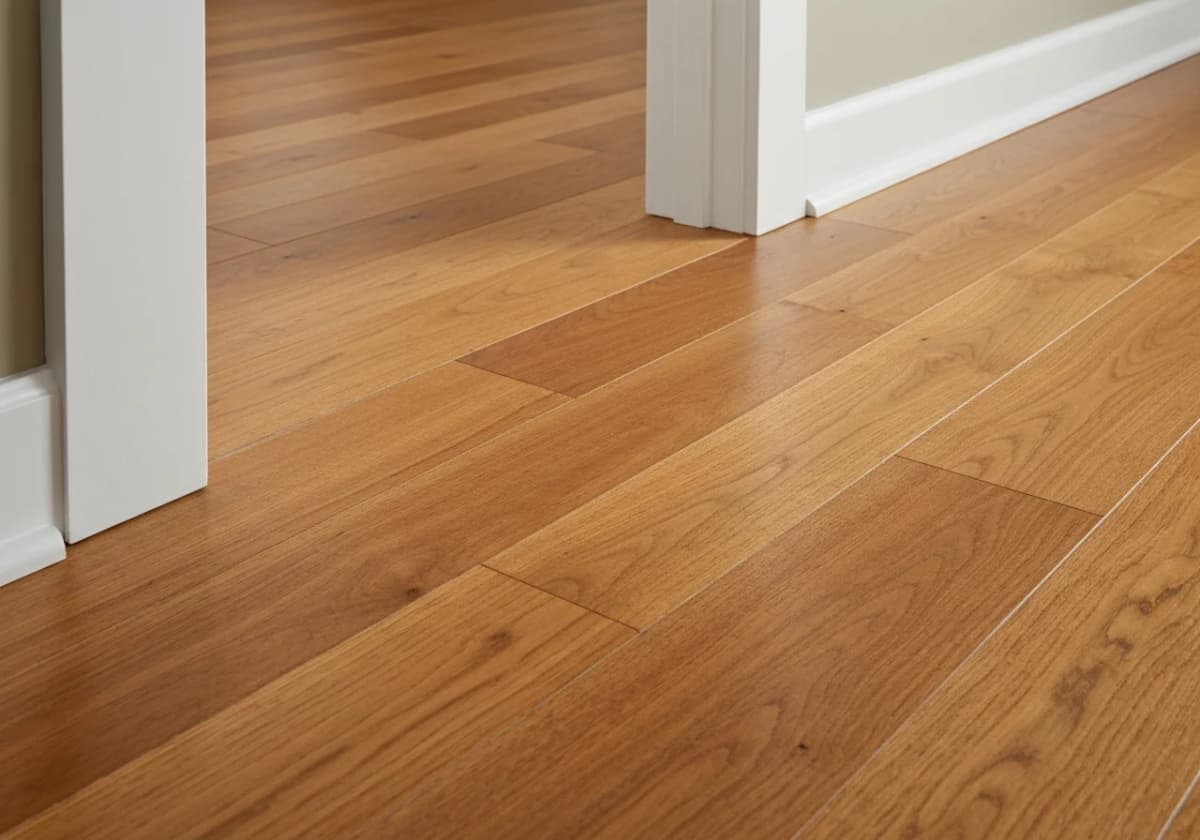
Engineered Hardwood or LVP Flooring
$5–$15 per sq ft installedFlooring in the addition should match or complement existing home flooring. Engineered hardwood can match existing real hardwood. LVP is durable, waterproof, and available in realistic wood looks.
Best for: Matching existing home flooring
Material selection for Boise home additions is driven by three non-negotiable realities: Ada County's 36-inch frost depth, a climate that swings from 15°F in January to 105°F in August, and the architectural diversity of a city where homes span more than a century of construction styles.
Foundation materials must be specified for Idaho's frost conditions. Poured concrete with proper rebar sizing and a minimum 36-inch depth is standard for any new foundation in Ada County, whether it's a full perimeter foundation for a room addition or isolated footings for a cantilevered bump-out. Insulating concrete forms (ICFs) are increasingly popular for below-grade and slab-on-grade additions because they dramatically improve thermal performance — a real benefit in a climate where the ground holds cold deep into spring and radiates heat through summer.
Framing lumber in Boise additions is almost universally engineered lumber for structural members — LVL beams, I-joists, and LSL headers provide the dimensional consistency and load capacity that second-story additions demand without the twisting and shrinking that can plague dimensional lumber in Boise's dry climate. Boise's low humidity — averaging 30–40% relative humidity — causes dimensional lumber to lose moisture after installation, which can result in squeaky floors, sticky doors, and visible nail pops within the first year if engineered products aren't specified.
Exterior cladding selection depends heavily on the neighborhood context. In the North End, Hardie Board fiber cement lap siding in 4-inch or 6-inch reveal profiles closely mimics the original wood lap siding on Craftsman bungalows while providing far superior resistance to Boise's UV intensity and freeze-thaw cycles. In West Boise and Harris Ranch, stucco and stone veneer combinations are architecturally consistent with the existing homes and provide excellent thermal mass that moderates temperature swings. Vinyl siding, while cost-effective, tends to expand and contract visibly in Boise's temperature extremes and is generally discouraged on additions where matching the original home's quality is important.
Roofing materials for addition tie-ins must match the existing roof for aesthetic continuity. Most Boise homes carry 30-year architectural asphalt shingles, which are readily available in matching profiles. Metal roofing is growing in popularity for additions — particularly standing-seam — because it handles Boise's occasional heavy snow loads with zero maintenance and provides superior solar reflectance that reduces cooling loads in summer.
Window and door specifications have a disproportionate impact on both comfort and energy performance in Boise's climate. Vinyl or fiberglass-framed double-pane windows with a Low-E coating and argon fill are the standard minimum. For west-facing additions that face Boise's brutal afternoon sun, triple-pane glass or a high solar heat gain coefficient specification is worth the premium. Proper window installation with continuous water-resistive barriers and flashing is critical in a climate where summer thunderstorms can deliver intense but brief precipitation that exploits any installation weakness.
Insulation specifications for Boise additions must exceed the minimums in the Idaho Energy Code. Walls at R-21 (2x6 framing with batts plus rigid foam sheathing) and attic insulation at R-49 or better are the practical targets for a comfortable, energy-efficient addition in this climate. Spray foam at rim joists and band joists prevents the cold-air infiltration that would otherwise make addition floors cold in January and create condensation problems in the crawlspace.
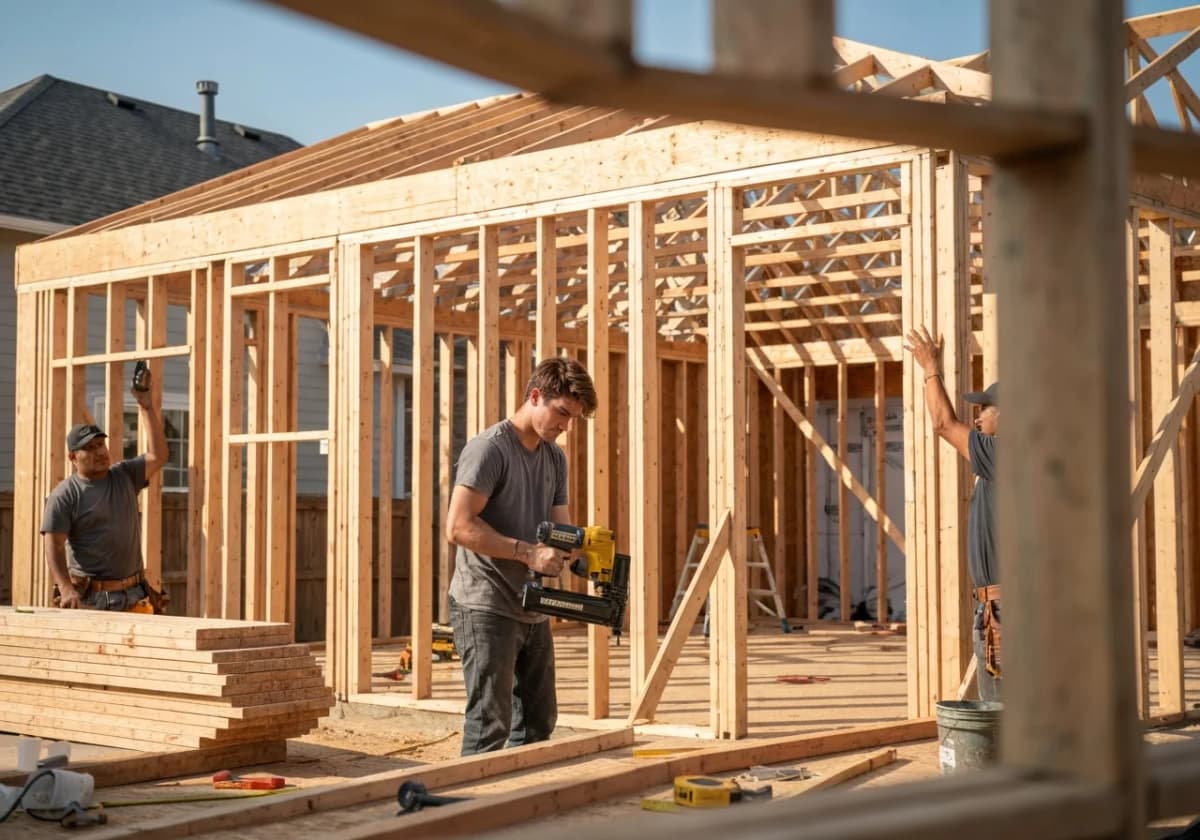
Here is how a typical home addition project works from first contact to final walkthrough:
1
Feasibility Assessment and Site Evaluation
We evaluate your lot size, setback requirements, existing foundation type, roof structure, utility connections, and zoning restrictions to determine what type and size of addition is possible on your property.
2
Architectural Design and Engineering
We create detailed architectural plans including floor plans, elevations, structural engineering, roofline integration, and mechanical system connections. Plans must meet local building codes and zoning requirements.
3
Permitting and Plan Review
Home additions require building permits, plan review, and multiple inspections. We submit plans to the local building department, respond to any review comments, and manage the approval process.
4
Foundation and Framing
Excavation and foundation work (typically concrete stem wall or slab-on-grade in Idaho) is completed first. Once the foundation is inspected, framing begins — walls, roof structure, and connection to the existing home.
5
Mechanical, Electrical, and Plumbing (MEP)
HVAC ductwork or mini-split installation, electrical wiring, plumbing rough-in (if the addition includes a bathroom or kitchenette), and insulation are completed before drywall.
6
Exterior Finish and Roofing
Roofing, siding, windows, and exterior trim are installed and integrated with the existing home's exterior. We match materials, colors, and profiles so the addition looks seamless.
7
Interior Finish and Final Details
Drywall, paint, flooring, trim, doors, fixtures, and all interior finish work is completed. The connection point between old and new is finished to be invisible. Final inspections are passed and a walkthrough is conducted.
Here is what to expect for project duration when planning a home addition in Boise:
| Phase | Duration | Details |
|---|---|---|
| Design and Engineering | 4–8 weeks | Architectural design, structural engineering, and plan preparation. This phase is longer than a remodel because additions require engineered plans. |
| Permitting and Plan Review | 2–6 weeks | Building department plan review, permit issuance, and any revisions. More complex additions may require multiple review cycles. |
| Foundation | 1–3 weeks | Excavation, forming, concrete pour, and curing. Weather conditions in Idaho can affect foundation scheduling, especially in winter months. |
| Framing and Roofing | 2–4 weeks | Wall framing, roof structure, windows, and exterior sheathing. The addition begins to take shape during this phase. |
| Mechanical, Electrical, Plumbing, and Insulation | 2–3 weeks | All mechanical rough-in, insulation, and inspection. This must be complete before drywall begins. |
| Interior and Exterior Finish | 3–6 weeks | Drywall, paint, flooring, trim, siding, fixtures, and final details. The connection between old and new is completed during this phase. |
Boise range: $60,000 – $400,000+
Most Boise projects: $145,000
Boise addition costs run 10–20% higher than national averages, primarily due to Idaho's deep frost requirements (36" foundation depth adds concrete and excavation cost), Ada County's active permit and inspection schedule, and the strong local labor market created by sustained construction demand. A basic ground-floor bump-out — say, extending a kitchen 8 feet into a backyard — typically runs $60,000–$90,000 fully finished. A full-room addition with its own foundation, framing, roofline tie-in, and HVAC extension falls in the $95,000–$160,000 range. Second-story additions over an existing single-story ranch are the most complex and most transformative, ranging from $180,000 to $400,000+ depending on whether the existing structure requires reinforcement, the degree of interior disruption, and finish level. In-law suites with private entrances, ADA-compliant bathrooms, and kitchenettes run $120,000–$220,000. Costs in the North End trend 10–15% higher than comparable projects in West Boise because of tighter site access, older utility connections, and the need to match historic architectural details precisely.
The final cost of your home addition in Boise depends on several factors. Here are the biggest cost drivers:
Size of the Addition (Square Footage)
high impactHome additions in Idaho typically cost $150-350 per square foot depending on complexity and finish level. A 400 sq ft primary suite addition might cost $60,000-140,000.
Foundation Work
high impactThe type and complexity of foundation work depends on soil conditions, existing foundation type, and addition size. Rocky soil or high water table conditions increase excavation costs.
Structural Complexity and Roofline Integration
high impactTying a new roofline into an existing roof is one of the most critical and costly aspects. Complex rooflines, multiple valleys, and hip-to-gable transitions require skilled framing.
Plumbing and HVAC Requirements
medium impactAdditions with bathrooms require new plumbing lines. HVAC may require ductwork extension, a new zone, or a mini-split system. These mechanical systems add $5,000-15,000 to the budget.
Interior Finish Level
medium impactBuilder-grade finishes vs. premium finishes (hardwood floors, custom trim, tile, quartz counters in a bathroom) can swing interior finish costs by $20-50+ per square foot.
Permit and Engineering Fees
medium impactHome additions require architectural plans, structural engineering, and building permits. Plan preparation and engineering typically cost $3,000-8,000. Permits add $500-2,000+.
These are the real-world projects we see most often from Boise homeowners:
Ranch-to-Two-Story Conversion in the Boise Bench
The Boise Bench's 1950s and 1960s ranches are Boise's most common canvas for second-story additions. These homes — typically 1,100 to 1,500 square feet on a slab or shallow crawlspace — were built solidly but simply. The first step Iron Crest always takes is a structural assessment: can the existing exterior walls and foundation support a second story without reinforcement? In most cases, the answer requires adding a structural ridge beam, sistering floor joists, and sometimes pouring supplemental concrete footings at bearing points. Once the structure is verified, the second-story addition adds 600 to 1,000 square feet of bedroom and bathroom space, a critical upgrade for growing families who don't want to give up their Bench location. The key architectural challenge is maintaining the original home's proportions so the addition reads as intentional rather than tacked-on — which typically means matching the original roof pitch, selecting fiber cement siding that mirrors the original, and specifying window styles consistent with the era of the home.
Typical cost: $180,000 – $280,000Timeline: 5–7 months
Kitchen Bump-Out for a North End Craftsman
North End lots are narrow — often 50 feet wide — and setback requirements leave little room for large lateral additions. But a well-designed bump-out of 8 to 12 feet into the backyard can transform a cramped galley kitchen into an open, functional workspace without requiring a full addition's footprint or cost. The structural challenge is cantilevering or adding a mini-foundation that meets Ada County's 36-inch frost depth while minimizing disruption to the existing foundation. Because North End homes are covered by Boise's Design Review process for properties in historically sensitive areas, exterior materials must complement the Craftsman vernacular — typically meaning wood or fiber cement lap siding, a shed or gabled roof that ties cleanly into the existing roofline, and period-appropriate window proportions. A kitchen bump-out in the North End often also requires addressing knob-and-tube or early aluminum wiring discovered during demolition, which adds cost but is essential for safety and insurance compliance.
Typical cost: $65,000 – $95,000Timeline: 2–3 months
In-Law Suite Addition in West Boise
West Boise's 1980s and 1990s two-story homes typically sit on lots large enough to accommodate a ground-floor in-law suite addition off the rear or side of the house. These projects are among the most personally meaningful Iron Crest builds — they allow aging parents to live nearby while maintaining independence, or provide space for adult children navigating Boise's competitive rental market. A full in-law suite includes a bedroom, accessible bathroom with roll-in shower or walk-in tub, a kitchenette, and a private exterior entrance. Structural tie-ins to the existing home must account for the age of the original framing, and HVAC design must allow the suite to be independently controlled for both comfort and efficiency. Boise's ADU ordinance governs whether the suite can be legally rented, and Iron Crest guides homeowners through the permitting process to ensure compliance from day one.
Typical cost: $125,000 – $195,000Timeline: 4–5 months
Primary Bedroom Suite Addition in Harris Ranch
Harris Ranch and Southeast Boise's newer developments often feature homes with strong public spaces but undersized primary suites. Families who bought in the mid-2010s now have the equity and the desire to add the spa-worthy primary suite their home was always missing — a large bedroom, walk-in closet, soaking tub, dual-head shower, and private access to an outdoor patio. These additions in Harris Ranch require coordination with the neighborhood's architectural review board before permits are pulled, and exterior materials must align with the established palette of the development. Because these homes were built more recently, structural tie-ins are generally simpler, but the HOA approval timeline adds 4–6 weeks to the project schedule that homeowners must plan around.
Typical cost: $95,000 – $155,000Timeline: 3–5 months
Detached Garage Conversion to Living Space in the North End
The North End's alley-accessed lots often feature detached garages at the rear of the property that see minimal use as actual vehicle storage. Converting or replacing these structures with finished living space — a home office, art studio, or accessory dwelling unit — is one of the most cost-effective ways to add square footage in a neighborhood where lot constraints make traditional additions difficult. Boise's ADU ordinance allows owner-occupied properties in most residential zones to include a detached ADU up to 700 square feet. These projects require full permits, utility connections, and compliance with the same frost-depth foundation requirements as any new construction. When done thoughtfully, a converted rear structure adds significant property value and flexibility without touching the primary home's footprint.
Typical cost: $80,000 – $140,000Timeline: 3–4 months
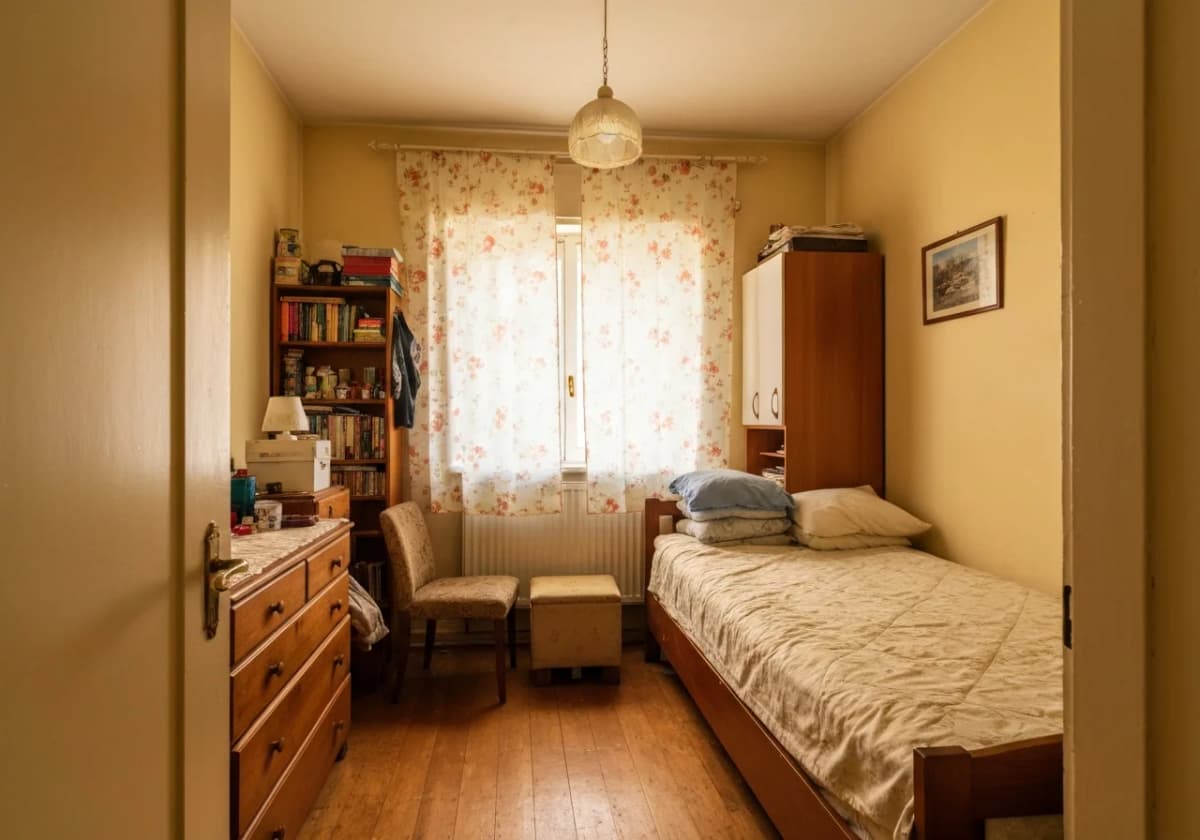
Problem: Not enough bedrooms for a growing family
Solution: We design bedroom additions that integrate with the existing floor plan, adding space without disrupting current room flow or outdoor living areas.
Problem: No primary suite — just a standard bedroom with a hall bath
Solution: We add a primary suite wing with a private bathroom, walk-in closet, and direct access. This is the most requested addition type in the Treasure Valley.
Problem: Need a home office but no room to create one
Solution: A dedicated office addition provides separation from household activity, proper lighting, electrical for equipment, and the quiet workspace remote professionals need.
Problem: Aging parents need ground-floor living space
Solution: We design in-law suites with bedroom, bathroom, kitchenette, and potentially a separate entrance for independence and privacy.
Problem: Cramped kitchen or living area with no room to expand
Solution: A bump-out addition of 4-12 feet can transform a cramped kitchen or living room, adding counter space, a dining nook, or a seating area.
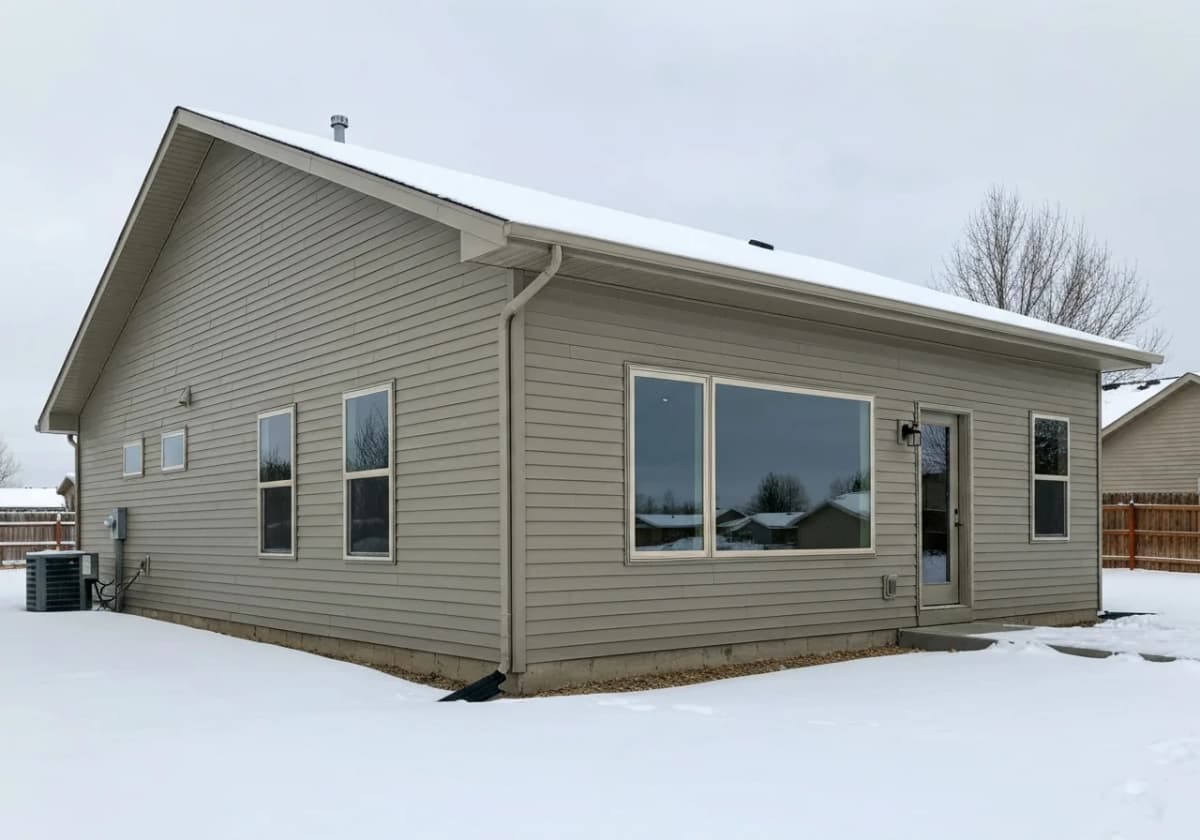
Boise has a semi-arid, four-season climate with hot, dry summers (90-105°F), cold winters (15-35°F), and low annual precipitation. This climate directly affects material choices, construction scheduling, and long-term durability of remodeling work.
Temperature Extremes (15°F to 105°F range)
Exterior materials must handle dramatic temperature swings. Windows need strong thermal performance. Interior comfort depends on insulation quality and HVAC sizing.
Low Humidity and Dry Air
Wood materials can dry, shrink, and crack. Hardwood floors may develop gaps in winter. Bathroom ventilation is still critical because bathrooms create localized high-humidity environments.
Freeze-Thaw Cycles
Exterior tile, concrete, and masonry must handle freezing and thawing without cracking. Foundation work has specific frost-depth requirements in the Boise area.
UV Exposure (300+ sunny days)
Exterior paint, siding, and stain fade faster under constant UV. South-facing and west-facing surfaces require UV-resistant materials and more frequent maintenance.
Construction Season
Foundation and exterior work is best scheduled March through November. Interior remodeling can happen year-round. Winter concrete pours require special cold-weather precautions.
North End
Boise's most historic and walkable neighborhood, with tree-lined streets, Craftsman bungalows, Tudor revivals, and mid-century homes dating from 1900 to 1960. The North End Historic District adds design review requirements for exterior work.
Common projects in North End:
- •Kitchen remodels in older homes with small, closed-off layouts
- •Bathroom updates in homes with original 1920s-1950s plumbing
- •ADU construction in larger lots for rental income
- •Home additions for growing families who love the neighborhood
Southeast Boise / Harris Ranch
A mix of established 1970s-1990s homes and newer master-planned developments like Harris Ranch. Homes range from mid-century ranch-style to modern custom builds with foothills views.
Common projects in Southeast Boise / Harris Ranch:
- •Full kitchen renovations upgrading builder-grade finishes
- •Primary suite additions in older ranch homes
- •Deck and patio construction for outdoor living
- •Whole-home remodels bringing 1970s-1980s homes to modern standards
Boise Bench
An elevated neighborhood south of downtown with a mix of post-war homes from the 1940s-1970s and newer infill construction. Known for its views and access to the Greenbelt.
Common projects in Boise Bench:
- •Bathroom remodels updating 1950s-1970s fixtures and tile
- •Kitchen updates in compact post-war floor plans
- •Basement remodels adding usable living space
- •Energy efficiency upgrades in older homes with poor insulation
West Boise
A large area with subdivisions spanning from the 1980s through the 2010s. Many homes are builder-grade with standard finishes that homeowners upgrade as the homes age.
Common projects in West Boise:
- •Kitchen and bathroom remodels replacing builder-grade finishes
- •Open-concept conversions in 1990s closed-layout homes
- •Flooring replacement throughout the home
- •Exterior painting and siding updates
Every Boise neighborhood has different housing stock, homeowner priorities, and project considerations. Here is what home addition looks like in each area:
North End
The North End is Boise's most architecturally beloved neighborhood, and home additions here require a level of design sensitivity that goes beyond pure construction competence. The neighborhood's 1900s through 1930s Craftsman bungalows, Tudor cottages, and Four Square homes sit on narrow lots — typically 50 feet wide — under mature tree canopies that have grown alongside these houses for a century. Any addition must navigate City of Boise setback requirements (typically 5 feet on the sides, 20 feet in the rear), the overhead and root systems of protected trees, and the expectations of neighbors who have self-selected into the North End precisely because of its architectural character.
Structural considerations in the North End are uniquely challenging because many homes were built on shallow or rubble-stone foundations that were never intended to carry additional loads. Before any second-story addition begins, Iron Crest conducts a full structural assessment — often including a consultation with a licensed Idaho structural engineer — to determine whether the existing foundation can be underpinned or whether isolated footings must be added adjacent to the existing structure. Knob-and-tube wiring is common in homes built before 1945, and any addition that opens up walls will trigger a requirement to update the electrical panel and associated branch circuits to current NEC standards.
The permit process in the North End can be longer than elsewhere in Boise because projects in historically sensitive areas may require Design Review in addition to standard building permits. Iron Crest's familiarity with the Design Review checklist — which evaluates scale, proportion, materials, and compatibility with the neighborhood character — shortens this timeline significantly. Homeowners who attempt to shortcut the Design Review process often discover mid-construction that they must modify or remove work already completed, a costly and demoralizing outcome. The right approach is to treat Design Review as a design collaborator, not an obstacle, and to engage it early with complete drawings and a well-reasoned material narrative.
The payoff for navigating these complexities is enormous. North End homes with thoughtfully executed additions command significant premiums because buyers understand they are getting expanded space in one of Boise's most desirable and irreplaceable neighborhoods. A primary suite addition on a North End bungalow, executed with the right proportions and materials, doesn't just add square footage — it adds a chapter to the story of a home that buyers will pay to be part of.
Boise Bench
The Boise Bench stretches across the elevated plateau south of downtown and contains some of Boise's most beloved mid-century housing stock — 1940s through 1970s ranches, split-levels, and modest two-stories that were built for durability but not for the demands of contemporary family life. The Bench's grid of tree-lined streets, proximity to the greenbelt, and strong school boundaries have kept demand high even as the homes themselves have aged into their seventh or eighth decade of service.
Ranch homes on the Bench are the most common addition candidate in Iron Crest's portfolio. These single-story homes — typically on concrete slabs or shallow crawlspaces — present both opportunities and constraints. The slab-on-grade foundation that's common in Bench ranches is a complication for second-story additions because it was never designed with the lateral and bearing loads of an upper floor in mind. In most cases, second-story additions on slab-foundation homes require the installation of new spread footings at bearing column locations, which involves either drilling through the existing slab or working from the exterior. This adds cost and complexity but is entirely achievable with proper engineering.
The lot sizes on the Bench — typically 6,000 to 9,000 square feet — are larger than North End lots, which means rear additions have more room to breathe. A 400-square-foot rear addition that adds a family room, mudroom, and half bath is a common Bench project that transforms the functional flow of a 1960s ranch without dramatically altering its street-facing character. These projects must still account for the 36-inch frost depth for any new foundation work, and the HVAC systems in Bench homes are frequently undersized for an addition — a furnace that was adequate for 1,400 square feet will struggle with 1,800, so a mechanical assessment is always part of Iron Crest's pre-construction process.
Electrical panels in Bench homes from the 1950s and 1960s are frequently 100-amp fuse boxes or early breaker panels that cannot support the loads of modern additions. Budget for a 200-amp panel upgrade as a near-certain cost in any Bench addition project. The resulting improvement in electrical capacity is genuinely transformative — it enables the addition, supports future EV charging, and modernizes the entire home's electrical infrastructure in a single project.
West Boise
West Boise's residential neighborhoods — stretching from the Meridian border west through communities like Ustick, Linder, and the developments around Ten Mile Road — represent Boise's most conventional suburban housing stock. The 1980s through 2010s two-stories and ranch homes here were built with higher standards than the mid-century Bench homes but were also built for a market that valued square footage over quality: open floor plans, vaulted ceilings, and master suites that feel grand at first glance but often lack the storage, bathroom space, and architectural detail that homeowners want after living in them for a decade.
West Boise additions tend to be more straightforward from a structural standpoint than North End or Bench projects. Homes are younger, foundations are engineered and inspected to modern standards, electrical panels are typically 200-amp, and HVAC systems are sized for the original footprint with room to extend. The primary complexity in West Boise additions is architectural integration — matching the stucco, stone veneer, or T1-11 siding common on 1990s homes requires careful material sourcing because some profiles are no longer manufactured. Iron Crest maintains relationships with specialty suppliers who can match discontinued siding profiles, which is a capability that matters enormously when the goal is an addition that looks like it was always there.
In-law suite additions are particularly popular in West Boise because the lots are large enough to accommodate them, the homes are younger and structurally straightforward, and the demographic profile of West Boise families — many in their 40s and 50s with aging parents and adult children navigating Boise's rental market simultaneously — creates genuine demand for flexible multigenerational living arrangements. The design of these suites requires careful attention to private entry placement, acoustic separation between the suite and the main home, and HVAC zoning so the suite can be independently controlled.
HOA considerations in West Boise are significant. Many of the neighborhood associations in this area have architectural standards that govern exterior materials, colors, and massing, and they have the legal authority to require modification or removal of non-compliant work. Iron Crest's standard process includes obtaining HOA architectural review board approval before pulling any permits, which adds 3–6 weeks to the pre-construction timeline but eliminates the risk of costly mid-construction change orders.
Harris Ranch / Southeast Boise
Harris Ranch is Boise's premier planned development community, occupying the benchlands southeast of downtown along the Boise River. Developed primarily in the 2000s and 2010s, the neighborhood features well-designed contemporary homes on thoughtfully sized lots with access to the extensive Harris Ranch trail network and proximity to the Boise River Greenbelt. The homes here are among Boise's newest and best-constructed, which changes the nature of addition work significantly compared to older neighborhoods.
Because Harris Ranch homes were built to current energy codes with 2x6 framing, modern electrical systems, and properly engineered foundations, structural additions are generally more predictable and less likely to surface costly surprises during demolition. The larger lots — many in the 8,000 to 15,000 square foot range — provide genuine flexibility for rear and side additions without the pinched setback constraints of older urban neighborhoods. And the high baseline home values in Harris Ranch — many homes sell above $600,000 — mean that a well-executed addition adds dollar-for-dollar value with little risk of over-improving for the neighborhood.
The defining constraint in Harris Ranch is the architectural review board process. The Harris Ranch HOA has detailed architectural guidelines governing exterior materials, roof pitches, color palettes, and massing relationships that must be respected for any structural addition. These guidelines are not punitive — they exist to protect the neighborhood's architectural consistency and therefore the property values of every homeowner. But they require careful preparation: complete architectural drawings, material samples, and a written justification are typically required before the ARB will schedule a review meeting. Iron Crest has navigated this process dozens of times and knows how to present addition proposals in a way that anticipates the board's questions and minimizes revision cycles.
Primary suite additions are the most popular project category in Harris Ranch, driven by buyers who purchased homes in the community during the rapid price appreciation of 2018–2022 and who now have the equity to invest in the luxury primary suite that the original builder didn't prioritize. These projects — adding 400 to 700 square feet of bedroom, closet, and bathroom space — deliver immediate quality-of-life improvements and strong resale value in a neighborhood where buyers are actively seeking move-in-ready homes with premium finishes.
Permit authority: City of Boise Planning and Development Services
Online portal: https://pds.cityofboise.org
- ✓Residential remodeling permits are required for plumbing, electrical, structural, and mechanical changes
- ✓The North End Historic District requires design review for exterior modifications
- ✓ADU permits follow specific zoning criteria — lot size, setbacks, parking, and owner-occupancy rules apply
- ✓Online permit portal allows digital submission and tracking
- ✓Inspections can be scheduled online with 24-hour advance notice
- ✓Typical permit processing is 1-2 weeks for standard residential remodels
- ●Roofline integration — the addition's roof must tie into the existing roof seamlessly to prevent leaks and visual disconnection
- ●Exterior material matching — siding, trim, window style, and paint color must match or intentionally complement the existing home
- ●Interior flow — the hallway, doorway, and room transition from the existing home into the addition should feel natural, not awkward
- ●Foundation matching — the addition's foundation type should match the existing home (crawl space, slab, basement) when possible
- ●Mechanical system capacity — evaluate whether existing HVAC, electrical panel, and plumbing main can support the additional load
- ●Natural light — plan window placement for light quality, views, and energy efficiency; additions on the north side need more interior lighting
Here are the design trends we see most often in Boise home addition projects:
- →Modern farmhouse and transitional styles blending clean lines with warm textures
- →Open-concept kitchen conversions removing walls between kitchen and living areas
- →Walk-in showers replacing bathtubs in primary bathrooms
- →Matte black and brushed gold fixture finishes replacing brushed nickel
- →Large-format tile (12x24+) in bathrooms for a modern, minimal-grout look
- →Quartz countertops overtaking granite as the primary kitchen surface
- →LVP (luxury vinyl plank) replacing carpet throughout main living areas
- →Smart home integration — lighting, thermostats, and security systems
Boise's housing market has appreciated significantly over the past decade, with median home values rising from approximately $180,000 in 2015 to over $450,000 in recent years. This appreciation makes remodeling an increasingly attractive investment — homeowners can invest $30,000-80,000 in a kitchen or bathroom remodel and see it reflected in their property value. The competitive market also means that updated, well-maintained homes sell faster and for higher prices than comparable homes with outdated finishes.
✓Licensed general contractor with home addition experience in Idaho
✓Structural engineering partnerships for safe, code-compliant design
✓Complete project management from design through certificate of occupancy
✓Detailed architectural plans included in every addition project
✓All trades licensed and insured — framing, electrical, plumbing, HVAC
✓Workmanship warranty on construction and finish work
Boise's addition market is shaped by forces that simply don't exist in Meridian, Nampa, or Caldwell. The combination of a mature urban housing stock — much of it Craftsman-era or mid-century — with sky-high replacement costs and a deeply ingrained neighborhood identity creates a client base that is uniquely motivated to invest in staying rather than moving.
In Meridian and West Nampa, the housing stock is newer, lots are larger, and the emotional attachment to place is often less entrenched — homeowners who outgrow their space are more willing to trade up. In Boise proper, particularly in the North End and Boise Bench, homeowners have often been in their homes for fifteen or twenty years, their children grew up on the block, and the idea of leaving for a larger house in a suburb they don't know is genuinely unappealing. This creates clients who are willing to invest $200,000 or more in an addition because the math of staying beats the math of leaving, and because the emotional value of the home and neighborhood is irreplaceable.
Boise's historic neighborhoods also create a design standard for additions that doesn't exist in newer suburban communities. A second-story addition on a 1920s North End bungalow must be architecturally credible — matching roof pitch, window proportions, trim profiles, and material quality — or it will look wrong to every passerby and undermine the home's value. This requires a level of architectural sophistication in the design phase that West Boise or Meridian additions rarely demand. Iron Crest's design-build approach, which integrates architectural drawing and construction under one roof, is particularly well-suited to this challenge.
Ada County building permits for home additions are handled through the Boise Building Services division, and the permitting process here is more rigorous than in many surrounding municipalities. Every addition requires a building permit, and projects above a certain scope trigger plan review by a structural plans examiner. The plan review process in Boise currently averages 3–6 weeks for residential additions, though projects with complex structural elements can take longer. Iron Crest submits permit-ready drawings at the outset of every project, which is the single most important thing a contractor can do to shorten the permitting timeline.
The frost depth requirement of 36 inches is non-negotiable and represents one of the most significant cost drivers for any addition in Ada County. Every new foundation element — perimeter walls, isolated footings, grade beams — must extend to this depth to prevent frost heave from lifting and cracking the structure. This requirement adds concrete volume, excavation depth, and forming cost to every addition project. Contractors who underestimate or ignore this requirement create additions that will crack and shift within a few years, generating expensive remediation work and potential liability. Iron Crest specifies all foundation work to the Ada County standards with the documentation to prove it.
Boise's semi-arid climate creates specific moisture management requirements that differ from wetter climates. Unlike the Pacific Northwest, Boise doesn't face chronic exterior moisture intrusion — but it does face intense summer UV radiation, occasional severe thunderstorms that can deliver an inch of rain in twenty minutes, and the roof snow loads that come with occasional heavy winter storms. Exterior assemblies must be detailed for solar-driven moisture reversal: in Boise's climate, wall assemblies can dry to either the interior or exterior depending on the season, so vapor control strategies must be appropriate for a mixed dry climate (IECC Climate Zone 5B) rather than a wet climate.
HVAC extension for additions requires careful engineering. Boise's temperature extremes — from 15°F winters to 105°F summers — place heavy demands on heating and cooling systems. Most existing homes were mechanically designed for their original footprint, and simply tying an addition into the existing ductwork is rarely adequate. Iron Crest conducts a Manual J load calculation for every addition project to determine whether the existing equipment has adequate capacity and to design the supply and return distribution for the new space. In many cases, a mini-split system dedicated to the addition is the most cost-effective and energy-efficient solution, particularly for in-law suites or primary suite additions where independent temperature control is desirable.
Lot coverage limits and setback requirements vary by zoning district and are rigorously enforced in Boise. R-1A zoning (common in the North End and Boise Bench) typically limits lot coverage to 35% and requires side setbacks of 5 feet and rear setbacks of 20 feet. R-1C zoning allows slightly higher density. Before any addition is designed, Iron Crest's process includes a zoning analysis to confirm the proposed footprint complies with all applicable development standards — a step that prevents the heartbreaking scenario where a homeowner falls in love with an addition design that turns out to be unpermittable on their specific lot.
Home additions in Boise represent one of the most compelling investment decisions available to homeowners in the current market. With median home values above $450,000 and the cost of selling and buying a larger replacement home approaching $50,000–$80,000 in commissions, moving costs, and rate impact alone, additions frequently deliver positive net value even before accounting for the quality-of-life improvements they create.
The ROI on specific addition types in Boise's market is instructive. Primary suite additions on well-maintained Boise homes typically recoup 60–75% of their cost at resale while providing years of enjoyment in the meantime. In-law suite additions — particularly those that can be legally rented as ADUs — can generate $1,200–$1,800 per month in rental income that directly offsets the addition's financing cost, creating a project that effectively pays for itself over a 7–10 year horizon while also increasing the home's market value.
Second-story additions on Bench ranches are the highest-ROI project in Boise's addition category, primarily because they allow owners to stay in neighborhoods where resale inventory is chronically tight and where the cost premium for larger existing homes is severe. A family that can add 800 square feet of second-story space for $220,000 rather than selling their 1,400 square foot ranch and competing for a 2,200 square foot home in the same neighborhood — where those homes sell above $650,000 when they appear at all — is making a financially sound decision.
The long-term equity picture in Boise favors staying and investing. Ada County's population growth trajectory, constrained land supply in the urban core, and the demonstrated premium that buyers pay for homes in established neighborhoods all support the thesis that investing in your existing home is a sound financial strategy. Iron Crest clients who completed additions in 2019–2021 have seen the resulting square footage appreciate dramatically as Boise's market continued its upward trajectory — the addition cost was fixed, but the value it added has compounded with the market.
Avoid these common pitfalls Boise homeowners encounter with home addition projects:
Mistake: Designing the addition before checking zoning and setback requirements
Better approach: Every addition design should begin with a zoning analysis. Ada County's GIS portal and Boise's online permit system both provide parcel-level zoning information, and Iron Crest's pre-construction process includes a formal zoning review before a single design hour is spent. This prevents the scenario — more common than homeowners expect — where a beautifully designed addition turns out to require a variance or is simply impossible on the specific lot. Setback requirements, lot coverage maximums, and height limits are non-negotiable, and designing around them from the beginning saves enormous time and emotional investment.
Mistake: Underestimating the cost of matching historic materials in the North End
Better approach: North End additions must match the architectural character of the original home, and that matching comes at a cost that generic contractor bids frequently miss. Original Craftsman trim profiles, period-appropriate window proportions, and matching wood or fiber cement siding in discontinued profiles are all more expensive than standard off-the-shelf materials. Iron Crest's North End addition budgets include a dedicated line item for architectural matching that reflects the real cost of sourcing appropriate materials — which prevents the budget overrun that occurs when a contractor discovers mid-project that the trim they need costs three times what they estimated.
Mistake: Tying the addition directly into the existing HVAC without a load calculation
Better approach: Boise's climate extremes make HVAC adequacy a genuine comfort issue, not a theoretical one. An existing furnace or air conditioner that was sized for 1,400 square feet cannot reliably heat or cool a 1,900 square foot home through Boise's hottest and coldest days. Iron Crest conducts a Manual J load calculation on every addition project to determine whether the existing equipment has excess capacity and to design the duct extension or supplemental equipment needed for the new space. In most cases, a dedicated mini-split for the addition is the most cost-effective solution and provides the bonus of independent temperature control.
Mistake: Skipping the structural assessment for second-story additions on older homes
Better approach: The temptation to skip or shortcut the structural assessment — particularly for homeowners who are cost-sensitive at the front end of a large project — is understandable but genuinely dangerous. Boise Bench ranches built in the 1950s and 1960s were not designed for second-story loads, and their foundations, wall plates, and framing must be evaluated by a qualified professional before any design is finalized. Discovering structural deficiencies after framing has begun — or after the addition is complete — is exponentially more expensive than discovering them during the assessment phase. The $2,000–$4,000 investment in a thorough structural evaluation is the best money spent in any second-story addition project.
Mistake: Failing to address the electrical panel before starting the addition
Better approach: Boise Bench and North End homes built before 1975 frequently have 60-amp or 100-amp electrical panels that are inadequate for both the existing home and any addition. Starting an addition without upgrading the panel creates a situation where the addition's electrical rough-in is complete but the panel can't support the loads — which means the panel upgrade happens mid-project at higher cost and with greater scheduling disruption. Iron Crest's standard pre-construction checklist includes an electrical panel assessment, and panel upgrades are budgeted into every addition project on pre-1975 homes as a near-certain scope item. A 200-amp panel upgrade, typically $2,500–$4,500, is one of the best investments in any addition project and benefits the entire home, not just the addition.
As Idaho's capital and largest city, Boise has a residential landscape that spans from early 1900s Craftsman bungalows in the North End to modern custom homes in the Southeast Boise foothills. The city's rapid growth over the past decade has increased property values substantially, making home remodeling an increasingly smart investment. Boise homeowners remodel for a mix of reasons: updating outdated finishes in 1980s and 1990s homes, expanding square footage for growing families, improving energy efficiency in older homes, and increasing property value in a competitive market. The city's four-season climate, with hot dry summers and cold winters, creates specific material and design considerations for both interior and exterior projects. Boise's building department is well-organized and responsive, but permit requirements are thorough — especially for structural work, plumbing changes, and ADU construction. The North End Historic District has additional design review requirements for exterior modifications.
Most popular remodeling projects in Boise
- ✓Kitchen remodels with open-concept conversion
- ✓Primary bathroom remodels with walk-in shower
- ✓ADU construction for rental income
- ✓Whole-home remodels in 1980s-1990s homes
- ✓Home additions for primary suites
- ✓Basement finishing and remodeling
- ✓Deck and outdoor living construction
- ✓Energy efficiency upgrades (windows, insulation, HVAC)
Bathroom Remodeling Cost in BoiseHow Long Does Bathroom Remodeling Take in Boise?Best Materials for Bathroom Remodeling in BoiseBathroom Remodeling Design Ideas for Boise HomesKitchen Remodeling Cost in BoiseHow Long Does Kitchen Remodeling Take in Boise?Best Materials for Kitchen Remodeling in BoiseKitchen Remodeling Design Ideas for Boise HomesHome Additions Cost in BoiseHow Long Does Home Additions Take in Boise?
Do I need a structural engineer for a home addition in Boise?
For the vast majority of home additions in Boise — anything involving a second story, a load-bearing wall modification, or a foundation tie-in — Ada County's Building Services will require stamped structural drawings from a licensed Idaho structural engineer. Even for projects that don't technically require it under the permit threshold, Iron Crest recommends structural engineering review for any addition that adds load to an existing foundation, because the cost of engineering ($1,500–$4,000 depending on complexity) is trivially small compared to the cost of discovering a structural deficiency after the addition is framed. Idaho's 36-inch frost depth and the seismic considerations relevant to Ada County (the Boise area is in Seismic Design Category B) make professional structural review a genuine protection for your investment, not just a bureaucratic formality.
How long does the permit process take for a home addition in Boise?
Boise Building Services currently processes residential addition permits in approximately 3–6 weeks from complete application submission. The key word is "complete" — applications with missing drawings, unclear structural details, or incorrect zoning information are returned for correction, which resets the clock. Iron Crest's estimating and design team prepares permit-ready drawings that anticipate plan examiner questions and include all required documentation (site plan, floor plans, elevations, structural details, energy code compliance worksheet) in the initial submission. This approach consistently achieves first-review approvals in the 3–4 week range. Projects that require Design Review in addition to standard building permits — common in the North End — should budget an additional 3–5 weeks for that parallel process.
Can I add an in-law suite with a kitchen in Boise?
Yes, and Boise's ADU ordinance has become progressively more permissive over the past several years. Accessory dwelling units — whether attached to the primary home or detached — are permitted in most Boise residential zones for owner-occupied properties. An attached in-law suite with a kitchenette, full bathroom, bedroom, and private entrance is permitted as an ADU and, once properly permitted, can be legally rented as a separate dwelling unit. The key requirements include minimum lot size thresholds (typically 6,000 square feet for attached ADUs), compliance with utility connection standards, and — if the ADU is rented — registration with the City of Boise. Iron Crest handles the full permit process for in-law suite additions and designs them from the outset with the accessibility features, acoustic separation, and utility independence that make them genuinely functional as autonomous living spaces.
Will a home addition in Boise hurt my property taxes?
Yes, adding square footage to your home will increase your assessed value and therefore your property tax bill — but the increase is proportional and well worth the investment for most homeowners. Ada County Assessor's Office reassesses properties when building permits are pulled and finaled, so the tax impact begins the year after your addition is completed. The exact increase depends on the square footage added, the quality of the finishes, and the current assessed value of your home. As a rough estimate, a $150,000 addition that adds 600 square feet of finished space might increase your annual property tax bill by $800–$1,500 depending on your current tax rate. This incremental cost is nearly always offset by the value the addition adds to the home and by the avoided cost of selling and repurchasing in Boise's expensive market.
How do I know if my North End home can support a second story?
The honest answer is that you need a professional assessment — and Iron Crest provides exactly that as part of our addition feasibility process. North End homes vary enormously in their structural capacity. Some early-twentieth-century bungalows were built with surprisingly robust foundations and framing that can support a second story with modest reinforcement. Others were built on rubble-stone foundations or have experienced decades of settling, moisture damage, or amateur modification that requires significant remediation before any addition is possible. Our process includes a visual structural assessment, foundation inspection (including crawlspace if applicable), and consultation with a licensed Idaho structural engineer when needed. We'll give you a honest assessment of what's possible, what it will cost, and whether the investment makes sense for your specific home and goals — before you commit to anything.
How do I know if a home addition is worth it?
That depends on available lot space, budget, current home layout, and whether the extra square footage solves a long-term need. In the Treasure Valley's housing market, adding square footage to a well-located home is often more cost-effective than buying a larger home — especially when you factor in moving costs, higher property taxes, and the appreciation of your current location.
How much does a home addition cost per square foot in Idaho?
Home additions in the Boise area typically cost $150-350 per square foot, depending on foundation type, structural complexity, finish level, and whether the addition includes plumbing (bathroom) or specialized systems. A simple room addition is on the lower end; a primary suite with full bathroom is on the higher end.
Do home additions require permits?
Yes. All home additions require building permits, plan review, and multiple inspections — foundation, framing, mechanical, electrical, plumbing, insulation, and final. We handle the entire permitting process.
How long does a home addition take to build?
A typical home addition takes 3 to 6 months from start of construction to completion. Including design, engineering, and permitting, the total project timeline is 5 to 9 months. Weather, permit timelines, and material availability all affect the schedule.
Will the addition match my existing home?
Yes. We carefully match rooflines, siding, windows, trim profiles, and interior finishes so the addition looks like it was always part of the house. This is one of the most important aspects of addition design.
Can I add a second story to my single-story home?
It is possible, but requires a structural evaluation of the existing foundation and framing to confirm they can support the additional load. Second-story additions are more complex and costly than ground-level additions but preserve outdoor space.
Do I need to move out during construction?
Most homeowners stay in the home during an addition project. The construction area is sealed from the living space with dust barriers. Temporary disruptions to utilities are typically brief and scheduled in advance.
Start your home addition in Boise
Get a free, no-obligation estimate for home additions in Boise, ID. We handle design, permits, and every detail of construction.
Get Your Free Estimate