
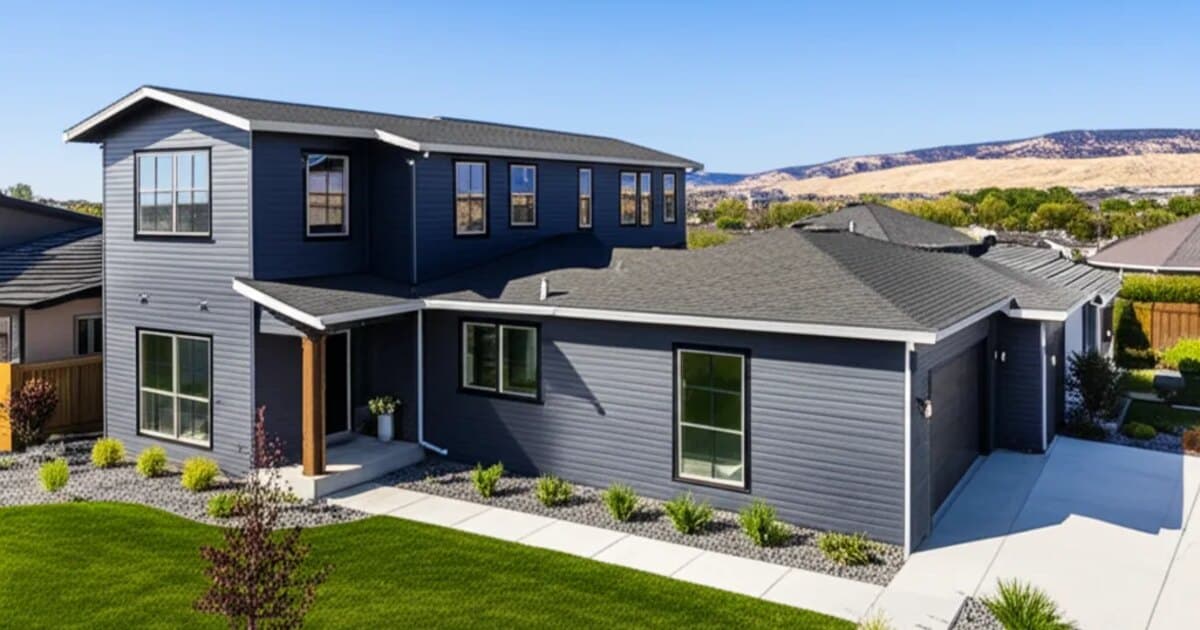
Home Additions Design Ideas for Boise
Get inspired with home additions design ideas tailored to Boise homes, from trending styles to practical layout considerations.
Quick answer
Will the addition match my existing home? Yes. We carefully match rooflines, siding, windows, trim profiles, and interior finishes so the addition looks like it was always part of the house. This is one of the most important aspects of addition design.
Boise, ID · Home Additions
Planning home additions in Boise?
Read the full guide below — or get your project priced now. Free, no-obligation estimates from an Idaho registered local team, backed by a 1-year workmanship warranty.
- Licensed Idaho RCE-6681702
- 1-Year Workmanship Warranty
- $2M Liability Coverage
- Free, No-Obligation Estimates
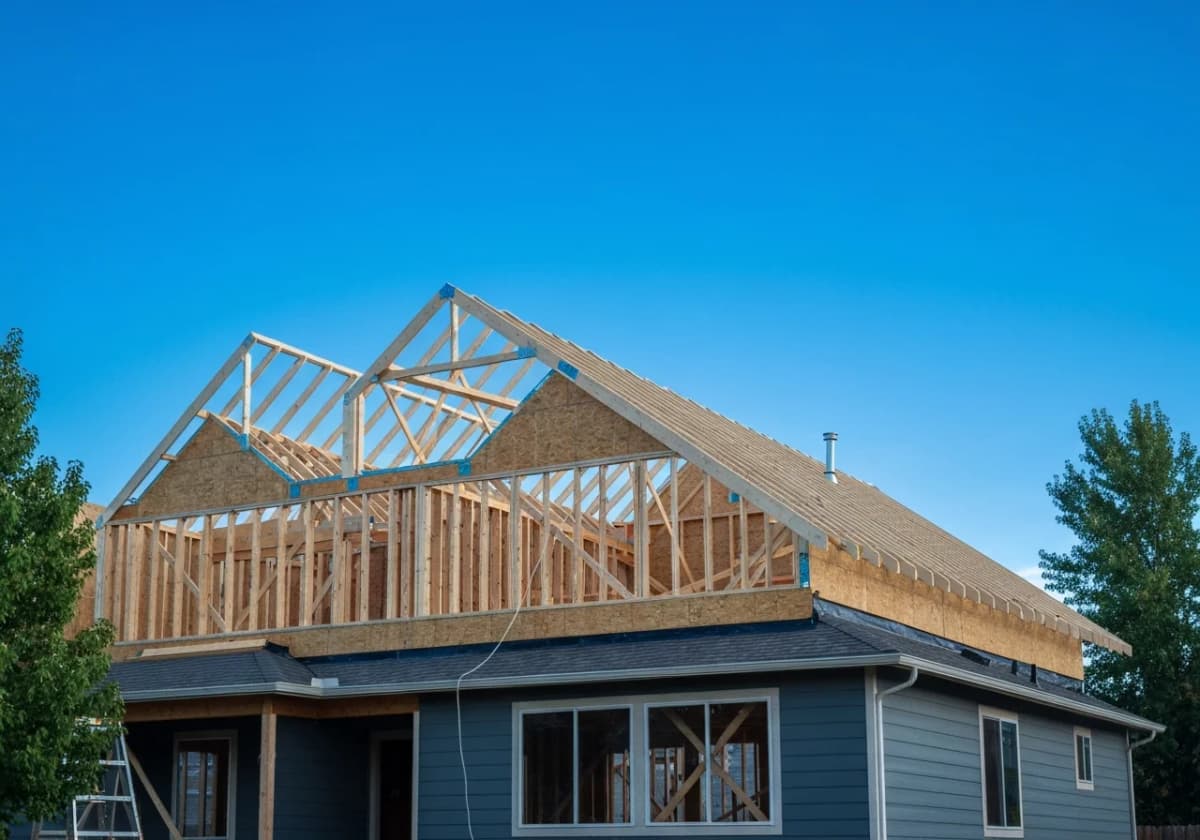
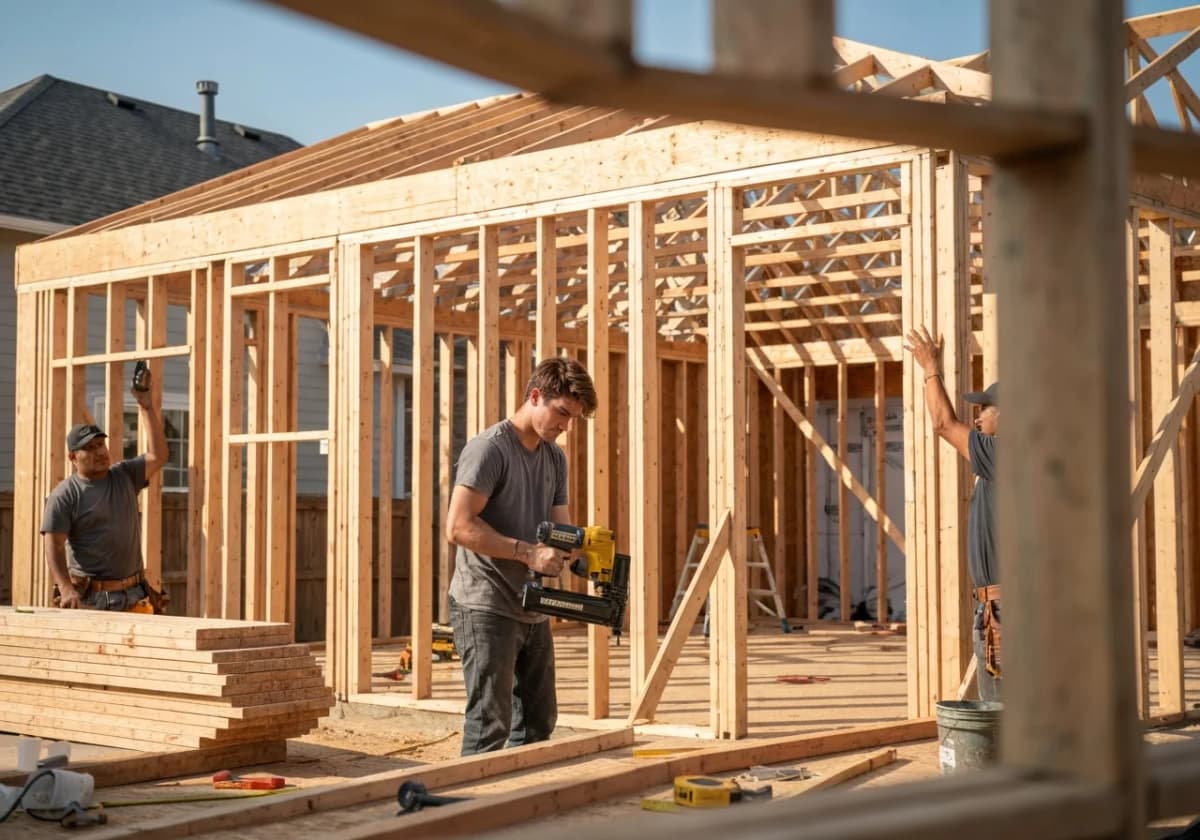

Boise's addition market is shaped by forces that simply don't exist in Meridian, Nampa, or Caldwell. The combination of a mature urban housing stock — much of it Craftsman-era or mid-century — with sky-high replacement costs and a deeply ingrained neighborhood identity creates a client base that is uniquely motivated to invest in staying rather than moving. In Meridian and West Nampa, the housing stock is newer, lots are larger, and the emotional attachment to place is often less entrenched — homeowners who outgrow their space are more willing to trade up. In Boise proper, particularly in the North End and Boise Bench, homeowners have often been in their homes for fifteen or twenty years, their children grew up on the block, and the idea of leaving for a larger house in a suburb they don't know is genuinely unappealing. This creates clients who are willing to invest $200,000 or more in an addition because the math of staying beats the math of leaving, and because the emotional value of the home and neighborhood is irreplaceable. Boise's historic neighborhoods also create a design standard for additions that doesn't exist in newer suburban communities. A second-story addition on a 1920s North End bungalow must be architecturally credible — matching roof pitch, window proportions, trim profiles, and material quality — or it will look wrong to every passerby and undermine the home's value. This requires a level of architectural sophistication in the design phase that West Boise or Meridian additions rarely demand. Iron Crest's design-build approach, which carries a project from architectural drawing through construction under a single contract, is particularly well-suited to this challenge.
North End
The North End is Boise's most architecturally beloved neighborhood, and home additions here require a level of design sensitivity that goes beyond pure construction competence. The neighborhood's 1900s through 1930s Craftsman bungalows, Tudor cottages, and Four Square homes sit on narrow lots — typically 50 feet wide — under mature tree canopies that have grown alongside these houses for a century. Any addition must navigate City of Boise setback requirements — in R-1C, the district covering most of the North End, an interior side setback of 5 or 10 feet depending on the applicable standard and a 15-foot rear setback, confirmed against the parcel's actual zoning rather than assumed — along with the overhead and root systems of protected trees, and the expectations of neighbors who have self-selected into the North End precisely because of its architectural character. Structural considerations in the North End are uniquely challenging because many homes were built on shallow or rubble-stone foundations that were never intended to carry additional loads. Before any second-story addition begins, Iron Crest conducts a full structural assessment — often including a consultation with a licensed Idaho structural engineer — to determine whether the existing foundation can be underpinned or whether isolated footings must be added adjacent to the existing structure. Knob-and-tube wiring is common in homes built before 1945, and any addition that opens up walls will trigger a requirement to update the electrical panel and associated branch circuits to current NEC standards. The permit process in the North End can be longer than elsewhere in Boise because projects in historically sensitive areas may require Design Review in addition to standard building permits. Iron Crest's familiarity with the Design Review checklist — which evaluates scale, proportion, materials, and compatibility with the neighborhood character — shortens this timeline significantly. Homeowners who attempt to shortcut the Design Review process often discover mid-construction that they must modify or remove work already completed, a costly and demoralizing outcome. The right approach is to treat Design Review as a design collaborator, not an obstacle, and to engage it early with complete drawings and a well-reasoned material narrative. The payoff for navigating these complexities is a bungalow that finally holds the household living in it without giving up the block, the tree canopy, or the walk downtown. A primary suite addition on a North End home, executed with the right proportions and materials, reads as part of the original house rather than as something attached to it. What that is worth in dollars on a specific North End street is a question for an agent or appraiser working current comparables — we have no transaction-level data for it and will not publish a figure.
Boise Bench
The Boise Bench stretches across the elevated plateau south of downtown and contains some of Boise's most beloved mid-century housing stock — 1940s through 1970s ranches, split-levels, and modest two-stories that were built for durability but not for the demands of contemporary family life. The Bench's grid of tree-lined streets, proximity to the greenbelt, and strong school boundaries have kept demand high even as the homes themselves have aged into their seventh or eighth decade of service. Ranch homes on the Bench are the most common addition candidate in Iron Crest's portfolio. These single-story homes — typically on concrete slabs or shallow crawlspaces — present both opportunities and constraints. The slab-on-grade foundation that's common in Bench ranches is a complication for second-story additions because it was never designed with the lateral and bearing loads of an upper floor in mind. In most cases, second-story additions on slab-foundation homes require the installation of new spread footings at bearing column locations, which involves either drilling through the existing slab or working from the exterior. This adds cost and complexity but is entirely achievable with proper engineering. The lot sizes on the Bench — typically 6,000 to 9,000 square feet — are larger than North End lots, which means rear additions have more room to breathe. A 400-square-foot rear addition that adds a family room, mudroom, and half bath is a common Bench project that transforms the functional flow of a 1960s ranch without dramatically altering its street-facing character. These projects must still account for the 24-inch frost depth for any new foundation work, and the HVAC systems in Bench homes are frequently undersized for an addition — a furnace that was adequate for 1,400 square feet will struggle with 1,800, so a mechanical assessment is always part of Iron Crest's pre-construction process. Electrical panels in Bench homes from the 1950s and 1960s are frequently 100-amp fuse boxes or early breaker panels that cannot support the loads of modern additions. Budget for a 200-amp panel upgrade as a near-certain cost in any Bench addition project. The resulting improvement in electrical capacity is genuinely transformative — it enables the addition, supports future EV charging, and modernizes the entire home's electrical infrastructure in a single project.
West Boise
West Boise's residential neighborhoods — stretching from the Meridian border west through communities like Ustick, Linder, and the developments around Ten Mile Road — represent Boise's most conventional suburban housing stock. The 1980s through 2010s two-stories and ranch homes here were built with higher standards than the mid-century Bench homes but were also built for a market that valued square footage over quality: open floor plans, vaulted ceilings, and master suites that feel grand at first glance but often lack the storage, bathroom space, and architectural detail that homeowners want after living in them for a decade. West Boise additions tend to be more straightforward from a structural standpoint than North End or Bench projects. Homes are younger, foundations are engineered and inspected to modern standards, electrical panels are typically 200-amp, and HVAC systems are sized for the original footprint with room to extend. The primary complexity in West Boise additions is architectural integration — matching the stucco, stone veneer, or T1-11 siding common on 1990s homes requires careful material sourcing because some profiles are no longer manufactured. Iron Crest maintains relationships with specialty suppliers who can match discontinued siding profiles, which is a capability that matters enormously when the goal is an addition that looks like it was always there. In-law suite additions are particularly popular in West Boise because the lots are large enough to accommodate them, the homes are younger and structurally straightforward, and the demographic profile of West Boise families — many in their 40s and 50s with aging parents and adult children navigating Boise's rental market simultaneously — creates genuine demand for flexible multigenerational living arrangements. The design of these suites requires careful attention to private entry placement, acoustic separation between the suite and the main home, and HVAC zoning so the suite can be independently controlled. HOA considerations in West Boise are significant. Many of the neighborhood associations in this area have architectural standards that govern exterior materials, colors, and massing, and they have the legal authority to require modification or removal of non-compliant work. Iron Crest's standard process includes obtaining HOA architectural review board approval before pulling any permits, which adds 3–6 weeks to the pre-construction timeline but eliminates the risk of costly mid-construction change orders.
Harris Ranch / Southeast Boise
Harris Ranch is Boise's premier planned development community, occupying the benchlands southeast of downtown along the Boise River. Developed primarily in the 2000s and 2010s, the neighborhood features well-designed contemporary homes on thoughtfully sized lots with access to the extensive Harris Ranch trail network and proximity to the Boise River Greenbelt. The homes here are among Boise's newest and best-constructed, which changes the nature of addition work significantly compared to older neighborhoods. Because Harris Ranch homes were built to current energy codes with 2x6 framing, modern electrical systems, and properly engineered foundations, structural additions are generally more predictable and less likely to surface costly surprises during demolition. The larger lots — many in the 8,000 to 15,000 square foot range — provide genuine flexibility for rear and side additions without the pinched setback constraints of older urban neighborhoods. Whether an addition risks over-improving for the neighborhood is a question for a local agent or appraiser working current Harris Ranch comparables — we do not publish a value figure for it. The defining constraint in Harris Ranch is the architectural review board process. The Harris Ranch HOA has detailed architectural guidelines governing exterior materials, roof pitches, color palettes, and massing relationships that must be respected for any structural addition. These guidelines are not punitive — they exist to protect the neighborhood's architectural consistency and therefore the property values of every homeowner. But they require careful preparation: complete architectural drawings, material samples, and a written justification are typically required before the ARB will schedule a review meeting. Iron Crest works through this process regularly and knows how to present addition proposals in a way that anticipates the board's questions and minimizes revision cycles. Primary suite additions are the most popular project category in Harris Ranch, driven by owners who bought in the community a decade or so ago and now want the primary suite the original builder didn't prioritize. Whether there is equity available to fund it is a lender's calculation against a current appraisal, not a figure we will estimate here. These projects — adding 400 to 700 square feet of bedroom, closet, and bathroom space — deliver immediate quality-of-life improvements in a neighborhood where buyers are actively seeking move-in-ready homes with premium finishes.
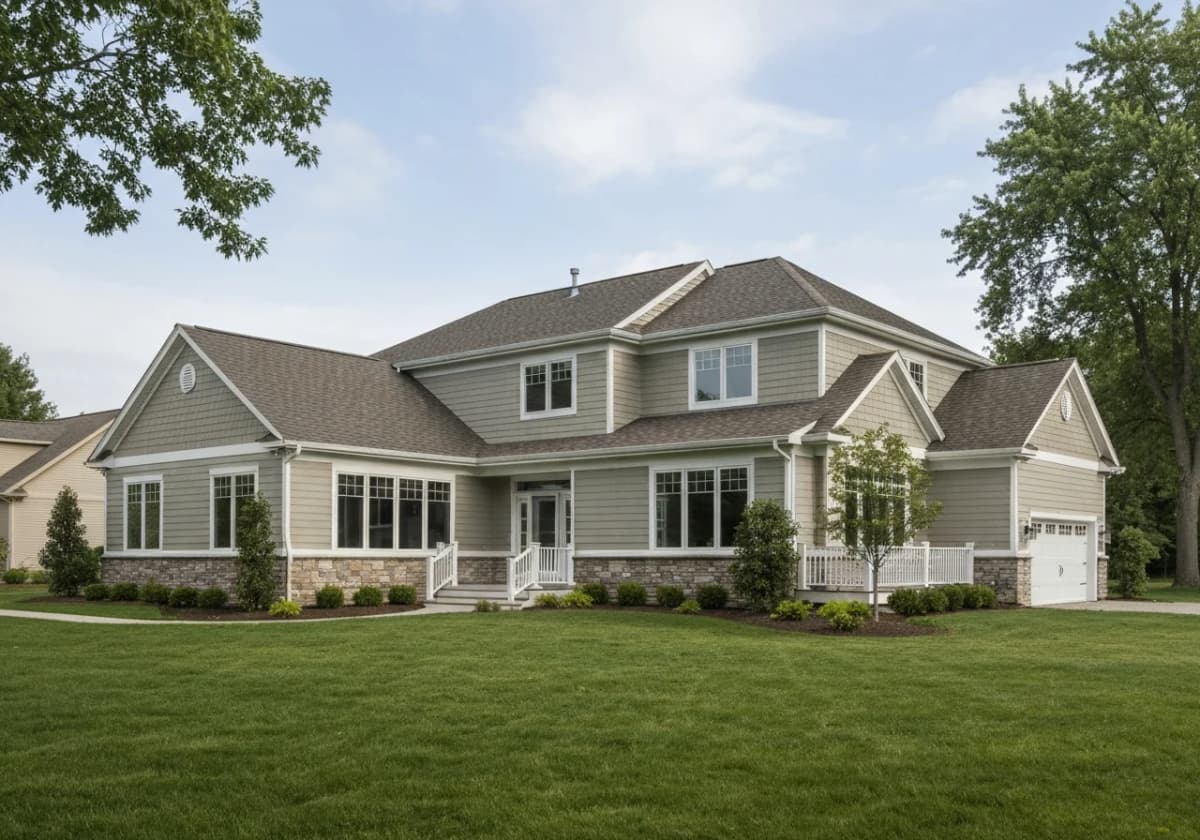
The design phase is where your home additions goes from a general idea to a specific plan. Good design balances aesthetics, functionality, budget, and the unique characteristics of your home and neighborhood in Boise. Here are the most popular design approaches and trends we see in Boise and the surrounding Treasure Valley.
Boise homeowners tend to favor designs that blend modern functionality with the regional character of Idaho homes. Here are the most requested design elements:
These design factors are specific to home additions projects and affect both the look and function of the finished space:
Roofline integration — the addition's roof must tie into the existing roof seamlessly to prevent leaks and visual disconnection
Exterior material matching — siding, trim, window style, and paint color must match or intentionally complement the existing home
Interior flow — the hallway, doorway, and room transition from the existing home into the addition should feel natural, not awkward
Foundation matching — the addition's foundation type should match the existing home (crawl space, slab, basement) when possible
Mechanical system capacity — evaluate whether existing HVAC, electrical panel, and plumbing main can support the additional load
Natural light — plan window placement for light quality, views, and energy efficiency; additions on the north side need more interior lighting
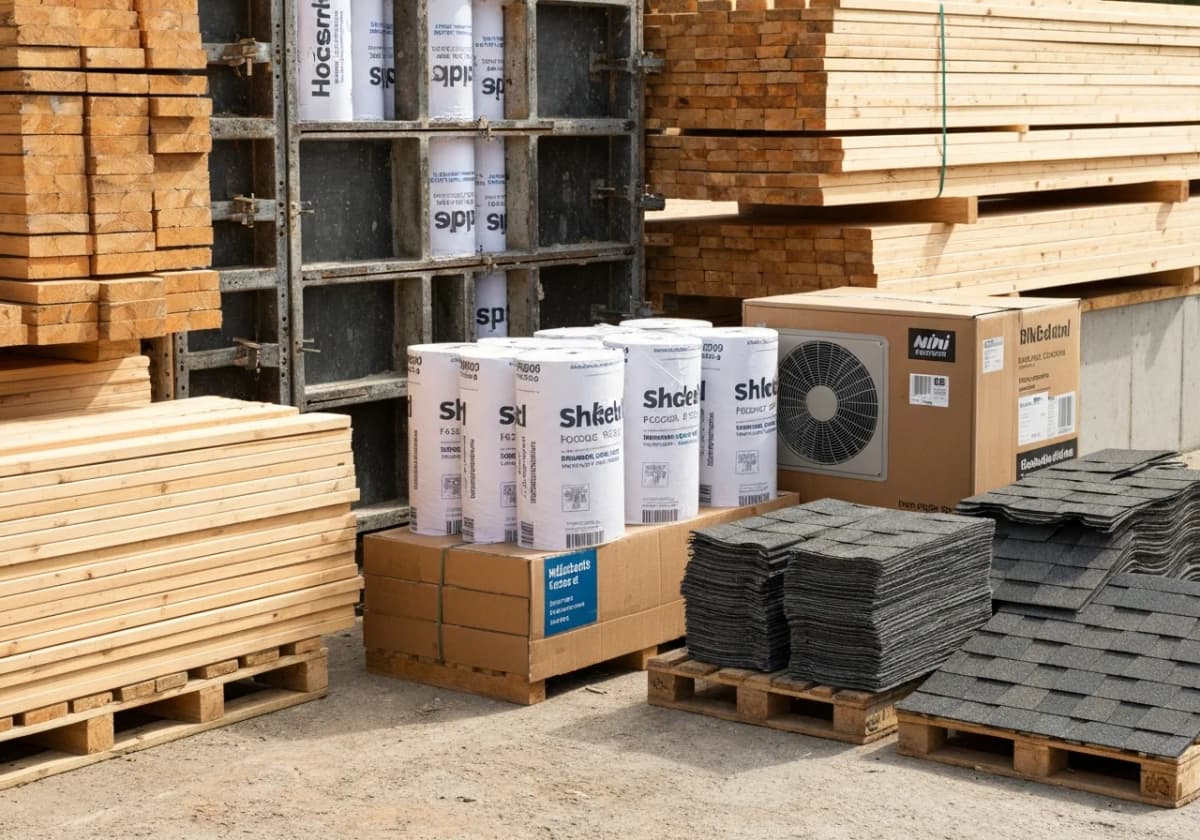
The materials and finishes you choose bring your design to life. Here are the options most commonly selected for home additions projects in Boise:
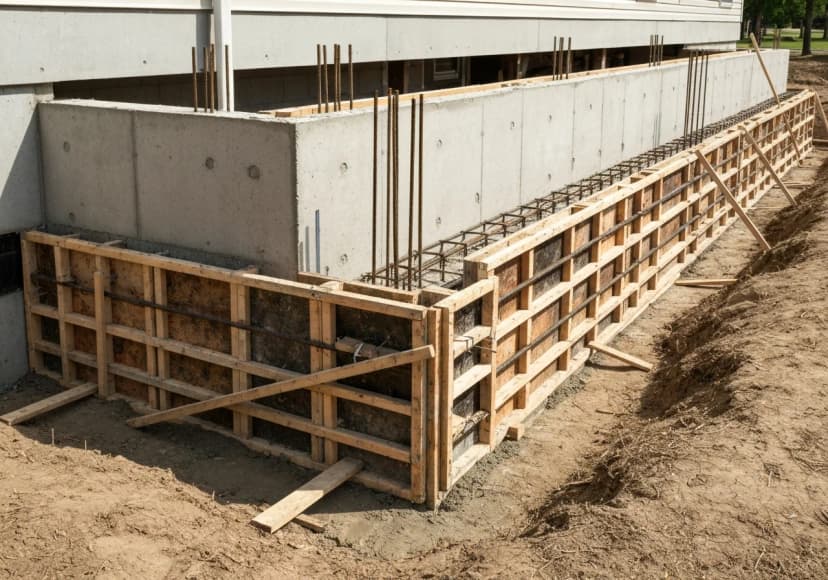
Concrete Foundation (Stem Wall or Slab)
$8,000–$25,000 depending on sizeAll home additions in Idaho
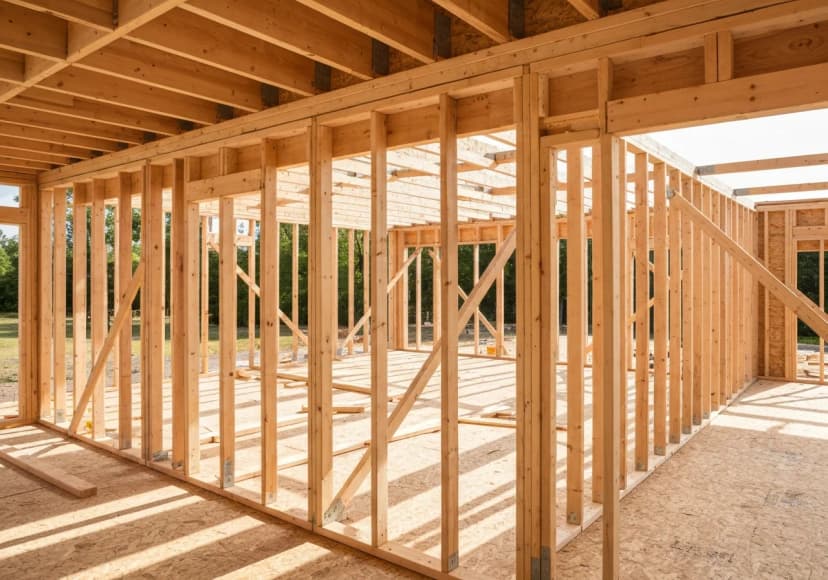
Dimensional Lumber Framing
$15–$25 per sq ft framedStandard room additions and second stories
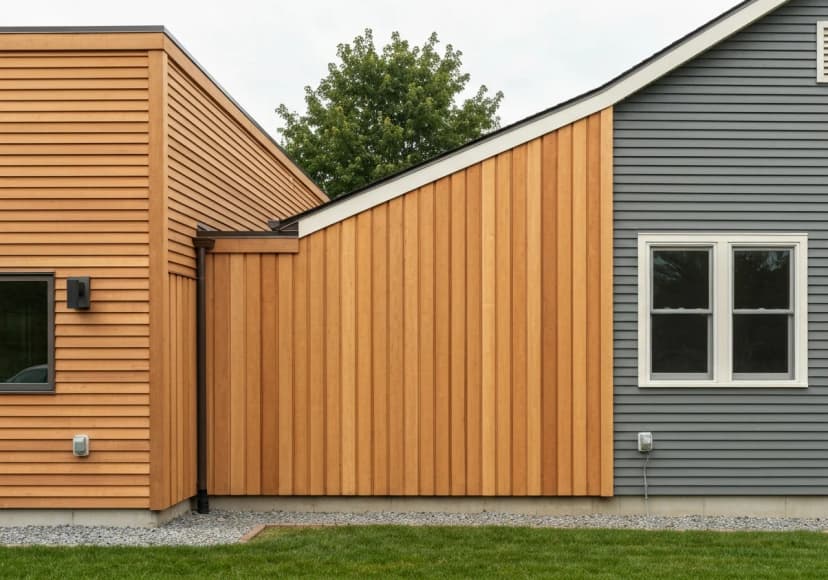
Matching Exterior Siding
$5–$15 per sq ft installedSeamless visual integration
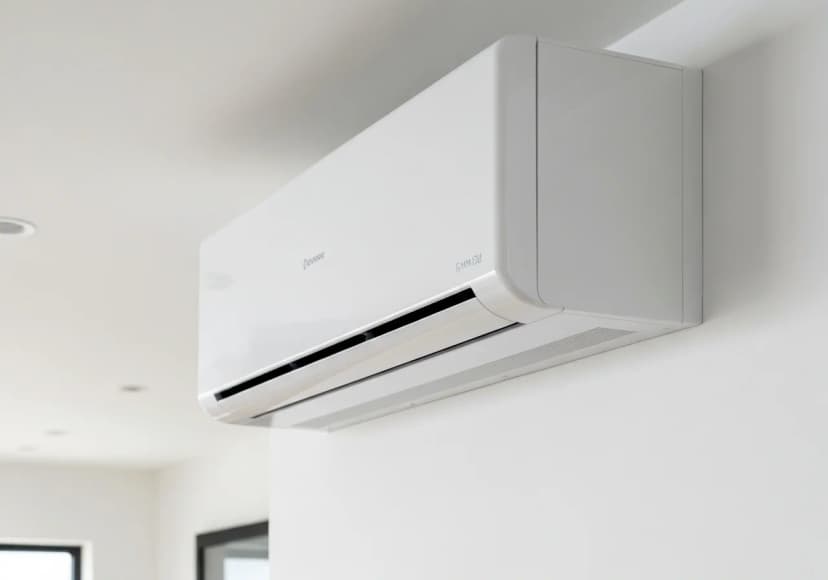
Mini-Split HVAC System
$3,000–$6,000 per zone installedAdditions where extending existing ductwork is impractical
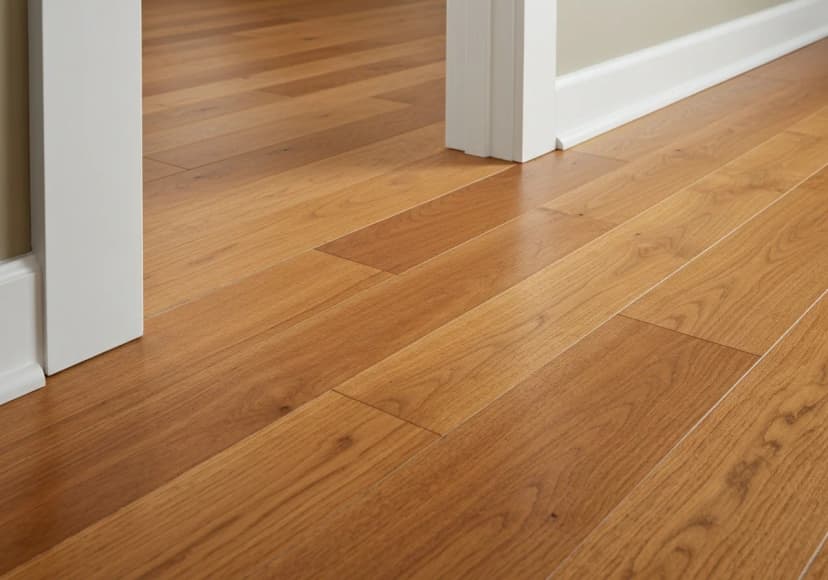
Engineered Hardwood or LVP Flooring
$5–$15 per sq ft installedMatching existing home flooring
Learning from others' mistakes saves time and money. Here are the most common home additions design pitfalls we see in Boise:
Not enough bedrooms for a growing family
We design bedroom additions that integrate with the existing floor plan, adding space without disrupting current room flow or outdoor living areas.
No primary suite — just a standard bedroom with a hall bath
We add a primary suite wing with a private bathroom, walk-in closet, and direct access. This is the most requested addition type in the Treasure Valley.
Need a home office but no room to create one
A dedicated office addition provides separation from household activity, proper lighting, electrical for equipment, and the quiet workspace remote professionals need.
Aging parents need ground-floor living space
We design in-law suites with bedroom, bathroom, kitchenette, and potentially a separate entrance for independence and privacy.
Cramped kitchen or living area with no room to expand
A bump-out addition of 4-12 feet can transform a cramped kitchen or living room, adding counter space, a dining nook, or a seating area.
For home additions projects in Boise, you have two main approaches to the design process: hiring a separate interior designer then a contractor, or working with a design-build firm that handles both under one roof.
Design-build (our approach)
- ✓ Single point of contact
- ✓ Design informed by real construction costs
- ✓ Faster project delivery
- ✓ Budget aligned from day one
Separate designer + contractor
- ● More specialized design expertise
- ● Independent design perspective
- ● Requires coordination between parties
- ● Can result in budget surprises
Local factors — Boise's housing stock and typical construction eras, the climate conditions that drive material and scheduling choices, and permitting through City of Boise Planning and Development Services — are covered in full on our Boise page for this service, alongside 5 common project types.
Home Additions in Boise: housing stock, climate & permits →Will the addition match my existing home?
Yes. We carefully match rooflines, siding, windows, trim profiles, and interior finishes so the addition looks like it was always part of the house. This is one of the most important aspects of addition design.
What about my HVAC — will my existing system handle the addition?
We evaluate your existing HVAC system capacity during the design phase. In many cases, a ductless mini-split system is the most practical solution for heating and cooling the addition independently.
Does the North End have special remodeling rules?
Yes. The North End Historic District has additional design review requirements for exterior modifications. Interior work is not affected, but changes to the exterior appearance — siding, windows, roofing, and additions — may require Historic Preservation Commission review.
Planning home additions in Boise?
Get expert guidance and a free estimate for your home additions project in Boise, ID.
Get Your Free Estimate