
Window Replacement Design Ideas for Eagle
Get inspired with window replacement design ideas tailored to Eagle homes, from trending styles to practical layout considerations.
Quick answer
Eagle's window market is distinguished from other Treasure Valley communities by the combination of foothills solar exposure, premium property values, and the custom-home architectural diversity that demands product and installation versatility that suburban production-home experience does not develop.
Eagle, ID · Window Replacement
Planning window replacement in Eagle?
Read the full guide below — or get your project priced now. Free, no-obligation estimates from an Idaho registered local team, backed by a 1-year workmanship warranty.
- Licensed Idaho RCE-6681702
- 1-Year Workmanship Warranty
- $2M Liability Coverage
- Free, No-Obligation Estimates


Eagle's window market is distinguished from other Treasure Valley communities by the combination of foothills solar exposure, premium property values, and the custom-home architectural diversity that demands product and installation versatility that suburban production-home experience does not develop. No other Treasure Valley city presents the same convergence of these factors at the same scale. The foothills west-facing solar management challenge is Eagle's most technically distinctive window issue. Afternoon western sun on Legacy Ridge and similar foothills elevations is more intense, earlier in the afternoon, and sustained for longer periods than valley-floor equivalents — a consequence of the elevated horizon that the foothills position creates. This is not a minor incremental difference in solar exposure; it is a meaningfully different environmental condition that demands appropriately aggressive SHGC specifications. Contractors who apply valley-floor window specifications to Eagle foothills properties are consistently under-serving the performance requirements of these locations. The premium market dimension also creates a different product selection conversation in Eagle than anywhere else in the Treasure Valley. In Meridian, the window replacement decision is primarily economic — what product delivers the best performance per dollar at standard residential valuations. In Eagle, performance and visual quality are primary considerations with cost as a secondary constraint — a distinction that changes both the product range being considered and the relative weight given to different performance attributes.
Legacy Ridge
Legacy Ridge is Eagle's most demanding window performance environment — a neighborhood of custom and semi-custom homes on foothills lots with south and west exposures that carry some of the heaviest solar loading in Ada County residential real estate. The combination of elevation above the valley floor, hillside terrain that amplifies solar exposure, and the custom-home standard that defines Legacy Ridge creates a window replacement market where the highest-tier specifications are the appropriate starting point. West and southwest-facing rooms in Legacy Ridge properties accumulate afternoon solar gain that exceeds any valley-floor location by a meaningful margin. We consistently recommend the most aggressive SHGC specifications available for Legacy Ridge west-facing windows — SHGC 0.20–0.24 with triple-pane glass is our standard for these orientations, not a premium upgrade. The comfort improvement relative to the original builder-grade windows that many Legacy Ridge homes still carry is felt first in exactly the rooms that are hardest to use on a July afternoon. Legacy Ridge's HOA architectural review extends to window replacement in some instances. Exterior frame color, profile, and divided-light pattern changes require review and approval. Like-for-like replacements generally proceed without formal review. Iron Crest verifies HOA requirements for each Legacy Ridge project at initial consultation and manages approval documentation when required. The view orientation that many Legacy Ridge homes are designed around — northwest to southwest valley views — means that large picture windows and multi-panel sliding systems on view elevations are common features. Specifying high-performance glass in these large-format units is as important as in standard double-hung replacements — the thermal and solar performance implications of a poorly specified large window or door system are proportionally larger given its greater glass area.
Banbury Meadows
Banbury Meadows sits along the Boise River and Dry Creek corridors in Eagle's eastern section, offering a combination of established mature landscaping, river adjacency, and the architectural variety of a community that spans multiple decades and development phases. The window replacement market in Banbury Meadows is well-established — the earlier development phases from the mid-1990s to early 2000s contain homes with original windows that are now at or past their useful service life, while the later phases from the mid-2000s onward are approaching their first major service life milestone. Banbury's river-adjacent lots experience a micro-climate distinction that influences window specification: above-average ambient humidity near the Boise River and Dry Creek corridors creates slightly more demanding moisture cycling conditions for window frames and seals than the drier upland Eagle properties experience. Fiberglass frames' superior resistance to humidity-related dimensional changes is a specific advantage on Banbury's river-adjacent lots, particularly for lower-level windows that are in closer proximity to the moisture sources that greenbelt vegetation and irrigation systems create. Eagle Road corridor noise is a real quality-of-life issue for Banbury properties on the development's western edge, and acoustic glass performance is a legitimate specification priority for road-facing windows. Laminated glass interlayers rate above standard double-pane on the manufacturer's published Sound Transmission Class figures and are available in combination with high-performance Low-E coatings that address both acoustic and thermal priorities simultaneously.
Downtown Eagle
Downtown Eagle's original residential neighborhoods — the streets around Eagle Road and State Street at the city's historic center — contain Idaho's most diverse collection of residential properties in a small-city context: 1920s bungalows, mid-century ranches, 1970s contemporary designs, and 2000s infill homes on original downtown lots. Each property's window replacement needs and appropriate specifications differ as much as the buildings themselves. The design context of Downtown Eagle window replacement is more traditionally residential than the custom-home premium of Legacy Ridge or Banbury Meadows. Appropriate window profiles for pre-1950 downtown homes are historically sympathetic — double-hung window styles with appropriate divided-light patterns in wood-interior frames maintain the character of these architecturally interesting older homes. Ranch-style homes from the 1960s and 1970s typically accept quality vinyl or fiberglass frames in white or almond without stylistic incongruity. Downtown Eagle homeowners generally have more design freedom than Eagle's HOA-governed communities — most downtown lots are on individual deed ownership without active architectural review — giving homeowners the flexibility to make product choices based on performance and personal preference rather than community appearance standards. This freedom is best used with design literacy: choosing products that are appropriate to the home's architectural character rather than importing specifications from unrelated contexts.

The design phase is where your window replacement goes from a general idea to a specific plan. Good design balances aesthetics, functionality, budget, and the unique characteristics of your home and neighborhood in Eagle. Here are the most popular design approaches and trends we see in Eagle and the surrounding Treasure Valley.
Eagle homeowners tend to favor designs that blend modern functionality with the regional character of Idaho homes. Here are the most requested design elements:
These design factors are specific to window replacement projects and affect both the look and function of the finished space:
Window style consistency — use the same style (double-hung, casement, slider) on each elevation for a unified exterior appearance
Grid pattern selection — grids between the glass (GBG) add a traditional look while maintaining easy cleaning; no grids create a clean, modern appearance
Interior color and finish — match window interior color to your trim and millwork; wood-clad windows offer the most interior finish options
Glass performance by exposure — south and west windows benefit from solar-control Low-E coatings; north windows benefit from high-solar-gain Low-E to capture winter warmth
Ventilation planning — ensure enough operable windows for adequate airflow; code requires egress-sized windows in bedrooms for emergency exit
Exterior color coordination — match or complement exterior window color with siding, trim, and front door for cohesive curb appeal
The materials and finishes you choose bring your design to life. Here are the options most commonly selected for window replacement projects in Eagle:
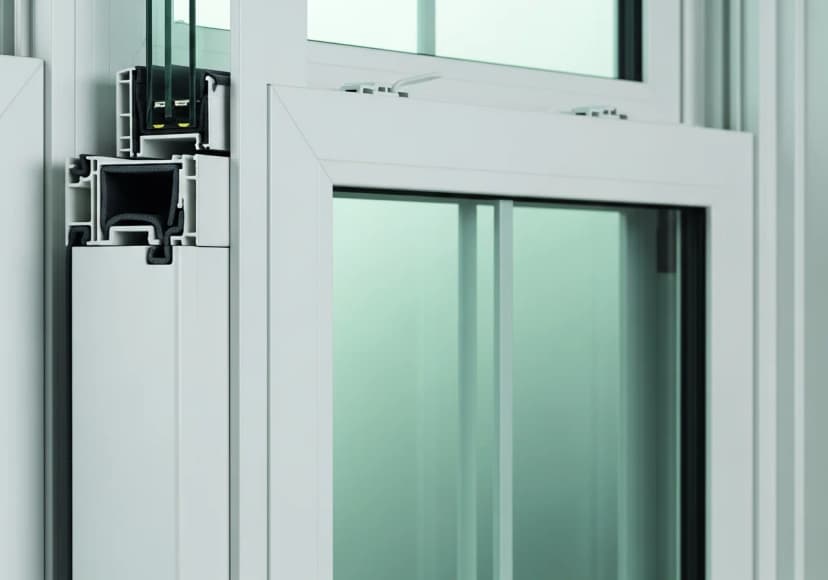
Vinyl Windows (Milgard, Simonton, Ply Gem)
$300–$900 per window installed, depending on tierBudget-conscious whole-home replacements where maximum energy savings per dollar is the priority
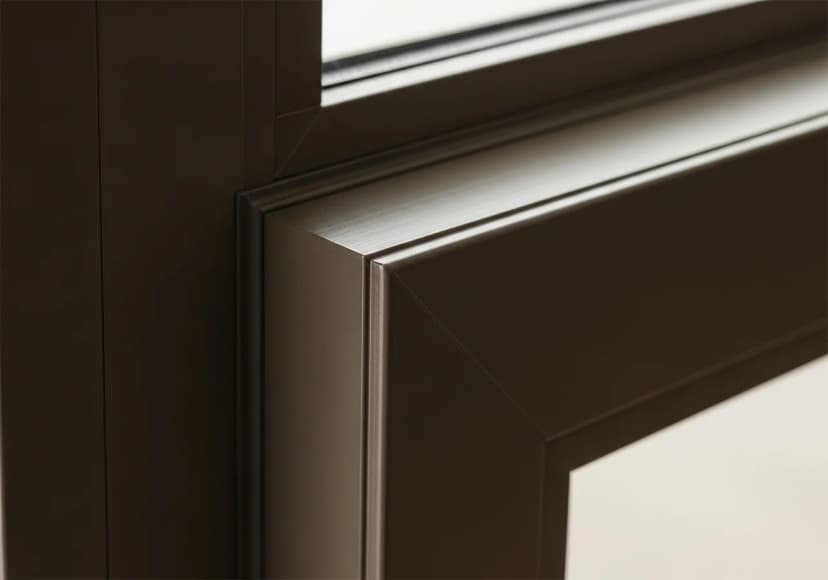
Fiberglass Windows (Milgard, Marvin, Pella)
$700–$1,400 per window installedHomeowners who want premium performance, slim profiles, and color options beyond white
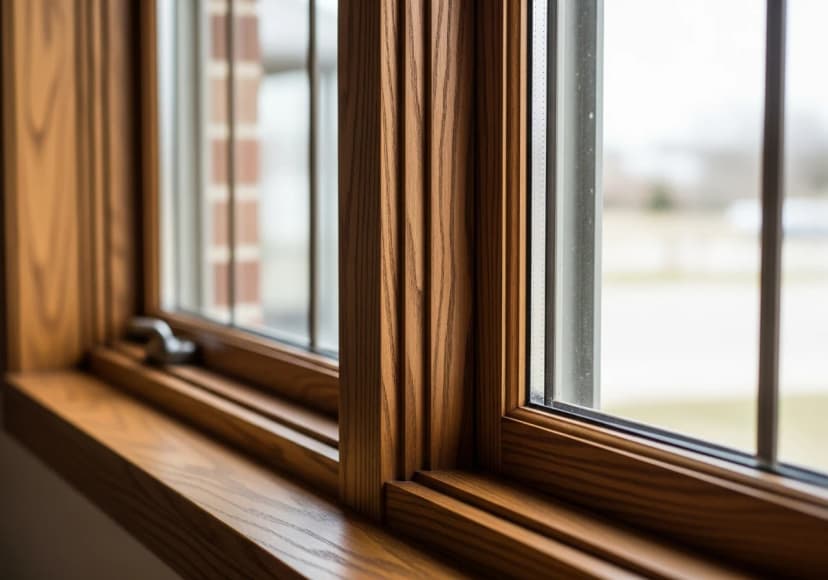
Wood-Clad Windows (Andersen, Marvin, Pella)
$900–$1,800+ per window installedHigh-end renovations, historic homes, and homeowners who want real wood interior trim and aesthetics
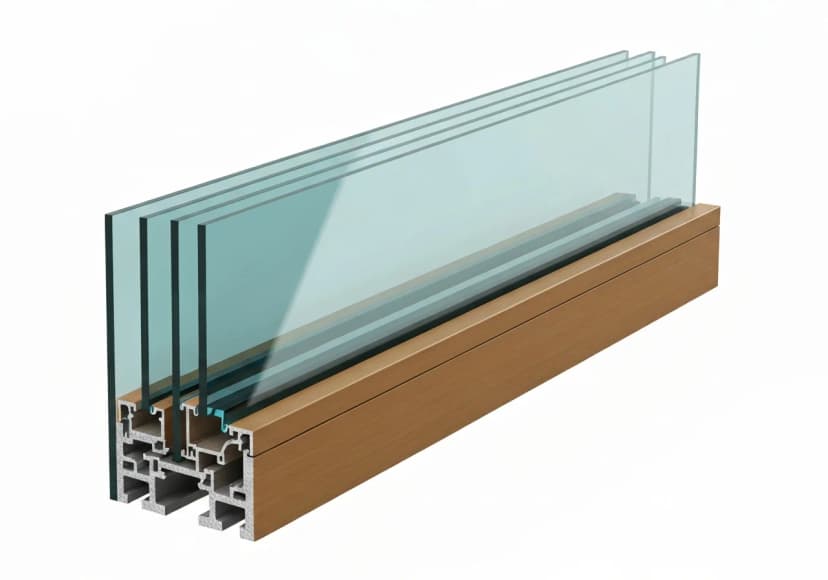
Low-E Glass with Argon Fill
Included in most quality replacement windowsAll replacement windows in the Treasure Valley — how manufacturers reach the U-factor of 0.32 that Idaho's adopted energy code sets for Climate Zone 5
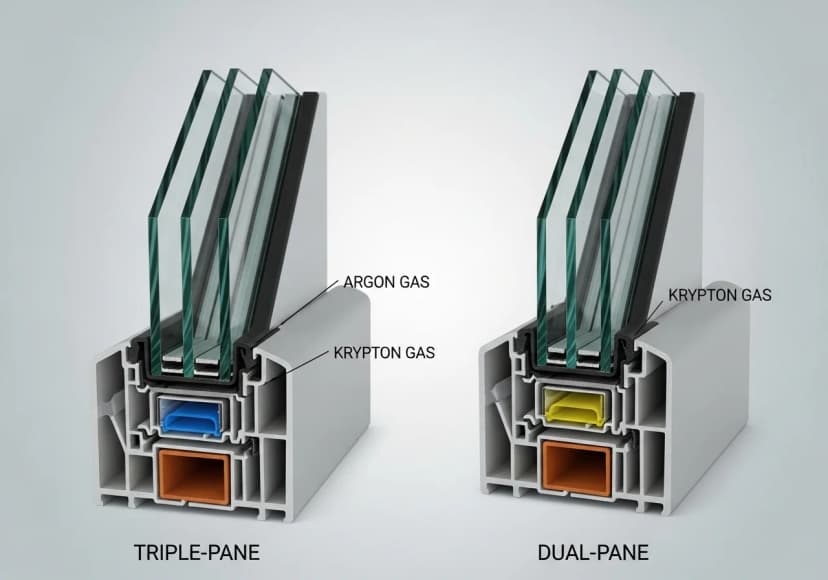
Triple-Pane Glass
$150–$300 premium per window over dual-paneNorth-facing windows for winter comfort, west-facing windows for afternoon solar load, bedrooms near roads, and homeowners seeking maximum energy performance
Learning from others' mistakes saves time and money. Here are the most common window replacement design pitfalls we see in Eagle:
Drafty windows causing cold spots and high heating bills in winter
We replace old single-pane or failed double-pane windows with modern Low-E, argon-filled units that reduce heat loss by 30-50%. Proper insulation around the frame eliminates drafts at the window-to-wall connection.
Foggy windows with failed seals and condensation between panes
Failed seals cannot be repaired — the window unit must be replaced. New factory-sealed dual or triple-pane units with quality spacers and seals restore clear views and insulation performance.
Windows that are difficult to open, close, or lock
New replacement windows operate smoothly with modern balance systems, tilt-in sashes for easy cleaning, and multi-point locking hardware for improved security.
Excessive noise from traffic or neighbors
We recommend dual-pane windows with laminated glass or triple-pane configurations for maximum noise reduction. Proper installation with foam-filled gaps at the rough opening also reduces sound transmission.
UV damage to furniture, flooring, and artwork near windows
Low-E glass blocks 70-95% of harmful UV rays while allowing visible light to pass through. This dramatically reduces fading and UV damage to interior furnishings, flooring, and artwork.
For window replacement projects in Eagle, you have two main approaches to the design process: hiring a separate interior designer then a contractor, or working with a design-build firm that handles both under one roof.
Design-build (our approach)
- ✓ Single point of contact
- ✓ Design informed by real construction costs
- ✓ Faster project delivery
- ✓ Budget aligned from day one
Separate designer + contractor
- ● More specialized design expertise
- ● Independent design perspective
- ● Requires coordination between parties
- ● Can result in budget surprises
Local factors — Eagle's housing stock and typical construction eras, the climate conditions that drive material and scheduling choices, and permitting through City of Eagle Building Department — are covered in full on our Eagle page for this service, alongside 4 common project types.
Window Replacement in Eagle: housing stock, climate & permits →Do replacement windows qualify for tax credits?
Yes. Energy Star certified windows qualify for federal energy efficiency tax credits under the Inflation Reduction Act. As of 2024, homeowners can claim up to $600 for qualifying window replacements. We can help you identify qualifying products.
What is the difference between insert and full-frame replacement?
Insert replacement installs the new window within the existing frame, preserving interior and exterior trim. Full-frame replacement removes everything including the old frame, allowing for new flashing and insulation at the rough opening. Full-frame costs more but addresses the entire window assembly.
Planning window replacement in Eagle?
Get expert guidance and a free estimate for your window replacement project in Eagle, ID.
Get Your Free Estimate