
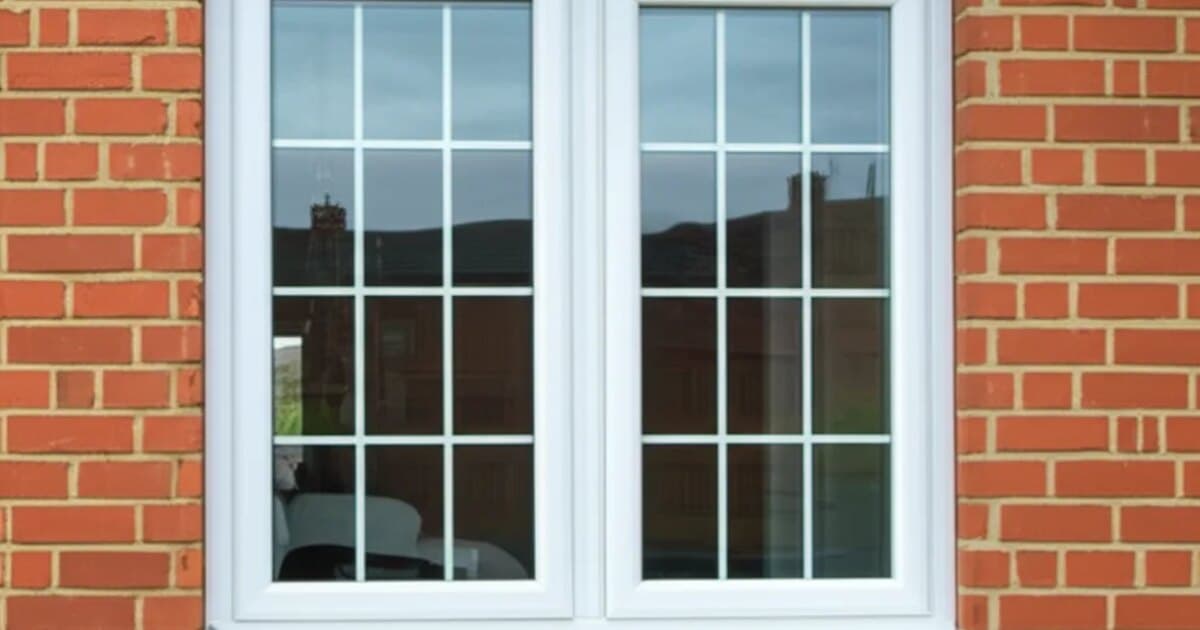
Window Replacement Design Ideas for Nampa
Get inspired with window replacement design ideas tailored to Nampa homes, from trending styles to practical layout considerations.
Quick answer
Nampa's window replacement market differs from Ada County equivalents in ways that reflect Canyon County's unique climate conditions, agricultural environment, and the economic characteristics of its housing stock. The starting condition is the most significant difference.
Nampa, ID · Window Replacement
Planning window replacement in Nampa?
Read the full guide below — or get your project priced now. Free, no-obligation estimates from an Idaho registered local team, backed by a 1-year workmanship warranty.
- Licensed Idaho RCE-6681702
- 1-Year Workmanship Warranty
- $2M Liability Coverage
- Free, No-Obligation Estimates


Nampa's window replacement market differs from Ada County equivalents in ways that reflect Canyon County's unique climate conditions, agricultural environment, and the economic characteristics of its housing stock. The starting condition is the most significant difference. In Nampa, where original single-pane aluminum windows are more prevalent in the historic downtown housing stock than in comparable Boise or Meridian neighborhoods, the performance gap between current windows and modern replacements is larger. Homes with a higher share of their window area in single-pane or failed double-pane units lose proportionally more through those openings. We do not publish a return-on-investment figure for closing that gap — no measured local data supports one. The agricultural dust environment is the second differentiator. Canyon County's agricultural activity creates a dust environment that accelerates weatherstripping deterioration and seal failure in ways that urban Ada County neighborhoods don't experience. Window products and installation details that are adequately specified for Boise's conditions may underperform in Nampa's dust environment — specifically, weatherstripping materials with tighter dust resistance and installation details that minimize infiltration pathways at the frame perimeter. Iron Crest's Nampa window specifications account for this environmental reality. The third difference is in the mix of work rather than in the price per window. Our per-window pricing does not change between Nampa and Boise — the same products, crews, and installation details apply on both sides of the county line. What differs is what a typical project contains: Nampa's post-1990 production housing has standard rough openings that take catalog units with short lead times, while Boise's North End work is dominated by custom-fit historic replacements that cost more per opening. That is a project-mix effect, not a discount, and we are not going to dress it up as one.
Downtown / Historic Nampa
Downtown Nampa window replacement projects are among the highest-energy-impact renovation projects available in Canyon County. The combination of original single-pane aluminum windows (R-1), aluminum frames (excellent heat conductors), and deteriorated weatherstripping (no air seal) is about the worst thermal situation a wall assembly can present. We are not going to put a percentage on how much of the home's heating and cooling loss runs through those openings, because that number is specific to the house and we would be inventing it — what we will do is thermal-image the openings on the assessment visit so you can see the actual condition rather than a statistic. The architectural fit challenge in downtown Nampa mirrors that in Garden City's Greenbelt Corridor and Boise's North End: original aluminum windows in historic homes have a slim frame profile that is part of the home's visual character, and replacement windows in thick vinyl frames change that character in ways that are immediately apparent. Iron Crest's downtown Nampa window process begins with a visual assessment of the original windows and their architectural contribution before any product is discussed. The rough opening non-standard sizing in pre-war Nampa construction requires custom or semi-custom window sizing in many cases. We field-measure every rough opening before any order is placed, confirm whether standard or custom-sized units are required, and include custom fabrication lead times in the project schedule from the outset. Custom sizing in premium vinyl or fiberglass adds 2 to 4 weeks to the project timeline versus standard-size orders.
South Nampa
South Nampa's window replacement market is primarily driven by seal failures in original or first-generation replacement windows from the 1980s and 1990s. The characteristic inter-pane fogging that results from failed IGU seals is visible across the neighborhood — a widespread condition that affects a large percentage of South Nampa's housing stock simultaneously. Seal failure in double-pane windows reduces the IGU's thermal performance from its original rated value (typically R-3 to R-4 for 1990s double-pane) to near single-pane performance (R-1 to R-2) because the argon gas fill that provides the thermal benefit of double-pane has escaped through the failed seal. The fogging visible between the panes is condensation that forms on the interior glass surface — evidence that the thermal break between panes is compromised. Replacing failed-seal windows restores the thermal performance and eliminates the appearance deficiency simultaneously. South Nampa homeowners tend to want the return framed concretely, and the honest framing is that we cannot put a number on the energy half of it. We hold no measured results here, and the national models that circulate in window advertising run on a reference home rather than a South Nampa ranch. What we can put in front of you is a firm, itemized project cost, the NFRC-rated U-factor and SHGC of each unit against the failed-seal glass it replaces, the restored clarity of the glass, and the end of the cold-glass draft in winter — and that is a decision you can actually weigh.
Northwest Nampa
Northwest Nampa's window replacement market is in its first significant cycle for homes built between 1998 and 2012. The original builder windows in this vintage — early double-pane units with aluminum or low-quality vinyl frames — are now showing the aging that 15 to 25 years of Canyon County thermal cycling produces: failed seals producing inter-pane fogging, hardware failures making windows difficult to operate, and weatherstripping that has compressed past its effective sealing function. The replacement opportunity in Northwest Nampa is particularly favorable from a cost perspective because the standard rough opening sizes in post-1990 production construction allow most windows to be replaced with standard-size catalog products without custom fabrication. Standard lead times are typically 3 to 4 weeks versus 5 to 8 weeks for custom sizes, and standard-size windows are priced significantly below custom. The design consideration for Northwest Nampa window replacement is the exterior appearance update opportunity. The original builder windows in this vintage were typically white or off-white vinyl in standard double-hung or slider configurations. Replacing with black or dark bronze exterior frame colors — available in premium vinyl and fiberglass frame products — creates a graphic visual update that complements the contemporary exterior color palettes (dark charcoal, warm navy, forest green) that Northwest Nampa homeowners are increasingly choosing for their siding and trim.

The design phase is where your window replacement goes from a general idea to a specific plan. Good design balances aesthetics, functionality, budget, and the unique characteristics of your home and neighborhood in Nampa. Here are the most popular design approaches and trends we see in Nampa and the surrounding Treasure Valley.
Nampa homeowners tend to favor designs that blend modern functionality with the regional character of Idaho homes. Here are the most requested design elements:
These design factors are specific to window replacement projects and affect both the look and function of the finished space:
Window style consistency — use the same style (double-hung, casement, slider) on each elevation for a unified exterior appearance
Grid pattern selection — grids between the glass (GBG) add a traditional look while maintaining easy cleaning; no grids create a clean, modern appearance
Interior color and finish — match window interior color to your trim and millwork; wood-clad windows offer the most interior finish options
Glass performance by exposure — south and west windows benefit from solar-control Low-E coatings; north windows benefit from high-solar-gain Low-E to capture winter warmth
Ventilation planning — ensure enough operable windows for adequate airflow; code requires egress-sized windows in bedrooms for emergency exit
Exterior color coordination — match or complement exterior window color with siding, trim, and front door for cohesive curb appeal
The materials and finishes you choose bring your design to life. Here are the options most commonly selected for window replacement projects in Nampa:
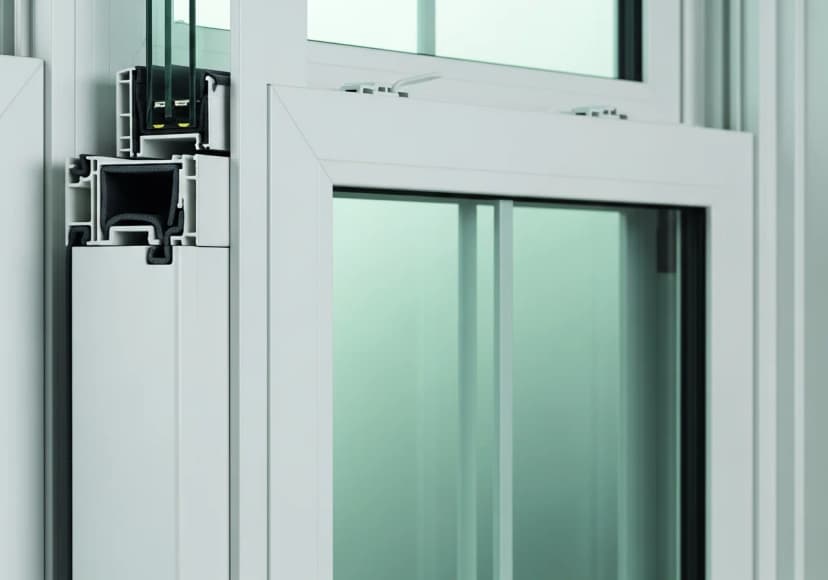
Vinyl Windows (Milgard, Simonton, Ply Gem)
$300–$900 per window installed, depending on tierBudget-conscious whole-home replacements where maximum energy savings per dollar is the priority
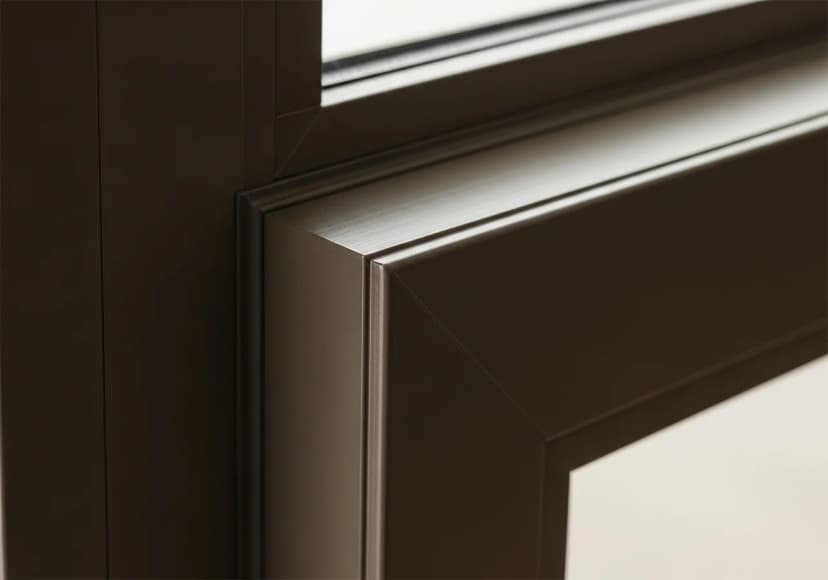
Fiberglass Windows (Milgard, Marvin, Pella)
$700–$1,400 per window installedHomeowners who want premium performance, slim profiles, and color options beyond white
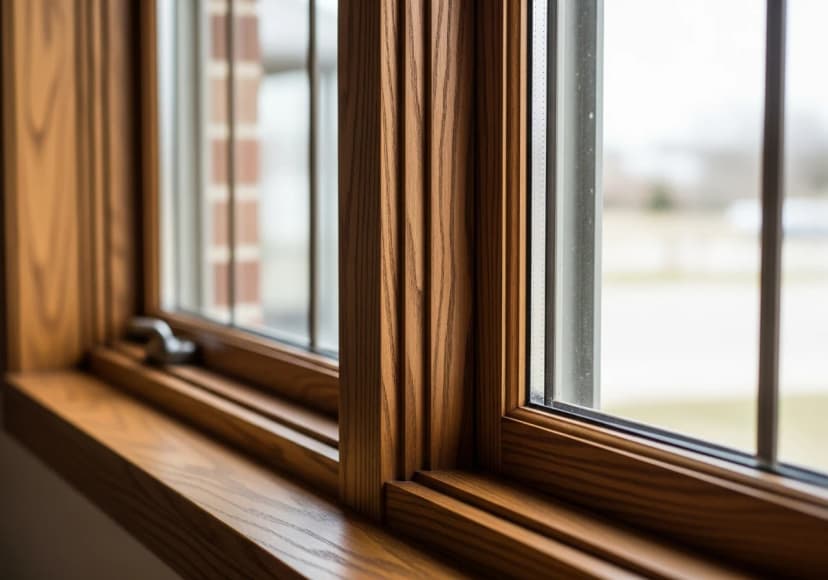
Wood-Clad Windows (Andersen, Marvin, Pella)
$900–$1,800+ per window installedHigh-end renovations, historic homes, and homeowners who want real wood interior trim and aesthetics
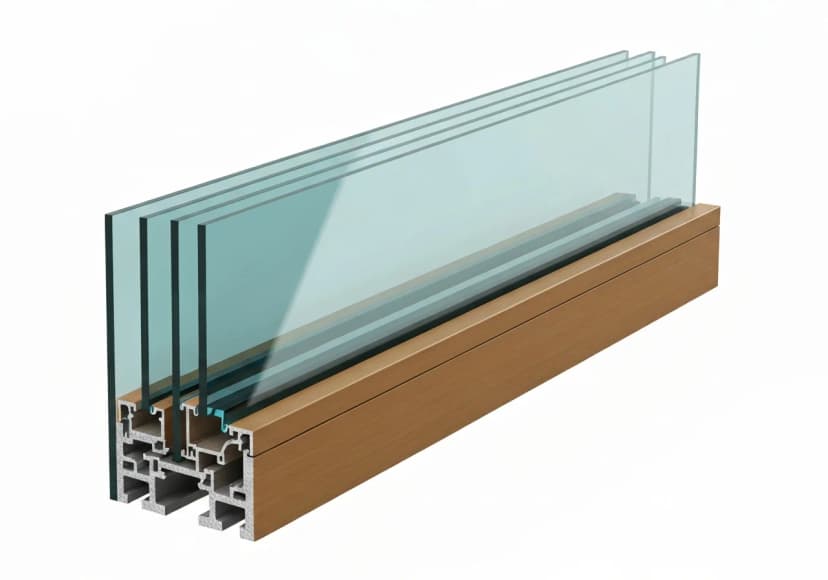
Low-E Glass with Argon Fill
Included in most quality replacement windowsAll replacement windows in the Treasure Valley — how manufacturers reach the U-factor of 0.32 that Idaho's adopted energy code sets for Climate Zone 5
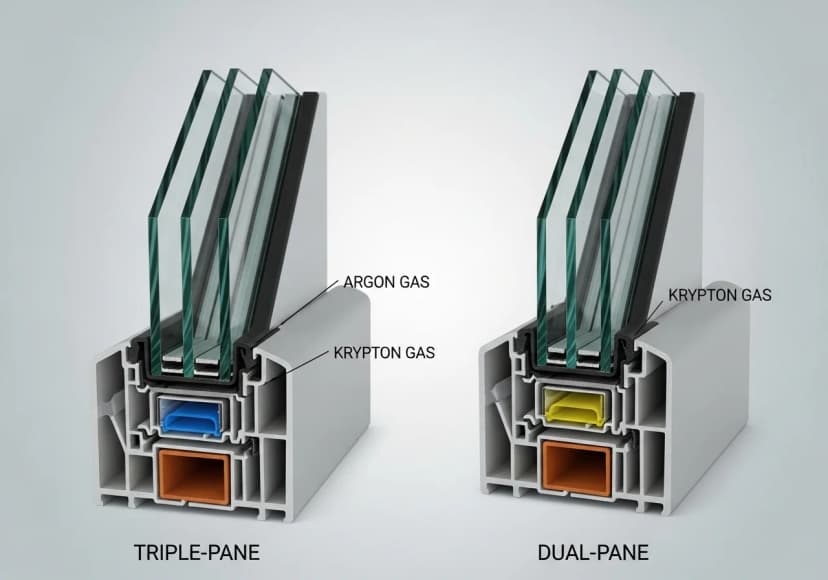
Triple-Pane Glass
$150–$300 premium per window over dual-paneNorth-facing windows for winter comfort, west-facing windows for afternoon solar load, bedrooms near roads, and homeowners seeking maximum energy performance
Learning from others' mistakes saves time and money. Here are the most common window replacement design pitfalls we see in Nampa:
Drafty windows causing cold spots and high heating bills in winter
We replace old single-pane or failed double-pane windows with modern Low-E, argon-filled units that reduce heat loss by 30-50%. Proper insulation around the frame eliminates drafts at the window-to-wall connection.
Foggy windows with failed seals and condensation between panes
Failed seals cannot be repaired — the window unit must be replaced. New factory-sealed dual or triple-pane units with quality spacers and seals restore clear views and insulation performance.
Windows that are difficult to open, close, or lock
New replacement windows operate smoothly with modern balance systems, tilt-in sashes for easy cleaning, and multi-point locking hardware for improved security.
Excessive noise from traffic or neighbors
We recommend dual-pane windows with laminated glass or triple-pane configurations for maximum noise reduction. Proper installation with foam-filled gaps at the rough opening also reduces sound transmission.
UV damage to furniture, flooring, and artwork near windows
Low-E glass blocks 70-95% of harmful UV rays while allowing visible light to pass through. This dramatically reduces fading and UV damage to interior furnishings, flooring, and artwork.
For window replacement projects in Nampa, you have two main approaches to the design process: hiring a separate interior designer then a contractor, or working with a design-build firm that handles both under one roof.
Design-build (our approach)
- ✓ Single point of contact
- ✓ Design informed by real construction costs
- ✓ Faster project delivery
- ✓ Budget aligned from day one
Separate designer + contractor
- ● More specialized design expertise
- ● Independent design perspective
- ● Requires coordination between parties
- ● Can result in budget surprises
Local factors — Nampa's housing stock and typical construction eras, the climate conditions that drive material and scheduling choices, and permitting through City of Nampa Building Department — are covered in full on our Nampa page for this service, alongside 4 common project types.
Window Replacement in Nampa: housing stock, climate & permits →Do replacement windows qualify for tax credits?
Yes. Energy Star certified windows qualify for federal energy efficiency tax credits under the Inflation Reduction Act. As of 2024, homeowners can claim up to $600 for qualifying window replacements. We can help you identify qualifying products.
What is the difference between insert and full-frame replacement?
Insert replacement installs the new window within the existing frame, preserving interior and exterior trim. Full-frame replacement removes everything including the old frame, allowing for new flashing and insulation at the rough opening. Full-frame costs more but addresses the entire window assembly.
Planning window replacement in Nampa?
Get expert guidance and a free estimate for your window replacement project in Nampa, ID.
Get Your Free Estimate