

Boise ADU Permits, Zoning, and Setbacks
Everything Boise homeowners need to know about ADU zoning districts, size limits, setback requirements, and the step-by-step permit process — from pre-application to certificate of occupancy.
Quick answer
Yes. Every ADU in Boise requires a building permit issued by the City of Boise Development Services Department. The permit process includes plan review, a building permit application, multiple inspections during construction, and a final certificate of occupancy.
Explore our full Boise ADU construction services
Building an accessory dwelling unit in Boise is one of the smartest investments a homeowner can make — but the regulatory landscape is the first hurdle every project must clear. Boise's Modern Zoning Code (effective December 2023) made the city one of the most ADU-friendly municipalities in Idaho — allowing an ADU on most residential lots, raising the size cap to 900 square feet, and dropping the parking and owner-occupancy requirements everywhere except the Harris Ranch Specific Plan. Idaho's 2026 ADU law (Senate Bill 1354, Idaho Code § 67-6541, in force since July 1, 2026) goes further: every city over 10,000 residents must allow either one internal or one detached ADU per lot, may not cap an ADU below 1,000 square feet or 75% of the primary home, may not require owner-occupancy, may require added parking only in limited cases, may not impose ADU setbacks stricter than single-family setbacks in the same zone, and must approve qualifying projects administratively. Boise has until February 1, 2027 to update its code, and historic districts are exempt. Even so, the rules around zoning, setbacks, size limits, parking, and design standards are specific and enforced. Understanding them before you design — not after — saves thousands of dollars and months of delay.
This guide walks through every regulatory requirement Boise homeowners face when planning an ADU. Whether you are converting a garage, building a detached backyard cottage, or adding an attached suite above a new garage, the zoning code, setback rules, and permit process apply to your project. Iron Crest Remodel navigates this process on Boise ADU projects, and we handle permit applications, plan review coordination, and inspection scheduling as part of every build.
If you are trying to understand total ADU costs, permits and fees represent a significant portion of the upfront budget. Knowing what to expect helps you plan accurately from the start.
Before 2019, ADUs in Boise were restricted to a handful of zoning districts and required a conditional use permit — a lengthy, uncertain process that discouraged most homeowners from pursuing accessory units. The Boise City Council changed that with a comprehensive ordinance update that made ADUs a permitted use in all residential zones, eliminating the conditional use hearing and replacing it with a standard building permit process.
The ordinance change was driven by Boise's rapid population growth and a housing supply shortage that had been building for years. By allowing homeowners to add small rental units on their existing properties, the city created a pathway for incremental density that does not require rezoning, large-scale development, or the political friction that comes with apartment projects in single-family neighborhoods.
Which Zones Allow ADUs
ADUs are now permitted in all residential zoning districts in Boise, including:
The property must contain an existing legal single-family dwelling, and the current code allows one ADU per lot (Idaho's 2026 ADU law, Senate Bill 1354, requires the city to allow either one internal or one detached ADU per lot by February 1, 2027). You cannot build an ADU on a vacant lot, and until the city adopts the state floor you cannot add a second ADU to a property that already has one.
Boise's ADU size formula is straightforward: the maximum floor area is 900 square feet or 70 percent of the primary structure's total floor area, whichever is smaller (Zoning Code Section 11-03-03.2B). This means the size of your existing house, not your lot, determines how large your ADU can be. Idaho's 2026 ADU law (Senate Bill 1354) bars cities from capping an ADU below 1,000 square feet or 75% of the primary home, and Boise must conform by February 1, 2027 — the table shows both the current cap and the state floor. How the city applies the two state figures to very small homes will be set in its code amendment, so confirm with Planning & Development Services.
| Primary Home Floor Area | 70% Calculation | Current Boise Max (900 cap) | SB 1354 Floor (75% / 1,000 sq ft) |
|---|---|---|---|
| 800 sq ft | 560 sq ft | 560 sq ft | 600 sq ft (75%) |
| 1,000 sq ft | 700 sq ft | 700 sq ft | 750 sq ft (75%) |
| 1,200 sq ft | 840 sq ft | 840 sq ft | 900 sq ft (75%) |
| 1,300+ sq ft | 910+ sq ft | 900 sq ft (cap) | 975+ sq ft (75%) |
| 2,000 sq ft | 1,400 sq ft | 900 sq ft (cap) | at least 1,000 sq ft |
This formula has a significant impact on North End homeowners, where 900-to-1,100-square-foot bungalows are common. A 1,000-square-foot house limits you to a 700-square-foot ADU under the current 70% rule (750 square feet under the 75% state floor) — enough for a well-designed one-bedroom or compact two-bedroom, but it requires careful planning to maximize every square foot. In contrast, homes of 1,300 square feet or more in Southeast Boise, on the Boise Bench, and in rural-transitional areas reach the full 900-square-foot cap today, and at least 1,000 square feet once the state floor takes effect.
Height Limits
Boise limits an ADU to two stories (Zoning Code Section 11-03-03.2.B(3)) and otherwise applies the underlying zone's height standard — 35 feet in R-1A and R-1B, and three stories not to exceed 40 feet in R-1C. There is no separate 25-foot accessory-structure height cap for ADUs. Idaho's 2026 ADU law also bars a city from holding an ADU to a height limit lower than the existing house (Idaho Code § 67-6541(2)(f)). Note that the reduced accessory-structure setbacks in Table 11-04.4 are only available below 14 feet, so a two-story ADU must hold the full zone setback.
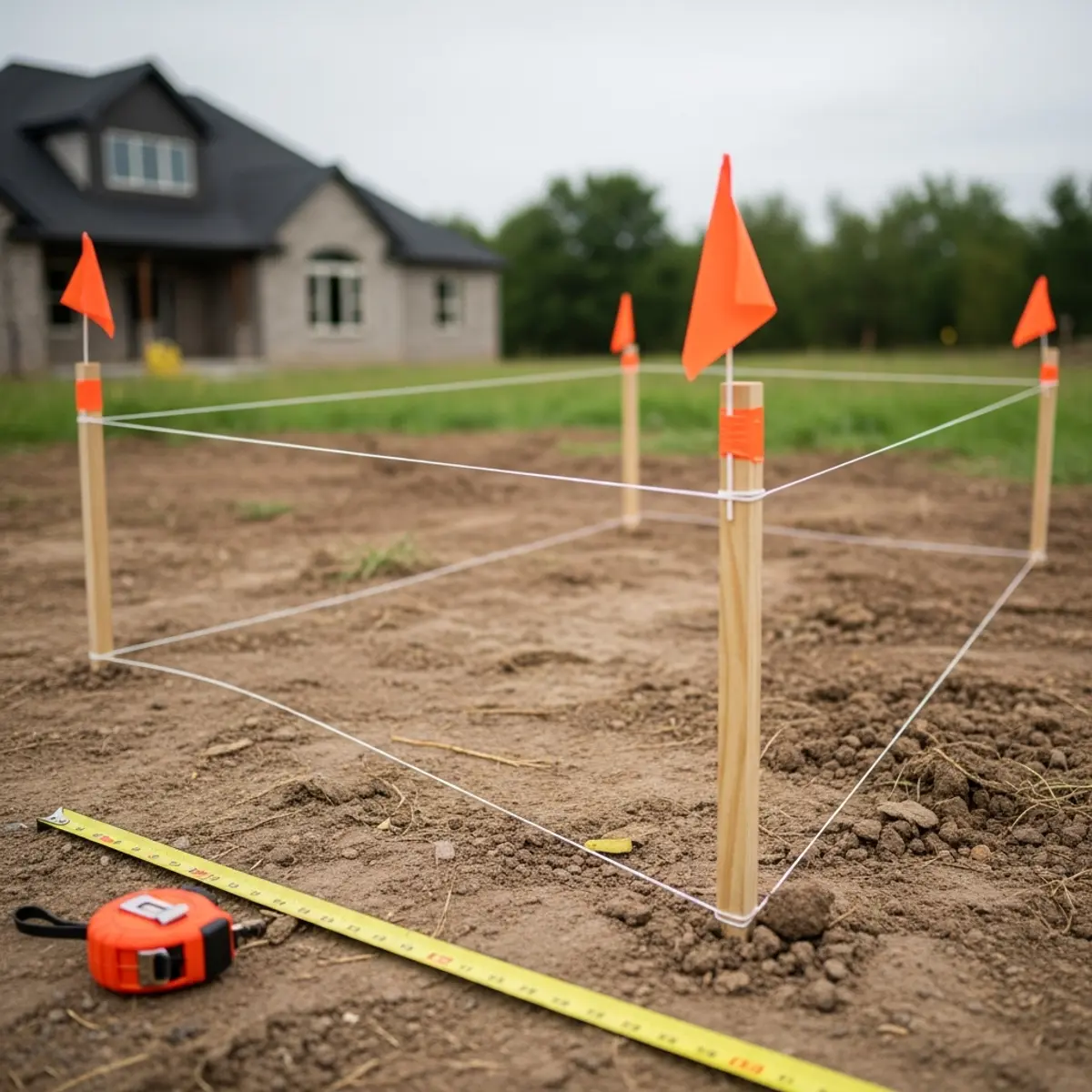
Setbacks are one of the most critical factors in ADU site planning because they define the buildable area on your lot. Every foot of setback reduces the available footprint, and on smaller lots the setback envelope — not the 900-square-foot cap — is usually what determines how big the ADU can be.
Front Yard Setback
ADUs follow the front-yard setback of the underlying zone. In R-1A, R-1B, and R-1C that is 15 feet for the structure and 20 feet for a front-entry garage (Tables 11-02.3, 11-02.5, 11-02.7). In practice, most detached ADUs are built in the rear yard and are not affected by the front setback. Attached ADUs that extend the front of the primary structure must comply.
Side Yard Setback
The interior side-yard setback is the underlying zone's, not an ADU-specific number: 5 feet in R-1C (10 feet for a third story abutting a single-story building) and 10 feet in R-1A and R-1B. A detached accessory structure of 121 to 500 square feet and under 14 feet in height may use a reduced 3-foot interior side setback in R-1A, R-1B, R-1C, R-2, and R-3 (Table 11-04.4).
Rear Yard Setback
The rear setback also comes from the underlying zone — 15 feet in R-1C, 20 feet in R-1A and R-1B. A detached accessory structure of 121 to 500 square feet and under 14 feet in height may use a reduced 9-foot rear setback in R-1A, R-1B, R-1C, R-2, and R-3 (Table 11-04.4). The code's full exemption from rear and side setbacks along an alley applies only to alley-loaded parking structures, so do not assume an alley lets an ADU sit on the rear property line.
Separation from Primary Dwelling
The zoning code sets no fixed separation distance between a detached ADU and the primary dwelling. Separation is driven instead by the adopted building code's fire-separation-distance provisions, which determine when exterior walls and openings need a fire-resistance rating. Your plans reviewer sets the requirement for your specific layout, so confirm it before fixing the ADU's position on narrow lots.
Parking Requirements
Boise's Modern Zoning Code does not require an added off-street parking space for an ADU, and Idaho's 2026 ADU law (Senate Bill 1354) limits when cities can require one (Idaho Code § 67-6541(2)(b)). The one parking rule that still applies: a garage or accessory-structure conversion may not reduce off-street parking below the minimum required for the lot, so if your existing garage becomes the ADU you must still provide the primary dwelling's required spaces on a driveway or pad. Alley-accessed lots usually solve this without site changes.
Owner-Occupancy Rules
Boise no longer requires owner-occupancy for ADU properties. The Modern Zoning Code (effective December 2023) removed the rule, and Idaho's 2026 ADU law (Senate Bill 1354) now prohibits cities from imposing one, so you may live in the primary dwelling, live in the ADU, or rent both units. Lenders and insurers may still have their own occupancy conditions, so check those before you plan around rental income.
Design Standards: Matching the Primary Dwelling
Boise's ADU ordinance includes design compatibility standards that require the accessory unit to be visually consistent with the primary dwelling. This means matching or complementary exterior materials (siding type, color palette), a roof pitch that is similar to the main house, and window styles that do not clash with the existing architecture. The intent is to ensure ADUs look like they belong on the property rather than appearing as afterthoughts. For detached backyard cottages, design review staff evaluate the proposed elevations against the primary structure during plan review.
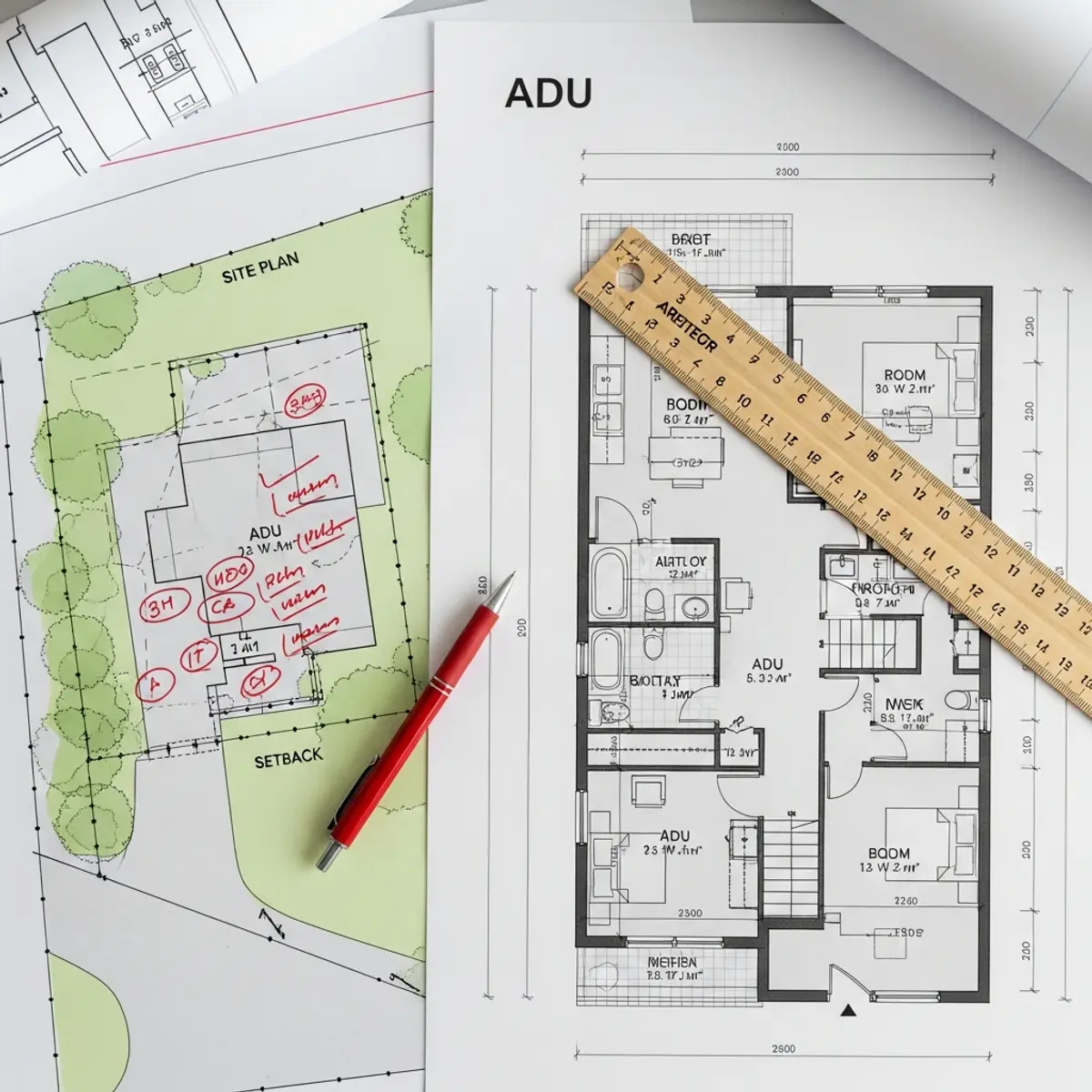
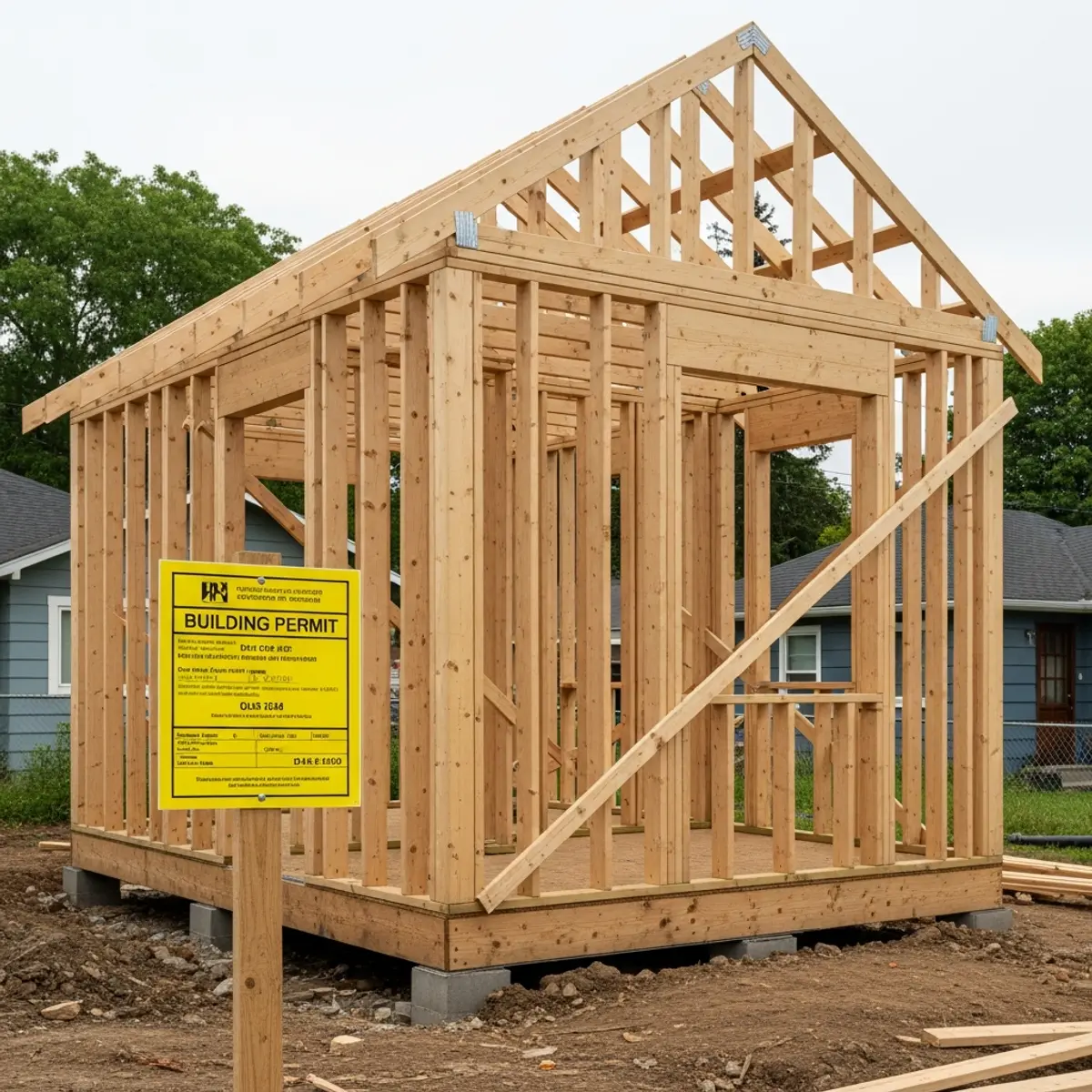
The City of Boise Development Services Department administers all ADU permits. The process is predictable if your plans comply with zoning and building code, but it requires patience — plan review timelines fluctuate based on department workload. Here is the sequence from start to finish.
Step 1: Pre-Application Meeting
Schedule a pre-application meeting with Boise Development Services before investing in full architectural plans. This meeting (typically $75–$150) allows a planner to review your lot, confirm zoning compliance, identify setback constraints, and flag any potential issues. The planner will tell you whether your concept is feasible and what documentation the formal application will require. This step adds 2 to 3 weeks to the front end but prevents costly redesigns later.
Step 2: Design and Construction Documents
Work with your architect or design-build team to produce construction documents that meet Boise building code and the International Residential Code (IRC). Plans must include a site plan showing the ADU location relative to property lines, setbacks, and the primary dwelling, plus architectural drawings, structural engineering, mechanical plans, and energy code compliance documentation.
Step 3: Plan Review Submission
Submit your complete plan set and application to Development Services. Plan review currently takes 4 to 8 weeks, though timelines vary with seasonal demand — spring submissions tend to have longer review periods. Reviewers check for zoning compliance (setbacks, size limits, parking, design standards) and building code compliance (structural, plumbing, electrical, mechanical, energy code). You may receive correction comments that require plan revisions and resubmission.
Step 4: Building Permit Issuance
Once plans are approved and all fees are paid, the building permit is issued. You cannot begin construction until the permit is in hand and posted at the job site. The permit is valid for 12 months, with the option to renew if construction is underway but not yet complete.
Step 5: Construction Inspections
Inspections occur at each critical phase of construction: foundation and footings, framing and shear, rough plumbing and electrical, insulation and vapor barrier, and final inspection. Each inspection must pass before the next phase of work begins. Failed inspections require corrections and re-inspection, which can add days or weeks to the schedule.
Step 6: Certificate of Occupancy
After the final inspection passes, Development Services issues a certificate of occupancy (CO). The CO confirms that the ADU has been built in accordance with the approved plans and meets all code requirements. You cannot legally occupy or rent the ADU until the CO is issued.
Permit and fee costs are a significant line item in any ADU budget. Boise's fee structure includes the building permit itself, plan review fees, impact fees, and utility connection charges. Taken together, these fees typically total $8,000 to $18,000 depending on ADU size and site conditions.
| Fee Category | Typical Range |
|---|---|
| Building permit fee | $1,500–$3,500 |
| Plan review fee | $800–$2,000 |
| Pre-application meeting | $75–$150 |
| Impact fees (parks, fire, police, highway) | $3,000–$6,000 |
| Sewer connection fee | $1,500–$3,500 |
| Water connection fee | $1,000–$2,500 |
| Electrical service connection | $500–$1,500 |
| Gas service connection | $300–$800 |
Impact fees are assessed by Ada County Highway District (ACHD) and the City of Boise based on the anticipated impact of the new dwelling unit on public infrastructure. These fees apply to new ADUs regardless of whether the unit is attached or detached. Utility connection fees depend on whether the ADU shares existing connections with the primary dwelling or requires new independent service lines — detached ADUs with separate utility runs cost more than attached units that tap into existing infrastructure.
For a detailed breakdown of all ADU expenses beyond permits, see our guide to ADU costs in Boise, and for specifics on water, sewer, and electrical hookups, read our ADU utility hookup guide.
Boise's diverse neighborhoods present different opportunities and challenges for ADU construction. Lot size, existing structure placement, alley access, and neighborhood character all influence what is feasible on a given property.
North End
The North End features some of Boise's most desirable real estate, but lot sizes are often 4,000 to 6,000 square feet — so the setback envelope, not the 900-square-foot cap, usually decides the footprint. Many North End lots have alley access, which is a significant advantage for detached ADU placement and parking. The neighborhood's historic character means design compatibility review is particularly important, and neighbors tend to be engaged in the process.
Southeast Boise
Larger lots in Southeast Boise — many exceeding 9,000 square feet — leave plenty of room for the full 900-square-foot ADU within lot-coverage limits. Properties in this area often have generous rear yards with room for a detached cottage without crowding the primary dwelling. The trade-off is that some SE Boise neighborhoods lack alley access, so the ADU driveway and parking must be accommodated from the front of the lot.
HOA-Governed Neighborhoods
While Boise's zoning code permits ADUs, homeowners association CC&Rs can impose additional restrictions — and many do. Some HOAs prohibit accessory dwelling units entirely, restrict detached structures, or impose architectural review requirements that exceed city standards. Before investing in design work, review your CC&Rs carefully and consult your HOA board. City zoning approval does not override private covenant restrictions.
Meridian and Eagle Comparison
ADU regulations in Meridian and Eagle differ from Boise. Meridian has been slower to adopt ADU-friendly policies, with more restrictive lot size minimums and conditional use requirements in some zones. Eagle's regulations vary by area and are generally less permissive than Boise's. If your property is in Meridian or Eagle rather than Boise city limits, verify the applicable municipal code before assuming Boise's rules apply.
While Boise allows ADUs in all residential zones, the specific zoning designation on your parcel sets the setbacks and height your ADU must meet, because an ADU is held to the dimensional standards of the underlying district (Zoning Code Section 11-03-03.2.B(6)). Two things do not vary by zone: minimum lot area and maximum density never apply to an ADU (Section 11-03-03.2.B(1)), and the size cap is always 900 square feet or 70 percent of the primary building, whichever is smaller. The residential districts under the Modern Zoning Code are R-1A, R-1B, R-1C, R-2, and R-3 — the older R-1M designation was folded into R-2.
R-1C (Single-Family Residential)
R-1C is the most common zoning designation for established single-family neighborhoods throughout Boise, including large portions of the North End, Central Bench, and West Boise. In R-1C zones, ADUs are permitted as an accessory use to the primary dwelling. The dimensional standards are a 15-foot front setback (20 feet for a front-entry garage), a 5-foot interior side setback, a 15-foot rear setback, and a maximum of three stories not to exceed 40 feet — though an ADU is separately capped at two stories (Table 11-02.7 and Section 11-03-03.2.B(3)). R-1C's 3,500-square-foot minimum lot area does not apply to an ADU. Because R-1C lots tend to be smaller (5,000–8,000 square feet), the 15-foot rear setback is often what limits a detached ADU. A detached unit of 121 to 500 square feet kept under 14 feet in height can use the reduced 3-foot side and 9-foot rear setbacks in Table 11-04.4, which is frequently the difference between a workable site plan and a redesign.
R-1A and R-1B (Large-Lot and Suburban Residential)
R-1A and R-1B cover Boise's larger-lot and suburban residential areas. Both carry the same building envelope: a 15-foot front setback (20 feet for a front-entry garage), a 10-foot interior side setback, a 20-foot rear setback, and a 35-foot height maximum (Tables 11-02.3 and 11-02.5). Those setbacks are materially deeper than R-1C's, so a detached ADU on an R-1A or R-1B parcel sits farther off every line — usually not a problem, since these lots are bigger to begin with. ADU size allowances follow the same 900-square-foot / 70 percent formula, and the zones' minimum lot areas (20,000 square feet in R-1A, and R-1B's own minimum) do not apply to an ADU. No added ADU parking is required in any Boise zone outside the Harris Ranch Specific Plan.
R-2 (Medium-High Density Residential)
R-2 zones are the most permissive residential designation for ADU construction in Boise. These areas already accommodate duplexes and small multi-family structures, so the addition of an ADU aligns with the zone's intent. The envelope is the loosest of the single-family-scale districts: a 10-foot front setback (20 feet for a front-entry garage), a 5-foot interior side setback, and a 15-foot rear setback that drops to 5 feet where the rear property line abuts an alley (Table 11-02.9). The zone allows four stories up to 45 feet, but an ADU is still capped at two stories. R-2 lots in established neighborhoods near downtown, the Depot Bench, and along major corridors like Boise Avenue and State Street offer some of the best ADU potential in the city — larger allowable footprints, proximity to transit, and a neighborhood context where accessory units blend naturally with the existing built environment.
Neighborhood-Specific Zoning Considerations
How to Check Your Zoning
The fastest way to confirm your property's zoning designation is the Ada County Assessor's parcel viewer, which displays the zoning code for any address in Ada County. The City of Boise's interactive zoning map provides the same information with additional overlay detail. Iron Crest Remodel verifies zoning, lot dimensions, and overlay restrictions for every prospective ADU client during our free initial consultation — before any design work begins.
Permit costs for a Boise ADU extend well beyond the building permit itself. Multiple agencies assess fees at different stages of the process, and the total can surprise homeowners who only budgeted for the headline permit number. Here is a detailed, itemized breakdown of the permit and fee costs for a typical Boise ADU project — a 600–800 square foot detached unit on a standard residential lot.
| Fee Item | Typical Cost | Notes |
|---|---|---|
| Building permit | $500–$2,000 | Based on construction valuation; higher for larger or more complex ADUs |
| Plan review fee | $400–$1,500 | 20% of the building permit fee (residential plan review, Boise Table 1-A); paid at submission |
| Impact fees (sewer, water, transportation) | $2,000–$5,000+ | Assessed by ACHD and City of Boise; varies by ADU size and location |
| Electrical permit | $100–$300 | Separate from building permit; required for new service panel or sub-panel |
| Plumbing permit | $100–$300 | Covers water supply, drain/waste/vent, and fixture rough-in |
| Mechanical permit | $75–$200 | HVAC system, ductwork, exhaust ventilation |
| ACHD access permit | $500–$1,500 | Required only if ADU needs a new driveway or curb cut from the street |
| Pre-application meeting | $75–$150 | Optional but strongly recommended; credited toward permit fees in some cases |
Total Permit Costs: For a typical Boise ADU, expect to pay $4,000–$10,000+ in combined permits, fees, and impact charges. Larger ADUs, those requiring new utility service lines, or projects that trigger ACHD driveway permits will fall toward the higher end of the range. These costs are separate from design, engineering, and construction expenses.
Permit Timeline: Application to Approval
From initial application to permit in hand, expect 8–16 weeks for a straightforward ADU project. Projects that require corrections, variance applications, or ACHD coordination can take longer. Iron Crest Remodel submits complete, code-compliant plan sets and addresses the common correction items before submission, which is what keeps a project from cycling back through review.
Even experienced homeowners and first-time ADU builders run into obstacles during the permit process. Most delays and denials stem from a handful of recurring mistakes that are entirely avoidable with proper planning. Here are the most common pitfalls we see on Boise ADU projects — and how to avoid each one.
Designing Before the Setback Envelope Is Drawn
Boise's residential districts do not set a maximum lot coverage percentage — Table 11-04.2 lists setbacks and height, not coverage — so the constraint that actually forces redesigns is the setback envelope. Homeowners size an ADU against the 900-square-foot cap, then discover the 15-foot rear setback in R-1C (20 feet in R-1A and R-1B) leaves far less buildable depth than they assumed, and that existing garages or sheds occupy the part of the yard that would have worked. The fix: Draw the setback envelope for your zone first and size the ADU to what is left, checking whether keeping the unit between 121 and 500 square feet and under 14 feet in height unlocks the reduced 3-foot side and 9-foot rear setbacks in Table 11-04.4. Iron Crest Remodel performs this buildable-envelope analysis during our initial site evaluation.
Setback Violations at Plan Review
Setback violations are discovered when the site plan shows the ADU footprint encroaching into the required setback zone. This happens when homeowners or designers use estimated property lines rather than a certified survey, or when they measure from fences (which are rarely on the actual property line) instead of from legal boundary markers. Eave overhangs, foundation footings, and mechanical equipment pads can also project into setback areas and trigger violations. The fix: Invest in a professional boundary survey before finalizing the ADU site plan. A $400–$800 survey prevents $5,000+ in redesign costs and weeks of delay.
Utility Capacity Issues
Older Boise neighborhoods — particularly the North End, Central Bench, and areas near downtown — sometimes have undersized sewer mains, aging water lines, or electrical service that cannot support an additional dwelling unit without upgrades. Discovering these issues after the permit is submitted adds months to the timeline while utility companies assess capacity and schedule infrastructure improvements. In some cases, the homeowner is responsible for the cost of upgrading the service lateral or extending utility mains. The fix: Contact Boise Public Works and Idaho Power during the pre-application phase to confirm that existing utilities can handle the additional load. Iron Crest Remodel coordinates utility verification as a standard part of our ADU pre-construction process.
Missing Parking Requirement
Boise does not require an added parking space for the ADU itself, but a garage conversion may not reduce the lot's required off-street parking. This is a frequent surprise — converting a two-car garage eliminates two spaces that must be replaced with new driveway area or a site redesign. The fix: Plan replacement parking early in the design process for any garage conversion.
Planning Around the Old Owner-Occupancy Rule
Older guides still describe an owner-occupancy affidavit, but Boise removed the owner-occupancy requirement in the Modern Zoning Code (effective December 2023). Homeowners who plan around the old rule sometimes design a smaller or less flexible unit than they are allowed, or assume they cannot rent both units. The fix: Design to the current code — there is no owner-occupancy requirement, and Idaho's 2026 ADU law (Senate Bill 1354) prohibits one — and treat your living arrangement as a business decision rather than a zoning constraint.
HOA Restrictions Not Checked Before Design
City zoning approval does not override private HOA covenants. Homeowners who design and submit plans without checking their CC&Rs risk discovering — after spending $5,000–$15,000 on architectural plans and engineering — that their HOA prohibits detached accessory structures, limits building heights below the city's allowance, or requires architectural committee approval that may take months. The fix: Review your CC&Rs and contact your HOA board before spending money on design. If the HOA restricts ADUs, explore whether the CC&Rs can be amended or whether an attached ADU (which some HOAs treat differently from detached structures) is a viable alternative.
Variance vs. Redesign: When Each Makes Sense
When your ADU design conflicts with a zoning requirement — a setback encroachment or a height issue — you have two options: pursue a variance or redesign the ADU. A variance is a formal request to the City of Boise Board of Adjustment for an exception to the zoning code. Variances require documented hardship (the strict application of the code creates an unreasonable burden due to unique lot conditions), a public hearing, and typically 2–4 months of additional timeline. Approval is not guaranteed. Redesigning the ADU to comply with the code is almost always faster, cheaper, and more predictable. Iron Crest Remodel recommends pursuing a variance only when the lot has a genuine physical constraint — irregular shape, topographic limitations, easement encumbrances — that makes code-compliant ADU construction impractical. In most cases, a skilled designer can adjust the ADU footprint, roof line, or orientation to achieve compliance without sacrificing livability.
Do I need a permit to build an ADU in Boise?
Yes. Every ADU in Boise requires a building permit issued by the City of Boise Development Services Department. The permit process includes plan review, a building permit application, multiple inspections during construction, and a final certificate of occupancy. Unpermitted ADUs are subject to code enforcement action and cannot be legally rented or occupied. Iron Crest Remodel handles all permit applications and inspections as part of every ADU project.
What zones in Boise allow accessory dwelling units?
Under the Modern Zoning Code (effective December 2023), Boise allows ADUs in all residential zoning districts, including R-1A, R-1B, R-1C, R-2, and other residential designations. The property must already contain a legal single-family dwelling, and the current code permits one ADU per lot (Idaho's 2026 ADU law, Senate Bill 1354, requires the city to allow either one internal or one detached ADU per lot by February 1, 2027). Some planned unit developments and HOA-governed neighborhoods may have additional restrictions that go beyond city zoning, so verifying your CC&Rs before starting is essential.
What is the maximum size for an ADU in Boise?
Boise limits ADU size to 900 square feet or 70 percent of the primary structure's total floor area, whichever is smaller, with no more than two bedrooms (Zoning Code Section 11-03-03.2B). On a 1,000-square-foot bungalow that means a maximum ADU of 700 square feet; on homes of roughly 1,300 square feet or larger you can reach the full 900-square-foot cap. Under Idaho's 2026 ADU law (Senate Bill 1354, Idaho Code § 67-6541, in force since July 1, 2026), Boise must raise that cap to at least 1,000 square feet or 75% of the primary home by February 1, 2027, so confirm the limit in effect with Planning & Development Services. The zoning code sets no minimum ADU size — habitable-space dimensions are governed by the adopted building code instead. These limits apply to the total finished floor area, including any interior stairs in a two-story detached unit.
What are the setback requirements for an ADU in Boise?
Boise sets no ADU-specific setback. An ADU must meet the dimensional requirements of the underlying zoning district (Zoning Code Section 11-03-03.2.B(6)), so the numbers change by zone: R-1C requires a 5-foot interior side and 15-foot rear setback, while R-1A and R-1B require 10 feet at the interior side and 20 feet at the rear (Tables 11-02.3, 11-02.5, and 11-02.7). A detached accessory structure between 121 and 500 square feet and under 14 feet in height may instead use the reduced setbacks allowed in R-1A, R-1B, R-1C, R-2, and R-3 — 3 feet at the interior side and 9 feet at the rear (Table 11-04.4, Section 11-04-03.3.B). Idaho's 2026 ADU law (Idaho Code § 67-6541(2)(g)) separately bars ADU setbacks stricter than those for a single-family home in the same zone once the city conforms (deadline February 1, 2027). Confirm the setbacks for your zone and structure size with Planning & Development Services before you design.
Does Boise require owner-occupancy for ADU properties?
No. Boise's Modern Zoning Code (effective December 2023) removed the owner-occupancy requirement, and Idaho's 2026 ADU law (Senate Bill 1354) now prohibits cities from imposing one, so the owner may live in either unit or rent both. Short-term rental use is governed separately by city and state rules, so confirm current requirements before planning an ADU as a vacation rental.
How long does the ADU permit process take in Boise?
The full permit process typically takes 8 to 14 weeks from initial application to permit issuance. A pre-application meeting with Development Services adds 2 to 3 weeks at the front end but significantly reduces the chance of plan review delays. Plan review itself takes 4 to 8 weeks depending on current volume and the complexity of the design. After the permit is issued, construction inspections are scheduled at each phase — foundation, framing, rough-in, insulation, and final — with the certificate of occupancy issued after the last inspection passes.
The following government agencies, industry organizations, and official resources provide additional information relevant to your remodeling project.
ADU Construction reads differently in each Boise neighborhood — different housing era, different permit overlay, different finish-tier expectations. 9 neighborhood-specific guides:
Start Your Boise ADU Project
Free consultations for ADU permits, design, and construction. We handle zoning compliance, permit applications, and inspections from start to finish.