

ADU Rental Readiness: Durable Finishes and Maintenance
Choosing the right materials for a rental ADU means balancing durability, maintenance cost, and tenant satisfaction. This guide covers every surface and fixture category for Boise rental ADUs.
Quick answer
Luxury vinyl plank (LVP) is the clear winner for rental ADUs. It is waterproof, scratch-resistant, and costs $3 to $6 per square foot installed. LVP handles pet claws, dropped objects, and moisture from Boise's snowy boot seasons without warping or staining.
Back to ADU Construction Services
Building an ADU is a significant investment. Building one that generates rental income without constant repair calls is a different challenge entirely. The finishes you select during construction determine how much you spend on maintenance, how fast you can turn the unit between tenants, and whether the space holds up after years of occupant use. Owner-grade materials look beautiful on move-in day, but many of them create ongoing costs that erode your rental return.
This guide covers the specific materials and products we recommend for rental ADUs in the Boise market. Every recommendation is based on durability, replacement cost, maintenance burden, and tenant satisfaction. We build ADUs across Ada and Canyon counties, and we have seen firsthand which finishes survive rental use and which ones fail within the first lease cycle.
Every tenant turnover costs you cleaning, repairs, and vacant weeks. Finishes that scratch, stain, or deteriorate under normal use drive those costs higher and shorten the interval between refurbishments. Across every surface in a 600- to 800-square-foot ADU, the difference between rental-grade and owner-grade materials compounds over a decade of ownership.
- Turnover cost reduction: rental-grade finishes require touch-up, not replacement, between tenants
- Maintenance simplicity: materials that tenants cannot damage through normal use eliminate repair calls
- Tenant satisfaction: clean, modern-looking finishes attract quality tenants who stay longer
- ROI protection: lower finish costs leave more room in the budget for structural quality and energy efficiency
- Insurance and liability: durable, moisture-resistant materials reduce mold risk and water damage claims
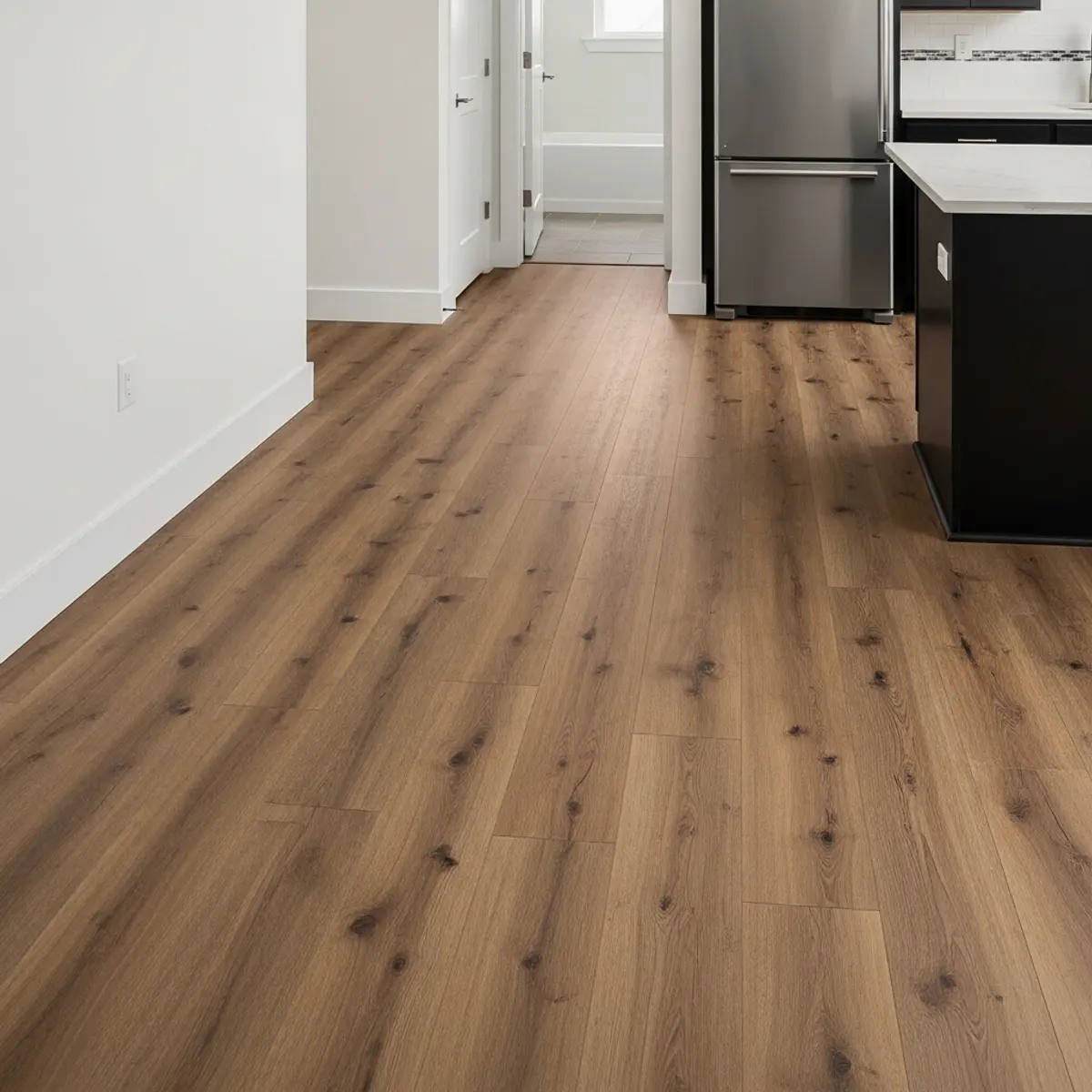
Luxury vinyl plank dominates the rental flooring market for good reason. It is 100 percent waterproof, handles high foot traffic without visible wear patterns, and costs a fraction of hardwood or engineered wood. For Boise ADUs specifically, LVP handles the moisture from tracked-in snow, pet accidents, and kitchen spills without warping, cupping, or delaminating.
What to Specify
- Rigid-core (SPC) construction — not flexible WPC, which dents more easily under furniture
- 20-mil or thicker wear layer for commercial-grade durability in a residential setting
- Attached pad for sound dampening — tenants in ADUs are often close to the main home
- Click-lock installation for individual plank replacement without disturbing adjacent planks
- Neutral wood-tone colors (light oak, greige, warm walnut) that hide minor scuffs and dirt between cleanings
Recommended products available through Boise suppliers include COREtec Pro Plus, Shaw Floorte Pro, and LifeProof (Home Depot). Installed cost runs $3 to $6 per square foot depending on product line. For a 650-square-foot ADU, total flooring cost is $1,950 to $3,900 — compared to $6,500 to $10,000 for engineered hardwood that will need refinishing after every second tenant.
Granite is a beautiful natural stone, but it requires periodic sealing that tenants will not perform. Unsealed granite absorbs cooking oils, coffee, and wine, leaving permanent stains. Boise's hard water compounds the problem — mineral deposits etch into unsealed granite surfaces within months.
Quartz is engineered, non-porous, and requires zero maintenance. Tenants can spill, scrub, and neglect it without consequence. For rental ADUs, we recommend mid-range quartz in neutral colors — white, gray, or warm beige — from brands like Silestone, LG Viatera, or MSI Q Quartz. These run $55 to $90 per square foot installed. Skip exotic veining and bookmatched patterns that cost more but add nothing to rental value. A clean, modern-looking slab is all a tenant needs, and it will look the same on year ten as it did on day one.
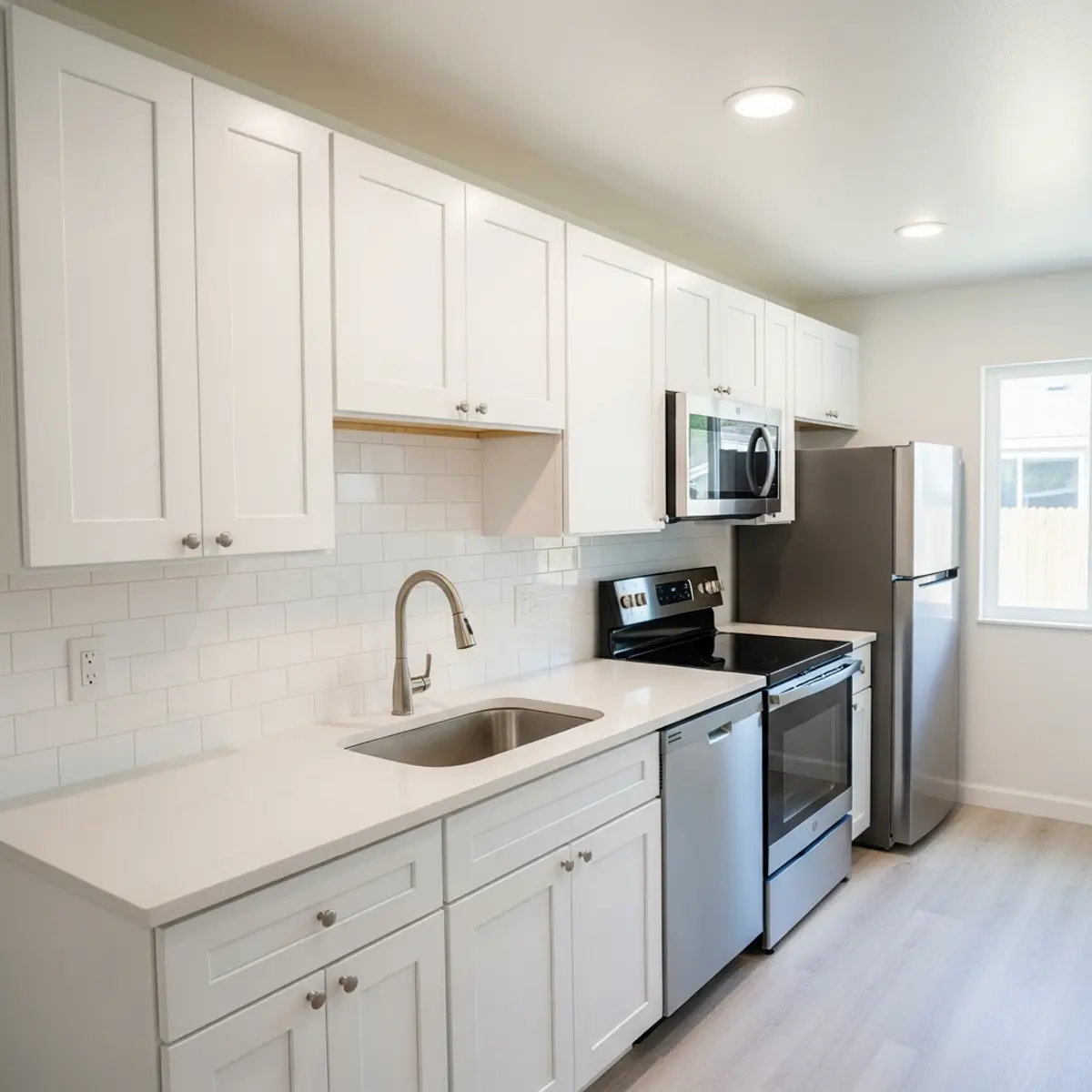
Solid wood cabinets are the gold standard in owner-occupied kitchens, but they are a poor choice for rentals. Wood doors dent, scratch, and show wear quickly under tenant use. Refinishing between tenants costs $2,000 to $4,000 for a small ADU kitchen. Thermofoil-wrapped MDF doors solve this problem. The vinyl wrap is moisture-resistant, wipes clean with a damp cloth, and does not chip or peel under normal conditions.
Thermofoil vs Painted MDF vs Wood
- Thermofoil: lowest cost, moisture-resistant, easy to clean, no refinishing needed — best for most rental ADU kitchens
- Painted MDF: slightly higher cost, smoother finish, touchable with matching paint between tenants, good for units targeting higher rents
- Wood (maple, birch, oak): highest cost, most susceptible to scratching and denting, requires refinishing — skip for rentals unless targeting premium tenants
For hardware, use soft-close hinges and full-extension drawer slides on every cabinet. These cost an additional $3 to $5 per door or drawer but eliminate the slamming that causes the most cabinet damage in rental units. White or light gray thermofoil doors with brushed nickel pulls give a clean, modern look that photographs well for listings and appeals to the broadest tenant pool.
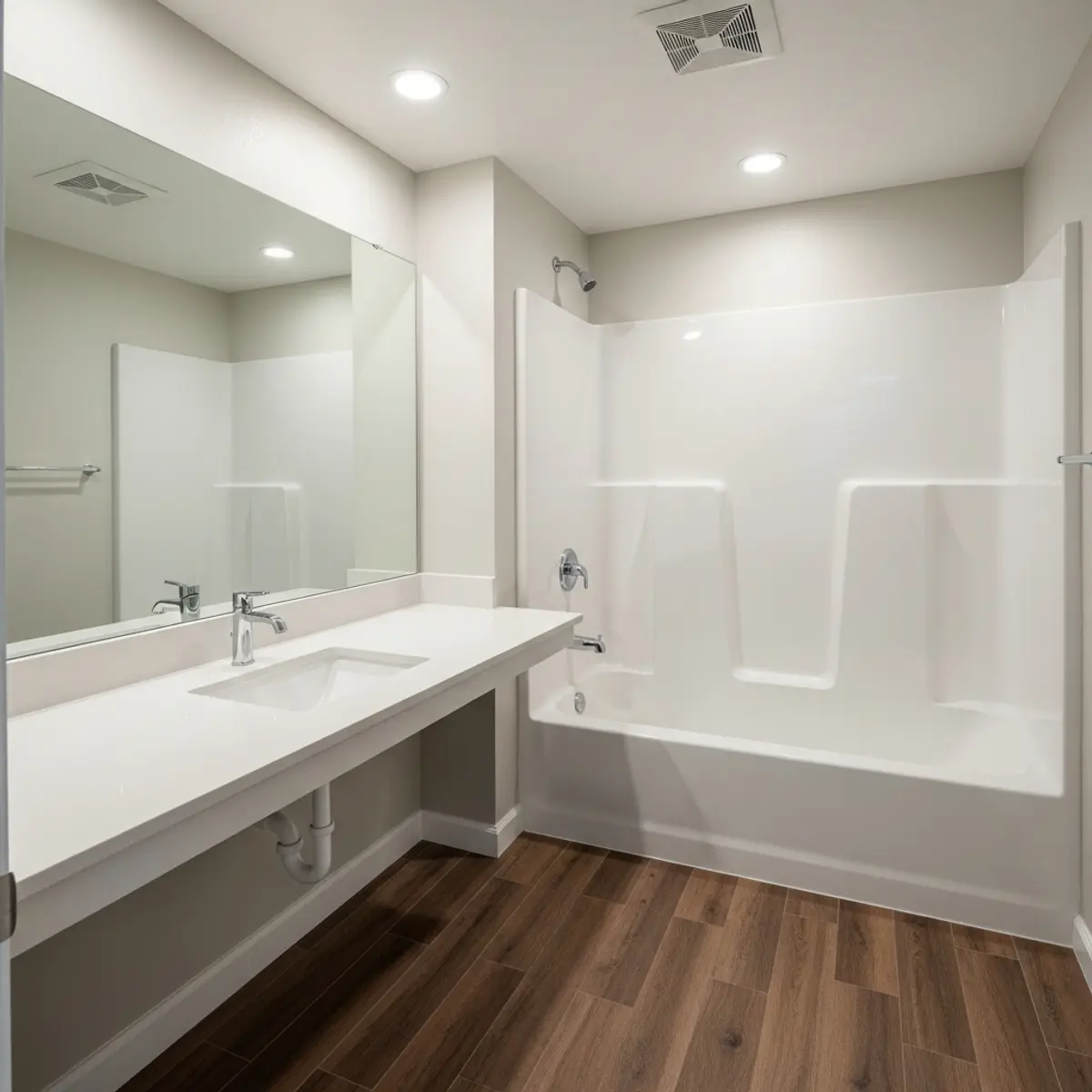
ADU bathrooms take the most abuse per square foot of any room in the unit. Moisture, cleaning chemicals, and daily use wear surfaces faster than anywhere else. Every material choice in this room should prioritize water resistance and cleanability.
Shower and Tub Surrounds
Large-format porcelain tile (12x24 or larger) with minimal grout lines is the best wall finish for rental bathrooms. Fewer grout joints mean less mold growth, less maintenance, and faster cleaning between tenants. For the shower floor, use a fiberglass shower pan rather than a tiled mortar bed. A fiberglass pan costs $300 to $600 installed, has zero grout to maintain, and lasts 15 to 20 years. A custom tile shower floor costs $1,500 to $3,000 and introduces grout maintenance that tenants will ignore, leading to mold and eventual waterproofing failure.
Vanity Tops
Solid surface vanity tops (Corian or equivalent) are the rental-grade standard. They are non-porous, seamless with the integrated bowl, and resist staining from toothpaste, hair dye, and cosmetics. Cultured marble is a budget alternative that works well for lower-cost ADU builds. Avoid natural stone vanity tops in rental units — tenants will not seal them, and hair products etch unsealed marble within weeks.
Bathroom Flooring
LVP or porcelain tile — either works for rental ADU bathrooms. LVP is warmer underfoot and less expensive. Porcelain tile is more durable long-term but costs more and requires grout maintenance. If you choose tile, use large-format rectified porcelain with epoxy grout to minimize joint width and eliminate the need for grout sealing.
Paint is the lowest-cost finish in any ADU, but it is also the most frequently damaged. The wrong sheen or formula turns a simple turnover into a full repaint. The right product lets you wipe scuffs, spot-treat marks, and touch up high-traffic areas without visible patches.
Recommended Approach
- Walls: eggshell finish in a washable, scuff-resistant formula (Sherwin-Williams Duration, Benjamin Moore Regal Select, or PPG Diamond)
- Trim, doors, and bathrooms: satin finish for additional moisture resistance and cleanability
- Kitchen and bathroom ceilings: semi-gloss to resist moisture and prevent mold growth
- Color: warm neutral tones (Agreeable Gray SW 7029, Repose Gray SW 7015, or similar) that allow seamless touch-ups
- Buy and store extra paint from the same batch — color matching for touch-ups between tenants is far easier with original paint
Budget $1.50 to $2.50 per square foot of wall area for quality paint and professional application. For a 650-square-foot ADU with standard 9-foot ceilings, that is approximately $1,800 to $3,000 for walls, trim, and ceilings. The premium over builder-grade flat paint is roughly $500 to $800 — money you recover on the first turnover by avoiding a full repaint.
Fixtures are the components tenants interact with every day. Cheap fixtures fail, leak, and cost more in service calls than the savings on initial purchase. Commercial-grade residential fixtures cost more up front and last considerably longer than builder-grade options; compare the manufacturer's warranty term and cartridge availability rather than the sticker price.
What to Specify
- Single-handle faucets in kitchen and bath — fewer moving parts, fewer leak points, easier for tenants to operate
- Lever door handles throughout — ADA-friendly, more durable than knobs, and easier to operate with full hands
- Moen or Delta faucets with ceramic disc cartridges — field-replaceable cartridges eliminate full faucet replacement
- Brushed nickel or matte black finish — hides water spots and fingerprints better than polished chrome
- Commercial-grade toilet (Toto Drake or American Standard Cadet Pro) — 1.28 GPF, powerful flush, readily available parts
- Lever-handle shower valve with pressure-balancing cartridge — prevents scalding and reduces maintenance calls
Appliances are functional tools in a rental unit, not design statements. Premium brands with proprietary parts and complex electronics create expensive repair bills. Standard appliances from mainstream manufacturers are easier to service, cheaper to replace, and meet tenant expectations without exceeding them.
What to Install
- Refrigerator: standard top-freezer or bottom-freezer from GE, Whirlpool, or Frigidaire ($600 to $1,000). Skip French door and counter-depth models ($1,800 to $3,000) — tenants do not pay more rent for them.
- Range: freestanding gas or electric range ($500 to $800). Avoid slide-in or induction cooktops that cost twice as much and require specialized service.
- Dishwasher: mid-range Bosch 100 series or Whirlpool ($400 to $600). Reliable, quiet, and widely serviced in the Boise area.
- Microwave: over-the-range combination unit for ventilation ($250 to $400). Do not install a standalone range hood and separate countertop microwave — it wastes counter space in a small ADU kitchen.
- Washer/dryer: stackable compact unit or ventless heat-pump dryer if space permits. Tenants value in-unit laundry highly, and it can add $75 to $125 per month to achievable rent in Boise.
The exterior of a rental ADU should require as close to zero maintenance as possible. You — not the tenant — are responsible for exterior upkeep, and every hour spent on siding repair or deck staining reduces your net return.
Siding
Fiber cement siding (James Hardie HardiePlank) is the best option for Boise ADUs. It resists Boise's freeze-thaw cycling, does not rot, and is not a food source for termites. James Hardie's ColorPlus factory finish carries a 15-year limited warranty against peeling, cracking and chipping, over a 30-year non-prorated limited warranty on the substrate; field-painted Hardie is repainted on the paint manufacturer's schedule. Vinyl siding is the lowest-maintenance alternative — it never needs painting — but it looks less refined and can crack in extreme cold. Avoid natural wood siding on rental ADUs. It requires repainting or staining every 5 to 7 years and is susceptible to rot in Boise's spring moisture cycles.
Decking and Outdoor Areas
If your ADU includes a small deck or patio area, use composite decking (Trex, TimberTech, or Fiberon). Composite costs more than pressure-treated lumber upfront ($8 to $12 per square foot vs $4 to $6), but it requires no annual staining, does not splinter, and lasts 25 to 30 years. Pressure-treated wood decks need staining every two years and begin to show wear within five — creating a recurring maintenance expense that composite eliminates entirely.
This table summarizes the key material choices for each finish category, comparing rental-grade and owner-grade options by cost and maintenance frequency.
| Category | Rental-Grade | Owner-Grade | Cost Difference | Maintenance |
|---|---|---|---|---|
| Flooring | LVP (rigid-core) | Engineered hardwood | Materially less | None vs refinish every 5 yr |
| Countertops | Mid-range quartz | Premium quartz/granite | Less | None vs seal yearly (granite) |
| Cabinets | Thermofoil MDF | Painted maple/birch | Less | Wipe vs refinish every 7 yr |
| Shower Floor | Fiberglass pan | Custom tile bed | Much less | None vs regrout every 3–5 yr |
| Vanity Top | Solid surface | Natural stone slab | Less | None vs seal every 12 mo |
| Paint | Eggshell washable | Matte/flat premium | Similar cost | Touch-up vs full repaint |
| Siding | Fiber cement | Natural wood | More | Repaint 15 yr vs restain 5 yr |
| Fixtures | Moen/Delta mid-range | Kohler/Brizo premium | Less | Cartridge swap vs full replace |
Understanding the local rental market helps calibrate your finish selections. Over-finishing for the market wastes capital. Under-finishing extends vacancy and attracts tenants who cause more wear.
Current Market Data
We do not publish rent or vacancy figures for Treasure Valley ADUs. We are a remodeling contractor, not a brokerage, and we have no data source that would make those numbers reliable. Before you finalize a finish budget, pull current comparable listings for your own neighborhood and unit size, or ask a local property manager for their actual leased rates and days-on-market.
Tenant Expectations
Boise ADU tenants are typically young professionals, retirees downsizing, or remote workers seeking affordable, private housing. They expect modern finishes, functional kitchens, in-unit or nearby laundry, and well-maintained outdoor space. They do not expect premium countertops, hardwood floors, or designer fixtures. A clean, durable, modern-looking unit with efficient appliances and good natural light satisfies the tenant expectations that drive occupancy rates — everything beyond that is landlord preference, not market requirement.
Understanding what each finish category actually costs — and how those costs stack up against rental income — is the foundation of every smart ADU investment decision. The numbers below reflect installed costs from Boise-area suppliers and trades as of 2025–2026. Material prices fluctuate seasonally, but these ranges hold for typical 600- to 800-square-foot rental ADUs across Ada and Canyon counties.
Flooring Costs
Luxury vinyl plank (LVP) runs $6 to $10 per square foot installed for rental-grade rigid-core products with a 20-mil wear layer. For a 650-square-foot ADU, that puts total flooring cost at $3,900 to $6,500. Porcelain tile — which some landlords prefer for wet areas — costs $10 to $18 per square foot installed depending on tile size and pattern complexity. LVP remains the better value for full-unit installation: it is faster to install, easier to repair, and the per-plank replacement capability means you never have to redo the entire floor because of one damaged section. Over a 10-year ownership window, LVP saves $4,000 to $8,000 in replacement and maintenance costs compared to tile or hardwood in the same space.
Kitchen Finish Costs
- Stock cabinets (thermofoil or painted MDF): $3,000 to $6,000 installed for a standard ADU galley or L-shaped kitchen with 10 to 14 linear feet of cabinetry
- Laminate countertops: $500 to $1,500 installed — the budget option that still looks clean and modern in neutral solid colors or stone-look patterns
- Mid-range quartz countertops: $2,000 to $4,000 installed — the upgrade path for units targeting higher rent brackets or short-term rental markets
- Basic appliance package (refrigerator, range, dishwasher, over-the-range microwave): $2,500 to $4,500 total from GE, Whirlpool, or Frigidaire
Bathroom Finish Costs
- Standard vanity with integrated top: $300 to $600 installed — solid surface or cultured marble in 30- to 36-inch width covers most ADU bathroom layouts
- Porcelain tile for walls and floors: $8 to $12 per square foot installed using large-format rectified tile with epoxy grout for minimal maintenance
- Fiberglass shower unit: $1,500 to $3,000 installed — one-piece or multi-piece units that eliminate all grout maintenance and waterproofing risk
- Custom tile shower (for comparison): $4,000 to $8,000 installed — looks premium but introduces grout maintenance that tenants will neglect, making it a poor ROI choice for rentals
Paint & Lighting Costs
Paint in eggshell finish throughout the unit runs $2 to $4 per square foot of wall area for professional application using a washable, scuff-resistant formula. Neutral tones — greige, warm white, soft gray — appeal to the broadest tenant pool and allow seamless touch-ups between turnovers. For a 650-square-foot ADU, budget $1,500 to $3,000 for walls, trim, and ceilings. LED lighting packages for the entire unit — recessed cans, surface-mount fixtures, under-cabinet kitchen lights, and bath vanity lighting — cost $500 to $1,500 total installed. LEDs last 25,000 to 50,000 hours, which means you will never replace a bulb during a tenant's lease.
Total Finish Budget Tiers
| Tier | Budget Range | What's Included | Best For |
|---|---|---|---|
| Economy | $15,000–$25,000 | LVP flooring, laminate counters, stock cabinets, fiberglass shower, builder-grade fixtures, basic appliances | Budget-conscious landlords, long-term rentals in Nampa/Caldwell |
| Mid-Range | $25,000–$40,000 | LVP flooring, quartz counters, thermofoil cabinets, tile shower walls with fiberglass pan, Moen/Delta fixtures, mid-range appliances, LED lighting | Most Boise ADU rentals — best balance of cost and tenant appeal |
| Premium | $40,000–$60,000 | LVP + accent tile, premium quartz, painted MDF cabinets, full tile shower, designer fixtures, upgraded appliances, smart home features | North End/East Boise units, short-term rentals, or ADUs targeting $1,500+/month |
How to Work Out Your Own Payback Period
The arithmetic is straightforward: divide your total finish cost by your annual net rental income. Take your own achievable rent from current comparable listings, annualise it, then deduct property management, a vacancy allowance, and a maintenance reserve — a local property manager will give you realistic percentages for all three. We deliberately do not plug in example rents here, because a made-up rent produces a made-up payback. What the comparison below does show is the relative cost of each finish package, which is the part we can speak to.
The rental strategy you choose for your Boise ADU — long-term tenant (LTR) or short-term vacation rental (STR) — should fundamentally shape every finish decision. Materials that make sense for a 12-month lease tenant are not the same materials that drive 5-star Airbnb reviews and premium nightly rates. Getting this wrong means either overspending on finishes that long-term tenants do not value or under-finishing a short-term unit that competes on aesthetics.
Long-Term Rental Finishes: Durability First
Long-term rental finishes prioritize durability, ease of maintenance, and tenant-proof material selection. The goal is to minimize your cost per turnover and maximize the number of years before any surface needs replacement. LTR tenants live in the space daily — they cook, clean, move furniture, and use every surface harder than a vacation guest who stays three nights.
- Neutral aesthetic throughout: warm grays, soft whites, light wood tones that appeal to every demographic and allow seamless touch-ups
- Rigid-core LVP flooring with 20-mil wear layer — handles pet claws, furniture drags, and daily foot traffic for 10+ years
- Thermofoil cabinets with soft-close hardware — wipe-clean surfaces, no refinishing between tenants
- Quartz or laminate countertops — zero maintenance, stain-resistant, no tenant action required
- Fiberglass shower pan with large-format tile walls — minimal grout, no waterproofing failures from tenant neglect
- Commercial-grade lever handles and single-handle faucets — fewer moving parts, longer service life
Short-Term Rental Finishes: Aesthetics Drive Revenue
Short-term rental (Airbnb, Vrbo) finishes must photograph well, create a memorable guest experience, and justify premium nightly rates. STR guests choose your unit based on listing photos and reviews — design-forward finishes directly increase bookings and nightly rate. The wear pattern is also different: STR guests use the space lightly but frequently, so surfaces need to look pristine after professional cleaning rather than survive heavy daily use.
- Instagram-worthy aesthetic: accent tile, open shelving, statement lighting, curated color palette that photographs well
- Higher-end fixtures: matte black or brushed gold faucets, rainfall showerhead, designer-look hardware that guests notice in photos
- Unique design touches: shiplap accent wall, patterned floor tile in the bathroom, custom-look open shelving in the kitchen
- Smart home features: keyless entry (essential for self-check-in), smart thermostat, USB outlets, streaming-capable TV setup
- Premium bedding and linens area: built-in closet system, quality lighting with dimmer switches, blackout window treatments
Boise Rental Market: STR vs. LTR by Neighborhood
Not every Boise neighborhood supports both rental strategies equally. The North End, Downtown Boise, and the Boise Bench attract strong short-term rental demand from visitors, Boise State event-goers, and business travelers — making STR-optimized finishes a smart investment in those areas. East Boise and the foothills also perform well for vacation rentals due to proximity to outdoor recreation. In contrast, Meridian, Nampa, Caldwell, and Eagle see stronger long-term rental demand from families and professionals who need stable, affordable housing. ADUs in these areas benefit from durable, cost-efficient LTR finishes rather than design-forward STR upgrades that tenants do not value.
Boise Short-Term Rental Regulations
Before investing in STR-grade finishes, understand the regulatory landscape. The City of Boise requires a short-term rental permit for any unit rented for fewer than 30 consecutive days. Permit requirements include proof of ownership, compliance with building and fire codes, and and payment of the applicable state and local lodging taxes on gross rental revenue — confirm the current rates with the Idaho State Tax Commission and the City of Boise, because they change. Boise limits the total number of STR permits in some residential zones, and some permit categories carry their own occupancy conditions. Occupancy limits restrict the number of guests based on bedroom count and available parking. Canyon County municipalities — Nampa, Caldwell, Middleton — have their own STR ordinances that vary by jurisdiction. Always verify current permit availability and requirements with the local planning department before committing to an STR finish strategy.
Finish Upgrades for Short-Term Rentals
Designer-grade finishes photograph better and can support a higher nightly rate than a basic but clean unit in the same neighborhood, but we have no data on what that premium is in Boise and will not invent one — check comparable listings and their booked rates. The incremental cost of STR-optimized finishes over long-term-rental-grade materials is typically $10,000 to $20,000, and that figure is the one you can hold us to. The key is targeting upgrades that photograph well and generate guest reviews: accent tile, statement lighting, and smart home features deliver the highest per-dollar return. Upgrading every surface to premium grade has diminishing returns — guests notice the first three design touches and stop noticing after that.
The most expensive finish in a rental ADU is not the one with the highest price tag — it is the one that generates the most maintenance calls, repair invoices, and turnover delays. Every material in your ADU should be evaluated through a maintenance-first lens: how much time and money will this surface cost me over 10 years of rental use? The answers often favor mid-range products with proven durability over premium materials that look impressive but demand ongoing care.
Materials That Minimize Landlord Headaches
- LVP flooring: 100% waterproof, scratch-resistant with a 20-mil wear layer, and individual plank replacement capability. A damaged plank costs $5 to $15 to replace — compared to $500+ for hardwood patch-and-refinish. LVP handles pet damage, furniture drags, and moisture from Boise’s snowy winters without warping or delaminating.
- Quartz countertops: zero maintenance over the life of the surface. No sealing, no polishing, no stain treatment. Quartz resists coffee, wine, cooking oil, hair dye, and cleaning chemicals without any action from the tenant. It is the closest thing to a maintenance-free countertop available.
- Porcelain tile in wet areas: dense, non-porous, and extremely durable in kitchens and bathrooms. Use large-format rectified tile (12×24 or larger) with epoxy grout to minimize grout joints and eliminate the need for grout sealing. Epoxy grout resists mold, mildew, and staining — critical in Boise’s bathroom environments.
- Semi-gloss paint in kitchens and baths: moisture-resistant, wipe-clean surface that stands up to cooking grease, steam, and splashes. Semi-gloss sheds moisture rather than absorbing it, which prevents the paint blistering and mold growth that flat and eggshell finishes allow in high-humidity rooms.
- Commercial-grade hardware: lever-style door handles (not knobs) last longer, comply with ADA standards, and operate smoothly with full hands. Commercial-grade hinges with ball bearings outperform residential hinges by 3–5x in cycle life. Specify 10-year-rated hardware throughout the unit.
Boise Climate Considerations for Material Durability
Boise's semi-arid climate creates specific material challenges that differ from coastal or humid environments. The Treasure Valley sees hot, dry summers and cold winters — KBOI's July average high is 93.5°F and its January average low 25.9°F (1991–2020 NOAA normals) — with significant daily temperature swings in spring and fall. This temperature cycling stresses materials that expand and contract — particularly adhesives, caulk joints, and rigid flooring installations. Rigid-core LVP handles thermal cycling better than WPC (wood plastic composite) vinyl, which can develop gaps at plank joints in homes with large temperature fluctuations. Boise's low indoor humidity in winter also dries out natural wood, causing splits, warps, and finish cracks in solid wood cabinets and hardwood flooring — another reason engineered and synthetic materials outperform natural products in Treasure Valley rental units.
Boise's hard water — measured at up to 13 grains per gallon in the hardest zones across most Ada County municipal systems — deposits calcium and magnesium on every wet surface. Fixtures with brushed or matte finishes hide mineral buildup better than polished chrome. Non-porous countertop surfaces (quartz, solid surface) resist mineral etching that damages natural stone. In bathrooms, specify a rain showerhead with easy-clean silicone nozzles that shed hard water deposits with a simple wipe, rather than fixed heads with small nozzle openings that clog within months.
Annual Maintenance Schedule & Costs
Even the most durable rental finishes require periodic attention. Building a predictable annual maintenance schedule prevents small issues from becoming expensive repairs and keeps your ADU in rent-ready condition year after year. The following schedule assumes rental-grade materials installed per the recommendations in this guide.
- Quarterly: HVAC filter replacement ($10–$20 per filter), smoke/CO detector battery check, exterior visual inspection for caulk or siding damage
- Semi-annually: check all faucet aerators and showerheads for hard water buildup, inspect caulk joints around tub/shower and countertop backsplash, test GFCI outlets
- Annually: touch up paint scuffs and marks ($50–$150 in paint and supplies), inspect LVP flooring for any plank damage ($5–$15 per plank replacement), deep-clean appliances and check for wear, inspect exterior siding and trim for weather damage
- Every 2–3 years: recaulk bathroom wet areas ($75–$150), service or replace faucet cartridges if dripping ($30–$60 per faucet), professional HVAC maintenance ($150–$250)
- Every 5 years: repaint interior walls ($1,500–$2,500 for full ADU), replace any worn weatherstripping and door hardware, deep inspection of all plumbing connections
Durable rental-grade finishes are chosen precisely because they need almost nothing between tenants: wipe-clean surfaces, no annual sealing, no refinishing cycle. Owner-grade materials that look better also demand more — hardwood refinishing, granite resealing, grout maintenance, wood cabinet touch-ups — and each of those is a recurring line in your maintenance reserve. Price the reserve from the specific materials you select rather than from a rule of thumb.
What is the best flooring for a rental ADU in Boise?
Luxury vinyl plank (LVP) is the clear winner for rental ADUs. It is waterproof, scratch-resistant, and costs $3 to $6 per square foot installed. LVP handles pet claws, dropped objects, and moisture from Boise's snowy boot seasons without warping or staining. Individual planks can be replaced if damaged, which keeps turnover repair costs minimal. We install rigid-core LVP with a 20-mil or thicker wear layer for rentals — anything thinner wears through within five to seven years under tenant use.
Should I install quartz or granite countertops in a rental ADU?
Quartz is the better choice for rental ADUs. It is non-porous, never requires sealing, and resists stains from coffee, wine, and cooking oils without any maintenance from the tenant. Granite requires resealing every 12 to 24 months — something tenants will not do. In Boise's hard-water environment, unsealed granite develops mineral deposits and dull spots quickly. Quartz costs $55 to $90 per square foot installed for rental-grade slabs, comparable to mid-range granite, but the zero-maintenance profile makes it the better long-term investment.
How much does it cost to finish a rental-ready ADU in Boise?
Interior finishes for a rental-ready ADU in Boise typically run $25,000 to $45,000 for a 600- to 800-square-foot unit. That includes LVP flooring, quartz countertops, thermofoil cabinets, fiberglass shower pan, large-format porcelain tile in the bathroom, commercial-grade fixtures, appliances, and washable paint throughout. Owner-grade finishes for the same unit would run $45,000 to $75,000. The rental-grade package costs substantially less and, in our experience, holds up as well or better under tenant turnover.
Are thermofoil cabinets durable enough for a rental unit?
Yes — thermofoil cabinets are one of the best options for rental ADUs. The vinyl wrap is moisture-resistant, easy to clean, and does not chip or peel under normal use. They cost meaningfully less than painted wood cabinets and require no refinishing between tenants. The main vulnerability is excessive heat near the stove, which can cause the thermofoil wrap to delaminate. We address this by installing a heat shield behind the range and using painted MDF doors on the cabinets immediately flanking the cooktop.
What paint finish should I use in a rental ADU?
Use eggshell or satin finish in a washable, scuff-resistant formula throughout the unit. Flat and matte finishes scuff easily and cannot be wiped clean without leaving marks. We use Sherwin-Williams Duration or Benjamin Moore Regal Select in eggshell for walls and satin for trim, doors, and bathrooms. Semi-gloss on kitchen and bathroom ceilings provides additional moisture resistance. Stick to neutral tones — greige, warm white, or soft gray — so you can touch up between tenants without repainting entire rooms.
Do rental-ready finishes affect ADU rental rates in Boise?
Rental-grade finishes do not significantly reduce achievable rents compared to owner-grade materials. Boise ADU tenants prioritize cleanliness, functionality, and modern appearance over premium materials. We do not publish Boise ADU rent figures — we build ADUs, we do not track the rental market, and the numbers change faster than a guide can. Pull current comparable listings for your neighborhood and unit size before you build a pro forma. What we can say from the build side is that the rental-grade package costs less up front and less to maintain between tenants.
The following government agencies, industry organizations, and official resources provide additional information relevant to your remodeling project.
Build a Rental ADU That Pays for Itself
Durable finishes, smart material choices, and expert construction for Boise rental ADUs. Free estimates — licensed, insured, and built to last.