

Utilities: Sewer, Water, and Electrical for ADUs
What it takes to connect sewer, water, electrical, gas, and communications to your Boise accessory dwelling unit — requirements, providers, and realistic costs.
Quick answer
Yes, Boise allows ADUs to share water, sewer, and electrical connections with the primary residence. Shared water service is the most common approach and avoids the cost of a second water meter and tap fee.
Back to ADU Construction Services
Utility hookups are one of the most variable cost factors in ADU construction. Two identical floor plans on different properties can have wildly different utility costs depending on distance from existing services, soil conditions, provider requirements, and whether you share connections with the main house or install separate meters. In the Boise area, utility hookups typically account for 10 to 20 percent of the total ADU construction budget.
This guide covers each major utility system, what Boise-area providers require, the decision points between shared and separate service, and what to budget for each connection type. Understanding these details early in the planning process helps you avoid surprises, coordinate with contractors, and keep your project on schedule.
Sewer is often the most complex and costly utility connection for a Boise ADU. The approach depends on whether your property is connected to the city sewer system or uses a private septic system, and whether the existing lateral can handle additional flow.
Tapping into the Existing Lateral
The most cost-effective approach is connecting the ADU drain lines to the existing sewer lateral that serves your main house. This works well when the lateral is a 4-inch line in good condition and the ADU is within 50 to 75 feet of the connection point. A plumber installs a wye fitting or saddle tap on the existing lateral, then runs a new line from the ADU with proper slope (typically 1/4 inch per foot). The City of Boise requires a plumbing permit and inspection for this work. Expect to pay $2,500 to $6,000 depending on distance and trenching conditions.
New Sewer Connection
If the existing lateral is undersized, damaged, or the ADU location makes tapping impractical, a new sewer connection to the city main may be necessary. This involves a sewer tap permit from the City of Boise, connection fees, and potentially street excavation. New sewer connections run $5,000 to $15,000 depending on depth of the main, distance, and whether the work requires pavement restoration. Sewer collection and treatment inside Boise city limits is handled by City of Boise Public Works, so confirm your service area before applying for permits.
Septic Considerations Outside City Limits
Properties in unincorporated Ada County or Boise's area of impact that use septic systems face additional requirements. Central District Health Department must approve any additional connections to an existing septic system. The system must have adequate capacity for the combined flow of the main house and ADU — typically 300 to 450 gallons per day for a two-bedroom ADU. If the existing tank and drain field cannot handle the additional load, upsizing costs $8,000 to $20,000 or more depending on soil conditions and system design.
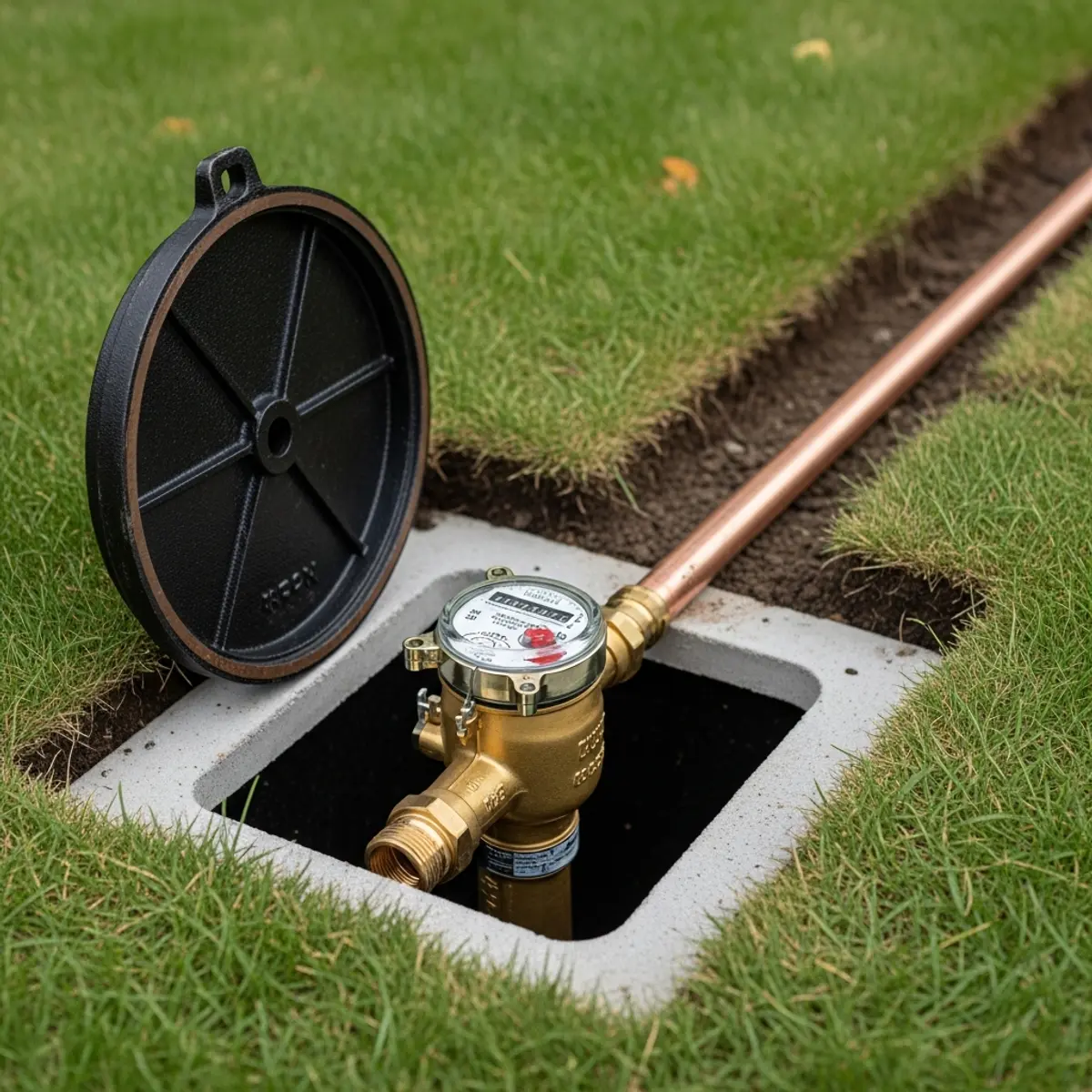
Water connections for Boise ADUs are generally more straightforward than sewer. Veolia Water Idaho supplies drinking water to most of Boise — City of Boise Public Works handles sewer — and most ADUs connect to the existing water service.
Shared vs. Separate Water Meter
Sharing the existing water meter is the simplest and least expensive option. A new water line is teed off the main house supply inside or outside the house and run underground to the ADU. This avoids the $3,000 to $6,000 cost of a new meter, tap fee, and system development charges. The tradeoff is that the homeowner pays a single water bill covering both units. For owner-occupied properties where the ADU is a rental, some owners install a sub-meter (not billed by the city) for internal tracking purposes, costing $200 to $500.
A separate water meter makes sense when separate billing is a priority or when the existing service line is undersized (3/4 inch or smaller). New meter installation requires an application to the City of Boise, payment of system development charges, and installation of a new service line from the water main to a meter box at the ADU.
Backflow Prevention and Line Sizing
Boise requires backflow prevention on any new water service connection. For shared service, a dual-check valve at the branch point is typical, costing $150 to $400 installed. The supply line to the ADU should be 3/4-inch minimum for a one-bathroom unit and 1-inch for ADUs with two bathrooms or high-demand fixtures. Proper sizing prevents pressure drops when multiple fixtures run simultaneously in both the main house and ADU.
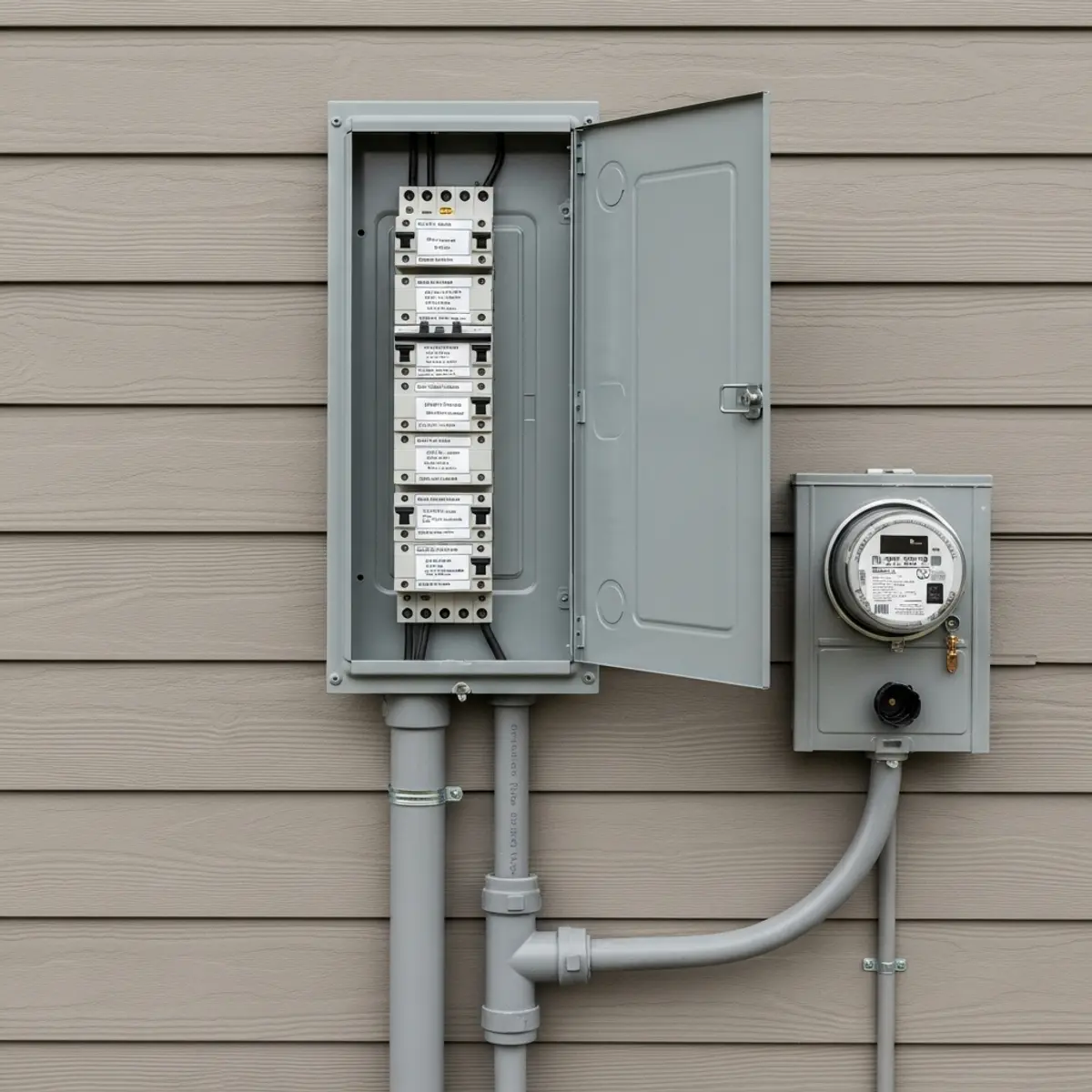
Electrical is typically the second-largest utility cost for ADU construction. Idaho Power serves the Boise area, and the approach depends on your existing service capacity and the ADU's electrical demands.
Subpanel from the Main House
The most common approach is feeding a subpanel in the ADU from the main house's electrical panel. This works when the main panel has sufficient capacity — typically a 200-amp main panel can support a 60 to 100-amp subpanel for the ADU while maintaining adequate capacity for the primary residence. The subpanel feed requires a dedicated circuit from the main panel, underground conduit run to the ADU (buried 18 to 24 inches per code), and a new panel installed in the ADU. Cost for a subpanel approach runs $3,000 to $8,000 depending on amperage and distance.
Separate Meter and Service
A separate Idaho Power meter provides independent electrical service to the ADU. This is required when the main panel cannot support the additional load, or when the homeowner wants independent billing. Idaho Power installs the meter base and connects to the grid; the homeowner's electrician installs the panel, wiring, and underground conduit from the meter to the ADU. Separate service costs $5,000 to $12,000 including Idaho Power fees, trenching, and panel installation. Overhead service drops are less expensive than underground but may not be permitted depending on your neighborhood and zoning.
Typical Amperage Requirements
- Studio or one-bedroom ADU with gas appliances: 60 to 100 amps
- Two-bedroom ADU with gas heat and water heater: 100 amps
- ADU with all-electric appliances, heat pump, and electric water heater: 150 to 200 amps
- ADU with electric vehicle charging capability: add 40 to 60 amps to base requirement
Intermountain Gas Company provides natural gas service throughout the Boise area. If your main house has gas service, extending it to the ADU is usually straightforward and significantly reduces electrical load requirements.
Gas Line Extension
A licensed plumber extends a gas line from the existing meter or main house gas line to the ADU. The line must be properly sized based on total BTU demand — furnace, water heater, range, and dryer combined. A typical ADU gas line extension costs $1,500 to $4,000 depending on distance, line size, and whether the existing meter has sufficient capacity. If the existing gas meter cannot handle the additional load, Intermountain Gas will upsize it at no cost in most cases, though the process may take 2 to 4 weeks.
Meter Placement and Safety
Intermountain Gas has specific requirements for meter placement relative to the ADU: minimum clearances from windows, doors, ignition sources, and electrical panels. The meter must be accessible for reading and maintenance. For detached ADUs, a separate gas meter may be required, which involves an application to Intermountain Gas and a new service line from the street main. Separate meter installation typically costs $2,000 to $5,000 including the service line and connection fees.
Communications utilities are the least complex ADU connections but are easy to overlook during planning. Running conduit during construction is far less expensive than retrofitting later.
- Install a 1-inch conduit from the main house to the ADU during the underground utility trenching phase — even if you don't plan to run cable immediately. Cost: $200 to $500 during construction versus $1,500 or more to trench later.
- Most Boise ADU owners extend their existing internet service using a hardwired ethernet run or a mesh Wi-Fi system. A direct ethernet connection from the main house router to the ADU provides the most reliable service.
- Sparklight (Cable One), CenturyLink, and fiber providers like Lumen or local cooperatives serve different parts of Boise. A separate internet account for the ADU typically requires a separate service drop, which the provider installs at minimal or no cost.
- If the ADU will be a rental, a separate internet account gives tenants autonomy. Run a separate conduit to the street or nearest utility pole during construction to make this option easy to activate later.
The table below summarizes typical costs for each utility connection in the Boise area. Ranges reflect the difference between shared connections (lower end) and separate new service installations (higher end).
| Utility | Shared Connection | Separate Service | Provider |
|---|---|---|---|
| Sewer/Wastewater | $2,500–$6,000 | $5,000–$15,000 | City of Boise Public Works |
| Water | $1,500–$3,500 | $3,000–$6,000 | Veolia Water Idaho |
| Electrical | $3,000–$8,000 | $5,000–$12,000 | Idaho Power |
| Natural Gas | $1,500–$4,000 | $2,000–$5,000 | Intermountain Gas |
| Internet/Cable | $200–$500 | $300–$800 | Various (Sparklight, CenturyLink) |
Typical total utility hookup cost: $15,000 to $40,000
The lower end applies to ADUs that share all connections with the main house and have short trenching runs. The upper end reflects separate meters for all utilities, long distances, and difficult site conditions.
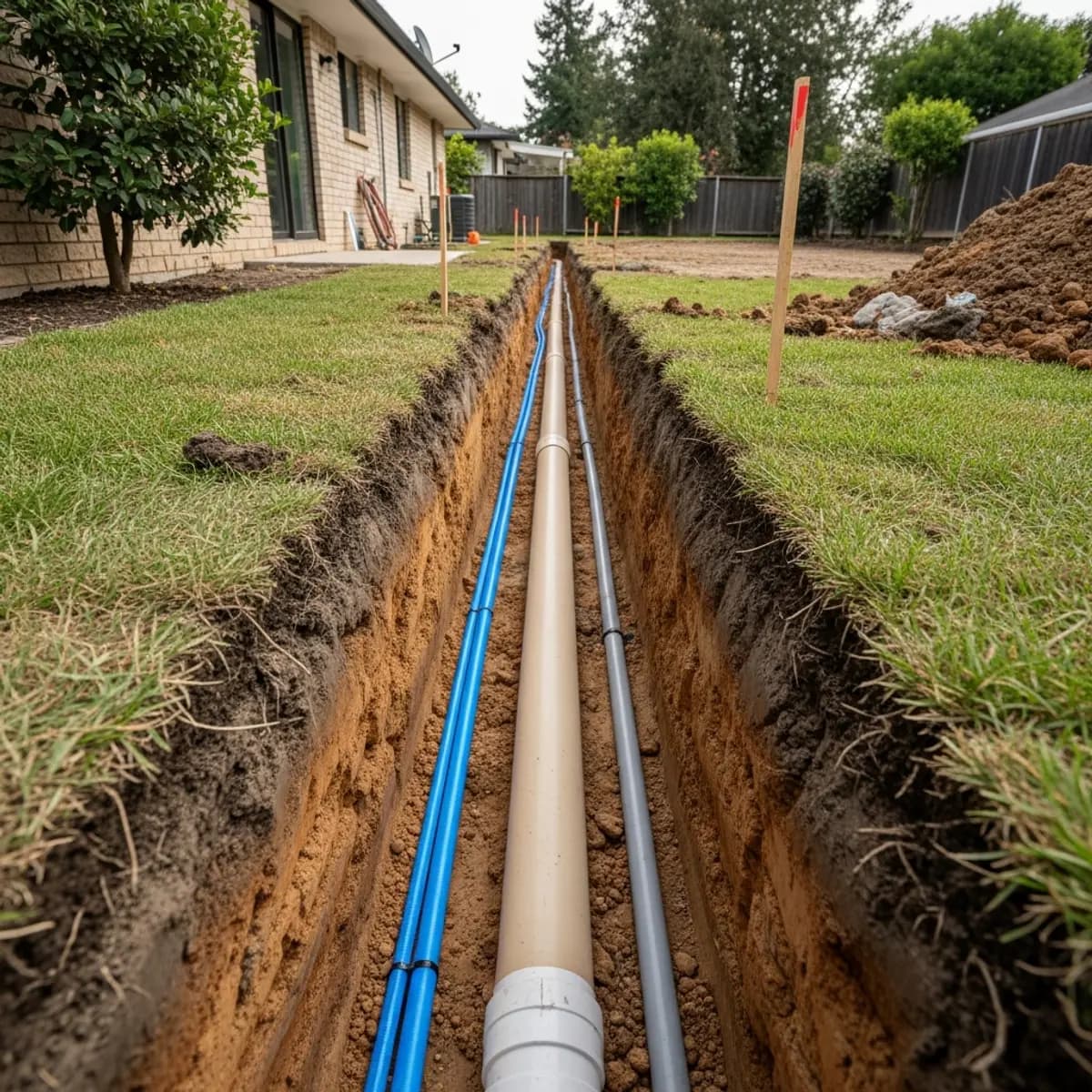
The physical work of getting utility lines from point A to point B is a significant cost driver. Site conditions in the Boise area vary widely — some neighborhoods have sandy, easily excavated soil, while others sit on hardpan clay, cobble, or even basalt that requires specialized equipment.
| Site Work Item | Cost Range | Notes |
|---|---|---|
| Open Trenching (per linear ft) | $5–$15 | Standard excavation in accessible soil. Most common for backyard ADU utility runs. |
| Directional Boring (per linear ft) | $25–$60 | Required under driveways, sidewalks, and landscaping you want to preserve. |
| Rock Trenching (per linear ft) | $15–$35 | Necessary in areas with basalt or heavy cobble. Common in parts of SE Boise and the Bench. |
| Driveway/Sidewalk Restoration | $500–$3,000 | Concrete or asphalt patching if open trenching crosses hardscape. |
| Landscape Restoration | $500–$2,000 | Regrading, topsoil, sod, or irrigation repair after trenching. |
Cost-Saving Strategies for Site Work
- Combine all utility lines in a single shared trench where code allows — this cuts trenching cost substantially
- Coordinate utility trenching with foundation excavation so the equipment is already on site
- Place the ADU as close to existing utility connections as setbacks and site planning allow
- Call 811 (Dig Line) before any excavation — it is free and required by Idaho law
Understanding how your ADU's layout affects utility runs is critical. See our ADU floor plan planning guide for utility requirements by layout.
Knowing which providers serve your property streamlines the permit and connection process. Contact each provider early in your ADU planning to understand requirements, fees, and lead times.
Veolia Water Idaho — Water
Supplies drinking water to most of Boise. Handles new meter applications and connection charges. Confirm current lead times when you apply.
City of Boise Public Works — Wastewater
Sewer collection and treatment within Boise city limits. Sewer tap permits are issued through the City of Boise.
Idaho Power — Electrical
Provides electrical service throughout the Treasure Valley. New service applications are submitted online. Idaho Power designs and installs the service connection from their lines to the meter; the homeowner's electrician handles everything from the meter to the ADU.
Intermountain Gas Company — Natural Gas
Natural gas distribution for Boise and surrounding communities. New service requests and meter upsizing are handled through their service department. Typical lead time for new gas service: 2 to 4 weeks.
Can my ADU share utilities with my main house in Boise?
Yes, Boise allows ADUs to share water, sewer, and electrical connections with the primary residence. Shared water service is the most common approach and avoids the cost of a second water meter and tap fee. Electrical can be shared via a subpanel fed from the main house panel, provided the main panel has sufficient capacity. Sewer can tap into the existing lateral if it is in good condition and properly sized. However, separate meters may be required if you plan to rent the ADU and want tenants to pay their own utilities.
How much does it cost to connect utilities to an ADU in Boise?
Total utility connection costs for a Boise ADU typically range from $15,000 to $40,000. The wide range depends on whether you share existing connections or install separate services, the distance from existing utility lines to the ADU, site conditions like rocky soil or existing hardscape that requires boring, and the capacity of your current services. A detached ADU 50 feet from the main house with shared water and sewer but a separate electrical subpanel typically falls in the $18,000 to $28,000 range.
Do I need a separate water meter for my Boise ADU?
Boise does not require a separate water meter for an ADU. Most homeowners connect to the existing water service, which avoids the $3,000 to $6,000 cost of a new meter and tap. If you choose a separate meter for tenant billing purposes, you will need to apply through Veolia Water Idaho, the water utility for most of Boise, and pay the applicable connection charges.
What electrical service size does an ADU need?
Most ADUs in Boise require 100-amp to 200-amp electrical service. A small studio or one-bedroom ADU with gas heating and a gas water heater typically works well with a 100-amp subpanel. Larger ADUs or those with all-electric appliances, electric heat pumps, and electric water heaters generally need 150 to 200 amps. Idaho Power will evaluate your existing main service to confirm it can support the additional load.
Can I connect an ADU to a septic system in Ada County?
If your property is outside Boise city limits and uses a septic system, connecting an ADU is possible but requires approval from Central District Health Department. The existing septic system must be evaluated to confirm it can handle the additional flow from the ADU. In many cases, the septic tank and drain field need to be upsized, which can cost $8,000 to $20,000. A soil percolation test and engineered septic design are typically required.
How long does it take to get utility connections approved and installed for a Boise ADU?
Utility connection timelines in Boise vary by provider and scope. Shared connections that tap into existing services can typically be completed in 1 to 2 weeks once permits are issued. New service connections requiring meter installations from Idaho Power or Veolia Water Idaho may take 4 to 8 weeks due to application processing and scheduling. Plan for 6 to 12 weeks total from permit application to final utility inspections, and coordinate early with each provider to avoid delays in the overall ADU construction timeline.
The following government agencies, industry organizations, and official resources provide additional information relevant to your remodeling project.
Plan Your ADU Utility Connections
Free site assessments for ADU utility hookups in Boise, Meridian, Eagle, and the Treasure Valley. We coordinate with all local providers.