
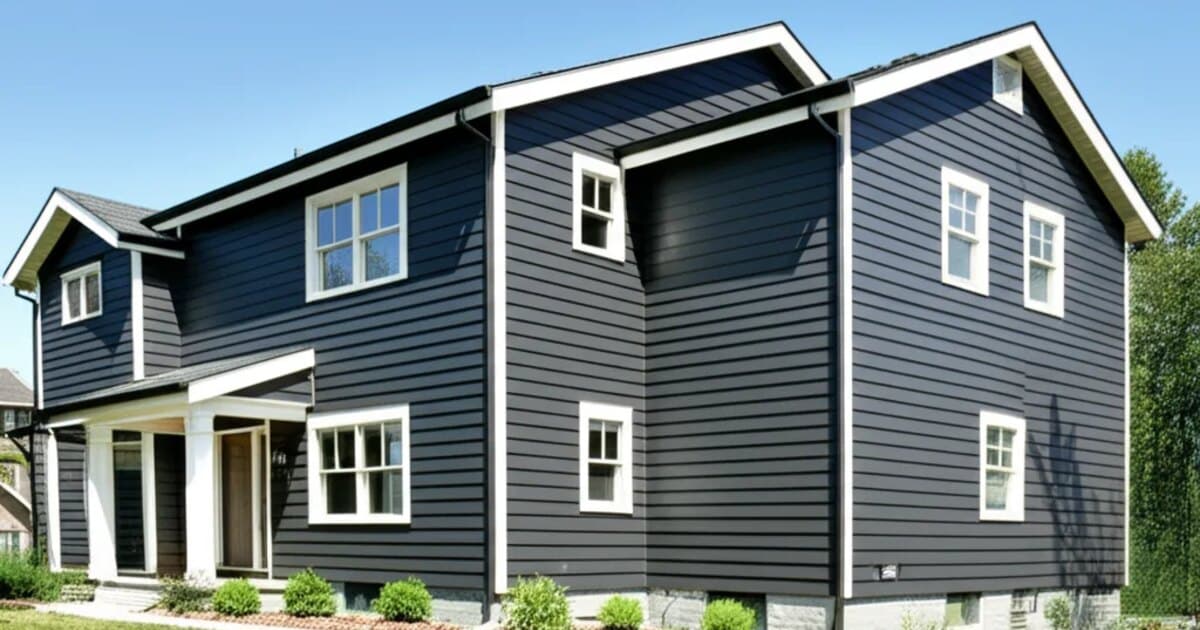
Siding Installation Design Ideas for Meridian
Get inspired with siding installation design ideas tailored to Meridian homes, from trending styles to practical layout considerations.
Quick answer
Siding in Meridian is different from Boise's older market because the problem is concentrated and predictable. In Boise, siding needs vary dramatically by neighborhood age — the North End has 1920s-era wood siding alongside 1960s ranch vinyl, each requiring completely different approaches.
Meridian, ID · Siding Installation
Planning siding installation in Meridian?
Read the full guide below — or get your project priced now. Free, no-obligation estimates from an Idaho registered local team, backed by a 1-year workmanship warranty.
- Licensed Idaho RCE-6681702
- 1-Year Workmanship Warranty
- $2M Liability Coverage
- Free, No-Obligation Estimates


Siding in Meridian is different from Boise's older market because the problem is concentrated and predictable. In Boise, siding needs vary dramatically by neighborhood age — the North End has 1920s-era wood siding alongside 1960s ranch vinyl, each requiring completely different approaches. In Meridian, the siding challenge is uniform: a city full of homes built between 1995 and 2015 with similar materials, similar installation quality, and similar aging profiles, all reaching the replacement window in the same decade. This uniformity creates a specific market dynamic: a large share of the city's siding reaches the replacement window at once rather than being spread across decades of housing stock. Contractors who specialise in Meridian's specific siding profile — LP SmartSide and T1-11 replacement with fiber cement upgrades, in HOA-governed subdivisions — have a distinct advantage over generalist contractors who treat every project as novel. The HOA dimension is also uniquely intense in Meridian compared to Boise. Because virtually all of Meridian's housing stock is in planned subdivisions, HOA design review is a standard component of every exterior project — not the exception it is in Boise's established neighborhoods. Contractors who understand the specific HOA requirements in Paramount, Movado Estates, Bellingham Park, and other Meridian communities deliver significantly better client experiences than those who treat HOA navigation as an afterthought.
South Meridian
South Meridian's newer homes present a specific siding challenge: LP SmartSide installed between 2005 and 2015 is now in its middle age, and the quality of the original installation — particularly joint sealing, end-grain priming, and window/door flashing — determines whether these homes are in the maintenance window or the replacement window. Homes in South Meridian's active-HOA subdivisions (Movado Estates, Bellingham Park, Copper Basin) must go through design review for any siding replacement that changes material type or color. Iron Crest prepares complete HOA submittal packages including manufacturer data sheets, color samples, and installation specifications. Fiber cement replacement proposals are generally well-received by South Meridian HOA design review committees — the material upgrade is viewed positively in virtually every subdivision with an active committee. Clearance at the lower courses of siding near grade is a recurring problem in South Meridian. Fiber cement installation instructions and the IRC both call for a minimum 6-inch gap between siding and finished grade, and 2 inches above concrete flatwork, to prevent moisture wicking. Homes where the original grade was established too high against the siding — particularly common in newer construction where landscaping has built up — need grade correction as part of a siding replacement project. The design trend in South Meridian siding replacement is moving toward two-profile exteriors: James Hardie HardiePlank lap on primary elevations with HardieShingle or HardiePanel board-and-batten on gable ends and accent areas. This mix of profiles creates architectural interest that reads as custom in listing photography and is well-supported by most South Meridian HOA design guidelines.
North Meridian
North Meridian represents the highest concentration of siding that is at or past end of life in Meridian. Original T1-11 and hardboard siding from the 1990s era is failing across these neighborhoods, and the replacement market here is primarily driven by necessity rather than aesthetic preference. However, homeowners who are replacing siding out of necessity are consistently upgrading to fiber cement — taking the opportunity to make a material-quality improvement alongside the required replacement. The substrate condition in North Meridian siding projects is the greatest variable. Homes with T1-11 siding that was allowed to paint-fail and remain unpainted often have sheathing moisture damage behind the siding. When we pull siding off these homes, we sometimes find rotted OSB or plywood sheathing at the base courses and around window openings. Sheathing replacement adds to project cost but is mandatory — new siding over rotted sheathing is likely to fail prematurely. Iron Crest provides a two-phase pricing structure for North Meridian siding projects: base scope pricing assuming good sheathing condition, plus a pre-priced per-sheet allowance for sheathing replacement as discovered. HOA oversight in North Meridian is less uniform than in South Meridian — some neighborhoods have active HOAs with design review, others are HOA-free or have inactive HOAs. For HOA-free North Meridian neighborhoods, homeowners have more flexibility in material selection and color — enabling bolder design moves that wouldn't be possible in structured HOA subdivisions.
Paramount / Lochsa Falls
Siding projects in Paramount and Lochsa Falls are the highest-specification work in Meridian's siding market. These homes were built with higher-quality original siding in most cases — premium grade LP SmartSide, some with cedar shake accents — and replacement projects here are more about material upgrade and aesthetic refresh than end-of-life necessity. The architectural character of Paramount and Lochsa Falls homes creates opportunities for siding profiles that would look out of place in a standard Meridian subdivision. Shake-profile siding on upper gables, board-and-batten on side and rear elevations, and the combination of horizontal lap with vertical accent panels all work beautifully on the larger, more architecturally detailed homes in these communities. Iron Crest's design consultation for Paramount and Lochsa Falls siding projects addresses profile mixing, color combination, and accent placement as a holistic curb appeal exercise. Both communities maintain strict HOA oversight over exterior material and color changes. Paramount's architectural review process requires detailed submittals including elevation drawings, material samples, and color chips. James Hardie's ColorPlus system, with its curated color palette and factory-finish warranty, is well-positioned for HOA approval in both communities — the established product quality and manufacturer backing give review committees confidence. Iron Crest prepares HOA submittals for both Paramount and Lochsa Falls as part of project management.

The design phase is where your siding installation goes from a general idea to a specific plan. Good design balances aesthetics, functionality, budget, and the unique characteristics of your home and neighborhood in Meridian. Here are the most popular design approaches and trends we see in Meridian and the surrounding Treasure Valley.
Meridian homeowners tend to favor designs that blend modern functionality with the regional character of Idaho homes. Here are the most requested design elements:
These design factors are specific to siding installation projects and affect both the look and function of the finished space:
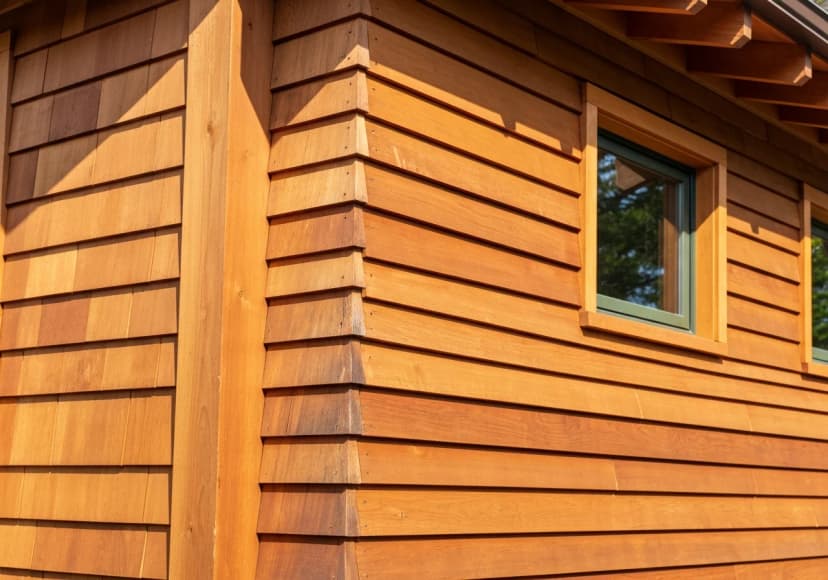
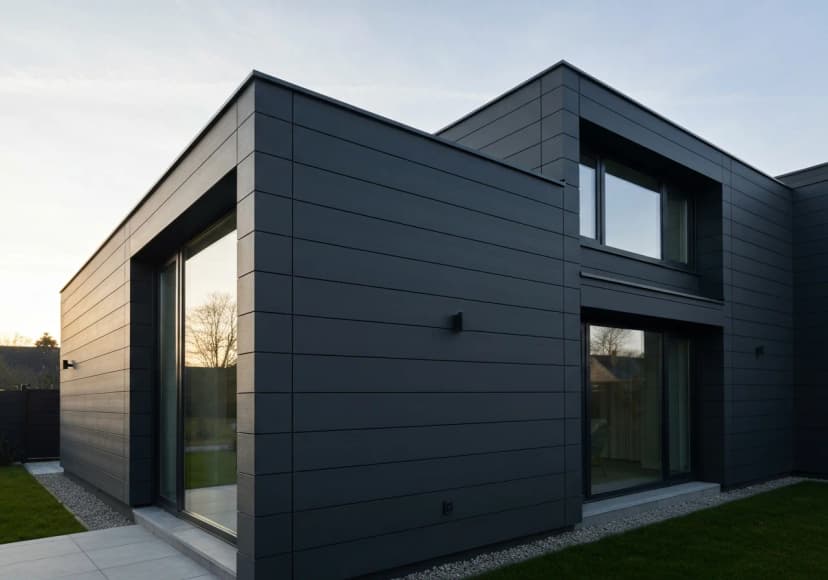
Siding profile selection — lap (horizontal), board-and-batten (vertical), shake (shingle-style), and panel each create a different architectural character
Mixed materials — combining two siding profiles (e.g., lap siding on main walls with board-and-batten on gable accents) adds visual depth and architectural interest
Color coordination — choose siding color to complement your roof, stone or brick elements, and front door; test large samples on the house in natural light
Trim proportions — wider trim boards around windows and doors create a more substantial, custom look; standard narrow trim is more economical but less distinctive
Reveal and exposure — the amount of siding visible between horizontal rows (the reveal or exposure) affects shadow lines and overall appearance
Regional style — Boise neighborhoods range from modern farmhouse to craftsman to contemporary; your siding choice should complement your home's architecture and neighborhood context
The materials and finishes you choose bring your design to life. Here are the options most commonly selected for siding installation projects in Meridian:
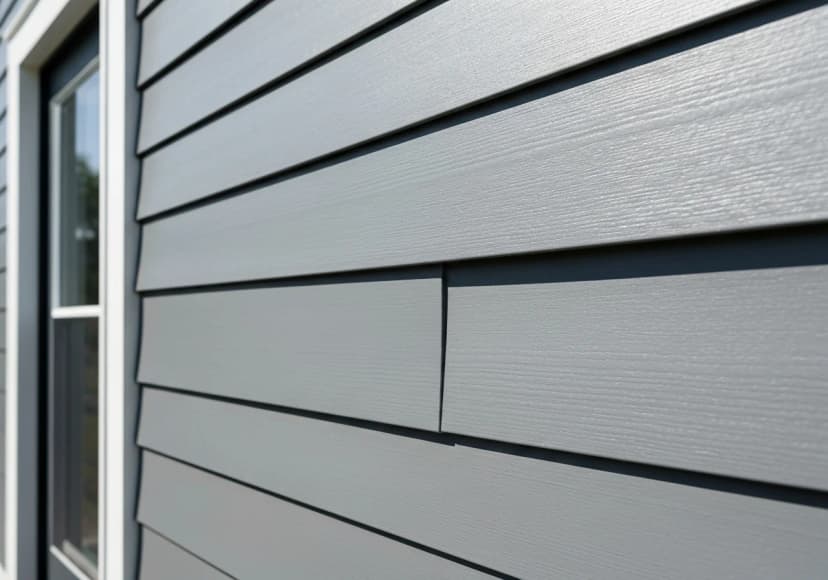
James Hardie HardiePlank Lap Siding
$10–$16 per sq ft installedHomeowners who want maximum durability, fire resistance, and long-term value
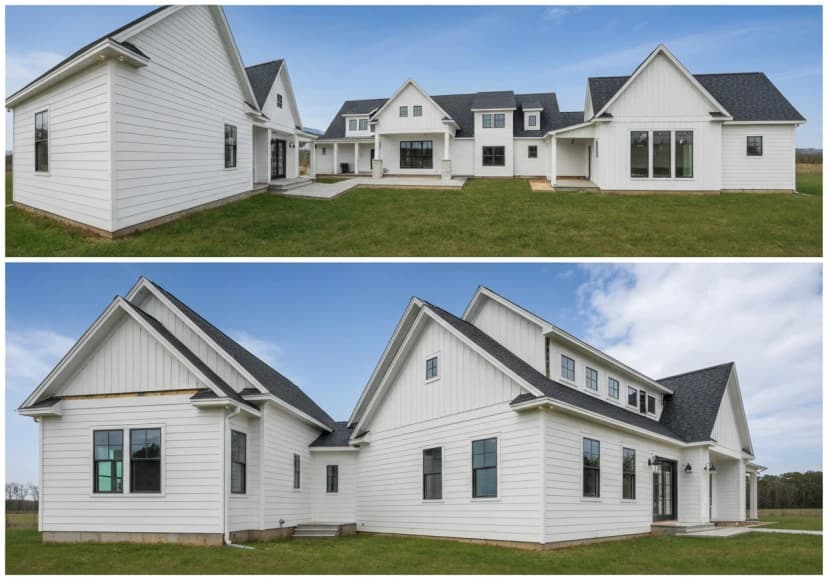
LP SmartSide Engineered Wood Siding
$8–$13 per sq ft installedHomeowners who want wood-grain appearance with engineered durability and lower cost than fiber cement
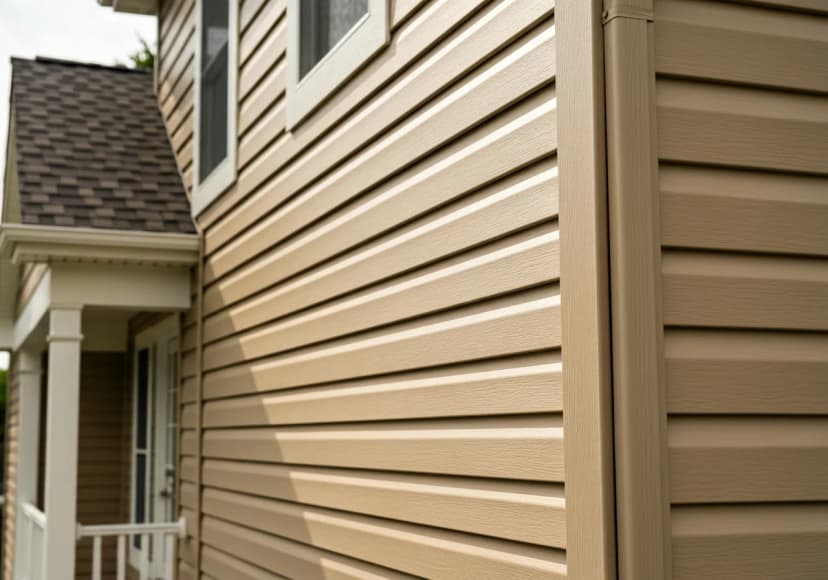
Vinyl Siding
$5–$10 per sq ft installedBudget-conscious projects, rental properties, and homeowners who want zero exterior painting maintenance
Weather-Resistive Barrier (House Wrap)
$0.50–$1.50 per sq ft installedRequired component beneath all siding installations for moisture and air management
PVC or Fiber Cement Trim
$4–$10 per linear foot installedAll exterior trim applications — especially in areas prone to moisture exposure
Learning from others' mistakes saves time and money. Here are the most common siding installation design pitfalls we see in Meridian:
Moisture intrusion behind siding causing rot and mold
We remove old siding, repair damaged sheathing and framing, install a proper weather-resistive barrier with correct lapping and sealing, and flash all openings to create a watertight exterior shell.
Fading, warping, or cracking in old vinyl or wood siding
We replace failed siding with modern materials rated for Idaho's UV and temperature extremes. Fiber cement and engineered wood hold their color and shape far longer than older vinyl or untreated wood.
Gaps and failed caulking allowing air and water infiltration
We install siding with manufacturer-specified gapping, use backer rod and premium caulk at all joints and penetrations, and ensure every seam and transition is properly sealed.
Woodpecker damage or pest intrusion in wood or foam-backed siding
We replace damaged sections and install fiber cement or other pest-resistant materials. James Hardie siding is immune to woodpecker damage, termites, and rot.
No weather barrier or inadequate flashing under existing siding
Many older Treasure Valley homes have siding installed directly over sheathing without house wrap or proper flashing. Our complete re-side includes a full weather barrier and flashing system as a standard component.
For siding installation projects in Meridian, you have two main approaches to the design process: hiring a separate interior designer then a contractor, or working with a design-build firm that handles both under one roof.
Design-build (our approach)
- ✓ Single point of contact
- ✓ Design informed by real construction costs
- ✓ Faster project delivery
- ✓ Budget aligned from day one
Separate designer + contractor
- ● More specialized design expertise
- ● Independent design perspective
- ● Requires coordination between parties
- ● Can result in budget surprises
Local factors — Meridian's housing stock and typical construction eras, the climate conditions that drive material and scheduling choices, and permitting through City of Meridian Building Department — are covered in full on our Meridian page for this service, alongside 5 common project types.
Siding Installation in Meridian: housing stock, climate & permits →Does siding replacement require a permit?
In most Treasure Valley jurisdictions, full siding replacement requires a building permit — especially if the project involves sheathing repair or weather barrier installation. We handle all permit applications and inspections.
Does new siding improve energy efficiency?
Yes. Removing old siding and installing a proper weather barrier and new siding reduces air infiltration. Adding rigid foam insulation behind the siding further improves R-value and energy efficiency — especially valuable in Boise's hot summers and cold winters.
Planning siding installation in Meridian?
Get expert guidance and a free estimate for your siding installation project in Meridian, ID.
Get Your Free Estimate