
Building an Allergy-Aware Kitchen in Boise: 7 Material Selections That Don't Make Allergies Worse
For households with allergies or asthma, kitchen material selection matters more than aesthetics. Seven decisions during the remodel that reduce allergen accumulation across the kitchen's lifespan.
Quick answer
Three verification methods. (1) Ask for product specifications at design phase — the contractor should provide brand names and model numbers for all paints, sealants, and finishes. You can verify VOC content on manufacturer product pages. (2) During installation, the actual product cans should be visible on site — confirm they match what was specified. (3) Look for certifications: GREENGUARD Gold certification verifies low-VOC emissions; the asthma & allergy friendly® certification (AAFA/ASL) verifies products meet specific allergen-management standards.
Boise's 8+ month pollen calendar (see our allergen-resistant bathroom design analysis for the full Treasure Valley pollen season detail) compounds kitchen allergen exposure for sensitive households. The kitchen is where cooking moisture, food allergens, and outdoor pollen all converge. Standard kitchen remodel design doesn't address these factors specifically.
This article covers seven kitchen material and design decisions that meaningfully reduce allergen accumulation for households with allergies, asthma, or chemical sensitivities. The features add 5-12% to a typical Boise kitchen remodel scope ($2,000-$6,000 above standard) and produce a kitchen that supports household members' health rather than compounding their exposure.
For broader sustainable and low-VOC remodel context, see our sustainable green remodeling guide. For the bathroom-specific companion piece on allergen design, see our allergen-resistant bathroom design article. This page focuses on kitchen-specific material and design decisions for allergy-sensitive households.
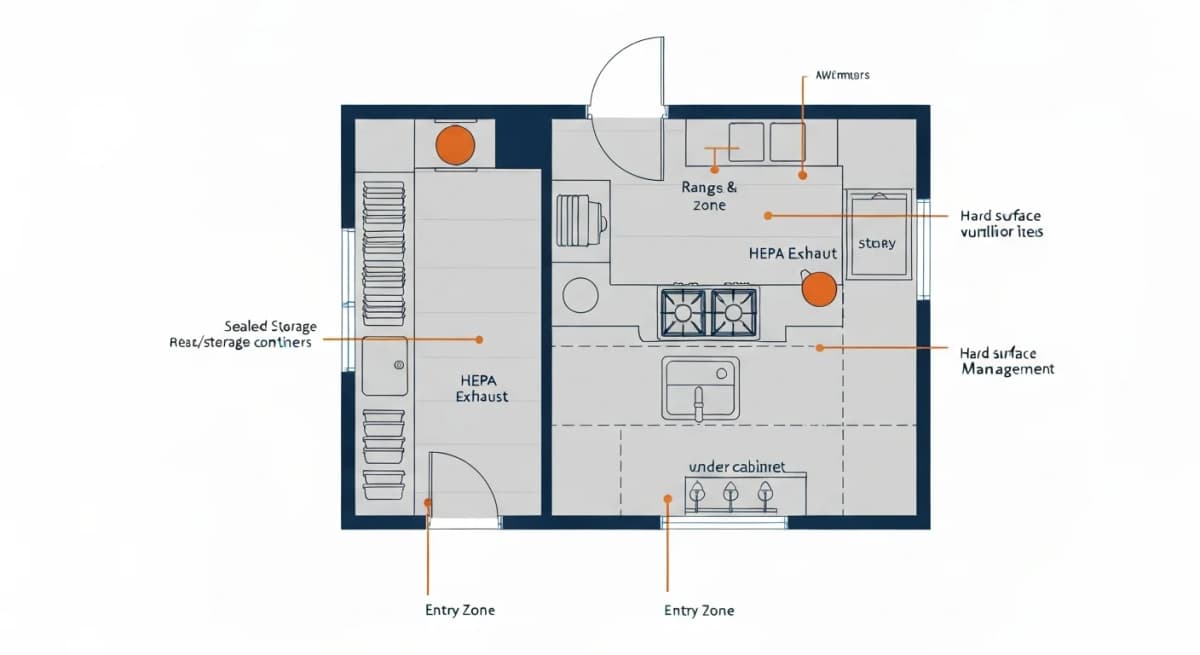
Kitchens in Boise homes face a specific allergen profile that combines outdoor and indoor sources:
Outdoor allergens carried indoors: Pollen on clothing and hair, particulate from yard work, mold spores from outdoor surfaces. The kitchen often acts as the first interior room after outdoor exposure (entry through mudroom or back door commonly opens to kitchen).
Cooking-generated allergens: Steam from cooking carries food particulate that can be allergenic for some users (especially aerosolized peanut, fish, milk proteins). Frying generates fine particulate that accumulates on surfaces. Mold-friendly conditions during cooking (warm, moist) followed by cooling create growth windows.
Food-source allergens: Storage of nuts, wheat, dairy, shellfish, and other allergens in pantries and cabinets. For allergen-sensitive households (anaphylaxis-level concerns), proper storage separation matters.
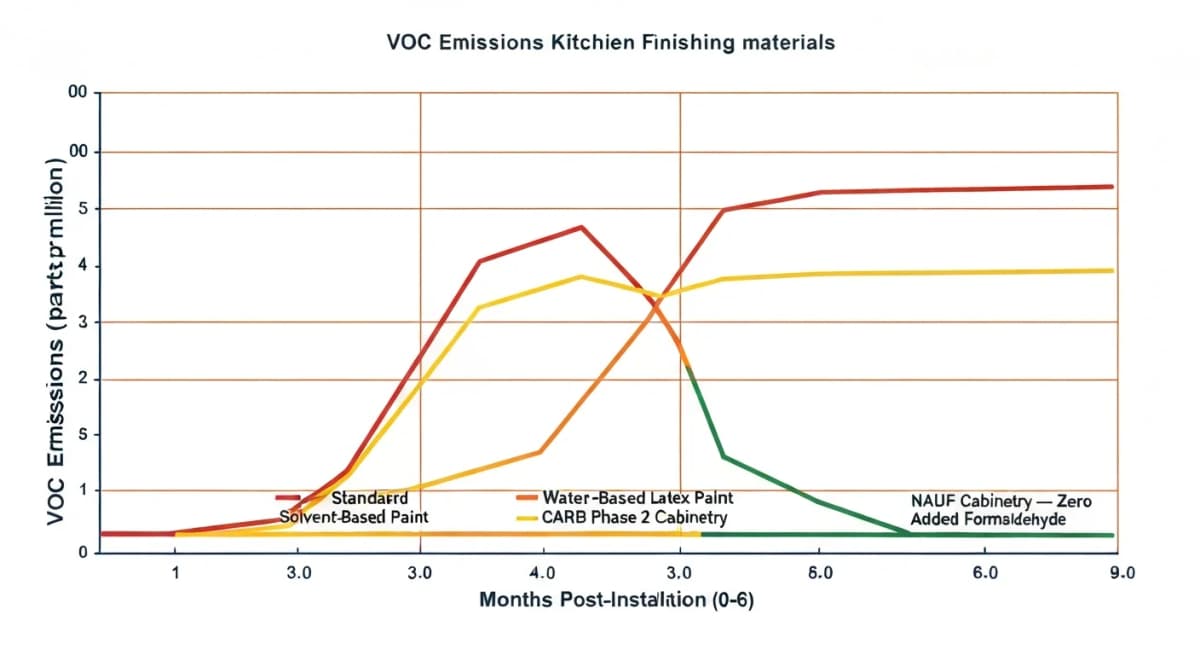
Material VOCs: Off-gassing from new finishes, cabinet materials, paints, and adhesives. Standard residential materials release VOCs for 30-180 days after installation. Sensitive household members experience respiratory irritation during this period.
Mold and microbial growth: Moist environments (cabinets near sinks, under-sink areas, leaks) support mold growth that compounds allergic reactions. Standard residential moisture management is often inadequate for sensitive households.
The seven design decisions below address each of these allergen pathways during the kitchen remodel. Implemented together, they meaningfully reduce household allergen exposure across the kitchen's lifespan.
Volatile organic compounds (VOCs) released from standard paint and finishes are the most common source of post-remodel respiratory irritation. For allergen-sensitive households, low-VOC or zero-VOC paint is essentially mandatory.
Paint product categories:
Standard solvent-based paint: 100-300 g/L VOC content. High emission for 30-90 days post-application. Off-gassing continues at lower levels for 6-12 months. Not appropriate for allergen-sensitive households.
Water-based latex paint: 50-150 g/L VOC content. Moderate emission for 7-21 days. Faster decay than solvent-based. Acceptable for most households but not optimal for sensitive ones.
Low-VOC water-based paint: Under 50 g/L VOC content. Lower initial emission and faster decay. Most major paint manufacturers offer low-VOC product lines (Sherwin-Williams Harmony, Benjamin Moore Aura, Behr Premium Plus Ultra). Acceptable for most allergen-sensitive households.
Zero-VOC water-based paint: Under 5 g/L VOC content. Minimal emission. The right choice for sensitive households. Cost premium: $5-$15 per gallon vs standard paint. Total impact on a typical kitchen: $50-$150 across the project.
The cost premium for upgrading from standard to zero-VOC paint across an entire kitchen is modest — typically $50-$150. For households where one or more members has documented respiratory sensitivity, this upgrade is non-negotiable rather than optional.
Most residential cabinet boxes use formaldehyde-emitting MDF or particleboard as the structural panel material. The formaldehyde off-gasses for years after installation, contributing to indoor air quality issues and respiratory irritation for sensitive household members.
Cabinet certification standards:
Standard residential cabinets: No specific formaldehyde restrictions. Older or budget-tier cabinets can have very high formaldehyde emissions during the first 6-12 months and meaningful emissions for years.
CARB Phase 2 certified: California Air Resources Board Phase 2 (and federal TSCA Title VI) standards limit formaldehyde emissions to 0.05–0.11 ppm depending on panel type (hardwood plywood 0.05, particleboard 0.09, MDF 0.11). Most modern major-brand cabinets (KraftMaid, Merillat, Wellborn, etc.) are CARB Phase 2 certified. Acceptable baseline for most allergen-sensitive households.
NAUF (no added urea formaldehyde) cabinets: The premium option. Cabinets use phenol-based or formaldehyde-free adhesives. Essentially zero formaldehyde emissions. Cost premium: $800-$2,500 above CARB 2 cabinetry for a typical kitchen set.
For most allergen-sensitive Boise households, CARB Phase 2 is the right baseline (verify your selected cabinet line is certified — most major brands are; some budget brands aren't). For households with severe sensitivity, NAUF is worth the premium.
The verification process: ask your contractor to provide CARB 2 or NAUF certifications for the specific cabinet lines being installed. Reputable cabinet manufacturers maintain these certifications and can supply documentation. If a cabinet line can't provide certification, that's a signal to choose a different line.
Countertop material selection affects allergen accumulation through three pathways: porosity (porous surfaces absorb particulate), texture (textured surfaces trap allergens), and cleanability (some surfaces are harder to clean thoroughly).
Material rankings for allergen accumulation:
Lowest accumulation: Quartz (engineered stone, non-porous), polished granite (sealed annually, dense and easy to clean), solid-surface materials (Corian, sealed). All effectively non-porous when properly maintained.
Moderate accumulation: Honed or leathered finish granite (more texture than polished, more places for particulate to accumulate), butcher block (porous; absorbs moisture and food residue), travertine (porous; requires careful sealing).
Higher accumulation: Tile countertops (grout lines harbor allergens), concrete countertops (porous unless properly sealed), unfinished wood.
For allergen-sensitive households, the right choice is quartz or polished granite. The maintenance routine is straightforward (daily wipe-down with non-abrasive cleaner; occasional thorough cleaning). Both materials handle Boise's hard water without significant staining.
The cost difference between basic quartz and basic granite is small ($45-$85 per square foot installed for either, vs $30-$50 for laminate or tile). Premium options (specific quartz colorways, premium granite, designer Corian) run higher ($85-$200+ per sq ft). For most Boise kitchens, mid-range quartz delivers excellent allergen-resistance at moderate cost.
Design a kitchen that helps with allergies, not against you
Allergen-aware kitchen design starts with the household's specific sensitivity profile. Schedule a consultation and we'll model the right material, ventilation, and storage selections for your home's allergen-management needs.
The range hood is the kitchen's primary defense against cooking-generated allergens. Undersized or recirculating range hoods (no filtration beyond a grease screen) are inadequate for allergen-sensitive households. Upgrading the range hood is one of the highest-impact allergen-management decisions.
Specifications for allergen-aware kitchens:
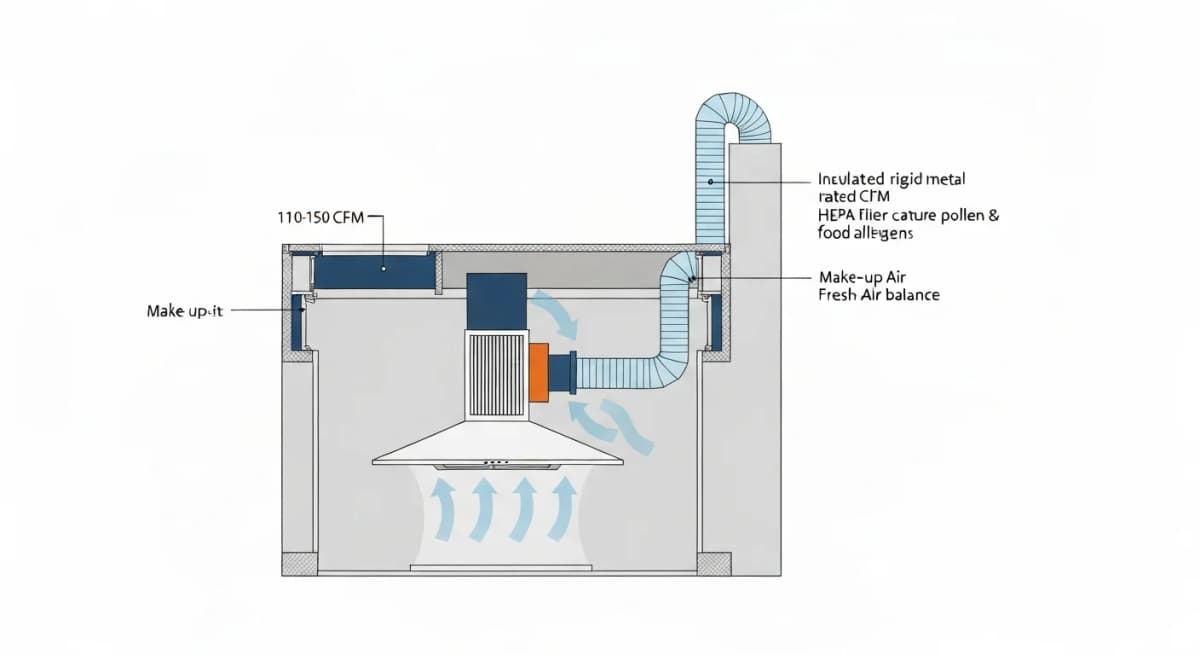
Properly sized CFM: at least 100 CFM per linear foot of range (so 300 CFM for a 30-inch range) and more for larger or open-concept layouts, with the elevation correction applied. The higher airflow cycles the kitchen air more rapidly, removing cooking particulate before it disperses through the home.
A separate HEPA air purifier: Ducted range hoods are not sold with HEPA cartridges — HEPA is an air-purifier feature. Pair the properly sized ducted hood with a standalone HEPA purifier sized for the kitchen and adjoining living space. The hood removes cooking particulate at the source; the purifier captures the fine particulate (including most allergens) that escapes the hood's capture zone.
Ducted exhaust: The hood must vent to the exterior, not recirculate. Recirculating hoods (which filter air and return it to the kitchen) are functionally inadequate for allergen management because they don't actually remove allergens from the home. Ducted exhaust to the exterior is the right configuration. See our range venting at Boise's elevation for full ducting specifications.
Make-up air integration: Hoods above 400 CFM require make-up air per 2018 IRC M1503.6 where the home has an atmospheric-vented fuel-burning appliance. For high-CFM hoods, the make-up air system itself can include filtration (a pre-filter on the incoming air) — capturing pollen from outdoor air during high-cooking-activity periods.
Cost: $400-$900 for a properly sized ducted range hood vs $80-$200 for a basic residential unit, plus $200-$500 for proper ducting if not already in place, plus a standalone HEPA purifier. Total range-hood scope premium for an allergen-aware kitchen: $400-$900.
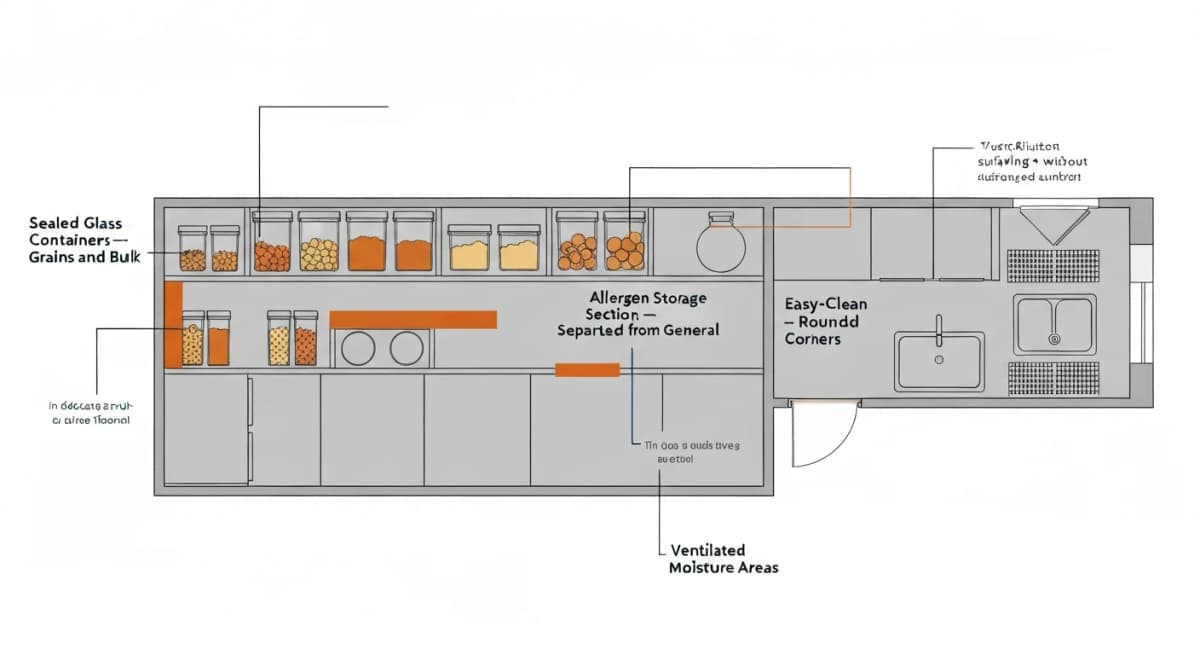
For households with anaphylaxis-level food allergies (severe peanut, tree nut, shellfish, dairy, gluten allergies), kitchen storage must support allergen-separation principles to prevent cross-contamination.
Allergen-separation storage design:
Sealed containers for allergen-containing foods: Glass or hard-plastic airtight containers for storage of allergen-containing items (peanuts, tree nuts, wheat flour, etc.). Prevents allergen particulate from contacting other food items during storage.
Dedicated drawers or sections: A specific drawer or pantry section reserved exclusively for allergen-containing foods. The household never mixes allergen and non-allergen items in this area. Allergen storage location is far from primary cooking surfaces to minimize cross-contamination risk during food prep.
Color-coded utensil systems: For severe-allergy households, dedicated utensils (cutting boards, knives, mixing bowls) for allergen-free cooking, stored separately from general kitchen utensils. The kitchen design accommodates dual-storage systems.
Easy-cleaning surfaces: Drawer interiors, shelving surfaces, and storage areas with smooth, non-porous, easily-wiped materials. Standard cabinet liners and unfinished plywood are inadequate; the spec calls for sealed melamine or vinyl-coated surfaces that wipe clean completely.
Cost: Storage system upgrades add $800-$2,000 to typical kitchen remodel scope. For severe-allergy households, the function justifies the cost.
Mold growth in kitchens compounds allergic reactions and respiratory issues for sensitive household members. Kitchen design that prevents mold growth at the source is more effective than trying to manage it after it develops.
Specific moisture-management design choices:
Under-sink ventilation: The cabinet under the kitchen sink is the most mold-prone location in the kitchen due to humidity from plumbing, occasional small leaks, and limited air circulation. Ventilated cabinet base (grilles or perforated panels) allows airflow that reduces mold-growth conditions. Cost: $50-$150 in cabinet modification.
Sealed grout in tile applications: Wherever tile is used (backsplash, floor), epoxy grout (non-porous) rather than cementitious grout (porous) prevents moisture absorption that supports mold growth at grout lines.
Proper kitchen ventilation: The range hood specification above also handles general kitchen moisture removal. Cooking generates significant water vapor; the hood exhaust prevents condensation accumulation on surfaces.
Quick-detection leak monitoring: Smart-home leak sensors (Roost, WaterCop, or similar) placed under sinks and behind appliances detect small leaks before they cause mold-growth conditions. Cost: $50-$150 for sensors, $0-$500 for integration with home monitoring.
Mold-resistant cabinet materials: Some cabinet manufacturers offer mold-resistant wood treatments or substrates for high-moisture applications. Worth specifying in moisture-prone cabinet locations.
For allergen-sensitive households, integrating air-purification capability into the kitchen remodel produces longer-term allergen reduction beyond just the cooking-event handling that range hoods address.
Three integration approaches:
Whole-house HEPA filtration: If the home's HVAC system has whole-house HEPA filtration capability or can have it added, ensuring the kitchen is on a dedicated supply duct (not return-only) so filtered air actively enters the kitchen. Standard residential HVAC often returns air from kitchen ducts back to the system — this can recirculate pollen and particulate. A dedicated kitchen supply with active filtered air reduces this. Cost: $400-$1,500 depending on HVAC system and retrofit scope.
Standalone HEPA air purifier: A countertop or floor-standing unit placed in the kitchen. No remodel-scope changes required, but adds clutter and electrical use. Cost: $150-$400 per unit.
UV-C light integration: UV-C lights in the kitchen HVAC return duct kill airborne mold spores and bacteria. Less effective for pollen (UV doesn't degrade pollen efficiently) but useful for mold-spore reduction in moisture-prone kitchen areas. Cost: $200-$500 for the UV-C unit + electrical install.
For most allergen-sensitive Boise kitchens, the right combination is whole-house HEPA filtration (long-term) plus a standalone HEPA air purifier in the kitchen during high-pollen seasons (immediate effect). UV-C is a niche addition that only addresses mold-spore-borne issues, not pollen.
Iron Crest's kitchen design conversations for allergen-sensitive households start by identifying the specific sensitivity profile — diagnosed allergies, asthma triggers, chemical sensitivities, severe food allergies — and the household's outdoor-activity patterns. The answers shape multiple design decisions: cabinet specification (CARB 2 baseline, NAUF for severe sensitivity), paint and finish selection (zero-VOC), range hood spec (properly sized and ducted, paired with a HEPA purifier), storage organization (allergen separation), and moisture management. We adjust the spec accordingly rather than applying a single allergen-friendly template.
The cost premium for allergen-aware kitchen design typically runs $2,000-$6,000 above standard residential scope on a $45,000-$70,000 kitchen remodel — a single-digit-to-low-double-digit share of total project cost. For households where the function matters, the premium is well-justified through reduced allergen exposure across the kitchen's 15-25 year lifespan. For broader context, see how we run kitchen remodeling in Boise and our companion allergen-resistant bathroom design article.
How do I verify my contractor is using genuinely low-VOC materials?
Three verification methods. (1) Ask for product specifications at design phase — the contractor should provide brand names and model numbers for all paints, sealants, and finishes. You can verify VOC content on manufacturer product pages. (2) During installation, the actual product cans should be visible on site — confirm they match what was specified. (3) Look for certifications: GREENGUARD Gold certification verifies low-VOC emissions; the asthma & allergy friendly® certification (AAFA/ASL) verifies products meet specific allergen-management standards. Iron Crest documents all material selections in the project scope and provides product specifications to the homeowner at project close.
How much does the allergen-aware kitchen premium typically add to a Boise remodel?
The cost premium for incorporating all the design features in this article runs $2,000-$6,000 above standard residential kitchen scope. Specifically: zero-VOC paint upgrade ($50-$150), CARB 2 vs standard cabinets ($0-$400 premium, usually included in major brands), NAUF cabinet upgrade if needed ($800-$2,500), properly sized ducted range hood ($400-$900), proper ducting if not already in place ($200-$500), under-sink ventilation and mold-resistant cabinet treatments ($150-$400), allergen-separation storage upgrades ($800-$2,000 if applicable). On a typical $45,000-$70,000 Boise kitchen remodel, that is a small share of total cost.
Are there kitchen materials I should avoid entirely if I have severe allergies?
A few specific items warrant skipping. (1) Wallpaper — texture and adhesive both retain allergens; replace with painted drywall or tile. (2) Open-shelf cabinetry — exposed dust accumulation; replace with sealed cabinet doors. (3) Fabric upholstery on kitchen seating — pollen and food allergen retention; replace with leather, vinyl, or removable washable covers. (4) Standard recirculating range hoods — don't actually remove allergens; replace with a properly sized ducted hood plus a standalone HEPA purifier. (5) High-VOC paint and finishes — replace with low-VOC or zero-VOC alternatives. None of these substitutions costs significantly more than the original; the difference is just specifying allergen-aware choices during design.
Can a kitchen remodel actually help with severe asthma or respiratory issues?
Modestly, as one part of a broader household allergen-management strategy. The kitchen-specific upgrades reduce one source of allergen exposure — but don't replace medical care, environmental controls outside the kitchen, or other respiratory-health strategies. The full allergen-management plan for severe respiratory conditions typically involves whole-home HVAC HEPA filtration, allergen-impermeable bedroom covers, regular allergen testing, and ongoing consultation with allergy and pulmonary specialists. The kitchen design choices are one valuable component of that broader plan rather than a comprehensive solution. For severe sensitivity, the right approach is integrating kitchen design choices into a coordinated whole-home plan.
Will allergen-aware kitchen materials add to my home's resale value?
Modestly positive for higher-end homes. For homes priced above $600,000, allergen-aware features (ducted range hood with HEPA purifier, NAUF cabinets, zero-VOC finishes) read as premium features that appeal to discerning buyers, particularly buyers with allergies. For homes in the $400-$600k range, allergen-aware features are positive but don't drive measurable list-price premium. For homes under $400k, the features are essentially neutral on resale — buyers don't price in the premium. The honest install rationale: allergen-aware features should be a household-use decision based on actual sensitivity needs, not a resale ROI play.
Are there local Boise resources for allergen-management home design?
Yes. The Asthma and Allergy Foundation of America (AAFA) publishes national resources on home environmental management. Local Boise allergy practices (Saint Alphonsus Allergy and Immunology, St. Luke's Allergy Center) provide specific environmental recommendations based on diagnosed conditions. The Idaho Department of Health and Welfare's asthma program provides population-level guidance for asthma management including home environment factors. For severe-sensitivity households, working with a Boise-region allergist informs design choices in ways that national guidelines don't, particularly for the regional pollen profile.
Design a kitchen that helps with allergies, not against you
Allergen-aware kitchen design starts with the household's specific sensitivity profile. Schedule a consultation and we'll model the right material, ventilation, and storage selections for your home's allergen-management needs.
These pages go deeper on the topics linked from this article. Read them before your consultation and you'll come in with sharper questions and a clearer scope.
The following government agencies, industry organizations, and official resources provide additional information relevant to your remodeling project.