
Pet-Friendly Kitchen Design for Boise Households: 8 Materials and Layouts That Survive Dogs and Cats
Most Boise pet households live with kitchens that weren't designed for the dog or cat sharing the space. Eight specific design decisions — from plumbed feeding stations to scratch-resistant floors to pet-zone integration with mudroom flow — that produce a kitchen that survives the household.
Quick answer
Flooring. In our experience, the floor decision drives the largest difference between a kitchen that survives a pet household and one that doesn't. Specifically: LVP with a 20-22 mil pet-rated wear layer in the main kitchen area, with porcelain tile in the feeding zone where water exposure concentrates.
Many Boise households own pets — the Treasure Valley's outdoor culture, walkable neighborhoods, and family-home demographics make dog-owning households common. Most of the kitchen remodels we design involve at least one pet, often two or more. But almost none of the standard kitchen design templates account for pets specifically. The result is kitchens that work fine for humans and adequately for pets, with predictable wear patterns and friction points that proper design could have avoided.
This article covers eight design decisions specific to pet-owning Boise households — materials, layouts, and integrations that protect the kitchen from claw scratches, water spills, and food messes while making the daily pet-care routines (feeding, watering, paw cleaning, kitchen-to-yard flow) easier rather than harder. The features add roughly 3–10% to a Boise kitchen remodel scope ($1,800–$5,000 on a $45,000–$70,000 project) and produce a kitchen that ages well alongside the pet.
For the broader pet-friendly flooring discussion across the whole home, see our pet-friendly flooring guide. This page covers kitchen-specific design beyond just flooring — feeding stations, paw-cleaning integration, claw-resistant materials, and the mudroom-to-kitchen transition that matters most for pet households.
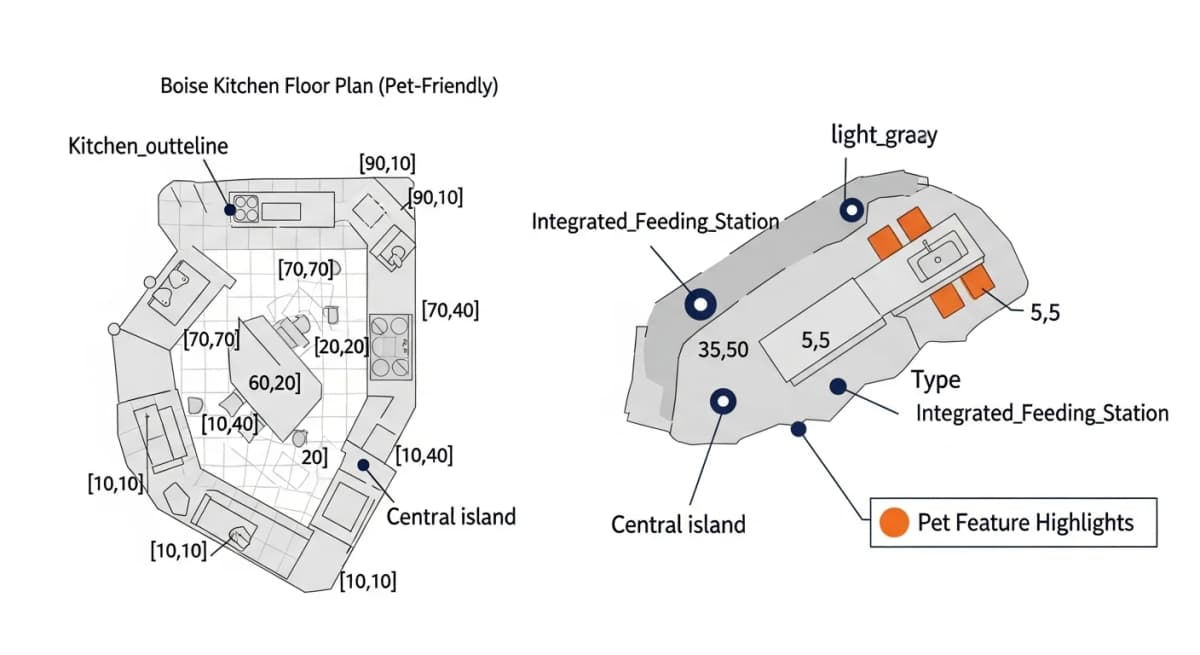
Standard kitchen designs assume two-legged occupants exclusively. In pet households, the wear patterns shift in predictable ways. Three specific zones see meaningfully more damage:
Floor along main traffic paths: Dog claws compound foot-traffic wear by adding direct scratch contact across hundreds of thousands of cycles per year. The damage concentrates along the routes the dog uses daily — typically from the back door or yard entry to the feeding zone, and from the feeding zone to the living area. Standard hardwood floors show visible claw marks in these paths within 12-24 months.
Cabinet base toe-kicks: Dogs jumping up at counter edges, drinking from puddles below sink lines, or scratching at pantry doors all create wear on the lower 6-8 inches of cabinet bases. Standard MDF or particleboard toe-kicks absorb moisture and show damage faster than hardwood plywood toe-kicks.
Feeding area: Water bowl spillage, food crumbs, kibble dust, and dog-paw wetness concentrate in a 4x6 foot area around the bowls. Standard hardwood or engineered hardwood in this zone shows water damage and stain within 18-30 months.
Cat households experience less floor damage but more counter and high-surface damage — cats jumping onto cabinets, knocking over containers, scratching backsplash transition strips. The wear patterns are similar but distributed differently.
Designing the kitchen around these wear zones rather than treating them as inevitable produces a kitchen that survives the pet without the dated, worn appearance that typically develops by year 5.
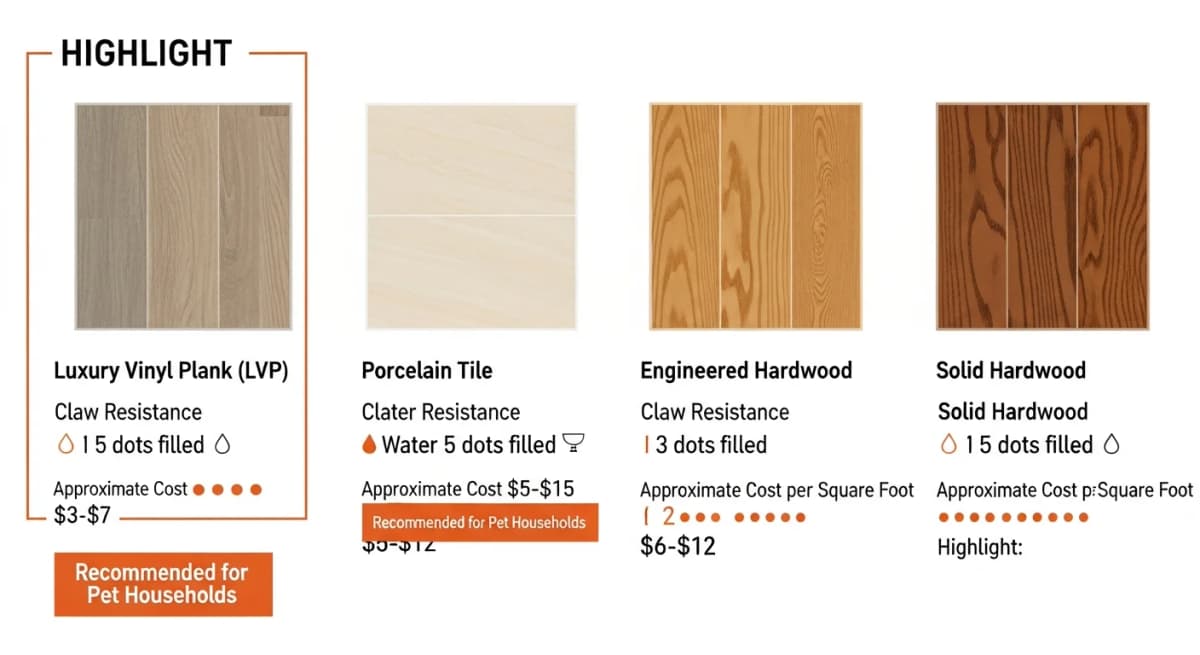
The single highest-impact pet-friendly kitchen decision is the floor. Four common kitchen flooring options, ranked for pet durability:
Luxury vinyl plank (LVP): 100% waterproof, scratch-resistant (typical wear layer 20-22 mil for pet-rated products), comfortable underfoot, and visually convincing as wood. The default pet-friendly kitchen flooring in 2026. Cost: $3-$8 per square foot installed. Recommendation: pet households with multiple dogs or active dogs.
Porcelain tile: Essentially indestructible against claws, fully waterproof, easy to clean. Cold underfoot (worth considering for owners — pets typically don't mind), can be slippery when wet (specify a slip-rated finish). Cost: $5-$12 per square foot installed. Recommendation: pet households with elderly dogs (where slip risk matters) or in zones with frequent water exposure.
Engineered hardwood: Better water tolerance than solid hardwood but still vulnerable to scratching. Shows claw marks within 18-30 months of active dog use. Acceptable for cat households or low-active-dog households. Cost: $6-$14 per square foot installed.
Solid hardwood: Beautiful, traditional, and the worst choice for active pet households. Visible scratching within 6-12 months, water staining within 12-18 months. Not recommended for kitchens with active dogs. Cost: $8-$16 per square foot installed.
For most Boise pet households, the LVP-or-porcelain decision is the right primary choice. Porcelain in the feeding zone (most water exposure) with LVP elsewhere is a strong hybrid that captures the strengths of both.
The base of kitchen cabinets — the section from the floor to about 4 inches up — sees more pet contact than any other cabinet surface. Standard cabinet construction uses MDF (medium-density fiberboard) or particleboard for the toe-kicks because it's cheaper and easier to mass-produce. Both materials swell when exposed to repeated moisture and crumble when scratched repeatedly.
Pet-friendly cabinet base spec: hardwood plywood toe-kicks (typically birch or maple), 3/4 inch thickness, with a moisture-resistant edge banding or sealed finish. Cost premium: $15-$40 per linear foot of cabinet base vs MDF toe-kicks. Total impact on a typical kitchen: $300-$800 above standard cabinet pricing.
Additional spec consideration: the toe-kick height. Standard residential toe-kicks are 4 inches high, which is convenient for human foot clearance but doesn't accommodate larger dogs that drink from puddles or eat under counters. For households with large breeds (Labs, German Shepherds, Goldens), increasing the toe-kick height to 5 inches gives the dog physical clearance to drink directly from a recessed water bowl in the toe-kick.
For the cabinet doors themselves — particularly the lower cabinets at pet height — laminate, painted MDF, or laminated wood doors hold up better than stained wood doors. Stained wood shows scratching and moisture damage more visibly than painted or laminated finishes.
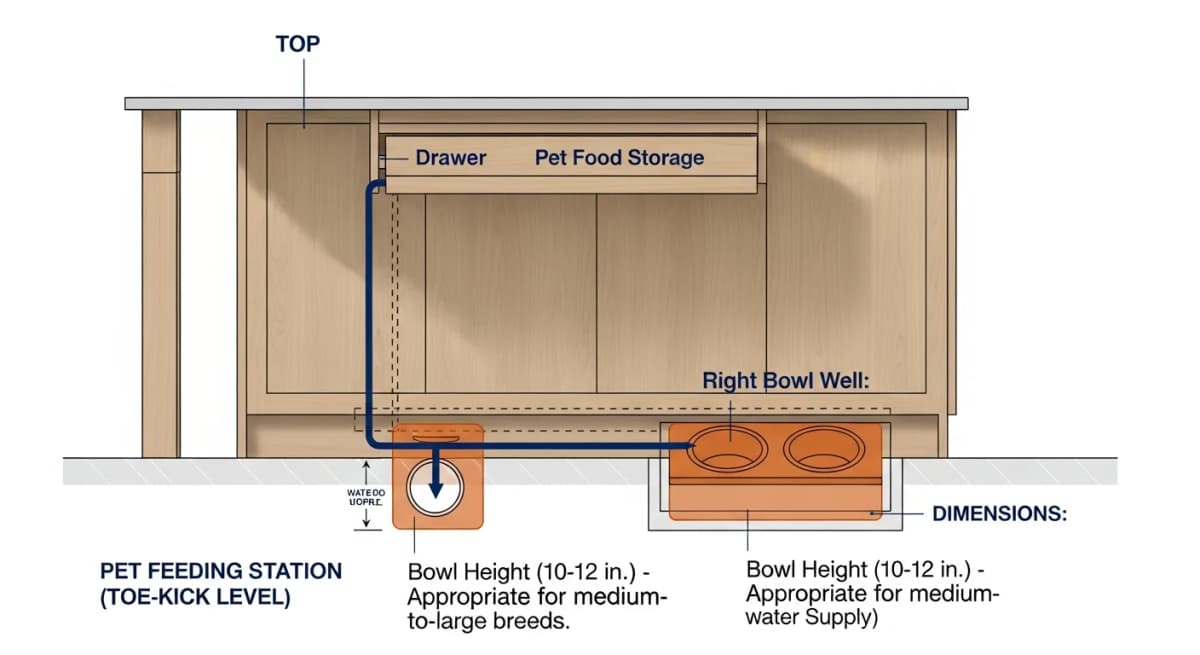
The feeding-and-watering area is the single most-used pet-care zone in any kitchen. Standard implementation: a 4x6 foot area of floor space with bowls placed on a mat. The compromises: floor surface within bowl-splash distance gets water damage; bowls slide; mat smells; the zone takes up walking room.
The integrated feeding station approach: build the feeding area into the cabinetry itself, typically the island toe-kick. The design includes recessed bowl wells (8-10 inches diameter for medium-to-large dogs, smaller for cats or small dogs), a water-supply line connection for automatic refill bowls (auto-fill float-valve bowls from pet-plumbing specialists), and storage drawer above for kibble or food storage. The bowls are at floor level, recessed into the toe-kick, with the surrounding floor protected from spills by the integrated design.
Cost: $400-$900 in cabinet modification + $200-$500 in plumbing rough-in for automatic water + $150-$400 for the bowls themselves and any controllers. Total: $750-$1,800. The space saving (no 4x6 foot dedicated feeding zone on the kitchen floor) and the wear-pattern improvement (no water exposure on the floor surface) are both meaningful.
For households with two or more dogs of different sizes, twin-bowl stations at different heights work well — small recessed station for the cat or small dog, larger station for the larger dog. The integrated design eliminates the food-bowl chaos that comes from multiple bowls placed on the open floor.
Boise pet households with at least one dog. Particularly impactful for households with large breeds, where the floor-mat-feeding system creates the largest mess.
Requires integration during cabinet design and installation. Hard to retrofit into an existing kitchen without cabinet modification.
Design a kitchen that survives your dogs, cats, and Treasure Valley outdoor lifestyle
Pet-friendly kitchen design starts with understanding your specific household — pets, activity patterns, outdoor access. Schedule a no-pressure consultation and we'll model the right flooring, feeding station, cabinet specs, and mudroom integration for your pet household.
Cats jumping onto counters and dogs reaching for items on lower surfaces are predictable behaviors in most pet households. Two design decisions help:
Pet-resistant pantry doors: Lower pantry cabinets should have full-height doors (not exposed shelving) and either childproof latches or magnetic latches that pets can't operate. Dogs and cats both can learn to open standard cabinet doors; latched doors at the relevant lower cabinets prevent food-stealing and kibble-discovery.
Counter-edge deterrents: Modern kitchens often have waterfall counters, mitered edges, and other contemporary edge designs that cats find attractive for jumping and scratching. For households with active cats, specifying counter edges with a slight overhang or bullnose (rounded edge) reduces jumping-related damage. Some homeowners install removable cat-deterrent strips (3M tape, plastic mats) along high-jump-risk counter edges — visible during use, removable when guests are present.
Vertical storage above pet height: Items that pets can damage (knives, dishwashing pods, cleaning supplies, certain foods) should be stored above 5-foot height in pet households. Standard kitchen design might put dish soap under the sink (accessible to dogs that open cabinet doors); pet-aware design keeps these items in upper cabinets with childproof latches.
Cat households face a specific design problem: where to put the litter box. Standard implementation puts it in a closet, laundry room, or hallway nook — visible, smelly, and difficult to vacuum around. For Boise homes where the kitchen is the central traffic hub, a kitchen-adjacent litter station works better than relegating the box to a back room.
The integrated approach: a built-in cabinet cubbyhole sized for a covered litter box (typically 24x18 inches floor footprint, 24 inches tall), with a small cat-sized entry opening, ventilation grille (12-inch diameter exhaust port to the exterior, with optional fan), and front access for daily cleaning. Located in the pantry, the laundry/mudroom adjacent to the kitchen, or in a corner cabinet built specifically for the purpose.
Cost: $200-$500 in cabinet modification + $300-$600 in ventilation rough-in (small exhaust fan and duct to exterior). The result is a litter station that's accessible, ventilated to prevent smell, and visually hidden from the kitchen's main sight lines.
For multi-cat households, the design scales — a 36-inch wide cubbyhole accommodates two boxes side-by-side. For households without a litter station as part of the kitchen scope, a similar design integrated into the mudroom or laundry adjacent to the kitchen achieves the same function with the litter station out of the immediate kitchen traffic.
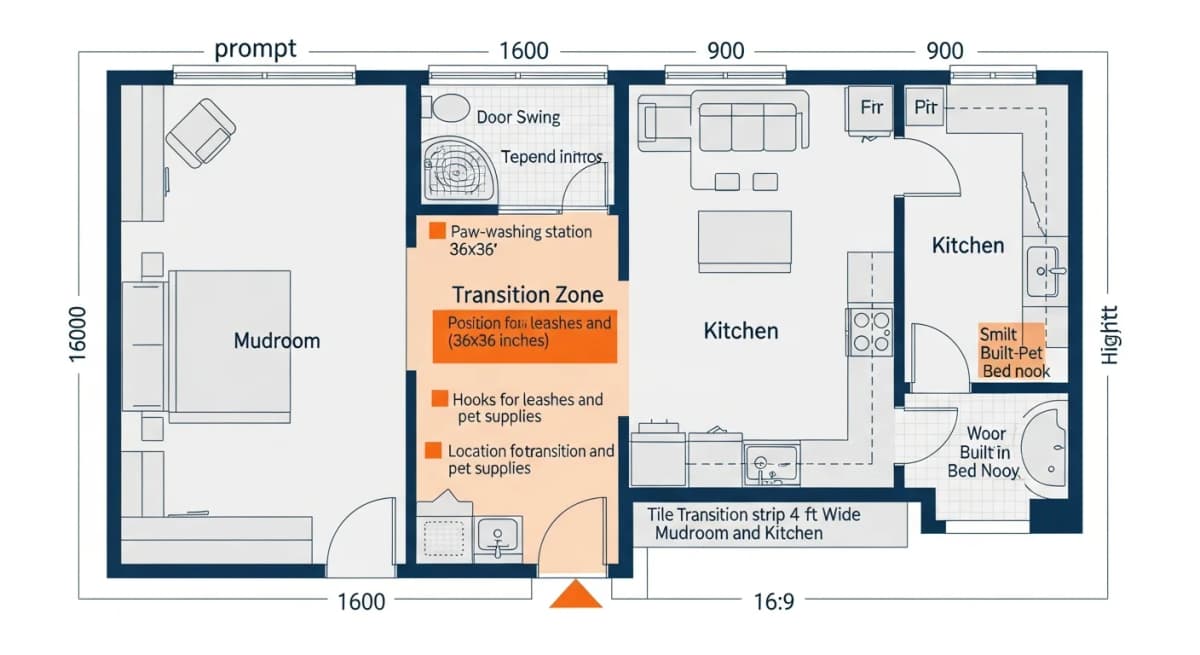
Boise's outdoor culture means most pet dogs come into the home from yards, hikes in the foothills, or walks through Treasure Valley irrigation areas. They bring mud, dust, water, and the occasional wildlife encounter back into the home. The transition from outside to kitchen is where most pet-related kitchen mess originates, and designing that transition properly handles 60-70% of the daily cleanliness battle.
The right mudroom-to-kitchen transition for pet households includes:
Paw-washing station: A small built-in shower or wash area (typically 36x36 inches with a low curb, hand-held sprayer at the appropriate height for medium-to-large dogs) located in the mudroom directly adjacent to the back-door entry. Cost: $1,500-$3,500 depending on tile, drainage, and fixtures. Reduces dirt-into-kitchen transfer dramatically for active dogs.
Tile or stone transition strip: The flooring transition from mudroom to kitchen should be a slightly more durable material (tile, stone, or LVP with extra wear layer) for the 4-6 foot zone immediately past the mudroom door. Catches the residual dirt that the dog tracks past the paw-washing station.
Hooks and gear storage: Wall-mounted hooks for leashes, harnesses, and outdoor gear at the mudroom entry. Pet supplies stored at the entry zone rather than in the kitchen reduce the kitchen's dual-purpose storage burden.
Built-in pet bed nook: If the mudroom is large enough, a built-in bench or cubby for the pet's bed at the entry creates a dedicated wind-down zone for the pet between outdoor activity and full home access. Reduces the dog jumping onto kitchen furniture or counters when arriving wet and excited.
Pets — particularly cats — are more sensitive to common indoor air quality issues than humans. Kitchen remodel materials worth checking:
Low-VOC paints: Volatile organic compound emissions from standard paint can cause respiratory irritation in pets, particularly cats and small dogs that breathe more rapid breaths per minute and absorb VOCs more readily. Spec zero-VOC or low-VOC paint products (most Benjamin Moore, Sherwin-Williams, and Behr lines offer this option) for any pet household. Cost premium: typically $5-$15 per gallon vs standard paint; total impact on a typical kitchen: $40-$150 across the project.
Pet-toxic plants: Decorative kitchen plants commonly include items toxic to pets — lilies (fatal to cats), pothos, philodendron, peace lily, dieffenbachia. For pet households, replace these with pet-safe alternatives (spider plant, money tree, Boston fern, parlor palm). Most Boise nurseries carry pet-safe alternatives if asked specifically.
Slip-rated tile finishes: Smooth-finish porcelain tile in kitchen areas can become hazardous when wet — particularly an issue for senior pets with mobility issues. Slip-rated tile finishes (DCOF rating 0.42 or higher) maintain traction when wet. Spec these specifically; many home-center tile products don't list DCOF ratings prominently.
Sealed grout for pet-zone tile: Pet households should specify epoxy grout in feeding zones and high-water-exposure areas (same logic as the STR bathroom durability article — see our STR bathroom article). Pets' urine, drool, and water spills don't stain epoxy grout the way they stain cementitious grout.
Iron Crest's kitchen design conversations with pet households start by asking specifically about the pets — number, size, age, activity level, outdoor access, and any specific care patterns the household follows. The answers shape multiple design decisions: flooring choice (LVP for active multi-pet homes vs porcelain for slip-sensitive senior pets), cabinet base materials, feeding station integration, mudroom-kitchen transition design. Most homeowners don't think to mention their pets during a kitchen design conversation, but the pets are using the kitchen daily and the design should account for that.
The cost premium for pet-friendly kitchen design — typically $1,800-$5,000 above standard residential kitchen scope — produces a kitchen that ages well alongside the pet rather than showing accelerated wear in the predictable pet-impact zones. For Boise households with active dogs particularly, this premium is well-justified. For broader pet-friendly home design context, see our pet-friendly flooring guide and the kitchen remodeling service overview.
What's the most important pet-friendly kitchen upgrade if I can only afford one?
Flooring. In our experience, the floor decision drives the largest difference between a kitchen that survives a pet household and one that doesn't. Specifically: LVP with a 20-22 mil pet-rated wear layer in the main kitchen area, with porcelain tile in the feeding zone where water exposure concentrates. The premium for these specs over a standard hardwood-floor kitchen is typically $1,200-$3,000 for a typical 200-300 sq ft kitchen. Every other pet-friendly design decision is meaningful but smaller in impact than the flooring choice. For homeowners with constrained budgets, start with the floor and add other features as budget allows.
How much does pet-friendly kitchen design add to a typical Boise kitchen remodel?
Adding all eight features in this article to a standard kitchen remodel costs roughly $1,800-$5,000 in additional scope. The breakdown: pet-friendly flooring upgrade ($800-$2,500), hardwood plywood toe-kicks ($300-$800), plumbed feeding station ($750-$1,800), litter station ventilation if cat household ($500-$1,100), paw-washing station in mudroom ($1,500-$3,500), low-VOC paint and slip-rated tile premiums ($100-$300). On a typical Boise kitchen remodel running $45,000–$70,000, the pet-friendly premium represents roughly 3–10% of total scope. The features have utility immediately and continue producing value across the kitchen's lifespan.
Are there pet-friendly cabinet finishes that hold up better than others?
Yes, in a meaningful way. Painted finishes (over MDF or solid wood) show scratches and chips most visibly. Stained wood shows water damage and uneven aging from pet contact. The most durable pet-household cabinet finish is thermofoil or laminated wood with a textured surface — the texture hides minor scratches and the impermeable surface resists water and food stains. Cost: thermofoil cabinets typically run $4,000-$10,000 less than custom stained wood cabinets for an equivalent layout. For pet households, the budget savings plus the durability advantage make thermofoil a reasonable choice in pet-impact areas (lower base cabinets especially). Upper cabinets where pet contact is minimal can use any cabinet finish without durability concerns.
Should I worry about my dog or cat being affected by kitchen remodel work itself?
Yes, several practical considerations. (1) VOCs from new finishes and paint can irritate pet respiratory systems for 1-4 weeks after install — pets should be kept out of the freshly-painted kitchen for 24-48 hours minimum, with strong ventilation for 1-2 weeks following. (2) Construction debris, dust, and chemicals are toxic to pets if ingested — keep pets in a separate area during active work hours and clean thoroughly before allowing access. (3) Stress: kitchen remodels involve noise, strangers in the home, and disrupted routines, all of which can stress pets. Plan for the pet's quiet zone during work hours (typically a back bedroom or basement); some pet owners board active dogs during the worst weeks of demolition and rough-in. We discuss this during the project schedule so the homeowner can plan pet accommodations.
Are integrated feeding stations difficult to retrofit into an existing kitchen?
Difficult, yes, depending on the existing cabinet construction. A retrofit feeding station requires removing the existing toe-kick or modifying the lower cabinet to accommodate the recessed bowls and the water supply line. For builder-grade or stock cabinets, this is typically destructive enough that replacing the affected cabinet section is cheaper than modifying it. For custom or semi-custom cabinets, modification may be feasible. The honest answer is most pet households add the integrated feeding station during a kitchen remodel or new construction; retrofitting it into an existing kitchen is rarely cost-effective. The interim alternative for existing kitchens is a freestanding feeding station (Petmate, etc.) on a rubber mat — less elegant than the integrated approach but functional.
Design a kitchen that survives your dogs, cats, and Treasure Valley outdoor lifestyle
Pet-friendly kitchen design starts with understanding your specific household — pets, activity patterns, outdoor access. Schedule a no-pressure consultation and we'll model the right flooring, feeding station, cabinet specs, and mudroom integration for your pet household.
These pages go deeper on the topics linked from this article. Read them before your consultation and you'll come in with sharper questions and a clearer scope.
The following government agencies, industry organizations, and official resources provide additional information relevant to your remodeling project.