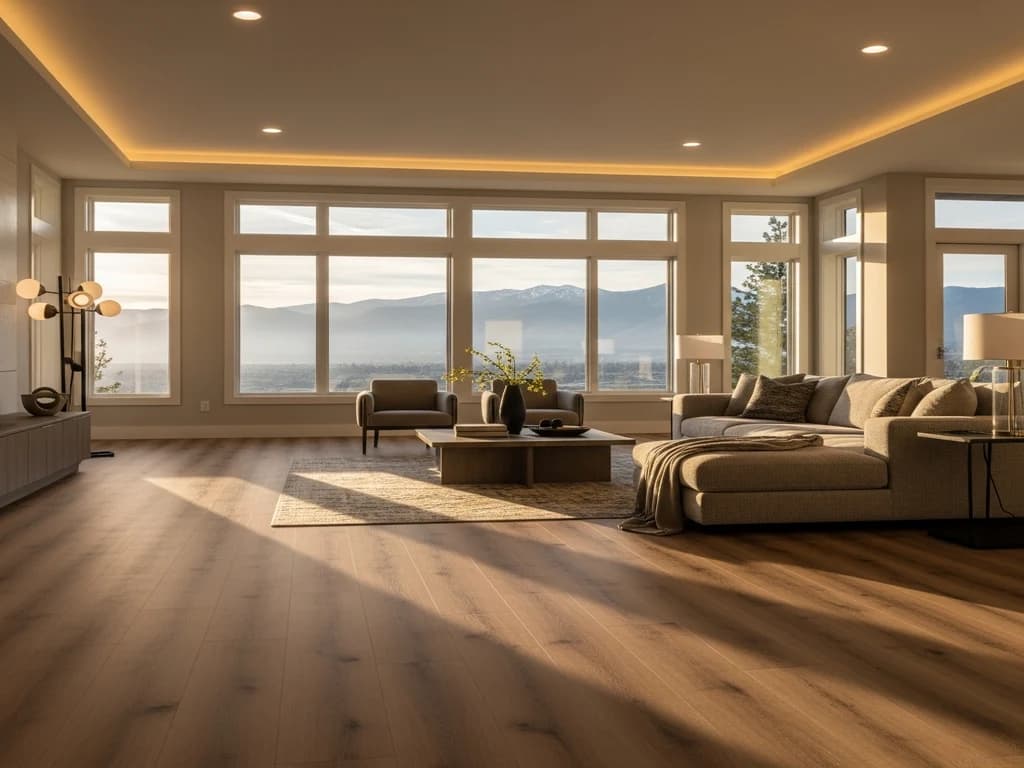
Why Phasing a Whole Home Remodel Saves Money and Sanity
A whole home remodel is the most ambitious project a homeowner can take on — and in Boise's market, where home prices have appreciated significantly over the past decade, it often makes more financial sense to transform the home you already own than to sell and buy in a competitive market. But attempting to remodel every room simultaneously is a recipe for chaos, budget overruns, and decision fatigue that makes even the most decisive people want to crawl under the covers and cancel everything.
Phasing is the answer. A phased whole home remodel breaks the project into logical stages — typically 2–4 phases spread over months or even years — with each phase containing related work that benefits from being completed together. Done correctly, phasing accomplishes three critical goals:
- Cash flow management: Instead of needing $150,000–$300,000 available upfront, you can fund each phase separately — often using the equity gains from completed phases to finance subsequent work.
- Decision quality: Remodeling requires thousands of decisions. Making all of them simultaneously leads to burnout and regret. Phasing spreads these decisions across months, giving you time to make thoughtful choices and learn from each completed phase before starting the next.
- Livability: A properly phased plan ensures you always have a functioning kitchen, at least one usable bathroom, and sleeping quarters throughout the process. Tearing apart the kitchen and master bath simultaneously in a Boise home with only two bathrooms? That's a recipe for misery, takeout bills, and gym shower memberships.
At IronCrest, we've managed hundreds of phased whole home remodels across the Treasure Valley. The difference between a well-phased project and an unplanned "let's do everything at once" approach isn't subtle — it's the difference between a homeowner who remembers the remodel as exciting and one who remembers it as traumatic. Let's walk through exactly how to plan yours.

Which Rooms to Remodel First: The Strategic Sequence
The order in which you remodel rooms isn't random — it follows a logic based on infrastructure dependencies, livability, and return on investment. Here's the optimal sequence for most Boise whole home remodels:
Phase 1: Infrastructure and Systems (Do This First, Always)
Before touching a single cosmetic surface, address the bones of your house. This is especially critical in Boise's older neighborhoods:
- Electrical panel upgrade: Many pre-2000 Boise homes have 100-amp panels that can't support modern loads (induction cooktops, EV chargers, multiple high-draw circuits). Upgrading to a 200-amp panel ($2,500–$5,000) at the start avoids having to retrofit later.
- Plumbing main line replacement: If your home has galvanized supply lines or cast iron drains, replace them now while walls will be open. The marginal cost of replacing plumbing during a remodel is 40–60% less than doing it as a standalone project.
- HVAC evaluation: Will your existing furnace and AC handle the new layout? If you're opening walls or changing room configurations, ductwork modifications are inevitable. Address this before closing walls.
- Insulation: With walls open, adding or upgrading insulation costs a fraction of what it would as a retrofit. Boise's temperature extremes (-10degF to 110degF) make proper insulation a critical investment.
Phase 2: Kitchen
The kitchen is the heart of the home and the most complex room to remodel. It touches plumbing, electrical, HVAC, structural, flooring, cabinetry, and countertops — more trade overlaps than any other room. Doing it early means:
- Your plumber and electrician are already mobilized from Phase 1 infrastructure work
- If structural changes are needed (opening walls, adding a beam), they happen before new flooring is installed in adjacent rooms
- Cabinet lead times (6–12 weeks for semi-custom, 12–18 for custom) are the longest in any remodel — ordering early keeps your project moving
Phase 3: Bathrooms
Remodel bathrooms after the kitchen because plumbing trades are already familiar with your home's system, and any main-line improvements from Phase 1 are complete. If your home has multiple bathrooms, remodel them in this order:
- Secondary/guest bath first — This gives you a usable bathroom while the primary bath is under construction
- Primary/master bath second — You use the freshly completed secondary bath during this phase
Phase 4: Living Spaces and Bedrooms
These rooms have the simplest remodel requirements — typically flooring, paint, lighting, and trim. Save them for last because they generate the least disruption and benefit from the final cosmetic coordination (consistent flooring, trim profiles, and paint palette throughout the home).
Phase 5: Exterior (If Included)
Exterior work — siding, painting, windows, decks — is weather-dependent in Boise. Plan exterior phases for April through October. Interior phases can run year-round, making winter months ideal for kitchen and bathroom work.
Budget Allocation: Where to Spend and Where to Hold Back
Whole home remodels in Boise typically range from $100,000 to $350,000+ depending on home size, scope, and material selections. Knowing how to allocate that budget across rooms and categories is one of the most impactful decisions you'll make.
Recommended Budget Allocation (Percentage of Total)
- Kitchen: 25–35% — The most complex room and the highest-ROI investment. A $200,000 whole home remodel should allocate $50,000–$70,000 to the kitchen.
- Primary bathroom: 10–15% — The second-highest ROI room. $20,000–$30,000 on a $200K project.
- Secondary bathrooms (total): 8–12% — $16,000–$24,000 split across guest and hall baths.
- Flooring (whole home): 10–15% — Consistent flooring throughout the home creates visual continuity and is one of the most noticeable improvements. $20,000–$30,000 for a 2,000 sf home.
- Infrastructure (electrical, plumbing, HVAC): 10–15% — The invisible investment that protects everything else. Don't skimp here.
- Living spaces (paint, lighting, trim): 5–10% — Lower investment per room but high visual impact.
- Contingency: 10–15% — Non-negotiable. Older Boise homes should budget toward 15%.
Where to Spend More
- Waterproofing in wet areas. Every dollar spent on proper waterproofing membranes, drainage, and moisture management prevents $10+ in future repair costs. This is the one area where we tell every client: do not look for savings.
- Cabinets. You interact with cabinets dozens of times daily. Quality cabinetry with dovetailed drawers, solid plywood boxes, and soft-close hardware makes a tangible daily-life difference.
- Countertops in high-use areas. Kitchen countertops and primary bathroom vanity tops get heavy use and are highly visible. Invest in quality materials here.
- Flooring in main living areas. The floor is the largest continuous surface in your home. Quality flooring (hardwood, quality LVP, or porcelain tile) elevates every room it touches.
Where to Hold Back
- Guest bathroom fixtures. Mid-range fixtures perform identically to premium fixtures in a bathroom used a few times per week. Save the luxury upgrades for your primary bath.
- Bedroom closet systems. Simple shelf-and-rod configurations from a local closet company cost a fraction of custom built-ins and serve the same function.
- Decorative lighting in low-visibility rooms. Statement pendants and chandeliers matter in the kitchen and dining room. In bedrooms and hallways, basic quality fixtures with warm LED bulbs look great at a fraction of the cost.
For a detailed cost breakdown specific to Boise, see our whole home remodel cost guide.

Timeline Expectations for Boise Whole Home Remodels
One of the most common questions we receive: "How long will this take?" The honest answer requires context, but here are realistic timeline ranges based on our Boise project experience:
Timeline by Project Scope
- Cosmetic refresh (paint, flooring, lighting, fixtures throughout): 4–8 weeks — No structural changes, no plumbing relocation, no wall removal. Fast but limited in scope.
- Moderate remodel (kitchen + 1–2 bathrooms + flooring + paint): 3–5 months — The most common whole home remodel scope in Boise. Includes some layout modifications but no major structural changes.
- Major renovation (kitchen + all bathrooms + living spaces + infrastructure): 5–9 months — Comprehensive remodel touching every room with layout changes, system upgrades, and high-end finishes.
- Gut renovation (down to studs and rebuild): 8–14 months — Full structural and systems overhaul. Common in North End historic homes and 1960s ranch conversions where the existing layout is completely reimagined.
What Drives Timeline in Boise
Several Boise-specific factors affect your project timeline:
Permit processing times. The City of Boise PDS has improved their permit turnaround significantly with the ePlans system, but complex projects requiring structural plan review still take 2–4 weeks for approval. Start the permit process early — before demolition, not after.
Material lead times. Custom and semi-custom cabinets are the longest lead-time item: 6–18 weeks depending on manufacturer and customization level. Countertop fabrication: 2–4 weeks after template. Special-order tile: 2–6 weeks. These lead times are cumulative and sequential — you can't template countertops until cabinets are installed. An experienced project manager builds these dependencies into the schedule from day one.
Trade scheduling. Boise's construction labor market is tight. Your project competes for plumber and electrician time with new construction, commercial projects, and other remodels. An established local general contractor gets priority scheduling — one of the key advantages of working with a firm that works in Boise every week.
Seasonal factors. If your remodel includes exterior work, Boise's weather creates a hard window from April through October. Interior work can proceed year-round, though material deliveries during December snowstorms can cause minor delays.
Inspection scheduling. City inspectors in Boise are busy. Rough-in inspections typically take 1–3 business days to schedule. Plan for these pauses — work can't proceed past certain points until the inspector signs off.
Permit Requirements for Multi-Room Projects in Boise
Whole home remodels in Boise typically require multiple permits — and managing the permit process is one of the most underappreciated aspects of project planning. Here's what you need to know:
Permits You'll Likely Need
- General building permit: Covers structural modifications, framing changes, and general construction. Required whenever you remove or modify walls, change room configurations, or alter the building envelope. Fee based on project valuation — typically $500–$2,000 for a whole home remodel.
- Plumbing permit: Required for any new, moved, or replaced plumbing. In a whole-home remodel touching the kitchen and multiple bathrooms, this is virtually guaranteed. $150–$400.
- Electrical permit: Required for new circuits, panel upgrades, fixture relocation, and any wiring changes. $100–$300.
- Mechanical permit: Required for HVAC modifications, new ductwork, and ventilation changes. $75–$200.
Single Permit vs Multiple Permits
For whole home remodels, the City of Boise can sometimes issue a single comprehensive building permit that covers all trades, with separate inspection cards for plumbing, electrical, and mechanical. This simplifies the process and reduces total permit fees compared to filing separate permits for each room. Ask your contractor whether a comprehensive permit makes sense for your project scope.
The Inspection Sequence
Multi-room projects have a complex inspection sequence that must be respected:
- Rough plumbing inspection — Before walls are closed
- Rough electrical inspection — Before walls are closed
- Rough mechanical inspection — Before walls are closed
- Framing/structural inspection — Before insulation and drywall
- Insulation inspection — Before drywall (required by Idaho energy code)
- Final inspections — After all work is complete, each trade gets a final inspection
These inspections create natural pause points in the project timeline. A skilled project manager coordinates trade work to minimize downtime between inspection-ready milestones and inspection scheduling. For a comprehensive permit overview, see our Boise permit guide or our permits and inspections resource.
Ada County vs Canyon County
If your home is in Meridian, Nampa, Caldwell, or other Canyon County communities, the permit process and fees differ from Boise/Ada County. Meridian uses its own Community Development department, while unincorporated areas fall under county jurisdiction. Ensure your contractor is familiar with your specific jurisdiction's requirements, forms, and inspectors.
Living Through a Whole Home Remodel in Boise
Can you live in your home during a whole home remodel? In most cases, yes — but it requires planning, realistic expectations, and a good sense of humor. Here's the practical reality:
The Non-Negotiables
- You must always have one usable bathroom. This is why the phasing sequence matters. Never demo both bathrooms simultaneously unless you have temporary bathroom arrangements (and portable toilets in the driveway of your Boise Bench neighborhood will not endear you to the HOA).
- You need a functional kitchen setup. When the real kitchen is torn apart, set up a temporary kitchen in the garage, basement, or spare bedroom. Minimum requirements: microwave, toaster oven, mini-fridge, electric kettle, paper plates. Budget an extra $200–$400/month for takeout — you'll need it.
- Dust containment is critical. Professional contractors use zippered plastic barriers, negative-air machines, and floor protection to contain construction dust. In Boise's dry climate, dust is even more pervasive than in humid regions. Insist on daily cleanup and proper containment — your lungs and your furniture will thank you.
Practical Tips From Experience
Create a "sanctuary room." Designate one room that the crew doesn't touch until the very end. This is your escape — your normal space in a chaotic house. Equip it with a comfortable chair, good lighting, a TV or laptop, and a door that closes. Many Boise homeowners use a master bedroom for this purpose.
Plan for pets. Construction zones are dangerous for pets — exposed nails, open outlets, toxic adhesives, and open doors make the environment hazardous. Crate your pets during work hours or keep them in the sanctuary room. If you have dogs, coordinate with the crew about gate-closing protocols — a North End escape artist Labrador will exploit any open fence gate.
Communicate schedules. Know when the crew arrives (usually 7:00–7:30 AM in Boise) and when they leave (typically 4:00–5:00 PM). Plan your mornings accordingly. If you work from home — as many Boise residents do — establish which rooms will be quiet during video calls and communicate that to the project manager.
Embrace imperfection temporarily. Living through a remodel means weeks of imperfect conditions. Your Boise neighbors will understand the dumpster in the driveway, the contractor trucks on the street, and the occasional sound of a tile saw at 8 AM. They've been through it too, or they will be.
For a deep dive on this topic, read our comprehensive guide to living through a remodel or our blog post on practical tips from contractors who've seen it all.

Design-Build vs Traditional: Which Approach Fits Your Project
One of the first decisions in a whole home remodel is the delivery method — how design and construction will be managed. Two models dominate the Boise market:
Design-Build
In the design-build model, a single firm handles both the design (architectural, interior, structural) and the construction. You have one contract, one point of accountability, and one team from concept through completion.
Advantages:
- Single accountability. If something doesn't work as designed, there's no finger-pointing between architect and builder. One entity owns the problem and the solution.
- Cost accuracy. Because the design team and the construction team work together, budgets are realistic from the start. The designer knows what things cost, and the builder influences design decisions in real time.
- Faster timeline. Design and pre-construction overlap, reducing the overall project timeline by 15–25% compared to the traditional sequential approach.
- Streamlined communication. One team, one project manager, one phone number to call.
Best for: Most Boise whole home remodels in the $100,000–$300,000 range, especially projects where budget predictability and timeline compression matter. This is the model we use at IronCrest, and it's the approach we recommend for the majority of Treasure Valley homeowners. Learn more about our design-build process.
Traditional (Design-Bid-Build)
In the traditional model, you hire an architect to create complete construction documents, then solicit bids from multiple contractors based on those documents. The architect and contractor are separate entities with separate contracts.
Advantages:
- Competitive bidding. Multiple contractors bid the same plans, creating price competition.
- Independent design vision. The architect works purely for your interests, without the construction team's cost considerations influencing design decisions.
- Separation of oversight. The architect can serve as your advocate during construction, reviewing the builder's work against the plans.
Best for: High-end custom projects ($300,000+), architecturally significant renovations (historic North End homes where design integrity is paramount), and projects where the homeowner has a strong design vision that requires specialized architectural talent not found within a design-build firm.
The downside: The sequential nature of design-bid-build adds 2–4 months to the project timeline (complete design before bidding starts). And the disconnect between architect and builder can lead to value-engineering sessions where the beautiful plans meet the real-world budget — sometimes painfully.
When You Need an Architect (and When You Don't)
Not every whole home remodel in Boise requires a licensed architect — but some absolutely do. Here's how to know the difference:
You Need an Architect When:
- You're adding square footage — home additions, bump-outs, and second-story additions require architectural plans and often structural engineering. Idaho building codes require stamped structural drawings for significant modifications.
- You're removing load-bearing walls — an architect or structural engineer must design the beam and column system that replaces the wall's structural function. This is common in Boise ranch-home open-concept conversions.
- Your project involves a historic property — North End homes in Boise's historic district may have design review requirements that benefit from architectural expertise. The Boise Historic Preservation Commission has specific guidelines for exterior modifications.
- You want a complete design vision — an architect creates a cohesive design across all rooms, ensuring proportions, sight lines, and material transitions work together as a unified whole. For large-scale renovations ($200K+), this holistic vision justifies the investment.
- Complex code compliance — egress requirements, setback calculations, lot coverage limits, and ADA compliance for multi-generational homes.
You Likely Don't Need an Architect When:
- You're remodeling within existing walls — no layout changes, no structural modifications. A design-build firm's in-house designer handles material selection, fixture planning, and aesthetic coordination.
- Minor layout changes — removing non-load-bearing walls, reconfiguring a bathroom within its existing footprint, or updating a kitchen layout without structural changes.
- Cosmetic-focused remodels — new surfaces, fixtures, lighting, and finishes throughout the home without structural or spatial changes.
Architect Costs in Boise
Boise-area architects typically charge 8–15% of construction cost or $150–$300 per hour. For a $200,000 whole home remodel, architectural services might cost $16,000–$30,000. The AIA Idaho chapter maintains a directory of licensed architects in the Treasure Valley.
Our design-build approach includes in-house design services at no separate charge — design costs are built into the project price. For projects that do require independent architectural services, we collaborate seamlessly with several Boise architectural firms and can recommend partners based on your project's specific needs.
Boise Housing Stock: How Your Home's Era Shapes Your Remodel
Every decade of Boise construction brought different standards, materials, and design philosophies. Understanding your home's era helps predict what you'll encounter behind the walls and under the floors — and shapes the scope, budget, and approach of your remodel.
Pre-1940s (North End, Hyde Park, Harrison Boulevard)
Plaster walls over wood lath, hardwood floors (often fir), knob-and-tube wiring, cast iron drain pipes, minimal insulation. These homes have architectural character that newer homes can't replicate — but remodeling them requires patience, expertise, and a tolerance for surprises. Budget a 15–20% contingency. Plan for electrical panel upgrades, plumbing replacement, and insulation additions. Drywall patches to plaster walls require a skilled hand to blend seamlessly.
1940s–1960s (Bench, Vista, Collister, Garden City)
Post-war housing boom. Smaller floor plans, simple ranch layouts, galvanized plumbing, 60-amp or 100-amp electrical, hardwood or linoleum floors, potential asbestos in flooring, pipe wrap, and joint compound. These homes are excellent remodel candidates because the simple floor plans offer opportunities for reconfiguration, and their solid construction (often poured concrete foundations, true-dimension lumber framing) provides a dependable base to build upon.
1970s–1980s (West Boise, early Southeast Boise subdivisions)
Larger homes, more complex floor plans, polybutylene plumbing (the gray pipes that fail catastrophically), aluminum wiring (fire hazard), early code-required insulation, tract-home construction methods. These homes often have generous square footage with dated aesthetics — sunken living rooms, Hollywood bathrooms with separate dressing areas, and compartmentalized layouts that feel closed and dark. Remodeling focuses on modernizing systems, opening layouts, and updating finishes.
1990s–2000s (Meridian, Eagle, Southeast Boise, Harris Ranch early phases)
Builder-grade materials, PEX plumbing, modern electrical, adequate insulation, but often with cost-cutting construction details: nail-pop drywall, thin countertops, hollow-core doors, minimum-code everything. These homes need less infrastructure investment but often disappoint in finish quality. Remodeling is straightforward — fewer surprises behind walls — but the "lipstick on a pig" effect is real if you upgrade surfaces without addressing the builder-grade elements that surround them.
2010s–Present (Star, Kuna, late-phase subdivisions)
Modern code compliance, energy-efficient systems, but still builder-grade finishes in most production homes. These homes are often "too new to remodel" but homeowners find the cookie-cutter finishes unsatisfying. Strategic upgrades — kitchen countertops, cabinet hardware, lighting, flooring — can transform these homes at relatively modest cost because the infrastructure is already solid.
Tell us about your home's era and location when you request your estimate, and we'll tailor our approach to what we know about construction practices in your specific Boise neighborhood.

Getting Started: Your First Steps
You've read the guide. You understand phasing, budgeting, timelines, permits, and the options for project delivery. Now what? Here's your action plan for the next 30 days:
Week 1: Define Your Goals
Before contacting any contractor, answer these questions with your household:
- Which rooms are the highest priority? What bothers you most about each one?
- How long do you plan to live in this home? (This affects ROI calculations and material investment levels.)
- What's your realistic total budget? Include a range — "we're comfortable at $150K and could stretch to $180K if the value is there."
- Are there any timeline constraints? (Graduation party in June, baby arriving in September, aging parent moving in by winter.)
- Do you want to live in the home during construction, or can you arrange temporary housing?
Week 2: Research and Shortlist Contractors
Identify 3–4 contractors who specialize in whole home remodels in the Boise area. Use our contractor vetting guide to check licenses, insurance, and references. Look specifically for firms with whole-home remodel experience — not just kitchen or bathroom specialists.
Week 3: Initial Consultations
Schedule in-home consultations with your shortlisted contractors. Walk through every room, discuss your goals and budget, and listen to their initial recommendations. Pay attention to:
- Do they ask thoughtful questions about how you use your home?
- Do they identify potential issues you hadn't considered (infrastructure, structural, code)?
- Do they talk about phasing and sequence, or do they jump straight to finishes and aesthetics?
- Do they seem genuinely interested in your project, or are they just taking measurements to generate a bid?
Week 4: Review Proposals and Make a Decision
Compare proposals using the framework in our contractor guide. Remember: the goal isn't to find the cheapest bid — it's to find the contractor whose approach, communication style, and track record give you confidence that they can manage a multi-month, multi-phase project in your home while you're living in it.
Ready to start the conversation? Request your free estimate and let's discuss how to transform your Boise home room by room, phase by phase, with a plan that respects your budget, your timeline, and your sanity.
For detailed information about phasing strategy, see our phasing a whole home remodel guide.
How much does a whole home remodel cost in Boise?
A whole home remodel in Boise typically costs $100,000–$350,000+ depending on scope, home size, and material selections. A cosmetic refresh (paint, flooring, fixtures throughout a 2,000 sf home) starts around $60,000–$100,000. A moderate remodel (kitchen + bathrooms + flooring + infrastructure upgrades) runs $100,000–$200,000. A comprehensive gut renovation ranges from $200,000–$350,000+. Budget 10–15% contingency on top of any quoted price.
How long does a whole home remodel take in Boise?
A moderate whole home remodel (kitchen + 1–2 bathrooms + flooring + paint) takes 3–5 months. A comprehensive renovation touching every room with layout changes takes 5–9 months. A full gut renovation can take 8–14 months. The largest timeline variables are cabinet lead times (6–18 weeks), permit processing (1–4 weeks), and trade scheduling during Boise's peak construction season (April–October).
Should I remodel or sell my home in Boise?
In Boise's current market, remodeling often makes more financial sense than selling because: (1) selling costs 8–10% in commissions and fees, (2) buying a replacement home at current prices typically costs more than remodeling your existing one, (3) a remodel lets you customize to your exact preferences, and (4) you avoid the stress and disruption of moving. However, if your home's location or lot no longer meets your needs, or the scope of required renovation exceeds 50% of the home's post-renovation value, selling may be more practical.
Which rooms should I remodel first in a whole home renovation?
The optimal sequence is: (1) infrastructure and systems (electrical panel, plumbing mains, HVAC), (2) kitchen, (3) bathrooms (secondary first, then primary), (4) living spaces and bedrooms, (5) exterior. This sequence follows infrastructure dependencies, maximizes trade efficiency, and ensures you always have a functional kitchen setup and at least one usable bathroom throughout the project.
Can I live in my house during a whole home remodel?
Yes, most Boise homeowners live in their homes during a whole home remodel, provided the project is properly phased. Key requirements: always maintain one functional bathroom, set up a temporary kitchen (microwave, mini-fridge, toaster oven), designate a 'sanctuary room' that remains untouched, and plan for dust containment. Expect noise from 7 AM to 5 PM on workdays and budget an extra $200–$400/month for dining out during the kitchen phase.
Do I need an architect for a whole home remodel in Boise?
You need an architect if your project includes adding square footage (additions), removing load-bearing walls, making changes to a historic property, or requires complex code compliance (egress, setbacks, ADA). For remodels within existing walls and footprint — even comprehensive ones — a design-build firm's in-house designer typically handles the design work as part of the project. Architectural fees in Boise run 8–15% of construction cost or $150–$300 per hour.
What permits do I need for a whole home remodel in Boise?
Most whole home remodels in Boise require a general building permit ($500–$2,000), plumbing permit ($150–$400), electrical permit ($100–$300), and mechanical permit ($75–$200). The City of Boise can issue a single comprehensive permit covering all trades, which simplifies the process. Plan for 1–4 weeks of permit processing time, longer for projects with structural changes requiring plan review. Your general contractor should handle all permit applications and inspection scheduling.
Is design-build or traditional better for a Boise whole home remodel?
Design-build is better for most Boise whole home remodels ($100K–$300K range) because it provides single-point accountability, more accurate budgets, and 15–25% faster timelines. The traditional design-bid-build approach is better for high-end custom renovations ($300K+), architecturally significant properties, or projects where the homeowner wants independent architectural oversight. Design-build is the model used by most established Boise remodeling firms for residential projects.