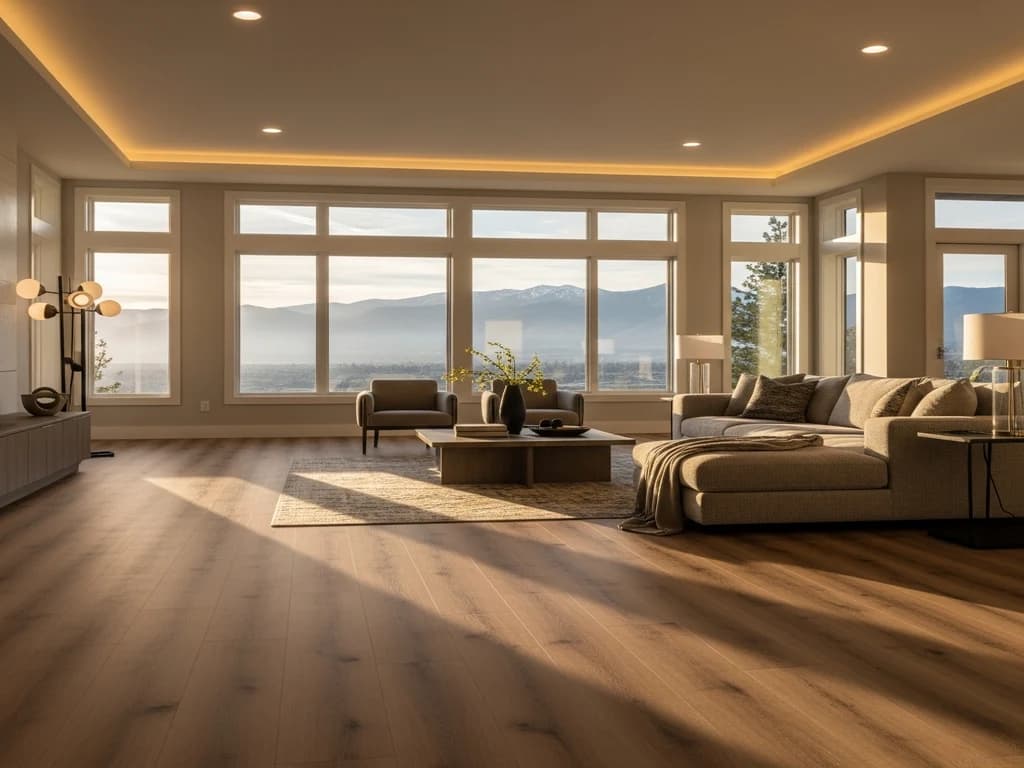
Why Boise Basements Are Prime Remodeling Real Estate
Boise homeowners are sitting on hundreds — sometimes thousands — of square feet of untapped living space directly below their feet. In a market where the median home price has climbed past $450,000 and buildable lots in desirable neighborhoods are increasingly scarce, a basement remodel is the most cost-effective way to dramatically expand your usable square footage without adding a single inch to your home's footprint.
The economics are compelling. Building a new addition in Boise costs $200–$400 per square foot for finished space. Finishing an existing basement? $30–$75 per square foot for most projects. That means a 1,000 sq ft basement finish delivers finished living space for a fraction of what an equivalent addition would cost — and the shell (foundation walls, floor slab, and roof above) is already built and paid for.
Boise's housing stock is particularly well-suited for basement remodeling. The majority of homes built in established neighborhoods — the North End, Boise Highlands, Collister, Warm Springs Mesa, the Bench, and even many Southeast Boise subdivisions — feature full or partial basements with 7.5–9 foot ceiling heights. Many 1960s–1990s homes have basements that were roughed in for future finishing, with plumbing stubs, electrical panels, and HVAC runs already in place. These are the low-hanging fruit of Boise remodeling.
What's changed in recent years is how Boise homeowners are using their basements. The dark, wood-paneled "rec rooms" of the past have given way to purpose-driven spaces that function as true extensions of the home. Home theaters, guest suites, remote offices, fitness rooms, entertainment bars, and income-generating rental units are all realistic basement uses — and each one adds measurable value to your property.
In this guide, we'll walk through the most popular basement remodel concepts for Boise homes, address the moisture and insulation challenges specific to Idaho's climate, cover the building code and permit requirements you need to know, and break down costs by finish level so you can plan your project with confidence.

Home Theater and Media Room Conversions
Basements are naturally suited for home theaters, and Boise homeowners are taking advantage. The below-grade location provides inherent sound isolation from the rest of the house, minimal natural light (an advantage for screen viewing), and the thermal mass of concrete walls maintains consistent, comfortable temperatures year-round.
A dedicated home theater in a Boise basement typically includes:
- Acoustic treatment — Sound-absorbing panels on walls and ceiling, resilient channel or sound isolation clips to decouple the ceiling from the floor joists above, and solid-core doors to contain sound. This prevents movie audio from vibrating through the house at 11 PM. Cost: $1,500–$5,000 depending on the level of treatment.
- Screen and projection — A 100–120" projection screen with a 4K laser projector (Epson, BenQ, Sony) is the most popular setup for Boise basements. For rooms with limited throw distance, a 75–85" OLED TV is the alternative. Projector + screen: $2,000–$8,000. OLED TV: $2,500–$5,000.
- Surround sound — In-ceiling and in-wall speakers for a 5.1.2 or 7.1.4 Dolby Atmos setup integrate cleanly and avoid floor-standing speakers that clutter the room. Pre-wiring during the remodel is essential. System cost: $1,500–$8,000 depending on brand and configuration.
- Tiered seating — A raised platform for the back row of seating ensures clear sightlines to the screen. The platform (typically 8–12" high) can also house wiring runs and subwoofer placements. Cost: $1,000–$3,000 for a basic platform.
- Light control — Blackout treatments for any egress windows, dimmable LED sconces for ambient lighting, and LED step lights on the riser for safe navigation in the dark. Cost: $500–$1,500.
Total home theater basement conversion in Boise: $15,000–$40,000 for the room finish plus equipment. Budget-conscious homeowners can build the room to theater spec (acoustic treatment, wiring, light control, platform) and add equipment incrementally.
One Boise-specific consideration: many basements in the North End and Bench neighborhoods have ceiling heights of 7.5–8 feet, which limits projector mounting options but works perfectly for a large-format TV installation. We design around the existing ceiling height to maximize screen size without sacrificing viewing angles.
Guest Suite and Rental-Ready Spaces
With Boise's tourism growing (Bogus Basin skiing, Boise River recreation, the vibrant downtown food scene) and the ongoing housing shortage, a basement guest suite or rental unit is both a hospitality upgrade and a potential income generator.
A basement guest suite typically includes a bedroom, full bathroom, and a small living/sitting area. For rental purposes, add a kitchenette (bar sink, under-counter refrigerator, microwave, and a few cabinets) to create a self-contained unit.
Legal considerations for rental use in Boise:
- Short-term rentals (Airbnb/VRBO): The City of Boise requires a short-term rental permit for stays of less than 30 days. You'll need to meet occupancy, safety (smoke detectors, egress windows), and parking requirements. Check the current regulations with Boise Planning and Development Services.
- Long-term rental: A basement apartment used as a long-term rental must meet the International Residential Code requirements for habitable space, including minimum ceiling height (7 feet), egress from every sleeping room, ventilation, and fire separation between the rental unit and the main dwelling.
- ADU classification: Depending on the level of separation and kitchen facilities, a basement apartment may be classified as an Accessory Dwelling Unit (ADU) under Boise's zoning code. See our Boise ADU permits and zoning guide for details.
Design elements that make a Boise basement guest suite comfortable and inviting:
- Separate entrance — A walkout basement or a side entry with its own exterior door provides privacy for both the guest and the homeowner. This is more feasible on sloped lots (common in the North End, Boise Highlands, and Warm Springs Mesa) where one side of the basement is at grade.
- Natural light — Egress windows are required in bedrooms (more on this below), and oversized window wells with reflective liners and well covers maximize the light entering a below-grade room. Adding a tubular skylight through the ceiling is another option for interior basement rooms.
- Sound isolation — Insulating the ceiling between the basement and main floor, and using resilient channel on the ceiling framing, significantly reduces sound transfer. Your guests won't hear footsteps overhead, and you won't hear their late-night TV. Cost: $1,000–$3,000 for a full ceiling sound treatment.
- Climate comfort — A dedicated HVAC zone or a ductless mini-split for the basement suite ensures independent temperature control. Basements in Boise stay naturally cool in summer (great for guests) but need supplemental heat in winter. Mini-split cost: $3,500–$5,500 installed.
Total cost for a basement guest suite in Boise: $25,000–$55,000. For a rental-ready suite with kitchenette, separate entrance, and full bathroom: $40,000–$75,000. The rental income potential in Boise's market ranges from $800–$1,400/month for long-term rental or $80–$150/night for short-term, providing payback periods of 3–7 years depending on configuration and rental strategy.
Home Office and Creative Studio
The remote work revolution is permanent in Boise, and basement home offices have become one of our most-requested finishes. A basement office offers something the spare bedroom doesn't: physical and psychological separation from the living space. Walking downstairs to work and back upstairs to be home creates a clear boundary that improves both productivity and work-life balance.
Key design elements for a basement home office in Boise:
Dedicated electrical circuits: A home office needs its own 20-amp circuit (minimum) for computers, monitors, printers, and lighting. If you're running video production equipment, a home server, or cryptocurrency mining (yes, we've built these in Boise basements), additional circuits and possibly a sub-panel are warranted. Plan electrical during the framing stage — it's 10x cheaper than adding circuits after drywall.
Data and network infrastructure: Hardwired Ethernet (Cat 6A minimum) provides more reliable connectivity than Wi-Fi, especially in a below-grade concrete space where wireless signals attenuate. Run Ethernet drops to the desk location, a wall-mounted access point location, and any equipment rack positions. Cost: $100–$300 per drop.
Lighting for video calls: If you're on camera regularly, your lighting design matters more than you think. A window-facing desk with a large egress window provides natural key light. Supplement with 4000K LED panel lights at desk level and above to eliminate under-eye shadows. Avoid recessed can lights directly overhead — they create unflattering downlight on video. Cost: $500–$1,500 for a video-optimized lighting layout.
Sound control: Between video calls, podcast recording, music practice, or simply concentrating without household noise, sound isolation transforms a basement office. Insulated ceiling cavities, acoustic panels at reflection points, and a solid-core door create a workspace where you can actually think. Cost: $1,000–$4,000 depending on the level of treatment.
Climate control: Basements in Boise maintain relatively stable temperatures (55–65°F year-round without HVAC), which is comfortable in summer but chilly in winter. A dedicated mini-split or a well-designed HVAC branch ensures year-round comfort without heating the entire basement. A small electric radiant panel under the desk keeps feet warm during Boise's cold January mornings for $50–$150.
For creative professionals — artists, musicians, photographers, video producers — a basement studio offers controlled lighting, sound isolation, and ample floor space that's rarely available in main-level rooms. A photographic studio needs a 10+ foot ceiling (achievable in newer Boise basements), a solid-color wall for backdrops, and high-CRI lighting. A music studio needs floating floors, isolated walls, and HVAC silencers. Cost: $30,000–$60,000 for a professional-grade creative studio finish.
Total cost for a basement home office in Boise: $10,000–$25,000 for a well-appointed single-room office finish with electrical, data, lighting, and climate control.

Home Gym and Fitness Area
Boise is an active city, and a basement home gym eliminates the monthly gym membership, the drive, and the waiting for equipment. A dedicated fitness space in your basement can range from a simple exercise room with rubber flooring and some equipment to a fully outfitted gym rivaling a commercial facility.
Flooring is the foundation. Rubber gym flooring (3/8"–3/4" thick interlocking tiles or rolled rubber) protects the concrete slab, absorbs impact, reduces noise transfer to the floor above, and provides stable footing for heavy lifts. Cost: $3–$8/sf for quality rubber flooring. For a 300 sq ft gym area: $900–$2,400.
Ceiling height matters. Overhead pressing, pull-up bars, and jumping rope all require adequate vertical clearance. Most Boise basements provide 7.5–9 feet of finished ceiling height, which works for most exercises but may limit overhead barbell movements for taller residents. Before finishing the ceiling, measure your needed clearance and consider leaving the ceiling open (exposed joists, painted) in the gym area to preserve maximum height. An industrial-painted ceiling also adds character to the gym aesthetic.
Ventilation is non-negotiable. A workout generates heat and moisture, and a below-grade room with no air exchange quickly becomes stifling. Options include:
- Extending an HVAC supply and return to the gym area — the simplest option during a remodel. Cost: $300–$800.
- A dedicated mini-split — provides independent cooling during intense workouts without affecting the rest of the basement. Cost: $3,500–$5,500.
- An exhaust fan ducted to the exterior — minimum 150 CFM for a gym-sized space. Cost: $300–$600.
Electrical for equipment: A treadmill draws 15–20 amps on its own, and many require a dedicated 20-amp circuit. Plan for at least 2–3 dedicated circuits in the gym area for cardio equipment, a TV or sound system, and a portable fan or heater. Cost: $200–$500 per circuit during the remodel phase.
Mirrors and lighting: Wall-mounted mirrors (essential for form checking) cost $5–$15/sf for gym-grade mirrors. LED high-bay or track lighting provides even, shadow-free illumination. Avoid harsh fluorescent — a well-lit gym with 4000K LED strips feels motivating rather than institutional. Cost: $500–$1,500 for mirrors and lighting in a 300 sq ft gym.
Popular Boise basement gym configurations:
- Cardio and yoga room (200 sq ft): Rubber flooring, mirrors, TV mount, fan, rack for mats and weights. Finish cost: $5,000–$10,000.
- Full home gym (300–500 sq ft): Power rack area, cardio zone, stretching space, storage. Finish cost: $10,000–$20,000 (not including equipment).
- Premium fitness suite (500+ sq ft): Dedicated zones for strength, cardio, and recovery (sauna or cold plunge). Finish cost: $20,000–$40,000.
Basement Bar and Entertainment Space
A basement bar is the centerpiece of Boise's entertaining culture. Whether it's game day for the Broncos, a post-ski gathering after a day at Bogus Basin, or a casual weeknight hangout, a well-designed basement bar transforms how you use your home.
Wet bar vs dry bar: A dry bar includes cabinetry, countertop, a mini-fridge, and storage — no plumbing required. Cost: $3,000–$8,000. A wet bar adds a bar sink and drain line, which requires tapping into existing basement plumbing (usually accessible in Boise homes with roughed-in plumbing stubs). Cost: $6,000–$15,000. The wet bar is worth the investment if you entertain regularly — washing glasses downstairs instead of hauling them up to the kitchen changes the dynamic entirely.
Design elements that elevate a Boise basement bar:
Bar top material: Butcher block (warm, rustic, hides imperfections), quartz (durable, low-maintenance, modern), live-edge wood slab (statement piece, pairs with Boise's mountain aesthetic), or epoxy-poured resin over reclaimed wood (trending in 2026). Cost: $1,000–$4,000 for a 6–8 foot bar top depending on material.
Beverage cooling: An under-counter beverage center or wine cooler keeps drinks at the ready. Dual-zone wine coolers from brands like Zephyr or KitchenAid accommodate both red and white wines. For beer enthusiasts, a kegerator with a through-counter draft tower makes a serious statement. Cost: $500–$2,500 for beverage cooling.
Seating: Bar stools at a 42" high counter for the social gathering point, with a lounge area behind for relaxed seating. Built-in banquette seating along a wall maximizes capacity without cluttering the floor plan.
Entertainment integration: A wall-mounted TV (65–85") visible from the bar and lounge area for game day. A pool table, shuffleboard, or darts area if space permits (a pool table needs 5 feet of clearance on all sides for cue use). Built-in speakers and a dedicated audio zone let you set the mood without blasting music through the whole house.
Backsplash and accent wall: This is where personality comes in. Reclaimed barn wood (sourced locally from Idaho agricultural properties), exposed brick veneer, subway tile with dark grout, or chalkboard paint for a menu wall. Boise homeowners tend to gravitate toward materials that reference the Idaho landscape — natural stone accents, warm woods, and earth tones.
Total basement bar and entertainment area in Boise: $15,000–$45,000 depending on whether it's a dry bar with a TV or a full wet bar with pool table, lounge, and surround sound. This is consistently one of the highest-satisfaction basement projects we complete — homeowners use these spaces far more than they expect.

Kids Playroom and Family Recreation
For Boise families with young children, a basement playroom might be the most-used room in the house. Moving the toy chaos, art projects, and indoor play downstairs reclaims the main-level living space and gives kids a dedicated domain where messes are contained and noise is buffered by the floor above.
Design priorities for a Boise basement playroom:
Durable, forgiving flooring: LVP (luxury vinyl plank) is the top choice for basement playrooms because it's waterproof, scratch-resistant, comfortable underfoot, and easy to clean. Pair it with interlocking foam tiles ($1–$3/sf) in the active play zone for extra cushioning during tumbles. Avoid carpet in basements — it traps moisture and allergens in below-grade environments. Cost for LVP in a 400 sq ft playroom: $2,000–$4,000 installed.
Built-in storage: The key to a functional playroom is storage — lots of it. Built-in cubbies, open shelving, and cabinet systems at kid-height keep toys accessible and encourage cleanup. A closet converted to a craft supply station with pull-out drawers and a child-height countertop creates a dedicated art zone that contains the mess. Cost: $1,500–$4,000 for custom built-in storage.
Activity zones: Designate areas for different activities — a reading nook with built-in bench seating and book storage, a craft table area with washable surfaces, an open floor zone for active play and building, and a media corner with a TV or projector for movie time. This zoning approach works even in modest-sized basements (300–400 sq ft).
Safety features: Cover all electrical outlets with tamper-resistant receptacles (required by code in new construction), install soft-close cabinet hinges, ensure all windows have child-safe locks or guards, and add padding to any exposed structural columns. If the basement has a bathroom, a child-height step stool and lever faucet handles promote independence. These aren't just playroom features — they're smart upgrades for the entire home.
Grow-with-them design: The best Boise basement playrooms are designed to evolve. The playroom that serves a 4-year-old becomes a homework station for a 10-year-old, a hangout room for a teenager, and eventually a guest suite or home office. Use neutral wall colors, flexible furniture, and modular storage that can be reconfigured as needs change.
Total cost for a basement playroom finish in Boise: $8,000–$20,000 depending on size, built-in storage, and finish level. This is often the best value in basement remodeling because the design can serve the family for 15+ years with minimal updates.
Moisture Control and Insulation for Boise Basements
Moisture is the number-one challenge in any basement remodel, and Boise has specific conditions that must be addressed before a single stud goes up. Getting moisture management right at the outset prevents thousands of dollars in damage and remediation down the road.
Boise's moisture profile: Despite our semi-arid climate (12–13 inches of annual rainfall), basement moisture is common in Boise for several reasons:
- Spring snowmelt and irrigation — The heaviest moisture load occurs in March through May when snowmelt raises the water table, and again in summer when landscape irrigation saturates the soil around the foundation. In neighborhoods with mature landscaping (North End, Collister, Warm Springs), irrigation-related basement moisture is extremely common.
- Boise's clay-heavy soils — Many areas, particularly the Bench and Southeast Boise, have expansive clay soils that hold water against the foundation rather than draining away. This creates hydrostatic pressure that can force moisture through concrete walls and floor slabs.
- Condensation — In summer, warm humid outdoor air enters the cool basement and condenses on cold concrete surfaces. This is often mistaken for a leak but is actually a humidity management issue.
Moisture control strategies we use in every Boise basement remodel:
1. Exterior grading and drainage. Before touching the interior, verify that the soil grade slopes away from the foundation (minimum 6 inches of drop over 10 feet). Clean and extend downspouts to discharge 4–6 feet from the foundation. This alone eliminates 60–70% of basement moisture problems. Cost: $500–$2,000 for grading and downspout extensions.
2. Interior drainage (if needed). For basements with active water intrusion, an interior perimeter drain (French drain) installed at the footing level, connected to a sump pump, is the definitive solution. The drain collects water before it reaches the living space and pumps it to the exterior. Cost: $5,000–$12,000 depending on basement size and the amount of concrete cutting required.
3. Vapor barrier on concrete walls. Before framing, we apply a dimpled drainage membrane (Delta-MS or equivalent) or closed-cell spray foam directly to the concrete walls. This prevents moisture from migrating through the concrete into the framed wall cavity. This step is non-negotiable in Boise basements — skipping it invites mold and structural damage. Cost: $1,500–$4,000 for membrane installation or $3,000–$7,000 for spray foam.
4. Insulation approach. We recommend 2 inches of closed-cell spray foam directly on the concrete walls (R-14, acts as both insulation and vapor barrier), followed by a framed 2x4 wall with fiberglass batts (R-13) for a total assembly of R-27. This exceeds code requirements and provides a warm, dry wall system. Alternative: rigid foam board (XPS or polyiso) on the concrete, sealed at all joints with tape and spray foam, followed by a framed wall. Either method works — the critical requirement is that the vapor barrier is on the concrete side, not between the insulation and the drywall.
5. Floor treatment. Concrete slabs can wick moisture through capillary action. A moisture test (calcium chloride or relative humidity probe) determines whether the slab needs treatment. For slabs with elevated moisture, we install a dimpled drainage mat (DRIcore or equivalent) or apply a moisture-blocking epoxy primer before any finished flooring goes down. Cost: $2–$5/sf for a drainage mat subfloor system.
6. Dehumidification. Even a well-built basement benefits from controlled humidity during Boise's spring and monsoon periods. A ducted or standalone dehumidifier set to maintain 40–50% relative humidity protects finishes and prevents musty odors. Cost: $200–$400 for a quality standalone unit, or $1,500–$3,000 for a ducted whole-basement unit.

Egress Windows, Building Codes, and Permits
If your basement remodel includes any sleeping room (bedroom, guest suite, rental unit), the International Residential Code (IRC) Section R310 requires emergency egress and rescue openings. In plain language: every bedroom must have a window or door large enough for a person to escape through (or for a firefighter to enter) in an emergency.
IRC egress window requirements:
- Minimum net clear opening area: 5.7 square feet
- Minimum net clear opening height: 24 inches
- Minimum net clear opening width: 20 inches
- Maximum sill height above floor: 44 inches
- Window wells: must be at least 36" wide (perpendicular to the window) and provide at least 9 sq ft of floor area. Wells deeper than 44" require a permanently installed ladder or steps.
For Boise basements without existing egress windows, cutting a new egress window opening is a common and well-understood process. It involves:
- Excavating the exterior to create the window well
- Cutting the concrete or block foundation wall (we use hydraulic chain saws for clean cuts with minimal dust)
- Installing a steel lintel above the opening to carry the foundation load
- Setting the egress window (typically a casement or slider)
- Installing a prefabricated or custom window well with a cover
- Waterproofing the well, adding drainage gravel, and backfilling
Cost for a new egress window installation in a Boise basement: $3,500–$7,000 per window including excavation, concrete cutting, window, well, and all waterproofing. This is one of the best investments in a basement remodel — it adds natural light, ventilation, and code-compliant safety in a single project.
Boise Building Permits
Finishing a basement in Boise requires a building permit from the City of Boise Planning and Development Services. The permit process covers:
- Framing and insulation — Minimum R-15 continuous insulation on basement walls per the Idaho Residential Energy Code
- Electrical — All new circuits, outlets (including AFCI protection as required), and lighting require electrical permits
- Plumbing — New bathrooms, kitchenettes, wet bars, and any drain/water connections
- Mechanical — New HVAC runs, exhaust fans, and gas connections
- Egress — Verification that all sleeping rooms meet IRC R310 requirements
- Smoke and CO detectors — Required in all sleeping rooms, outside sleeping rooms, and on every level
Permit fees in Boise are based on project valuation and typically run $500–$2,000 for a basement finish. The inspection process involves 3–5 inspections: rough framing, rough electrical, rough plumbing, insulation, and final. We coordinate all permit applications and inspections as part of our basement remodeling service. Read more about the Boise permit and inspection process.
Flooring Choices and Cost by Finish Level
Choosing the right flooring for a below-grade basement in Boise requires balancing aesthetics, durability, moisture resistance, and budget. Not every flooring material that works upstairs is appropriate in a basement — and the consequences of choosing wrong are expensive.
Best Flooring for Boise Basements
- Luxury Vinyl Plank (LVP) — The #1 choice for Boise basement finishing. 100% waterproof, comfortable underfoot, available in realistic wood and stone looks, and dimensionally stable in below-grade humidity. Cost: $4–$8/sf installed. Our top recommendation for general living spaces, offices, and playrooms.
- Porcelain tile — Best for bathrooms, laundry rooms, and bar areas where water exposure is highest. Large-format tiles with radiant floor heating underneath create a warm, luxurious feel. Cost: $8–$15/sf installed. See our tile installation services.
- Epoxy coating — Ideal for gym areas and workshops. Poured epoxy creates a seamless, waterproof, easy-to-clean surface. Available in solid colors, metallic finishes, and decorative flake patterns. Cost: $5–$12/sf installed.
- Rubber flooring — Purpose-built for gym areas. Interlocking tiles or rolled rubber absorb impact, reduce noise, and protect equipment and slab. Cost: $3–$8/sf.
- Engineered hardwood — Usable in basements when installed over a moisture-blocking subfloor system, but carries more risk than LVP. Choose species with good dimensional stability (white oak, hickory) and expect to maintain 40–50% humidity to prevent cupping. Cost: $8–$14/sf installed.
Flooring to Avoid in Boise Basements
- Solid hardwood — Expands and contracts too much in below-grade humidity conditions. Not recommended.
- Standard laminate — Not waterproof. A single moisture event can cause irreversible swelling. If you want the laminate look, choose LVP instead.
- Wall-to-wall carpet (direct on slab) — Traps moisture, promotes mold growth, and is extremely difficult to dry after any water event. If carpet is desired, use carpet tiles with a moisture-blocking backing — they can be removed, dried, and replaced individually.
Cost by Finish Level
| Finish Level | Cost/SF | 1,000 SF Total | What's Included |
|---|---|---|---|
| Basic | $30–$45/sf | $30,000–$45,000 | Framing, insulation, drywall, LVP flooring, basic lighting, 1 egress window, paint, electrical |
| Standard | $45–$60/sf | $45,000–$60,000 | All basic + full bathroom, improved lighting, mini-split HVAC, sound insulation, trim/doors |
| Premium | $60–$85/sf | $60,000–$85,000 | All standard + wet bar, custom built-ins, upgraded finishes, second egress, media wiring |
| Luxury | $85–$120/sf | $85,000–$120,000 | All premium + home theater, custom bar, high-end bathroom, radiant floor heating, full automation |
These costs are specific to the Boise market as of 2026 and include materials, labor, permits, and standard finishes for each tier. Structural modifications (cutting new egress windows, relocating HVAC, reinforcing floors), specialty features (saunas, elaborate bars, recording studios), and high-end finish selections can push costs beyond these ranges.
Ready to discuss your Boise basement remodel? Request a free estimate and we'll walk through your space, evaluate moisture conditions, identify structural opportunities, and provide a detailed quote tailored to your vision and budget.

How much does it cost to finish a basement in Boise?
Finishing a basement in Boise costs $30–$45/sf for a basic finish (framing, insulation, drywall, flooring, lighting), $45–$60/sf for a standard finish with a bathroom and improved features, $60–$85/sf for a premium finish with a wet bar and custom elements, and $85–$120/sf for a luxury finish with a home theater, high-end bar, and custom everything. For a typical 1,000 sq ft basement, that's $30,000–$120,000 depending on the finish level.
Do I need an egress window in my Boise basement?
Yes, if your basement remodel includes any sleeping room (bedroom, guest suite, or rental unit), the IRC requires at least one egress window or door per sleeping room. The window must provide a minimum 5.7 sq ft net clear opening, at least 24 inches high and 20 inches wide, with a sill no more than 44 inches above the floor. Installing a new egress window in a Boise basement costs $3,500–$7,000 per window.
Is basement moisture a problem in Boise?
Yes, despite Boise's semi-arid climate, basement moisture is common due to spring snowmelt, landscape irrigation saturating soil around foundations, clay-heavy soils in the Bench and Southeast areas, and summer condensation. Proper moisture management — exterior grading, vapor barriers, appropriate insulation, and potentially interior drainage — is essential before any finishing work begins. Skipping moisture control is the most expensive mistake in basement remodeling.
What is the best flooring for a Boise basement?
Luxury vinyl plank (LVP) is the best all-around basement flooring for Boise homes. It's 100% waterproof, comfortable underfoot, dimensionally stable in below-grade humidity, and available in realistic wood and stone designs. Cost: $4–$8/sf installed. For bathroom areas, use porcelain tile ($8–$15/sf). For gym areas, use rubber flooring ($3–$8/sf) or epoxy ($5–$12/sf). Avoid solid hardwood, standard laminate, and wall-to-wall carpet directly on slab.
Do I need a permit to finish my basement in Boise?
Yes, finishing a basement in Boise requires a building permit from the City of Boise Planning and Development Services. The permit covers framing, insulation, electrical, plumbing (if adding a bathroom or wet bar), mechanical (HVAC), egress compliance, and smoke/CO detector requirements. Permit fees run $500–$2,000 based on project valuation, and 3–5 inspections are required throughout the project.
Can I add a rental unit in my Boise basement?
Yes, a basement rental unit is possible in Boise but must comply with building codes (egress windows, ceiling height, fire separation, ventilation) and local regulations. Short-term rentals require a permit from the City of Boise. Depending on the level of separation and kitchen facilities, the unit may be classified as an ADU under Boise's zoning code. A rental-ready basement suite costs $40,000–$75,000 and can generate $800–$1,400/month in rental income.
How long does a basement remodel take in Boise?
A basic basement finish (framing, insulation, drywall, flooring, lighting) takes 4–6 weeks. A standard finish with a bathroom adds 6–8 weeks. A premium or luxury finish with a bar, home theater, and custom features takes 8–14 weeks. Egress window installation adds 1–2 weeks. Permit review typically takes 2–4 weeks before construction begins. We recommend starting the planning process 2–3 months before your desired start date.
What basement remodel adds the most value to a Boise home?
A finished basement with a bedroom, full bathroom, and flexible living space consistently adds the most value to Boise homes — typically 65–75% of the project cost in increased home value. A legal rental unit or ADU can add even more when valued based on income potential. Home theaters and bars add personal enjoyment but have lower direct resale returns (40–60%) because they're taste-specific. The best value play is a versatile finish that appeals to the broadest range of future buyers.