
Fiber Cement Siding Installation in Boise
The gold standard for Idaho homes. James Hardie fiber cement siding delivers non-combustible fire protection, a 30-50 year lifespan, and superior UV resistance at Boise's 2,730-foot elevation — backed by the strongest warranties in the siding industry.
Quick answer
Fiber cement siding installed correctly in Boise typically lasts 30 to 50 years. James Hardie backs their products with a 30-year non-prorated substrate warranty, and real-world performance in Idaho's high-desert climate supports that figure.
Fiber cement siding is an engineered exterior cladding manufactured from three core ingredients: Portland cement, silica sand, and cellulose fibers. These raw materials are combined under high pressure and heat to produce a dense, dimensionally stable board that replicates the appearance of natural wood siding without any of wood's vulnerabilities to rot, termites, woodpeckers, or fire.
The cement component provides structural rigidity, fire resistance, and moisture impermeability. The sand adds density and hardness that resists impact damage from hail, debris, and everyday wear. The cellulose fiber acts as a reinforcing matrix — similar to rebar in concrete — that prevents the boards from becoming brittle and allows them to be cut, nailed, and shaped like traditional wood planks. The result is a product that weighs approximately 2.5 pounds per square foot, significantly heavier than vinyl or engineered wood, but that weight translates directly into durability, impact resistance, and a substantial feel that lighter siding materials cannot replicate.
Fiber cement is the material we specify most often for Idaho homes, and the reasons are specific to our climate: it is completely non-combustible in a state where wildfire risk is a constant concern, it handles Boise's roughly 87 freeze-thaw cycles a year without cracking or delaminating, and it resists UV degradation at our 2,730-foot elevation better than any other siding material on the market. For homeowners in the Boise Foothills and WUI zones, fiber cement is not just recommended — it is often the only compliant exterior cladding option.
James Hardie is the fiber cement brand we specify most often, and the one Boise plan reviewers and appraisers recognise on a submittal. Their product lineup is engineered around climate-zone-specific formulations, and the HZ5 version — engineered for climates with freezing temperatures, wide seasonal swings, and snow and ice — is the correct specification for every installation in the Boise metro area. HZ10 is James Hardie's hot, humid, and coastal product line, and specifying it here would put the warranty at risk. We verify that every delivery contains HZ5-stamped boards before installation begins.
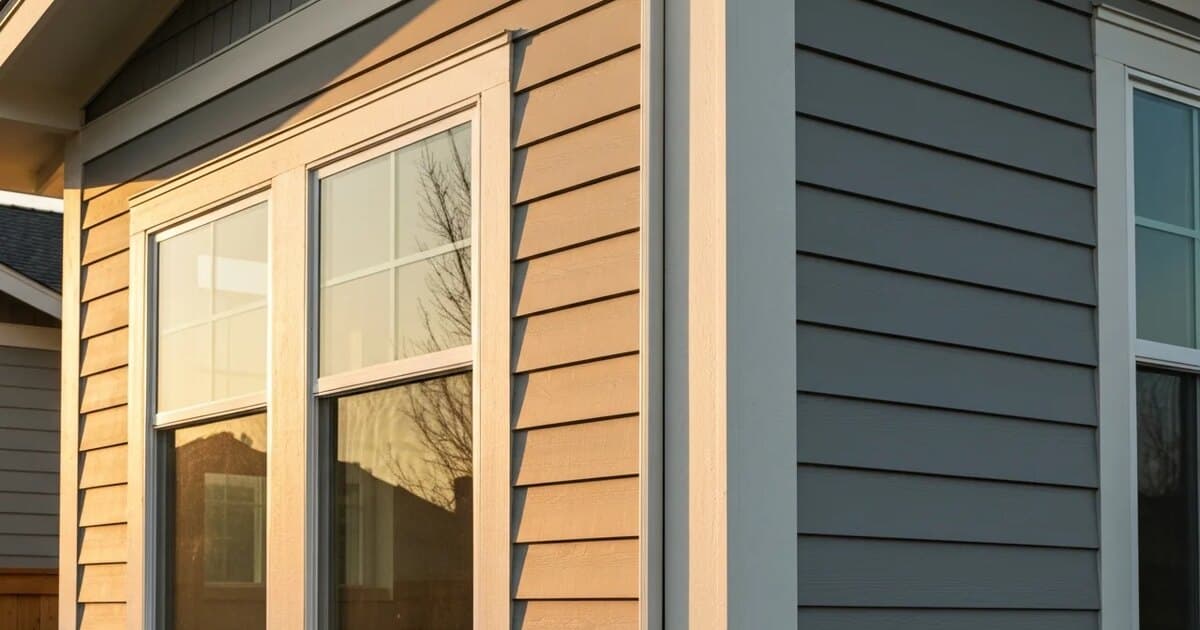
HardiePlank Lap Siding
The most-installed fiber cement profile in America. Horizontal planks in smooth or cedarmill (woodgrain) texture, with exposed face widths from 5.25" to 8.25". The 8.25" exposure is the Boise favorite for its substantial, handcrafted shadow line — ideal for Craftsman bungalows in the North End, mid-century ranches on the Boise Bench, and farmhouse builds across the Treasure Valley.
View on JamesHardie.com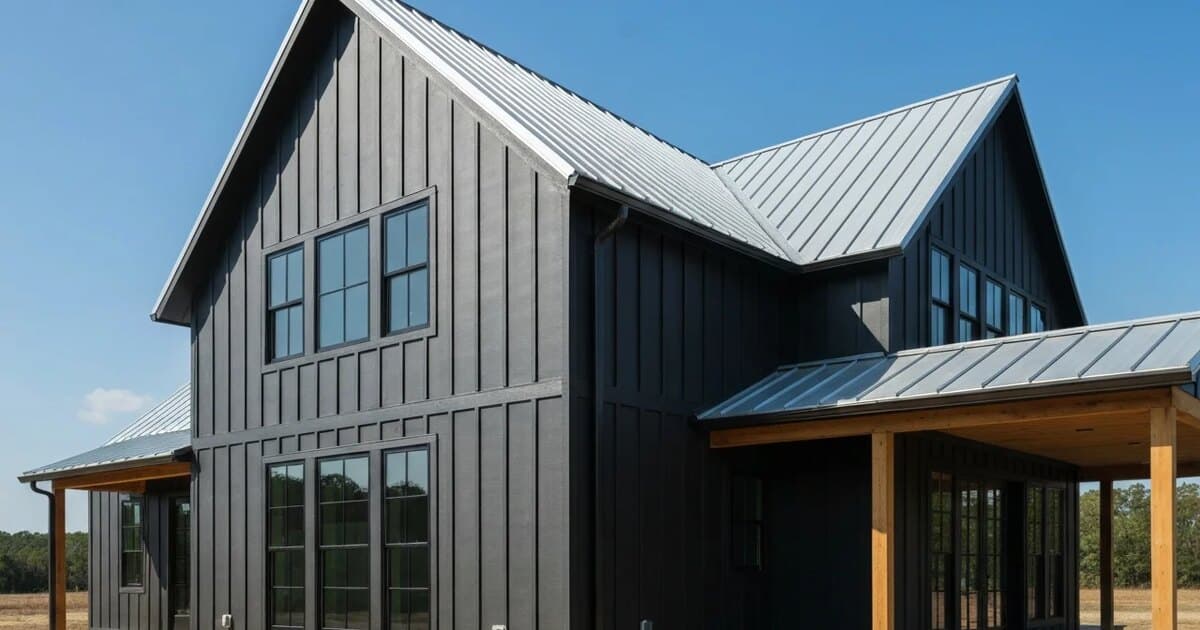
HardiePanel Vertical Siding
Large-format 4×8 and 4×10 panels for board-and-batten, flat panel, or stucco-replacement applications. The go-to product for modern and contemporary builds in Southeast Boise, Star, and Meridian. Board-and-batten installations use HardiePanel as the flat field with HardieTrim battens overlaid at 12" to 16" intervals.
View on JamesHardie.com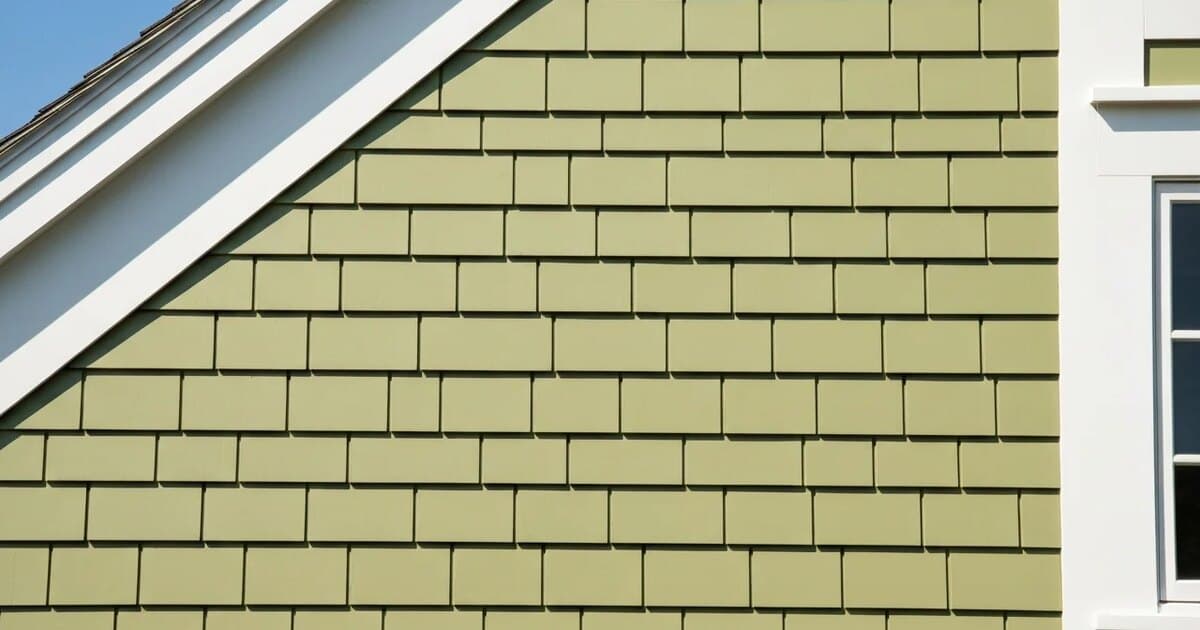
HardieShingle Siding
Individual shingle pieces and panel-format shingles that replicate cedar shakes without the combustibility, rot, or maintenance burden. Available in straight-edge, staggered, and half-round profiles. Especially popular in the North End historic district, the Harrison Boulevard corridor, and Eagle's custom-home neighborhoods.
View on JamesHardie.com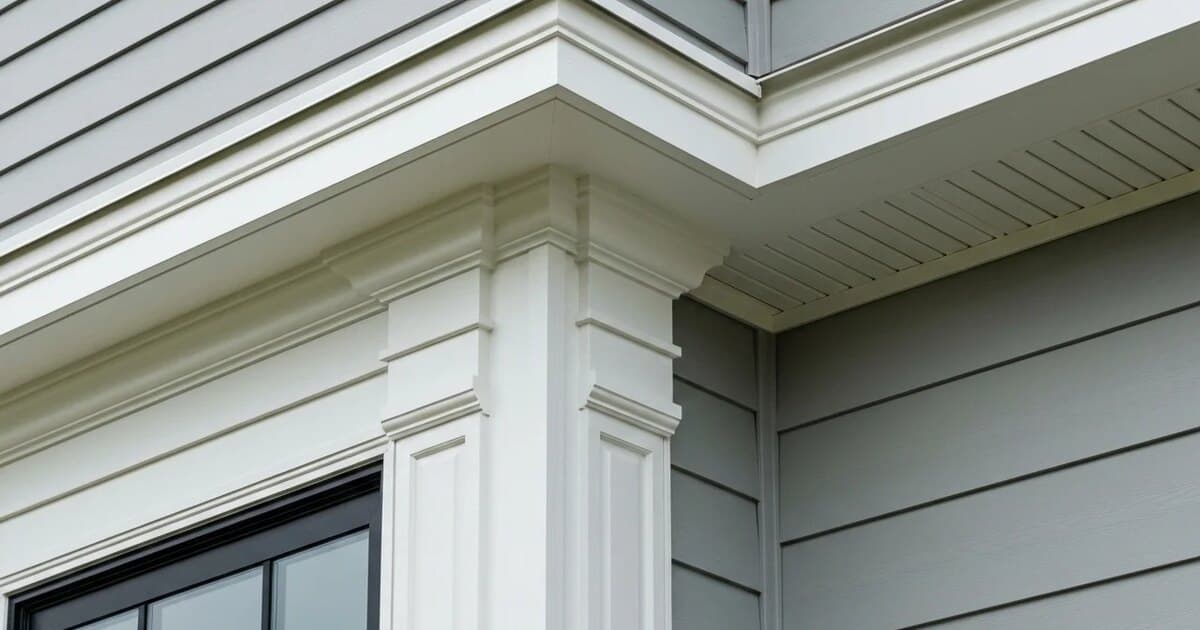
HardieTrim & HardieSoffit
Matching fiber cement trim for window and door surrounds, corner boards, fascia, and decorative details, plus vented and non-vented soffit panels. Critical in WUI zones — using Hardie trim and soffit (instead of wood or PVC) maintains a fully non-combustible envelope from foundation to roofline.
View on JamesHardie.comFiber cement siding is a mid-to-premium investment, but it delivers the lowest total cost of ownership over a 30-year window when you factor in lifespan, maintenance, repainting frequency, and insurance benefits. Typical installed costs in the Boise metro area range from $10 to $16 per square foot, putting a full re-side of a typical 1,800–2,200 square foot Boise home in the $16,500 to $32,000 part of our range depending on product selection, home complexity, and number of stories.
| Product | Per Sq Ft (Installed) | 1,500 Sq Ft Home | 2,500 Sq Ft Home |
|---|---|---|---|
| Hardie Primed (paint-ready) | $8–$12 | $14,000–$21,000 | $23,000–$34,500 |
| Hardie ColorPlus (factory-finished) | $10–$14 | $17,500–$24,500 | $28,500–$40,000 |
| HardiePanel (board-and-batten) | $10–$15 | $17,500–$26,000 | $28,500–$43,000 |
| HardieShingle (shake profile) | $12–$16 | $21,000–$28,000 | $34,500–$46,000 |
Whole-house estimates include old siding removal, house wrap (Tyvek DrainWrap or equivalent), siding installation, HardieTrim, caulking, and cleanup. Costs vary by home complexity, number of stories, and amount of custom trim work. Sheathing repair, window re-flashing, and fascia replacement are additional. Primed products require separate painting at $2–$4/sq ft additional.
Every siding material involves trade-offs. Fiber cement has clear advantages for Idaho's high-desert climate, but it also has limitations that homeowners should understand before committing to a project. Here is an honest assessment based on our experience installing fiber cement across the Treasure Valley.
Advantages
Non-combustible — which is what Boise requires for siding in hillside and Wildland Urban Interface areas under Permit 428
Superior UV resistance at Boise's 2,730-foot elevation
Will not rot, warp, or attract termites, woodpeckers, or carpenter ants
Pest-proof — zero biological degradation from any insect or animal species
Engineered for freeze-thaw climates (HZ5 formulation)
ColorPlus carries a 15-year finish warranty against peeling, cracking and chipping
Excellent paint retention on primed boards when using quality exterior coatings
30-50 year lifespan with minimal maintenance requirements
Non-prorated 30-year substrate warranty plus 15-year ColorPlus finish warranty
Non-combustible, which is what Boise requires for siding in hillside and Wildland Urban Interface areas under Permit 428
Limitations
Higher upfront cost than vinyl ($8-$14/sq ft vs. $4-$7/sq ft installed)
Heavier than all alternatives at ~2.5 lbs/sq ft — may need structural verification on older homes
Professional installation required — not a DIY-friendly material due to weight and cutting hazards
Can crack at fastener points if nails are over-driven — proper nail gun calibration is essential
Cannot be installed below 40°F ambient temperature, limiting winter windows in Idaho
Requires specialized cutting tools (fiber cement shears or dust-capture circular saw)
Primed boards must be painted within 180 days of installation — scheduling matters in shoulder seasons
Moisture behind boards from improper flashing causes efflorescence and accelerated deterioration
Boise's high-desert climate presents a unique combination of challenges that few siding materials can handle simultaneously: intense UV at altitude, rapid freeze-thaw cycling, extreme temperature swings, and wildfire exposure. Fiber cement is engineered to address every one of these factors, which is why it has become the default recommendation from builders, inspectors, and insurance carriers throughout the Treasure Valley.
120+ Freeze-Thaw Cycles Per Winter
Boise experiences more freeze-thaw transitions than most Idaho homeowners realize. Temperatures cross the 32°F threshold repeatedly throughout the day during fall, winter, and early spring — often freezing at night and thawing by midday. This cycling is harder on building materials than sustained cold because water expands approximately 9% when it freezes, creating micro-stresses in any material with absorbed moisture. James Hardie's HZ5 formulation is engineered specifically for freeze-thaw climates, with modified manufacturing processes that lower moisture absorption, which is what drives freeze-thaw damage in cementitious products.
Wildfire Protection in WUI Zones
The Boise Foothills, areas east of Table Rock, and portions of Eagle and Star near the Boise National Forest are designated Wildland-Urban Interface zones where building code requires fire-resistant exterior materials. Fiber cement's non-combustible classification under ASTM E136 satisfies all WUI requirements without additional treatment or fire-retardant coatings. During a wildfire event, the primary ignition pathway for structures is airborne embers landing on or near combustible surfaces. Fiber cement will not ignite from ember contact, radiant heat, or direct flame exposure, making it one of the most effective first lines of defense for foothills properties.
UV Resistance at 2,730-Foot Elevation
UV radiation at Boise's elevation is more intense than at sea level, and that accelerates color fading and surface degradation on virtually every exterior material. Vinyl siding fades and becomes brittle; field-applied paint on wood or engineered wood chalks and peels prematurely; even premium exterior paints on primed fiber cement need recoating in 7–10 years on south-facing walls. James Hardie's ColorPlus factory finish is formulated with UV-resistant pigments specifically engineered for high-altitude exposure, which is why it carries a 15-year finish warranty where no field-applied paint system can offer comparable coverage in this climate.
While fiber cement is an excellent siding choice for virtually any Boise home, there are specific situations where it is the clear first choice — and in some cases, the only compliant option.
Boise Foothills (WUI Zones)
Homes in the foothills, East Boise near Table Rock, and rural Ada County require non-combustible exterior cladding under WUI building codes. Fiber cement is the most popular compliant option because it combines fire safety with the residential appearance homeowners want.
Mid-Century Ranch Homes
The Boise Bench and West Boise are home to thousands of mid-century ranch homes built in the 1950s-1970s. These single-story, rectangular-footprint homes are ideal fiber cement candidates because the simple geometry keeps installation costs at the lower end of the range.
Craftsman & Historic Homes
Boise's North End, Harrison Boulevard, and Warm Springs Avenue feature homes requiring period-appropriate siding profiles. HardiePlank cedarmill texture with 7" exposure is virtually indistinguishable from original cedar lap siding, and HardieShingle replicates Craftsman-era cedar shakes.
HOA-Restricted Neighborhoods
Many subdivisions in Eagle, Meridian, Star, and South Boise have HOA guidelines requiring premium cladding. Fiber cement satisfies every HOA we have worked with in the Treasure Valley, with 33 ColorPlus colors providing flexibility within architectural review committee requirements.
Fiber cement siding delivers a 30 to 50 year lifespan with remarkably low maintenance compared to wood or engineered wood alternatives. The substrate itself — Portland cement, sand, and cellulose fiber — does not degrade from UV exposure, insect attack, or biological decay. What determines how long your fiber cement lasts is the condition of the finish, the caulk joints, and the moisture management behind the panels.
ColorPlus finish: Inspect annually for any chips or scratches. Touch up with Hardie-matched paint as needed. First full repaint at approximately 15–20 years.
Primed & painted finish: Repaint every 7–10 years in the Boise market. South- and west-facing walls may need attention at the 5–7 year mark due to intense UV exposure.
Caulk joints: Inspect and reseal every 8–10 years. Pay particular attention to window and door trim joints, corner board seams, and any penetrations.
Cleaning: Rinse annually with a garden hose. Avoid pressure washing above 1,500 PSI, which can damage the paint film and drive water behind joints.
Understanding how fiber cement compares to other siding options helps homeowners make informed decisions. Here is a side-by-side comparison of the five most common siding materials installed on Boise-area homes, evaluated against the performance factors that matter most in Idaho's climate.
| Factor | Fiber Cement | Vinyl | Eng. Wood | Cedar | Metal |
|---|---|---|---|---|---|
| Cost/sq ft | $10–$16 | $5–$10 | $8–$13 | Quoted per project | Quoted per project |
| Lifespan | 30–50 yrs | 20–30 yrs | 30–40 yrs | 20–40 yrs | 40–60 yrs |
| Fire Rating | Non-combustible | Combustible (melts) | Class C (III)* | Combustible (Class B) | Non-combustible |
| UV Resistance | Excellent | Fair | Good | Poor | Excellent |
| Freeze-Thaw | Excellent | Good | Good | Fair | Excellent |
| Maintenance | Low | Very Low | Moderate | High | Very Low |
| Allowed in Boise hillside/WUI | Yes | No | No | No | Yes |
| Wood Look | Excellent | Fair | Excellent | Authentic | Poor |
*LP SmartSide is a Class C (III) product under ASTM E84 and LP states it is not an ignition-resistant material under IWUIC Section 503.2. Untreated engineered wood is combustible. Metal siding refers to steel and aluminum panel systems.
Fiber cement installation is a multi-step process that requires experienced crews, specialized tools, and attention to manufacturer specifications. Cutting corners on any step can void the James Hardie warranty and lead to premature failure. Here is how we approach a typical fiber cement re-side project on a Boise home.
Step 1: Old Siding Removal & Inspection
We strip all existing siding and inspect the wall sheathing, framing, and window/door flashing for moisture damage, rot, or structural deficiencies. Any compromised sheathing is replaced before proceeding.
Step 2: House Wrap & Flashing
We install Tyvek DrainWrap or equivalent weather-resistant barrier over the sheathing, integrated with new kick-out flashing at roof-to-wall transitions, head and sill flashing at all windows and doors, and weep-capable starter strips at the base.
Step 3: Fiber Cement Board Installation
Boards are installed from the bottom up with blind-nailing using corrosion-resistant siding nails. Each board is spaced per Hardie specifications to allow for thermal expansion. Cut edges are sealed with Hardie touch-up paint within the same day. We use fiber cement shears or circular saws with HEPA dust-capture systems — never uncontrolled dry cutting.
Step 4: Trim, Corners & Soffits
HardieTrim corner boards, window and door surrounds, fascia, and soffit panels are installed to complete the non-combustible building envelope. All joints are caulked with polyurethane or paintable silicone sealant rated for fiber cement applications.
Step 5: Painting or Touch-Up (If Applicable)
For primed installations, we coordinate exterior painting within the 180-day window. For ColorPlus installations, we touch up any field cuts, nail heads, and minor handling marks with Hardie-supplied color-matched paint.
Step 6: Final Inspection & Cleanup
A thorough walkthrough verifies correct fastener patterns, gap spacing, flashing integration, and finish quality. All debris is removed and the site is left clean. We schedule a post-installation checkup at the 6-month mark to inspect caulk joints after the first thermal cycling season.
How long does fiber cement siding last in Boise's climate?
Fiber cement siding installed correctly in Boise typically lasts 30 to 50 years. James Hardie backs their products with a 30-year non-prorated substrate warranty, and real-world performance in Idaho's high-desert climate supports that figure. The key factors that determine lifespan are proper installation (correct fastener patterns, gap spacing for thermal movement, and flashing integration), maintenance of caulk joints every 8 to 10 years, and timely repainting if you chose primed rather than ColorPlus factory-finished boards. Boise's dry climate is actually favorable for fiber cement — the material handles freeze-thaw cycles well as long as it was not installed with moisture trapped behind the panels. Homes in the North End and Boise Bench with original Hardie siding from the early 2000s are still performing well with minimal maintenance.
Is fiber cement siding fireproof?
Fiber cement siding is classified as non-combustible under ASTM E136 testing standards. It will not ignite, support flame spread, or contribute fuel to a fire. This makes it one of the only siding materials that meets the strictest wildfire-resistant building requirements in Idaho's Wildland-Urban Interface (WUI) zones. For homeowners in the Boise Foothills, East Boise, and parts of Eagle near the foothills, fiber cement siding is often required or strongly recommended by local fire districts. Unlike vinyl (which melts and deforms at approximately 300 degrees Fahrenheit) or wood (which is combustible), fiber cement maintains its structural integrity even under direct flame exposure.
How does James Hardie ColorPlus compare to site-painted fiber cement?
James Hardie ColorPlus is a factory-applied finish system where multiple coats of paint are applied and baked onto the fiber cement board in a climate-controlled facility. The result is a finish with significantly better UV resistance, color consistency, and adhesion compared to field-applied paint. ColorPlus carries a 15-year finish warranty against peeling, cracking, and chipping — a guarantee no paint contractor can match. Site-painted fiber cement, even using premium exterior paint like Sherwin-Williams Duration, typically needs repainting in 7 to 10 years in Boise's UV-intense environment. ColorPlus adds approximately $1.50 to $2.00 per square foot to the material cost, but you save the immediate painting labor cost ($2 to $4 per square foot) and delay the first repaint by 5 to 8 additional years. For most Boise homeowners, ColorPlus is the better long-term value.
Can fiber cement siding be installed in winter in Idaho?
Fiber cement siding can be installed during Idaho winters, but with important temperature restrictions. James Hardie specifies that their products should not be installed when ambient temperatures are below 40 degrees Fahrenheit, primarily because the caulking, touch-up paint, and adhesives used during installation require above-freezing conditions to cure properly. In Boise, this typically means installation work pauses during the coldest weeks of December through February. However, many winter days in the Treasure Valley reach the mid-40s or higher by midday, making partial-day installation feasible during milder stretches. We monitor weather forecasts closely and schedule fiber cement work during appropriate windows to protect your investment and warranty coverage.
Does fiber cement siding help when you sell in Boise?
We do not publish a cost-recovery percentage for siding. The figures that circulate come from national cost-versus-value surveys, and no Boise-specific resale study stands behind them — a national panel average does not transfer to one address, in one neighbourhood, in front of one buyer pool. For a figure about your own house, ask a local agent or an appraiser for a comparative market analysis on current Treasure Valley comparables. What is true without a survey is that fiber cement reads as a permanent, premium cladding to buyers, home inspectors and appraisers, that it removes the repaint cycle a wood or field-painted exterior carries, and that in Boise’s hillside and Wildland Urban Interface areas it is one of the few cladding materials the City will accept at all.
Fiber cement is our most-recommended siding material for Boise homes, but it is not the only option. Explore the other siding types we install to compare performance, cost, and aesthetics for your specific project.
Siding replacement is often the right time to coordinate other exterior projects. Bundling saves on scaffolding, crew mobilization, and ensures seamless integration between materials.
The following government agencies, industry organizations, and official resources provide additional information relevant to your remodeling project.
Ready for Fiber Cement Siding?
Get a free, no-obligation estimate for James Hardie fiber cement siding installation on your Boise-area home. Registered, insured, and Hardie-experienced crews ready to build.