
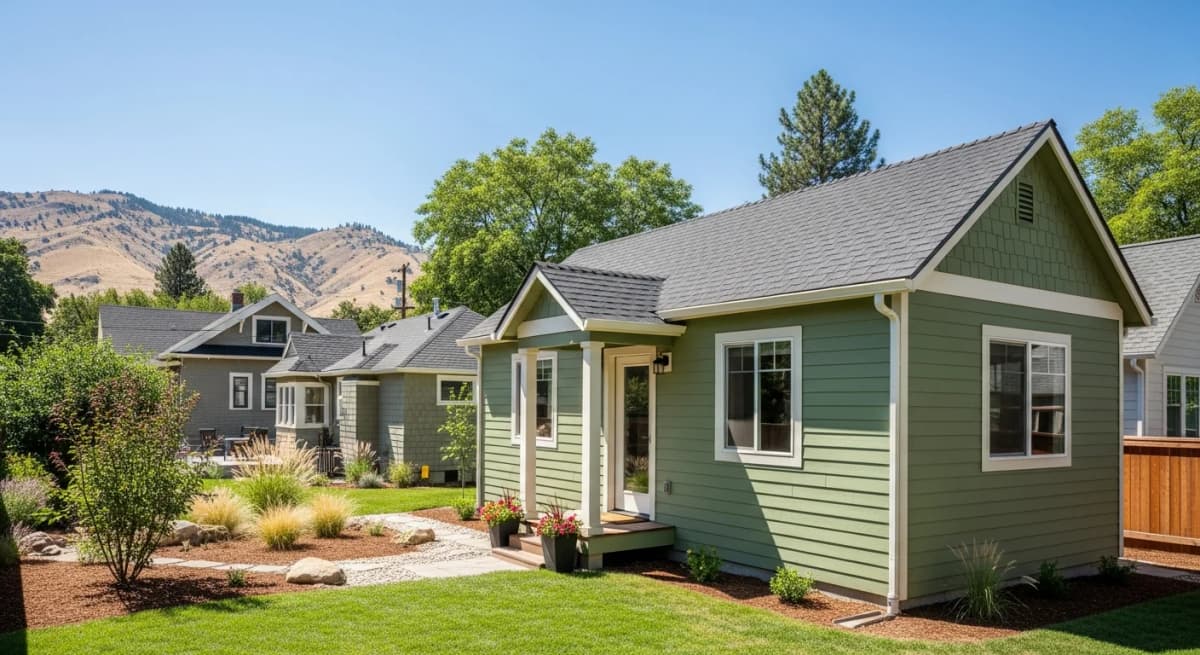
ADU Permits & Regulations in Boise
A comprehensive guide to zoning requirements, setback rules, building permits, impact fees, utility connections, and building codes for accessory dwelling unit construction in Boise, Idaho. Understand every regulatory requirement before your ADU project begins.
Quick answer
Yes. All accessory dwelling units in Boise require a building permit regardless of size or type (attached, detached, or garage conversion). You will need to submit architectural plans, a site plan showing setbacks and lot coverage, and obtain separate permits for electrical, plumbing, and mechanical work.
Boise's ADU regulations are governed by City Code Chapter 11-06-04.3, which establishes where accessory dwelling units can be built, how large they can be, and the conditions property owners must meet. Understanding these zoning requirements is the first step in any ADU project.
Allowed Zones
ADUs are permitted in the following Boise residential zoning districts. If your property falls within one of these zones and meets the additional criteria below, you are eligible to build an accessory dwelling unit.
R-1A (Residential, Single-Family)
Large-lot single-family zone. Minimum lot size typically 8,000 sq ft. ADUs allowed on lots that meet the minimum size and setback requirements.
R-1B (Residential, Single-Family)
Medium-lot single-family zone. Minimum lot size typically 7,000 sq ft. The most common zone for ADU construction in established Boise neighborhoods like the North End and East End.
R-1C (Residential, Single-Family)
Smaller-lot single-family zone. Minimum lot size typically 4,000 sq ft. ADUs are permitted but lot coverage limits can be more restrictive due to the smaller lot size.
R-2 (Residential, Medium Density)
Medium-density zone allowing duplexes and attached housing. ADUs are permitted as an additional unit on qualifying lots. Lot coverage and density calculations apply.
A-1 (Open Lands/Agricultural)
Agricultural and open lands zone. ADUs allowed on parcels that meet the residential development standards. Less common for urban ADU projects but applicable for larger rural parcels in the Boise foothills.
Key Restrictions
Even if your property is in an eligible zone, the following restrictions and conditions must be satisfied before an ADU can be approved.
One ADU per lot (for now)
Boise's current code permits one accessory dwelling unit per residential lot. Idaho's 2026 ADU law (Senate Bill 1354) requires the city to allow one internal ADU and one detached ADU per lot by October 1, 2026, so confirm the rule in effect before planning a second unit.
No owner-occupancy requirement
Boise's Modern Zoning Code does not require the owner to live on the property, and Idaho's 2026 ADU law (Senate Bill 1354) prohibits cities from imposing an owner-occupancy requirement. You may rent both units.
ADU size limit: 70% or 900 sq ft
An ADU cannot exceed 70% of the primary structure's total floor area or 900 square feet, whichever is smaller, and may have no more than two bedrooms (Zoning Code Section 11-03-03.2B). For a 1,000 sq ft home, the maximum ADU would be 700 sq ft; a 1,300 sq ft or larger home reaches the 900 sq ft cap. Idaho's 2026 ADU law (Senate Bill 1354) requires Boise to raise the cap to at least 1,000 sq ft or 75% of the primary home and to allow one internal plus one detached ADU per lot by October 1, 2026 — confirm the limit in effect with Planning & Development Services.
Same limit for attached, detached, and conversions
Boise applies the 900 sq ft / 70% limit to every ADU type: interior conversions, additions to the house, detached units, and garage conversions (which may not reduce off-street parking below the lot's minimum).
No added parking requirement
Boise does not require an added off-street parking space for the ADU, and Idaho's 2026 ADU law (Senate Bill 1354) prohibits cities from requiring one. A garage conversion may not reduce the lot's required parking for the primary dwelling, so plan replacement parking for that case.
Primary residence must exist
An ADU can only be built on a lot with an existing primary residence. You cannot build an ADU before or instead of a primary dwelling.
How to check your zoning: Visit the City of Boise's online zoning map at cityofboise.org or contact Planning and Development Services at (208) 384-3830. Provide your property address and they will confirm your zoning designation, lot dimensions, and any overlays or special conditions that may affect ADU eligibility. Iron Crest Remodel verifies all zoning requirements during our initial site assessment.
Setbacks determine how close your ADU can be built to property lines. These requirements vary by zoning district and directly affect where an ADU can be placed on your lot, how large it can be, and whether a detached structure is feasible. Setback compliance is one of the most common barriers to ADU approval.
| Setback Type | Requirement | Notes |
|---|---|---|
| Front Setback | Matches zone standard (20-25 ft typical) | Varies by zone. R-1B is typically 25 ft from front property line. Detached ADUs are generally placed in the rear yard, so front setback usually applies only to attached ADUs. |
| Side Setback | 5 ft minimum | Both interior side yards require a minimum 5 ft setback. Corner lots have a larger street-side setback (typically 10-15 ft). Eaves and overhangs may project up to 2 ft into the setback. |
| Rear Setback | 5 ft minimum for detached ADU | Detached ADUs must be at least 5 ft from the rear property line. Alley-accessed lots may have different requirements. The primary dwelling's rear setback is typically 15-20 ft but does not apply to a detached accessory structure. |
| Height Limit | 25 ft max or primary home height | Whichever is less. Most detached ADUs are single-story (12-16 ft). Two-story ADUs are possible but the 25 ft cap and neighborhood compatibility are considerations during review. |
| Separation from Primary | 6 ft minimum (detached) | A detached ADU must be at least 6 ft from the primary dwelling. This distance is measured from the closest points of the two structures, not including overhangs. |
| Lot Coverage Maximum | 40-50% (varies by zone) | Total building footprint (primary + ADU + garage + all structures) cannot exceed the zone's lot coverage limit. R-1B allows 40%, R-1C allows 50%. Calculate carefully with all existing structures. |
How to Read Your Property's Setbacks
Your property's specific setback requirements are determined by your zoning district, lot dimensions, and any special overlays. Here is how to find them:
- Pull your property's plat map from Ada County Assessor records to confirm lot dimensions and property lines
- Identify your zoning district on the City of Boise zoning map (cityofboise.org)
- Cross-reference the setback table in Boise City Code Title 11 for your specific zone
- Check for any overlay districts (historic, floodplain, hillside) that may impose additional restrictions
- A professional land survey is recommended if your property lines are uncertain or if construction will be near the minimum setback
Common Setback Challenges
These are the setback-related issues we encounter most frequently on Boise ADU projects. Early identification prevents costly redesigns during plan review.
- Existing garage or shed already consumes buildable rear yard area
- Lot coverage already at or near the maximum due to existing structures
- Utility easements along the rear or side property line reducing buildable area
- Irregular lot shapes making it difficult to meet setbacks on all sides simultaneously
- Corner lots with two street-side setbacks reducing the available rear yard
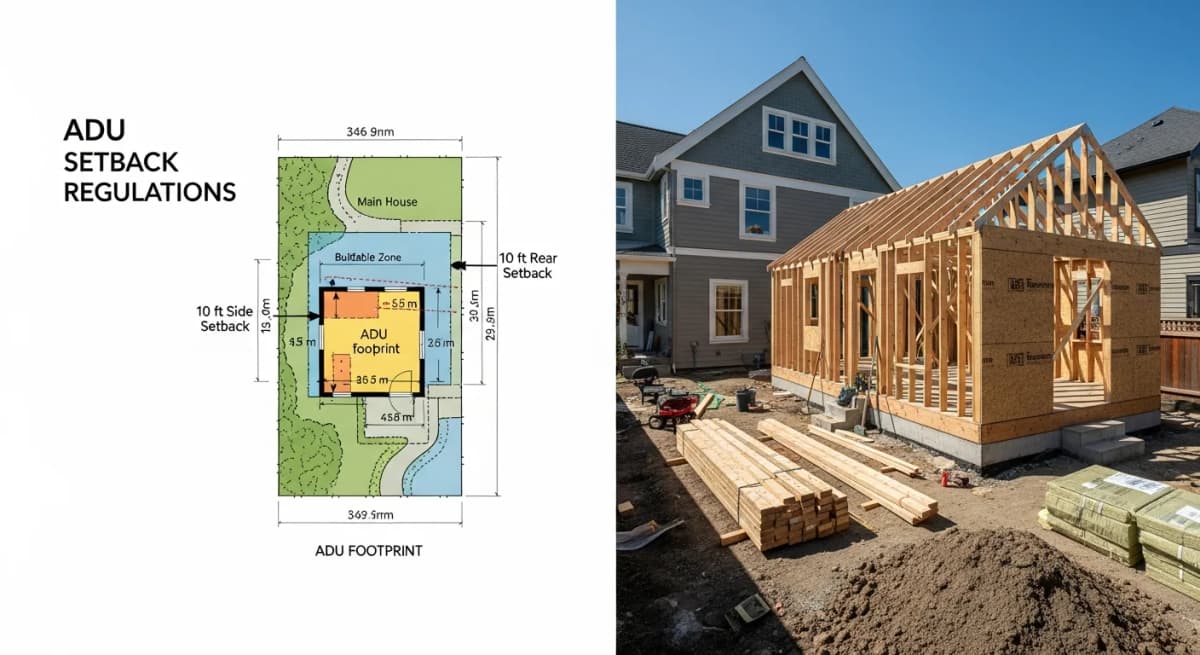
The ADU permit process in Boise involves multiple city departments and several stages of review. Plan review for new ADU construction is more involved than a typical remodel permit because it covers zoning compliance, structural design, and all building systems. Here is the step-by-step process from pre-application through certificate of occupancy.
Pre-Application Meeting (Recommended)
While not mandatory, a pre-application meeting with the City of Boise Planning and Development Services department is strongly recommended for ADU projects. This meeting allows you to present your concept and receive feedback on zoning compliance, setback issues, and any site-specific concerns before investing in full architectural plans.
What to bring: A site plan showing your lot, existing structures, proposed ADU location, and approximate dimensions. The planning staff will review zoning eligibility, setback requirements, lot coverage calculations, and identify any potential issues early. Pre-application meetings can be scheduled by contacting (208) 384-3830 and typically occur within 2 to 4 weeks.
Plan Submission
Submit complete construction documents to the City of Boise through the ePermit online portal. ADU plan submissions require significantly more documentation than a standard remodel permit. Incomplete submissions are the number one cause of delays.
Required documentation: Completed permit application, site plan (showing property lines, setbacks, existing structures, proposed ADU footprint, utility connections, and parking), architectural plans (floor plans, elevations, cross-sections), structural engineering drawings, energy code compliance documentation (REScheck or HERS rating path), mechanical/plumbing/electrical plans, lot coverage calculations, and the owner-occupancy covenant form. The contractor's Idaho registration number and proof of insurance are also required.
Plan Review (8-12 Weeks Typical)
The City of Boise conducts a multi-department plan review covering zoning compliance, structural adequacy, building code compliance, fire code, mechanical systems, plumbing, and electrical design. Each discipline reviews independently and may generate comments or correction requests.
Review timeline: First-round review typically takes 8 to 12 weeks. If revisions are required (common for first-time ADU applications), the resubmission review takes an additional 2 to 4 weeks per round. Well-prepared submissions that address all code requirements on the first round move through review significantly faster. Iron Crest Remodel's architectural partners prepare submissions specifically to minimize revision cycles.
Permit Issuance
Once all plan review comments are resolved and fees are paid, the building permit is issued. The permit card must be posted at the construction site and visible from the street. Building permits in Boise are valid for 180 days from issuance. If construction does not commence within that window, the permit expires and must be renewed. For ADU projects, which often have long lead times for materials and scheduling, it is important to coordinate permit timing with your construction start date.
Construction & Inspections
Construction proceeds through a defined sequence of inspections. Each stage must pass before the next phase of work begins. Inspections are requested through the city's online portal with a minimum 24-hour notice.
Inspection sequence: Foundation/footing, framing/structural, rough electrical, rough plumbing, rough mechanical, insulation/energy code, drywall (for fire-rated assemblies), and final inspections for each trade. ADU projects typically require 8 to 12 individual inspections over the course of construction.
Certificate of Occupancy
After all final inspections pass, the City of Boise issues a Certificate of Occupancy (CO). This document confirms that the ADU was built in compliance with the approved plans and all applicable codes. The ADU cannot be legally occupied until the CO is issued. The CO is also required by lenders, insurance providers, and for property tax assessment purposes. Iron Crest Remodel ensures all inspections pass and the CO is obtained before project closeout.
Fee estimate: Total permit and impact fees for a Boise ADU typically range from $3,000 to $8,000 depending on the size, valuation, and whether new utility connections are required. See the detailed fee breakdown in the next section.
Beyond the building permit fee, ADU construction in Boise triggers multiple impact fees and development charges from various agencies. These fees fund infrastructure improvements needed to support new development. Understanding the full fee picture prevents budget surprises.
| Fee Type | Agency | Typical Range | Notes |
|---|---|---|---|
| Building Permit | City of Boise | $500 - $2,000 | Based on project valuation; calculated per IRC fee schedule |
| Plan Review Fee | City of Boise | 65% of permit fee | Added to the building permit fee for plan examination |
| ACHD Impact Fee | Ada County Highway District | $1,000 - $2,500 | Transportation impact fee for new dwelling units; amount varies by ADU size and location |
| Sewer Connection | City of Boise Public Works | $500 - $2,000 | Required if new sewer lateral is needed; shared connections may reduce cost |
| Water Connection | City of Boise / United Water | $500 - $3,000 | Depends on whether a new meter and service line are required or if shared connection is approved |
| Electrical Permit | City of Boise | $100 - $300 | Covers all electrical work; separate from building permit |
| Plumbing Permit | City of Boise | $100 - $250 | Covers kitchen, bathroom, and laundry plumbing installations |
| Mechanical Permit | City of Boise | $75 - $200 | HVAC system, exhaust fans, gas appliance installations |
| School District Impact | Boise School District | $0 - $500 | May apply for new dwelling units; ADUs may qualify for reduced or waived fees depending on current policy |
Small ADU (400-600 sq ft)
$3,000 - $5,000
Studio or one-bedroom. Often uses shared utility connections, which reduces connection fees. Lower valuation means lower building permit fee.
Medium ADU (600-800 sq ft)
$4,500 - $6,500
One or two-bedroom unit. May require separate utility connections depending on the jurisdiction's determination. Higher valuation increases base permit fee.
Large ADU (800-1,000 sq ft)
$6,000 - $8,000+
Two-bedroom with full amenities. More likely to require separate utility meters and connections. Highest ACHD impact fees due to larger dwelling size.
Note: Fee amounts are estimates based on current schedules and may change. ACHD, the City of Boise, and utility providers update their fee schedules periodically. Iron Crest Remodel provides a detailed fee estimate specific to your project during the design phase, and all permit fees are included in your construction contract.
Every ADU needs water, sewer, electrical, and gas service. Whether you can share connections with the primary dwelling or must install separate service depends on the city's requirements, utility capacity, and the specifics of your project. Utility connections are often the most complex and costly portion of the permitting and site work for ADU construction.
Water Service
Boise ADUs may connect to the existing water service (shared meter) or require a separate water meter and service line. The determination depends on the distance from the water main, the existing service size, and the ADU's demand.
- Shared connection: tap into existing 3/4" or 1" service line. Lower cost ($200-$800 for plumbing runs).
- Separate meter: new service line from water main, new meter box, and connection fee ($1,500-$3,000+).
- Contact Suez Water Idaho (serves most of Boise) to determine requirements for your address.
- Hot water heater: ADU requires its own water heating system (tankless or tank).
Sewer Service
Sewer connections for ADUs in Boise are managed by the City of Boise Public Works Department. The existing sewer lateral from the primary home may be shared or a new lateral may be required.
- Shared lateral: connect ADU waste lines to existing sewer lateral (lower cost, $500-$1,500 for new pipe runs).
- Separate lateral: new connection to sewer main in the street ($2,000-$5,000+ including street cut and repair).
- Sewer capacity verification may be required by the city, especially in older neighborhoods with aging infrastructure.
- Properties on septic systems require Idaho Department of Environmental Quality approval for ADU connections.
Electrical Service
Electrical service is one of the most important utility decisions for your ADU. The choice between a sub-panel fed from the primary home and a separate meter affects both cost and long-term operational independence.
- Sub-panel from primary: 60-100 amp sub-panel fed from existing main panel. Lower cost ($1,500-$3,000) but shares utility billing.
- Separate meter: Idaho Power installs a new meter and service drop. Higher cost ($3,000-$6,000+) but independent billing for tenant.
- Primary home panel must have adequate capacity. If the existing panel is 100 amps, an upgrade to 200 amps may be needed ($2,000-$4,000).
- Underground conduit run from primary panel or utility pole to ADU location. Trench depth: 18" minimum per NEC.
Gas, Internet & Cable
Additional utility services round out the ADU's functionality. Gas service is especially important for heating in Boise's cold winters.
- Gas: Intermountain Gas provides service in Boise. A new gas line run from the meter to the ADU is typically $1,000-$2,500. A gas permit and pressure test are required.
- Internet: Contact Sparklight, CenturyLink, or other Boise ISPs about extending service to the ADU. Many run cable or fiber to a detached structure for $200-$500.
- Alternative: A mesh Wi-Fi system extending from the primary home can serve many ADUs without a separate internet connection.
- All-electric option: Heat pump HVAC and electric water heater eliminate the need for gas service entirely. Growing trend in Boise ADU construction.
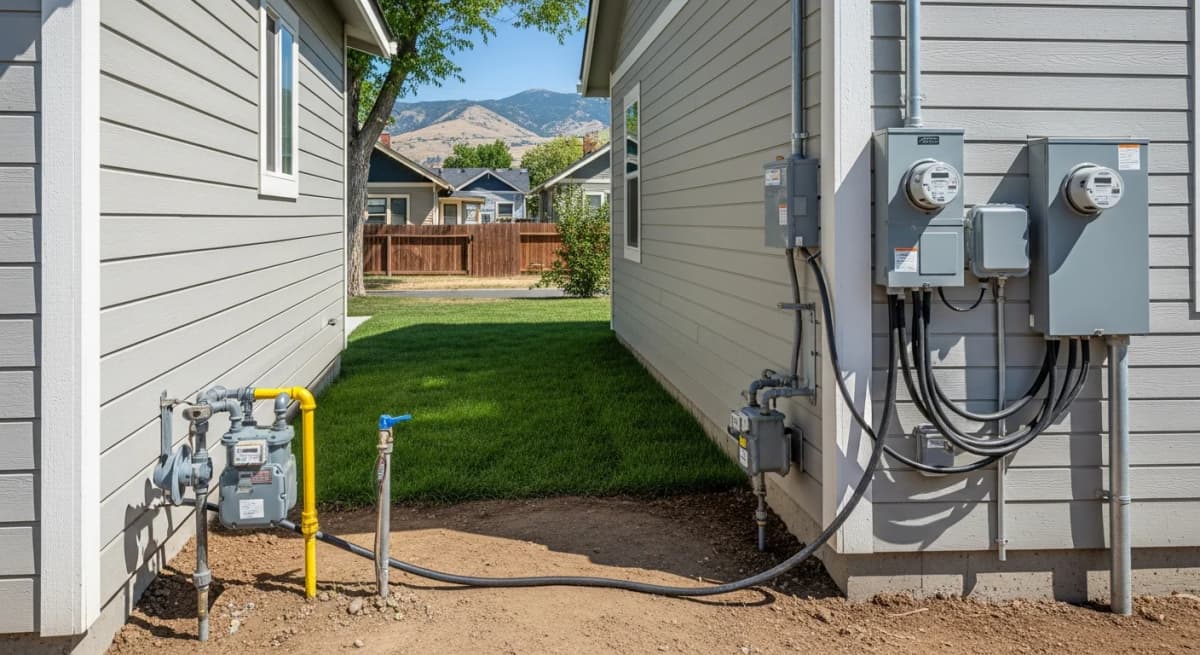
Utility coordination tip: Contact all utility providers early in the design process. Water, sewer, gas, and electrical providers each have their own application processes and timelines. Some require separate permits and inspections. Iron Crest Remodel coordinates with all utility providers as part of our ADU construction service, handling applications, scheduling, and inspections on your behalf.
ADUs must comply with the International Residential Code (IRC) as adopted by Idaho for fire and life safety. These requirements protect occupants and are closely inspected. Non-compliance is a failed inspection, which halts construction until corrections are made.
Smoke & CO Detection
Smoke alarms and carbon monoxide detectors are required in all ADUs per Idaho code and the IRC.
- Smoke alarms in every bedroom, outside each sleeping area, and on every level
- CO detectors outside each sleeping area and on every level with fuel-burning appliances
- All alarms must be hardwired with battery backup and interconnected
- Combination smoke/CO units are acceptable and simplify installation
Fire Separation
Attached ADUs require specific fire-rated separation between the ADU and the primary dwelling to prevent fire spread.
- 1-hour fire-rated wall assembly between attached ADU and primary dwelling
- 1-hour fire-rated floor/ceiling assembly if ADU is above or below primary living space
- Self-closing, 20-minute fire-rated door at connecting doorways
- Detached ADUs within 5 ft of property line may need fire-rated exterior wall on the line side
Egress & Sprinklers
Emergency egress and fire suppression requirements ensure safe evacuation and fire control for ADU occupants.
- Every bedroom must have an egress window: min 5.7 sq ft opening, max 44" sill height
- Emergency escape and rescue opening required per IRC R310
- Fire sprinklers may be required if the ADU exceeds certain size thresholds or if the local fire authority determines it necessary
- Address numbers must be visible from the street for emergency response (minimum 4" height, contrasting color)
Attached vs. detached fire code differences: Detached ADUs have simpler fire code requirements because the physical separation between structures provides inherent fire protection. Attached ADUs require more extensive fire-rated assemblies and separation details. The choice between attached and detached construction significantly affects both fire code compliance costs and construction complexity. Iron Crest Remodel evaluates both options during the design phase and recommends the most practical approach for your specific lot and budget.
New ADU construction in Idaho must comply with the International Energy Conservation Code (IECC) 2018 edition as adopted by the state. Because ADUs are new construction (even garage conversions in most cases), they must meet the full energy code requirements for Climate Zone 5 (Boise). These requirements affect insulation, windows, air sealing, HVAC efficiency, and lighting.
Insulation R-Value Minimums
Boise falls in Climate Zone 5 under the IECC, which requires the following minimum insulation values for new residential construction. ADUs must meet these standards for the building envelope.
Exterior Walls
R-20 or R-13 + R-5ciR-20 cavity insulation OR R-13 cavity plus R-5 continuous insulation on the exterior. The continuous insulation option reduces thermal bridging through studs.
Attic / Ceiling
R-49Blown-in or batt insulation in the attic space. Cathedral ceilings must meet R-49 or use a combination of cavity and rigid insulation.
Floors Over Unconditioned Space
R-30Applies to floors over crawl spaces, garages, or open areas. Proper installation and air sealing at the floor plane are critical.
Basement / Crawl Space Walls
R-15 / R-10ciInsulation on interior or exterior of foundation walls. Continuous insulation preferred for moisture management in Boise's climate.
Slab Edge (Heated Slabs)
R-10 for 2 ft depthRequired for slab-on-grade construction with in-floor heating. Perimeter insulation reduces heat loss through the slab edge.
Air Sealing & Performance Testing
Air sealing is one of the most impactful energy efficiency measures in new construction. The IECC 2018 requires blower door testing to verify that the building envelope meets the maximum air leakage rate.
Blower Door Test: 3 ACH50 Maximum
The completed ADU must test at or below 3 air changes per hour at 50 pascals of pressure (3 ACH50). This is verified by a blower door test conducted before the final inspection. A well-built ADU typically achieves 1.5 to 2.5 ACH50. If the test fails, additional air sealing work is required before the building passes inspection.
Duct Leakage Testing
If the ADU uses a ducted HVAC system, duct leakage testing is required. The IECC 2018 limits duct leakage to 4 CFM25 per 100 square feet of conditioned floor area. Properly sealed duct connections and mastic at all joints are essential for passing this test. Ductless mini-split systems eliminate this requirement entirely.
HERS Rating Option
As an alternative to the prescriptive R-value path, you can use a HERS (Home Energy Rating System) rating to demonstrate energy code compliance. A HERS rater models the building's energy performance and verifies it meets the energy budget. This path offers more design flexibility and can allow trade-offs between components.
Idaho Power Rebate Eligibility
Idaho Power offers rebates for new construction that exceeds the minimum energy code. High-efficiency ADUs may qualify for rebates on ENERGY STAR appliances, heat pump water heaters, heat pump HVAC systems, and LED lighting packages. Contact Idaho Power at (208) 388-2323 or visit idahopower.com/rebates for current programs.
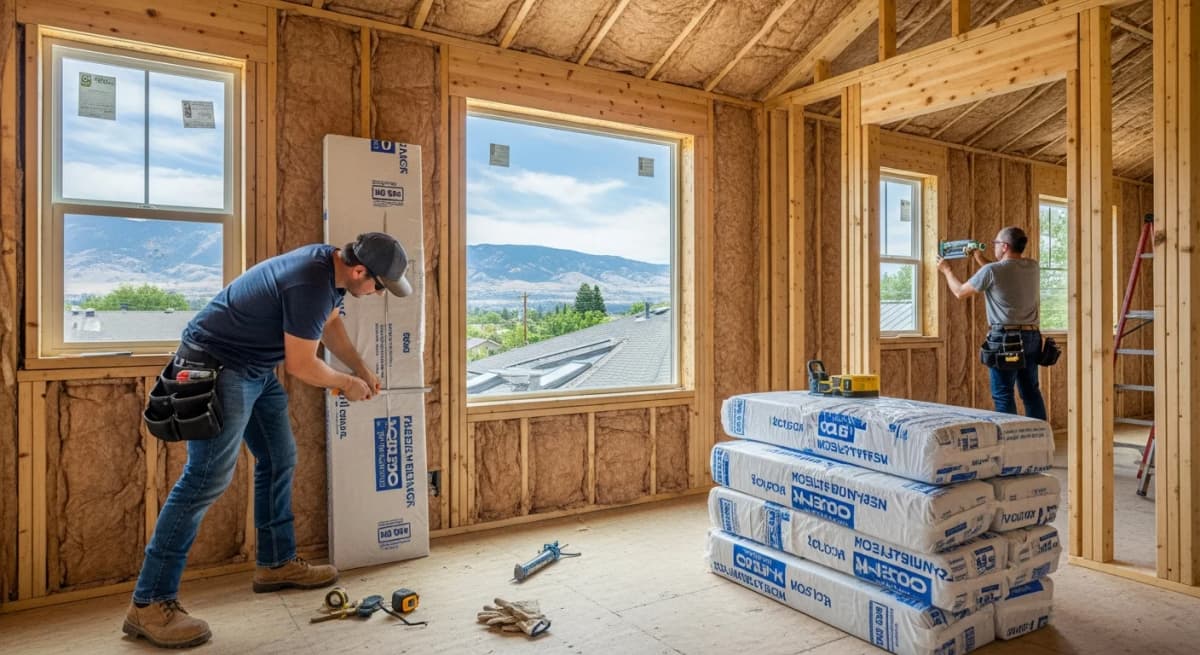
Not every lot or every ADU design sails through the permit process without challenges. These are the most common issues we encounter on Boise ADU projects and the strategies Iron Crest Remodel uses to resolve them.
Setback Encroachments
The proposed ADU footprint extends into a required setback zone. This is the single most common issue, especially on smaller lots or lots with existing accessory structures.
Solution: Redesign the ADU footprint to fit within setbacks. Options include reducing the footprint, adjusting the placement on the lot, removing an existing non-conforming structure to create space, or in rare cases applying for a variance through the City of Boise Board of Adjustment. Variances require demonstrating a hardship unique to the property and are not guaranteed. Iron Crest Remodel conducts a detailed site analysis before design begins to identify setback constraints early.
Lot Coverage Exceeded
Adding the ADU would push total lot coverage (all structures combined) above the zone's maximum. This is common on R-1C lots (smaller lot sizes) and on properties with large homes, garages, and sheds.
Solution: Reduce the ADU footprint, remove or downsize existing accessory structures (storage sheds, detached garages) to free up coverage capacity, or convert an existing structure (garage conversion ADU) rather than building new. A garage conversion counts as the same footprint and does not add to lot coverage. This is often the most practical solution for coverage-limited lots.
Neighbor Objections
While ADUs in Boise do not require a public hearing or neighbor notification for standard approvals, neighbors may raise concerns about privacy, parking, property values, or construction impacts.
Solution: Proactive communication. Inform neighbors before construction begins. Address privacy concerns through thoughtful window placement and landscaping screening. Minimize construction impacts with defined work hours and clean job sites. ADUs that are well-designed and maintained generally have positive effects on neighborhoods. Iron Crest Remodel can assist with neighbor communication strategies as part of the project planning process.
Utility Capacity Limitations
The existing water, sewer, or electrical service to the property is insufficient to support an additional dwelling unit. This is more common in older Boise neighborhoods with aging infrastructure.
Solution: Upgrade utility service as needed. Common upgrades include a 200-amp electrical panel upgrade, a new water service line, or a sewer lateral replacement. These upgrades add cost ($2,000 to $6,000 per utility) but also improve the primary home's service. Iron Crest Remodel coordinates with all utility providers early in the design phase to identify capacity issues before construction begins.
Historic District Restrictions
Properties in Boise's historic districts (Harrison Boulevard, North End Historic District, and others) face additional design review requirements. The Boise Historic Preservation Commission reviews exterior design, materials, and massing for compatibility with the historic neighborhood character.
Solution: Work with the Historic Preservation Commission early. Design the ADU's exterior to complement the primary home and neighborhood character (matching materials, roof pitch, window proportions). Submit design documents to the commission before or concurrently with the building permit application. The review adds 4 to 8 weeks to the timeline but approval is achievable with thoughtful design. Iron Crest Remodel has experience working within Boise's historic districts and understands the commission's design guidelines.
Common questions about ADU permits, zoning, and building regulations in Boise, Idaho.
Do I need a permit to build an ADU in Boise?
Yes. All accessory dwelling units in Boise require a building permit regardless of size or type (attached, detached, or garage conversion). You will need to submit architectural plans, a site plan showing setbacks and lot coverage, and obtain separate permits for electrical, plumbing, and mechanical work. The City of Boise Planning and Development Services department reviews all ADU applications for compliance with zoning and building codes before issuing permits.
How long does it take to get an ADU permit in Boise?
The ADU permit timeline in Boise typically ranges from 8 to 12 weeks for plan review alone. A pre-application meeting with the planning department can take 2 to 4 weeks to schedule. After plan review approval, the permit is issued and construction can begin. The total time from initial application to permit in hand is commonly 10 to 16 weeks. Incomplete or non-compliant submissions can add 4 to 8 weeks for revision cycles. Iron Crest Remodel submits thorough, code-compliant plans to minimize review time.
How much do ADU permits and fees cost in Boise?
Total permit and impact fees for an ADU in Boise typically range from $3,000 to $8,000 depending on the size and scope. This includes the building permit fee ($500 to $2,000 based on valuation), plan review fees (65% of the permit fee), ACHD impact fees ($1,000 to $2,500), sewer connection fees ($500 to $2,000), and separate trade permits for electrical, plumbing, and mechanical work ($75 to $200 each). Larger ADUs and those requiring new utility connections fall at the higher end.
Can I build an ADU on any residential lot in Boise?
No. ADUs are allowed in specific residential zones: R-1A, R-1B, R-1C, R-2, and A-1. Your lot must meet minimum size requirements for the zone, have adequate space for setbacks and lot coverage limits, and the primary residence must already exist. The current code permits one ADU per lot; Idaho's 2026 ADU law (Senate Bill 1354) requires Boise to allow one internal and one detached ADU per lot by October 1, 2026. You can verify your property's zoning designation through the City of Boise's online zoning map or by contacting Planning and Development Services at (208) 384-3830.
Does the property owner have to live on-site with an ADU?
No. Boise's Modern Zoning Code (effective December 2023) has no owner-occupancy requirement, and Idaho's 2026 ADU law (Senate Bill 1354, Idaho Code § 67-6541) prohibits cities from imposing one. You may live in the main house, live in the ADU, or rent both units. Short-term rental use is regulated separately, and lenders or insurers may have their own occupancy conditions, so check those before planning around rental income.
Does Iron Crest Remodel handle the full ADU permit process?
Yes. Iron Crest Remodel manages the entire ADU permit process from start to finish. This includes the pre-application meeting with the City of Boise, preparing all required architectural and site plans, submitting permit applications, paying fees (included in your project cost), coordinating with ACHD and utility providers, scheduling all required inspections during construction, and obtaining the final certificate of occupancy. You do not need to visit the permit office or manage any part of the regulatory process yourself.
Explore our complete library of ADU construction guides for Boise homeowners. Each guide covers a different aspect of planning, building, and financing your accessory dwelling unit.
ADU Construction Service
Our full ADU construction service overview for Boise homeowners
ADU Cost Guide
Detailed ADU pricing from $100k to $300k+ by type and size
ADU Construction Timeline
Phase-by-phase scheduling from design through move-in
ADU Materials Guide
Foundation, framing, finishes, and fixture selections
Boise ADU Permits & Zoning Resource
In-depth resource on Boise's ADU regulatory landscape
ADU Utility Hookups Guide
Water, sewer, electrical, and gas connection details
We Handle All ADU Permits for You
Iron Crest Remodel manages the entire ADU permit process from pre-application meeting through certificate of occupancy. Zoning verification, plan submission, impact fees, utility coordination, and all inspections are handled on your behalf.