
ADU Construction Timeline in Boise
A realistic, phase-by-phase look at how long ADU construction takes in Boise and the Treasure Valley. From initial design through certificate of occupancy, know what to expect at every stage of your accessory dwelling unit project.
Quick answer
A detached ADU in Boise typically takes 6 to 10 months from initial design through certificate of occupancy. The design and permitting phase accounts for 2 to 3 months, while active construction runs 4 to 7 months depending on size, complexity, foundation type, and weather conditions.
ADU construction timelines vary dramatically based on the type of structure you are building. A garage conversion that reuses an existing shell is fundamentally different from a ground-up detached ADU that requires excavation, foundation, and full construction. Here is how each type breaks down in the Boise market.
Garage Conversion
3 - 5 Months Total
The fastest path to a livable ADU. The existing garage shell — foundation, walls, and roof — eliminates the most time-intensive construction phases. Work focuses on interior buildout: adding insulation to meet current energy code, installing drywall, running new electrical circuits, plumbing for a kitchen and bathroom, HVAC installation, flooring, and finish work. A new exterior door and window modifications are typically required. The City of Boise reviews garage conversions faster than new construction because the structural shell already exists.
Attached ADU
5 - 7 Months Total
An attached ADU is built as an addition to the primary residence — sharing at least one wall with the existing home. This reduces some site work and utility connection costs but adds complexity at the connection point between old and new construction. Foundation work, framing, and roofing must integrate seamlessly with the existing structure. Matching exterior materials and rooflines to the primary home requires careful planning. Design and permitting take longer because structural engineering for the tie-in connection is required, and the City of Boise reviews the impact on the existing structure.
Detached ADU
6 - 10 Months Total
A detached ADU is a standalone structure built from the ground up on your property. This is the most complex ADU type and involves every phase of new home construction: site preparation, excavation, foundation, framing, roofing, exterior finishes, utility connections, and full interior buildout. Detached ADUs require separate utility runs from the property line or main house, ACHD right-of-way review for driveway access, and often a more extensive City of Boise site plan review. However, detached ADUs offer the most flexibility in design, the best privacy for occupants, and typically command the highest rental income in the Boise market.
A detached ADU is the most involved project type and moves through seven distinct phases. Understanding each phase helps you plan around disruptions, anticipate inspection milestones, and track progress accurately. Here is the exact sequence Iron Crest Remodel follows for ground-up ADU construction in Boise.
Phase 1: Design & Engineering
Months 1 - 2Every ADU project begins with a thorough site assessment and design development process. We evaluate your lot for buildable area, setback requirements (the City of Boise requires minimum setbacks from property lines, existing structures, and easements), utility connection feasibility, and access for construction equipment. The design phase produces architectural drawings, structural engineering calculations, and a complete set of construction documents that will be submitted to the City of Boise for plan review. Engineering is critical for Boise's seismic zone requirements and snow load calculations specific to the Treasure Valley.
- Site assessment and lot survey
- Architectural design and floor plan development
- Structural engineering (seismic and snow load)
- Energy code compliance calculations (IECC)
- Material selections and finish specifications
- Construction document preparation for City submittal
Phase 2: Permits, Site Prep & Utilities
Months 2 - 3Once construction documents are complete, we submit to the City of Boise Planning and Development Services for plan review. Concurrently, we initiate utility coordination — contacting Boise City Public Works for sewer and water connection applications, Idaho Power for electrical service planning, and Intermountain Gas for gas line routing. Dig Line (Idaho 811) utility locates are scheduled. Site preparation begins once permits are issued: clearing the build area, establishing construction access, installing temporary fencing, and setting up erosion control measures as required by Ada County stormwater regulations. Excavation for the foundation follows immediately.
- City of Boise plan review submission (4-8 weeks)
- ACHD right-of-way and access review
- Sewer and water connection applications
- Idaho 811 utility locates
- Site clearing and excavation
- Erosion control and temporary fencing
Phase 3: Foundation, Framing & Roofing
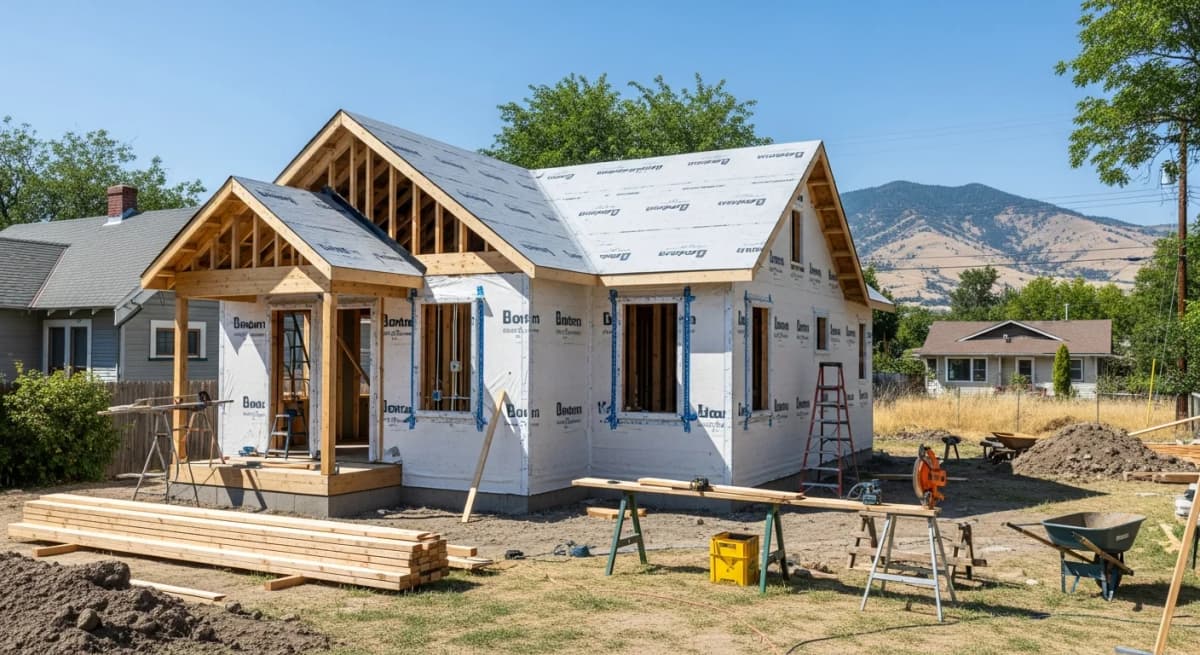
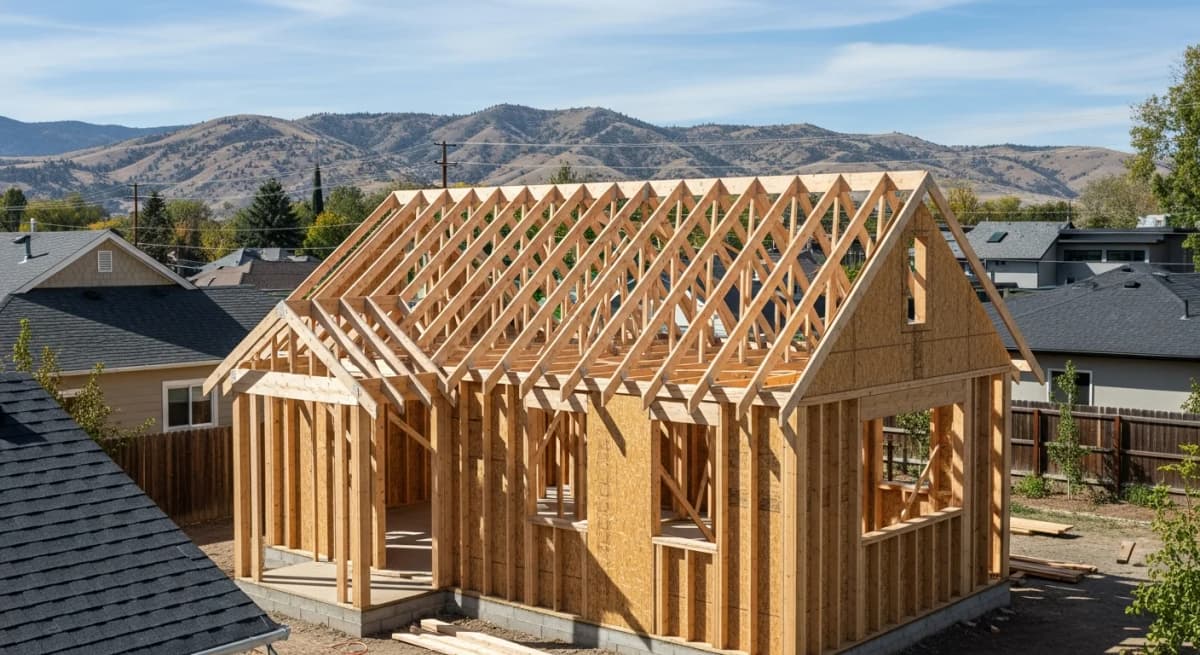
Months 3 - 4Foundation work begins with footings excavated to the frost line depth required by Boise building code (typically 24 inches in the Treasure Valley). Depending on the design, the foundation may be a monolithic slab, stem wall with crawl space, or full basement. Rebar is placed, anchor bolts are set, and concrete is poured. A minimum 7-day cure period is required before framing begins (longer in cold weather — concrete must be protected from freezing for at least 72 hours after placement). The foundation inspection is one of the most critical checkpoints in the project. Once framing starts, the structure takes shape quickly: walls are raised, roof trusses or rafters are set, roof sheathing and underlayment are installed, and the building is dried in. A framing inspection by the City of Boise is required before proceeding to the next phase.
- Footing excavation and rebar placement
- Concrete pour and curing (7+ days)
- Foundation inspection (City of Boise)
- Wall framing and sheathing
- Roof truss installation and sheathing
- Framing inspection and dry-in
Phase 4: Rough Plumbing, Electrical & HVAC
Months 4 - 5With the structure dried in, the mechanical trades move in simultaneously. Licensed plumbers run supply and drain lines for the kitchen, bathroom, and laundry (if included). Water heater location is roughed in — tankless units are increasingly popular in Boise ADUs for space efficiency. Electricians run all circuits from the new subpanel: kitchen appliance circuits (dedicated 20-amp for refrigerator, dishwasher, microwave, and disposal), bathroom GFCI circuits, lighting circuits, smoke and CO detector wiring, and exterior circuits. HVAC installation includes ductwork (or mini-split line sets for ductless systems, which are the most common choice for Boise ADUs due to efficiency and space savings). Each trade must pass individual rough inspections by the City of Boise before walls can be closed up.
- Supply and drain plumbing rough-in
- Electrical panel and circuit wiring
- HVAC ductwork or mini-split line sets
- Gas line installation (if applicable)
- Low-voltage wiring (data, cable, security)
- Rough mechanical inspections (all trades)
Phase 5: Insulation, Drywall & Exterior
Months 5 - 6After all rough inspections pass, insulation is installed. Boise's climate zone 5B requires R-21 wall insulation, R-49 ceiling insulation, and R-30 floor insulation (over crawl spaces) per the International Energy Conservation Code. Spray foam, fiberglass batts, or blown-in cellulose are common choices. An insulation inspection verifies coverage and R-values before drywall is hung. Drywall is installed, taped, mudded (three coats), and sanded. Priming and painting follow. Simultaneously on the exterior, siding is installed (fiber cement, wood, or engineered wood are popular in Boise neighborhoods), exterior trim is finished, gutters are hung, and exterior paint or stain is applied. Windows and exterior doors are installed and flashed during framing but receive final trim and weathersealing during this phase.
- Wall, ceiling, and floor insulation
- Insulation inspection (energy code compliance)
- Drywall hang, tape, mud, and sand
- Interior priming and painting
- Exterior siding and trim installation
- Gutters, downspouts, and exterior paint
Phase 6: Interior Finishes, Kitchen & Bathroom
Months 6 - 7This is where the ADU transforms from a construction site into a livable space. Cabinets are installed in the kitchen and bathroom, followed by countertop templating, fabrication, and installation. Flooring goes in throughout — LVP is the most popular choice in Boise ADUs for its durability, water resistance, and ease of maintenance. Tile is installed in the bathroom (shower surround, floor, and backsplash). Plumbing fixtures are set: kitchen sink and faucet, bathroom vanity, toilet, and shower/tub fixtures. Electrical finish work includes light fixtures, switches, outlets, and cover plates. Interior doors are hung, trim and base molding are installed, and all hardware (door handles, cabinet pulls, towel bars) is mounted. Appliances are delivered and installed: range, refrigerator, dishwasher, microwave, washer and dryer connections (if included).
- Kitchen and bathroom cabinet installation
- Countertop templating, fabrication, and install
- Flooring installation (LVP, tile, or hardwood)
- Bathroom tile and shower surround
- Plumbing and electrical fixture installation
- Appliance delivery and hookup
Phase 7: Final Inspections & Certificate of Occupancy
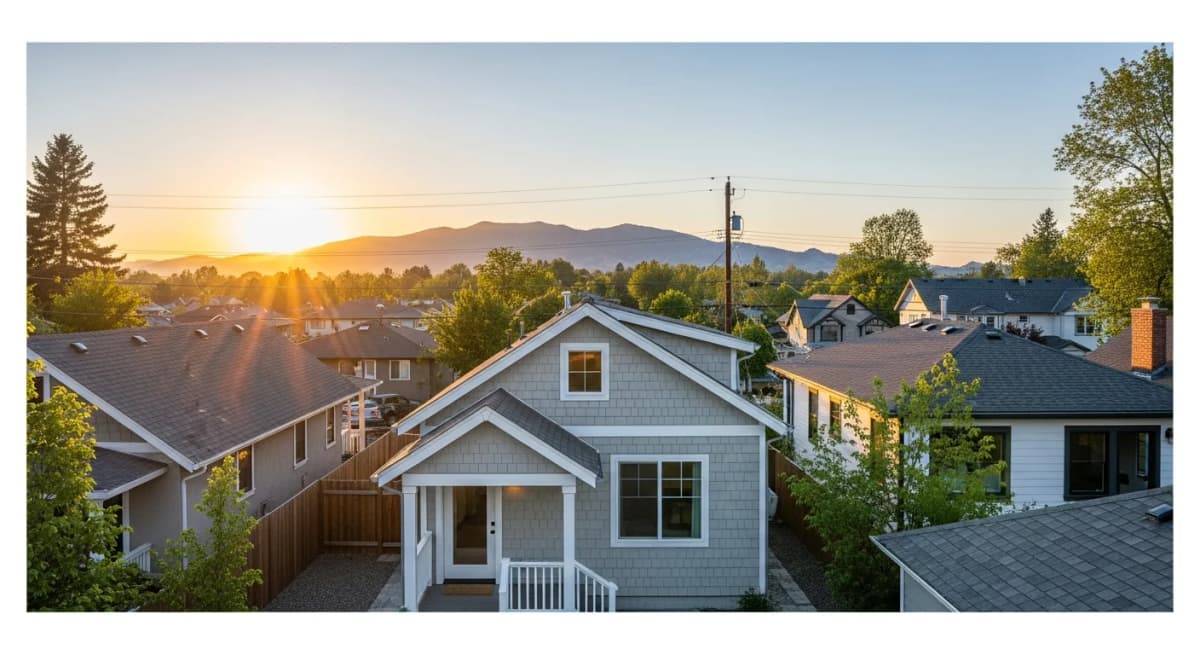
Months 7 - 8The final phase involves completing all remaining punch list items and scheduling the battery of final inspections required by the City of Boise. Final inspections include building, electrical, plumbing, mechanical, and fire safety. Utility connections are finalized: the water meter is activated by Boise City Public Works, the sewer connection is completed and inspected, Idaho Power connects permanent electrical service (the project runs on a temporary power pole during construction), and Intermountain Gas activates the gas meter. Once all inspections pass, the City of Boise issues the Certificate of Occupancy (CO) — the legal document that authorizes the ADU to be occupied as a dwelling unit. Final landscaping, driveway or pathway work, and site cleanup complete the project. We conduct a detailed walkthrough with you, review all systems, provide warranty documentation, and hand over keys.
- Final building, electrical, plumbing inspections
- Water meter activation (Boise City Public Works)
- Permanent electrical service (Idaho Power)
- Certificate of Occupancy issued by City of Boise
- Final landscaping and site restoration
- Owner walkthrough and warranty handoff
Permitting is one of the most unpredictable variables in any ADU project. The City of Boise has become increasingly supportive of ADU construction, but the review process still requires patience and thorough preparation. Here is what to expect from the permitting process in the Boise area.
City of Boise Plan Review
The City of Boise Planning and Development Services department reviews all ADU construction plans for compliance with zoning, building code (IRC), energy code (IECC), fire code, and accessibility requirements. Plan review for new ADU construction typically takes 4 to 8 weeks from the date of a complete submission. Garage conversions with minimal structural changes may clear review in 3 to 4 weeks. Plans that require revisions are returned with correction comments, and resubmission adds 2 to 3 weeks per review cycle. Iron Crest Remodel submits construction-ready documents with all required details to minimize revision requests.
Ada County vs. City of Boise Permits
If your property is within Boise city limits, your permits go through the City of Boise Planning and Development Services. Properties in unincorporated Ada County are reviewed by Ada County Development Services, which has its own review timeline (often slightly shorter but with different zoning requirements). Some Boise-area communities like Eagle, Meridian, and Star have their own permitting departments with varying ADU regulations. It is critical to confirm your jurisdiction before beginning the design process, as ADU size limits and setback requirements still vary between jurisdictions until every city conforms to Idaho's 2026 ADU law (Senate Bill 1354) by October 1, 2026.
ACHD Access Review
The Ada County Highway District (ACHD) reviews any project that may affect the public right-of-way. For ADU projects, ACHD reviews driveway access, curb cuts, and potential impacts on street parking and traffic flow. If your ADU requires a new driveway approach or modification to an existing one, ACHD must approve the design. This review typically runs concurrently with City plan review and takes 2 to 4 weeks. Properties on ACHD-maintained roads (which includes most streets in the Boise metro area) are subject to this review regardless of whether the property is in the City of Boise or unincorporated Ada County.
Sewer & Water Connection Timing
Utility connections are among the longest lead-time items in ADU construction. Boise City Public Works handles water and sewer connections within city limits. A water service connection application typically requires 4 to 6 weeks for processing and scheduling. Sewer connection permits must be obtained separately and require a sewer availability letter from the City. If the existing sewer lateral has sufficient capacity, connecting the ADU to the same lateral is usually approved. If a new lateral is needed, excavation in the public right-of-way requires coordination with ACHD and can add 3 to 5 weeks to the timeline. We initiate utility applications as early as possible — often during the design phase — to prevent utility connections from becoming the critical path delay.
Understanding common delay factors helps you plan proactively. While no construction project is entirely predictable, an experienced ADU contractor anticipates these bottlenecks and builds buffer time into the schedule. Here are the most common delay sources specific to Boise ADU projects.
Permit Revisions & Resubmissions
Incomplete or non-compliant plan submissions are the number one cause of permit delays. Each revision cycle adds 2 to 4 weeks to the permitting timeline. Common rejection reasons include insufficient structural details, missing energy code calculations, setback violations, and incomplete site plans. The City of Boise reviewers are thorough — they check every detail against the International Residential Code and local amendments. Iron Crest Remodel maintains a detailed pre-submission checklist based on years of experience with Boise plan reviewers to ensure first-pass approval whenever possible.
Utility Hookup Scheduling
Utility connections operate on the utility company's schedule, not the contractor's. Boise City Water connections can take 4 to 6 weeks from application to installation. Idaho Power transformer installations or service upgrades can require 8 to 12 weeks during peak construction season. Intermountain Gas line extensions depend on the distance from existing infrastructure. We submit utility applications during the design phase — months before connections are needed — to ensure these long-lead items do not hold up the final phases of construction.
Concrete Curing in Cold Weather
Boise winters bring temperatures that regularly drop below freezing from November through February. Freshly poured concrete must be maintained above 50 degrees Fahrenheit for proper curing and must be protected from freezing for at least 72 hours after placement. Cold-weather concrete work requires heated enclosures, insulated blankets, and sometimes accelerating admixtures — all of which add cost and extend the curing timeline. Foundation work poured in December or January may need 14 to 21 days before framing can begin, compared to 7 days in warmer months. This is why we strongly recommend scheduling foundation pours between April and October.
Material Lead Times
Critical materials can have extended lead times that impact the construction schedule. Windows typically require 4 to 8 weeks from order to delivery. Specialty doors may take 6 to 10 weeks. HVAC equipment (particularly mini-split systems) can have 3 to 6 week lead times during peak season. Custom cabinets require 8 to 12 weeks. Roofing materials, particularly metal roofing panels, can take 4 to 6 weeks. We order long-lead items during the permitting phase so materials arrive on-site when needed. Material substitutions are discussed upfront as a contingency strategy.
Inspection Scheduling
ADU construction requires numerous inspections at specific milestones: foundation, framing, rough electrical, rough plumbing, rough mechanical, insulation, and final inspections for each trade. The City of Boise inspection division schedules inspections based on request date and inspector availability. During peak construction season (May through September), inspection wait times can extend to 3 to 5 business days, compared to 1 to 2 days in the off-season. A failed inspection requires corrections and reinspection, adding 3 to 7 days. We schedule inspections proactively and ensure all work is inspection-ready before requesting each milestone inspection.
Site Access & Soil Conditions
Boise properties vary significantly in soil conditions and site accessibility. Some areas near the Boise River have high water tables that require dewatering during excavation. Properties in the Boise foothills may encounter rocky soil or caliche (ceite-like calcium carbonate deposits) that require specialized excavation equipment and more time. Tight backyard access that prevents standard equipment from reaching the build site may require smaller equipment or hand-digging, which extends the foundation phase. A thorough geotechnical assessment during the design phase helps identify these issues before construction begins.
Boise's four-season climate has a direct impact on ADU construction scheduling. Different phases of the project are affected differently by weather and seasonal conditions. Strategic project timing can shave weeks off your overall timeline and reduce weather-related costs.
Foundation Work: Best April Through October
Concrete work is the most weather-sensitive phase of ADU construction. Boise temperatures from April through October consistently support proper concrete curing without the need for heated enclosures or insulated blankets. The frost line in the Treasure Valley requires footings at approximately 30 inches deep, and frozen ground in winter can complicate excavation. Pouring foundation in warm months ensures optimal curing (7-day minimum before loading), reduces the risk of cold-weather cracking, and eliminates the cost premium for winter concrete protection. If your project schedule requires a winter foundation pour, budget an additional $2,000 to $4,000 for cold-weather protection measures and expect an extended curing period.
Framing: Year-Round With Crew Scheduling
Framing can proceed in nearly any Boise weather condition. Lumber is not significantly affected by cold temperatures, and framing crews are accustomed to working in winter conditions. The primary winter consideration is reduced daylight hours (Boise receives only about 9 hours of daylight in December versus 15 hours in June), which can slow daily productivity by 20 to 30 percent. Heavy snow events may cause 1 to 2 day work stoppages, but Boise typically averages only 4 to 5 significant snow events per winter. Rain is more disruptive than cold — framing lumber that gets repeatedly soaked can swell and require drying before sheathing and insulation. We protect framed structures with tarps and prioritize getting the roof sheathed and dried in quickly.
Exterior Finishes: Best April Through November
Exterior siding installation, painting, and staining require temperatures consistently above 40 to 50 degrees Fahrenheit for proper adhesion and curing. In Boise, this window runs from approximately mid-March through late November, though October and November can be unpredictable. Fiber cement siding can be installed in cooler temperatures than wood siding because it does not require field painting (it comes pre-primed or pre-finished). Exterior painting is the most temperature-sensitive exterior task — most exterior paints require a minimum of 50 degrees during application and for 4 hours after. Scheduling exterior finishes for completion before Thanksgiving is a reliable target for Boise ADU projects.
Interior Work: Year-Round
Once the structure is dried in (roof on, windows installed, exterior weather barrier complete), all interior work proceeds regardless of exterior conditions. Temporary heat is provided during winter months using propane heaters or the permanent HVAC system (once installed). Insulation, drywall, painting, flooring, cabinetry, plumbing fixtures, electrical fixtures, and all finish work are entirely weather-independent. This is why starting design and permitting in late fall or winter is the optimal strategy: you complete the planning phases during months when outdoor construction is least efficient, break ground in spring when conditions are ideal for site work and foundation, and have the structure dried in before the following winter so interior work continues uninterrupted through the cold months.
The Ideal Boise ADU Timeline Strategy
Based on years of ADU construction experience in the Boise market, the most efficient project timeline follows this seasonal pattern:
- November - January: Design development, engineering, material selections, and construction document preparation. Use the winter months for all planning and decision-making.
- February - March: Permit submission, utility applications, and material ordering. Plans are in review while you wait for spring.
- April - May: Permits issued, site prep, excavation, and foundation pour in ideal concrete weather.
- June - August: Framing, roofing, rough mechanicals, and exterior work during the longest, driest days.
- September - November: Interior finishes, final inspections, utility connections, and certificate of occupancy. Move-in ready before winter.
Common questions about ADU construction timelines and scheduling in the Boise area.
How long does it take to build a detached ADU in Boise?
A detached ADU in Boise typically takes 6 to 10 months from initial design through certificate of occupancy. The design and permitting phase accounts for 2 to 3 months, while active construction runs 4 to 7 months depending on size, complexity, foundation type, and weather conditions. Starting design in late fall or winter positions you for a spring groundbreak, which is the most efficient seasonal strategy in the Treasure Valley.
How long does the City of Boise take to approve ADU permits?
The City of Boise plan review for ADU construction typically takes 4 to 8 weeks for a complete submission. Simple garage conversions may clear review in 3 to 4 weeks, while new detached structures with complex site plans can take 6 to 8 weeks. Incomplete submissions or plans that require revisions can add 2 to 4 additional weeks. Iron Crest Remodel submits complete, code-compliant plans to minimize review cycles and avoid resubmission delays.
What is the fastest type of ADU to build in Boise?
A garage conversion is the fastest ADU type in Boise, typically completing in 3 to 5 months total including design and permits. Because the shell structure already exists, you skip foundation work, framing, roofing, and exterior siding entirely. The project focuses on interior buildout: insulation, drywall, electrical, plumbing, HVAC, flooring, kitchen, and bathroom installation. This makes garage conversions both faster and more affordable than ground-up construction.
Can I build an ADU in Boise during winter?
Yes, but with strategic planning. Interior work (electrical, plumbing, insulation, drywall, finishes) can proceed year-round in Boise. However, foundation work and concrete pouring are best scheduled between April and October when temperatures consistently stay above 40 degrees Fahrenheit. Framing can proceed in winter with proper crew scheduling. Exterior siding and painting are best completed before November. Starting design and permitting in winter for a spring groundbreak is the ideal Boise ADU strategy.
What causes the most delays in Boise ADU projects?
The three most common ADU delay factors in Boise are permit revisions (adding 2 to 4 weeks if plans need corrections), utility hookup scheduling (Boise City Water connections can take 4 to 6 weeks to schedule, and Idaho Power transformer installations may require 8 to 12 weeks), and weather-related concrete delays during cold months. Material lead times for windows, HVAC equipment, and specialty finishes can also impact the schedule. Working with an experienced ADU contractor who anticipates these bottlenecks is the best delay prevention strategy.
Explore our complete library of ADU construction guides for Boise homeowners.
ADU Construction Service
Our full ADU construction service overview
ADU Cost Guide
Detailed pricing from $80k to $300k+
Boise ADU Permits
City of Boise ADU regulations and requirements
ADU Design Ideas
Floor plans, layouts, and style inspiration
Our Projects
See completed ADU projects in Boise
Get a Free Estimate
Request your personalized ADU construction quote
Ready to Start Planning Your ADU?
Contact Iron Crest Remodel for a free ADU consultation. We will walk you through the timeline for your specific project, review your lot for buildability, and help you plan the most efficient construction schedule for your Boise ADU.