
Why Boise Shower Glass Etches in 18 Months — and the 4 Coatings That Actually Last
Shower glass etching is permanent — once it's there, no cleaner reverses it. In Boise's up to ~13 gpg (avg ~6) water, uncoated clear glass clouds in 12–18 months. Here's the surface chemistry behind it and the four coating technologies that actually survive Treasure Valley water.
Quick answer
Partially, in some cases, and only for early-stage etching. Diamond polishing or cerium oxide buffing can recover light surface haze if the etching is shallow (less than 6 months of progression from first visibility).
Most Boise homeowners discover shower-glass etching the same way: at month 14 or 15 after installation, the new frameless glass that looked perfect on day one has a haze across the lower half that won't squeegee off, won't wipe off, and gradually deepens until the panel needs replacement. This is etching — a permanent surface chemistry change in the glass itself — and in Boise's harder water zones (up to ~13 grains per gallon; ~6 on average), it happens fast. The frustrating part is that the solution exists and is well-documented; most homeowners just don't hear about it until after the install is finished and the damage has started.
This article goes deeper than the standard "use a squeegee" advice. The four coating technologies on the market handle Boise water with measurably different lifespans, are applied at different stages of the install, and carry different warranty terms. The chemistry behind glass etching also explains why some surface protections work and others don't — relevant if you're considering the cheaper DIY option versus the factory-applied coating that adds $200–$500 to the glass order.
For the broader hard-water context (faucets, appliances, tile, surface protection across kitchen and bath), our Boise hard water fixture guide is the comprehensive resource. This page goes deeper on one specific surface — shower glass — where the chemistry, coating options, and lifespan numbers warrant a dedicated article.
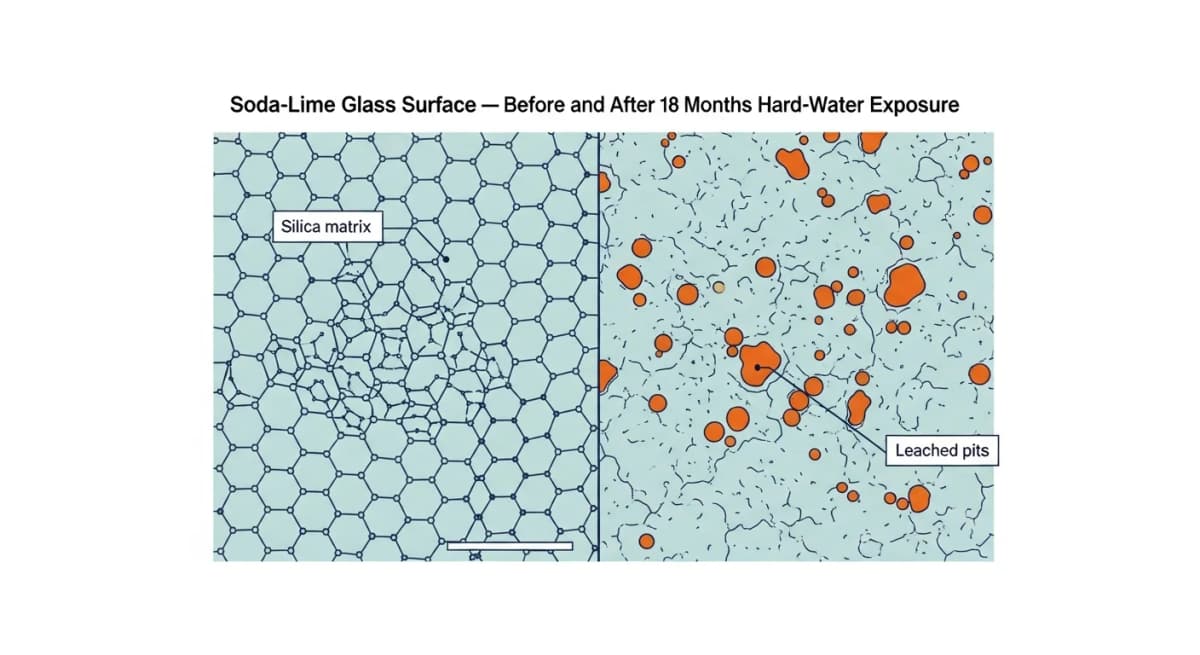
Standard shower glass is soda-lime float glass — silicon dioxide (SiO₂) network with sodium and calcium oxides mixed in to lower the melting temperature and modify the structural properties. The silica network on the surface is chemically reactive with water, slowly. In pure distilled water, the reaction is so slow it's invisible over decades. In water with dissolved calcium and magnesium ions (Boise water at up to 13 gpg in the hardest zones), the reaction accelerates dramatically because the dissolved minerals catalyze silica leaching from the surface.
The mechanism: as water sits on the glass after a shower, calcium ions exchange with surface sodium ions in the silica matrix, and the resulting alkaline microenvironment dissolves silica from the surface in microscopic pits. Each shower deposits a thin water film that goes through this cycle until it evaporates. Over thousands of cycles, the surface becomes measurably pitted at the micron scale — invisible to the naked eye initially, then progressively visible as light scatters off the roughened surface. The transition from invisible to visible etching typically occurs at 12–18 months in unprotected Boise glass.
Two things accelerate the process. First, higher water temperature (hotter showers run more aggressive reaction kinetics). Second, alkaline soaps and cleaners — most body washes are mildly alkaline and shift the surface pH further from neutral, accelerating the silica dissolution. The combination of 110°F water, hard water (up to ~13 gpg in Boise's well-fed zones), and standard pH-9 body wash creates the worst-case chemistry for shower glass.
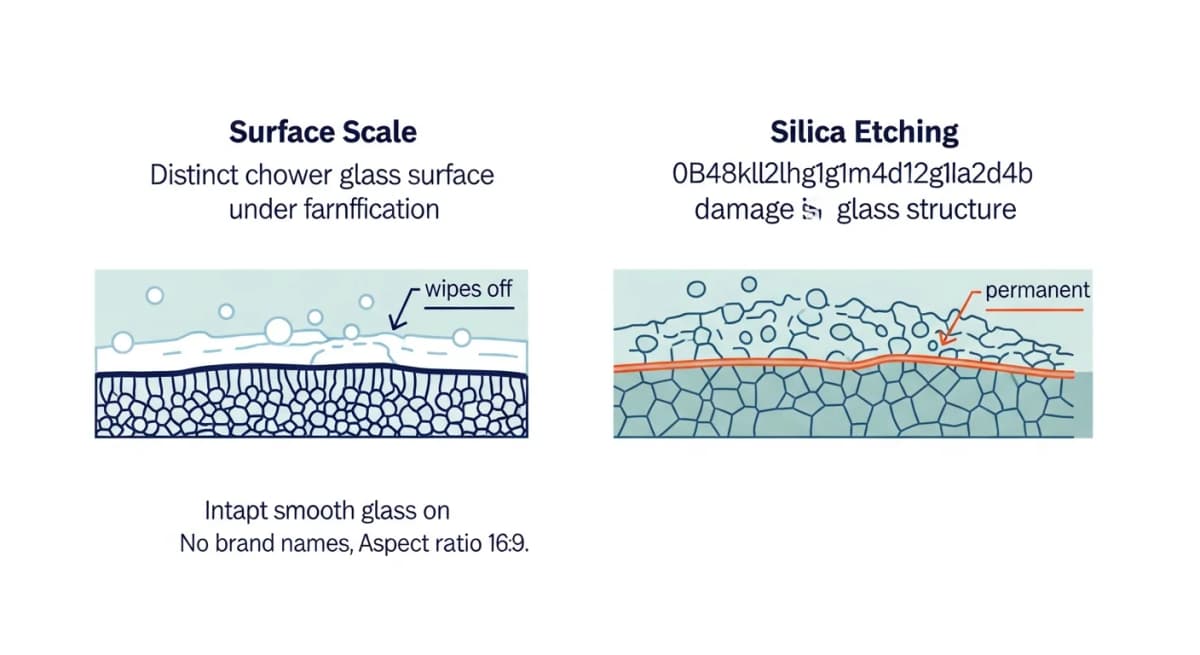
Shower glass in Boise commonly shows two visible issues that look similar but are chemically distinct. Surface scale is calcium and magnesium deposits sitting ON the glass — typically a white chalky residue visible after evaporation. Scale is removable with vinegar, citric acid, or commercial lime scale removers; the underlying glass is unchanged.
Etching is the silica leaching described above — a permanent surface modification of the glass itself. Etched glass has a hazy, frosted appearance that gradually deepens. No cleaner reverses etching because there's no deposit to remove; the glass surface is physically rougher than it was when installed.
The diagnostic test: spray vinegar or CLR on the panel and wait 5 minutes, then squeegee. If the haze is gone, it was scale; if the haze persists, it's etching. Most Boise shower glass past 18 months without coating has both — scale on top of progressively-developing etching beneath.
Prevention strategies differ for each. Scale is prevented by water softening (eliminates the dissolved minerals) and routine squeegeeing (prevents evaporation deposits). Etching is prevented by hydrophobic surface coatings that make water sheet off rather than sit on the surface, breaking the reaction-cycle exposure time. The two strategies stack — a softener plus a coating is the gold-standard combination for Boise shower glass.
ShowerGuard is a hot-applied silica-bond coating manufactured by Guardian Glass and applied during the float-glass manufacturing process. The coating is fused to the glass at the molecular level during production, which makes it the most durable of the available shower-glass treatments. It cannot be applied to existing glass — only specified at the time of glass order, before the panel is fabricated.
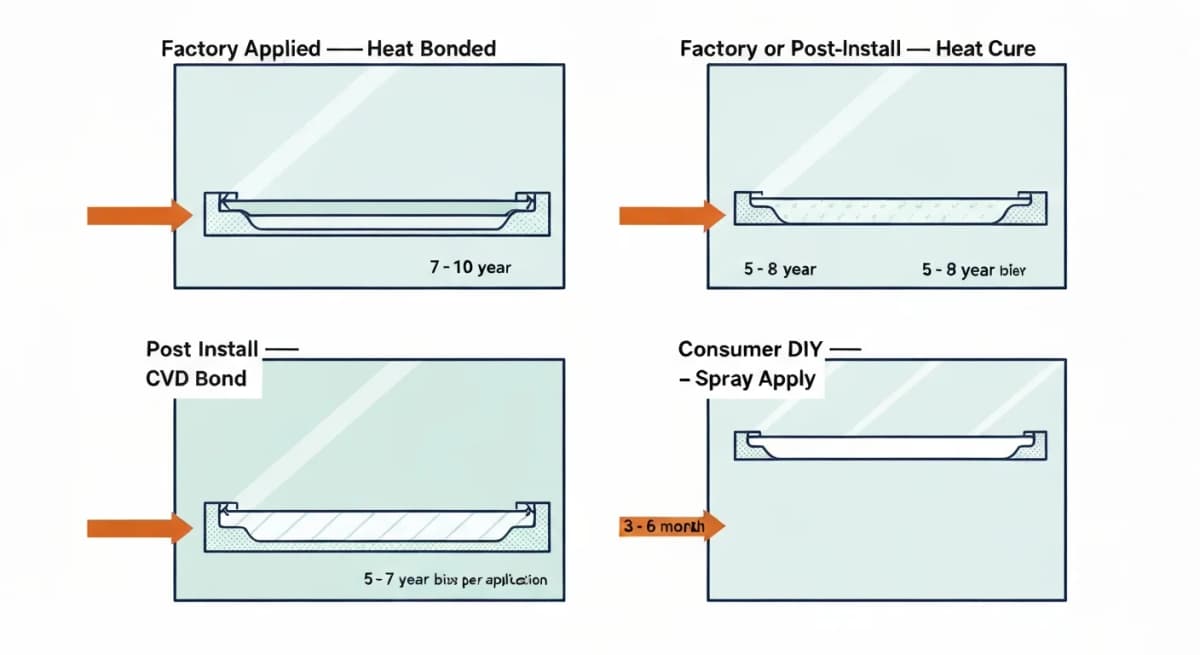
In Boise's up to ~13 gpg (avg ~6) water, ShowerGuard-treated panels typically maintain clarity through year 7–10 with proper maintenance, compared to 12–18 months for uncoated glass. The coating itself doesn't wear off in the traditional sense — it's permanently bonded — but the protective effect can be compromised by aggressive cleaning agents (especially fluoride-containing cleaners, which dissolve the silica bond) and by physical abrasion from rough cleaning pads.
The cost premium for ShowerGuard glass is typically $150–$400 over standard shower glass depending on enclosure size and fabricator markup. Several Treasure Valley glass shops stock or special-order ShowerGuard, including most that supply premium shower enclosures. Lead time may be 2–4 weeks longer than standard glass.
New shower enclosures where the glass order can be specified up-front. The most durable option but requires coordinating with the glass spec at design phase.
Can't be applied retroactively. Limited finish-color options on the glass itself (most ShowerGuard is clear). Higher upfront cost than post-install coatings.
EnduroShield is a hydrophobic nano-coating that can be applied at the glass fabricator (factory) or as a professional post-install service after the glass is in the home. The factory version uses heat-cure application and bonds more durably than the field version. In Boise water, factory-applied EnduroShield typically lasts 5–8 years; field-applied versions last 3–5 years before re-application is recommended.
The chemistry is silane-based — a thin layer of organosilicon compounds that bond to the glass surface and produce a hydrophobic effect (water beads up and sheets off rather than wetting the surface). This dramatically reduces the residence time of mineral-laden water on the glass, slowing the etching reaction. EnduroShield is non-toxic, food-safe, and approved for use on residential glass.
The factory-applied version typically adds $100–$300 to the glass order. The field-applied version (which our team can install during a shower remodel completion or as a standalone service) costs $200–$500 depending on enclosure size and includes a 3-year warranty when applied per spec. Both versions need re-application at the end of their effective lifespan to maintain protection — EnduroShield doesn't compound over reapplications; it replaces the existing layer.
Mid-range Boise shower remodels where the homeowner wants protection but can't justify the factory-applied premium for ShowerGuard, or for existing glass that needs a retrofit coating.
Field-applied version has shorter lifespan than factory. Both versions need eventual reapplication.
Diamon-Fusion is a chemical vapor-deposition (CVD) coating that's applied to glass after fabrication, typically by a Diamon-Fusion-certified installer. The coating creates a covalent bond with the silica in the glass, producing a hydrophobic protective layer that's chemically similar to factory-applied options but installed in the field.
In Boise water, professionally-applied Diamon-Fusion typically performs at the upper end of post-install coatings — 5–7 year lifespan with proper maintenance. Warranty terms are set by the applicator and the manufacturer rather than by us, so get the current term in writing from the shop doing the work before you pay the premium. Application requires the glass to be thoroughly cleaned and conditioned before treatment, which is part of the installer's process.
Cost: $300–$700 for a typical shower enclosure depending on size and fabricator pricing. Several Treasure Valley glass shops are Diamon-Fusion certified; we work with two of them on installations where the homeowner specifies this option. Worth noting: Diamon-Fusion can also be applied to other bathroom glass surfaces (vanity mirrors, decorative panels) during the same service call.
Upscale Boise shower remodels with frameless or oversized enclosures where the appearance investment justifies the longer-warranty coating.
Higher cost than EnduroShield post-install. Limited installer availability in the Treasure Valley (only a few certified shops).
Spec your shower glass coating before the glass is ordered
The coating decision is easiest to make at design phase, before the glass shop has fabricated the panels. Schedule a Boise shower remodel consultation and we'll plan the coating spec, softener integration, and maintenance routine alongside the rest of the build.
Aquapel, Rain-X for Shower Doors, and similar consumer products are spray-on hydrophobic treatments designed for periodic homeowner application. They use the same silane-based chemistry as EnduroShield (essentially the same class of compound at lower concentration with simpler application) and produce real hydrophobic protection — but with shorter durability per application.
In Boise water, consumer DIY treatments typically last 3–6 months per application before noticeable reduction in beading. Reapplied on schedule (every 3 months) they can extend uncoated-glass life from 12–18 months to 4–6 years before serious etching develops. That's meaningfully better than no coating but meaningfully less than any professional option.
Cost: $15–$30 per bottle, with one bottle covering 4–6 applications of a standard shower enclosure. Annual cost is $30–$80 if applied quarterly. The trade-off is consistency — homeowners who reapply on schedule get good results; those who treat it once and forget see protection degrade and etching develop on the normal timeline.
Budget shower remodels, rental properties, or interim protection while planning a future upgrade. Also useful as a maintenance overlay on top of factory or post-install coatings to extend their effective life.
Discipline required. The 3-month reapplication interval is real — drift to 6 months and protection drops noticeably.
The honest alternative to coating is choosing glass that doesn't show etching even when it occurs. Frosted glass (acid-etched at the factory) and textured glass (pattern rolled into the surface during manufacture) both have surfaces that are not "clear" to begin with, so the additional roughness from hard-water etching is essentially invisible. This is a legitimate strategy for households that don't want to maintain coatings and don't want to deal with replacing glass at year 5.
The trade-off is the design language. Frosted glass softens the visual but loses the clean modern look that drives the popularity of clear frameless showers. Textured glass (Cracked Ice, Rain, Linear Drop, and similar patterns) adds visual interest but is also less contemporary. Both options work better in design-language contexts where the texture is intentional (transitional, traditional, spa-style) than in stripped-down modern bathrooms where clear glass is the design intent.
Cost-wise, frosted and textured glass typically cost the same as clear glass plus a $50–$200 fabrication premium for the texture work. No coating is required. Maintenance is just regular cleaning. Lifespan is essentially indefinite as far as etching is concerned because etching doesn't visibly change a surface that's already textured.
Households who want the structural and accessibility benefits of a glass enclosure but don't want the maintenance burden of clear glass.
Design-language change. Less modern aesthetic. Some loss of visual transparency.
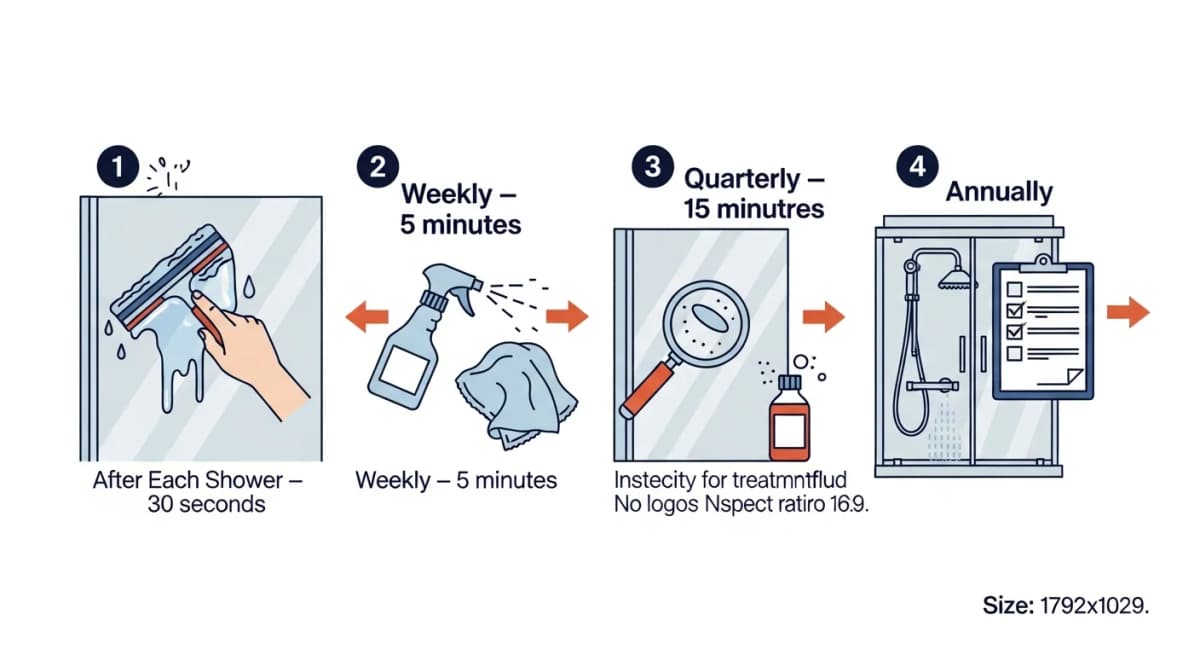
Regardless of coating choice, the routine that gets factory-coated glass to its full lifespan is consistent across our project history:
After every shower (30 seconds): Squeegee the entire glass panel from top to bottom. This removes the standing water that drives the etching reaction during evaporation. The single highest-leverage habit for shower glass longevity in Boise.
Weekly (5 minutes): Spray a pH-neutral glass conditioner (Method Daily Shower Spray, Mrs. Meyer's, or similar) on the glass and squeegee or wipe. This neutralizes any residual alkaline soap film and removes early-stage mineral deposits before they become permanent.
Quarterly (15 minutes): Inspect for early-stage etching haze and reapply consumer-grade hydrophobic treatment if using one as an overlay. Quarterly reapplication on professional coatings is optional but extends their effective life by 20–40%.
Annually: If using a consumer-DIY treatment as the primary protection, do a full deep clean and reapplication. If using a professional coating, perform a clarity assessment — if performance is degrading, schedule the reapplication or recoating service.
The reality check: homeowners who do the daily squeegee consistently get 5–8 years on factory-coated glass even without weekly maintenance. Homeowners who skip the squeegee get etching by year 2 even with weekly cleaning. The squeegee is the rate-limiting factor.
If prevention fails and the glass etches, the realistic options are: live with it (haze gradually deepens, eventually becomes opaque), professional resurfacing (limited effectiveness past moderate etching), or panel replacement. Resurfacing through diamond polishing can recover lightly-etched glass but is rarely cost-effective for severely etched panels — the labor cost approaches or exceeds replacement.
Replacement cost for a typical Boise frameless shower enclosure runs $1,800–$4,500 installed depending on panel size, hardware, and whether the enclosure design is reusable (sometimes the hardware survives but the glass needs replacement). Custom shapes, oversized panels, and high-hardness tempered specifications run higher. Compare this to $200–$700 for proper coating at install time — the prevention math is straightforward.
Worth noting: most homeowner's insurance policies in Idaho do not cover glass damage from water hardness as a claimable loss because it's classified as wear-and-tear / maintenance rather than accidental damage. Coverage may apply for impact damage or installation defects but not for etching from hard water exposure.
Our standard practice when planning a shower remodel in Boise is to discuss glass coating during the design phase, not at the glass-order phase. By the time you're sitting at the glass-shop counter selecting hardware, the coating decision is constrained by what they stock and what they can apply. Earlier in the process — when we're scoping the bathroom remodel — we have full flexibility to spec ShowerGuard for the highest-durability option, EnduroShield for a balanced cost-performance choice, or factory-coordinated Diamon-Fusion through a glass shop licensed to apply it. The decision usually comes down to budget tier and to the warranty the applicator will put in writing.
For homes with existing untreated glass that's still in good condition, we run EnduroShield or Diamon-Fusion retrofits as standalone services — typically $300–$700 for a standard enclosure with 3–5 year (EnduroShield field) or 5–7 year (Diamon-Fusion) protection. This is a worthwhile small project for homeowners who recently bought a Boise home with a 1–2 year old shower and want to protect the investment before etching starts. For broader hard-water strategy across the whole home, see how we plan around water hardness during Boise shower remodels.
Can I remove existing etching from my shower glass?
Partially, in some cases, and only for early-stage etching. Diamond polishing or cerium oxide buffing can recover light surface haze if the etching is shallow (less than 6 months of progression from first visibility). Past that point, the surface roughness penetrates too deeply for cost-effective polishing — the labor is $400–$900 for a single panel restoration and the result is rarely back to original clarity. For severely etched glass (12+ months past first visibility), replacement is the honest answer. Vinegar, CLR, and acid-based cleaners do not remove etching because the damage is structural in the glass, not a surface deposit. Some products claim to 'remove water spots' from glass; those work on scale deposits sitting on top of intact glass, not on etched glass.
How much does a whole-house water softener actually extend shower glass life in Boise?
Significantly. With a properly functioning whole-house softener removing the calcium and magnesium that drives the etching reaction, uncoated clear glass typically performs at the level that coated glass does in unsoftened water — 5–8 years without visible etching versus 12–18 months without the softener. The math: a $1,500–$3,000 softener installed during a bathroom remodel pays back through coating savings (if you skip ShowerGuard and Diamon-Fusion across multiple bathroom installations), extended shower-glass life (no panel replacement at year 4–5), reduced cleaning labor, and the broader hard-water benefits to dishwashers, water heaters, and other fixtures throughout the home. Most upscale Boise bathroom remodels we run include a softener discussion in the design phase because the integrated math heavily favors having one.
Will frosted or textured glass also etch — I just won't see it?
Yes, technically, but in practice it doesn't matter. The hard-water reaction with the silica matrix happens regardless of the surface texture, so frosted and textured glass do experience the same chemical process. The reason etching is invisible on these glass types is that the surface starts rough; additional roughness from etching doesn't visually change the appearance. After 5–10 years, the surface may be slightly different at a microscopic level than it was at install, but the visual appearance is unchanged. Texturing is essentially a 'maintenance shortcut' strategy — accepting that the glass will chemically interact with the water but eliminating the visible consequence. For households tired of glass-maintenance demands, this is a legitimate and durable choice.
Is the factory-applied coating worth the upcharge over the post-install coating?
It depends on the household's expected ownership period and maintenance discipline. Factory-applied coatings (ShowerGuard especially) have meaningfully longer practical lifespans — 7–10 years in Boise water versus 5–8 for the best post-install options. For homeowners who plan to be in their home long-term and prefer to spec the glass right once rather than recoating every 5–6 years, the $100–$300 upcharge typically pencils out. For homeowners who may sell within 5–7 years, post-install coatings deliver adequate protection at lower upfront cost, and the next homeowner can decide whether to recoat. Both are reasonable choices; the decision is about ownership horizon and maintenance philosophy, not about which coating is 'better' in absolute terms.
Do shower glass coatings affect transparency or color?
Properly applied, no — all four coating technologies listed above are designed to be optically clear and invisible once cured. ShowerGuard, EnduroShield, and Diamon-Fusion are all specified as optically clear treatments; if visible clarity is a concern, ask the fabricator for the manufacturer's current transmittance data on the exact product being applied. Consumer-DIY treatments like Aquapel and Rain-X can produce slight haze if over-applied or applied inconsistently — the workaround is light application and proper buffing during installation. We've never had a client complaint about reduced clarity from a properly-applied professional coating, and we've installed coated glass in showrooms-quality bathrooms across Eagle, Harris Ranch, and the foothills.
Can I apply ShowerGuard or EnduroShield to my existing glass myself?
ShowerGuard, no — it's applied during glass manufacture and isn't sold as a consumer product. EnduroShield does have a consumer-grade version available through hardware stores and direct-to-consumer channels, but the field-applied professional version is meaningfully more durable because of the heat-cure step and the application equipment. For homeowners who want a DIY approach, Aquapel and similar are designed for it; for homeowners who want the durability advantage of professional coatings, the application has to be professional. The middle option — consumer EnduroShield — produces results between Aquapel-grade and factory-applied performance, with about 1–2 year lifespan in Boise water.
How long does it take to apply a professional glass coating?
Field-applied EnduroShield and Diamon-Fusion both require the glass to be thoroughly cleaned, dried, and chemically conditioned before coating application — typically 60–90 minutes of prep for a standard shower enclosure. The coating itself applies in 15–30 minutes, then requires a cure time of 30–60 minutes before the shower can be used. Total appointment time is usually 2–3 hours for a single enclosure. The first 24 hours after application, the homeowner should keep the shower glass dry to allow full cure. For coordination during a bathroom remodel, we schedule the coating after final cleaning and before final walkthrough — typically the day before or morning of project handoff.
Spec your shower glass coating before the glass is ordered
The coating decision is easiest to make at design phase, before the glass shop has fabricated the panels. Schedule a Boise shower remodel consultation and we'll plan the coating spec, softener integration, and maintenance routine alongside the rest of the build.
These pages go deeper on the topics linked from this article. Read them before your consultation and you'll come in with sharper questions and a clearer scope.
The following government agencies, industry organizations, and official resources provide additional information relevant to your remodeling project.