
Basement Moisture Before Finishing: 7 Checks Every Bare Treasure Valley Basement Needs
Boise's dry summers hide what April did to your basement. Here are the seven moisture checks a project manager runs on a bare Treasure Valley basement — and the fixes that come before any framing.
Quick answer
If "right now" is June through October in the Treasure Valley, a dry look proves very little. Boise's dry season pulls moisture out of concrete quickly, so a slab that sat damp in April reads dry by July.
Walk into a bare basement on the Boise Bench in late July and it will feel like the driest space in the house. That's exactly the trap. This valley does most of its basement water damage in spring — when irrigation deliveries start, canal seepage rises, and clay-heavy soils are still holding snowmelt against the foundation — and then our dry summers erase the evidence for months. Evaluating basement moisture before finishing is step zero of the whole project: it decides whether you can frame this year, or whether drainage work comes first. Below are the seven checks I run on every bare basement, in the order I run them, and what each finding means for the schedule and the budget.
None of this requires special instruments — just a careful eye, a roll of plastic sheeting, painter's tape, and some patience, because the most honest read on a Treasure Valley basement happens in April, not August.
This page answers one question: is this basement dry enough to finish? For everything that comes after a passing grade — layout, framing, insulation, permits, budget — see our end-to-end Boise basement finishing guide. Treat this page as the gate you clear before that one applies.

The most common mistake we see is judging a basement in the season when it can't fail. A basement that took on water in April will read bone-dry by August — Boise's summer heat pulls moisture out of concrete fast enough that a slab which sat damp for weeks shows nothing but a faint mineral haze by the time most buyers tour it.
This matters everywhere in the valley, but especially in the flood-irrigation legacy areas of Nampa, Caldwell, and parts of Meridian, where the canal network and decades of irrigated ground mean some neighborhoods see a genuine seasonal rise in groundwater each spring. A summer walkthrough there tells you almost nothing about what May looks like.
If you bought the house in summer or fall and the basement is bare, the gold standard is simple: watch one wet season before you commit finish money. Visit the basement weekly from March through June, and pay particular attention the week irrigation water starts running in your area.
Recent buyers who closed between June and October and have never seen the basement in spring.
Waiting costs a season. If the schedule can't absorb that, the residue reading in item 2 and the slab test in item 3 are the fallback — less certain, but far better than nothing.
Water leaves a record even after it evaporates, and many 1950s–1970s Boise Bench basements were left bare or half-finished — which makes them easy to read if you know what to look for. Five signs tell most of the story.
Efflorescence is the white, chalky mineral bloom on concrete walls or slab edges. It isn't mold and it isn't harmful, but it forms only one way: water moved through the concrete, reached the surface, and evaporated, leaving its dissolved minerals behind. A white band along the base of a wall is a map of past water. Musty smell — trust your nose over your eyes; a persistent earthy odor in a visually dry basement means moisture is active somewhere. Damp corners after irrigation season starts — check the corners lowest on the lot first. Rust at steel post bases — the columns carrying the main beam sit directly on the slab, and a rust ring at a base plate means that slab has been wet more than once. An existing sump pit — staining or a high-water line inside the pit tells you it has worked for a living.
Any homeowner doing a first walkthrough before design — this reading costs nothing and takes twenty minutes.
Signs prove water has been present; they don't tell you how much or how often. Pair them with the slab test, and ideally a wet-season visit.

Tape a two-foot square of clear plastic sheeting to the slab, sealing all four edges with painter's tape, and leave it for one to three days. If the underside fogs, beads with condensation, or the concrete beneath it darkens, moisture is migrating up through the slab as vapor. Run it in three or four locations — the corners, the lowest point of the floor, and anywhere the signs from item 2 showed up.
This is a legitimate, decades-old field test, and it earns its keep in the Treasure Valley because our soils vary block by block. A clay-heavy lot holds water against the foundation long after the surface looks dry, and vapor keeps moving up through the slab for weeks after the last visible dampness.
Cost: a few dollars of plastic and tape. Timing matters more than technique — one test run in March or April, once irrigation water is moving, is worth several run in September.
Deciding between finished-floor options: heavy, persistent fogging steers the project toward vapor-tolerant flooring or a slab-sealing step; a clean spring test opens up more choices.
It detects vapor, not liquid intrusion, and it can't measure volume. A clean plastic test in August does not clear a basement that shows spring efflorescence.
Almost every damp Treasure Valley basement we evaluate traces back, at least in part, to controllable surface water: grade that slopes toward the foundation, downspouts dumping roof water beside the wall, or window wells with no functioning drain. Clay-heavy soils make this worse than it would be in a sandy market — water that lands near the foundation doesn't percolate away; it sits against the wall and pushes moisture through the concrete for weeks.
The fix list, in rough order of cost: extend downspouts well away from the foundation, clean and repair gutters, regrade the first several feet of soil so it falls away from the house, and add or restore window-well drains. Exterior grading and drainage corrections typically land between $600 and $4,500 depending on how much soil has to move (typical Treasure Valley range).
On our own basement jobs, this work is closed out before framing is scheduled — it's the cheapest insurance anywhere in the project.
Any basement that showed signs in items 2–3, and any house where you can stand at the foundation after a storm and watch water pool.
Grading fixes need a wet season — or at least a few hard irrigation cycles — to prove themselves. Budget the calendar time, not just the dollars.

Get a straight read on your basement before you finish it
We'll walk the bare space, read the slab and walls, and tell you honestly what the right next step is — design, or a season of drainage work first. No pressure, and no framing over problems we can see.
A sump pump is the right answer when water is coming from below — a seasonally high water table — and the wrong answer when it's coming from above, which is the more common case. If grading and downspout work stops the water, a sump adds cost, noise, and a mechanical dependency you never needed.
Where sumps genuinely earn their keep: neighborhoods with a flood-irrigation and canal legacy in parts of Nampa, Caldwell, and Meridian, where spring groundwater rise is a fact of the area rather than a drainage defect on your lot. Neighborhood behavior is good evidence — if the houses on both sides run their sumps every May, that's your answer. A basin-and-pump installation with a proper discharge line typically runs $2,500–$6,000, more if interior drain tile is added (typical Treasure Valley range).
Homes in known high-groundwater pockets, or basements where the existing pit from item 2 shows regular historical use.
A sump is a machine: it needs power, periodic testing, and eventual replacement. If the basement will be finished above it, spec a battery backup — the pump matters most during the spring storms that also knock out power.
Radon has nothing to do with moisture, but it belongs on this checklist for the same reason everything else does: it is dramatically easier to deal with before the finishes go in. Idaho has areas with elevated radon potential, and a finished basement is exactly the space where people start sleeping and spending long hours. Testing is cheap — a short-term kit costs less than a single sheet of drywall — and the EPA's radon program covers how to test and how to read the result.
If mitigation turns out to be needed, a sub-slab depressurization system wants a suction point through the slab and a vertical pipe run to the roof. Routing that pipe through a bare basement is straightforward; routing it through finished walls and ceilings means opening them back up.
Every basement finish, no exceptions — and doubly so if a bedroom is in the plan.
A single short-term test is a snapshot. If the first result is borderline, retest before making mitigation decisions rather than acting on one reading.
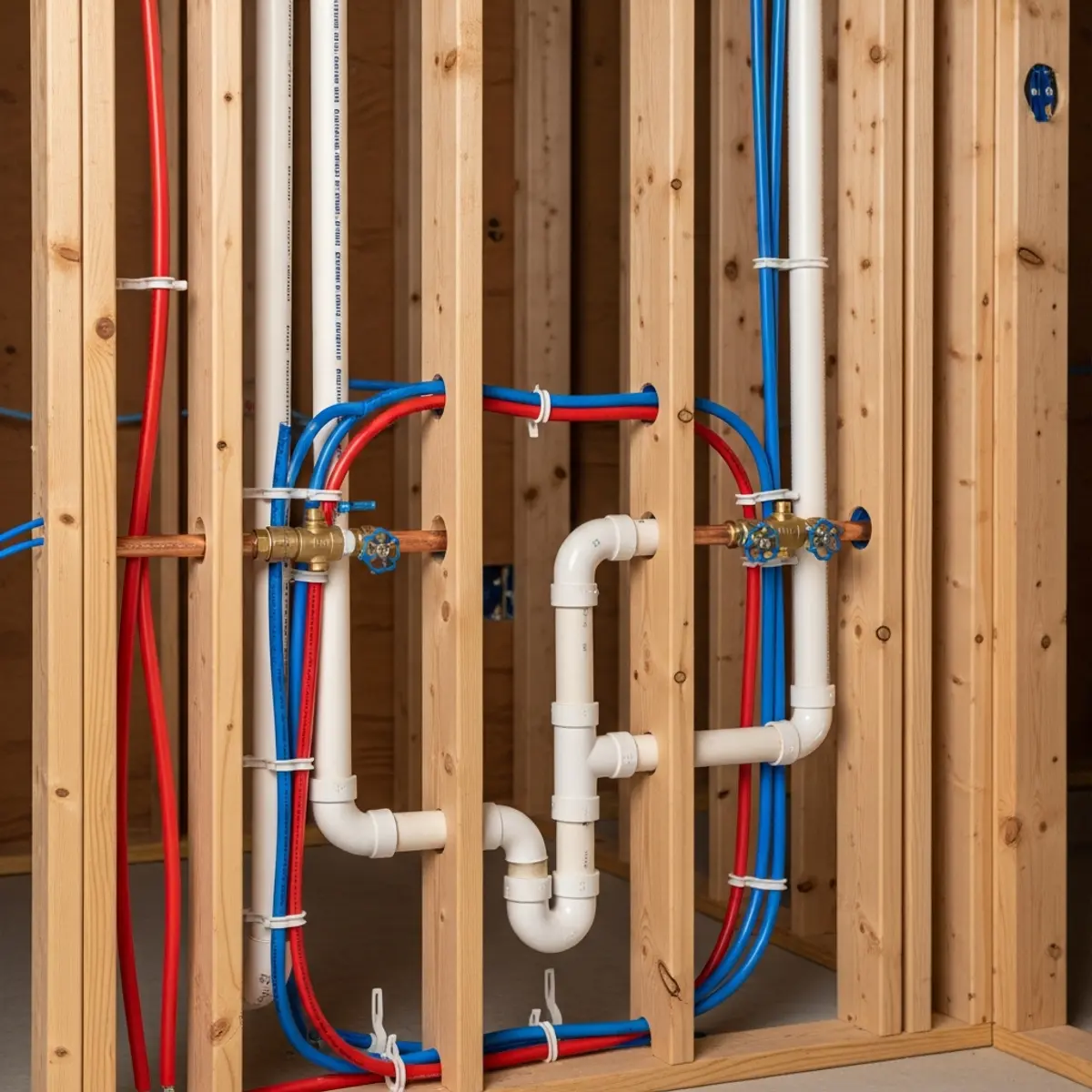
Finishing over a basement you know is damp is the most expensive shortcut in remodeling. Framing and drywall don't stop moisture; they hide it, hold it against organic material, and convert a drainage problem you could see into a mold problem you can't — right up until the flooring cups or the baseboard blooms. The demolition, remediation, and re-finish cost more than the original finish did, and the water still has to be fixed at the end of it.
Even after a basement passes its checks, spec materials that tolerate the occasional bad spring: rigid foam insulation against concrete instead of fiberglass batts, a pressure-treated or gasketed bottom plate wherever framing meets the slab, luxury vinyl plank or tile instead of glue-down carpet, and moisture-resistant drywall held up off the floor. None of this costs much as a delta at build time; all of it is expensive to retrofit.
Moisture is one of two gatekeepers a Treasure Valley basement has to clear before finishing starts. The other is legal egress from any sleeping room — covered in our basement egress window guide.
Everyone at the materials-selection stage, and especially anyone whose slab test showed light vapor that doesn't justify major drainage work.
Moisture-tolerant specs carry a modest premium over the cheapest stack. It's the premium that keeps one wet April from becoming a full re-do.
When Iron Crest takes on a basement, the moisture evaluation happens at the first walkthrough, before design money is spent. We read the walls and slab, run the plastic test where the history is unclear, and tell you plainly if the honest sequence is drainage work now and finishing after a wet season proves it. Nobody enjoys hearing "not yet" — but it's a much better conversation than the one that starts with cupped flooring two springs after move-in.
When the basement clears its checks, the same discipline carries into the build: slab-contact materials specced for below-grade conditions, drainage corrections closed out before framing starts, and the work backed by our 3-year workmanship warranty. That water-first sequencing is the core of how we run every basement remodel in Boise.
The basement looks completely dry right now — can I just start framing?
If "right now" is June through October in the Treasure Valley, a dry look proves very little. Boise's dry season pulls moisture out of concrete quickly, so a slab that sat damp in April reads dry by July. Before framing, read the residue signs — efflorescence, rust at post bases, staining in any sump pit — and run the taped-plastic test in several spots. If the house is new to you and the evidence is ambiguous, the safest budget decision in the whole project is watching one spring before committing finish money.
My taped-plastic test showed light fogging in one corner. Is the project dead?
No. Light vapor migration through a slab is common and manageable — it steers material choices (vapor-tolerant flooring, rigid foam rather than fiberglass against concrete, possibly a slab sealer) rather than killing the project. What should stop the project is liquid water: damp corners in spring, active efflorescence growth, a sump that runs regularly. Vapor is a specification problem; liquid water is a drainage problem, and drainage gets fixed before finishing starts.
Does every Treasure Valley basement need a sump pump before finishing?
No, and installing one by default is a common overspend. Most basement moisture here is surface-water mismanagement — grading, gutters, downspouts, window wells — and those fixes are cheaper and more durable than a pump. Sumps earn their place where seasonal groundwater rise is real, which in this valley clusters in the flood-irrigation legacy areas of Nampa, Caldwell, and parts of Meridian. Neighborhood behavior is useful evidence: if the surrounding homes run sumps every spring, plan on one; if not, fix the surface water first and re-test.
Is efflorescence dangerous? Do I need to remove it before finishing?
Efflorescence itself is just mineral salt — not mold, not toxic, and easy to brush off. Its value is as evidence: it forms only where water has moved through concrete and evaporated, so its location and extent map your moisture history. Never treat removing it as fixing anything. Clean it off after the water source is corrected, then watch through a wet season. Fresh bloom after drainage work means the work isn't done.
Does the City of Boise inspect for moisture when I permit a basement finish?
No. Permits for a Boise basement finish run through Boise Planning and Development Services, and inspectors check framing, electrical, and egress — but there is no moisture inspection anywhere in the process. Nobody with a badge will make you evaluate water before covering the walls; that responsibility sits entirely with you and your contractor. Which is exactly why this checklist exists: the party with the most at stake — the person living above the finished basement — is the one who pays if the step gets skipped.
How much time does the moisture evaluation add to a basement project?
If the basement is clearly dry — no residue signs, clean plastic tests, no neighborhood groundwater history — it adds a week or two of reading and testing, which usually fits inside the design phase anyway. If the signs are ambiguous, or you've never seen the basement in spring, the honest answer is up to a season: test in March through June, make the drainage corrections, and confirm they held before framing. On the calendar that feels slow. Against the alternative — demolishing a finished basement to chase mold — it's fast.
Get a straight read on your basement before you finish it
We'll walk the bare space, read the slab and walls, and tell you honestly what the right next step is — design, or a season of drainage work first. No pressure, and no framing over problems we can see.
These pages go deeper on the topics linked from this article. Read them before your consultation and you'll come in with sharper questions and a clearer scope.
The following government agencies, industry organizations, and official resources provide additional information relevant to your remodeling project.