Asbestos Vinyl Floor in Pre-1985 Boise Bathroom Demos: 5 Identification, Removal, and Encapsulation Decisions
Pre-1985 Boise bathrooms frequently have asbestos-containing vinyl floor tile or sheet flooring. Discovery during demo creates regulatory and safety issues that significantly affect remodel scope. Five decisions for identification, testing, and proper handling.
Quick answer
Legally, in single-family residences in Idaho, yes — homeowner DIY work is largely unregulated. But health, future-renovation, and disclosure consequences make this a bad choice. Encapsulation (covering with new flooring) is the budget-conscious approach that's legal and reasonably safe.
Vinyl floor tile installed before 1985 in Boise homes commonly contains asbestos as a binder material. The hazard is benign when the tile is intact (asbestos doesn't release fibers from undisturbed tile), but it becomes a serious health and regulatory issue during demolition. For bathroom remodels in pre-1985 Boise homes — particularly in North End, Hyde Park, East End, Boise Bench, and Garden City — asbestos investigation is essential before demo scope.
This article covers five decisions for handling asbestos vinyl floor in Boise bathroom remodels, from initial identification through final remediation. The decisions affect both safety and project cost — handling asbestos correctly adds $1,500-$5,000 to typical scope; handling it incorrectly creates liability exposure and potential EPA penalties.
For broader historic home remodeling context including other hazardous-material considerations, see our historic home remodeling guide for Boise.
Asbestos vinyl floor tile production peaked in the 1950s-1970s, with widespread residential use through 1985. After 1985, the asbestos content was largely phased out due to EPA regulations. Boise homes built or remodeled during the asbestos-flooring era frequently have it.
Boise neighborhoods and homes with elevated likelihood:
North End (pre-1950 construction): Most original North End homes had different flooring (linoleum, hardwood). But 1960s-1980s remodels often installed asbestos vinyl tile. Many North End bathrooms have asbestos vinyl from remodel history rather than original construction.
Boise Bench (1940s-1970s construction): Heavy asbestos vinyl tile usage. Substantial portion of Boise Bench bathrooms still have original or first-remodel asbestos vinyl flooring.
Garden City (1950s-1970s): Significant asbestos vinyl flooring presence.
West Boise (early subdivisions, 1960s-1970s): Common in this housing stock.
Hyde Park and East End (1920s-1960s): Often have multiple flooring layers from various renovation eras. Asbestos vinyl frequently present in mid-renovation layer.
Early Meridian (1970s subdivisions): Borderline. Some homes have asbestos vinyl from original construction.
Less likely: Post-1985 construction (post-asbestos era). Homes built or fully remodeled after 1985 are typically asbestos-free in floor finishes.
Layered flooring is the most common scenario:
Many Boise bathrooms have multiple flooring layers from different eras — original 1950s vinyl tile, 1980s vinyl sheet over the top, 2000s laminate over both. The asbestos-containing layer is buried beneath subsequent renovations. Demo work disturbs all layers, releasing asbestos from the buried original tile.
The pre-demo question: any pre-1985 home with bathroom flooring of unknown composition — assume asbestos until tested.
Boise homeowners with pre-1985 homes planning any bathroom demo scope.
Testing adds cost ($150-$400) but the alternative (assuming no asbestos and risking exposure) is unacceptable.
Asbestos vinyl tile has visual characteristics that distinguish it from modern non-asbestos vinyl. Identification is suggestive, not definitive — testing is required for confirmation — but visual indicators inform the likelihood.
Key identification features:
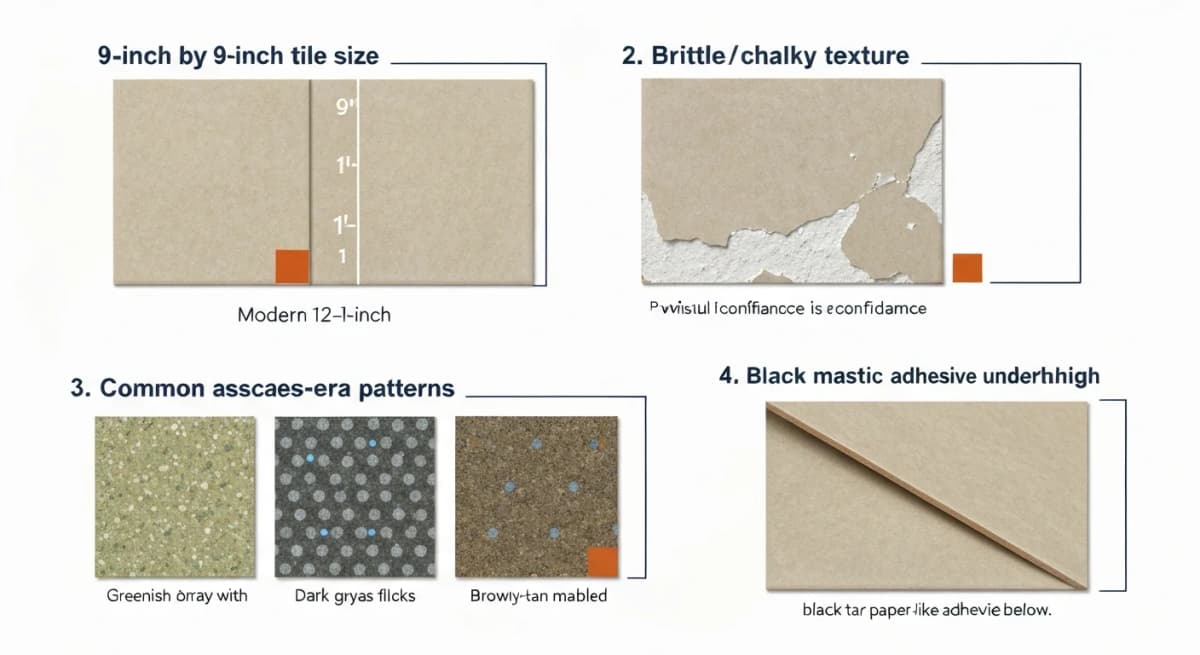
9x9 inch tile size (vs 12x12 modern): Asbestos vinyl tile was typically manufactured in 9x9 inch squares. Modern vinyl tile is 12x12 or 18x18. If your floor has 9x9 squares, asbestos content is highly likely.
Brittle, chalky texture: Asbestos vinyl tile becomes brittle and chalky with age. Modern vinyl remains flexible. Test by carefully pressing fingernail into a corner — asbestos tile dents or chips easily; modern vinyl flexes without damage.
Specific color patterns common in asbestos era: Greenish-tan with darker flecks, dark gray/black with white flecks, light blue with darker dots, brown-tan with marbled pattern. These were popular asbestos-era patterns.
Black mastic adhesive: The adhesive used to install asbestos tile was often asbestos-containing itself. Black tar-paper-like underlayment beneath the tile is typically asbestos mastic.
Yellowed or aged appearance: 40+ year old vinyl typically shows yellowing and surface wear that indicates age, supporting the asbestos likelihood.
What's not asbestos:
12x12 or larger tile: Generally post-1985 manufacture.
Vinyl plank (LVP): Post-2000 product. Almost never asbestos.
Laminate flooring: Post-2000 product. Not asbestos.
Ceramic tile: Never contains asbestos in residential applications.
Linoleum (true linoleum, not vinyl): Different product. Generally asbestos-free, though older linoleum sometimes had asbestos-containing backing.
For homeowners doing self-identification:
Conservative approach: If you see 9x9 tile or any pre-1985 vinyl flooring, assume asbestos until tested. Do not chip, scrape, sand, or disturb the material. Schedule professional testing.
Sample collection: Asbestos sample collection should be done by a licensed asbestos inspector. DIY sample collection has health risks and may not be accepted by labs.
Initial assessment before scheduling testing.
Visual identification is suggestive only — testing is required for definitive answers.
Professional asbestos testing is the only way to confirm or rule out asbestos content in floor materials. Testing should happen before any demo scope that would disturb the flooring.
Testing process:
Licensed asbestos inspector: Idaho requires licensed inspectors for commercial asbestos testing. For residential, licensing isn't strictly required but using a licensed inspector reduces liability exposure and ensures proper sample handling.
Sample collection: Inspector collects small (1-2 cm) samples from each suspect material. Samples are bagged and labeled. Sample collection takes 30-60 minutes for a typical bathroom.
Lab analysis: Samples go to an EPA-accredited asbestos laboratory for analysis. Standard turnaround: 3-5 days. Rush turnaround: 24-48 hours (premium).
Report: Lab returns a report identifying any asbestos content and the specific type and percentage. Reports are typically suitable for permit and insurance documentation.
Cost:
Single bathroom testing (3-4 samples): $150-$400 typical Boise pricing.
Whole-home testing: $300-$800 depending on number of suspect materials.
Rush turnaround: Add $100-$200.
Boise-area testing providers:
Several Boise-area companies provide residential asbestos testing. Look for EPA-accredited labs and AHERA-certified inspectors. Iron Crest can coordinate testing as part of bathroom remodel scope, but homeowners can also engage testing companies directly.
What the report tells you:
Asbestos present (positive result): The material contains asbestos in detectable percentages. Specific percentages affect remediation requirements: less than 1% is typically classified as "non-asbestos containing" (NAC), 1% or more is "asbestos containing material" (ACM) requiring proper handling.
Asbestos not detected (negative result): The material doesn't contain asbestos at detectable levels. Standard demo procedures can be used.
Documentation value:
Even if asbestos is found and removed, the testing report and remediation documentation are valuable. They support: future property sales (disclosure requirements), insurance claims, contractor liability protection, and future remodel scope.
Without testing:
If you proceed with demo without testing, the assumption is asbestos presence. EPA RRP-style protocols apply (full containment, professional removal, disposal). This is the safest approach but also the most expensive. Testing first often saves money when the result is negative.
All pre-1985 Boise bathroom demos. Testing first informs the right scope and budget.
Testing cost adds to project but typically saves significantly if asbestos is ruled out.
Pre-1985 bathroom remodel done safely
Asbestos investigation and remediation coordination is part of our pre-1985 Boise bathroom remodel design phase. Schedule a consultation and we'll plan the right testing and remediation scope.
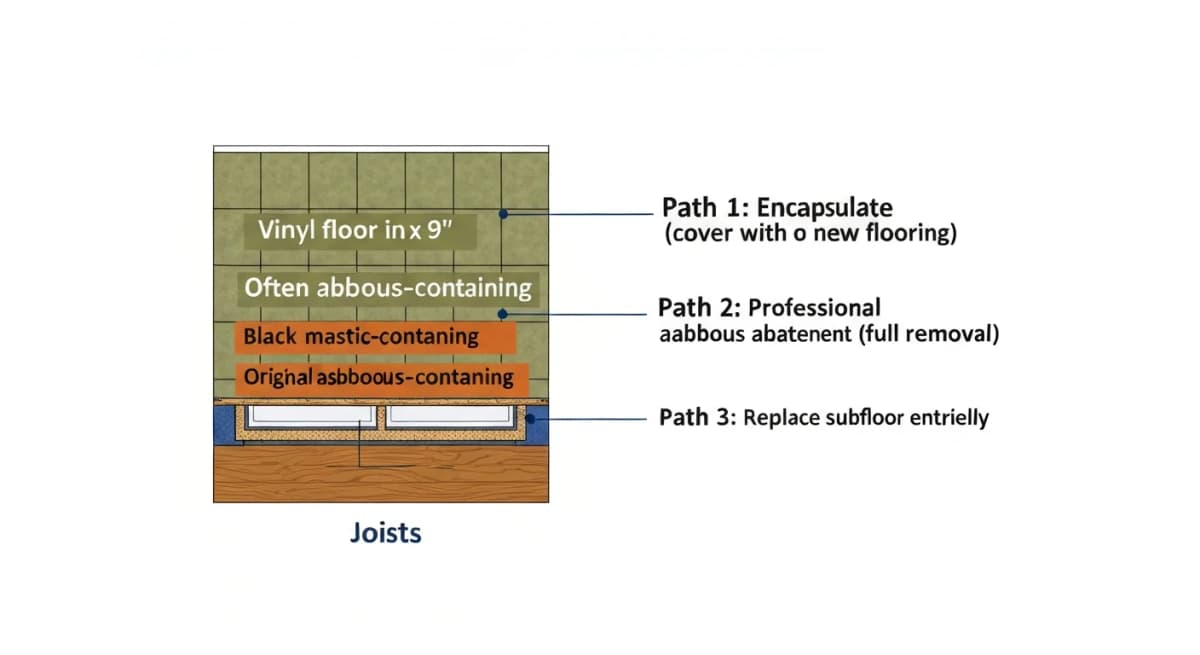
When asbestos is confirmed, two primary remediation paths exist: professional asbestos abatement (removal) or encapsulation (covering it without disturbing).
Professional asbestos abatement:
Process: Licensed asbestos abatement contractor establishes containment (plastic sheeting sealing the bathroom from rest of home, negative-pressure air filtration), uses PPE (respirators, full-body suits), removes asbestos material using techniques that minimize fiber release (wet methods, careful breakage management), bags material in proper containment, and disposes via EPA-approved facilities.
Cost: $2,500-$8,000 for a typical Boise bathroom abatement. Cost varies by quantity of material, accessibility, and disposal facility distance.
Timeline: 2-5 days for the abatement work itself. Plus 1-2 weeks for testing, contracting, and scheduling.
Result: Complete removal of asbestos hazard. Future renovations can proceed without further asbestos concerns.
Encapsulation:
Process: Existing asbestos material is left in place but covered with new finish materials. Common in bathrooms: install new vinyl plank flooring or tile over the existing asbestos floor. The encapsulation creates a barrier preventing asbestos exposure.
Cost: $300-$1,500 for typical bathroom encapsulation with new flooring. Significantly cheaper than abatement.
Requirements: Encapsulation only works when the underlying surface is intact and the new finish provides adequate sealing. Damaged or deteriorated asbestos material may need partial removal before encapsulation.
Limitations: Future renovations must work around the encapsulated asbestos. Any work that breaches the encapsulation requires abatement protocols. Future homeowners must be informed.
Decision framework:
Choose abatement if: You plan multiple future renovations of the bathroom area, you want clean slate for future projects, the existing flooring is damaged enough that encapsulation won't work, you want full hazard elimination for sale to risk-averse buyers, or budget permits.
Choose encapsulation if: Existing flooring is intact and stable, budget is constrained, you're not planning further bathroom renovations, the bathroom remodel scope already covers new flooring installation, future homeowners are likely to live with the bathroom configuration.
Subfloor implications:
Asbestos mastic (the adhesive): Even after tile removal, asbestos-containing mastic may remain on the subfloor. Additional abatement of mastic adds $300-$1,000 to abatement cost. Sometimes mastic is left in place and covered with new flooring (encapsulation of the mastic specifically).
Subfloor damage from asbestos abatement: Aggressive removal techniques sometimes damage underlying subfloor, requiring replacement. Plan for $300-$1,500 in possible subfloor replacement.
Making the abatement vs encapsulation decision based on project context.
Encapsulation is cheaper but creates future limitations. Abatement is more expensive but eliminates the issue.
Asbestos handling is regulated at federal (EPA), state (Idaho DEQ), and local levels. Understanding the regulatory environment prevents legal exposure during bathroom remodel work.
Federal (EPA) requirements:
NESHAP (National Emission Standards for Hazardous Air Pollutants): Asbestos removal in single-family residences is generally exempt from NESHAP federal requirements. Commercial buildings and multi-unit residential (typically 4+ units) are subject to NESHAP.
OSHA worker protection: Contractors working with asbestos materials must follow OSHA requirements regardless of NESHAP exemption status. Worker safety regulations apply to any commercial activity.
Idaho state requirements:
Idaho DEQ asbestos program: Idaho's Department of Environmental Quality regulates asbestos abatement contractors and lab certifications. Idaho doesn't typically require homeowner notification for single-family residence asbestos work, but contractors performing the work must be licensed.
Disposal: Asbestos waste must be disposed at approved landfills. Idaho has limited approved facilities; most Boise abatement waste is transported to specific facilities. Disposal cost is built into abatement contractor pricing.
Boise local requirements:
Building permits: Boise bathroom remodels generally require permits regardless of asbestos. The permit application requires contractor to indicate whether asbestos is being disturbed.
Inspection: Boise inspectors may request documentation of asbestos handling for pre-1985 home permits. Have testing reports and abatement documentation available.
Real estate disclosure:
Idaho seller disclosure: Idaho's seller disclosure requirements include known material defects and hazardous materials. If asbestos is present in your home (encapsulated or not), it must be disclosed to future buyers.
Documentation for disclosure: Save all testing reports, abatement documentation, and encapsulation records. They support the disclosure process and provide value to future buyers (showing the asbestos was handled correctly).
Insurance considerations:
Homeowner's insurance: Generally doesn't cover asbestos remediation as gradual condition. Specific events (asbestos exposed during a covered loss like fire) may trigger coverage. Check policy.
Contractor liability: Reputable abatement contractors carry pollution-liability insurance specifically for asbestos work. Verify before contracting.
Common compliance traps:
DIY removal: Idaho law allows homeowners to remove asbestos from their own homes, but health and disposal requirements still apply. DIY removal typically results in improper handling. Even legally, it's generally a bad idea.
Unlicensed contractor work: Contractors who claim to do asbestos work without proper licensing may violate Idaho regulations. Verify Idaho DEQ asbestos contractor licensure before hiring.
Disposal short-cuts: Bagging asbestos and disposing at regular garbage facilities is illegal. Reputable contractors handle disposal correctly.
Boise homeowners doing pre-1985 bathroom remodels who need to understand the regulatory environment.
Compliance requirements add complexity but protect against significant legal exposure.
Iron Crest's pre-1985 Boise bathroom remodel process always begins with an asbestos investigation conversation. We coordinate testing during the design phase, discuss the abatement vs encapsulation decision with the homeowner, and work with licensed Boise-area asbestos abatement contractors when removal is needed. The cost premium for pre-1985 bathroom remodels (testing + remediation) typically runs $1,500-$8,000 above standard scope. For broader historic-home context, see our historic home remodeling guide.
Can I do the bathroom remodel without addressing the asbestos floor?
Legally, in single-family residences in Idaho, yes — homeowner DIY work is largely unregulated. But health, future-renovation, and disclosure consequences make this a bad choice. Encapsulation (covering with new flooring) is the budget-conscious approach that's legal and reasonably safe. Outright leaving the asbestos exposed and continuing to use the bathroom is risky.
How dangerous is undisturbed asbestos vinyl tile?
Largely non-dangerous when undisturbed. The asbestos in vinyl tile is bound in the vinyl matrix; fibers don't readily release into the air. Health risk is minimal in normal use. Health risk becomes significant when the material is broken, scraped, sanded, or otherwise disturbed during demo work. The hazard is overwhelmingly a demo-phase issue, not a daily-use issue.
Does asbestos in the floor affect home insurance rates?
Generally no for known and disclosed asbestos in single-family homes. Asbestos isn't typically an insurance rating factor. Specific carriers may have specific policies. Damage events involving asbestos (fire damage that disturbs asbestos) may not be fully covered. Check your policy.
Can asbestos vinyl tile increase home resale risk?
Mixed. Sophisticated buyers (especially newer Boise buyers from California or Pacific Northwest markets) may discount homes with disclosed asbestos. Other buyers may be unbothered if the asbestos is properly encapsulated and disclosed. We have no sourced figure for the price effect in this market and won't invent one; treat it as a modest negative that is rarely prohibitive. Documented proper handling (testing reports, abatement or encapsulation records) reduces buyer anxiety.
What if I find asbestos vinyl floor mid-project?
Stop disturbance immediately, evacuate the bathroom, and call a licensed asbestos abatement contractor. Don't continue work, don't sweep up debris, don't try to clean. The exposed surfaces must be properly contained. Cost of mid-project discovery handling typically $1,500-$4,000 (abatement plus cleanup). Project timeline extends by 1-2 weeks. The best protection is testing before demo starts.
Pre-1985 bathroom remodel done safely
Asbestos investigation and remediation coordination is part of our pre-1985 Boise bathroom remodel design phase. Schedule a consultation and we'll plan the right testing and remediation scope.
These pages go deeper on the topics linked from this article. Read them before your consultation and you'll come in with sharper questions and a clearer scope.
The following government agencies, industry organizations, and official resources provide additional information relevant to your remodeling project.