
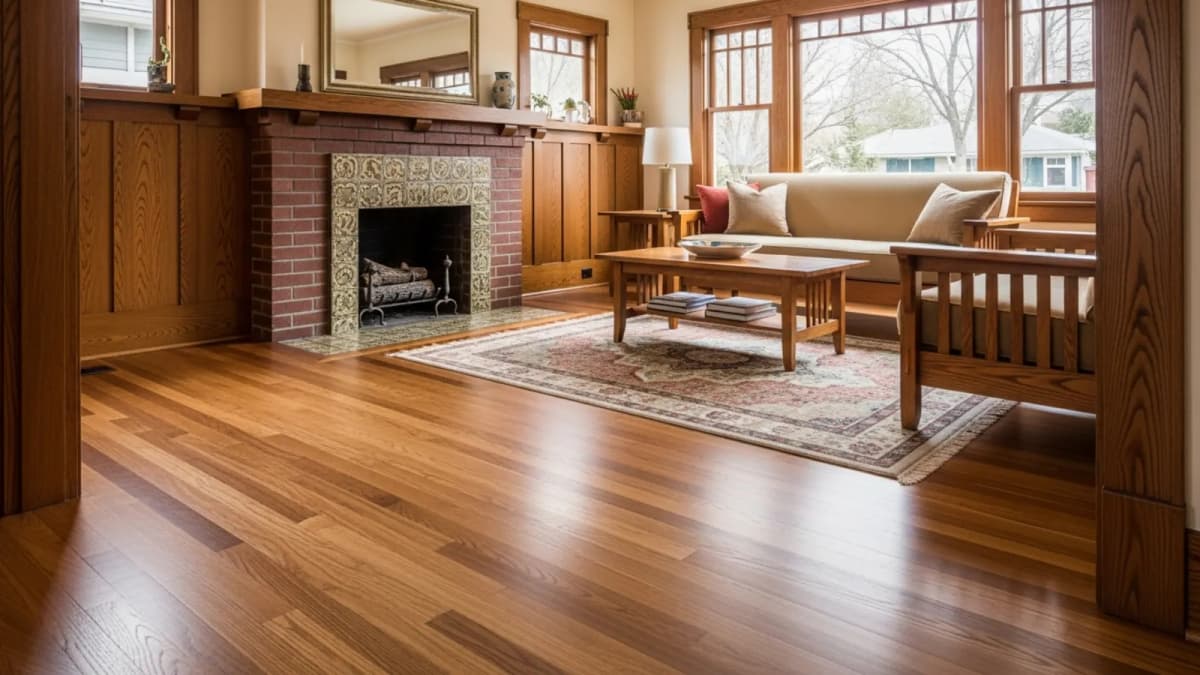
Flooring Installation in Boise's North End
Original oak floor refinishing, engineered hardwood install, period-correct tile — flooring work in 80–120-year-old North End homes done with the prep and finish discipline these original surfaces deserve.
Quick answer
Refinish, almost always. Original oak floor in a pre-1960 North End home is irreplaceable old-growth wood with grain density and patina you can't buy new. Refinishing removes 1/16″–1/8″ of surface wood through sanding — most original floors can be refinished 4–6 times over their lifetime.
Flooring decisions in a North End home are higher-stakes than in any newer Boise neighborhood. The original oak or fir flooring on pre-1960 homes is irreplaceable old-growth wood with grain density and patina that can't be replicated with new material — preserving and refinishing it is almost always the right call when condition allows. Where original flooring is missing or beyond rescue, modern engineered hardwood, period-correct tile, or selective LVP can fill in while maintaining the home's character. Iron Crest has refinished, repaired, and replaced flooring across hundreds of North End rooms and brings the specific competence — careful sanding, period-appropriate stain selection, lead-safe practices, and pattern matching — these old houses require.
Flooring strategy varies by era because original flooring type, layout, and condition differ significantly across the North End's housing waves.
1900–1925: Original Craftsman bungalows
Original 2 1/4-inch wide quarter-sawn oak strip flooring on heavy fir joists is the defining North End flooring. Sometimes original fir flooring instead of oak (less common, more economical at original construction). Floors run continuously through living spaces with simple transition strips at room boundaries. Often original wood is still in place under decades of carpet, vinyl, or laminate added during later remodels.
1925–1940: Tudor Revival, Colonial Revival
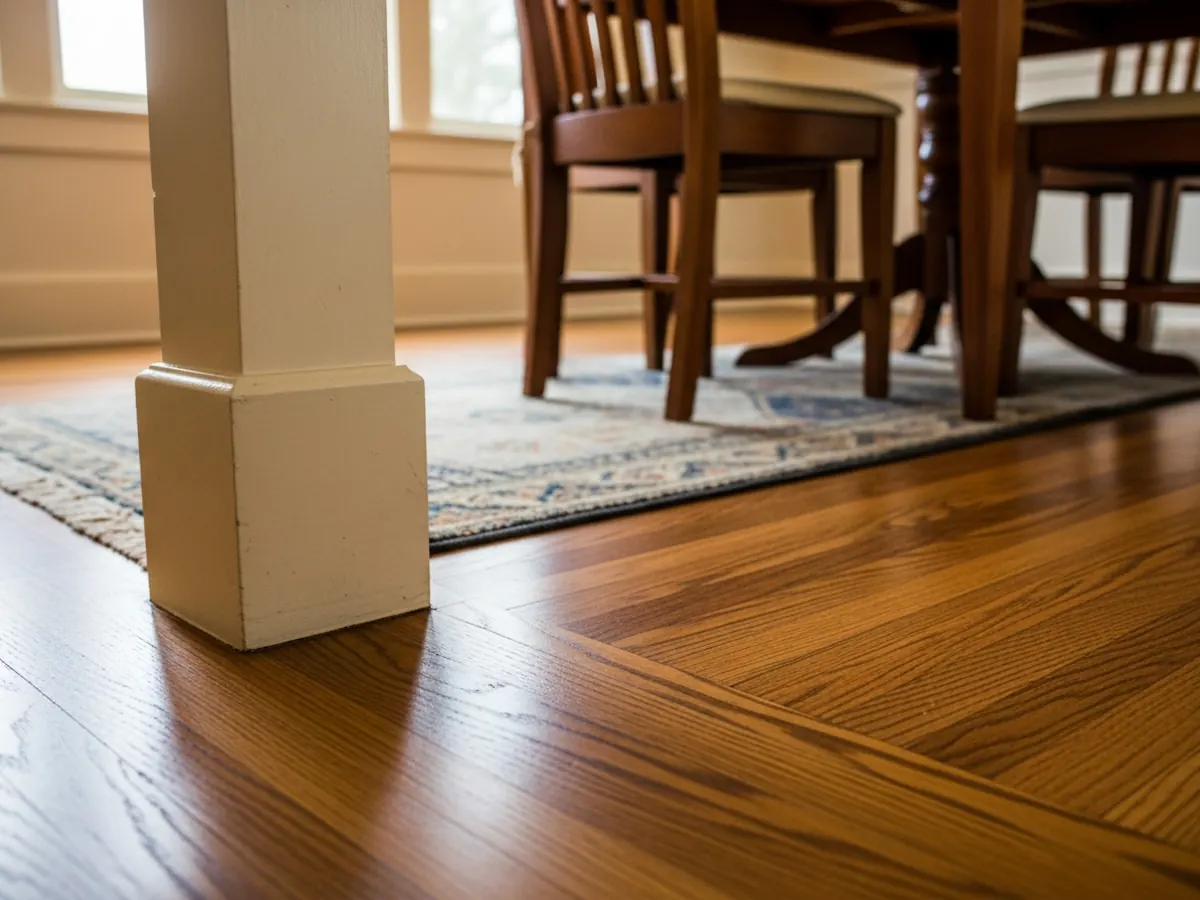
More refined original flooring: 2 1/4″ to 3 1/4″ oak strip in primary spaces, sometimes herringbone or parquet patterns in formal dining rooms or entries. Maple flooring in some homes. Tile or terrazzo in entries and bathrooms. Generally well-preserved original installations.
1945–1965: Post-war ranch and minimal traditional
Oak strip flooring (typically 2 1/4″) in living spaces, original linoleum in kitchens and bathrooms (often containing asbestos). Some homes have original cork or rubber tile in basements. Mid-century homes were the last era of widespread original hardwood; later eras moved to wall-to-wall carpet over plywood subfloor.
1985–present: Infill and renovated homes
Modern flooring from original construction or recent updates — typically engineered hardwood, LVP, tile, or carpet. Standard flooring practices apply with no era-specific considerations.
North End flooring projects fall into recognizable shapes based on what's being installed and what condition the existing flooring is in.
1. The Original Floor Refinish — preserve and restore
Sand existing original oak or fir floor to bare wood, repair damaged areas (board replacement where needed), apply stain in selected color, finish with three coats of polyurethane (oil-based or water-based depending on preference). Restores 80–120-year-old original floor to near-new appearance while preserving irreplaceable old-growth wood. The highest-value flooring decision in North End homes.
Target homes: Pre-1960 North End homes with intact original wood floors. Permit: no permit required.
2. The Carpet-Pull and Refinish — exposing hidden originals
Removing wall-to-wall carpet that was installed over original wood, assessing condition of underlying floor, repairing as needed (sometimes original tack strips have damaged the wood at room perimeters), and refinishing. Often a dramatic and welcome surprise — original wood discovered under decades-old carpet.
Target homes: North End homes where prior owners installed carpet over what was originally exposed wood. Permit: none.
3. The Engineered Hardwood Install — new flooring matching originals
Install engineered oak hardwood in rooms where no original wood survives, in matching tone and width to seamlessly blend with original wood in adjacent rooms. Engineered (vs solid) is the right choice in moderate-humidity Boise climate — more dimensionally stable through seasonal humidity changes. 4″ or 5″ plank width matches Craftsman-era proportions.
Target homes: Rooms where original flooring is missing or beyond rescue, or whole-home installations where a consistent look across all rooms is the goal. Permit: none.
4. The Period-Correct Tile — kitchen, bathroom, entry
Hex mosaic tile, basket-weave mosaic, or large-format porcelain in patterns appropriate to the home's era. Hex floors in pre-1940 bathrooms; large-format porcelain in mid-century kitchens. Properly prepped subfloor (cement board over plywood for tile applications), tile install, grout, and sealing.
Target homes: Kitchens and bathrooms in North End homes wanting period-correct flooring. Permit: usually none.
5. The Whole-Home Flooring Refresh — comprehensive
Comprehensive flooring across the entire home — original floor refinishing in rooms where wood survives, engineered hardwood install in rooms where wood is missing, tile in wet areas. Coordinated stain and finish selections so the floors read as one continuous surface story across the home.
Target homes: Whole-home remodels or owners doing comprehensive home refresh. Permit: usually none.
The North End is made up of distinct sub-neighborhoods, each with its own remodeling personality.
13th Street & Hyde Park
The cultural and commercial heart of the North End — boutique shops and restaurants along 13th between Brumback and Eastman, with the densest concentration of original Craftsman bungalows on the surrounding blocks. Lots are tight (typically 50' frontage), alley access is common, and the neighborhood is heavily walked. Most homes here are 1905–1925 Craftsman.
Camel's Back & Heron Streets
The streets immediately around Camel's Back Park, climbing slightly into the lower foothills. Mostly Craftsman bungalows with some Tudor Revival mixed in. Lots get larger toward the park edge, and some homes back to the Foothills Reserve with significant trees. Project budgets here tend to be higher — these are some of the most coveted blocks in the city.
Harrison Boulevard corridor
The grand divided boulevard running south-to-north through the heart of the North End, lined with the neighborhood's largest historic homes. Tudor Revival, Colonial Revival, and a few notable Prairie-style houses sit on deep lots with mature plantings. Projects here lean toward sympathetic upgrade rather than reconfiguration — these homes already have generous floor plans.
Fort Boise & Capitol-area North End
The streets around Fort Boise Park and stretching toward the State Capitol grounds — a mix of original Craftsman bungalows, larger 1920s and 1930s homes, and a higher proportion of post-war infill. Lots vary widely. Project scopes span the full range depending on house age and homeowner intent.
North of Hill Road / new infill
The northern fringe of the historic North End, where construction continued through the 1950s and where modern infill has been most active. Newer (1945–present), larger, less constrained by historic-district considerations. Projects here look more like SE Boise or Harris Ranch in scope and material strategy.
Lower-numbered streets (3rd–9th)
The streets between the State Capitol grounds and Fort Boise — traditionally a more working-class section of the North End, with a mix of smaller Craftsman bungalows, post-war houses, and some converted multi-family. Increasingly being renovated as North End demand pushes outward from the 13th Street core. Excellent value if you can find an unrenovated home here.
Flooring pricing in pre-1978 North End homes runs slightly above newer construction, primarily driven by EPA RRP lead-safe labor practices for any sanding work in lead-paint homes and the careful approach original surfaces require.
North End flooring installation ranges
Single-room original floor refinish (sand to bare wood, stain, three coats polyurethane): $3,800–$5,500 (typical 12x16 room) / 1 week end to end
Whole-floor original refinish (main level or upstairs comprehensive refinish): $8,500–$16,000 / 1–2 weeks end to end
Engineered hardwood install (single room) (remove existing flooring, install engineered hardwood): $3,800–$8,500 (typical 12x16 room) / 1–2 weeks end to end
Whole-home engineered hardwood install (comprehensive flooring throughout): $18,000–$32,000 / 3–6 weeks end to end
Tile install (kitchen or bathroom) (hex, basket-weave, or large-format porcelain on properly prepped subfloor): $4,500–$14,000 / 1–3 weeks end to end
Pricing assumes Iron Crest's standard scope: EPA RRP lead-safe work practices for any pre-1978 home (sanding generates lead-paint dust; full RRP procedures required), proper substrate preparation, premium-grade Bona finish or oil-modified polyurethane, dust containment with HEPA-filtered exhaust, complete cleanup, and a 3-year workmanship warranty. Solid hardwood install (rather than engineered) priced separately due to acclimation period and moisture barrier requirements.
The North End Historic District boundary covers most — but not all — of the North End. The district is administered by the City of Boise Historic Preservation Commission, which reviews exterior modifications within the district boundary. Interior work, including comprehensive remodels, is exempt from Historic Preservation review. This is the single most important permitting fact to internalize: your interior work doesn't need historic review, regardless of how aggressive the scope.
Where Historic Preservation review enters the picture is when your project includes any exterior change. Examples we encounter regularly: enlarging a window, relocating an exterior door, adding an exterior-vented hood that requires a new wall penetration, building a small addition or bump-out, or replacing a side-yard window with a different style. Any of these requires a Certificate of Appropriateness from the Historic Preservation Commission, which can add several weeks to the permit timeline (confirm current timelines with PDS) and typically requires architectural drawings showing the proposed change in context.
For interior-only projects, the standard City of Boise permits apply: a building permit for structural work (wall removal, beam installation), an electrical permit for new circuits or panel work, a plumbing permit for fixture relocation or new water lines, and a mechanical permit for ducting or HVAC modifications. Permit fees for a typical mid-range project run several hundred to a few thousand dollars depending on scope. Processing times: electrical and plumbing permits are often same-day or next-day; building permits go through plan review, about two weeks for online plan review per Boise PDS and longer when structural drawings are involved.
One North End-specific permit consideration: parking and right-of-way. Placing a dumpster on the street or parking a construction trailer at the curb requires an ACHD temporary-use permit (fee varies), since North End residential streets are ACHD right-of-way. Some North End streets have additional restrictions related to the historic neighborhood designation. Iron Crest pulls all required temporary-use permits as part of project setup.
Flooring material strategy for North End homes balances preservation of original character, modern durability needs, and period-appropriate aesthetics.
Original wood floor preservation
If original oak or fir flooring exists and is structurally sound (no severe water damage, no widespread board failure), preserve it. Even floors with significant cosmetic damage (scratches, gaps, surface wear) can be restored through sanding and refinishing. The exception: floors with widespread structural failure (rot, severe board damage), or floors that have been previously sanded thin (pre-1980 sanding sometimes removed too much wood), warrant replacement.
Stain selection for refinished originals
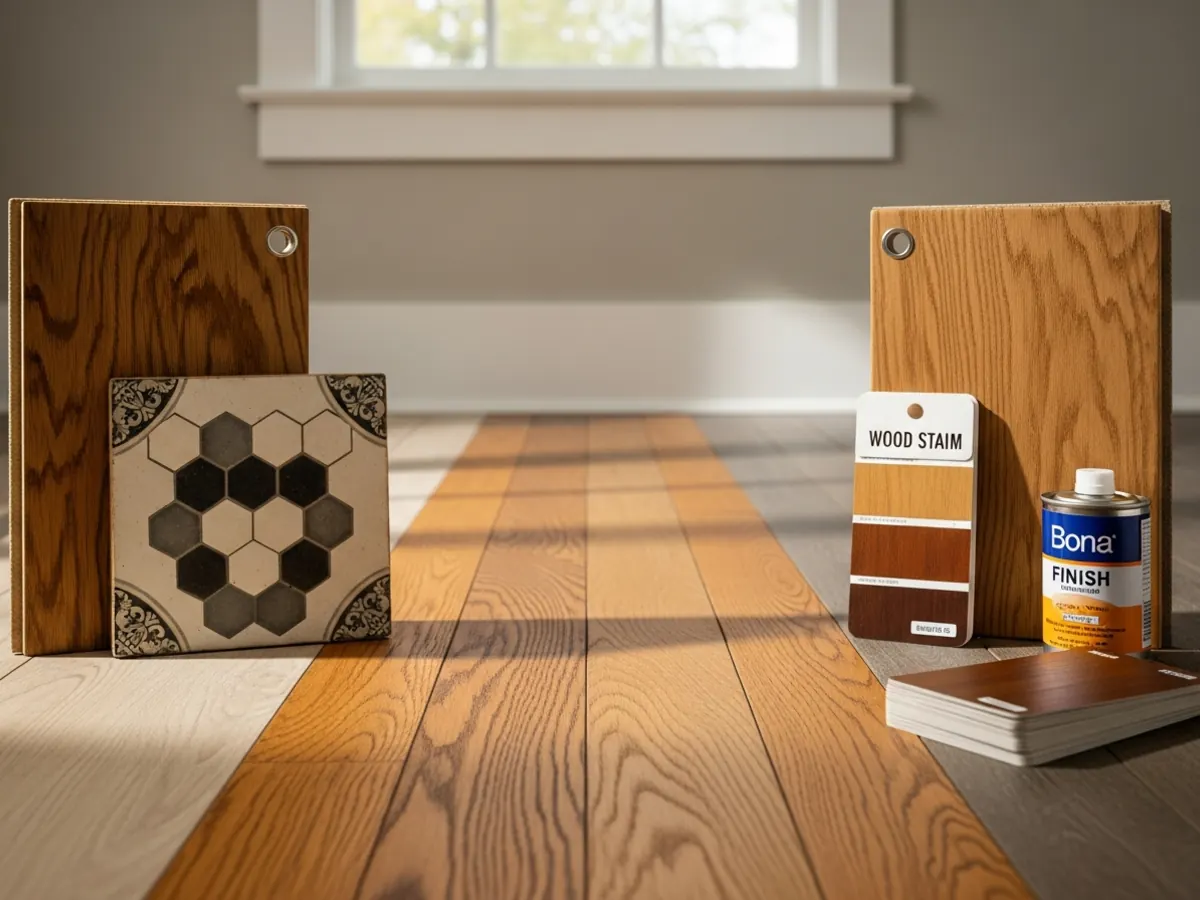
Period-correct stain colors for North End refinished oak: medium walnut, golden oak, English chestnut. Avoid: ultra-dark stains (espresso, ebony) that read as 2010s contemporary; ultra-light bleached looks that don't match Craftsman era. Test stain on original floor in inconspicuous area before committing — original wood absorbs stain differently than new wood. Modern Bona stains offer wider color range with better grain show-through than older oil stains.
Engineered hardwood for new install
Engineered oak hardwood with 3/8″–1/2″ thick wear layer, in 4″ or 5″ plank width to match Craftsman-era proportions. Pre-finished or site-finished both viable; site-finished allows custom stain color matching to existing original wood. Manufacturers we use: Mohawk, Mannington, Mirage. Avoid: ultra-wide (7″+) plank widths that read as contemporary in pre-1940 homes; wood-look LVP in primary spaces (acceptable in basements or laundry rooms only).
Tile for kitchens and bathrooms
Hex mosaic (1″–2″) in white-with-black-dot for pre-1940 bathrooms. Basket-weave mosaic for 1920s–1930s formal bathrooms. Large-format porcelain (12x24 or 24x24) in stone-look or solid color for mid-century or contemporary aesthetic. Penny round mosaic also period-appropriate. Proper subfloor prep is non-negotiable: cement board over plywood subfloor with proper deflection rating, especially in older homes with sometimes-bouncy original framing.
Subfloor preparation
Original 1×6 fir subfloors in pre-1925 North End homes are usually still excellent — repair localized damage and proceed. For newer engineered hardwood or LVP install, original subfloor may need overlay with 1/4″ luan or new 3/4″ tongue-and-groove plywood for a flat substrate. For tile install, cement board over plywood is required (uncoupling membrane like Schluter Ditra is highly recommended for older homes with subfloor movement).
Finish selection
Polyurethane finishes — water-based (Bona Mega) or oil-based (Bona Mega ONE, Pallmann Pall-X) — both produce durable surface finish. Water-based: faster drying (re-coatable in 2–4 hours), less odor, slightly less amber color development over time. Oil-based: traditional warm amber color development matching period aesthetic, longer dry times (12+ hours between coats), stronger odor during application. Three coats minimum for residential traffic; satin or semi-gloss sheen for period-correct look (avoid high-gloss, which reads as modern).
Flooring work in older North End homes occasionally surfaces conditions that affect cost and timeline.
- •Asbestos in original linoleum or vinyl flooring. Pre-1980 sheet vinyl, 9-inch vinyl tiles, and some sheet linoleum frequently contain asbestos. Required testing identifies extent. Abatement before disturbance: $1,200–$4,500.
- •Lead paint on baseboards and trim near floor. Universal in pre-1978 homes. Sanding floors generates dust that can disturb baseboard paint. EPA RRP lead-safe containment and dust control required. Built into Iron Crest's pricing.
- •Subfloor damage from undetected leaks. Removing existing flooring sometimes reveals subfloor damage from old leaks (around toilets, sinks, dishwashers, refrigerators). Patch repair: $400–$1,200. Larger area: $1,500–$3,500.
- •Original wood floor sanded too thin previously. Pre-1980 floor sanding sometimes removed too much wood; remaining wear layer is too thin for additional sanding. Detect through depth measurement during prep. Forces conversion to engineered hardwood install. $4,500–$8,500 incremental.
- •Squeaks and movement requiring subfloor screw-down. Older subfloors sometimes need additional fastening to underlying joists. Screwing through subfloor to joists at 12-inch spacing: $0.40–$0.80 per square foot.
- •Floor leveling required for new install. Original framing has settled differentially over a century. New install requires level substrate. Self-leveling underlayment in low spots: $200–$1,500 depending on extent.
- •Original wood floor staining challenges. Old oak sometimes accepts stain unevenly due to grain density variations. Multiple stain test samples on the actual floor recommended before final selection. Standard scope; no incremental cost.
- •Threshold and transition complications between rooms. When refinishing original wood in some rooms while installing new flooring in others, transitions require careful detail. Custom-milled threshold matching: $80–$200 per transition.
- •Pet damage requiring board replacement. Pet stains and scratches sometimes go through the wear layer requiring board replacement during refinish. Sourcing matching old-growth oak boards: $400–$1,500 per damaged area.
Consultation and floor assessment (Week 1)
Walkthrough of all flooring areas, condition assessment, depth measurement of original wood (to confirm enough wear layer for sanding), discussion of strategy (refinish vs replace vs new install), stain and finish selection.
Environmental testing if needed (Week 1)
Asbestos testing on suspect linoleum or vinyl. Results in 5–7 business days.
Estimate and material ordering (Week 1–2)
Detailed line-item estimate. Stain and finish products ordered. Engineered hardwood ordered if applicable (1–3 week lead).
Furniture removal and protection (Day 1 of work)
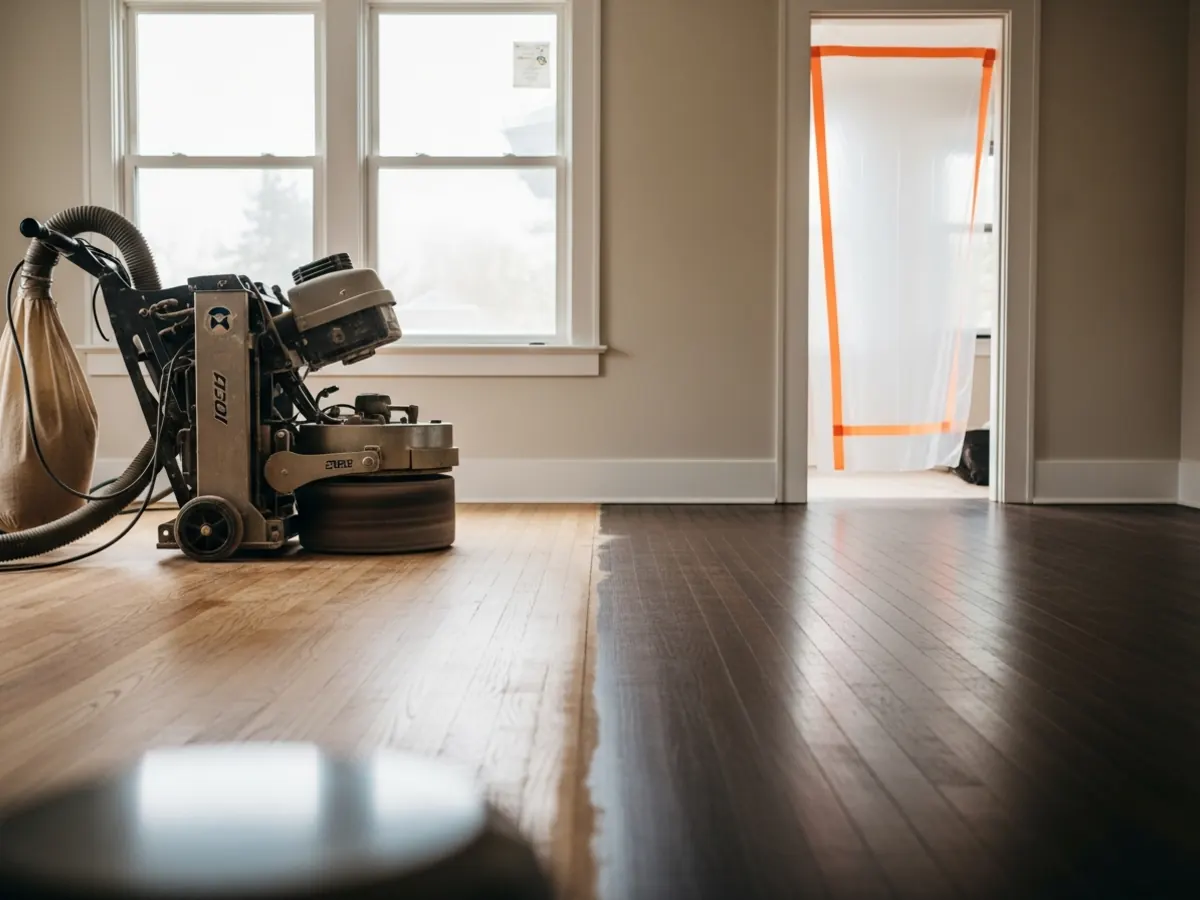
Furniture moved out of work area. Adjacent rooms protected with poly sheeting and HEPA scrubbers. Lead-safe containment for pre-1978 homes.
Existing floor removal if applicable (Day 1–2)
Carpet, vinyl, or laminate removal. Tack strip removal. Substrate inspection. Repair of any damage discovered.
Sanding (Days 2–4 for refinish; not applicable for new install)
Drum sanding with progressively finer grits (typically 36-60-80-100). Edge sanding at perimeter with edge sander. Hand sanding in corners. HEPA-filtered dust collection throughout. Multiple progressive passes for smooth result.
Stain and finish (Days 4–6 for refinish; new install Days 1–3)
Stain application (where applicable) — wait 24 hours for proper drying. First coat polyurethane — wait 4–8 hours. Light sanding between coats. Second coat — wait. Third coat — final cure.
Cure time (Days 6–8)
Walk-on (sock-feet) typically 24 hours after final coat. Furniture replacement typically 72 hours after final coat. Full cure (rugs, normal traffic) typically 1 week after final coat.
Walkthrough and final (Day 8+)
Walkthrough with you. Cleanup verification. Touch-ups if needed. Punch-list addressed within 1 week. 3-year workmanship warranty begins.
Flooring work in older North End homes — especially original floor refinishing — is a craft that doesn't translate from suburban work. Sanding too much, sanding unevenly, choosing wrong stain, or applying finish poorly all produce results you'll see daily for years.
- City of Boise Historic Preservation Commission — Design review information, district maps, and Certificate of Appropriateness application.
- City of Boise Planning & Development Services — Building, electrical, plumbing, and mechanical permits. Online portal and in-person plan check.
- Idaho DEQ Air Quality (Asbestos) — Testing and abatement guidance for pre-1980 homes via the Idaho Department of Environmental Quality.
- EPA Lead Renovation, Repair and Painting (RRP) Program — Required certification and work practices for renovation in lead-paint homes.
- Preservation Idaho — Statewide nonprofit advocating for historic preservation. Resources and educational events.
Should I refinish my original oak floor or replace it?
Refinish, almost always. Original oak floor in a pre-1960 North End home is irreplaceable old-growth wood with grain density and patina you can't buy new. Refinishing removes 1/16″–1/8″ of surface wood through sanding — most original floors can be refinished 4–6 times over their lifetime. Replacement is warranted only when severe water damage, widespread board failure, or excessive prior sanding has compromised the floor structurally. Iron Crest assesses depth (with a depth gauge) during consultation to confirm refinish viability.
What stain color is right for a North End Craftsman?
Medium-tone period-correct stains — Bona Walnut, Golden Oak, English Chestnut. These match the warm-tone aesthetic of Craftsman-era interiors and complement the typical original Craftsman millwork (stained Douglas fir or oak trim). Avoid ultra-dark stains (espresso, ebony) which read as 2010s-modern; avoid ultra-light bleached looks which conflict with Craftsman warmth. We test stain samples on your actual floor in inconspicuous areas before committing.
Can you refinish my floors while I live in the home?
Yes, with planning. Sanding generates fine dust even with HEPA collection — we use containment plastic to seal off work areas from the rest of the home and HEPA scrubbers running continuously. Finish coats produce odor (less with water-based, more with oil-based) that's typically tolerable in adjacent rooms with closed doors. Cure time means the refinished floor is non-walkable for 24 hours, furniture-replaceable at 72 hours, and full-traffic at 1 week. We discuss your routine and stage work to minimize disruption.
What about the dust from sanding original floors?
Modern HEPA-filtered dust collection systems (we use Bona dust containment) capture 95–99% of sanding dust at the source. Adjacent rooms protected with poly sheeting and air scrubbers. Work area cleaned daily during the sanding process. Final HEPA vacuuming of all surfaces in the work area before finish application. The result is far cleaner than older sanding methods, but some fine dust always escapes containment — the home will need a thorough cleaning after the project.
How long does a floor refinish take?
1 week for a single room, 1–2 weeks for a whole-floor refinish (main level or upstairs), 2–3 weeks for whole-home original floor refinish. The schedule: 1–2 days sanding, 1 day stain (with 24-hour dry), 3 days finish coats with sanding between, 2–3 days cure. New engineered hardwood install: 2–4 weeks depending on scope.
What about the asbestos in my original linoleum?
Pre-1980 sheet vinyl and 9-inch vinyl tiles frequently contain asbestos in the backing or the tile matrix. Idaho DEQ requires asbestos abatement by a licensed contractor before any disturbance. Iron Crest coordinates testing as part of pre-construction. Abatement: $1,200–$4,500 typical for a kitchen or bathroom. Once abatement is complete, we proceed with new flooring install per scope.
Should I use solid hardwood or engineered hardwood for new install?
Engineered hardwood for almost all North End installations. Boise's climate (humidity swings from 18% in winter to 65% in occasional summer storms) causes solid hardwood to expand and contract significantly, leading to cupping, gapping, and seasonal movement that's visible. Engineered hardwood (real wood wear layer over plywood core) is dramatically more dimensionally stable through humidity changes. Solid hardwood is appropriate only when matching existing solid hardwood floors and even then with careful acclimation.
Do you do tile installation in older bathrooms and kitchens?
Yes — tile install is standard scope. We're particularly experienced with period-correct hex mosaic in pre-1940 bathrooms and basket-weave or large-format porcelain in mid-century and contemporary kitchens. Subfloor preparation is critical in older homes — original framing sometimes has more deflection than modern tile installations require. We use Schluter Ditra uncoupling membrane on cement-board subfloor for any tile install in pre-1960 homes to prevent crack telegraphing through the tile.
Ready to start your North End flooring installation project?
Free in-home consultation, honest contingency-based budgeting, and the experience Boise homes require. Iron Crest Remodel — Idaho RCE #6681702, EPA RRP lead-safe work practices, $2M general liability, 3-year workmanship warranty.
Get Your Free Estimate