
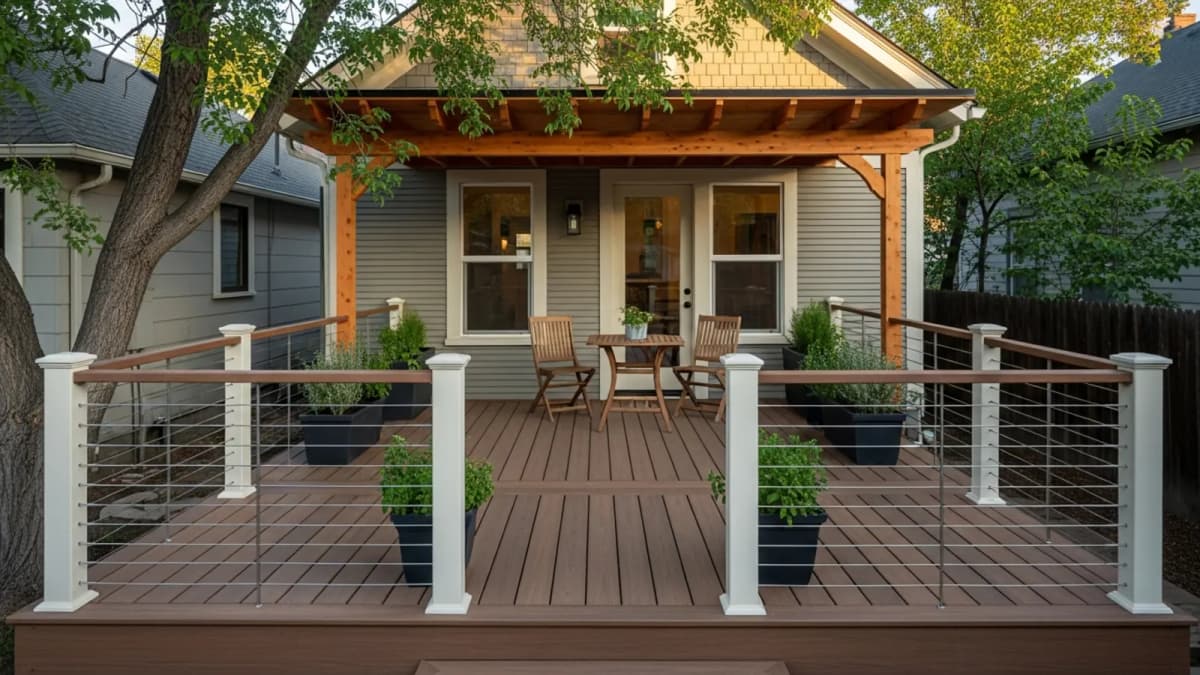
Deck Construction Across Hyde Park, Camel's Back, Harrison Boulevard & the Lower-Numbered Streets
Composite, cedar, and wood decks on 50'-frontage Craftsman bungalow lots, full outdoor-living scope on Harrison Boulevard's deep Tudor lots, greenbelt-edge builds on Camel's Back foothills transition with Shoreline Protection coordination — Boise 24-inch frost-depth footings, HPC Certificate of Appropriateness handled in-house when scope is visible from public way.
Quick answer
Depends on visibility from public way. Most rear-yard decks behind tall solid fences in the District proceed without HPC review because they're not visible from a street. Decks visible from public way trigger Certificate of Appropriateness — front-yard decks (rare), side-yard decks on corner lots, deck-stair railings extending around a side of the home that's visible from the street, and sometimes rear-yard decks where the rear faces a public alley with low visual screening.
Building a deck on a North End home is shaped by three District-specific realities that don't apply at the same intensity in any other Boise neighborhood: tight 50' frontage on the 13th Street and Hyde Park bungalow blocks limiting deck footprint and creating staging-logistics challenges on builds without alley access; deeper Harrison Boulevard lots that support full outdoor-living scope (multi-zone decks, pergola or louvered roof, integrated planters and lighting); and greenbelt-edge property along the Camel's Back and Heron Streets foothills transition where decks within 50 feet of the foothills reserve trigger Shoreline Protection coordination through the City of Boise — adding review steps and sometimes setback constraints that aren't present on interior District lots. HPC Certificate of Appropriateness applies to any deck visible from public way — front-yard decks (rare in the District), side-yard decks on corner lots, deck-stair railings extending around a side of the home that's visible from the street, and sometimes rear-yard decks when the rear faces a public alley with low visual screening. Rear-yard decks behind tall solid fences sometimes proceed without HPC review depending on visibility — verification at consultation. The bungalow stock on 13th Street, Hyde Park, Camel's Back, and Heron Streets typically had simple covered front porches and minimal back-yard outdoor structures in original 1905–1925 construction; deck additions to these homes are essentially new construction designed in Craftsman vocabulary (tapered painted railing posts matching original Craftsman porch columns, simple horizontal rail patterns, painted lap-siding skirting matching house siding) but functionally serving modern outdoor-living expectations. Tudor and Colonial Revival on Harrison and around Fort Boise had more substantial original outdoor architecture — covered side porches, back terraces, sometimes original brick or stone patios — and deck additions integrate with these existing features rather than replacing them. Boise's 24-inch frost depth requires properly engineered concrete footings or the deck heaves and racks within 5–10 freeze-thaw cycles. Right-of-way permit restrictions on tight District streets affect dumpster placement during deck builds — alley access where available is gold, and Iron Crest's project setup includes the right-of-way permit handling that's sometimes a project-blocking step on tight blocks. Iron Crest's North End deck work is anchored on HPC pre-meeting before formal application when scope is visible from public way, properly engineered footings to 24-inch frost depth (sometimes deeper on poor-bearing soils common in older fill yards), period-sympathetic Craftsman or Tudor design vocabulary, mature-tree root system protection (many District properties have 80–120-year-old plantings), and the operational experience to navigate tight 50' frontage staging.
North End deck strategy varies sharply by era and sub-area because the home's architectural character, lot depth, original outdoor-living conventions, foothills transition status, and HPC visibility profile all set what a sympathetic deck looks like and how it sequences through review.
1905–1925 original Craftsman bungalows on tight 50' frontages (13th Street, Hyde Park, Camel's Back, Heron Streets)
Single-story homes typically 1,200–1,800 sq ft on 50' wide lots with rear-yard depths of 30–60 feet. Original outdoor architecture: simple covered front porch with tapered painted columns, minimal back-yard structure beyond a small set of stairs to grade. Deck additions are essentially new construction designed in Craftsman vocabulary — painted 4×4 cedar railing posts matching original Craftsman porch column proportions and color, simple horizontal cable or wood baluster patterns, painted lap-siding skirting matching house siding, decking in warm composite wood tones (mahogany, cedar, walnut) or real cedar where the owner is committed to staining maintenance. Tight 50' frontage limits deck footprint to typically 12×16 to 14×20 — sized for outdoor dining for 4–6 plus a grill, accessed from kitchen or dining via existing exterior door. Alley access (where available) is essential for material staging and dumpster placement.
1925–1940 Tudor Revival, Colonial Revival, Prairie on deeper lots (Harrison Boulevard, Fort Boise area)
Two-story homes typically 2,200–3,800 sq ft on deeper Harrison Boulevard or Fort Boise lots — frequently 60–120 feet of rear-yard depth that supports full outdoor-living scope. Original outdoor architecture: covered side porches with painted columns, back terraces (sometimes original brick or stone patio still intact and worth integrating), formal landscape design. Deck additions on these properties can be substantial — wrap-around configurations, multi-level designs to address grade changes, pergola or louvered roof integration, integrated planters and built-in seating around perimeter, multi-zone layouts with distinct dining and lounge areas. Composite decking in warm wood tones complements the home's formal character; cedar appropriate where existing outdoor brick or stone establishes a natural-material vocabulary. HPC review applies when visible from Harrison Boulevard or side streets; deeper lots often hide rear-yard decks behind landscape and qualify for limited or no review.
1945–1965 post-war ranch and minimal traditional infill (lower-numbered streets 3rd–9th, parts of Fort Boise)
Single-story homes typically 1,000–1,800 sq ft whose simpler architecture tolerates more deck design variation than the pre-1940 contributing-resource stock. Modern composite decks with cable railing or simpler design vocabularies work well on these homes. Often built off the back of the kitchen or family room with sliding glass doors providing the access — a modification that postdates 1945 ranch original construction in many cases and that's been a consistent renovation pattern. Lower-numbered streets 3rd–9th HPC review is generally lighter than on contributing pre-1940 stock because the homes aren't contributing resources within the District; verification at consultation.
1985+ modern infill north of Hill Road, with greenbelt-edge consideration on Camel's Back foothills transition
Modern construction. Deck additions follow standard practice with no era-specific architectural constraints. Often outside the Historic District boundary — verify per property because boundary doesn't track Hill Road exactly. Special consideration applies to greenbelt-edge properties along the Camel's Back and Heron Streets foothills transition where the Foothills Reserve abuts residential lots: decks within 50 feet of the reserve boundary trigger Shoreline Protection coordination through City of Boise — adding review steps, sometimes setback constraints, and occasional retaining-wall or erosion-control requirements. Worth flagging early in consultation when the property is on the foothills transition.
Five recurring deck shapes account for nearly every North End project. Lot frontage and depth, sub-area location, HPC visibility, and greenbelt-edge status all drive which one fits.
1. The Tight-Frontage Bungalow Rear Deck (12×16 to 14×20)
Modest rear deck on a 50' frontage Craftsman bungalow lot in Hyde Park, around 13th Street, on Camel's Back, or on Heron Streets blocks. Sized for outdoor dining for 4–6 plus a grill. Composite decking (Trex Transcend, TimberTech AZEK, Fiberon Concordia) in warm wood tone or cedar where owner commits to maintenance. Painted 4×4 cedar railing posts matching original Craftsman porch column proportions and color (typically cream or warm white matching house trim). Simple horizontal cable or aluminum baluster infill. Two stairs down to grade. Painted lap-siding skirting matching house siding to enclose the underdeck space. Connects to kitchen or dining room via existing exterior door. Most common North End deck shape by count. Rear-yard decks behind tall solid fences typically proceed without HPC review; verification at consultation.
Target homes: 1905–1925 Craftsman bungalow stock on tight 50' District frontages — Hyde Park, 13th Street, Camel's Back, Heron Streets. Permit: building permit required for any deck above 30″ from grade; HPC review only if visible from public way.
2. The Harrison Boulevard Deeper-Lot Outdoor-Living Deck (16×24 to 20×32)
Generous rear or side deck on a 1925–1940 Tudor Revival or Colonial Revival property along Harrison Boulevard or in the Fort Boise area where rear-yard depth supports full outdoor-living scope. Multi-zone layout — outdoor dining area for 8–10, separate lounge seating zone, sometimes a covered pergola or louvered-roof zone, sometimes built-in planters or integrated seating around perimeter. Composite decking in warm wood tones complementing the home's formal character. More elaborate railing — painted balusters with decorative patterns appropriate to Tudor or Colonial Revival vocabulary, integrated low-voltage LED lighting at posts and stair risers. Connects to kitchen, family room, and primary suite via french doors or sliding glass. HPC review applies when visible from Harrison Boulevard or side streets; deeper lots frequently hide rear scope behind mature landscape.
Target homes: 1925–1940 Tudor Revival, Colonial Revival, Prairie homes on Harrison Boulevard and around Fort Boise Park with rear-yard depth supporting larger structure. Permit: building permit; HPC Certificate of Appropriateness when visible from public way.
3. The Multi-Level Terraced Deck (Camel's Back Foothills Transition)
Two or three deck levels with stair transitions between, addressing grade changes typical on Camel's Back and Heron Streets properties climbing into the lower foothills toward the Foothills Reserve. Upper level connects to home's main floor; lower levels step down toward landscape and grade. Composite decking, integrated lighting in stair risers and railing posts, often built-in seating around perimeter at lower-level zones. Higher cost due to multiple framing levels, more complex structural engineering, and increased footing count for stepped frame support. Greenbelt-edge properties (within 50 feet of Foothills Reserve boundary) trigger Shoreline Protection coordination — adds review steps and sometimes retaining-wall or erosion-control requirements.
Target homes: Camel's Back, Heron Streets, and Fort Boise area properties with sloped or multi-grade rear yards climbing toward the foothills. Permit: building permit with structural drawings; HPC review when visible; Shoreline Protection coordination when greenbelt-edge.
4. The Covered Deck — Pergola, Louvered Roof, or Solid Roof Add-On
Standard rear deck with a pergola (open horizontal beams providing partial shade and architectural detail at lowest cost), louvered roof system (Equinox, StruXure — adjustable louvers for variable shade and weather protection at mid cost), or solid covered roof structure (full weather protection, effectively making the deck a usable outdoor room year-round at highest cost). Roof design must complement the home's existing roof line, slope, and material — Craftsman bungalow scope typically uses pergola or low-slope solid roof matching home's overhang depth; Tudor scope can support more substantial covered structure. HPC review universally applies because covered structure is exterior-visible architectural element regardless of yard visibility.
Target homes: North End homes wanting outdoor space usable in more weather conditions — particularly valuable for shoulder-season use. Permit: building permit; HPC Certificate of Appropriateness because roof structure affects exterior architectural reading.
5. The Wraparound or Side Deck (Atypical Configuration)
Decks that wrap around a corner of the home, occupy a side yard, or extend in atypical configurations following lot shape. Less common in tight District frontages due to setback constraints — typically requires deeper than standard 50' frontage or corner-lot configuration. More common on Camel's Back and Harrison Boulevard properties with larger lots. Wraparound design provides multiple connection points to interior spaces and creates usable outdoor area on sides of the home that would otherwise be unusable. HPC review applies because side-yard or wraparound visibility extends to street view almost universally.
Target homes: North End homes with corner-lot configuration or larger Camel's Back-area lots supporting wrap or side decks. Permit: building permit; HPC Certificate of Appropriateness for visible portions.
The North End is made up of distinct sub-neighborhoods, each with its own remodeling personality.
13th Street & Hyde Park
The cultural and commercial heart of the North End — boutique shops and restaurants along 13th between Brumback and Eastman, with the densest concentration of original Craftsman bungalows on the surrounding blocks. Lots are tight (typically 50' frontage), alley access is common, and the neighborhood is heavily walked. Most homes here are 1905–1925 Craftsman.
Camel's Back & Heron Streets
The streets immediately around Camel's Back Park, climbing slightly into the lower foothills. Mostly Craftsman bungalows with some Tudor Revival mixed in. Lots get larger toward the park edge, and some homes back to the Foothills Reserve with significant trees. Project budgets here tend to be higher — these are some of the most coveted blocks in the city.
Harrison Boulevard corridor
The grand divided boulevard running south-to-north through the heart of the North End, lined with the neighborhood's largest historic homes. Tudor Revival, Colonial Revival, and a few notable Prairie-style houses sit on deep lots with mature plantings. Projects here lean toward sympathetic upgrade rather than reconfiguration — these homes already have generous floor plans.
Fort Boise & Capitol-area North End
The streets around Fort Boise Park and stretching toward the State Capitol grounds — a mix of original Craftsman bungalows, larger 1920s and 1930s homes, and a higher proportion of post-war infill. Lots vary widely. Project scopes span the full range depending on house age and homeowner intent.
North of Hill Road / new infill
The northern fringe of the historic North End, where construction continued through the 1950s and where modern infill has been most active. Newer (1945–present), larger, less constrained by historic-district considerations. Projects here look more like SE Boise or Harris Ranch in scope and material strategy.
Lower-numbered streets (3rd–9th)
The streets between the State Capitol grounds and Fort Boise — traditionally a more working-class section of the North End, with a mix of smaller Craftsman bungalows, post-war houses, and some converted multi-family. Increasingly being renovated as North End demand pushes outward from the 13th Street core. Excellent value if you can find an unrenovated home here.
Deck pricing in the North End reflects three layers: composite decking material cost (premium products like Trex Transcend, TimberTech AZEK, Fiberon Concordia), properly engineered concrete footings to Boise's 24-inch frost depth (no shortcuts — shallow footings heave within 5 freeze-thaw cycles), and the operational complexity of staging materials on tight 50' District frontages with limited curbside access (alley access where available is essential).
North End deck construction ranges
Tight-frontage bungalow rear deck (12×16 to 14×20) (Composite decking, simple Craftsman painted railing, basic stairs, fits within 50' lot constraints): $15,000–$28,000 / 5–8 weeks end to end
Wraparound or side deck (Atypical configuration on corner lot or larger Camel's Back-area lot): $28,000–$54,000 / 7–11 weeks end to end
Harrison Boulevard outdoor-living deck (16×24 to 20×32) (Multi-zone composite deck with decorative railing, integrated lighting, on deeper Tudor lot): $32,000–$52,000 / 8–11 weeks end to end
Multi-level terraced deck (foothills transition) (Two or three levels with stair transitions on Camel's Back grade-change lots): $38,000–$68,000 / 10–14 weeks end to end
Covered deck add-on (Pergola, louvered roof, or solid roof above base deck — incremental cost): $24,000–$54,000 incremental / +3–5 weeks end to end
Pricing assumes Iron Crest's standard North End deck scope: full City of Boise building permit with structural drawings, HPC Certificate of Appropriateness submittal handled in-house when scope is visible from public way (pre-meeting before formal application — adds several weeks to the permit timeline when triggered), Shoreline Protection coordination on greenbelt-edge Camel's Back or Heron Streets properties within 50 feet of Foothills Reserve, properly engineered concrete footings to 24-inch frost depth in tube forms with poured-in-place concrete and galvanized post anchors (sometimes deeper on poor-bearing soils common in older fill yards), pressure-treated lumber for joists and beams with engineered lumber (LVL or PSL) for long spans, premium composite decking (Trex Transcend, TimberTech AZEK, Fiberon Concordia, or equivalent) installed with hidden fastener system, painted-finish railing posts and trim matching house color via premium acrylic paint, code-compliant guard-rail and stair detailing, mature-tree root system protection during footing excavation, right-of-way permits for dumpster on tight 50' District streets with historic-neighborhood parking restrictions, and our 3-year workmanship warranty plus manufacturer material warranty (typically 25–30 years on composite decking).
The North End Historic District boundary covers most — but not all — of the North End. The district is administered by the City of Boise Historic Preservation Commission, which reviews exterior modifications within the district boundary. Interior work, including comprehensive remodels, is exempt from Historic Preservation review. This is the single most important permitting fact to internalize: your interior work doesn't need historic review, regardless of how aggressive the scope.
Where Historic Preservation review enters the picture is when your project includes any exterior change. Examples we encounter regularly: enlarging a window, relocating an exterior door, adding an exterior-vented hood that requires a new wall penetration, building a small addition or bump-out, or replacing a side-yard window with a different style. Any of these requires a Certificate of Appropriateness from the Historic Preservation Commission, which can add several weeks to the permit timeline (confirm current timelines with PDS) and typically requires architectural drawings showing the proposed change in context.
For interior-only projects, the standard City of Boise permits apply: a building permit for structural work (wall removal, beam installation), an electrical permit for new circuits or panel work, a plumbing permit for fixture relocation or new water lines, and a mechanical permit for ducting or HVAC modifications. Permit fees for a typical mid-range project run several hundred to a few thousand dollars depending on scope. Processing times: electrical and plumbing permits are often same-day or next-day; building permits go through plan review, about two weeks for online plan review per Boise PDS and longer when structural drawings are involved.
One North End-specific permit consideration: parking and right-of-way. Placing a dumpster on the street or parking a construction trailer at the curb requires an ACHD temporary-use permit (fee varies), since North End residential streets are ACHD right-of-way. Some North End streets have additional restrictions related to the historic neighborhood designation. Iron Crest pulls all required temporary-use permits as part of project setup.
Deck material selection for North End homes balances longevity in Boise's freeze-thaw and high-UV climate, period-sympathetic aesthetic appropriate to Craftsman bungalow or Tudor Revival architectural context, and operational budget. The right material depends on the home's era and the owner's maintenance preference.
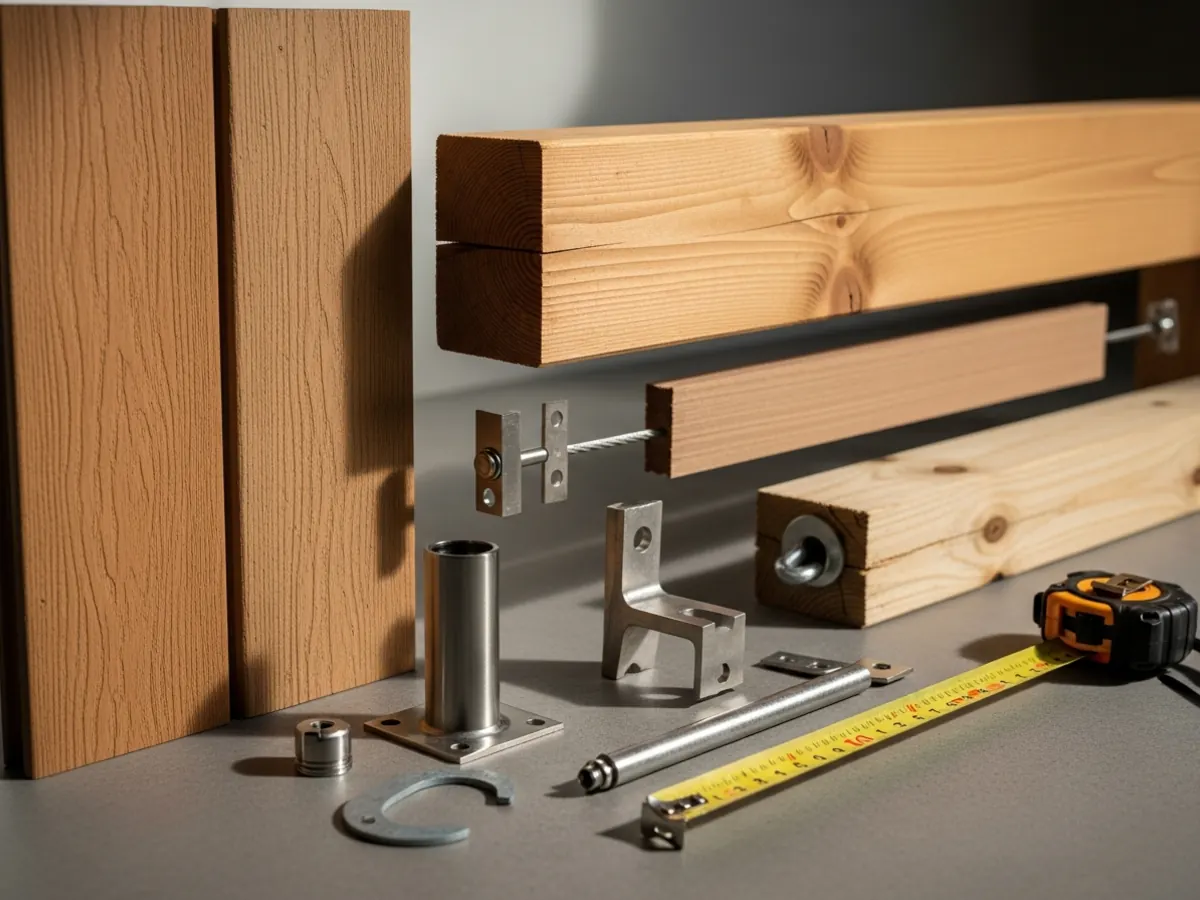
Composite decking — Trex Transcend, TimberTech AZEK, Fiberon Concordia
Industry-leading deck surface materials. Excellent dimensional stability in Boise's freeze-thaw cycling and high-UV summer load. No painting or staining required throughout life. 25–30 year material warranty. Cost: $4–$10 per square foot installed (vs $3–$5 for cedar, $2–$3 for pressure-treated). Available in wood-tone colors that read as sympathetic to North End homes — mahogany, cedar, walnut, dark teak. Premium options (TimberTech AZEK, Trex Transcend with shell-protected surface) offer the most realistic wood-look texture and color variation. Best choice for most North End decks regardless of architectural era — the maintenance-free reality matches owner expectations and the modern composite formulations now offer wood-aesthetic that was unavailable a decade ago.
Cedar decking — period-authentic for Craftsman bungalows committed to maintenance
Real cedar wood — most period-authentic for 1905–1925 Craftsman bungalow scope where natural wood tone matches the home's character and original outdoor-architecture vocabulary (cedar shingle gables, painted cedar trim, often cedar fencing). Requires staining or sealing every 2–3 years to maintain color and weather resistance — without which cedar weathers to silver-gray within 18 months. 15–25 year service life depending on maintenance discipline. Cost: $3–$5 per square foot installed. Beautiful but maintenance-intensive; the right answer only when homeowner is genuinely committed to ongoing care every 2–3 years.
Pressure-treated decking — budget-constrained or rental scope
Lowest-cost option ($2–$3 per square foot installed). Modern pressure-treated lumber (CCA-replacement micronized copper treatments) lasts 10–15 years with proper maintenance — annual cleaning, stain or sealer every 2 years, fastener inspection. Less period-sympathetic than cedar; less durable than composite. Acceptable for budget-constrained projects or rental property scope where owner is optimizing for cost rather than longevity or aesthetic. Not recommended for primary-residence Craftsman bungalow or Tudor mansion scope where the architectural context calls for higher-quality material.
Railing systems — period-correct Craftsman painted post detail
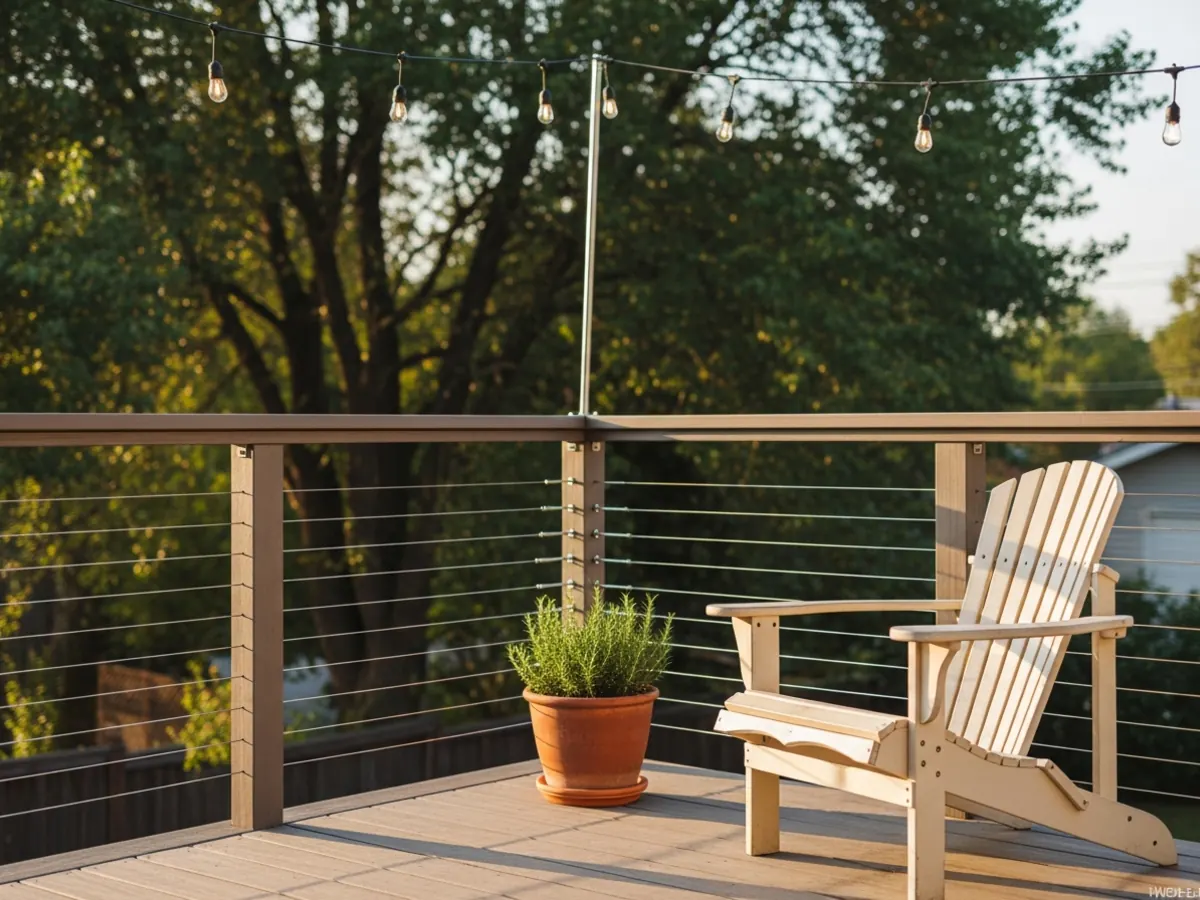
Painted 4×4 cedar or pressure-treated railing posts (painted to match house trim color in cream, warm white, or sage green) are the period-correct choice for Craftsman bungalows on Hyde Park, 13th Street, Camel's Back, and Heron Streets — they echo the tapered porch column detail of original Craftsman architecture. Aluminum or composite balusters between posts (Fortress Iron, Westbury) provide low-maintenance infill that reads cleanly. Cable railing (horizontal stainless cables between metal posts) is appropriate for newer-era homes (post-war ranch on lower-numbered streets, modern infill north of Hill Road) and where owners want unobstructed views toward the foothills from Camel's Back-area properties. Tudor and Colonial Revival on Harrison Boulevard support more elaborate decorative-baluster patterns appropriate to the home's formal character.
Foundation and structural framing — 24-inch Boise frost-depth footings, no shortcuts
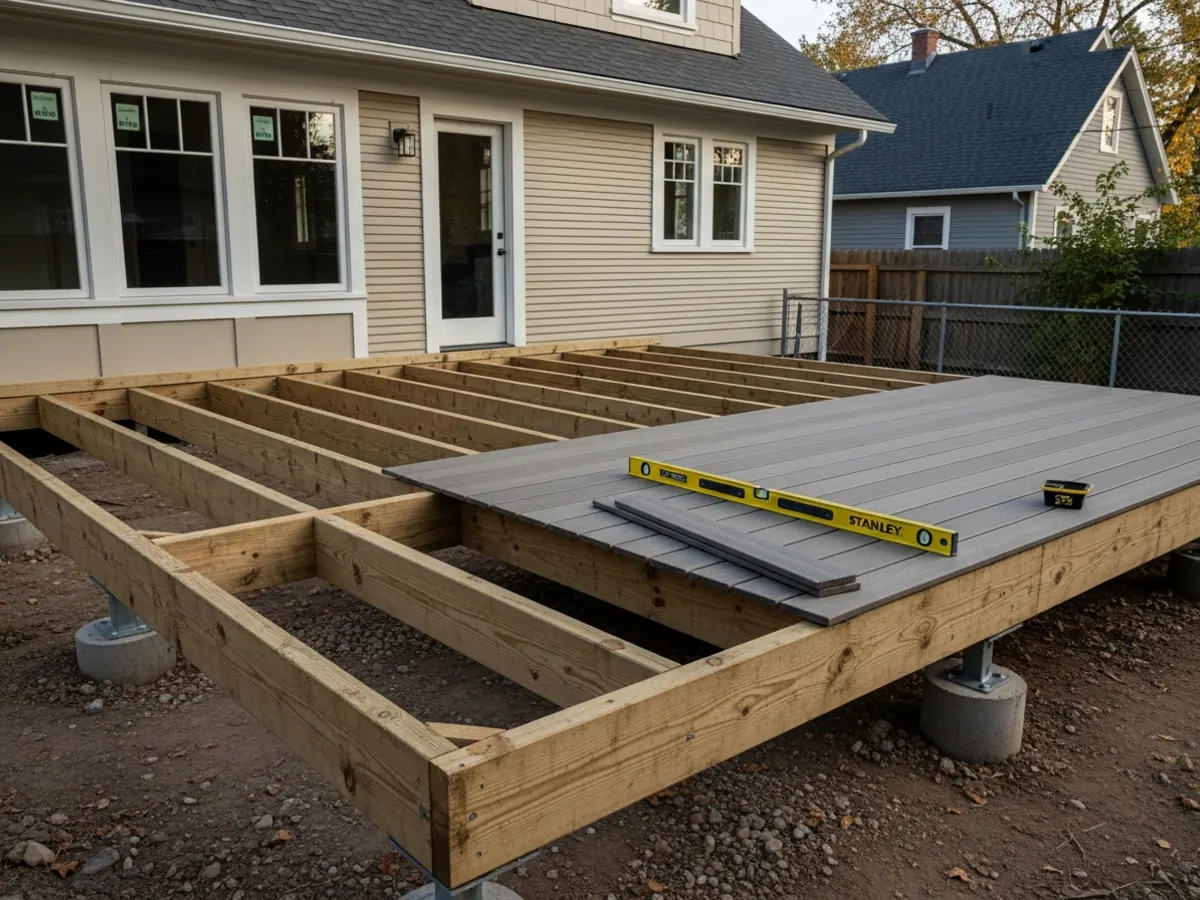
Tube-form concrete footings extending to 24-inch frost depth (Boise minimum — verified per property at consultation, sometimes deeper on poor-bearing soils common in older fill yards). Concrete poured in-place around galvanized post anchors. Pressure-treated lumber for joists and beams (modern micronized-copper treatments are excellent — far better than older ACQ formulations). Engineered lumber (LVL or PSL) for long-span beams over 12 feet. Joist hangers throughout with stainless or hot-dipped galvanized structural screws (not nails, which back out under freeze-thaw cycling). Helical piles are an alternative to concrete footings — more expensive ($350–$600 per pile vs $150–$300 for concrete), faster install, less dirt disruption, useful when mature-tree root systems prevent concrete footings.
Lighting and integration — low-voltage LED with warm color temperature
Low-voltage LED deck lighting integrated into railing posts, stair risers, and post caps adds usability after dark and is the highest-impact-per-dollar enhancement on outdoor-living scope. Dimmer-controlled, 2700K–3000K warm color temperature throughout. Run wiring through framing during construction for clean finish — retrofit lighting on completed deck is dramatically more expensive and visible. Outdoor receptacles for grills, heaters, and entertainment use installed during electrical rough-in. Integration with existing exterior lighting design creates cohesive evening aesthetic across landscape and house.
Deck construction in older North End back yards routinely surfaces conditions that affect cost and timeline. Tight 50' District frontages, mature trees, and foothills-edge transitions all create predictable patterns.
- •HPC Certificate of Appropriateness for visibility-from-public-way scope Front-yard decks (rare), side-yard decks on corner lots, deck-stair railings extending around a side of the home that's visible from the street, and rear-yard decks where rear faces a public alley with low visual screening all require HPC review. Iron Crest pre-meets with HPC staff before formal application. Adds several weeks to the permit timeline. Modifications when HPC requests changes: $1,500–$5,500 in design and material adjustment.
- •Shoreline Protection coordination on greenbelt-edge properties Camel's Back and Heron Streets properties within 50 feet of the Foothills Reserve boundary trigger Shoreline Protection coordination through City of Boise — adds review steps, sometimes retaining-wall or erosion-control requirements. Coordination and any required mitigation: $2,500–$8,500 above standard scope.
- •Existing deck demolition and disposal If replacing a deteriorating existing deck, demolition adds labor and disposal cost. Old deck removal: $1.50–$3.50 per square foot of existing deck. If existing deck has lead-paint contamination on painted railing posts (pre-1978), EPA RRP-compliant disposal: $1,500–$4,500 incremental.
- •Poor-bearing soil conditions in older fill yards (lower-numbered streets pattern) Some North End back yards have poor soil bearing — fill from old structures demolished during 1970s–1990s renovations, organics from decades of garden composting, water table close to surface in low-lying lots. Geotechnical investigation: $2,000–$4,500. Engineered footing solutions (deeper concrete footings to bearing soil, drilled piers, or helical piles): $4,500–$18,000 above standard.
- •Underground utilities crossing deck footing area Old utility lines (sewer laterals, water service, gas service, original electrical service) sometimes run through North End back yards in unexpected paths from pre-1925 service installation. Idaho 811 mark-out before excavation is required; sometimes utility relocation is needed when footing locations conflict with critical lines. $0 if caught in mark-out and footing locations adjusted; $2,000–$6,500 if utility must be physically relocated.
- •Mature-tree root system impact on footing locations Many North End yards have 80–120-year-old plantings — mature elm, walnut, oak, maple — with extensive root systems that footings must work around. Footing locations may need to shift or be hand-excavated to avoid major roots. Helical piles are sometimes the right answer when concrete footings can't be located without root damage. Hand-excavation premium and design adjustment: $1,500–$5,500. Arborist consultation when major roots may need cutting: $400–$800.
- •Existing house ledger connection requiring repair on pre-1925 stock Connecting deck to existing house framing requires careful inspection of the rim joist where the ledger attaches. Pre-1925 Craftsman bungalow rim joists are typically robust old-growth fir that holds fasteners excellently — but sometimes show rot at south- and west-facing elevations from accumulated water entry. Reinforcement with sister blocking before ledger attachment: $600–$2,500 typical.
- •Yard grading and drainage issues on tight 50' frontages Some North End back yards have grading issues affecting deck design or requiring drainage solutions — particularly on tight 50' frontages where yard area is limited and water management has fewer options. Yard re-grading or French drain install: $2,000–$6,500. Sometimes deck design itself addresses grading by spanning low areas.
- •Right-of-way permit restrictions on tight District streets Hyde Park, 13th Street, Camel's Back, and Heron Streets have tight 50' frontages with limited curbside staging for dumpster placement and material delivery. Right-of-way permits have additional restrictions on some District streets ($150–$400 per permit period). Alley access where available is essential — projects without alley access require more careful staging logistics. Iron Crest handles permitting as part of project setup.
- •Existing alley fence or detached garage requiring temporary access modification Material delivery and waste disposal often requires alley access. Existing alley fences or detached garages sometimes need temporary panel removal for crew and material access. Standard scope addresses minor cases; major access challenges where alley garage sits on lot line: $600–$2,200.
- •Setback or zoning restrictions identified during permit review City of Boise zoning sometimes flags deck setback (which varies by parcel and zoning district; we verify it during project planning) or coverage issues not apparent from initial site visit. Issues are sometimes flagged late in permit review when the full plot plan is checked. $0 if caught early; $2,000–$6,500 if requires redesign mid-process.
Consultation, lot assessment, sub-area-specific review (Week 1)
On-site walkthrough. Lot dimension verification — particularly important on tight 50' District frontages where deck footprint is constrained. Setback analysis. Alley access assessment for material staging and dumpster placement. HPC visibility-from-public-way assessment — front, side, rear-from-alley views all evaluated. Shoreline Protection coordination flag on Camel's Back or Heron Streets greenbelt-edge properties within 50 feet of Foothills Reserve. Mature-tree inventory and root-system protection planning. Discussion of deck shape, intended use, and architectural integration with home's Craftsman, Tudor, or Colonial Revival vocabulary.
Design development and material selection (Weeks 1–3)
Deck plan with dimensions, height above grade, railing detail, stair location, multi-level configuration on grade-change lots. Material selections — composite color (Trex, TimberTech, Fiberon), railing system (painted Craftsman post detail, decorative Tudor baluster, or cable-rail for foothills views), low-voltage lighting layout. Color and finish coordination with house trim and existing exterior architecture. Mature-tree root protection plan for footing locations.
HPC pre-meeting and formal Certificate of Appropriateness application (Weeks 2–10 if scope is visible)
Pre-meeting with HPC staff before formal application — minimizes redesign risk by identifying any concerns about design, railing material, or visibility before formal review begins. Formal Certificate of Appropriateness application with architectural drawings showing existing site, proposed deck, height, railing detail, and material specifications. HPC review typically 6–10 weeks for deck scope. Shoreline Protection coordination submittal on greenbelt-edge scope runs in parallel.
Detailed estimate and material orders (Weeks 2–6)
Detailed line-item estimate with structural specifications. Composite decking and railing material orders placed (typical 1–3 week lead time for stock colors, 4–6 weeks for special-order). Custom-milled cedar or pressure-treated framing lumber. Helical pile coordination if scope requires.
Building permit application (Weeks 6–10)
City of Boise building permit application with structural drawings showing footing locations, framing layout, post and beam dimensions, ledger attachment detail. Permit processing time varies by season for deck-only scope. Right-of-way permit for dumpster placement and material delivery.
Site setup, plant protection, mature-tree root protection (Day 1 of work)
Plant and lawn protection. Mature-tree root system protection during footing excavation — plywood barriers, hand-tool excavation near major roots, arborist coordination when needed. Footing locations marked. Idaho 811 utility mark-out completed before any excavation. Dumpster placement under right-of-way permit.
Foundation — 24-inch frost-depth footings (Days 2–6)
Tube-form concrete footings poured to 24-inch frost depth (sometimes deeper on poor-bearing soils). Concrete cure 24–72 hours depending on temperature. Galvanized post anchors set in fresh concrete with proper alignment. City of Boise footing inspection. Helical piles as alternative when concrete footings can't be located due to root systems or poor-bearing soils.
Framing — posts, beams, joists, ledger (Days 6–16)
Posts, beams, joists install. Engineered lumber (LVL or PSL) for spans over 12 feet. Ledger attached to house with proper Z-flashing detail and self-adhered flashing tape integration to prevent water intrusion at the house-to-deck joint. Joist hangers throughout with stainless or hot-dipped galvanized structural screws. City of Boise framing inspection.
Decking, railing, stairs, painting, walkthrough (Days 16–48)
Composite decking install with proper expansion gaps and hidden fastener system. Painted 4×4 railing posts with cap detail (period-correct on Craftsman scope). Aluminum, composite, or cable rail infill. Stair construction with code-compliant rise-and-run dimensions and graspable handrail. Painting of railing posts and any visible trim to match house color. Low-voltage lighting install. Outdoor receptacles. Final cleanup. Lawn restoration around work area. HPC final inspection on visible scope. Final building inspection. Walkthrough with owner. 3-year Iron Crest workmanship warranty + composite manufacturer warranty.
Deck construction on North End lots requires the combined skills of a structural carpenter familiar with Boise's 24-inch frost-depth footing requirements and the soil conditions in older District lots, a designer who can integrate the deck with Craftsman bungalow or Tudor Revival architectural character, and a contractor with operational experience navigating tight 50' District frontages and HPC review for any scope visible from public way.
- City of Boise Historic Preservation Commission — Design review information, district maps, and Certificate of Appropriateness application.
- City of Boise Planning & Development Services — Building, electrical, plumbing, and mechanical permits. Online portal and in-person plan check.
- Idaho DEQ Air Quality (Asbestos) — Testing and abatement guidance for pre-1980 homes via the Idaho Department of Environmental Quality.
- EPA Lead Renovation, Repair and Painting (RRP) Program — Required certification and work practices for renovation in lead-paint homes.
- Preservation Idaho — Statewide nonprofit advocating for historic preservation. Resources and educational events.
Will my North End deck need Historic Preservation Commission approval?
Depends on visibility from public way. Most rear-yard decks behind tall solid fences in the District proceed without HPC review because they're not visible from a street. Decks visible from public way trigger Certificate of Appropriateness — front-yard decks (rare), side-yard decks on corner lots, deck-stair railings extending around a side of the home that's visible from the street, and sometimes rear-yard decks where the rear faces a public alley with low visual screening. Covered decks (pergola, louvered roof, solid roof) universally trigger HPC review because the roof structure is exterior architectural element regardless of yard visibility. Iron Crest pre-meets with HPC staff to confirm review requirements before formal application — adds several weeks when triggered.
What's the right decking material for a North End Craftsman bungalow?
Composite decking (Trex Transcend, TimberTech AZEK, or Fiberon Concordia) in a warm wood-tone color (cedar, mahogany, walnut, dark teak). Excellent dimensional stability in Boise's freeze-thaw climate, no maintenance beyond occasional cleaning, 25–30 year material warranty. Painted 4×4 cedar railing posts in cream or warm white matching the home's original Craftsman porch column color provide period-sympathetic detail that echoes the home's architectural vocabulary. Cedar decking is more period-authentic but requires staining or sealing every 2–3 years — appropriate only for owners genuinely committed to ongoing maintenance discipline.
How deep do deck footings need to be in Boise's North End?
24 inches minimum (Boise frost depth — sometimes deeper on poor-bearing soils common in older fill yards). Footings that stop above the frost line will heave during freeze-thaw cycles, causing the deck to rack and shift over time. Iron Crest pours every footing below the required frost depth using tube forms and properly designed concrete mix with poured-in-place concrete around galvanized post anchors. Helical piles are an alternative for sites where excavation is difficult — mature-tree root systems are common on pre-1925 District lots and sometimes prevent traditional concrete footings; helical piles are more expensive but install faster with less yard disruption.
Can I have a deck on a tight 50' District frontage with limited yard?
Yes — and the typical North End deck footprint is calibrated to exactly this constraint. 12×16 to 14×20 sized for outdoor dining for 4–6 plus a grill is the most common shape on Hyde Park, 13th Street, Camel's Back, and Heron Streets bungalow stock. Setback constraints, which vary by parcel and zoning district and are verified during project planning, further limit available footprint. Alley access where available is essential for material staging and dumpster placement; projects without alley access require more careful right-of-way coordination on the front street. Larger deck footprints typically require deeper Harrison Boulevard or Camel's Back-area lots with more rear-yard depth.
What about deck footings near mature trees?
Mature North End trees (which are part of the neighborhood's character — 80–120-year-old elm, walnut, oak, maple in many District yards) have extensive root systems that footings must work around. Iron Crest hand-excavates footing holes near significant tree roots and shifts footing locations as needed. Where footings can't be located optimally due to trees, helical piles are the right answer — they install with minimal root disturbance and can be located precisely. Worst case, we consult with an arborist to identify which roots can be cut without harming the tree. Mature-tree protection during construction (plywood barriers, careful equipment routing) is part of standard scope.
What about Shoreline Protection on greenbelt-edge Camel's Back or Heron Street properties?
Camel's Back and Heron Streets properties climbing toward the foothills sometimes sit within 50 feet of the Foothills Reserve boundary — that triggers Shoreline Protection coordination through the City of Boise on top of standard building permit and HPC review when applicable. Adds review steps, sometimes setback constraints from the reserve boundary, and occasionally retaining-wall or erosion-control requirements when slope and soil conditions warrant. Iron Crest flags Shoreline Protection at consultation on properties near the foothills transition and handles coordination as part of project setup.
How long does a deck take to build in the North End?
5–8 weeks for a tight-frontage modest rear deck (12×16 to 14×20) on Hyde Park or Camel's Back bungalow. 8–11 weeks for a Harrison Boulevard outdoor-living deck (16×24 to 20×32). 10–14 weeks for a multi-level terraced deck on Camel's Back foothills transition. Permit processing (varies by season) and material lead time (1–3 weeks for composite stock colors, 4–6 weeks for special-order) run concurrent with design. HPC Certificate of Appropriateness adds several weeks when scope is visible from public way, and Shoreline Protection coordination adds review time on greenbelt-edge scope.
Can I attach a deck to a 100-year-old Craftsman house?
Yes — and we do this regularly on Hyde Park, 13th Street, and Camel's Back bungalow stock. The connection (called a ledger) requires careful inspection of the existing rim joist where the deck attaches. Original rim joists in pre-1925 Craftsman bungalows are typically robust old-growth fir lumber that holds fasteners excellently — better than modern pressure-treated rim joists in some respects. Where rim joist condition is questionable (typically at south- and west-facing elevations from accumulated water entry), we install structural sister blocking or replace damaged sections before ledger attachment. Proper Z-flashing and self-adhered flashing tape at the ledger-to-house junction is critical to prevent water intrusion — failed flashing here is the most common cause of expensive water damage to older homes.
What about alley access and material staging in the North End?
Alley access is essential for North End deck projects on tight 50' District frontages — material deliveries, dumpster placement, and crew access all benefit from alley positioning rather than the front street. Hyde Park, 13th Street, and many Camel's Back blocks have functional alleys; Harrison Boulevard and some lower-numbered street blocks do not. We coordinate with City of Boise for any required right-of-way permits and with neighbors for any temporary alley fence panel removals. North End projects from alley access have minimal impact on front-street neighborhood character; projects without alley access require careful staging logistics and longer right-of-way permit periods. Confirmed at consultation walkthrough.
Ready to start your North End deck construction project?
Free in-home consultation, honest contingency-based budgeting, and the experience Boise homes require. Iron Crest Remodel — Idaho RCE #6681702, EPA RRP lead-safe work practices, $2M general liability, 3-year workmanship warranty.
Get Your Free Estimate