
Kitchen Toe-Kick Heating for Cold Boise Floors: 5 Decisions Before You Spec One
Boise homes with kitchens over crawl spaces, unheated basements, or slab-on-grade construction often have cold kitchen floors all winter. Toe-kick heaters integrate into the kitchen cabinet base and produce localized warmth without major HVAC modification. Five decisions for whether and how to specify them.
Quick answer
Typical toe-kick heaters operate at 35-50 dB during fan operation — similar to a quiet refrigerator or soft conversation. Audible in a quiet kitchen but not disruptive during normal cooking activity.
A common Boise kitchen complaint in winter: "The kitchen floor is freezing." The complaint comes from three specific structural patterns common in Boise homes — kitchens over crawl spaces (most pre-1980 Boise housing stock), kitchens over unheated basements (some mid-century homes), and kitchens on slab-on-grade construction (newer Boise homes especially in Meridian, Eagle outskirts, and Kuna). Boise's winter climate (averaging 22-38°F in December-February) cools these floor types substantially, producing cold-floor conditions for 3-4 months annually.
Toe-kick heaters address this specifically. They install into the toe-kick space below the kitchen cabinets, produce localized warmth at the floor level where you stand during cooking, and don't require major HVAC modification. The retrofit cost is modest ($400-$2,500 depending on type and complexity), and the daily-use comfort improvement is substantial.
This article covers five decisions for evaluating and specifying toe-kick heating in your Boise kitchen.
For broader HVAC and heating system context — whole-home heating decisions, ductwork, hydronic systems — see our HVAC guide for Boise. This page focuses specifically on toe-kick heaters as a targeted retrofit in kitchen remodels.
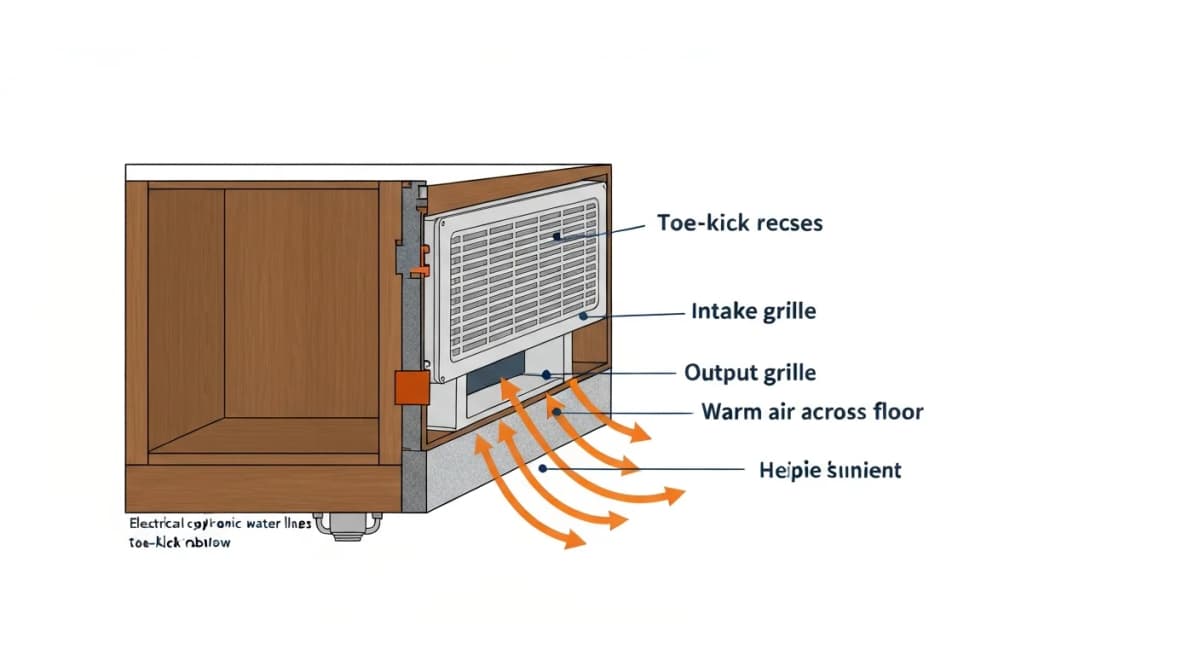
Cold kitchen floors result from specific structural conditions. Not every Boise home has the problem — but enough do that toe-kick heating is worth knowing about.
Kitchens over crawl spaces (highest cold-floor risk): Most pre-1980 Boise homes have crawl-space foundations. The crawl space is typically unheated, often poorly insulated, and runs 35-45°F in winter. The kitchen floor cools through conduction. Subfloor temperatures in unimproved crawl spaces can reach 50-55°F even when the kitchen ambient is 70°F. Cold-floor sensation is severe.
Kitchens over unheated basements: Less common in Boise than in colder climates but exists. Similar conduction problem, slightly less severe than crawl spaces because the basement is generally warmer.
Kitchens on slab-on-grade construction: Common in newer Meridian, Kuna, and outskirts-of-Eagle housing. Concrete slabs cool through ground contact — slab temperatures stay around 50-58°F in Boise winter despite kitchen ambient heating. Slab kitchens also lose heat through edge insulation gaps.
Kitchens with finished hardwood floors over any of the above: Hardwood conducts heat well and provides minimal insulation between the cold subfloor and the user's feet. Aggravates the cold-floor sensation.
Less affected: Kitchens over heated basements, kitchens on slab-on-grade with radiant slab heating, kitchens with thick carpet (rare in modern remodels), kitchens with engineered tile on a thermal mat.
How to assess your home's risk:
Crawl space inspection: If you can access the crawl space, check insulation. R-19 or higher in the floor cavity is acceptable; R-11 or no insulation indicates high cold-floor risk.
Floor temperature measurement: Use an infrared thermometer on the kitchen floor in winter. Floor temperature 5°F or more below ambient indicates significant heat loss to the floor structure.
Subjective test: If you wear slippers in winter when you wouldn't otherwise, your kitchen probably has cold-floor issues worth addressing.
Determining if your home actually has the cold-floor problem before specifying a toe-kick heater.
Some Boise homes don't have this problem and don't benefit from toe-kick heating.
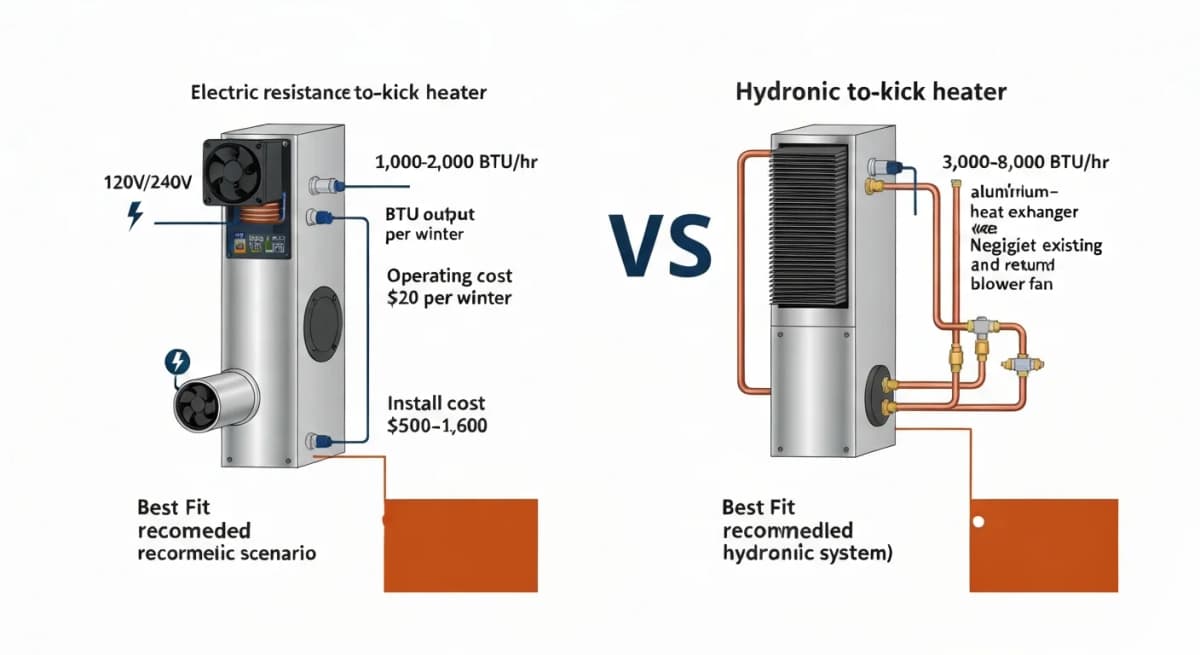
Two technology paths for toe-kick heating: electric resistance and hydronic (water-loop). Each has distinct fit conditions.
Electric toe-kick heaters:
How they work: A heating element (resistance coil) plus a small blower fan. Plugs into existing electrical circuit or wires into a dedicated circuit. Activates via thermostat or switch.
Cost: $200-$600 for the unit, $300-$1,000 for electrical install (if dedicated circuit needed). Total: $500-$1,600.
Heat output: 1,000-2,000 BTU/hour (300-600 watts of electrical input). Sufficient for typical 8x10-foot kitchen footprint.
Operating cost: $20-$60 per winter season at Idaho Power electricity rates.
Best fit: Smaller kitchens, retrofit applications, homes without hydronic heating systems already in place.
Hydronic toe-kick heaters:
How they work: Hot water from the home's heating system (boiler or hydronic heat pump) circulates through an aluminum-finned heat exchanger in the toe-kick unit. A small blower transfers heat to the room. No internal heating element; relies on the home's existing hot water supply.
Cost: $400-$1,200 for the unit, $500-$1,800 for plumbing connection to the home's hydronic loop. Total: $900-$3,000.
Heat output: 3,000-8,000 BTU/hour. Significantly higher than electric. Right for larger kitchens or scenarios where the floor is very cold.
Operating cost: Negligible additional cost over the home's existing hydronic heating expense.
Best fit: Larger kitchens, homes that already have hydronic heating systems (boilers, hydronic heat pumps), comprehensive heating system upgrades.
Recommendation by Boise scenario:
Pre-1980 home with crawl space, retrofit only the kitchen: Electric toe-kick. Modest install, sufficient heat for typical kitchen.
Whole-home renovation with hydronic system being added: Hydronic toe-kick as part of the broader scope. Operating cost is essentially free.
Slab-on-grade home with floor temperature 50-55°F: Electric toe-kick may not have enough output. Consider hydronic, or evaluate whether full radiant slab installation is feasible during remodel.
Selecting between electric and hydronic based on home characteristics.
Electric is simpler but lower output; hydronic requires existing or new hydronic infrastructure.
Toe-kick heating delivers value in specific scenarios. Not every Boise kitchen benefits enough to justify the cost.
Strong-fit scenarios:
Cooks who spend 30+ minutes daily standing at the kitchen counter: The cumulative time at the counter means cold-floor discomfort compounds. Daily-use benefit clearly justifies $500-$3,000 install.
Older household members who feel cold acutely: Aging-related thermal sensitivity means cold-floor sensation is more bothersome. Toe-kick heating delivers daily comfort improvement.
Homes with documented floor temperatures below 60°F in winter: Objective measurement supports the subjective complaint. Floor-warming addresses a real comfort gap.
Kitchen remodels where the toe-kick space is being rebuilt anyway: Marginal cost of toe-kick heater install during kitchen remodel is much lower than retrofit install years later. Standard scope addition.
Weak-fit scenarios:
Newer Boise homes with insulated crawl spaces: Floor temperatures stay in 60-65°F range. Cold-floor sensation is mild. Toe-kick heating delivers marginal benefit.
Homes with engineered hardwood or porcelain tile on insulating underlayment: Floor warmth retention is better. Less benefit from toe-kick heating.
Limited cooking activity: Households that don't cook often don't spend long enough in the kitchen for cold floors to matter.
Tight budgets where other comfort improvements deliver more impact: Better insulation, drafty window replacement, or other broader fixes might address the underlying cold-home issue more effectively than a localized toe-kick heater.
Marginal-fit scenarios:
Small kitchens (under 80 sq ft): The toe-kick space might be limited to 2-3 linear feet, restricting heater placement. Some Boise galley kitchens have inadequate toe-kick space for proper unit installation.
Galley kitchens with the toe-kick on the wrong side: Heat from a toe-kick unit travels across the room. If the cook stands on the opposite side, the unit doesn't help much. Placement matters.
Honestly evaluating whether your kitchen actually benefits from toe-kick heating.
Some homes don't need it. The install cost wastes money in those scenarios.
Solve cold kitchen floors during your remodel
Toe-kick heater specification is part of our standard kitchen remodel design for Boise homes with cold-floor conditions. Schedule a consultation and we'll measure your floor temperatures and recommend the right approach.
Toe-kick heater installation requires coordination with cabinet installation and electrical/plumbing trades.
Pre-installation requirements:
Cabinet base modification: Standard kitchen cabinets have a 4-inch toe-kick recess. Toe-kick heaters typically require 4-6 inches of vertical clearance and 3-4 inches of depth. Some cabinet types accommodate this; others need custom modification.
Outlet/circuit positioning: Electric toe-kick heaters need power. A dedicated 120V circuit is sometimes required (depending on wattage). Specify circuit during electrical rough-in, before drywall.
Plumbing rough-in (hydronic): Hot water supply and return lines from the home's hydronic loop must reach the toe-kick area. Plumber routes during rough-in phase.
Cabinet finish coordination: The heater grille is visible in the toe-kick. Match finish to cabinet aesthetic (black, white, brushed nickel, or specified cabinet color).
Project sequencing for new kitchen remodels:
1. Design phase: Specify heater unit, location, and infrastructure requirements.
2. Rough-in: Electrical or plumbing infrastructure installed before drywall closes.
3. Cabinet install: Cabinets positioned with toe-kick space available for heater.
4. Heater install: Unit installed in toe-kick space, connected to power or water.
5. Cabinet finish: Toe-kick grille finished to match cabinet aesthetic.
Retrofit installation in existing kitchen:
1. Identify suitable toe-kick location (sufficient clearance, accessible).
2. Run new electrical circuit (or extend existing) — may require partial cabinet removal.
3. Modify cabinet toe-kick to accommodate heater dimensions.
4. Install heater, connect, and test.
5. Restore finish.
Cost premium for retrofit vs new-install: typically 30-60% higher due to additional labor in accessing existing electrical/plumbing.
Recommended Boise installers:
Licensed electrician (electric unit): Any qualified Boise electrician familiar with kitchen scope. Verify they understand toe-kick clearance and grille finish coordination.
Licensed plumber + electrician (hydronic unit): Hydronic typically requires both trades. Specify experienced installers for both.
Cabinet installer: Coordinate the toe-kick modification with the cabinet installer, not separately. Avoid mismatched finish or improper clearance.
Project planning for the toe-kick heater installation specifically.
Coordination complexity. Multiple trades involved.
Toe-kick heaters address the symptom (cold floor); insulation addresses the cause. For Boise homeowners with crawl-space-borne cold-floor issues, considering insulation alternatives or supplements is worth the analysis.
Insulation alternatives:
Crawl space floor insulation (R-19 or R-30): Insulation between the joists supporting the kitchen floor. Cost: $1.50-$3.00 per sq ft for materials and labor. For a typical kitchen with 150 sq ft of floor area, total cost: $225-$450. Reduces heat loss substantially.
Crawl space encapsulation: Full crawl space conversion to a conditioned space (vapor barrier, perimeter insulation, mechanical ventilation). Cost: $5,000-$15,000. Addresses crawl space moisture and energy issues comprehensively, not just the kitchen floor.
Slab perimeter insulation (slab-on-grade homes): Insulation around the slab edge to reduce heat loss to surrounding soil. Cost: $1,500-$4,500 depending on exposure. Better long-term solution than toe-kick heating for slab-on-grade homes.
Direct comparison:
Toe-kick heater alone: Addresses immediate comfort but heat loss to crawl space continues. Operating cost is real ($20-$60 per year electric, free if hydronic).
Floor insulation alone: Addresses heat loss source. Significantly reduces cold-floor severity. May eliminate the need for toe-kick heating entirely.
Both (insulation + toe-kick): Comprehensive solution. Insulation addresses underlying problem; toe-kick handles residual cold during peak winter cold.
Recommendation by scenario:
If you can do insulation work (accessible crawl space): Start with insulation. May resolve the issue. Add toe-kick later if needed.
If insulation work is impractical: Toe-kick heater becomes the right primary intervention. Accept that the underlying heat loss continues.
If you have budget for both: Insulation first (addresses source), then evaluate whether toe-kick is still needed. Sometimes the answer becomes no.
The economic analysis often favors insulation over toe-kick heating for Boise crawl-space scenarios — $300-$500 for floor insulation versus $500-$1,600 for an electric toe-kick — and insulation reduces ongoing heating costs across the entire home. But each home is different and assessment is worthwhile.
Considering the broader options before defaulting to toe-kick heating.
Insulation work may not be feasible in some homes (inaccessible crawl spaces, complex floor framing).
Iron Crest's kitchen remodel design includes explicit cold-floor assessment for any pre-1980 Boise home or any slab-on-grade home. We measure floor temperatures, inspect crawl spaces where accessible, and discuss the trade-offs between toe-kick heaters and insulation upgrades. For most cold-floor scenarios, we recommend addressing the underlying cause (insulation) plus a toe-kick heater as comfort backup. For broader HVAC context, see our Boise HVAC guide.
How loud is a toe-kick heater during operation?
Typical toe-kick heaters operate at 35-50 dB during fan operation — similar to a quiet refrigerator or soft conversation. Audible in a quiet kitchen but not disruptive during normal cooking activity. Some premium models include variable-speed fans that run quieter during low-output operation.
Can I run a toe-kick heater on a regular outlet?
Electric toe-kick heaters typically draw 300–1,500 watts and run on a standard 120V circuit; units above 1,500 watts need a dedicated circuit. Verify the specific unit's electrical requirements with your electrician before installation.
Do toe-kick heaters work as the only heat source for the kitchen?
No. Toe-kick heaters are designed as supplemental, localized heat — not primary kitchen heating. Plan on the home's central HVAC providing the primary heat; toe-kick adds floor-level warmth at the work zone.
How long do toe-kick heaters last?
Electric units: 10-15 years typical, primarily limited by fan motor lifespan. Hydronic units: 15-25 years, very few moving parts (just the blower fan).
Will a toe-kick heater affect my kitchen cabinet warranty?
Generally no, if installed per manufacturer specifications. Confirm with your cabinet manufacturer that toe-kick heater installation is permitted in their product. Most modern cabinet lines specifically accommodate toe-kick heater installations.
Solve cold kitchen floors during your remodel
Toe-kick heater specification is part of our standard kitchen remodel design for Boise homes with cold-floor conditions. Schedule a consultation and we'll measure your floor temperatures and recommend the right approach.
These pages go deeper on the topics linked from this article. Read them before your consultation and you'll come in with sharper questions and a clearer scope.
The following government agencies, industry organizations, and official resources provide additional information relevant to your remodeling project.