
Knob-and-Tube Wiring in Pre-1980 Boise Kitchens: 9 Hidden Costs You Find After Demo Day
If your Boise home was built before 1980, demo day is where the surprises happen. Here are the 9 wiring discoveries we see most often — and how each one reshapes the kitchen-remodel budget.
Quick answer
There are four reliable indicators you can check without opening walls. First, check the basement and any accessible attic for visible ceramic knob insulators on the joists — knob-and-tube is identifiable instantly when you can see it.
If your Boise home was built before 1980 — which covers most of the North End, large swaths of the Bench, the older sections of Hyde Park and Collister, and a surprising number of foothills properties — there's a real chance the kitchen walls hide some combination of knob-and-tube wiring, aluminum branch circuits, ungrounded receptacles, and a 100-amp panel that was sized for a 1958 family. None of this is visible on a pre-construction walkthrough. It shows up on demo day, after the cabinets are out and the drywall is open, with the crew on site and the project clock running.
Tear-outs of pre-1980 kitchens across the Treasure Valley tend to surface the same surprises, and they follow a pattern. Below are the 9 discoveries that most often change a kitchen-remodel budget, what each one actually costs to address, and the few that should pause the project for an electrical-panel decision before any new cabinets get hung. The point of this article isn't to scare anyone off a North End remodel — those homes are worth the work. It's to make sure the budget you sign at the design phase is the budget you spend, not the one you find out about on day six.
For the broader context, our historic home remodeling guide covers all the hazardous-material discoveries (knob-and-tube, lead paint, asbestos, galvanized supply) at a high level, and the Boise kitchen permits guide covers the inspection sequence. This page goes deeper on one specific risk category — pre-1980 kitchen wiring — and the demo-day decisions that come with it.
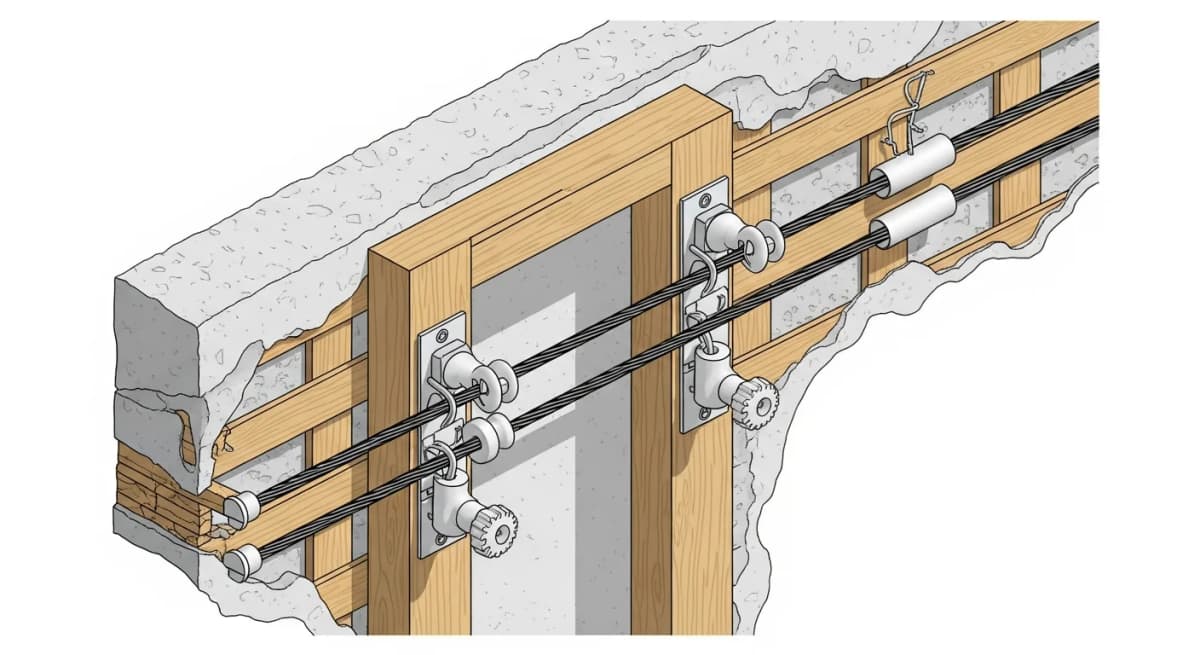
Knob-and-tube was the dominant residential wiring system in the United States from roughly 1900 through 1940, and pockets of it persisted in Boise installations into the early 1950s. It's identifiable instantly: ceramic knobs that anchor the conductors, ceramic tubes that pass them through framing, and individual hot and neutral conductors that run separately rather than bundled in a cable jacket. When we open a North End or Hyde Park kitchen wall and see active knob-and-tube, three things have to happen.
First, the kitchen-area circuits should be replaced entirely, not extended. Extending knob-and-tube with modern copper romex is poor practice that many inspectors reject, and it leaves the old circuit's limitations in place. Second, the rest of the home's circuits need to be checked for active knob-and-tube — what's in the kitchen wall is rarely the only place it exists, and a partial remediation leaves liability and insurance issues unresolved. Third, the panel must have a spare circuit position (or be upgraded) to accommodate the new dedicated kitchen circuits that replace the old shared-circuit knob-and-tube.
Cost impact (typical Treasure Valley range): replacing the knob-and-tube in the kitchen alone typically adds $2,500–$5,500 to the electrical scope. If the inspection finds active knob-and-tube throughout the home, a whole-home rewire while walls are already open runs $14,000–$28,000 depending on home size.
Pre-1950 North End, Hyde Park, and East End bungalows. Many pre-1940 Boise homes still have at least some active knob-and-tube somewhere in the structure.
Whole-home rewire during the kitchen project is cheaper per linear foot than coming back later. The decision is often whether to budget for it now or accept that the next remodel triggers it.
The second most common variant — and arguably the more dangerous one — is knob-and-tube that's been tied into a modern junction box, often by a previous homeowner or unlicensed handyman during a 1980s or 1990s update. From the outside, the kitchen looks modern: standard receptacles, drywall, normal-looking switches. Behind the wall, the modern wiring terminates at a junction box and the knob-and-tube starts from there.
These splices are usually made without proper enclosures or listed connectors (NEC 110.14), and the result is actively unsafe. The two systems have incompatible amperage ratings, no shared ground, and the splice points typically lack proper enclosure. Worse, this configuration is what triggers the insurance disclosure problem — most homeowner's policies in Idaho require disclosure of any active knob-and-tube, and a mid-circuit splice doesn't make the knob-and-tube go away.
Cost impact (estimate): the fix is identical to active knob-and-tube — replace the affected circuit run all the way back to the panel. Adds $1,800–$4,500 per circuit depending on path length and accessibility. The added wrinkle is documentation — Iron Crest provides written removal records that homeowners can submit to their insurance carrier to update the policy.
Homes where a previous remodel touched the kitchen but didn't go to the panel. Very common in 1980s and 1990s North End and Bench cosmetic updates.
The home looks more modern than it is. Insurance carriers price this as if the original knob-and-tube were still active because, electrically, it is.
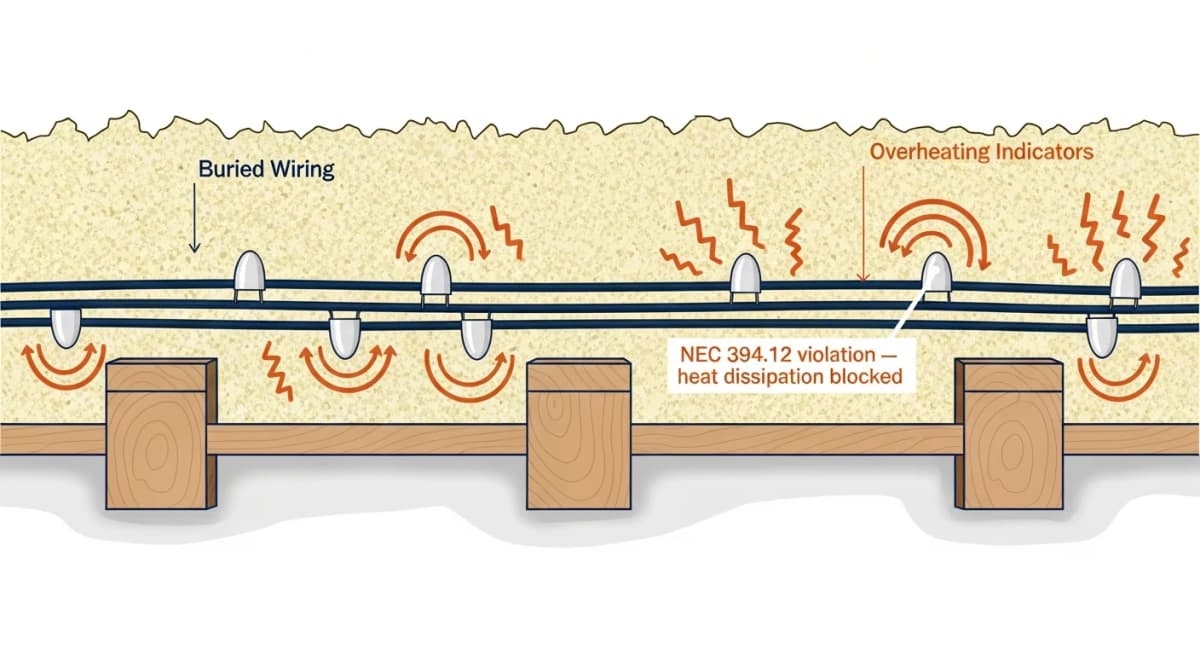
Boise had a big wave of attic-insulation upgrades during the 1990s and 2000s energy-efficiency push. In homes that still had active knob-and-tube in the attic, the blown-in cellulose or fiberglass went right over the top of the wiring. This is explicitly prohibited by NEC 394.12 because knob-and-tube was designed to dissipate heat through the air gap around the conductors — bury it in insulation and the conductors run hotter than they were designed for, accelerating the failure of the rubber and cloth insulation on the wires themselves.
We find this on virtually every pre-1940 Boise home that's had attic insulation added in the last 30 years. From the kitchen perspective, the issue is that the attic-run circuits often feed kitchen lighting and one or more of the kitchen receptacles. Remediation requires either removing the insulation, replacing the wiring, and re-insulating, OR running new circuits and abandoning the knob-and-tube in place (acceptable per code if the old wiring is fully disconnected at both ends).
Cost impact (estimate): adds $1,200–$3,500 to the kitchen scope if the kitchen-feeding circuits are involved. Adds $4,000–$9,000 if the homeowner wants the broader attic-insulation issue addressed at the same time (which makes financial sense — the access is already open).
Pre-1940 Boise homes (North End, East End, parts of Hyde Park) that had attic insulation upgrades in the 1990s–2010s.
Pulling and replacing the attic insulation costs more up front than abandoning the wiring in place, but the attic access is already open — doing it later means paying for that access twice.
If your kitchen has two-prong receptacles — the kind that won't accept a three-prong plug — every one of them is ungrounded by definition. In pre-1962 Boise homes this is original wiring; in 1962–1980 homes it sometimes means the original two-conductor wiring was retained when the rest of the home was upgraded. Either way, modern kitchen appliances and small electronics require grounded outlets, and under NEC 2023 — the edition Idaho has adopted — Section 210.8(A)(6) requires GFCI protection for all 125-volt through 250-volt kitchen receptacles, not only the ones serving the countertop.
The fix isn't a code-compliant three-prong receptacle swap unless the existing run is actually grounded somewhere upstream. In most pre-1980 Boise kitchens it isn't. The honest options are: run new grounded circuits from the panel (preferred for a remodel where walls are already open), install GFCI receptacles upstream and three-prong receptacles labeled "no equipment ground" (code-permitted but functionally limiting for some appliances), or accept partial replacement and document the limitation.
Cost impact (estimate): running new dedicated grounded kitchen circuits from the panel adds $1,800–$3,500 if the panel has capacity. If the panel is at capacity, see item 5.
Any Boise kitchen with original two-prong outlets, which is most pre-1980 homes that haven't had a previous full electrical remodel.
Three-prong with GFCI upstream is the budget option but limits which appliances you can plug in safely. New grounded circuits are the right call during a kitchen remodel.
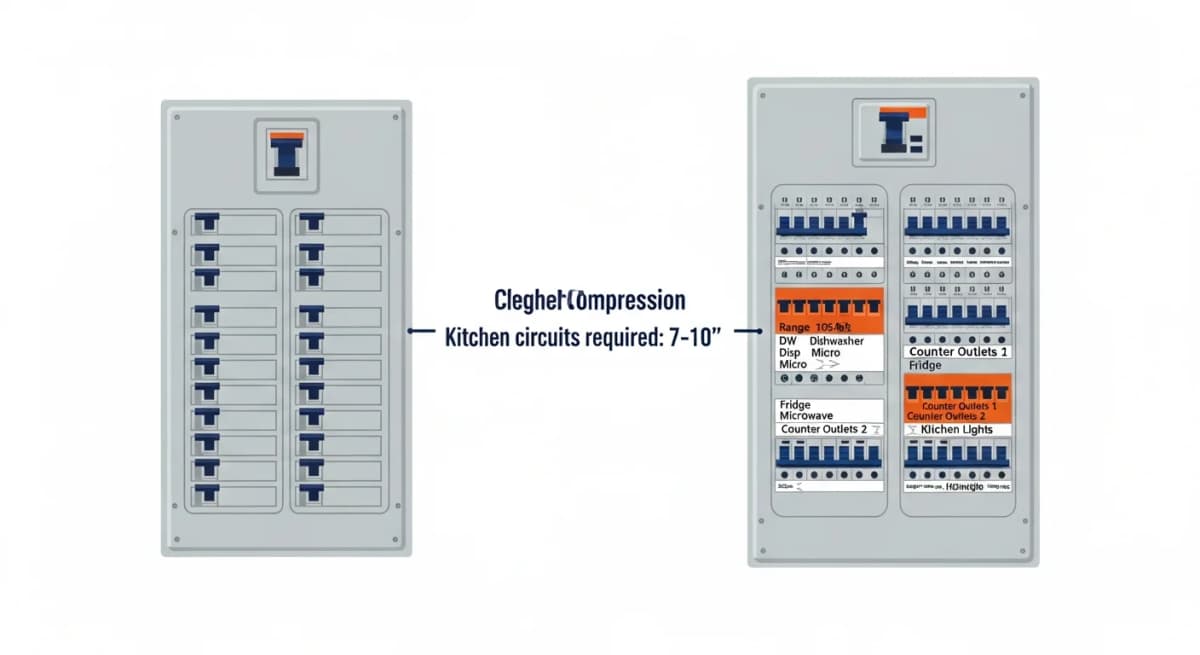
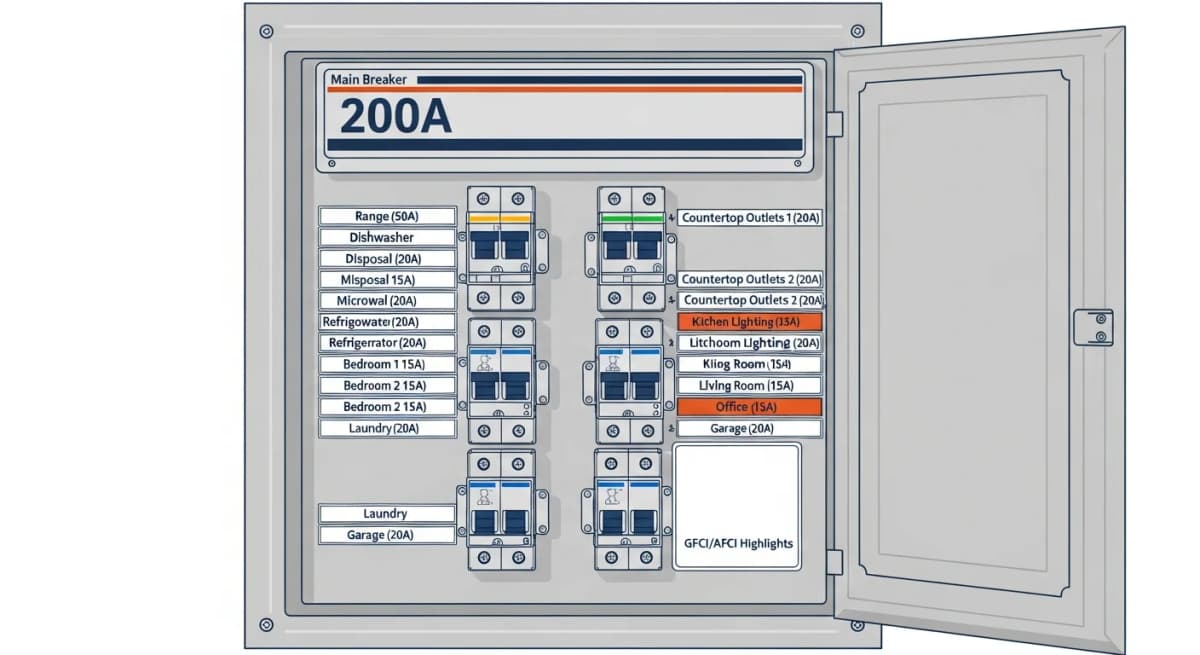
This is the demo-day discovery that pauses more Boise kitchen projects than any other. A modern kitchen needs 7–10 dedicated 20-amp and 15-amp circuits: two for countertop receptacles (NEC 210.11(C)(1)), one each for the dishwasher, garbage disposal, microwave, refrigerator, and range, plus general-lighting and any specialty circuits (pot filler, ice maker, wine fridge, beverage center). A 1950s 100-amp panel typically has 16–20 breaker positions and was originally loaded with maybe 6–8 circuits serving the entire home.
The math problem is twofold. Service amperage: 100 amps was sized for an era when the typical home had one electric range, no AC, no electric dryer, and incandescent lighting. A modern home with central AC, electric appliances, EV charging, and a renovated kitchen frequently exceeds 100 amps under peak load. Panel capacity: even if the service amperage were sufficient, there are physically not enough breaker positions to accommodate the new kitchen circuits.
The upgrade path: 200-amp service with a new panel, sized appropriately for current and future loads. This requires coordination with Idaho Power (they need to upgrade the meter base and service drop, which involves a temporary power shutoff and a scheduled appointment), a new permit from Boise PDS or the relevant city, and a licensed electrician for the panel install.
Cost impact (estimate): a 200-amp service upgrade including panel, meter base coordination, mast work, and permits typically runs $3,500–$6,500 in Boise. Subpanel-only upgrades (keeping the main service at 100 amps and adding a 100-amp subpanel near the kitchen) can be a viable middle-ground at $1,800–$3,200, but only if the existing service has the capacity for the additional load.
Pre-1980 Boise homes with original 100-amp panels — particularly common in North End, Hyde Park, the Bench, and Vista. Many homes built between 1950–1979 still have the original service.
The panel upgrade is rarely on the original budget. It also can't be deferred — if the kitchen needs the circuits, the panel decision happens now, not later.
Get a pre-demo electrical assessment before signing your kitchen remodel
We include a 30-minute electrical inspection in every pre-1980 Boise kitchen consultation — panel age and capacity, visible wiring ID, receptacle and GFCI status, and a documented contingency range so the budget you sign is the budget you spend. Free, no pressure.
Aluminum branch wiring is a separate issue from knob-and-tube and is found in a different era of Boise homes — primarily 1965 through 1975, during the copper-price spike that pushed builders toward aluminum as a temporary substitute. Aluminum branch wiring isn't inherently unsafe, but it has specific failure modes: it expands and contracts more than copper, which loosens terminations over decades; and it oxidizes under standard brass screw terminations, creating high-resistance connections that heat up and become fire risks.
In a kitchen, the receptacle terminations are where aluminum problems show up first because the high-amperage appliances (toaster, microwave, coffee maker) cycle the connection heat repeatedly. The remediation options are: (1) replace the aluminum branch circuits entirely with copper — the gold-standard fix; (2) use CO/ALR-rated receptacles and switches at every termination — code-compliant but doesn't fix the wire-itself problem; (3) install AlumiConn or COPALUM connectors at every junction — a permanent crimped repair that's UL-listed and accepted by major insurance carriers.
Cost impact (estimate): full aluminum-to-copper replacement of the kitchen circuits adds $2,200–$4,500. AlumiConn remediation runs $400–$900 for a kitchen scope. Most insurance carriers in Idaho accept AlumiConn as a permanent fix; check yours during the planning phase.
1965–1975 Boise homes — common in the western Bench, parts of Garden City, early Meridian subdivisions, and Vista. Aluminum is identifiable by silver-colored conductor versus copper's reddish color.
Full replacement is the safer long-term call. AlumiConn is faster and cheaper but only addresses terminations, not the underlying wire characteristics.
Pre-1975 Boise kitchens that have an electric range often have a three-wire (240V) circuit feeding the range receptacle. The pattern, normal for the era, was a single neutral conductor sized smaller than the two hots — sometimes a 6 AWG neutral on 4 AWG hots. This worked for resistance-heating ranges that drew current relatively symmetrically. It does NOT work for modern induction ranges, double ovens with electronics, or any modern range that draws asymmetric load on the neutral.
The fix is to replace the range circuit with a properly sized four-wire (two hots, dedicated neutral, dedicated ground), all conductors sized for the actual amperage of the new range. This is a single-circuit replacement and the cost is straightforward — the complication is whether the route from the panel to the range location remains accessible.
Cost impact (estimate): replacement of a single range circuit including new copper, new receptacle, and inspection runs $800–$1,800 if the path is accessible (usually it is during a kitchen remodel with walls open). Adds $400–$900 if conduit routing through finished ceilings or other rooms is required.
Pre-1975 homes upgrading to induction or double-oven ranges. Any kitchen remodel where the existing range circuit will be reused.
The receptacle change alone (3-prong to 4-prong) isn't a fix — the circuit conductors themselves need replacement.
Active knob-and-tube wiring is a disclosure trigger for most Idaho homeowner's insurance policies. Some carriers won't write new policies on a home with active knob-and-tube; others will but at a higher premium. After a remodel that remediates the kitchen wiring, the homeowner needs documentation proving the remediation to get the policy updated.
Resale is the other half of this conversation. Idaho's seller-disclosure requirements (Idaho Code § 55-2503) require sellers to disclose known defects, including active knob-and-tube. Buyers' agents in Boise increasingly include knob-and-tube as a specific inspection callout, particularly in North End and East End listings. A pre-listing kitchen remodel that addresses the wiring — even partially — removes a common negotiating point at sale. We don't have a sourced figure for what the electrical remediation itself is worth at sale — nobody tracks that component separately — but it is one fewer item for a buyer's inspector to write up.
Our standard practice during a pre-1980 kitchen remodel: we provide written documentation of every electrical scope item — what was found, what was replaced, what was left in place — that the homeowner can submit to their insurance carrier and use in any future resale disclosure. The documentation is part of the project deliverable, not an extra. For the bigger context on resale ROI, our seller's remodeling ROI guide covers the broader math.
Anyone planning to keep the home long-term (insurance angle) or sell within 5 years (resale angle). Honestly, both groups, which is most homeowners.
Documentation takes a half-day at project closeout. It's worth it.
When Iron Crest runs a pre-1980 kitchen remodel in Boise, the electrical scope isn't quoted as a fixed line item — it's quoted as a base scope with a documented contingency range, because we don't know what's behind the walls until demo day. Our pre-construction walkthrough includes a 30-minute electrical inspection (panel age and capacity, visible wiring identification at any accessible point like the attic or basement, receptacle and switch counts, GFCI status), which catches most of the discoveries above before signing. The rest only show up at demolition, and no walkthrough finds them — we are not going to pretend otherwise by putting a hit rate on it. We tell every pre-1980 client the same thing: budget 10–15% contingency on the electrical scope alone, and we'll either return the unused portion or apply it where the surprises actually land.
Decision authority matters here. When we open a wall and find active knob-and-tube, our project manager doesn't quietly add the work and bill at close-out. We pause, document with photos, write a formal change order, and the homeowner approves before any additional work happens. The transparent-discovery process is part of how we plan every kitchen remodel in Boise — particularly the older homes, where the surprises are the rule rather than the exception.
How can I tell if my pre-1980 Boise home has knob-and-tube wiring before demo day?
There are four reliable indicators you can check without opening walls. First, check the basement and any accessible attic for visible ceramic knob insulators on the joists — knob-and-tube is identifiable instantly when you can see it. Second, look at your electrical panel: original 1940s–60s fuse boxes (cylindrical glass fuses) almost always indicate that the original wiring is still in service somewhere. Third, count grounded versus ungrounded receptacles in your home — if most outlets are two-prong, the original wiring is largely still in place. Fourth, request the seller's disclosure documents from your purchase records or order a Level 2 home inspection focused on electrical — Idaho-licensed inspectors will identify active knob-and-tube as a specific finding. None of these are perfect predictors because pre-1980 homes often have mixed wiring, but together they let you walk into a kitchen remodel consultation with a realistic baseline.
Does Boise PDS require a permit for replacing kitchen electrical during a remodel?
Yes. Any modification to electrical circuits in a kitchen remodel — new dedicated circuits, panel upgrades, circuit relocations, replacement of knob-and-tube or aluminum branch wiring, additions of GFCI protection where it didn't exist — requires an electrical permit from Boise Planning & Development Services or the appropriate city authority. Like-for-like receptacle and switch replacement (replacing a worn 3-prong outlet with a new 3-prong outlet on the same grounded circuit) does not require a permit. In practice, every pre-1980 Boise kitchen remodel Iron Crest handles triggers an electrical permit because of the circuit-count requirements for modern kitchens. The permit cost is modest ($150–$400 typically); the value is the inspection sign-off that confirms the work meets NEC and is properly documented for insurance and resale purposes.
Can I phase the electrical work to spread the cost across multiple projects?
Sometimes yes, often no, and the answer depends on the specific discovery. Panel upgrades and active knob-and-tube remediation generally need to happen during the kitchen project because the panel can't safely add new kitchen circuits without the upgrade, and the knob-and-tube can't safely coexist with new modern wiring on the same circuit. Aluminum-branch remediation and partial whole-home rewiring can sometimes be deferred — the kitchen circuits get addressed now, the rest of the home waits for a future bathroom or whole-home remodel when walls will be opened again. The math usually favors doing more during the current project: opening drywall, running conductors, and re-finishing is 40–60% more expensive per linear foot of wiring when done as a standalone project versus during an active remodel. We help every client run that math during pre-construction so the decision is informed rather than reactive.
Will an aluminum-branch remediation with AlumiConn be accepted by my insurance carrier?
Most major Idaho insurance carriers accept AlumiConn (and the older COPALUM) as permanent remediation of aluminum branch wiring, with documentation. Underwriting varies by carrier, and some specialty or high-value carriers prefer full copper replacement, so ask your carrier. The right move is to call your carrier or agent during the planning phase, name the specific remediation method, and get written confirmation that the remediation will satisfy any policy condition related to aluminum wiring. Iron Crest provides the post-installation documentation — including AlumiConn UL certification, the count and locations of remediated connections, and the licensed-electrician sign-off — that the carrier needs. The documentation matters as much as the remediation itself for the insurance update.
How long does a 200-amp panel upgrade actually add to my kitchen remodel timeline?
From decision to operational, a Boise panel upgrade typically adds 2–4 weeks to the kitchen remodel — but most of that time runs in parallel with other phases of the project, not in serial. The actual electrician work (panel removal, new panel install, circuit transfers) takes 1–2 days. Idaho Power's coordination — they have to coordinate the meter swap and temporary service shutoff, which requires a scheduled appointment, often a couple of weeks out from request — is the longer pole. The inspection from Boise PDS typically follows within a few business days of the electrician requesting it. The realistic sequencing is: file the panel-upgrade permit at the same time as the kitchen-remodel permit, schedule Idaho Power's meter work for the demo week, and the panel is upgraded and inspected before the cabinets arrive. Done in parallel, the only timeline impact is the day the power is off in the home (homeowners typically stay in a hotel or with family that night).
Is it ever okay to leave some knob-and-tube in place if it's outside the kitchen scope?
Yes, with two important conditions. First, the knob-and-tube has to be fully disconnected at both ends and labeled — it can be left in the walls but it cannot be active. Second, the homeowner has to understand that disclosure obligations at sale still apply because the wiring is physically present even if disconnected. Practically, most Iron Crest clients on pre-1980 kitchen remodels choose one of two paths: (1) remediate only the kitchen-area knob-and-tube during this project, plan the rest of the home for a future remodel, and disclose the remaining knob-and-tube on any future sale; or (2) take advantage of the open walls to expand the scope and rewire most or all of the home now. The second is cheaper per circuit but obviously larger upfront. The right answer depends on long-term homeownership intent, current insurance status, and budget — we work through it during the design phase.
Are these electrical issues unique to pre-1980 Boise homes, or do they show up in newer construction too?
The specific issues above — knob-and-tube, aluminum branch, undersized service, two-prong receptacles — are predominantly pre-1980 problems. Knob-and-tube is essentially absent from post-1955 construction. Aluminum branch wiring is concentrated in 1965–1975 builds. Two-prong receptacles disappeared by code in 1962. 100-amp service was the default through about 1970 and increasingly 200-amp from 1975 onward. 1980s and 1990s Boise homes have their own electrical issues — federal-pacific 'Stab-Lok' panels (known fire-hazard panels still in many 1980s Bench and Garden City homes), insufficient kitchen circuits by modern code (kitchens built to 1990 code typically have 3–4 circuits versus 7–10 required today), and lack of AFCI protection. So newer homes have different problems, not no problems. Our pre-construction electrical assessment covers all of these regardless of home age.
Get a pre-demo electrical assessment before signing your kitchen remodel
We include a 30-minute electrical inspection in every pre-1980 Boise kitchen consultation — panel age and capacity, visible wiring ID, receptacle and GFCI status, and a documented contingency range so the budget you sign is the budget you spend. Free, no pressure.
These pages go deeper on the topics linked from this article. Read them before your consultation and you'll come in with sharper questions and a clearer scope.
The following government agencies, industry organizations, and official resources provide additional information relevant to your remodeling project.