
Window Replacement & Restoration Across the North End — Hyde Park, Harrison Boulevard, Camel's Back & Beyond
Original wood double-hung restoration on 1905–1925 Craftsman bungalows around 13th Street, HPC-acceptable Marvin Signature and Pella Architect Reserve in-kind replacement on Harrison Boulevard Tudors, storm-window add-ons that bypass HPC entirely, modern replacement on the infill north of Hill Road. Every visible exterior change inside the District boundary requires a Certificate of Appropriateness — we sequence the submittal so it doesn't gate your install date.
Quick answer
On a contributing-resource Hyde Park or Camel's Back Craftsman bungalow, restoration is almost always the right answer and is HPC's strongly preferred path. Original 1905–1925 wood double-hungs that are still operable — even when the ropes have failed and the weatherstripping is shot — can be restored to like-new performance with reglazing in linseed-oil-based putty, chain or sash cord replacement, and weatherstripping for $400–$1,200 per opening.
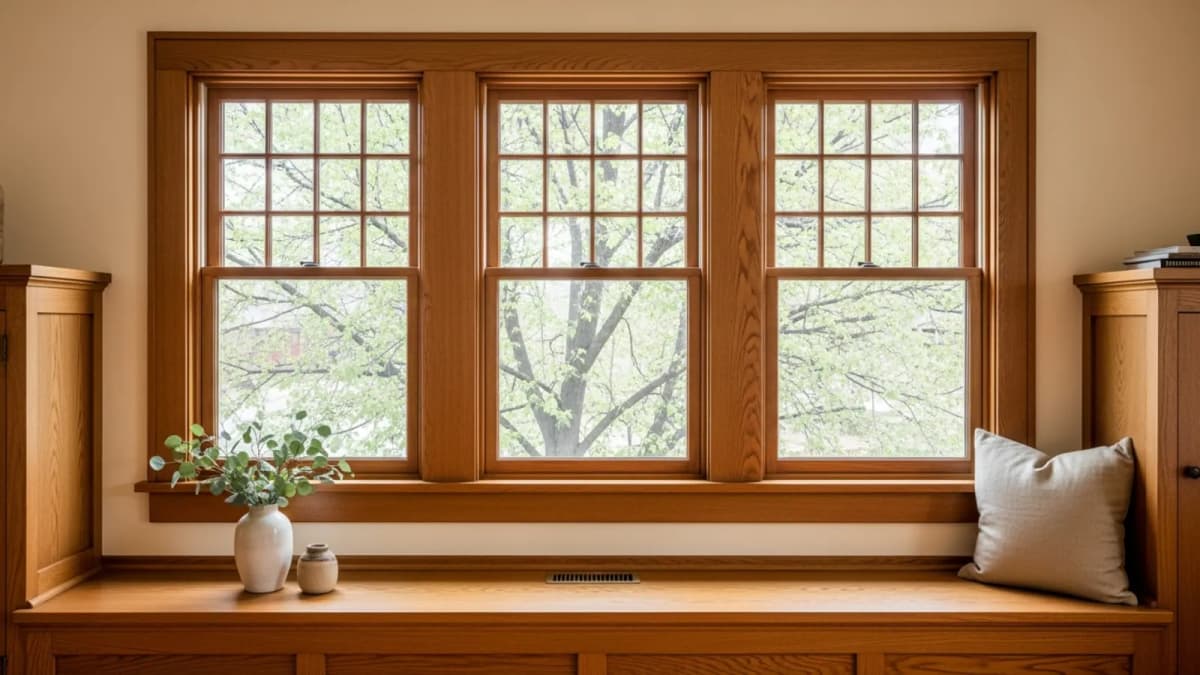
Window work on a North End house is unlike window work anywhere else in Boise because the Historic Preservation Commission's strong preference is restoration over replacement on the contributing-resource Craftsman bungalows around Hyde Park, 13th Street, and Camel's Back, and because nearly every exterior window decision inside the District boundary triggers a Certificate of Appropriateness review that adds 4–8 weeks to permit timeline. The original wood double-hung windows on 1905–1925 North End bungalows aren't generic single-pane stock that gets thrown away when energy bills get high — they're divided-light old-growth fir and pine sashes (typically 4-over-1, 6-over-1, or 9-over-1 grille patterns), hung on chain-and-weight counterweight systems concealed inside the framing, glazed with linseed-oil-based putty, set into custom-milled trim with deep sills and corner blocks. Restored properly — reglazing with linseed-oil-based putty, repairing or replacing chain and sash cord, weatherstripping, sash repair where damaged, exterior storm window addition for thermal performance — they outperform modern replacement windows on longevity by a wide margin and read as architecturally authentic in a way no replacement can match. HPC strongly prefers this approach. Where original windows can't be saved, HPC-acceptable in-kind replacement uses Marvin Signature, Pella Architect Reserve, or Sierra Pacific H3 wood-clad replacements with simulated divided-light grilles matching the original 4-over-1, 6-over-1, or 9-over-1 pattern. The lower-numbered streets (3rd–9th) and the post-war infill on parts of Fort Boise sometimes have less HPC scrutiny because contributing-resource status varies — verification per property at consultation. North of Hill Road infill is often outside the District boundary entirely, which means standard City of Boise permitting on window work without HPC overlay. The decision tree on every North End window job runs: is the original worth saving, is it a contributing resource, is the home inside the District, and what does HPC accept on this specific elevation visible from this specific street.
North End window strategy varies sharply by era because original window types, divided-light grille patterns, sash construction, surrounding casing details, and Historic Preservation Commission contributing-resource status all differ across the District's housing waves. Era of the original house drives whether restoration or replacement is the right answer.
1905–1925 original Craftsman bungalows (13th Street, Hyde Park, Camel's Back, Heron Streets)
Original wood double-hung windows with 4-over-1, 6-over-1, or 9-over-1 divided-light grille patterns. Hung on chain-and-weight counterweight systems concealed inside balloon-framed wall pockets. Glazed with linseed-oil-based putty in the original wood muntins. Surrounded by Craftsman wood casings with deep sills and corner blocks (often custom-milled fir 4–6 inches wide). Single-pane glass with old-glass distortion that's part of the architectural identity. Most original sashes are still operable but poorly weathersealed because original ropes have failed and weatherstripping was rudimentary. HPC strongly prefers restoration over replacement on these contributing-resource homes — restored sashes with reglazed putty, new chain or sash cord, weatherstripping, and exterior storm window addition outperform replacement on both authenticity and longevity. Where structural damage forces replacement, HPC requires in-kind: Marvin Signature, Pella Architect Reserve, or Sierra Pacific H3 wood-clad with simulated divided-light grilles matching the original pattern. Restoration cost: $400–$1,200 per opening. In-kind replacement: $1,800–$3,200 per opening. Storm window add-on: $180–$450 per opening.
1925–1940 Tudor Revival, Colonial Revival, Prairie (Harrison Boulevard, Fort Boise area)
Tudor: wood casement windows with leaded-glass divided-light patterns (diamond pattern, rectangular pattern), occasionally with steel-leaded inserts on the more formal Harrison Boulevard houses. Sometimes arched or pointed-arch heads. Colonial Revival: traditional double-hung with smaller divided-light grilles (6-over-6, 12-over-12) on more formal trim profiles than Craftsman. Prairie: horizontal-emphasis casements and bands of windows. Original wood sashes generally in better condition than the 1905–1925 stock because slightly newer construction. HPC review is at its most demanding on Harrison Boulevard because these are the most architecturally significant homes in the District. In-kind replacement options: Marvin Signature wood-clad with simulated divided-light, Pella Architect Reserve, Sierra Pacific H3. Steel casements on the more formal Tudors require specialty restoration or in-kind replacement that runs higher than wood. Restoration: $600–$1,800 per opening. In-kind replacement: $2,200–$4,500 per opening.
1945–1965 post-war ranch and minimal traditional infill (lower-numbered streets 3rd–9th, parts of Fort Boise)
Original wood double-hung or steel casement windows with simpler casings than the older stock. Some homes have aluminum sliders from later 1970s–1980s updates that need replacement. HPC scrutiny varies — many of these homes are non-contributing resources within the District, which means in-kind requirement is lighter or absent. Verification at consultation. Replacement options expand to include vinyl-clad and full fiberglass on non-contributing properties. Cost: $900–$1,800 per opening for vinyl-clad; $1,200–$2,500 per opening for fiberglass-clad.
1985+ modern infill (north of Hill Road and isolated non-contributing parcels)
Modern construction with vinyl, vinyl-clad wood, or aluminum-clad wood windows already installed. Often outside the Historic Preservation District boundary entirely on the homes north of Hill Road, which means standard City of Boise permitting without HPC overlay even on full replacement. Replacement options open to the full product range — vinyl, fiberglass, vinyl-clad, fiberglass-clad. Cost: $600–$1,400 per opening for vinyl; $900–$1,800 for fiberglass-clad.
Five recurring window-work shapes account for nearly every North End project. Era of the original house, contributing-resource status within the District, and HPC's strong preference for restoration over replacement all drive which one fits.
1. The Original Wood Double-Hung Restoration (HPC-Preferred Approach)
HPC's strongly preferred path for contributing-resource Craftsman bungalows around Hyde Park, 13th Street, and Camel's Back. Restore original 1905–1925 wood double-hungs in place: reglazing with linseed-oil-based putty, repairing or replacing chain and sash cord on the original chain-and-weight counterweight systems, weatherstripping, sash repair where individual muntins or stiles are damaged, repainting on the original primed-and-painted surface (lead-safe practices). Original divided-light grille pattern preserved. Exterior storm window addition for thermal performance. Result: a window that's good for another 50–80 years and reads as architecturally authentic in a way no replacement can match.
Target homes: Contributing-resource pre-1925 Craftsman bungalows with structurally sound original sashes. Permit: typically no permit required for like-for-like restoration; HPC notification rather than full Certificate of Appropriateness for restoration approach.
2. The HPC-Acceptable In-Kind Replacement (Where Originals Can't Be Saved)
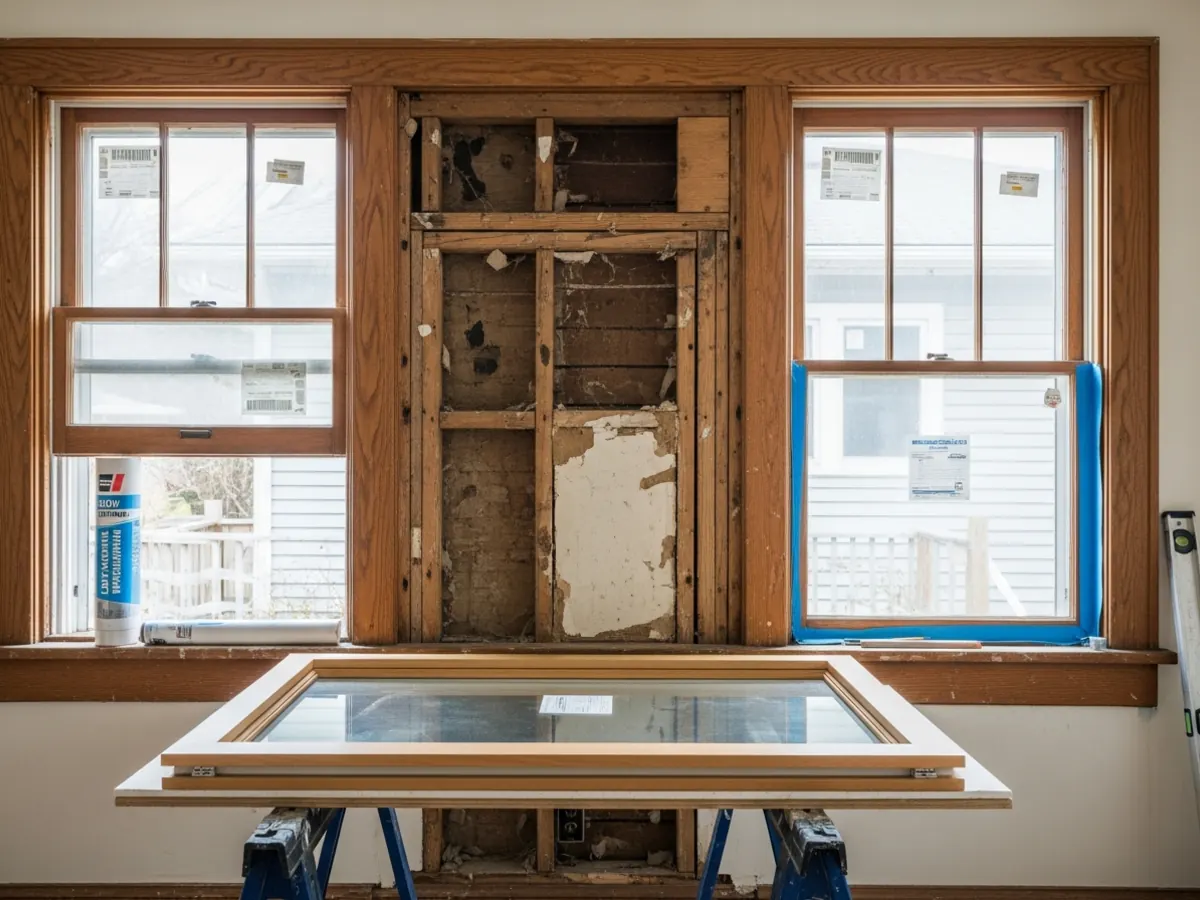
When original sashes are too damaged to restore, in-kind replacement using Marvin Signature, Pella Architect Reserve, or Sierra Pacific H3 wood-clad units with simulated divided-light grilles matching the original 4-over-1, 6-over-1, or 9-over-1 pattern. Custom-sized to fit the existing rough opening with original interior casings preserved intact. HPC review required — Certificate of Appropriateness adds 4–8 weeks to permit timeline. Most common shape on Harrison Boulevard Tudors where original windows have been previously replaced badly with non-period units that HPC won't accept on a second replacement.
Target homes: Pre-1940 District homes with originals beyond rescue or with prior bad replacements. Permit: building permit + HPC Certificate of Appropriateness.
3. The Storm Window Add-On (HPC-Preferred Thermal Upgrade)
HPC's preferred thermal-upgrade path on contributing-resource homes. Adding interior or exterior storm windows over preserved originals — provides 70–80% of the energy benefit of full replacement at a quarter of the cost while preserving original windows entirely. Interior storms (Indow, Innerglass) are nearly invisible from outside and require zero HPC review because they're inside the building envelope. Exterior storms (Allied, Larson) are HPC-friendly because they're removable and reversible. Combined with original-sash restoration, this is the highest-value North End window strategy on Hyde Park bungalows.
Target homes: Owners committed to original window preservation. Permit: no permit; no HPC review on interior storms; HPC notification on exterior storms.
4. The Selective Replacement (Mixed-Condition Homes)
Replace only the windows that have failed beyond restoration (severe sash rot, broken muntins, badly distorted frames, prior failed replacements) while preserving and restoring operable originals on the rest of the house. More cost-effective than full replacement, allows phased work over multiple budget cycles. Common on Camel's Back and Fort Boise homes where some elevations have weathered worse than others.
Target homes: Homes with mixed window condition. Permit: building permit if more than a few openings change; HPC Certificate of Appropriateness for any visible exterior replacement inside the District.
5. The Modern Infill Replacement (North of Hill Road, Non-Contributing Parcels)
Standard window replacement on the post-1985 infill north of Hill Road and on isolated non-contributing parcels within the District. Product options open to vinyl-clad, fiberglass-clad, or full fiberglass without HPC restriction. Often outside District boundary entirely, which means City of Boise permitting only — no HPC overlay. Substantially faster timeline and lower cost than the contributing-resource District work.
Target homes: Post-1985 infill outside District boundary, non-contributing parcels inside the District. Permit: building permit if openings change; no HPC review when outside boundary.
The North End is made up of distinct sub-neighborhoods, each with its own remodeling personality.
13th Street & Hyde Park
The cultural and commercial heart of the North End — boutique shops and restaurants along 13th between Brumback and Eastman, with the densest concentration of original Craftsman bungalows on the surrounding blocks. Lots are tight (typically 50' frontage), alley access is common, and the neighborhood is heavily walked. Most homes here are 1905–1925 Craftsman.
Camel's Back & Heron Streets
The streets immediately around Camel's Back Park, climbing slightly into the lower foothills. Mostly Craftsman bungalows with some Tudor Revival mixed in. Lots get larger toward the park edge, and some homes back to the Foothills Reserve with significant trees. Project budgets here tend to be higher — these are some of the most coveted blocks in the city.
Harrison Boulevard corridor
The grand divided boulevard running south-to-north through the heart of the North End, lined with the neighborhood's largest historic homes. Tudor Revival, Colonial Revival, and a few notable Prairie-style houses sit on deep lots with mature plantings. Projects here lean toward sympathetic upgrade rather than reconfiguration — these homes already have generous floor plans.
Fort Boise & Capitol-area North End
The streets around Fort Boise Park and stretching toward the State Capitol grounds — a mix of original Craftsman bungalows, larger 1920s and 1930s homes, and a higher proportion of post-war infill. Lots vary widely. Project scopes span the full range depending on house age and homeowner intent.
North of Hill Road / new infill
The northern fringe of the historic North End, where construction continued through the 1950s and where modern infill has been most active. Newer (1945–present), larger, less constrained by historic-district considerations. Projects here look more like SE Boise or Harris Ranch in scope and material strategy.
Lower-numbered streets (3rd–9th)
The streets between the State Capitol grounds and Fort Boise — traditionally a more working-class section of the North End, with a mix of smaller Craftsman bungalows, post-war houses, and some converted multi-family. Increasingly being renovated as North End demand pushes outward from the 13th Street core. Excellent value if you can find an unrenovated home here.
Pricing reflects the three layers that drive North End window cost: the HPC's strong restoration preference (which keeps cost down on contributing-resource homes when restoration is the answer), the universal pre-1978 EPA RRP lead-safe work practices required on every address, and the Certificate of Appropriateness lead time and design rigor required for any exterior change inside the District boundary.
North End window replacement ranges
Storm window add-on (Interior or exterior storms over preserved originals — HPC-preferred thermal upgrade): $2,400–$8,500 / 2–4 weeks end to end
Single-window replacement or restoration (One opening, restoration or in-kind replacement): $400–$3,200 / 1–2 weeks end to end
Original wood double-hung restoration (whole house) (Reglazing, chain-and-weight repair, weatherstripping, sash work on 12–18 originals): $8,500–$24,000 / 4–8 weeks end to end
Selective replacement (5–10 failing windows replaced, originals preserved elsewhere): $6,500–$22,000 / 4–8 weeks end to end
Whole-house in-kind replacement (HPC-acceptable) (12–18 openings replaced with Marvin Signature, Pella Architect Reserve, or Sierra Pacific H3): $24,000–$48,000 / 8–14 weeks end to end
Pricing assumes Iron Crest's standard North End scope: full City of Boise building permit when openings change, HPC Certificate of Appropriateness submittal handled in-house when exterior scope is involved, removal of existing sashes preserving original interior casings intact, custom-sized in-kind replacement windows with low-E insulating glass and simulated divided-light grilles matching the original 4-over-1, 6-over-1, or 9-over-1 pattern, weatherproofing and trim integration, EPA RRP lead-safe practices throughout (universal in pre-1978 housing), and our 3-year workmanship warranty + manufacturer warranty (typically 10–20 years on glass and frame). Critical permit fact: interior storm window installation is exempt from HPC review entirely — it's inside the building envelope and triggers no Certificate of Appropriateness. Exterior storm windows require HPC notification but typically pass review unanimously because they're removable. Full window replacement triggers a Certificate of Appropriateness that adds 4–8 weeks to permit timeline. North of Hill Road infill is often outside the District boundary entirely — verification per property at consultation.
The North End Historic District boundary covers most — but not all — of the North End. The district is administered by the City of Boise Historic Preservation Commission, which reviews exterior modifications within the district boundary. Interior work, including comprehensive remodels, is exempt from Historic Preservation review. This is the single most important permitting fact to internalize: your interior work doesn't need historic review, regardless of how aggressive the scope.
Where Historic Preservation review enters the picture is when your project includes any exterior change. Examples we encounter regularly: enlarging a window, relocating an exterior door, adding an exterior-vented hood that requires a new wall penetration, building a small addition or bump-out, or replacing a side-yard window with a different style. Any of these requires a Certificate of Appropriateness from the Historic Preservation Commission, which can add several weeks to the permit timeline (confirm current timelines with PDS) and typically requires architectural drawings showing the proposed change in context.
For interior-only projects, the standard City of Boise permits apply: a building permit for structural work (wall removal, beam installation), an electrical permit for new circuits or panel work, a plumbing permit for fixture relocation or new water lines, and a mechanical permit for ducting or HVAC modifications. Permit fees for a typical mid-range project run several hundred to a few thousand dollars depending on scope. Processing times: electrical and plumbing permits are often same-day or next-day; building permits go through plan review, about two weeks for online plan review per Boise PDS and longer when structural drawings are involved.
One North End-specific permit consideration: parking and right-of-way. Placing a dumpster on the street or parking a construction trailer at the curb requires an ACHD temporary-use permit (fee varies), since North End residential streets are ACHD right-of-way. Some North End streets have additional restrictions related to the historic neighborhood designation. Iron Crest pulls all required temporary-use permits as part of project setup.
Window product selection for North End homes is driven by three things: HPC contributing-resource status, original era of the home, and whether the owner's priority is restoration authenticity or modern energy performance. The decision tree on every job starts with "can the original be saved" and moves outward only when the answer is no.
Restoration of original 1905–1925 wood double-hungs (HPC-preferred path)
On contributing-resource Hyde Park, 13th Street, and Camel's Back Craftsman bungalows, restoration of original wood double-hungs is the single strongest decision. Process: remove sash, strip failing paint with lead-safe procedures, repair muntins where damaged, reglaze with linseed-oil-based putty (the original 1905–1925 glazing material — modern silicone is not HPC-acceptable on contributing resources), replace failed chain or sash cord on the chain-and-weight counterweight system, weatherstrip the sash perimeter with bronze or felt, repaint with HPC-compatible color. Cost: $400–$1,200 per opening depending on damage extent. Combined with exterior storm window addition, the restored sash outperforms replacement on both longevity and authenticity.
HPC-acceptable in-kind replacement (Marvin Signature, Pella Architect Reserve, Sierra Pacific H3)
Where originals can't be saved, HPC-acceptable replacement uses three product lines: Marvin Signature wood-clad with aluminum or fiberglass exterior cladding, Pella Architect Reserve, or Sierra Pacific H3. All available with simulated divided-light grilles matching the original 4-over-1, 6-over-1, 9-over-1 (Craftsman) or 6-over-6, 12-over-12 (Colonial Revival) pattern. True-divided-light is also available on Marvin Signature for the most demanding Harrison Boulevard restorations but adds $400–$800 per opening. Cost: $1,800–$3,200 per opening installed for Marvin Signature; $1,600–$2,800 for Pella Architect Reserve; $1,400–$2,400 for Sierra Pacific H3.
Storm windows (HPC-preferred thermal upgrade)
Interior storms (Indow Window Inserts, Innerglass) sit inside the existing window opening, are nearly invisible from outside, are removable in summer, and require zero HPC review because they're inside the building envelope. Exterior storms (Allied, Larson, Harvey) mount on the exterior and are HPC-friendly because they're removable and reversible. Both options provide 70–80% of the energy benefit of full replacement at a quarter of the cost. Cost: $180–$450 per opening for interior storms; $250–$650 per opening for exterior storms.
Divided-light grille patterns (must match original)
Period-correct grilles define each home's window character and are HPC's most-scrutinized review item on visible elevations. Original North End patterns: 4-over-1, 6-over-1, or 9-over-1 (Craftsman bungalows around 13th Street, Hyde Park, Camel's Back); 6-over-6 or 12-over-12 (Colonial Revival on Harrison Boulevard); diamond or rectangular leaded (Tudor on Harrison and Fort Boise); horizontal banded (rare Prairie). Replacement grilles must match the original pattern exactly. True-divided-light (separate panes between true muntins) is the most authentic and HPC's preferred specification — adds $300–$800 premium per opening. Simulated-divided-light (muntins between two glass panes) is acceptable on most contributing-resource homes from the District. Grilles-between-glass (plastic grids floating between panes) is never HPC-acceptable on contributing resources and reads as fake from any close distance.
Glass package
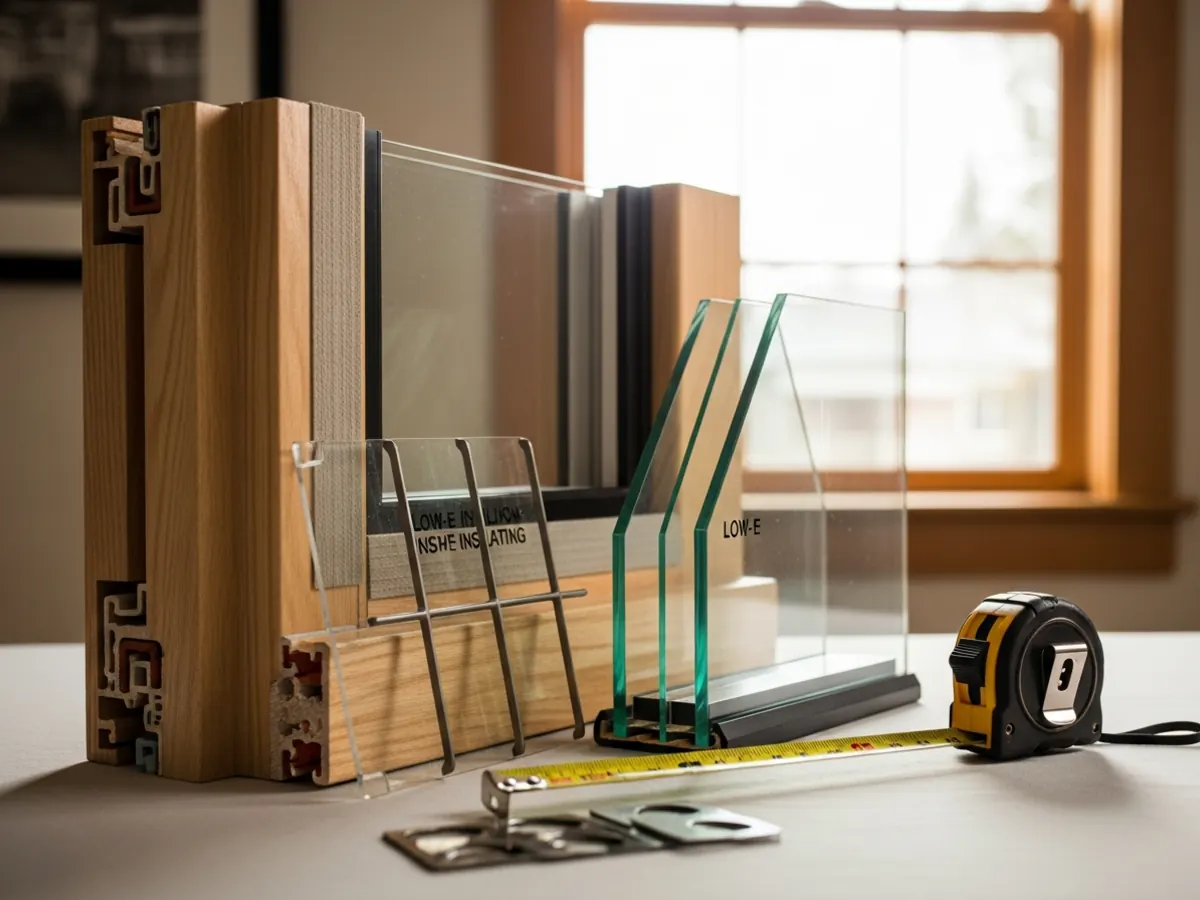
Modern energy-efficient glass packages on replacement windows: low-E coating to block UV and reflect heat, argon gas fill in the air space between panes, warm-edge spacers at the perimeter to reduce edge condensation. Standard double-pane: U-factor ~0.30. Premium triple-pane: U-factor ~0.20 (more expensive, marginally better performance). For Boise's climate at 2,700' elevation with high solar gain, double-pane low-E with argon is the cost-effective sweet spot. On restored originals, single-pane glass remains — the storm window provides the second pane.
Casing and trim — preserve original Craftsman millwork
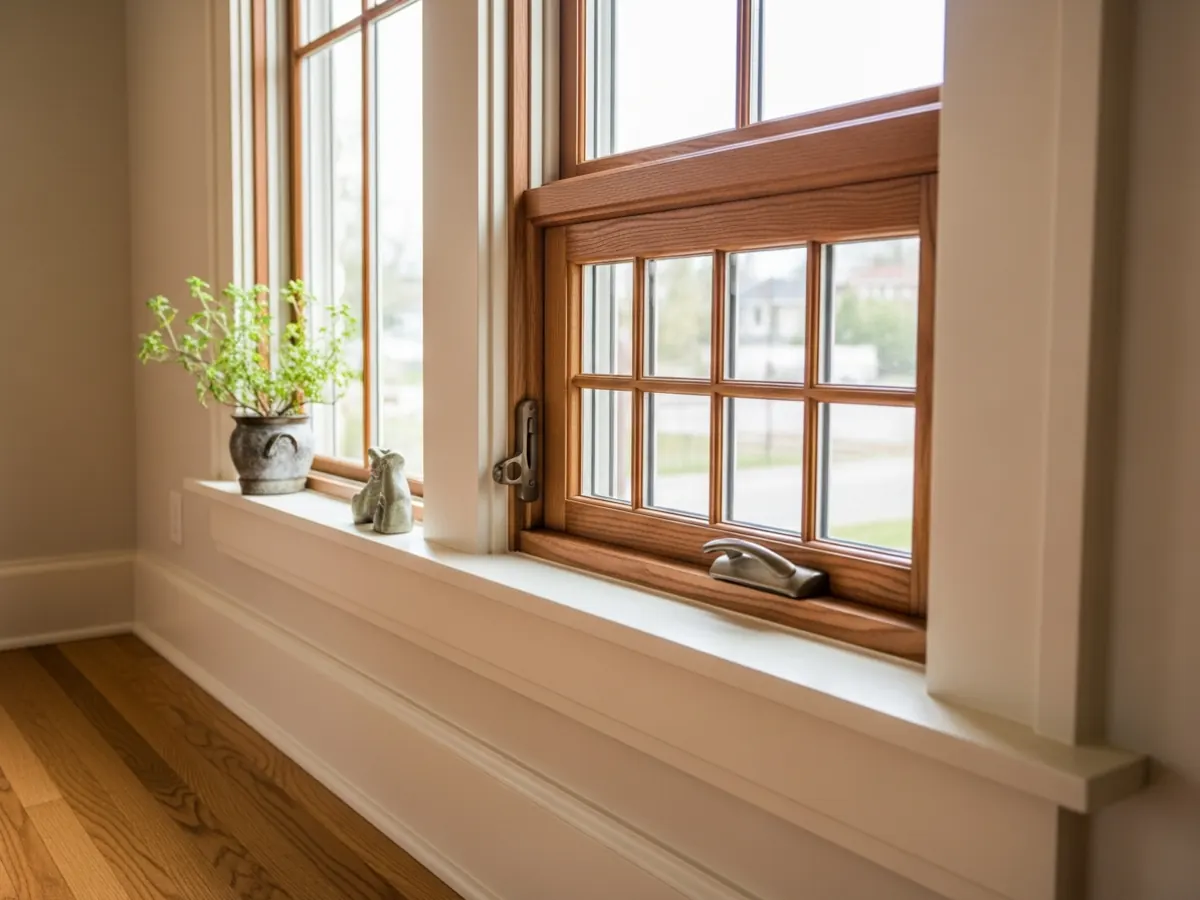
Original Craftsman interior casings on Hyde Park and 13th Street bungalows are custom-milled fir 4–6 inches wide with deep sills and corner blocks — often the single most important architectural detail in the room. Replacement windows must be sized to fit the existing rough opening with original interior casing intact. New trim only when original is damaged, and then custom-milled fir or pine to match original profile and reveal exactly. Tudor Revival casings on Harrison are different (bullnose or modest molding profiles) and require their own match. Generic stock trim from a big-box destroys the architectural integrity these homes spent a century earning.
Window work in older North End homes occasionally surfaces conditions that affect cost and timeline. Most relate to the universal pre-1925 plaster-and-lath wall construction, lead paint on every original casing, and the specific structural realities of balloon-framed wall pockets that contained the chain-and-weight counterweight systems.
- •Sill or framing rot at window opening Long-term water infiltration at window perimeters can rot original wood sills and framing members on south- and west-facing elevations of older Hyde Park and Camel's Back stock where decades of rain runoff have penetrated. Repair before new window install or restoration: $300–$1,200 per opening.
- •Out-of-square original openings — universal in 100-year-old homes Original wood windows in 1905–1925 homes are nearly always out of square or out of plumb because balloon-framed structures settle over a century. Custom-sizing in-kind replacement windows to fit, plus trim shimming and adjustment is standard scope; extreme cases on the older 1905–1915 Hyde Park stock add $200–$500 per opening.
- •Lead paint on every original casing — universal in pre-1978 homes Universal in pre-1978 North End homes regardless of era. EPA RRP lead-safe work practices required during removal — full HEPA containment, wet-paste paint scraping, lead-safe disposal. Built into Iron Crest's pricing for pre-1978 homes rather than added as discovery.
- •Plaster-and-lath wall damage at window perimeter (pre-1925 stock) Pre-1925 North End walls are plaster-and-lath with horsehair binder, not drywall. Removing existing windows and reinstalling replacements often disturbs the plaster surface around the opening. Plaster repair to match: $35–$85 per square foot. Different demolition protocol than drywall — Iron Crest uses keyhole cuts and skim-coat patches rather than open the wall.
- •Asbestos in original glazing putty or caulking Some pre-1980 windows were caulked or glazed with asbestos-containing products, particularly on the steel casement Tudors along Harrison. Required testing identifies. Licensed abatement: $400–$1,200.
- •Existing storm window or aluminum slider removal complexity Triple-track aluminum storm windows from 1960s–1980s installations and full aluminum slider replacements from the same era sometimes need careful removal before in-kind work. Often hides original casings underneath that have been damaged by the prior bad install. Standard scope but adds time and occasionally surfaces additional repair needs.
- •Egress code requirements on bedroom windows Modern egress code requires minimum opening dimensions in bedroom windows. Pre-1960 windows sometimes don't meet current code; opening enlargement plus new structural header may be required. Inside the District, opening enlargement requires HPC Certificate of Appropriateness and is sometimes denied on contributing-resource homes. $400–$1,500 per opening when accepted.
- •Original chain-and-weight counterweight system disposition Pre-1925 double-hung windows have weight pockets in the balloon-framed wall containing iron sash weights. New replacement windows don't use weights; the pockets become dead air space and a major thermal bridge. Insulating these pockets during in-kind replacement: $50–$150 per opening. On restoration jobs, weights and chain are repaired and kept in service.
- •Knob-and-tube wiring routed through window framing Pre-1950 North End originals often have knob-and-tube wiring routed through window framing pockets. Replacement work that opens framing surfaces the K&T — often the right time to coordinate with whole-house rewire. Discovery item: $0 if simply noted; $1,200–$4,500 if rerouting required during window scope.
- •HPC Certificate of Appropriateness review modifications Initial Certificate of Appropriateness submittal sometimes triggers HPC-requested changes to product, divided-light grille pattern, or trim integration. Iron Crest pre-meets with HPC staff to minimize redesign risk on visible Harrison Boulevard or Hyde Park elevations. Modifications: $500–$3,500 in product upgrade or design adjustment.
Initial consultation and window-by-window assessment (Week 1)
Walkthrough of every window. Existing-condition photographs. Divided-light grille pattern documentation per opening. Interior casing condition assessment. Restoration vs replacement decision per opening. HPC contributing-resource status verification — confirms whether the property is inside the District and what the contributing-resource determination is.
Estimate, product selection, HPC pre-application (Weeks 1–3)
Detailed line-item estimate per opening. Product selection finalized — Marvin Signature, Pella Architect Reserve, or Sierra Pacific H3 for in-kind replacement; Indow or Innerglass for interior storms; Allied or Larson for exterior storms. HPC pre-application meeting with staff for any visible exterior replacement scope.
HPC Certificate of Appropriateness review (Weeks 3–11)
Formal Certificate of Appropriateness application to HPC for any exterior change inside the District boundary. Architectural drawings showing proposed changes in context. Material samples and grille pattern documentation. HPC review at monthly meetings — typically 4–8 weeks. Iron Crest sequences this concurrent with product order to compress timeline where possible.
Window order and lead time (Weeks 3–13)
Custom-sized windows ordered. Lead times: Marvin Signature 8–12 weeks, Pella Architect Reserve 6–10 weeks, Sierra Pacific H3 6–8 weeks. Storm windows 2–4 weeks. Lead time is the longest activity in the project on replacement scope. Restoration work has no lead time — sash repair starts as soon as scope is signed.
Site setup and prep (Day 1 of work)
Interior protection of floors and furniture near each opening. Exterior protection of plantings — particularly important on Camel's Back lots that back to the Foothills Reserve. Containment and EPA RRP setup for pre-1978 homes — universal across nearly every North End address.
Existing window removal or restoration prep (Days 1–4)
On replacement scope: careful removal of existing sashes preserving original interior casings. On restoration scope: sashes removed for shop work, openings temporarily glazed with poly. Old caulking and weatherstripping cleaned out. Lead-safe debris handling. Plaster-and-lath patching scheduled at perimeter where damaged.
Sash restoration (Weeks 1–4 on restoration scope, in shop)
Off-site sash work: paint stripping, muntin repair, reglazing with linseed-oil-based putty, chain or sash cord replacement, weatherstripping installation, repainting. Restored sashes returned and reinstalled in original framing.
New window installation (Days 1–6 on replacement scope)
New windows set in original openings, leveled, plumbed, fastened. Operation tested. Low-expansion foam insulation around perimeter to prevent frame distortion. Insulation of original chain-and-weight pockets where present. Original interior casings reattached with care.
Walkthrough, cleanup, final inspections (Days 6–10)
Operation testing of every window. Cleanup of all debris. EPA RRP final HEPA vacuuming. City of Boise final inspection if building permit was required. HPC final inspection on Certificate of Appropriateness scope. Walkthrough with you. Punch-list addressed within 1 week. 3-year workmanship + manufacturer warranties begin.
Window work on contributing-resource North End homes is a different category from suburban replacement-window installs. The contractor needs deep familiarity with the HPC's strong restoration preference, hands-on experience with chain-and-weight counterweight systems and linseed-oil-based putty reglazing, the technical skill to size in-kind replacements into 100-year-old out-of-square openings, and a working relationship with HPC staff for the Certificate of Appropriateness submittal.
- City of Boise Historic Preservation Commission — Design review information, district maps, and Certificate of Appropriateness application.
- City of Boise Planning & Development Services — Building, electrical, plumbing, and mechanical permits. Online portal and in-person plan check.
- Idaho DEQ Air Quality (Asbestos) — Testing and abatement guidance for pre-1980 homes via the Idaho Department of Environmental Quality.
- EPA Lead Renovation, Repair and Painting (RRP) Program — Required certification and work practices for renovation in lead-paint homes.
- Preservation Idaho — Statewide nonprofit advocating for historic preservation. Resources and educational events.
Should I restore my original Craftsman wood windows or replace them?
On a contributing-resource Hyde Park or Camel's Back Craftsman bungalow, restoration is almost always the right answer and is HPC's strongly preferred path. Original 1905–1925 wood double-hungs that are still operable — even when the ropes have failed and the weatherstripping is shot — can be restored to like-new performance with reglazing in linseed-oil-based putty, chain or sash cord replacement, and weatherstripping for $400–$1,200 per opening. Add an exterior storm window for $250–$650 and you've matched the thermal performance of replacement at a quarter of the cost while preserving an irreplaceable architectural detail and earning HPC's enthusiastic approval. Replacement is the right answer only when sashes have severe rot, broken muntins, or when prior bad replacements need correcting. Iron Crest assesses each opening individually at consultation.
Will my window replacement need Historic Preservation Commission approval?
Yes, if your property is inside the North End Historic District boundary AND the new windows are visible from any public way. Interior storm windows are exempt from HPC review entirely because they're inside the building envelope. Exterior storm windows usually require HPC notification but pass review unanimously because they're removable and reversible. Full window replacement triggers a Certificate of Appropriateness that adds 4–8 weeks to permit timeline. HPC reviews window changes for compatibility — primarily the divided-light grille pattern matching the original, the visible exterior detail, and product specification. North of Hill Road infill is often outside the District boundary entirely and requires no HPC review. Iron Crest verifies your property's status at consultation and pre-meets with HPC staff to minimize redesign risk before formal application.
What's the right replacement window for a Harrison Boulevard Tudor?
Marvin Signature wood-clad replacements with simulated divided-light grilles matching your original 6-over-6, 12-over-12, or diamond-leaded pattern is the most defensible HPC submittal on Harrison Boulevard's contributing-resource Tudor and Colonial Revival homes. True-divided-light at $400–$800 premium per opening is HPC's preferred specification on the most architecturally significant Harrison houses. Pella Architect Reserve is acceptable. Sierra Pacific H3 is acceptable on slightly less prominent elevations. Vinyl is never HPC-acceptable on contributing-resource Tudors regardless of price. Steel casement restorations on the more formal Tudors require specialty work — Iron Crest coordinates that with regional restoration specialists.
How long does whole-house window work take in the North End?
Restoration scope: 4–8 weeks total, with sash work happening off-site over 2–4 weeks while openings stay temporarily glazed. In-kind replacement scope: 8–14 weeks total, including 4–8 weeks for HPC Certificate of Appropriateness review (concurrent with product order), 6–12 weeks of product lead time on Marvin Signature, and 4–6 days of on-site install work for a typical 12–18 window home. Storm window add-on scope: 2–4 weeks total. Lead time is the longest single activity on replacement work — Iron Crest sequences HPC submittal concurrent with order placement to compress timeline.
What about plaster-and-lath wall damage during window work?
Pre-1925 North End walls are plaster-and-lath with horsehair binder rather than drywall, and removing existing windows or reinstalling replacements often disturbs the plaster surface around the opening. Iron Crest uses keyhole cuts and skim-coat patches rather than opening the wall — different demolition protocol than drywall work. Plaster repair runs $35–$85 per square foot depending on extent. On Tudor and Colonial Revival homes from 1925–1940 the plaster is generally in better condition than 1905–1925 stock; on the 1905–1915 Hyde Park bungalows, plaster damage is more common because the original mix was leaner.
Do you handle the lead paint on my window casings?
Yes — universal in pre-1978 homes. EPA RRP lead-safe work practices required during removal: containment of work area with poly sheeting, dampened removal of sashes and casings, HEPA vacuuming of all surfaces, proper waste disposal, and detailed cleanup verification. Built into Iron Crest's pricing for pre-1978 homes rather than added as discovery — virtually every North End address falls under pre-1978 RRP requirements regardless of era.
What's the energy performance of restored originals plus storms vs full replacement?
Restored originals plus exterior or interior storm windows match modern double-pane low-E performance very closely — original single-pane wood with quality storm achieves combined U-factor around 0.32, vs replacement double-pane low-E with argon at U-factor ~0.30. The difference is negligible in real-world energy bills. The performance gap that mattered in 1990 is largely closed in 2026 because storm window technology has advanced substantially. On the comfort side (no cold drafts, no condensation, more even temperatures) properly weatherstripped restored originals plus storms perform identically to replacements.
Are the windows on my property contributing-resource or non-contributing within the District?
Depends on the property and we verify per address at consultation. Most pre-1940 North End homes within the District boundary are contributing resources, which means HPC's strict restoration-preferred review applies. Some post-1945 homes within the boundary are non-contributing because they don't represent the District's character-defining era — for those, HPC review is lighter and product options expand. North of Hill Road infill is typically outside the District boundary entirely, which means no HPC overlay regardless of product choice. Lower-numbered streets (3rd–9th) include both contributing and non-contributing parcels — verification per property is essential before any product commitment.
Ready to start your North End window replacement project?
Free in-home consultation, honest contingency-based budgeting, and the experience Boise homes require. Iron Crest Remodel — Idaho RCE #6681702, EPA RRP lead-safe work practices, $2M general liability, 3-year workmanship warranty.
Get Your Free Estimate