
Siding Installation Across Hyde Park, Camel's Back, Harrison Boulevard & the Lower-Numbered Streets
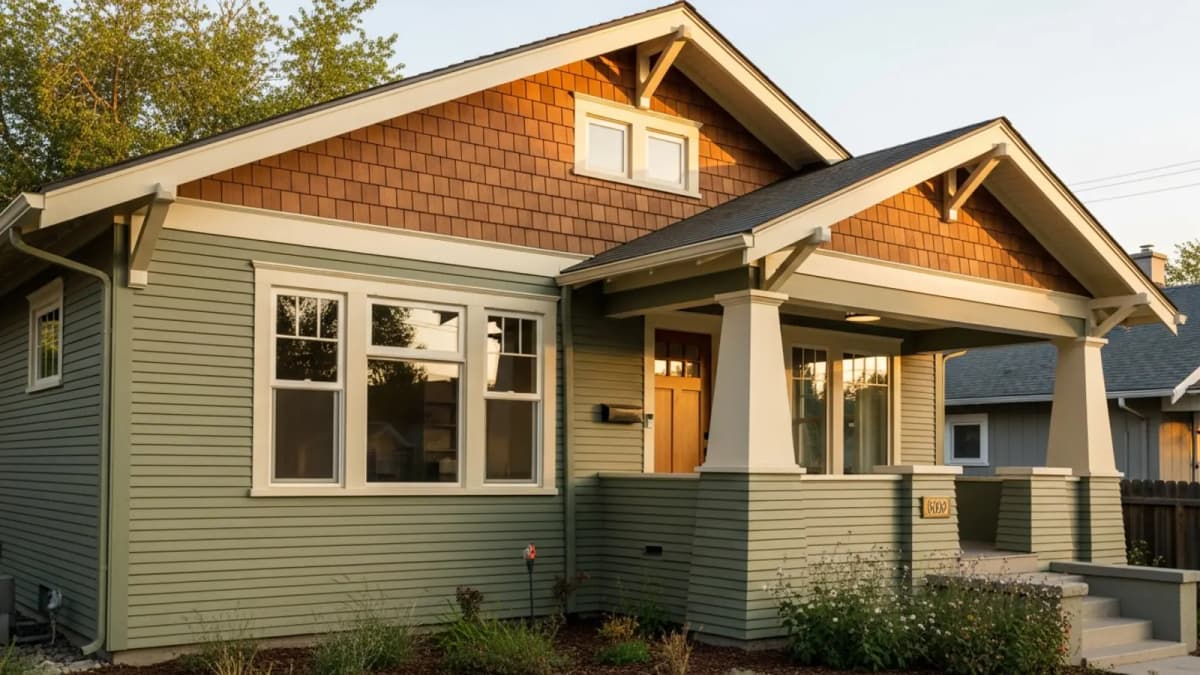
Hardie HZ5 ColorPlus matched to original 1×6 Craftsman lap profile at 7-inch reveal, 1×8 Tudor lap on Harrison Boulevard, 1970s aluminum overlay removal exposing original cedar on the 3rd–9th streets — HPC Certificate of Appropriateness handled in-house, R-0 wall cavities upgraded to closed-cell spray foam while siding is off, EPA RRP lead-safe practices throughout.
Quick answer
Yes — on virtually every North End property inside the District boundary, HPC Certificate of Appropriateness is required for any visible exterior siding change. Siding is the canonical HPC exterior-trigger scope.
Siding installation in the North End is the canonical Historic Preservation Commission exterior-trigger scope — the project type where Certificate of Appropriateness is universally required because siding is the most visible exterior surface and HPC review of profile, color, and material is non-negotiable for any change visible from public way. This is the inverse of interior scope: where a comprehensive interior remodel proceeds at standard City of Boise speed without HPC overlay, siding work universally carries the 4–8 week HPC review on top of standard building-permit processing. Verification of District boundary status is the first step at consultation — most North End properties from 13th Street and Hyde Park through Camel's Back and Heron Streets and along Harrison Boulevard sit squarely inside the District; properties north of Hill Road frequently fall outside the boundary and proceed without HPC overlay (verify per-property because the boundary line doesn't track Hill Road exactly). Original siding on the 1905–1925 Craftsman bungalow stock is typically 1×6 cedar lap at 7-inch reveal with painted finish, exposed rafter tails, tapered porch columns, and cedar shingle gable accents on dormers and end gables — the distinctive Craftsman exterior vocabulary. Tudor Revival and Colonial Revival on Harrison Boulevard and around Fort Boise carry 1×8 cedar lap at 8-inch reveal more commonly, with stucco panels and painted half-timbering on Tudor scope and formal corner boards plus dentil cornice on Colonial Revival. The lower-numbered streets 3rd–9th frequently have 1970s aluminum siding overlay covering original wood — a service-era pattern from when aluminum was marketed as maintenance-free but is now showing 50-year fade and dent damage. Original wood beneath aluminum overlay is sometimes preserved in remarkable condition because the aluminum protected it from solar UV; sometimes severely deteriorated because moisture trapped behind aluminum drove rot. Hardie HZ5 ColorPlus (Hardie's high-performance climate-zone product for our region with factory-applied paint) is accepted by HPC when matched to original color and profile. LP SmartSide engineered wood is also HPC-acceptable on most North End scope. Insulation upgrade in opened wall cavities is particularly valuable on pre-1925 Craftsman with R-0 wall insulation in original construction — closed-cell spray foam blown into cavities while exterior is open is the right answer and adds dramatic envelope performance for moderate cost. Iron Crest's North End siding work is anchored on HPC Certificate of Appropriateness submittal handled in-house with pre-meeting before formal application to minimize redesign risk, original profile dimensions documented and replicated in new product (1×6 Craftsman lap, 1×8 Tudor lap, custom-milled corner boards and water table), EPA RRP lead-safe practices throughout (pre-1978 lead paint universal in the District), and the wall-cavity insulation upgrade as standard scope rather than upsell.
North End siding strategy varies sharply by era because the original profile, paint history, original color palette, and what HPC will accept in replacement product all differ between the 13th Street and Hyde Park Craftsman bungalows, the Harrison Boulevard Tudor and Colonial Revival mansions, the lower-numbered streets that received 1970s aluminum overlay, and the modern infill north of Hill Road that often falls outside the District boundary entirely.
1905–1925 original Craftsman bungalows (13th Street, Hyde Park, Camel's Back, Heron Streets)
Original 1×6 cedar lap siding at 7-inch reveal with painted finish — the dominant North End siding profile by count. Exposed rafter tails (typically painted contrasting color), tapered porch columns matching the home's siding color or in contrasting cream, cedar shingle accents on gables and dormers (often 5-inch exposure handcut shingle). Original color palettes ran toward warm earth tones — sage greens, soft browns, muted yellows, deep reds — with cream or warm white trim. Pre-1978 lead paint universal — full EPA RRP containment required during demolition, full lead-safe disposal of removed siding. Walls behind original siding frequently have R-0 insulation (open balloon-framed cavities or kraft-paper-faced batts in partial fill) — siding replacement is the only realistic time to upgrade wall insulation without demolishing interior plaster. Closed-cell spray foam blown into opened cavities: $1.50–$3.00 per square foot of wall area, dramatic envelope performance gain.
1925–1940 Tudor Revival, Colonial Revival, Prairie (Harrison Boulevard, Fort Boise area)
Mixed siding strategies. Tudor: stucco panels with painted half-timbering accents on the upper levels — original three-coat stucco rarely needs full replacement, typically just patching of damaged areas plus repaint to refresh half-timbering color contrast. Colonial Revival: 1×8 painted lap siding at 8-inch reveal with formal corner boards, dentil cornice molding at the eave line, and pediment detail above doors. Both styles carried more substantial original construction than the Craftsman bungalow era — better lath, better fastening, better paint history — so siding here often survives in better condition than pre-1925 stock. Replacement scope where required: Hardie HZ5 ColorPlus matched to original profile and color; LP SmartSide also HPC-acceptable. Lead paint universal on pre-1978 trim. Wall insulation slightly better than bungalow era but still typically R-7 or below — upgrade opportunity during siding work.
1945–1965 post-war ranch and minimal traditional infill (lower-numbered streets 3rd–9th, parts of Fort Boise)
Original wood lap siding (often 1×6 at 5-inch or 6-inch reveal) frequently covered with 1970s aluminum siding overlay during the maintenance-free era marketing wave. Aluminum is now showing 50-year fade, dents, and chalk damage. Removing aluminum exposes original wood — sometimes preserved in remarkable condition because aluminum blocked solar UV; sometimes severely deteriorated because trapped moisture drove rot in the wood beneath. Service pattern: aluminum removal, original wood condition assessment, Hardie HZ5 or LP SmartSide replacement matching original profile. Lower-numbered streets 3rd–9th are increasingly being renovated as North End demand pushes outward from the 13th Street core — excellent value scope when an unrenovated home is found.
1985+ modern infill north of Hill Road
Modern construction with current-era siding products from original construction or recent updates. Often outside the Historic Preservation District boundary entirely — but the boundary doesn't track Hill Road exactly so verification per property is essential. Standard siding replacement scope at modern pricing without HPC overlay when outside the District boundary. With HPC overlay (when verified inside the boundary), the constraints are less restrictive than on the contributing pre-1940 stock because the homes aren't contributing resources within the District.
Five recurring siding shapes account for nearly every North End project. Era of the original house, profile-replication requirement, aluminum-overlay history, and HPC contributing-resource status all drive which one fits.
1. The Pre-1925 Craftsman Full-House Replacement (Period-Correct)
Remove failing original 1×6 cedar lap siding at 7-inch reveal on a 1905–1925 Hyde Park, 13th Street, Camel's Back, or Heron Street bungalow. Install Hardie HZ5 ColorPlus matched to original profile and color (or LP SmartSide if architectural brief favors slightly more wood-like aesthetic), painted to period-correct color scheme via factory ColorPlus or on-site application. Replace cedar shingle gable accents with hand-cut cedar shingles or Hardie shingle product depending on owner maintenance preference. Preserve and reintegrate exposed rafter tails (painted contrasting color). Custom-milled corner boards, frieze board, water table, and window casing all matched to original profile dimensions. Insulation upgrade in opened wall cavities (R-0 to R-21 closed-cell spray foam) as standard scope. HPC Certificate of Appropriateness submittal handled in-house. The dominant North End siding scope by count.
Target homes: 1905–1925 Craftsman bungalows in Hyde Park, around 13th Street, on the Camel's Back and Heron Streets blocks. Permit: building permit; HPC Certificate of Appropriateness REQUIRED (4–8 week processing on top of standard permit timeline).
2. The Harrison Boulevard Tudor Stucco Repair + Half-Timbering Restoration
Patching damaged areas of original three-coat stucco on a 1925–1940 Tudor Revival mansion (cracks, water-damaged sections, areas where original lath has failed), re-skim coating where major repair occurred, restoration of painted half-timbering accents in correct period color contrast, repaint overall to period-authentic Tudor color palette. Less expensive than full siding replacement and preserves the original stucco that defines Tudor architectural character. HPC review required because stucco is exterior surface visible from public way; review on this scope is typically lighter than full replacement because the work is restorative rather than substantive change.
Target homes: 1925–1940 Tudor Revival homes along Harrison Boulevard with intact original stucco showing typical age-related damage. Permit: building permit on substantive repair; HPC Certificate of Appropriateness for any visible work.
3. The 1970s Aluminum Overlay Removal + Underlying Wood Restoration
Remove 1970s aluminum siding overlay on a lower-numbered street, Fort Boise, or Heron Street property — frequently installed over original 1905–1925 cedar lap during the maintenance-free era marketing wave. Assess condition of original wood beneath aluminum; preserved sections retained and supplemented with matching profile cedar where deterioration warrants. Repaint to period-correct Craftsman color scheme. Restores the home's original Craftsman exterior character that aluminum overlay obscured. HPC favors this scope because it returns the home to historic appearance; review can sometimes proceed faster than full replacement scope when aesthetic restoration is the goal.
Target homes: Pre-1960 North End homes with 1970s aluminum siding overlay that owners want removed. Lower-numbered streets 3rd–9th and Fort Boise area most common locations. Permit: building permit; HPC Certificate of Appropriateness.
4. The Selective Elevation Replacement (Failing Exposures Only)
Replace siding on specific elevations that have failed (typically south or west exposures from accumulated solar UV damage; sometimes north elevations from moisture infiltration where snow accumulates in winter), preserving siding on other elevations in good condition. More complex installation because new siding must integrate at corners with existing siding without visible transition. Cost-effective when most of the house is in good shape. HPC review still required for any visible exterior change; partial-elevation scope sometimes processes faster than full-house if the change is minimal.
Target homes: North End homes with localized siding failure on specific exposures. Permit: building permit if more than 25% of one elevation; HPC review if exterior visible from public way.
5. The Comprehensive Down-to-Sheathing Restoration with Insulation Upgrade
Deepest possible siding scope on a pre-1925 Craftsman bungalow or pre-1940 Tudor where the owner wants to restart with new sheathing performance, full wall-cavity insulation upgrade (R-0 to R-21+ closed-cell spray foam), full self-adhered weather-resistant barrier (Tyvek CommercialWrap with built-in drainage plane or equivalent), new flashing detailing at every penetration, and new period-correct lap siding throughout. Common on Harrison Boulevard Tudors where the home has been poorly renovated previously and owner wants to start fresh, and on premium Camel's Back and Hyde Park bungalows where the budget supports envelope performance gain. Approaches new-construction cost per square foot of wall area.
Target homes: High-end pre-1940 North End homes where envelope-performance gain matters and budget supports comprehensive scope. Permit: full City of Boise building permit + HPC Certificate of Appropriateness.
The North End is made up of distinct sub-neighborhoods, each with its own remodeling personality.
13th Street & Hyde Park
The cultural and commercial heart of the North End — boutique shops and restaurants along 13th between Brumback and Eastman, with the densest concentration of original Craftsman bungalows on the surrounding blocks. Lots are tight (typically 50' frontage), alley access is common, and the neighborhood is heavily walked. Most homes here are 1905–1925 Craftsman.
Camel's Back & Heron Streets
The streets immediately around Camel's Back Park, climbing slightly into the lower foothills. Mostly Craftsman bungalows with some Tudor Revival mixed in. Lots get larger toward the park edge, and some homes back to the Foothills Reserve with significant trees. Project budgets here tend to be higher — these are some of the most coveted blocks in the city.
Harrison Boulevard corridor
The grand divided boulevard running south-to-north through the heart of the North End, lined with the neighborhood's largest historic homes. Tudor Revival, Colonial Revival, and a few notable Prairie-style houses sit on deep lots with mature plantings. Projects here lean toward sympathetic upgrade rather than reconfiguration — these homes already have generous floor plans.
Fort Boise & Capitol-area North End
The streets around Fort Boise Park and stretching toward the State Capitol grounds — a mix of original Craftsman bungalows, larger 1920s and 1930s homes, and a higher proportion of post-war infill. Lots vary widely. Project scopes span the full range depending on house age and homeowner intent.
North of Hill Road / new infill
The northern fringe of the historic North End, where construction continued through the 1950s and where modern infill has been most active. Newer (1945–present), larger, less constrained by historic-district considerations. Projects here look more like SE Boise or Harris Ranch in scope and material strategy.
Lower-numbered streets (3rd–9th)
The streets between the State Capitol grounds and Fort Boise — traditionally a more working-class section of the North End, with a mix of smaller Craftsman bungalows, post-war houses, and some converted multi-family. Increasingly being renovated as North End demand pushes outward from the 13th Street core. Excellent value if you can find an unrenovated home here.
Pricing reflects three layers that drive North End siding-installation cost: HPC Certificate of Appropriateness handling (4–8 weeks added to permit timeline plus design coordination labor), period-correct profile replication (custom-milled trim matching original 1×6 or 1×8 dimensions, hand-cut cedar shingle gables, exposed rafter-tail integration), and the wall-cavity insulation upgrade scope that's universally valuable on pre-1925 R-0 construction.
North End siding installation ranges
Selective elevation replacement (1–2 specific elevations replaced with profile-matched siding): $14,000–$30,000 / 8–12 weeks end to end
Tudor stucco repair + half-timbering restoration (Patching, re-skim, half-timbering repaint on Harrison Boulevard mansion): $18,000–$36,000 / 8–12 weeks end to end
1970s aluminum overlay removal + wood restoration (Remove aluminum, assess and supplement original wood, period-correct repaint): $32,000–$58,000 / 10–14 weeks end to end
Pre-1925 Craftsman full-house Hardie HZ5 ColorPlus (Comprehensive replacement with period-correct profile, insulation upgrade, HPC handled): $38,000–$62,000 / 10–16 weeks end to end
Comprehensive down-to-sheathing restoration (New sheathing performance, full insulation upgrade, premium WRB, new period-correct siding): $48,000–$72,000 / 12–18 weeks end to end
Pricing assumes Iron Crest's standard North End siding scope: full City of Boise building permit, HPC Certificate of Appropriateness submittal handled in-house with pre-meeting before formal application (universal requirement on any visible exterior siding change inside the District boundary — adds 4–8 weeks to permit timeline), comprehensive siding removal with EPA RRP lead-safe practices on every pre-1978 home (universal in the District), licensed asbestos abatement when 1940s–1970s asbestos-cement siding is present, weather-resistant barrier (Tyvek HomeWrap standard or CommercialWrap with built-in drainage plane on premium scope), period-correct trim with custom-milled corner boards, frieze board, water table, and window casing matched to original profile dimensions, painted-finish (factory-primed siding painted on-site to HPC-approved color or factory ColorPlus matched to original) with premium acrylic paint, wall-cavity insulation upgrade where original construction was R-0, right-of-way permits for dumpster on tight 50' District streets with historic-neighborhood parking restrictions, and our 3-year workmanship warranty plus 30-year Hardie material warranty (or 50-year LP SmartSide).
The North End Historic District boundary covers most — but not all — of the North End. The district is administered by the City of Boise Historic Preservation Commission, which reviews exterior modifications within the district boundary. Interior work, including comprehensive remodels, is exempt from Historic Preservation review. This is the single most important permitting fact to internalize: your interior work doesn't need historic review, regardless of how aggressive the scope.
Where Historic Preservation review enters the picture is when your project includes any exterior change. Examples we encounter regularly: enlarging a window, relocating an exterior door, adding an exterior-vented hood that requires a new wall penetration, building a small addition or bump-out, or replacing a side-yard window with a different style. Any of these requires a Certificate of Appropriateness from the Historic Preservation Commission, which can add several weeks to the permit timeline (confirm current timelines with PDS) and typically requires architectural drawings showing the proposed change in context.
For interior-only projects, the standard City of Boise permits apply: a building permit for structural work (wall removal, beam installation), an electrical permit for new circuits or panel work, a plumbing permit for fixture relocation or new water lines, and a mechanical permit for ducting or HVAC modifications. Permit fees for a typical mid-range project run several hundred to a few thousand dollars depending on scope. Processing times: electrical and plumbing permits are often same-day or next-day; building permits go through plan review, about two weeks for online plan review per Boise PDS and longer when structural drawings are involved.
One North End-specific permit consideration: parking and right-of-way. Placing a dumpster on the street or parking a construction trailer at the curb requires an ACHD temporary-use permit (fee varies), since North End residential streets are ACHD right-of-way. Some North End streets have additional restrictions related to the historic neighborhood designation. Iron Crest pulls all required temporary-use permits as part of project setup.
Siding material selection for North End homes balances modern weather-resistance and paint-adhesion performance with HPC-required period-authentic profile, color, and detail. Hardie HZ5 ColorPlus is the dominant choice; LP SmartSide is the well-supported alternative; original cedar repair is appropriate where condition supports.
James Hardie HZ5 ColorPlus — climate-zone product with factory paint
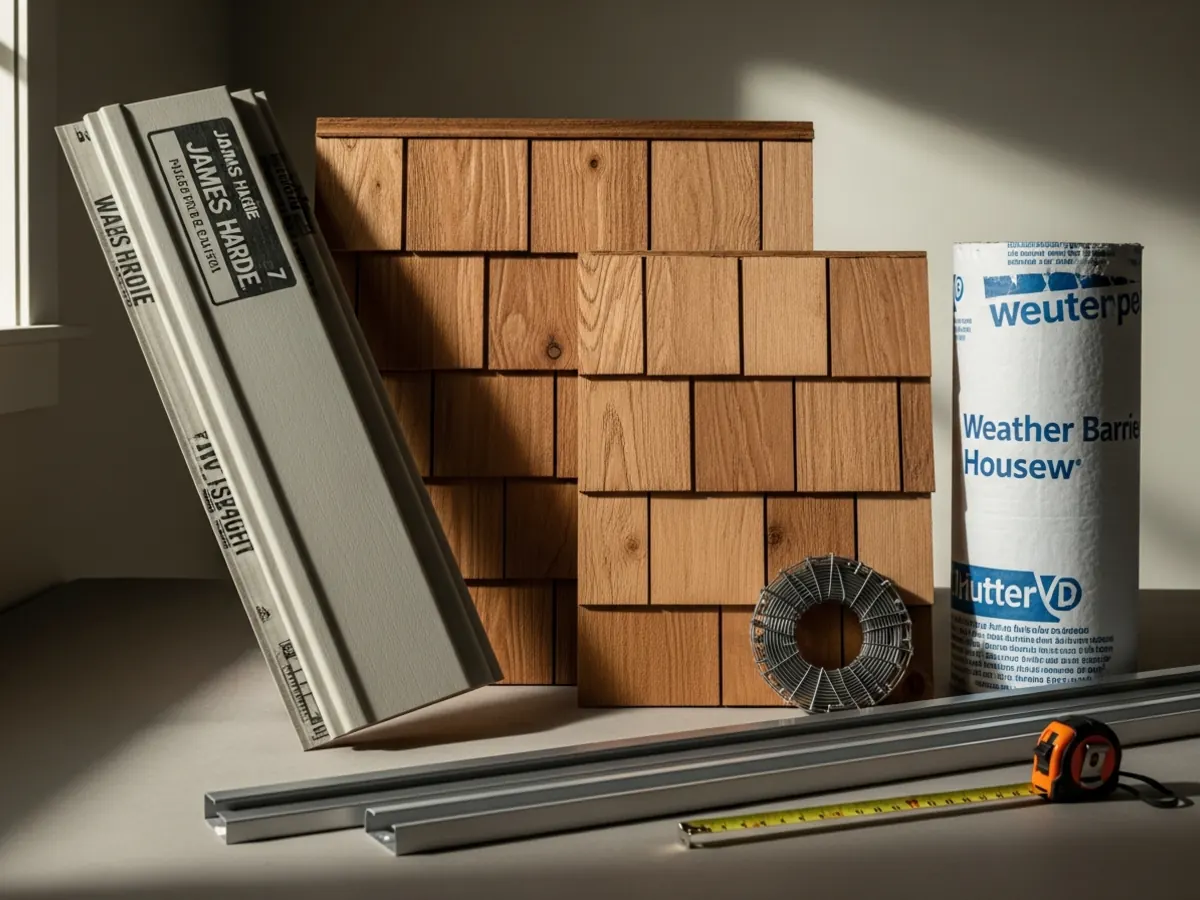
Hardie HZ5 is the high-performance product line for our region's freeze-thaw and high-UV climate — engineered for the moisture and temperature swings the North End sees. ColorPlus is the factory-applied paint finish. HPC accepts Hardie HZ5 ColorPlus when matched to original profile (1×6 lap at 7-inch reveal for Craftsman, 1×8 lap at 8-inch reveal for Colonial Revival) and original color (verified from period documentation, original paint analysis, or HPC color guide). Available formats: lap (5-inch through 8-inch reveal), shingle (6×18 panels for cedar shingle gable replacement), panel for end gables. Cost: $3.50–$5.50 per square foot installed. 30-year material warranty. The dominant choice on North End full-replacement scope.
LP SmartSide engineered wood — HPC-acceptable alternative
Engineered wood siding (treated wood strands compressed and resin-bonded). Lighter than fiber cement, easier to install and cut on-site for the complex period-correct trim integration North End scope demands, factory-primed and finished. 50-year material warranty (longer than Hardie's 30). Slightly more wood-like aesthetic than Hardie. HPC-acceptable for most contributing-resource scope. Cost: $3.00–$5.00 per square foot installed. Particularly favored on aluminum-overlay-removal scope where the underlying wood is being supplemented and the new product needs to read as natural-wood-aesthetic alongside preserved original.
Cedar shingle gable accents — hand-cut original profile or Hardie shingle equivalent
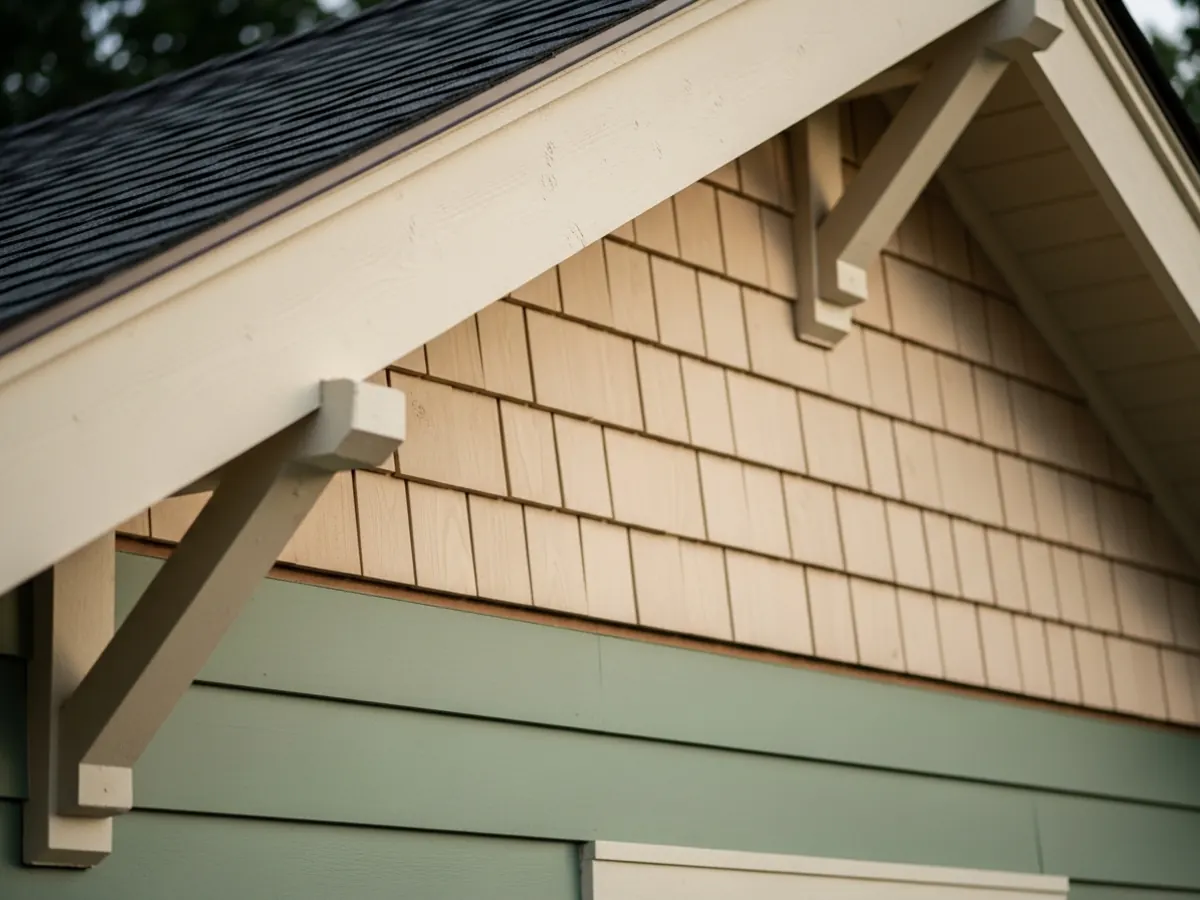
Original Craftsman bungalows on Hyde Park, 13th Street, and Camel's Back have cedar shingle gable accents on dormers and end gables — a defining architectural detail. Replacement options: hand-cut cedar shingles ($800–$1,800 per gable) at original 5-inch exposure, painted or stained to match surrounding siding — period-authentic and the right answer when owner is committed to repaint maintenance every 8–12 years. Hardie shingle product (4-inch exposure pre-finished panels, $400–$1,200 per gable) is HPC-acceptable when matched to original color and is the right answer when owner prefers low maintenance. The aesthetic difference is visible in close inspection; from the public way at 30+ feet the products read similarly.
Custom-milled trim, corner boards, frieze board, water table
Period-correct trim profile is essential — modern siding installed with modern trim profiles reads as wrong even at a casual glance and HPC will reject the design. Iron Crest documents original profile dimensions during pre-construction survey and replicates: custom-milled fir corner boards (typically 4-inch on Craftsman, 5-inch on Colonial Revival), frieze board (top of wall just below soffit, typically 6-inch on Craftsman with crown detail), water table (bottom of wall just above foundation, typically 6-inch with cap molding), window and door casing (original profile typically 4-inch with backband on Craftsman, 5-inch with crown on Tudor and Colonial Revival). Stock Hardie Trim is acceptable for some scope but often requires custom milling for the deeper original profiles.
Weather-resistant barrier — premium drainage-plane on pre-1925 stock
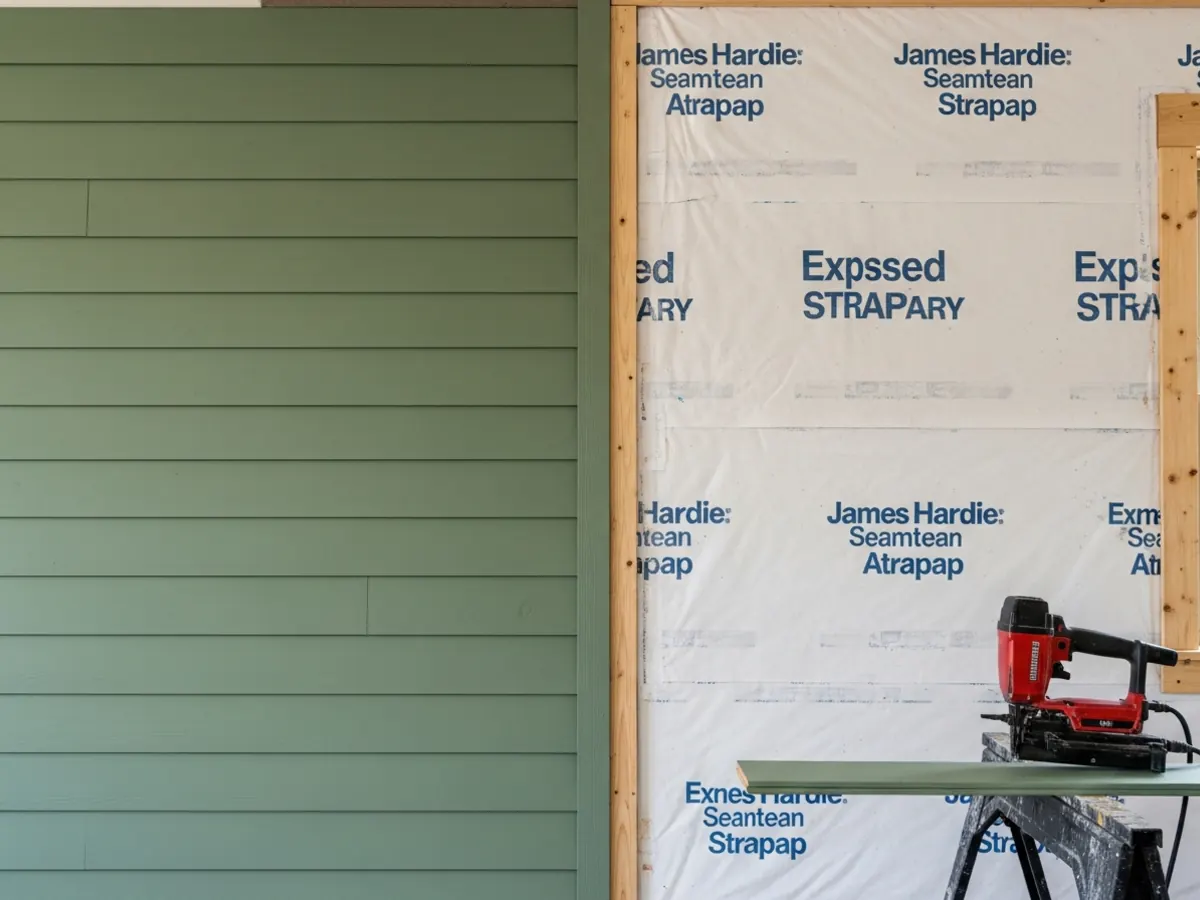
Modern installations use Tyvek (DuPont) or equivalent weather-resistant barrier behind the siding — far better water and air resistance than the original tarpaper that's universal behind 1905–1940 District housing. Two grades: HomeWrap (standard) and CommercialWrap (premium with built-in drainage plane that lets any moisture infiltration drain down and out rather than soaking sheathing). For pre-1925 Craftsman on the bungalow stock that has had any moisture issues — and most have, after 80–120 years — the premium drainage-plane product is worth the upcharge ($400–$1,000 incremental per house). Self-adhered flashing tape (Grace Vycor or equivalent) at every window, door, and penetration.
Wall-cavity insulation upgrade — R-0 to R-21 closed-cell spray foam
Pre-1925 North End Craftsman bungalow stock typically has R-0 wall insulation in original construction — open balloon-framed cavities or kraft-paper-faced batts in partial fill. Pre-1940 Tudor and Colonial Revival have slightly better but still typically R-7 or below. Siding replacement is the only realistic time to upgrade wall insulation without demolishing interior plaster (which destroys irreplaceable wall surfaces). Closed-cell spray foam blown into opened cavities through the exterior side once siding is removed: $1.50–$3.00 per square foot of wall area, $4,500–$12,000 typical for whole-house. Dramatic envelope performance gain — heating-and-cooling load reduction of 25–40%, comfort improvement at exterior walls eliminates the cold-wall sensation, condensation risk reduced. Standard scope on every Iron Crest North End siding job rather than upsell.
Siding replacement in older North End homes routinely surfaces conditions that need addressing before new siding goes on. Pre-1925 Craftsman stock in particular reveals 80–120 years of accumulated weather and structural history when original siding comes off.
- •HPC Certificate of Appropriateness review delays for siding profile, color, or material change Universal on any siding scope visible from public way inside the District. Adds 4–8 weeks to permit timeline. Iron Crest pre-meets with HPC staff before formal application to minimize redesign risk; modifications to profile or color: $1,500–$8,000 in additional design and material adjustment when HPC requests changes.
- •Sheathing damage from long-term moisture infiltration (pre-1925 Craftsman pattern) Removing original siding on pre-1925 Hyde Park or Camel's Back bungalow stock often reveals sheathing damage or rot from years of accumulated water entry around windows, at the water-table line above foundation, or at the rake-and-eave edges. Sheathing replacement: $2.00–$4.00 per square foot of damaged area. Comprehensive replacement on a single elevation: $1,500–$5,500.
- •R-0 wall insulation in original pre-1925 construction (universal) Pre-1925 North End Craftsman bungalow stock typically has R-0 wall insulation — open balloon-framed cavities or kraft-paper-faced batts in partial fill. Siding replacement is the only realistic time to upgrade. Closed-cell spray foam blown into opened cavities: $4,500–$12,000 whole-house. Standard scope on Iron Crest North End siding work rather than discovery item — but called out here because mid-project owners frequently choose the upgrade once they understand the value.
- •Failed original window flashing requiring replacement Original window flashing on pre-1925 stock (often just tar paper) has typically failed by the time siding is replaced. New self-adhered flashing tape (Grace Vycor or equivalent) integrated with the new weather-resistant barrier: $120–$280 per window above standard scope.
- •Rotted framing at sill plates, headers, or studs Long-term water infiltration through failed original flashing or aluminum-overlay-trapped moisture can damage framing members behind siding. Most common at south- and west-facing elevations on the pre-1925 stock. Repair or sister of framing: $600–$3,500 depending on extent.
- •Lead paint contamination on adjacent surfaces (universal pre-1978) Removing pre-1978 painted siding generates significant lead-paint debris. Universal in the North End District. EPA RRP-compliant containment, lead-safe disposal, and adjacent-surface protection (planted gardens, decks, walkways) are required and built into Iron Crest pricing on every pre-1978 District job.
- •1940s–1970s asbestos-cement siding requiring abatement Some 1940s–1970s North End homes had asbestos-cement siding installed (sometimes over original wood lap on the lower-numbered streets and Fort Boise area). Required pre-screen testing identifies before demolition. Licensed abatement before removal: $4,500–$14,000 depending on quantity.
- •Foundation cap or water-table detail in poor condition (pre-1925 pattern) The water table (horizontal trim where siding meets foundation) on pre-1925 stock often shows rot from 80–120 years of splash-back. Replacement of water table with new period-correct profile: $600–$1,800 per side of house.
- •1970s aluminum overlay trapping moisture in original wood beneath Aluminum overlay on lower-numbered streets and Fort Boise pre-1960 homes sometimes trapped moisture against original wood and drove rot. Removal reveals condition. Sometimes original wood is preserved in remarkable condition (UV-protected); sometimes severely deteriorated. Range varies $0 to $8,000 in supplemental wood replacement.
- •Original cedar shingle gable accents requiring replacement Cedar shingle gable accents 80–120 years old on pre-1925 Craftsman bungalow stock often require replacement. Hand-cut cedar shingles at $800–$1,800 per gable for period-authentic restoration; Hardie shingle product at $400–$1,200 per gable for low-maintenance equivalent. Documented in HPC Certificate of Appropriateness submittal.
- •Right-of-way restrictions on tight 50' District streets Hyde Park, 13th Street, and Camel's Back blocks have tight 50' frontages with limited curbside staging. Right-of-way permits for dumpster placement and material delivery have additional restrictions in some District streets ($150–$400 per permit period). Iron Crest handles permitting as part of project setup.
Consultation, exterior assessment, profile documentation (Week 1)
On-site walkthrough. Existing siding condition assessment with elevation-by-elevation rot probe testing. Original profile documentation — siding reveal, corner board dimensions, frieze board profile, water table profile, window casing profile — measured and photographed for HPC submittal and replication. HPC contributing-resource verification — most North End properties are inside the District boundary; some properties north of Hill Road fall outside (verify per property because boundary doesn't track Hill Road exactly). Color discussion — original color identified through paint analysis or period documentation when HPC review will require period-correct match.
HPC pre-meeting and formal Certificate of Appropriateness application (Weeks 2–10)
Pre-meeting with HPC staff before formal application — minimizes redesign risk by identifying any concerns about profile, color, or material before formal review begins. Formal Certificate of Appropriateness application with architectural drawings showing existing and proposed conditions, profile dimensions, color samples, material specifications. HPC review typically 6–10 weeks for siding scope. Modifications when HPC requests changes are coordinated through Iron Crest's design team.
Detailed estimate, environmental testing, material orders (Weeks 2–8)
Detailed line-item estimate covering elevation-by-elevation siding, custom-milled trim profile dimensions, weather-resistant barrier, insulation upgrade scope, painting. Pre-1980 asbestos pre-screen on suspect 1940s–1970s siding products. Material orders placed — Hardie HZ5 ColorPlus typical 3–4 week lead time; LP SmartSide 2–3 weeks; custom-milled cedar trim 4–6 weeks. Cedar shingle gable orders if hand-cut shingle scope.
Building permit application (Weeks 8–12)
City of Boise building permit application with structural drawings if any framing modifications are part of scope. Permit processing typically 3–5 weeks for siding-only scope. Right-of-way permit for dumpster placement and material delivery on tight District streets.
Site setup, plant protection, EPA RRP containment (Day 1 of work)
Mature North End landscape protection — many District properties have 80–120-year-old plantings that must be protected during exterior work. Plywood barriers, plant covers, dust containment. EPA RRP plastic containment for pre-1978 lead-safe demolition. Lift or scaffolding setup on tight 50' frontage streets where ground-level access is limited. Material staging with right-of-way permit handling.
Demolition, sheathing inspection, framing repair (Days 2–10)
Existing siding removal with EPA RRP containment throughout. Asbestos-cement siding abatement by licensed contractor when triggered. Careful preservation of any architectural details to be reused — exposed rafter tails, decorative trim brackets, intact cedar shingles where condition supports. Sheathing condition assessment elevation-by-elevation. Sheathing replacement and framing repair where rot is found. Original window-flashing replacement.
Wall-cavity insulation upgrade (Days 8–14)
Closed-cell spray foam blown into opened wall cavities through the exterior side. Whole-house upgrade typically 2–4 days of dedicated insulation work. R-0 to R-21+ envelope performance gain.
Weather-resistant barrier and flashing detail (Days 12–18)
Tyvek HomeWrap or CommercialWrap (drainage-plane premium) install with proper integration at windows, doors, corners, and penetrations. Self-adhered flashing tape (Grace Vycor) at every opening. Code-compliant detailing for water management.
Siding installation, custom trim, painting, walkthrough (Days 18–48)
Hardie HZ5 ColorPlus or LP SmartSide install starting at corners and working across each elevation. Proper fastening per manufacturer specification, expansion gaps, integration with custom-milled corner boards, frieze board, water table. Cedar shingle gable installation. Painting — factory ColorPlus or on-site application of HPC-approved color in premium acrylic paint. Touch-up of trim. Detail finish work — exposed rafter-tail painting, porch column integration. HPC final inspection on exterior scope. Final building inspection. Walkthrough with owner. 3-year Iron Crest workmanship warranty + 30-year Hardie or 50-year LP SmartSide material warranty.
Siding replacement on older North End homes requires the combined skills of an installer working to Hardie's HZ5 published specifications, a carpenter capable of replicating period-correct 1×6 Craftsman or 1×8 Tudor profile dimensions, and a contractor with active working relationship with the City of Boise Historic Preservation Commission for the universally required Certificate of Appropriateness review.
- City of Boise Historic Preservation Commission — Design review information, district maps, and Certificate of Appropriateness application.
- City of Boise Planning & Development Services — Building, electrical, plumbing, and mechanical permits. Online portal and in-person plan check.
- Idaho DEQ Air Quality (Asbestos) — Testing and abatement guidance for pre-1980 homes via the Idaho Department of Environmental Quality.
- EPA Lead Renovation, Repair and Painting (RRP) Program — Required certification and work practices for renovation in lead-paint homes.
- Preservation Idaho — Statewide nonprofit advocating for historic preservation. Resources and educational events.
Will my siding replacement need Historic Preservation Commission approval?
Yes — on virtually every North End property inside the District boundary, HPC Certificate of Appropriateness is required for any visible exterior siding change. Siding is the canonical HPC exterior-trigger scope. HPC reviews siding profile (lap reveal dimension, trim details, corner board configuration), material (Hardie HZ5 ColorPlus and LP SmartSide both acceptable when properly specified), and color (period-authentic match to original is preferred). Iron Crest pre-meets with HPC staff before formal application to minimize redesign risk. Adds 4–8 weeks to project timeline. Properties north of Hill Road sometimes fall outside the District boundary and skip HPC overlay — verify per property because the boundary doesn't track Hill Road exactly. Like-for-like replacement (same profile, same color) sometimes processes through expedited staff review.
What's the right siding product for a North End Craftsman bungalow?
Hardie HZ5 ColorPlus lap siding in 7-inch reveal matched to original 1×6 cedar lap profile, factory-finished or painted to HPC-approved period-correct color on-site. HZ5 is Hardie's high-performance product line for our region's freeze-thaw and high-UV climate. ColorPlus is the factory-applied paint finish. 30-year material warranty. LP SmartSide at 50-year warranty is the well-supported alternative — lighter, easier to cut for the complex period-correct trim integration North End scope demands, and slightly more wood-like aesthetic. For most pre-1925 Hyde Park, 13th Street, Camel's Back, and Heron Street bungalow scope, Hardie HZ5 is the default choice; LP SmartSide is the right choice when the architectural brief favors more wood-like aesthetic alongside preserved original cedar.
How long does a full-house siding replacement take in the North End?
10–16 weeks for a typical pre-1925 Craftsman bungalow (1,200–1,800 sq ft, single-story) on the Hyde Park, 13th Street, or Camel's Back blocks. 12–18 weeks for a Harrison Boulevard Tudor or Colonial Revival (2,500+ sq ft). The actual installation is 4–8 weeks; the rest is HPC Certificate of Appropriateness review (4–8 weeks — universal in the District), permit processing (2–4 weeks for building permit), material lead time (2–4 weeks for Hardie HZ5 ColorPlus or LP SmartSide; 4–6 weeks for custom-milled cedar trim), and site setup/cleanup. The HPC review is the single longest schedule line item and should be initiated as early as possible.
What about insulation while the siding is off?
Siding replacement is the only realistic time to upgrade wall-cavity insulation on pre-1925 Craftsman bungalow stock without demolishing interior plaster (which would destroy irreplaceable wall surfaces). Original construction is typically R-0 — open balloon-framed cavities or kraft-paper-faced batts in partial fill. Closed-cell spray foam blown into opened cavities through the exterior side once siding is removed: $4,500–$12,000 typical whole-house, $1.50–$3.00 per square foot of wall area. Dramatic envelope performance gain — heating-and-cooling load reduction of 25–40%, comfort improvement at exterior walls eliminates the cold-wall sensation. Standard scope on Iron Crest North End siding work rather than upsell.
Should I replace my original North End wood siding or repair and repaint?
Depends on condition. Original 1×6 cedar lap 80–120 years old that's largely intact (no rot, secure fastening, paintable surface) can often be repaired and repainted for a fraction of replacement cost — and the original old-growth cedar is irreplaceable. Original wood with widespread rot, severe paint failure (alligatoring, peeling beyond sandable depth), or that's been previously damaged by insects, water entry, or aluminum-overlay trapped moisture warrants replacement. Iron Crest assesses elevation-by-elevation with rot probe testing during consultation. Sometimes the right answer is partial replacement of the worst exposures (typically south and west) while preserving the better elevations.
Can you preserve my original cedar shingle gable accents?
When the existing cedar shingle gables are in good condition, yes — we work around them, integrate the new lap siding cleanly at the transition, and document the preserved feature in the HPC submittal. When the existing shingles are failing (which is common after 80–120 years on Craftsman bungalow stock), replacement options: hand-cut cedar shingles at $800–$1,800 per gable for period-authentic restoration with 5-inch original exposure, painted or stained to match surrounding siding (commits owner to repaint maintenance every 8–12 years); Hardie shingle product at $400–$1,200 per gable for HPC-acceptable low-maintenance equivalent. From the public way at 30+ feet the products read similarly; close inspection shows the difference.
What about removing 1970s aluminum siding from a lower-numbered street property?
This is a service we run regularly — particularly common on lower-numbered streets 3rd–9th and around Fort Boise where the maintenance-free era marketing wave installed aluminum overlay over original 1905–1925 cedar lap. Removal reveals the underlying wood. Sometimes original wood is preserved in remarkable condition because aluminum blocked solar UV for 50 years; sometimes severely deteriorated because trapped moisture drove rot in the wood beneath. Service pattern: aluminum removal, original wood condition assessment elevation-by-elevation, supplementation with matching-profile cedar where deterioration warrants, full repaint to period-correct Craftsman color scheme. HPC favors this scope because it returns the home to historic appearance and review can proceed faster than full new-product replacement.
What about asbestos in 1940s–1970s siding products?
Some 1940s–1970s North End homes had asbestos-cement siding installed (sometimes over original wood lap on the lower-numbered streets and Fort Boise area). Required pre-screen testing identifies before demolition. If positive, licensed abatement before removal: $4,500–$14,000 depending on quantity. Pattern is most common on the lower-numbered streets and Fort Boise homes that received exterior overlay during the 1960s–1970s wave. Built into our North End siding pricing as a probable-on-some-scope rather than surprise discovery.
Will siding replacement affect my home's resale value in the North End?
Yes — substantially. New Hardie HZ5 ColorPlus siding (with 30-year material warranty) or LP SmartSide (50-year) is a major positive signal to North End buyers — eliminates the largest single maintenance worry on an older District home and signals overall care. North End homes with new Hardie or LP siding properly specified to period-correct profile typically appraise at 80–115% of cost recovery. Actual sale-price impact in the District's competitive listing environment frequently exceeds appraisal-based recovery because siding replacement removes a buyer-side concern about deferred maintenance and the visible quality signals careful ownership of a historic home. HPC-compliant scope (period-correct profile, color, detail) is critical — non-compliant siding actively hurts resale by triggering buyer concern about HPC enforcement.
Ready to start your North End siding installation project?
Free in-home consultation, honest contingency-based budgeting, and the experience Boise homes require. Iron Crest Remodel — Idaho RCE #6681702, EPA RRP lead-safe work practices, $2M general liability, 3-year workmanship warranty.
Get Your Free Estimate