
Interior Painting Across Hyde Park, Camel's Back, Harrison Boulevard & the Lower-Numbered Streets
Plaster-skim coating on 1905–1925 Craftsman walls, period-correct palette guidance for Tudor and Colonial Revival on Harrison, original wide-profile Craftsman trim preservation, EPA RRP lead-safe practices throughout — interior scope moves at standard City of Boise speed because Historic Preservation Commission review applies only to exterior work.
Quick answer
No — interior painting is fully exempt from HPC review even when your home is squarely inside the North End Historic District boundary. Color choice, sheen, scope depth, comprehensive whole-house repaints with palette changes — none of it triggers Certificate of Appropriateness.
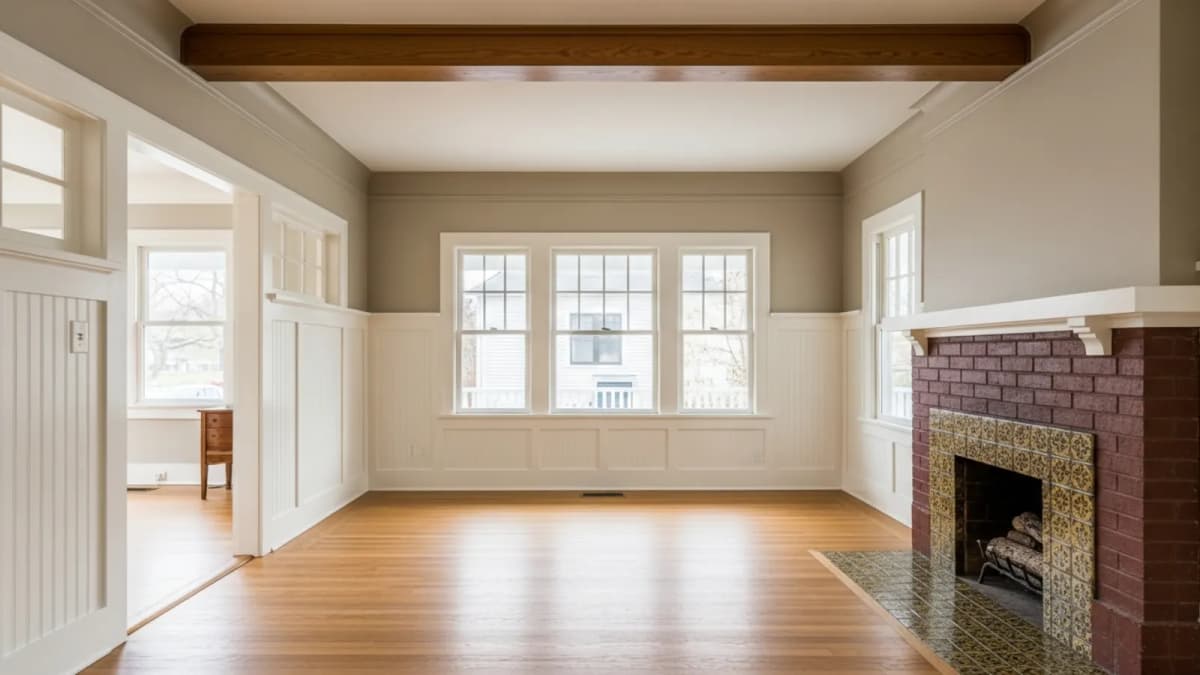
Interior painting in a North End house is the dominant point of contact a homeowner has with the building's pre-1925 reality. The walls are plaster-and-lath with horsehair binder — original 1905–1920 construction technique on the 13th Street and Hyde Park bungalow stock and on most of the Camel's Back and Heron Streets blocks climbing into the foothills. The wall surface is intentionally textured rather than sheetrock-flat; the original lime-plaster finish coat sits roughly 7/8-inch thick over wood lath nailed to balloon-framed studs. Crack patterns are universal — eight to twelve decades of seasonal expansion and contraction leave hairline through hairline-plus crazing on every wall, dominant on the south- and west-facing elevations where solar gain has cycled the plaster hardest. Trim is original wide-profile Craftsman casing on the bungalow stock — typically square-edge fir at 5½ inches with a head detail and a plinth block at the base, sometimes still in original stain on the Hyde Park homes that escaped the 1970s paint-everything wave. Tudor and Colonial Revival homes along Harrison Boulevard run more refined molding profiles with dentil cap detail and more frequent oak or maple species. Pre-1978 lead paint is universal across every wave of the District, and EPA RRP lead-safe work practices are required by federal law — full HEPA containment, dampened sanding, wet-paste scraping, lead-safe disposal. A critical permit fact distinguishes interior painting from exterior painting in the District: interior scope is fully exempt from Historic Preservation Commission review even when the home is squarely inside the District boundary. Color choice, sheen, scope depth, even comprehensive whole-house repaints with palette changes — none of it triggers Certificate of Appropriateness. The HPC overlay applies only when scope crosses to the exterior — exterior color change, new exterior trim, exterior siding repaint. Interior painting work proceeds at standard City of Boise speed (no permit required for paint work alone) on every block of the North End. Iron Crest's North End interior painting is anchored on plaster-skim coating where original walls are preserved (rather than tearing out and drywalling, which destroys irreplaceable architectural texture), period-correct palette guidance calibrated to the home's specific era and architectural sub-vocabulary, custom-mixed colors when the deeper period saturates need adjustment for room light conditions, and EPA RRP lead-safe work practices throughout because the District housing predates 1978 in nearly every case.
North End interior painting strategy varies sharply by era because the wall system, original trim profile, and color-palette sensibility differ between the 13th Street and Hyde Park bungalow density, the Harrison Boulevard mansion corridor, the lower-numbered streets 3rd–9th post-war infill, and the modern construction north of Hill Road that often falls outside the Historic District boundary entirely.
1905–1925 original Craftsman bungalows (13th Street, Hyde Park, Camel's Back, Heron Streets)
Plaster-and-lath wall system with horsehair binder, balloon-framed studs behind. Original wide-profile Craftsman trim — square-edge fir casing typically 5½ inches with head detail and plinth block. Original interior color schemes ran toward warm whites in main rooms with stained fir trim left natural in dining rooms and built-ins (the Hyde Park bungalows that escaped 1970s paint-the-wood waves are most valuable architecturally and the trim should be preserved). Pre-1978 lead paint universal. Pre-1980 joint compound on patches frequently contains asbestos — pre-screen testing required before any sanding. Plaster-repair work on adjacent surfaces $35–$85 per square foot. Project shapes here lean toward whole-house repaint with plaster-skim coating across all rooms because the cracking patterns are continuous across a house — addressing one room without the others creates visible discontinuity. Period palette: warm whites (Simply White, White Dove, Swiss Coffee), muted greens (Card Room Green, Sage Green), with deep-saturated accent walls (Hale Navy, Forest Green, Studio Green, plum) on a single feature wall or built-in.
1925–1940 Tudor Revival, Colonial Revival, Prairie (Harrison Boulevard, Fort Boise area)
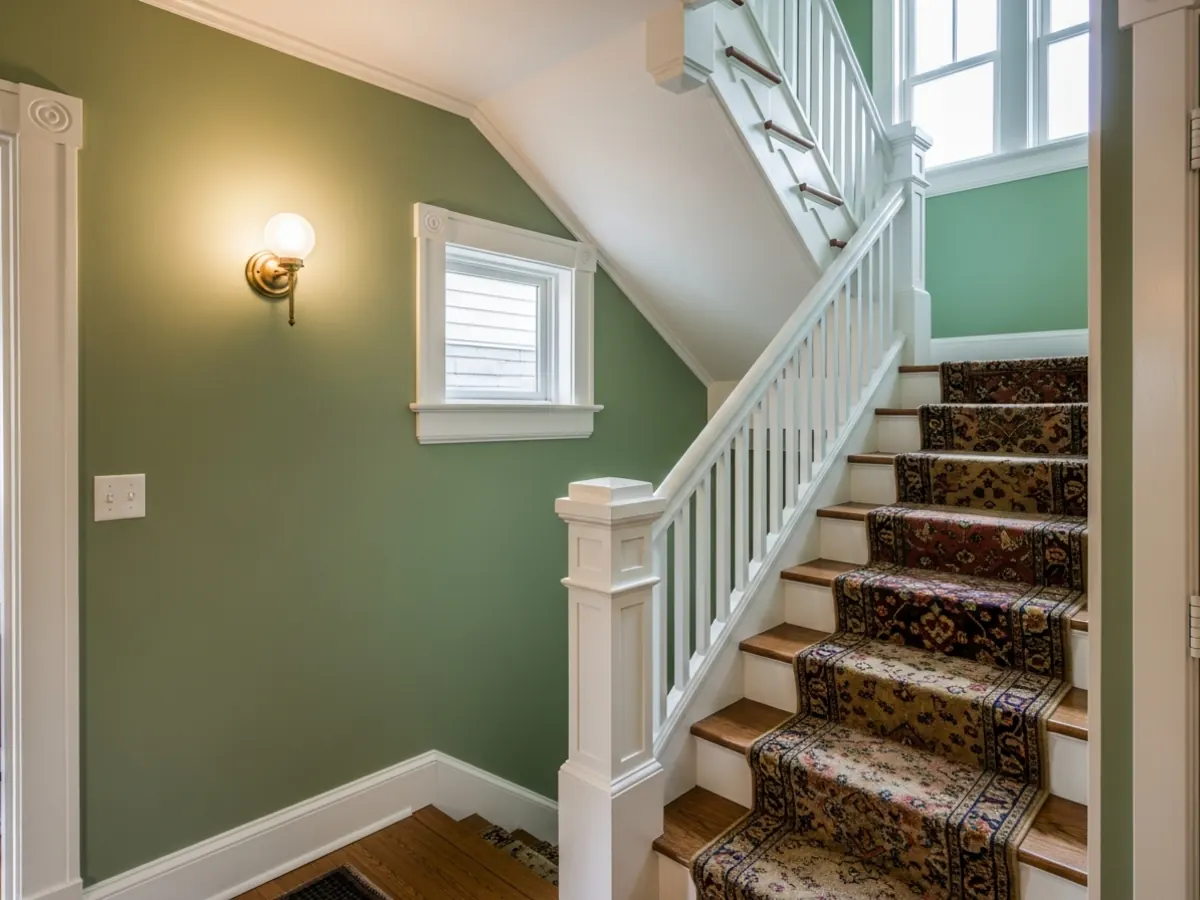
Two-story plaster-walled homes typically 2,200–3,800 sq ft on the deeper Harrison Boulevard lots. Original construction is improved over the bungalow era — plaster work is generally in better condition because slightly newer and because the homes were built for higher economic strata with better trade work. Trim is more refined — bullnose or modest molding profiles on Tudor with leaded-glass interior doors on some homes; dentil cap and refined casing on Colonial Revival; species frequently oak or maple rather than fir. Color palette sensibility supports the deeper saturates the architectural character calls for — Tudor greens (Tate Olive, Bavarian Cream, deep forest), saturated burgundies (Caponata, Cromwell Red), Newburyport Blue and Hale Navy on Colonial Revival principal rooms, with refined warm whites (China White, Mascarpone) on trim. Original plaster crown molding with profile detail is common and worth preserving — repaint with multiple thin coats and sanding between rather than aggressive primer-then-finish that fills profile detail. Pre-1980 asbestos in joint compound a known pattern on the early-drywall era patches.
1945–1965 post-war ranch and minimal-traditional infill (lower-numbered streets 3rd–9th, parts of Fort Boise)
Single-story homes typically 1,000–1,800 sq ft. Mixed plaster-and-skim and early drywall construction depending on year — homes from 1948 and earlier still tend toward plaster; 1955+ shifted to drywall increasingly. Original color palettes from this era are dated (avocado, harvest gold, mauve, baby blue) and almost always completely repainted in the modern scope. Trim is simpler than the pre-1940 Craftsman or Tudor — typically painted from original construction in semi-gloss white. Pre-1978 lead applies but levels are lower than pre-1940 stock. Project shapes here lean toward whole-house repaint with cohesive modern palette because the original mid-century pastel scheme is what the owner is escaping. Common move on the lower-numbered streets: warm whites throughout with one or two accent walls in deeper saturates.
1985+ modern infill north of Hill Road
Modern drywall construction with current trim profiles. Often outside the Historic District boundary entirely (verify per property — the boundary runs near but not always at Hill Road). No plaster-and-lath protocols, no asbestos, no lead. Standard interior painting scope at standard newer-home pricing — typically 25–40% less per square foot than work in the pre-1978 District stock because the prep complexity and lead-safe overhead drop out.
Five recurring interior-painting shapes account for nearly every North End project. Era of the original house, plaster-vs-drywall wall system, and whether scope is comprehensive or focused all drive which one fits.
1. The Pre-1925 Bungalow Plaster-Skim Whole-House
Comprehensive whole-house repaint of a 1905–1925 Craftsman bungalow on the 13th Street, Hyde Park, Camel's Back, or Heron Streets blocks. Plaster-skim coating across every room because the crack patterns are continuous and addressing one room without the others creates visible discontinuity. Stain-blocking primer on all patched areas. Premium acrylic paint (Benjamin Moore Aura, Sherwin Williams Emerald) in a coordinated whole-house palette — warm white principal rooms with one or two deep-saturated accent walls, original stained fir trim preserved where intact (refinish rather than paint), painted trim color-matched to surrounding wall. EPA RRP lead-safe containment throughout. Pre-1980 asbestos pre-screen on joint-compound patches. The dominant North End interior painting scope by count.
Target homes: 1905–1925 Craftsman bungalows in Hyde Park, around 13th Street, on the Camel's Back and Heron Street blocks climbing toward the foothills. Permit: none required for paint work — interior scope is exempt from HPC review.
2. The Harrison Boulevard Tudor or Colonial Revival Saturated-Palette Repaint
Whole-house or principal-rooms repaint of a 1925–1940 Tudor Revival or Colonial Revival mansion on Harrison Boulevard or in the Fort Boise area. Saturated wall colors — Tudor greens, deep blues, burgundies — that the home's formal architectural character supports. Refined warm white on trim (often oak or maple species, occasionally still stained on the Tudor scope and worth preserving). Multiple thin coats with sanding between rather than aggressive primer-then-finish to preserve profile detail in original plaster crown molding. Plaster condition typically better than the pre-1925 bungalow stock so prep is lighter; the cost-per-square-foot is lower but total square footage on these 2,200–3,800 sq ft homes drives total cost up.
Target homes: 1925–1940 Tudor Revival, Colonial Revival, Prairie homes along Harrison Boulevard and around Fort Boise Park. Permit: none — interior scope exempt.
3. The Single-Room Refresh on Pre-1925 Plaster Walls
One room (typically kitchen, dining room, or principal bedroom) on a 1905–1925 Craftsman bungalow. Standard scope: floor and furniture protection, surface prep with crack patching and skim-coat where local damage exists, EPA RRP containment, stain-blocking primer on patches, premium-grade two-coat finish. Preserved original stained Craftsman trim refinished separately rather than painted. Asbestos pre-screen on any joint compound being sanded. Most common single-room scope on the North End by volume — owners testing a new color before committing to whole-house, or refreshing a single high-impact room (kitchen, principal bedroom) without the budget for comprehensive scope.
Target homes: Any pre-1925 North End home wanting focused single-room work. Permit: none required.
4. The Trim & Built-In Refinish — Preserve or Repaint Original Millwork
Focused on original trim, doors, and built-in cabinetry — repaint where previously painted, refinish where stained. Critical decision point in North End scope: original Craftsman stained fir trim and built-ins on the Hyde Park bungalow stock are irreplaceable architectural features that add resale value, and refinishing (strip-sand-stain-clear-coat) is the right answer rather than painting over. Where trim is already painted (often from 1970s-era updates) the period-correct restoration of stain finish is laborious and expensive — at that point a fresh paint scheme that respects the home's character may be the right answer. The biggest aesthetic transformation per dollar in homes where wall color is fine but trim and built-ins are tired or in the wrong finish.
Target homes: Pre-1940 North End homes with significant original trim and built-in cabinetry; especially Hyde Park and Camel's Back bungalow stock. Permit: none required.
5. The Plaster-Repair Comprehensive Skim and Repaint
Deepest single-discipline plaster work in the North End interior-painting catalog. Comprehensive crack patching with mesh tape and three-coat joint compound on all walls and ceilings, full skim coat on damaged areas, sanding between coats, stain-blocking primer over all patches before paint. Common on pre-1925 Craftsman bungalows whose plaster has suffered settlement movement, water damage from old radiator leaks, or earlier failed renovation work. Plaster repair on adjacent surfaces runs $35–$85 per square foot — the most expensive element in this scope. Pre-1980 asbestos in joint compound on patched areas pre-screened before sanding. Whole-house plaster-and-paint scope on a 1908 Hyde Park bungalow can run higher than the comprehensive single-phase remodel of a 1990s tract house.
Target homes: Pre-1940 North End homes with significant plaster damage, water history, or owners wanting deepest possible refresh of original wall surfaces. Permit: none required.
The North End is made up of distinct sub-neighborhoods, each with its own remodeling personality.
13th Street & Hyde Park
The cultural and commercial heart of the North End — boutique shops and restaurants along 13th between Brumback and Eastman, with the densest concentration of original Craftsman bungalows on the surrounding blocks. Lots are tight (typically 50' frontage), alley access is common, and the neighborhood is heavily walked. Most homes here are 1905–1925 Craftsman.
Camel's Back & Heron Streets
The streets immediately around Camel's Back Park, climbing slightly into the lower foothills. Mostly Craftsman bungalows with some Tudor Revival mixed in. Lots get larger toward the park edge, and some homes back to the Foothills Reserve with significant trees. Project budgets here tend to be higher — these are some of the most coveted blocks in the city.
Harrison Boulevard corridor
The grand divided boulevard running south-to-north through the heart of the North End, lined with the neighborhood's largest historic homes. Tudor Revival, Colonial Revival, and a few notable Prairie-style houses sit on deep lots with mature plantings. Projects here lean toward sympathetic upgrade rather than reconfiguration — these homes already have generous floor plans.
Fort Boise & Capitol-area North End
The streets around Fort Boise Park and stretching toward the State Capitol grounds — a mix of original Craftsman bungalows, larger 1920s and 1930s homes, and a higher proportion of post-war infill. Lots vary widely. Project scopes span the full range depending on house age and homeowner intent.
North of Hill Road / new infill
The northern fringe of the historic North End, where construction continued through the 1950s and where modern infill has been most active. Newer (1945–present), larger, less constrained by historic-district considerations. Projects here look more like SE Boise or Harris Ranch in scope and material strategy.
Lower-numbered streets (3rd–9th)
The streets between the State Capitol grounds and Fort Boise — traditionally a more working-class section of the North End, with a mix of smaller Craftsman bungalows, post-war houses, and some converted multi-family. Increasingly being renovated as North End demand pushes outward from the 13th Street core. Excellent value if you can find an unrenovated home here.
Pricing reflects three layers that drive North End interior-painting cost: working with pre-1925 plaster-and-lath wall systems (skim coating, crack patching, asbestos pre-screen on joint compound), EPA RRP lead-safe labor practices on every pre-1978 home (universal in the District), and the careful trim work and brush technique that original wide-profile Craftsman casing or refined Tudor crown molding demands.
North End interior painting ranges
Single room on pre-1925 plaster (Walls, ceiling, trim, doors, one room with crack patching, EPA RRP containment, two coats): $3,200–$7,500 / 1–2 weeks end to end
Trim & built-in refinish (Original Craftsman trim and built-ins refinished or repainted; walls preserved): $8,500–$18,000 / 2–4 weeks end to end
Pre-1925 bungalow whole-house plaster-skim (Comprehensive Craftsman bungalow repaint with plaster-skim coating across all rooms): $18,000–$32,000 / 4–6 weeks end to end
Harrison Tudor or Colonial Revival saturated palette (Whole-house repaint of pre-1940 Harrison Boulevard or Fort Boise mansion in deep period palette): $22,000–$38,000 / 5–7 weeks end to end
Plaster-repair comprehensive skim and repaint (Deep plaster restoration plus full painting on settled or water-damaged pre-1940 stock): $22,000–$38,000 / 5–8 weeks end to end
Pricing assumes Iron Crest's standard North End interior-painting scope: EPA RRP lead-safe practices throughout (universal in the pre-1978 District housing — full HEPA containment, dampened sanding, wet-paste scraping, lead-safe disposal), pre-1980 asbestos pre-screen on joint compound patches with licensed abatement when triggered, comprehensive surface prep including plaster-skim coating where original walls are preserved, premium-grade Benjamin Moore Aura or Sherwin Williams Emerald paint with two finish coats, careful original-trim masking and brush technique, custom color matching when period palette adjustment is needed, and our 3-year workmanship warranty. Plaster repair beyond standard crack patching ($35–$85 per square foot of adjacent surface) is called out as a separate line item rather than absorbed into general scope. No HPC Certificate of Appropriateness applies — interior scope is fully exempt from Historic Preservation Commission review regardless of color choice or scope depth.
The North End Historic District boundary covers most — but not all — of the North End. The district is administered by the City of Boise Historic Preservation Commission, which reviews exterior modifications within the district boundary. Interior work, including comprehensive remodels, is exempt from Historic Preservation review. This is the single most important permitting fact to internalize: your interior work doesn't need historic review, regardless of how aggressive the scope.
Where Historic Preservation review enters the picture is when your project includes any exterior change. Examples we encounter regularly: enlarging a window, relocating an exterior door, adding an exterior-vented hood that requires a new wall penetration, building a small addition or bump-out, or replacing a side-yard window with a different style. Any of these requires a Certificate of Appropriateness from the Historic Preservation Commission, which can add several weeks to the permit timeline (confirm current timelines with PDS) and typically requires architectural drawings showing the proposed change in context.
For interior-only projects, the standard City of Boise permits apply: a building permit for structural work (wall removal, beam installation), an electrical permit for new circuits or panel work, a plumbing permit for fixture relocation or new water lines, and a mechanical permit for ducting or HVAC modifications. Permit fees for a typical mid-range project run several hundred to a few thousand dollars depending on scope. Processing times: electrical and plumbing permits are often same-day or next-day; building permits go through plan review, about two weeks for online plan review per Boise PDS and longer when structural drawings are involved.
One North End-specific permit consideration: parking and right-of-way. Placing a dumpster on the street or parking a construction trailer at the curb requires an ACHD temporary-use permit (fee varies), since North End residential streets are ACHD right-of-way. Some North End streets have additional restrictions related to the historic neighborhood designation. Iron Crest pulls all required temporary-use permits as part of project setup.
Material strategy for North End interior painting is about respecting the home's architectural character through paint product quality, period-correct color palette, sheen selection, and the plaster-and-lath wall system that defines the pre-1925 District housing.
Paint product — premium-grade acrylic on pre-1978 stock
Benjamin Moore Aura (zero-VOC, lifetime hide warranty) or Sherwin Williams Emerald (low-VOC) on every North End project. Mid-grade contractor paint shows brush marks on original plaster surfaces, requires three coats instead of two on saturated colors, and ages poorly within 4–6 years — false economy on a District home. Sheen: flat or matte for ceilings; matte or eggshell for living spaces (eggshell holds up better in hallways and high-touch spaces); satin for trim; semi-gloss for doors and built-in cabinetry. Avoid: contractor-grade paint, chalk paint on permanent installations, latex over oil without proper bonding primer.
Color palette — Craftsman bungalow on Hyde Park, Camel's Back, 13th Street
Warm whites (Benjamin Moore Simply White OC-117, White Dove OC-17, Swiss Coffee OC-45) for principal rooms with original stained fir trim preserved natural. Muted greens (Card Room Green by Farrow & Ball, Sage Green BM 506, Kendall Charcoal HC-166) on accent walls or in dens and libraries. Warm tans (Manchester Tan HC-81, Shaker Beige HC-45) where the warmth of the Craftsman vocabulary is the goal. Deep-saturated accent walls — Hale Navy HC-154, Forest Green HC-129, Studio Green by Farrow & Ball, plum-family deeper purples — work on a single feature wall or behind a built-in to add architectural presence without overwhelming the room.
Color palette — Tudor and Colonial Revival on Harrison Boulevard, Fort Boise
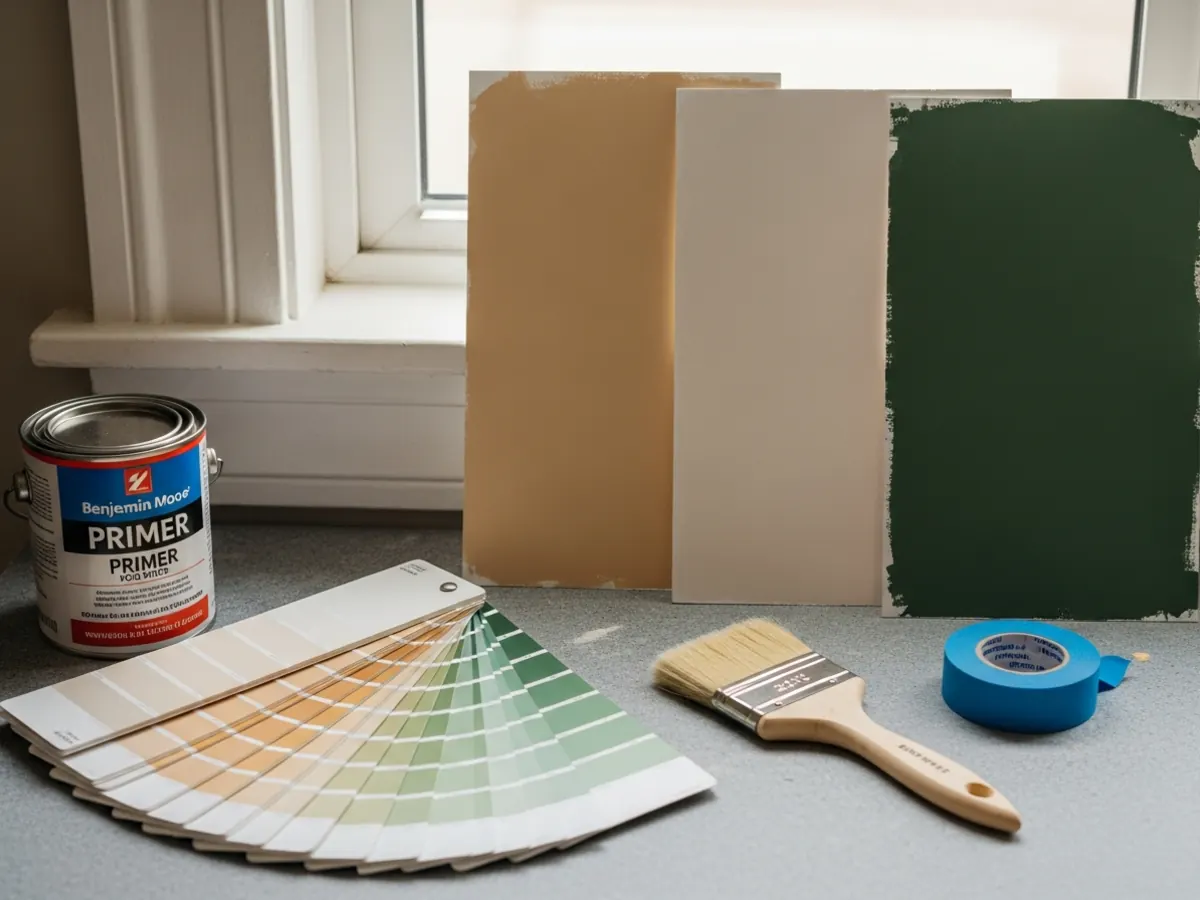
Saturated wall colors are appropriate to the home's formal character. Tudor greens (Tate Olive HC-112, Bavarian Cream OC-30, Avon Green HC-129), deep blues (Hale Navy HC-154, Newburyport Blue HC-155, Wrought Iron 2124-10), burgundies (Caponata AF-650, Cromwell Red HC-46) on principal rooms; Refined warm white (China White OC-141, Mascarpone AF-20) on trim. The deeper saturates that read as period-authentic for these homes are exactly the saturates that wash out in lower-quality paint or under poor lighting — premium product and careful color sample review (12×12 painted boards in the actual room at multiple times of day) are non-negotiable.
Plaster-skim and crack-repair materials — keyed connection on pre-1925 walls
Small cracks: paintable acrylic caulk for hairline movement; vinyl spackle or USG Sheetrock joint compound for slightly wider. Larger cracks or settled areas: USG Sheetrock all-purpose joint compound applied in three thin coats with mesh tape and sanding between. Severe damage requiring rebuild: gypsum plaster or skim coat over fiberglass mesh tape on a keyed connection where the new substrate ties into the original plaster face. Water-damaged areas: stain-blocking primer (Kilz Original alcohol-based, Zinsser BIN shellac-based) before patching to prevent bleed-through. Pre-1980 joint compound on patched areas pre-screened for asbestos before any sanding — built-in step on every pre-1980 North End project.
Trim and millwork — original wide-profile Craftsman casing preservation
Original wide-profile fir Craftsman trim on the Hyde Park, 13th Street, Camel's Back, and Heron Streets bungalow stock is irreplaceable architectural feature — refinish (strip, sand, stain, clear-coat) rather than paint where intact. Tudor and Colonial Revival molding on Harrison Boulevard frequently runs oak or maple species and carries dentil cap detail; multiple thin coats of premium semi-gloss with sanding between rather than aggressive primer-then-finish that fills profile detail. New trim added to spaces where original was removed: custom-milled fir or pine to match exact original dimensions and reveal — the most important visual continuity decision and where lower-quality contractors most visibly cut corners.
EPA RRP lead-safe practices — universal on pre-1978 District housing
Federal law requires EPA RRP lead-safe work practices for any renovation, repair, or painting in pre-1978 homes — that's nearly every North End property. Required practices: full plastic-sheet containment of work area with sealed door barriers, dampened wet-paste paint scraping rather than dry sanding, HEPA-filter vacuum throughout work and between phases, lead-safe waste disposal in marked containers, posted warning signage, EPA-required cleanup verification before homeowner returns to the work area. Adds 18–25% labor cost compared to non-RRP work but it's the legal and ethical baseline. Iron Crest follows EPA RRP lead-safe work practices and uses RRP-compliant practices on every pre-1978 District project — built into our pricing rather than treated as a surprise add-on.
Interior painting in older North End homes surfaces a predictable set of conditions across the pre-1978 District housing stock. Pre-1925 plaster-and-lath walls in particular reveal eight to twelve decades of accumulated history when prep work begins.
- •Severe plaster cracking pattern requiring full-room skim coat (universal on pre-1925 stock) Original plaster-and-lath walls 80–120 years old show continuous hairline crack patterns from accumulated settlement and seasonal cycling. South- and west-facing elevations show heaviest damage from solar gain. Comprehensive skim coat across affected room: $35–$85 per square foot of adjacent surface. Whole-house skim on a 1908 Hyde Park bungalow: $8,500–$18,000.
- •Pre-1980 asbestos in joint compound on patched areas Joint compound applied during 1950s–1979 patches frequently contains asbestos. Required pre-screen testing identifies before any sanding begins. Licensed abatement before paint prep can proceed: $1,500–$4,500. Pattern is most common on the lower-numbered streets and Fort Boise homes that received early-drywall infill or patching during the 1960s–1970s wave.
- •Lead paint chipping and flaking requiring careful encapsulation Pre-1978 homes (universal in the North End) with deteriorating paint require encapsulation with EPA RRP practices rather than aggressive removal where layers are still adhered. Encapsulation primer (XIM Bonder, Sherwin-Williams Lead-Encapsulating) plus two finish coats: $500–$2,500 incremental depending on room count.
- •Water damage discovered behind paint or wallpaper around original radiators Pre-1940 North End homes frequently have original cast-iron steam or hot-water radiators. Decades of small leaks at radiator valves leave hidden water damage in walls behind and beside radiator locations. Wall investigation, drying, and patching before painting: $400–$3,500 depending on extent.
- •Wallpaper buried under multiple paint layers Pre-1960 North End homes commonly have one or more layers of original wallpaper that were painted over rather than properly removed during 1970s–1990s updates. Identification during prep, then steam, scraping, and substantial labor to remove: $1,500–$5,500 depending on quantity, layer count, and adhesive condition.
- •Original cut-nail pop pattern in lath-and-plaster walls Original cut nails fastening lath to balloon-framed studs on pre-1925 stock have settled over a century and produce small pop-marks throughout walls. Each requires individual setting, patching, and sanding before painting. Standard scope addresses minor cases; severe pop patterns: $400–$1,500 incremental.
- •Settling cracks at original Craftsman trim-to-wall joints Original wide-profile Craftsman casing has separated from plaster walls at joints due to long-term settlement movement. Caulking and repainting these joints with paintable elastomeric caulk that accepts continued movement: $400–$1,200 per major room.
- •Failed prior paint application — peeling, alligatoring, incompatible primer Previous paint applied over inadequate prep, latex over un-bonded oil, or onto incompatible primer can fail in patches. Removal of failed coats with EPA RRP-compliant practices and proper bonding primer before repainting: $600–$2,500 per affected room.
- •Original stained Craftsman trim previously painted over (1970s wave) 1970s and 1980s paint-the-wood updates covered original stained Craftsman trim throughout much of the North End. Restoration to stain finish is laborious — chemical stripper, careful sanding, restain, multiple coats of clear finish — at $35–$95 per linear foot of trim. Often the period-correct decision is to commit to a quality painted finish rather than attempt restoration.
- •Inadequate winter ventilation requiring temporary HEPA-filtered fan setup Older North End homes have minimal mechanical ventilation. Winter painting requires temporary HEPA-filtered exhaust fan setup to maintain acceptable indoor air quality during work. Built into standard scope but extends timeline 1–2 days in homes with no functional bathroom or kitchen exhaust fan.
Consultation, color planning, and scope confirmation (Week 1)
In-home walkthrough covering every room. Plaster condition assessment — crack patterns, water history, settlement movement. Original-trim assessment — stained vs painted, profile inventory, refinish-vs-repaint discussion. Color palette discussion calibrated to architectural era (Craftsman bungalow vs Tudor Revival vs post-war ranch). Large-format painted samples (12×12) provided to view in actual room lighting at morning, midday, and evening before final color selection. Confirmation that scope is interior-only — no HPC review applies.
Environmental testing and detailed estimate (Week 1–2)
Pre-1980 asbestos pre-screen on suspect joint-compound patches. Lead testing assumed universal on pre-1978 trim — built into pricing rather than tested individually unless specific question arises. Detailed line-item estimate covering surface area, plaster repair scope, EPA RRP labor practices, paint product, and finish work. Schedule confirmation.
Site setup, EPA RRP containment, surface prep (Days 1–3 of work)
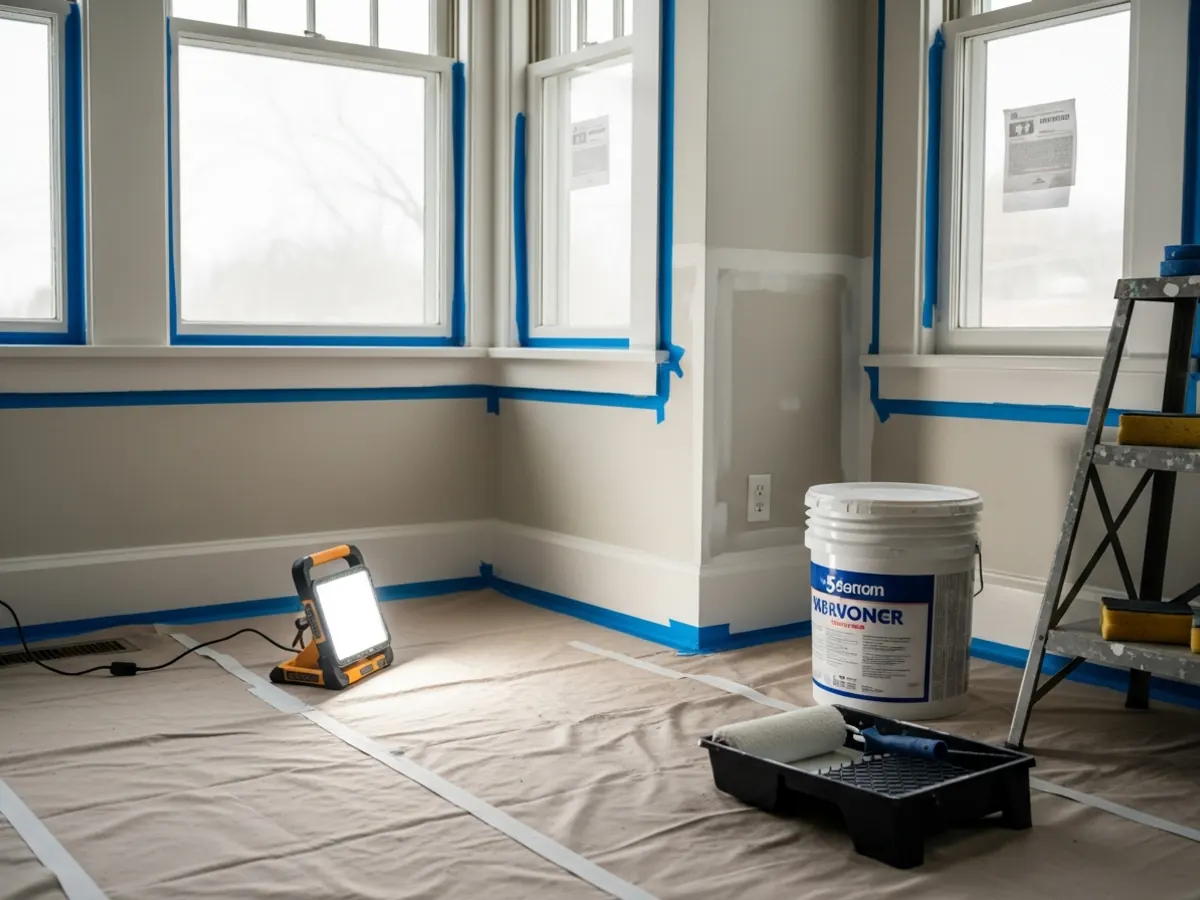
Furniture protection (move out, cover in place, or wrap), floor protection (drop cloths plus ram board on hard surfaces, plastic on carpet), EPA RRP plastic-sheet containment with sealed door barriers if pre-1978 home. Fill nail holes, set cut-nail pops on plaster, repair small plaster cracks with mesh tape and joint compound, sand glossy or oil-based existing finishes with HEPA dust collection, mask original trim and built-in cabinetry.
Plaster-skim coating and substantial repair (Days 2–6 if scope)
Larger crack patching with mesh tape and three thin coats of joint compound with sanding between. Skim coat across damaged wall sections — keyed connection where new substrate ties into original plaster face. Full-room skim on whole-house plaster-skim scope. Stain-blocking primer (Kilz Original or Zinsser BIN) over patched areas before paint. HEPA vacuum cleanup between phases.
Stain-blocking and color-blocking primer (Day 3–4 of paint phase)
Stain-blocking primer on all patched and water-damaged areas. Color-blocking primer where dramatic color change requires (covering Hale Navy with warm white, or vice versa) — typically a tinted gray primer matched halfway between current and target color. Single coat usually sufficient with premium primer.
First finish coat (Day 4–5 of paint phase)
First coat of wall and ceiling color. Allow 4–6 hours dry between coats. Cut-in by hand at corners, ceiling lines, and against original trim with detail brush. Roller technique on field — long even strokes, proper film build. Brush technique on original trim, doors, and built-ins.
Second finish coat (Day 5–6 of paint phase)
Second coat applied for full hide and color depth — particularly important on saturated colors like Hale Navy or Studio Green where mid-grade paint would require three coats. Full inspection of coverage in raking light before signing off.
Trim, door, and built-in painting or refinishing (Days 6–9)
Original-trim refinish (strip, sand, stain, multiple clear-coat layers) where preserving stained Craftsman fir or oak. Repaint where trim was previously painted — multiple thin coats of premium semi-gloss with sanding between rather than one heavy coat. Door painting with hardware removed and reinstalled. Built-in cabinet painting with cabinet doors removed for spray finish where the architectural brief supports it.
Detail work, RRP cleanup verification, walkthrough (Day 9+)
Touch-ups, caulk lines refreshed, hardware reinstalled, masking removed, floor protection removed. Final HEPA vacuum cleanup with EPA RRP cleanup verification on pre-1978 work. Walkthrough with owner. Punch-list addressed within 24–48 hours. 3-year Iron Crest workmanship warranty begins on the painted surfaces.
Interior painting in older North End homes requires specific competence — EPA RRP lead-safe work practices (federal-law requirement), pre-1980 asbestos pre-screen on joint compound, plaster-and-lath wall protocols, original wide-profile Craftsman trim preservation skill, and color sense for the period architectural context across Craftsman bungalow, Tudor Revival, Colonial Revival, and post-war ranch vocabularies. Hiring on price alone for this work in pre-1978 District housing is risky.
- City of Boise Historic Preservation Commission — Design review information, district maps, and Certificate of Appropriateness application.
- City of Boise Planning & Development Services — Building, electrical, plumbing, and mechanical permits. Online portal and in-person plan check.
- Idaho DEQ Air Quality (Asbestos) — Testing and abatement guidance for pre-1980 homes via the Idaho Department of Environmental Quality.
- EPA Lead Renovation, Repair and Painting (RRP) Program — Required certification and work practices for renovation in lead-paint homes.
- Preservation Idaho — Statewide nonprofit advocating for historic preservation. Resources and educational events.
Does Historic Preservation Commission review apply to my interior painting project?
No — interior painting is fully exempt from HPC review even when your home is squarely inside the North End Historic District boundary. Color choice, sheen, scope depth, comprehensive whole-house repaints with palette changes — none of it triggers Certificate of Appropriateness. The HPC overlay applies only when scope crosses to the exterior (exterior color change, new exterior trim, exterior siding repaint). Interior painting work proceeds at standard City of Boise speed with no permit required for paint work alone, on every block of the District from 13th Street and Hyde Park to Harrison Boulevard to the lower-numbered streets.
Do I need EPA RRP-certified painters for my older North End home?
Yes — federal law requires EPA RRP lead-safe work practices for any renovation, repair, or painting in homes built before 1978, which is nearly every property in the North End District. RRP requires plastic-sheet containment of the work area with sealed door barriers, dampened wet-paste scraping rather than dry sanding, HEPA-filter vacuuming throughout, lead-safe waste disposal, and posted warning signage. Iron Crest follows EPA RRP lead-safe work practices and uses RRP-compliant practices on every pre-1978 District project — built into pricing rather than treated as a surprise add-on. Hiring a non-certified painter for work in a lead-paint home is a federal violation and exposes both contractor and homeowner to liability.
Should I paint over my original Craftsman stained fir trim?
Generally no. Original stained Craftsman fir trim on Hyde Park, 13th Street, Camel's Back, and Heron Street bungalows is one of the most valuable architectural features of pre-1940 North End homes — irreplaceable wide-profile millwork that adds character and meaningful resale value. Painting over it is reversible only at significant cost (chemical stripping at $35–$95 per linear foot rarely produces fully restored results because original stain has penetrated the wood grain). Exception: if your trim has already been previously painted over during the 1970s wave, restoring to stain finish is so laborious that a fresh quality paint scheme respecting the home's character is often the right answer. We assess condition during the consultation walkthrough.
What's the difference in cost for a pre-1925 plaster-walled bungalow vs newer drywall home?
Painting in a pre-1925 plaster-and-lath North End bungalow runs 35–55% above the same scope in newer drywall construction, driven by: EPA RRP-required practices throughout (containment, dampened sanding, HEPA vacuuming, lead-safe disposal); plaster-skim coating across all rooms because crack patterns are continuous and addressing one room creates discontinuity; pre-1980 asbestos pre-screen on joint compound patches; original wide-profile Craftsman trim with more profiles and edges than modern trim; and substrate prep on horsehair-binder plaster requires different technique than fresh drywall.
How long does a whole-house paint job take on a North End Craftsman bungalow?
4–6 weeks for a pre-1925 Craftsman bungalow on the 13th Street, Hyde Park, or Camel's Back blocks (typically 1,200–1,800 sq ft, 5–8 rooms). 5–7 weeks for a Harrison Boulevard Tudor or Colonial Revival mansion (2,200–3,800 sq ft, 9–14 rooms). Plaster-skim coating across all rooms is the longest-duration phase. Owner can typically remain in residence by sequencing rooms and providing a clear path through the house, though pre-1978 EPA RRP containment can make individual rooms unusable for 24–48 hours during active work.
Can you match an original Craftsman or Tudor period color palette?
Yes — and we have favored color recommendations for each architectural era of the District. Craftsman bungalow brief: warm whites (Simply White, White Dove, Swiss Coffee) with stained or painted Craftsman trim, deep-saturated accent walls (Hale Navy, Forest Green, Studio Green) on a single feature wall or behind a built-in. Tudor Revival on Harrison Boulevard: saturated greens (Tate Olive, Avon Green), deep blues (Hale Navy, Newburyport Blue), burgundies (Caponata, Cromwell Red) with refined warm white trim. Colonial Revival: refined blues, soft greens, warm whites. Custom color matching available when a specific period saturate needs adjustment for your room's specific light conditions.
What about asbestos in joint compound on patched areas?
Pre-1980 joint compound applied during 1950s–1979 patches and early-drywall infill frequently contains asbestos. Required pre-screen testing identifies before any sanding. If positive, licensed abatement before paint prep can proceed: $1,500–$4,500. Pattern is most common on the lower-numbered streets and Fort Boise homes that received early-drywall patching during the 1960s–1970s wave. Built into our North End interior-painting pricing as a probable rather than surprise discovery on pre-1980 stock.
Do you do plaster-skim coating as part of interior painting?
Yes — plaster-skim coating is the dominant prep approach for any pre-1925 Craftsman bungalow whole-house repaint because the crack patterns are continuous across rooms and addressing one without the others creates visible discontinuity. Standard process: comprehensive crack patching with mesh tape and three thin coats of joint compound with sanding between, full skim coat on damaged sections, stain-blocking primer over all patches before paint. Pre-1980 asbestos pre-screen on joint compound before sanding. Plaster repair on adjacent surfaces $35–$85 per square foot — called out as a separate line item rather than absorbed into general scope.
Will painting affect my home's resale value in the North End?
Yes — substantially. North End buyers are attentive to home presentation and pay premiums for properly updated historic homes. A well-executed whole-house repaint in period-appropriate colors typically returns 110–160% of cost at sale on pre-1925 Hyde Park, 13th Street, or Camel's Back bungalow stock — one of the highest-ROI improvements available short of comprehensive remodel scope. Critical: choosing colors that read as period-current and tasteful rather than personalized to specific taste, preserving original Craftsman stained trim where intact, using premium paint that doesn't show roller marks. Bad paint (cheap product, sloppy execution, painted-over original trim) actively hurts resale by signaling deferred care and irreversible damage to original architectural features.
Ready to start your North End interior painting project?
Free in-home consultation, honest contingency-based budgeting, and the experience Boise homes require. Iron Crest Remodel — Idaho RCE #6681702, EPA RRP lead-safe work practices, $2M general liability, 3-year workmanship warranty.
Get Your Free Estimate