
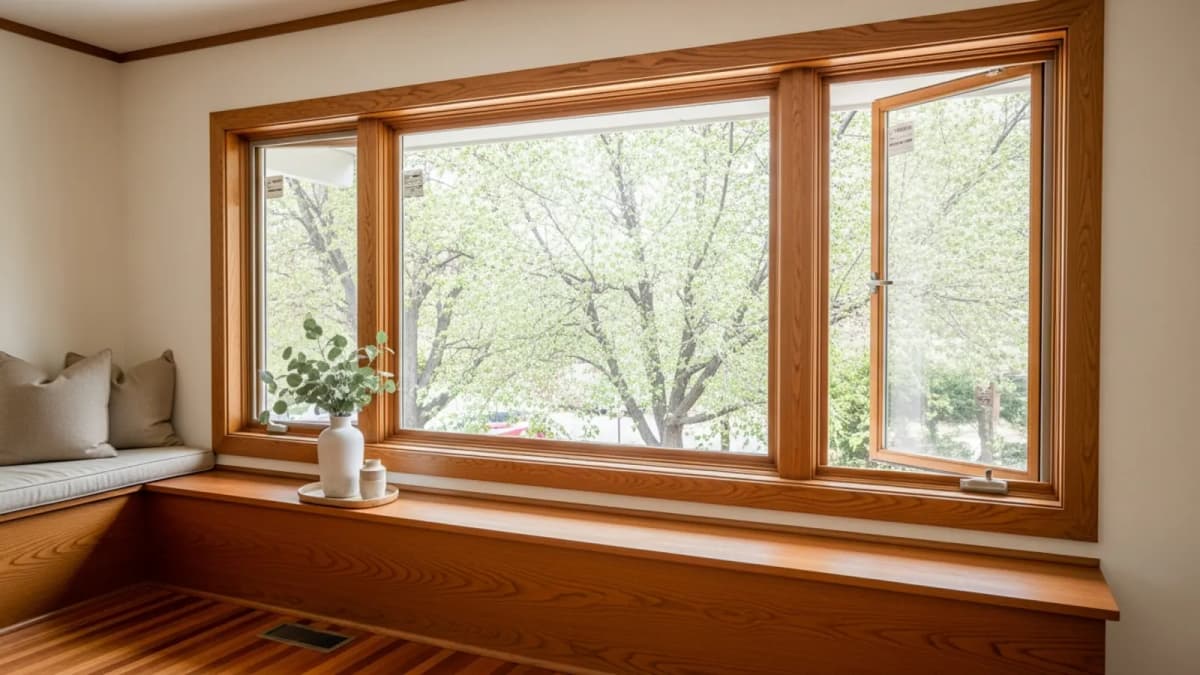
Window Replacement Across Vista, Curtis / Targee, Eastern Bench & the Lower Bench
Wood-clad, fiberglass-clad, and vinyl replacement windows for 1948–1965 mid-century ranches and split-levels — modern energy performance, picture-window upgrades, full color and grid flexibility because the Bench isn't within any Boise Historic District.
Quick answer
Depends on condition and priorities. Original 1948–1965 wood double-hung windows in good repair (operable sashes, intact glazing, weather-stripped, ropes-and-weights still functional) can be restored and supplemented with interior storm windows — preserving original character at lower cost.
Window replacement on the Boise Bench is more straightforward than equivalent work in the North End for two specific reasons. First, the Bench isn't within any City of Boise Historic District, so there's no Historic Preservation Commission review on window scope — no Certificate of Appropriateness required, no period-correctness mandate, no historic-review overlay. Owners have full flexibility on product (wood-clad, fiberglass-clad, vinyl), profile (casement, double-hung, slider, picture), and color. Second, the pre-1978 housing stock that comprises essentially all of the Bench was built with simpler painted-wood casings and modern stud-spacing framing, so the integration work is technically clean — no plaster-and-lath protocols, no balloon-framing complications. The window-replacement work itself is anchored on three patterns specific to the Bench. The original wood double-hung windows on 1948–1965 Vista, Curtis / Targee, and Roosevelt Market ranches are typically still operable but poorly weather-sealed and energy-inefficient (single-pane glass with U-factor approaching 1.0). The original steel casement windows on a subset of 1955–1965 Bench homes have failed at the operator hardware and at the steel-to-glass connection. The aluminum sliders that many homes received in 1970s and 1980s budget updates have failed insulating-glass seals creating visible fogging between the panes and substantial drafts. EPA RRP applies on every pre-1978 address (universal in the Bench), and that's nearly the entire housing stock. Iron Crest's Bench window work is anchored on Marvin, Pella, and Andersen authorized installation, original casing preservation as standard practice where condition allows, and the picture-window upgrade scope that's the defining curb-appeal move on Bench front elevations.
Window replacement strategy on the Bench varies by era because original window type, casing detail, and what previous owners did to the windows all change across the post-war housing waves.
1940–1955 early post-war minimal traditional (Roosevelt Market area, parts of Western Bench)
Original wood double-hung windows with simple divided-light grids (typically 6-over-1 or 4-over-1 patterns), sometimes original wood casements on the smaller minimal-traditional homes. Surrounded by simple painted wood casings, often original to construction. Single-pane glass with original ropes and weights typically still functional. Many original windows still operable but poorly weather-sealed and energy-inefficient. EPA RRP universal — lead-painted casings.
1955–1965 classic post-war ranch (Vista, Curtis / Targee, Eastern Bench)
Original wood double-hung or steel casement windows. Large picture windows in living rooms are the characteristic feature of mid-century ranch architecture — 8-foot to 12-foot wide single-pane glass framing the front yard. Original casings simple painted profiles. Some homes have original aluminum-framed sliders on bedroom and bathroom locations. Pre-1978 lead-paint universal on casings.
1965–1975 expanded ranch and split-level (Eastern Bench / Overland, parts of Lower Bench)
Original aluminum sliders or wood casements. Many homes received aluminum slider updates in 1970s as a budget refresh — these are now showing 50+ years of age with failed insulating-glass seals creating visible fogging between panes and aluminum frames pitted from weather exposure. The aluminum-slider replacement scope is the dominant window project on Eastern Bench stock.
1985+ infill and renovated Bench homes
Modern vinyl or aluminum-clad wood windows from original construction. Standard window replacement applies — faster lead times and lower cost than work in older Bench homes. No EPA RRP overhead because post-1978. Smaller share of the Bench housing stock.
Five recurring window-replacement shapes account for nearly every Bench project. Era of the home, what original window type is being replaced, and product-tier brief all drive which one fits.
1. The 1955-Era Original Wood Whole-House Replacement
Replace all original 1948–1965 wood double-hung or steel casement windows with new wood-clad replacement (Marvin Essential, Pella Lifestyle, Andersen 400 Series) or fiberglass-clad (Marvin Elevate, Pella Impervia). Original interior wood casings preserved where condition allows — saves substantial paint and trim work. Modern simulated-divided-light grids to match original 6-over-1 or 4-over-1 patterns where the Bench ranch architectural brief warrants, or no grids for fully contemporary aesthetic. Custom-sized to fit existing rough openings.
Target homes: 1948–1965 Vista, Curtis / Targee, Roosevelt Market, and Eastern Bench ranches with original wood or steel casement windows. Permit: building permit when openings change; not required for like-for-like replacement.
2. The Failed-Aluminum-Slider Replacement (1965–1980 Update Subset)
Specific scope for Bench homes whose 1970s–1980s aluminum slider updates have failed at the insulating-glass seals (visible fogging between panes) or at the aluminum frames (pitted, dented, cosmetically aged). Replace with new vinyl, fiberglass-clad, or wood-clad sliders depending on product-tier brief. Standard scope on Eastern Bench / Overland and Lower Bench stock that received the aluminum-slider wave.
Target homes: 1965–1980 Bench homes with failed aluminum sliders from prior updates. Permit: building permit when openings change.
3. The Selective Replacement (Failing Windows Only)
Replace only the windows that have actually failed — warped sashes, broken seals, severely damaged frames — while preserving operable original windows for now. Cost-effective phased approach for owners with mixed-condition windows or budget constraints. Common on Roosevelt Market 1948 minimal-traditional stock where original wood windows have variable condition across the home.
Target homes: Bench homes with mixed window condition. Permit: the City of Boise issues residential window replacement under Permit 428 — confirm scope with the Building Division at (208) 608-7070.
4. The Picture Window Upgrade (Front-Elevation Focal Point)
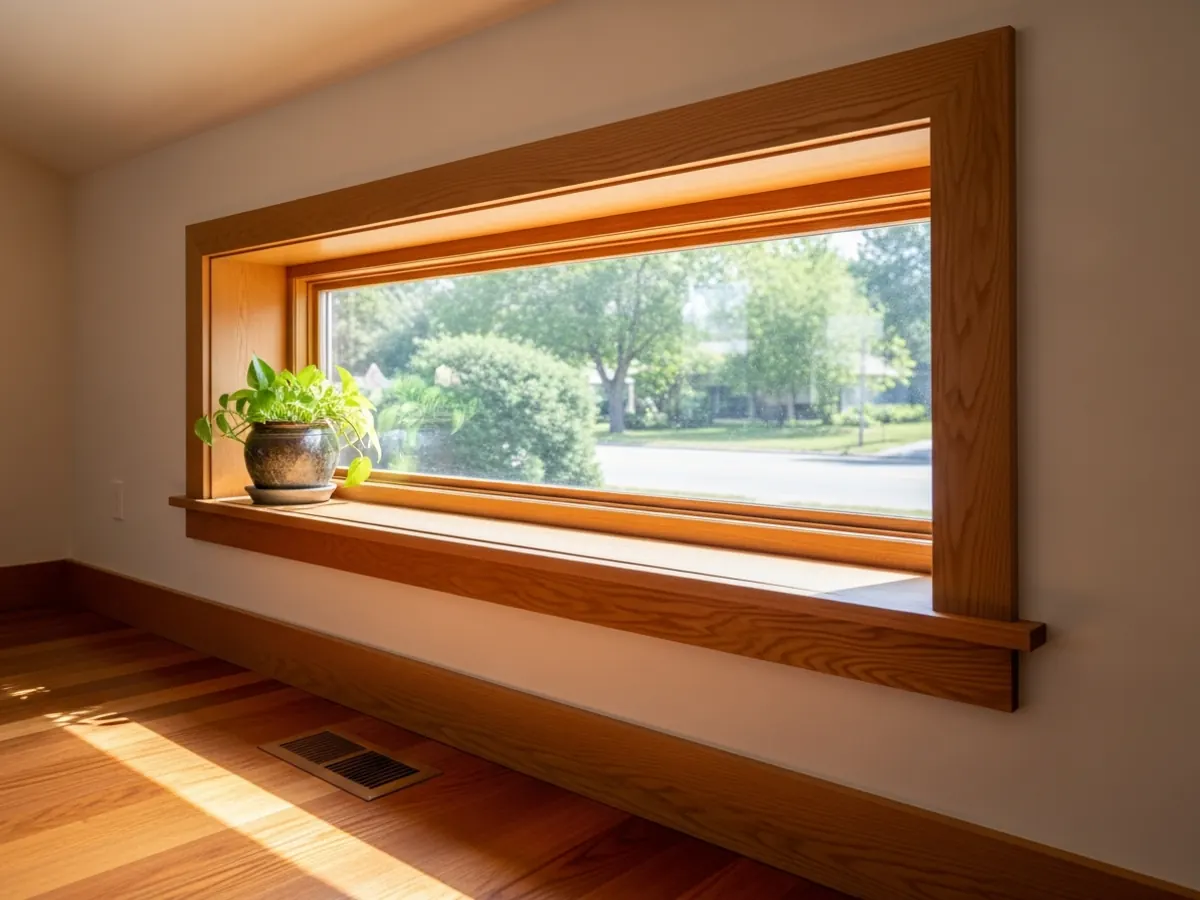
Mid-century ranches across Vista, Curtis / Targee, and the Eastern Bench have a defining 8-foot to 12-foot picture window framing the living room view of the front yard. This original single-pane picture window is the largest single source of heat loss in a typical Bench ranch and the most visible curb-appeal element. Replacement with a new wood-clad or fiberglass-clad picture window with low-E argon glass elevates both aesthetic and energy performance. Often paired with header reinforcement because modern triple-pane glass is meaningfully heavier than original single-pane.
Target homes: Bench homes with original aging picture windows on the front elevation. Permit: typically no permit if opening size doesn't change.
5. The Egress Window Addition (Basement Bedroom Code Compliance)
Adding a code-compliant egress window to a basement bedroom on Lower Bench or Eastern Bench split-level stock where the basement was converted to a bedroom without proper egress. Excavation of the window well area, foundation cutting for the new opening, structural reinforcement of the foundation header, window well construction with proper drainage, new egress window install. Sometimes done as part of a basement finish or basement ADU conversion.
Target homes: Bench homes with basement bedrooms lacking code-compliant egress. Permit: building permit required.
The Boise Bench is made up of distinct sub-neighborhoods, each with its own remodeling personality.
Vista
One of the most recognized sub-neighborhoods on the Boise Bench, centered around Vista Avenue between the Boise River and Overland Road. Post-war homes on uniform lots with mature street trees and good walkability to local commercial corridors. A heavy concentration of small ranch and minimal-traditional homes that respond well to galley-kitchen open-ups, primary-suite additions, and aesthetic modernization.
Central Bench (Curtis & Targee corridor)
The geographic core of the Bench, running along Curtis Road and Targee Street between I-84 and Overland. The City of Boise's Central Bench Neighborhood Plan records that the neighbourhood changed significantly during and after World War II, when agricultural land was subdivided into residential lots, and that new homes were built west of Orchard Street from the mid-1950s through the 1970s. Blueprint Boise designates the Central Bench primarily for compact-neighbourhood form — small lots, typically between 5,000 and 7,000 square feet, predominantly single-family, on an interconnected network of sidewalks and streets. Galley kitchen conversions are the dominant remodeling project type here.
Eastern Bench / Overland
The eastern edge of the Bench around Overland Road, with a mix of ranch and split-level homes. Lots tend to be slightly larger. Closer to mall-adjacent commercial corridors and major transit routes.
Western Bench / Roosevelt Market area
The western edge of the Bench near the Roosevelt Market and Capitol corridor. Some of the older Bench housing stock sits here, with steeper roof pitches and smaller footprints than the post-war ranches further east. Closer to downtown amenities and walkable.
Greenbelt-adjacent Bench
Bench properties along the elevated edges of the Boise River bluff with views down to the Greenbelt and the river. Frequently subject to view-preserving design considerations during exterior work — though without formal Historic District constraints.
Lower Bench (I-84 frontage)
The southern edge of the Bench close to I-84, on smaller lots and often with more traffic noise from the freeway. Common to combine kitchen, bathroom, and primary-suite remodels into a single comprehensive scope.
Most Boise window replacement projects run $6,500 to $28,000 — the band published on our Boise window replacement page. The ranges below run higher than that band because of the Bench's pre-1980 housing stock, where asbestos testing, lead-safe work practices and original-systems discovery are part of the base scope rather than an add-on. Pricing reflects three Bench realities: window product cost across vinyl (budget), fiberglass-clad (mid-tier), and wood-clad (premium) tiers; original casing preservation labor that saves trim-and-paint scope but requires careful demolition; and the EPA RRP lead-safe practices universal on the pre-1978 housing stock.
Boise Bench window replacement ranges
Single-window replacement (1 window, mid-tier vinyl or fiberglass-clad): $800–$2,500 / 1 week (after lead time) end to end
Selective 5–10 window replacement (5–10 failing windows replaced, originals preserved elsewhere): $6,500–$14,000 / 2–3 weeks end to end
Egress window addition (basement bedroom) (Code-compliant basement bedroom egress with window well): $4,500–$9,500 / 2–3 weeks end to end
Whole-house vinyl or fiberglass-clad replacement (All 10–15 windows replaced with mid-tier vinyl or fiberglass-clad): $12,000–$22,000 / 3–5 weeks end to end
Whole-house wood-clad replacement (All 10–15 windows replaced with premium wood-clad (Marvin, Pella, Andersen)): $18,000–$32,000 / 4–6 weeks end to end
Pricing assumes Iron Crest's standard Bench scope: City of Boise building permit for whole-house or major scope (not required for like-for-like single-window replacement), removal of existing windows with careful preservation of original interior casings where condition allows, custom-fit replacement windows with low-E argon-filled insulating glass, foam insulation in framing gaps, self-adhered flashing tape at opening perimeter, exterior trim integration, EPA RRP lead-safe work practices throughout (universal on pre-1978 Bench stock), and our 3-year workmanship warranty layered on the manufacturer's product warranty (typically 10–20 years on glass and frame, lifetime on Marvin Signature). The Bench isn't within any Boise Historic District — no Historic Preservation review, no Certificate of Appropriateness, no historic overlay that comparable North End scope carries.
The City of Boise designates ten historic districts, and the Boise Bench is not one of them and does not sit inside one. There is no Historic Preservation Commission review for exterior modifications, so siding changes, window replacements, additions, and exterior colour changes don't trigger the Certificate of Appropriateness process that constrains North End and East End projects. That removes a review step from the pre-construction schedule on any Bench exterior scope; confirm current review timelines with Boise PDS for your specific project.
City of Boise standard permits still apply for any work involving electrical, plumbing, structural changes, or mechanical systems. A scope that includes new circuit additions, moving a gas line, or removing a load-bearing wall requires a building permit from City of Boise Planning and Development Services. Permit processing for Bench projects takes about two weeks for online plan review per Boise PDS, longer with structural drawings — without the historic-review overlay that North End projects carry. Building Division: (208) 608-7070. Planning & Zoning: (208) 608-7100.
Asbestos and lead paint remain serious considerations on the Bench, despite the absence of Historic District review. Pre-1980 Bench homes (which is most of the housing stock) commonly contain asbestos in floor tiles, joint compound, and sometimes pipe insulation. We test suspect pre-1980 materials and arrange AHERA-accredited abatement when asbestos is confirmed. Pre-1978 Bench homes contain lead paint. The EPA RRP rule requires lead-safe work practices for any renovation in lead-paint homes — including containment, specialized HEPA vacuuming, and proper disposal. Iron Crest follows EPA RRP lead-safe work practices and incorporates them into the standard scope on every pre-1980 Bench project.
Bench-specific permit consideration: setbacks. Blueprint Boise designates the Central Bench primarily for compact-neighbourhood form, with small lots typically between 5,000 and 7,000 square feet, so additions or detached structures must navigate side and rear setbacks carefully. Boise's residential zoning code sets no maximum lot coverage, so the binding constraint on a Bench addition is almost always the setback envelope rather than a coverage percentage. Zoning verification during initial design is critical to avoid late-stage redesigns.
Window product selection for Bench homes balances modern energy performance, mid-century-appropriate aesthetics (or fully contemporary if that's the owner's brief), and cost-effectiveness across product tiers.
Wood-clad — Marvin, Pella, Andersen premium
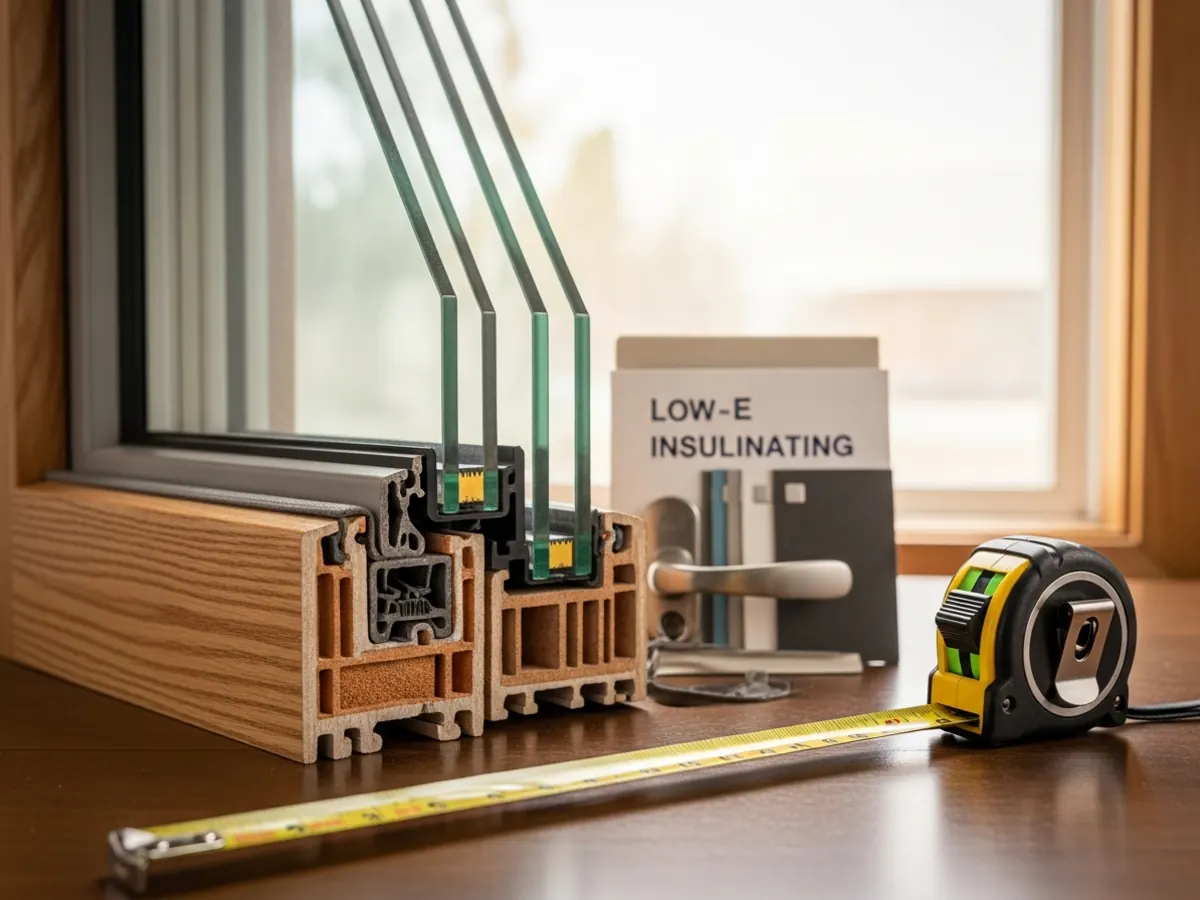
Premium wood interior with aluminum or fiberglass exterior cladding. Modern interior look that complements mid-century clean aesthetic with a warmer reading than vinyl or fiberglass-clad. Marvin Essential or Signature, Pella Lifestyle or Reserve, Andersen 400 Series. Cost: $1,000–$2,200 per window installed. Best choice for premium Bench projects or homes preparing for sale at the upper end of the comparable-sale band.
Fiberglass-clad — middle tier
Fiberglass interior and exterior. Modern energy performance, lower maintenance than wood-clad, longer-lasting paint finishes than vinyl. Marvin Elevate, Pella Impervia. Cost: $800–$1,600 per window installed. Excellent middle-tier choice for most Bench applications — captures most of the wood-clad aesthetic and performance benefit at meaningful cost reduction.
Vinyl — value tier
Most cost-effective option. Acceptable for mid-century Bench context where period-authenticity isn't constrained by Historic Preservation review. Premium vinyl (Pella 250 Series, Andersen 100 Series Fibrex composite, Milgard Trinsic) outperforms budget vinyl significantly and delivers modern energy performance with 20-year glass warranty. Cost: $450–$1,000 per window installed. Avoid: lowest-end builder-grade vinyl which can warp in Boise's temperature extremes.
Window styles — picture, casement, double-hung, slider
Modern Bench window choices vary by room and architectural brief: large picture windows in living rooms (the defining mid-century feature) — preserved or upgraded with modern low-E glass; casements or double-hungs in bedrooms; simple modern grids or no grids depending on the contemporary-vs.-period brief; wide trim profiles consistent with mid-century ranch architecture. Simulated-divided-light grids are appropriate when matching original 6-over-1 or 4-over-1 patterns; no grids appropriate for fully contemporary aesthetic on owners doing a comprehensive modernization.
Glass package — low-E argon standard, triple-pane available
Modern energy-efficient glass packages: low-E coating to block UV and reflect heat, argon gas fill in the air space between panes, warm-edge spacers to reduce edge condensation. Standard double-pane: U-factor approximately 0.30 (down from original single-pane 1.0). Premium triple-pane: U-factor approximately 0.20 — modest energy improvement at substantial cost upgrade, usually specified only on west-facing exposures with high afternoon sun load or on the picture-window upgrade scope.
Casing and trim integration
Original Bench interior casings can sometimes be preserved during window replacement (the simple painted profiles characteristic of mid-century ranches are easier to preserve than ornate Craftsman casings), sometimes need replacement where water damage or prior modification has compromised them. Preservation saves substantial paint-and-trim scope. Replacement windows must be sized to fit the existing rough opening with original casing intact. Exterior trim integration: matched to existing or refreshed with modern profile depending on broader exterior-painting scope concurrent with the project.
Window replacement in older Bench homes surfaces a recurring set of conditions related to original framing, casing condition, and modern code requirements. We pre-screen at the consultation walkthrough so the budget reflects them up front.
- •Sill or framing rot at window openings (south- and west-facing exposures) Long-term water infiltration around 60–75 year old windows can rot sills and framing, particularly on south- and west-facing exposures where rain and snow accumulate at the bottom edge. Repair before new window install: $300–$1,200 per window.
- •Out-of-square original openings on pre-1965 Bench framing Pre-1965 Bench homes have some out-of-square or out-of-plumb openings from decades of settling. Custom-sizing replacement windows plus trim shimming is standard scope. Severe cases requiring substantial reframing: $200–$500 per window.
- •Lead paint on existing window casings (universal in pre-1978 Bench stock) Universal in pre-1978 homes. EPA RRP lead-safe work practices required — HEPA-only sanding, wet-paste paint scraping, lead-safe disposal of debris. Built into Iron Crest's Bench pricing rather than added as a surprise discovery.
- •Failed aluminum slider with broken insulating-glass seal Common on Bench homes with 1970s–1980s aluminum slider updates. Visible fogging between panes is the giveaway. Window replacement is the only real answer — seal repair isn't economically viable. Standard scope.
- •Window opening modifications required for modern egress code Modern egress code requires minimum opening dimensions in bedroom windows. Pre-1965 Bench bedroom windows sometimes don't meet current code (some original 1955 bedroom windows are 24×36, below the modern 24×44 minimum). Opening enlargement plus new header: $400–$1,500 per window.
- •Insulation deficiency around original window framing Replacement is the right time to add foam insulation in the framing gap around the rough opening. Standard scope at no extra charge. Substantial improvement in air-sealing performance on the leaky pre-1965 stock.
- •Triple-track aluminum storm window removal Triple-track aluminum storm windows from 1960s–1980s budget weatherization are still present on a meaningful share of original Bench stock. Removal as part of replacement scope adds time but no real cost beyond standard demolition. Disposal as standard construction debris.
- •Picture window header reinforcement for modern triple-pane glass Some original 1955–1965 Bench picture-window headers are sized for original single-pane glass weight. Premium triple-pane is meaningfully heavier. Header reinforcement: $300–$1,200.
- •Casing integrity issues from water damage or prior modification Original interior casings sometimes can't be preserved due to water damage or prior owner modification. Replacement with matched-profile new casing: $80–$200 per window.
Consultation and window assessment (Week 1)
Walkthrough of every window — measurements, photographs of existing condition, casing assessment, condition rating. Identification of which windows are actually failing vs. cosmetically aged. Discussion of replacement strategy (whole-house vs. selective), product tier, grid pattern preference (period-matched vs. contemporary). Picture-window-upgrade scope assessment.
Estimate and product selection (Week 1)
Detailed line-item estimate. Window product, grid pattern, and color finalized.
Window order and lead time (Weeks 2–6)
Custom-sized windows ordered. Lead time varies meaningfully by product tier: vinyl and fiberglass-clad often 2–4 weeks; premium wood-clad (Marvin, Pella) typically 4–8 weeks; custom-size or special-color orders extend to 8–12 weeks.
Site setup and prep (Day 1 of work)
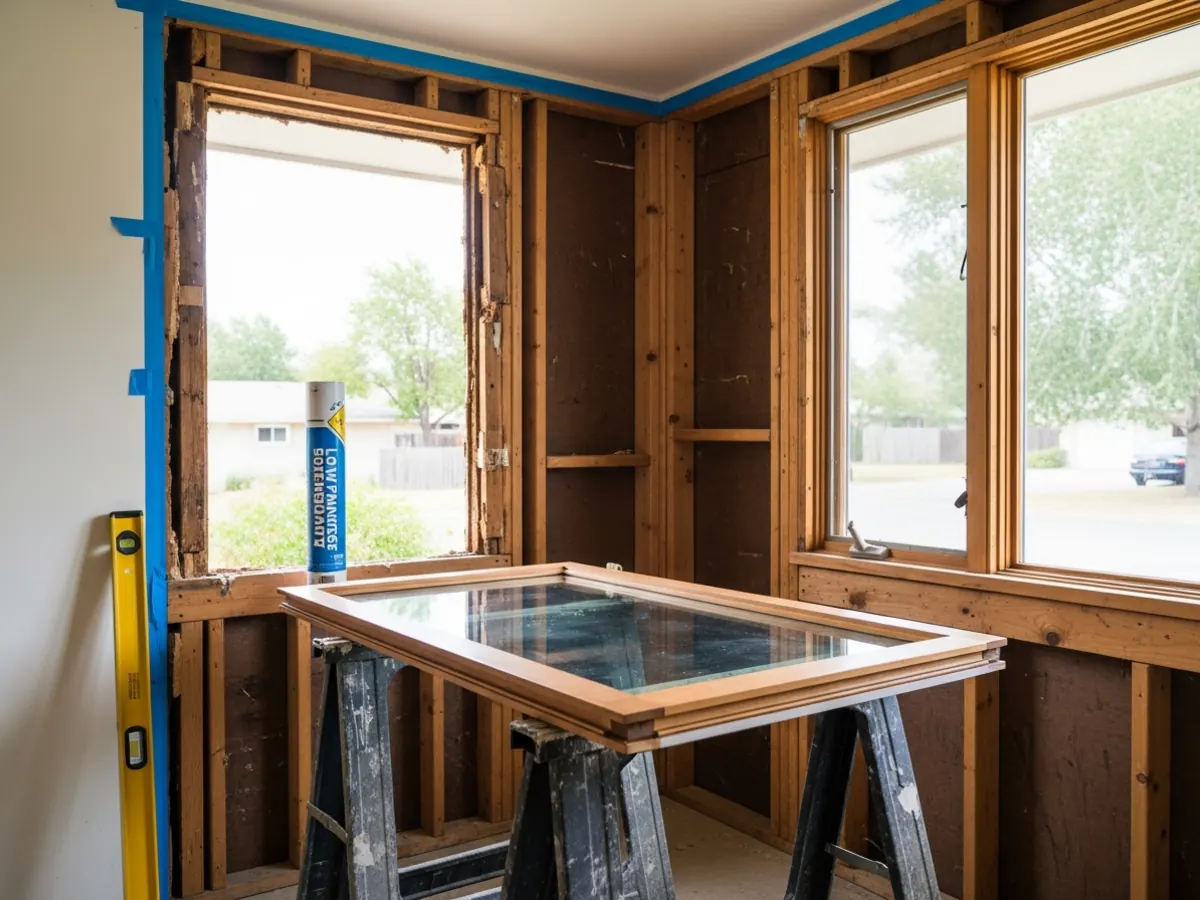
Interior protection of floors and furniture near each window. Exterior protection of plantings. EPA RRP containment with poly sheeting on the ground around work area for pre-1978 homes. Lift or scaffolding setup for two-story scope.
Existing window removal (Days 1–3, approximately 3 windows per day per crew)
Careful removal of existing windows preserving original interior casings where possible. Sash and frame removal. Old caulking and weatherstripping cleaned out. EPA RRP lead-safe debris handling on pre-1978 stock.
Opening prep (Days 1–3, alongside removal)
Sill inspection and repair when needed. Foam insulation in framing gaps. Self-adhered flashing tape at opening perimeter. Header reinforcement on picture-window or triple-pane upgrades.
New window installation (Days 1–4, approximately 3 windows per day per crew)
New window set in opening, leveled, plumbed, fastened to manufacturer specification. Operation tested. Low-expansion foam insulation around perimeter (high-expansion foam can distort the frame). Interior casing reattached on like-for-like scope or new matched-profile casing installed where original couldn't be preserved.
Exterior trim and sealing (Days 4–6)
Exterior trim integration with existing siding. Caulking at exterior trim joints with paint-grade premium caulk. Touch-up paint on disturbed fascia and trim.
Final walkthrough (Day 6+)
Operation testing of every window. Cleanup of all debris. EPA RRP final HEPA vacuuming on pre-1978 homes. Owner walkthrough. Punch-list addressed within 1 week. 3-year Iron Crest workmanship warranty plus manufacturer warranties begin.
Window replacement in older Bench homes requires custom sizing for production-built rough openings that have settled differentially over 60–75 years, original casing preservation expertise where condition allows, and the EPA RRP lead-safe practices universal on pre-1978 stock. Without Historic District scrutiny the work moves faster than comparable North End scope, but the bar shifts to product selection precision and installation craft.
- City of Boise Planning & Development Services — Building, electrical, plumbing, and mechanical permits. Online portal and in-person plan check.
- Idaho DEQ Air Quality (Asbestos) — Testing and abatement guidance for pre-1980 homes via the Idaho Department of Environmental Quality.
- EPA Lead Renovation, Repair and Painting (RRP) Program — Required certification and work practices for renovation in pre-1978 lead-paint homes.
- Idaho Power — Rebates & Offers — Idaho Power's residential incentives: the Heating and Cooling Efficiency Program (heat pumps, central air conditioners, duct sealing, smart thermostats, heat pump water heaters, whole-house fans and similar equipment), the A/C Cool Credit, and the Shade Tree Project. Windows and insulation are not covered.
- Idaho DOPL — Contractor Search — Verify any contractor's RCE registration through the official Idaho DOPL license search.
Should I replace my original Bench wood windows or restore them?
Depends on condition and priorities. Original 1948–1965 wood double-hung windows in good repair (operable sashes, intact glazing, weather-stripped, ropes-and-weights still functional) can be restored and supplemented with interior storm windows — preserving original character at lower cost. Original wood windows with severe damage (sash rot, broken muntins, badly distorted frames) warrant replacement. Steel casement windows from the same era are harder to restore because of operator-hardware failure and steel-frame deterioration — usually replacement is the right answer. We assess each window during consultation.
Will my window replacement need Historic Preservation Commission approval?
No. The Boise Bench is not within any City of Boise Historic District. Standard City of Boise permit only, and often no permit at all for like-for-like single-window replacement; confirm scope and turnaround with the Building Division at (208) 608-7070. No Certificate of Appropriateness, no historic-review overlay that comparable North End scope carries.
What's the right window product for my Bench mid-century ranch?
Three tiers depending on budget and aesthetic priority. Premium: Marvin Essential or Signature, Pella Lifestyle or Reserve, Andersen 400 Series wood-clad ($1,000–$2,200/window installed) — best for owners staying long-term or preparing for sale at the upper end of the comparable-sale band. Mid-tier: Marvin Elevate or Pella Impervia fiberglass-clad ($800–$1,600/window) — excellent middle-ground for most Bench applications. Value: Pella 250 Series, Andersen 100 Series, or Milgard Trinsic vinyl ($450–$1,000/window) — acceptable for mid-century Bench context where period-authenticity isn't constrained.
How long does whole-house window replacement take?
4–8 weeks total. Most of that is window product lead time: 2–4 weeks for vinyl and fiberglass-clad; 4–8 weeks for premium wood-clad (Marvin, Pella); 8–12 weeks for special-order custom sizes or colors. Actual installation is typically 4–6 days for a 10–15 window Bench home. We try to start install the same week the windows arrive on site so disruption is minimized.
What about my failed aluminum slider with fogged glass?
The fogging means the insulating-glass seal has failed and the window is no longer providing modern energy performance — the inert-gas fill has migrated out and condensation is forming between the panes. Replacement is the only real answer; seal repair isn't economically viable on 30–50 year old aluminum sliders. New vinyl or fiberglass-clad slider with current low-E argon glass package: $700–$1,500 per window. We do not publish a payback period — the saving depends on the house, its usage and your rate schedule.
Do I need to repaint my exterior after window replacement?
Possibly — depends on whether new exterior trim is installed and how dramatic the visual change is. We integrate new windows with existing exterior trim where condition allows. Where new trim is installed (often the case on aluminum-slider replacement scope where the original integration was minimal), it's painted to match existing color at no extra charge. Significant trim changes may warrant exterior repainting scope; we discuss timing at consultation.
What about lead paint inside my window casings?
Universal in pre-1978 Bench homes — and that's essentially every Bench address. EPA RRP lead-safe work practices required during removal: HEPA-only sanding, wet-paste paint scraping where needed, lead-safe disposal of debris. Built into our Bench window-replacement pricing rather than added as a surprise.
What's the energy performance gain from new windows?
Substantial. Original 1948–1965 single-pane wood windows have U-factor approximately 1.0; modern double-pane low-E argon replacements deliver U-factor approximately 0.30. That's roughly a 4× improvement in window-related heat loss, which Boise's high-summer-cooling-load and cold-winter climate notices specifically on west-facing exposures with afternoon sun and on north-facing bedrooms in winter. On a typical Bench ranch with 10–15 single-pane windows, full replacement removes the single worst-performing part of the envelope. We do not publish a percentage for this; the saving depends on the house, its usage and the rate schedule.
Ready to start your Boise Bench window replacement project?
Free in-home consultation, honest contingency-based budgeting, and the experience Boise homes require. Iron Crest Remodel — Idaho RCE #6681702, EPA RRP lead-safe work practices, $2M general liability, 3-year workmanship warranty.
Get Your Free Estimate