
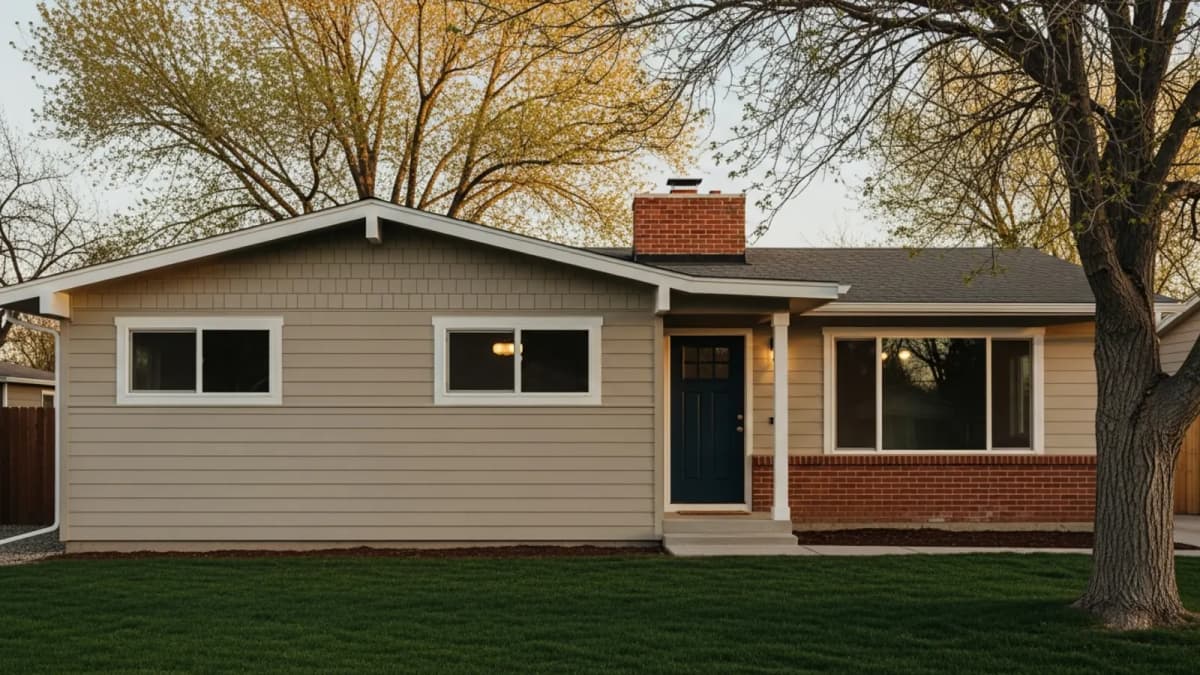
Siding Installation Across Vista, Curtis / Targee, Eastern Bench & Roosevelt Market
James Hardie fiber cement and LP SmartSide replacements for 1948–1965 mid-century ranch cedar lap, aluminum siding removal on the 1970s–1980s update subset, insulation upgrade in opened wall cavities — no Historic Preservation overlay, fastest permit timeline in the city.
Quick answer
Depends on age and condition. Original 1×6 or 1×8 cedar at 60–75 years that's been maintained with regular paint cycles can hold another decade with comprehensive prep and premium repaint ($10K–$18K).
Replacing siding on a Boise Bench home is one of the highest-impact and longest-lasting exterior investments available — and the math is shaped by three patterns specific to this housing stock. First, the original 1×8 cedar or fir lap siding that came on virtually every 1948–1965 Vista, Curtis / Targee, Eastern Bench, and Roosevelt Market home is now 60–75 years old. The wood is generally good lumber (old-growth, dense, dimensionally stable) and where it's been maintained with regular paint cycles it can hold up another decade. Where maintenance has lapsed, weather-checking and rot at south- and west-facing exposures and at the bottom course is universal — replacement with modern fiber cement (James Hardie HardiePlank HZ5 climate-zone product) or engineered wood (LP SmartSide) is the right move. Second, a meaningful subset of Bench homes received aluminum siding overlays in 1970s or 1980s budget refreshes — that aluminum is now showing every season of its age (chalky factory finish, dents from decades of weather and lawn maintenance) and frequently has trapped moisture against the underlying original cedar, accelerating rot beneath the cover. Aluminum removal scope is more common in the Bench than people expect because owners often don't realize their home is aluminum-covered until we walk it. Third, the Bench isn't within any City of Boise Historic District and has no HOA on most blocks — full color and profile flexibility, no Certificate of Appropriateness overhead, no ARC submittal. No Certificate of Appropriateness step applies; confirm the current permit turnaround with Boise PDS. Iron Crest's Bench siding work is anchored on James Hardie HZ5 climate-zone product installed to Hardie's published specifications, comprehensive sheathing inspection during removal as standard scope, aluminum-removal expertise on the 1970s–1980s overlay subset, insulation upgrade in opened wall cavities (the only opportunity the home will offer), and brick-chimney repointing coordination on 50–70 year old original chimneys.
Siding strategy on the Bench varies by era because original siding type, what previous owners did to it, and brick-chimney condition all change across the post-war housing waves.
1940–1955 early post-war minimal traditional (Roosevelt Market area, parts of Western Bench)
Original 1×8 cedar or fir lap siding at 7-inch reveal with painted wood trim, brick chimney accents, sometimes wood window shutters that survived later remodel waves. Original siding profiles are simple beveled lap. Some homes from this era received aluminum siding overlay in 1970s–1980s; underlying cedar may be in remarkable condition or may show significant rot from trapped moisture under the aluminum. Pre-1978 trim universally lead-painted — EPA RRP applies on every replacement scope. Pre-1980 subset sometimes has asbestos-cement original siding (uncommon but worth pre-screen testing).
1955–1965 classic post-war ranch (Vista, Curtis / Targee, Eastern Bench)
Original 1×6 or 1×8 cedar lap siding at 7-inch reveal with painted Hardie or wood trim, simpler eave details than earlier minimal-traditional stock, brick chimney and accent details, large picture windows. A meaningful subset received aluminum siding in 1970s–1980s budget updates that now needs different removal approach. Original cedar that survived without aluminum overlay is now 60–70 years old and at end of practical paint life — replacement timing is appropriate. EPA RRP universal.
1965–1975 expanded ranch and split-level (Eastern Bench / Overland, parts of Lower Bench)
Mix of original wood lap siding and aluminum siding from original construction (aluminum increasingly used in original construction during this era rather than as a later overlay). Larger split-levels often have multi-tone original color schemes (beige body, brown trim) that read thoroughly dated. Pre-1978 subset still triggers EPA RRP. Less common on the Bench than the wood-and-aluminum-overlay 1948–1965 stock.
1985+ infill and renovated Bench homes
Modern lap siding from original construction (Hardie, LP SmartSide, sometimes vinyl). Standard siding replacement applies — no EPA RRP overhead, no aluminum-removal complexity, no asbestos pre-screen. Smaller share of Bench stock.
Five recurring siding shapes account for nearly every Bench project. Era of the home, whether previous owners overlaid aluminum, and whether scope is mostly cosmetic refresh or includes insulation upgrade all drive which one fits.
1. The 1955-Era Cedar-to-Hardie Whole-House Replacement
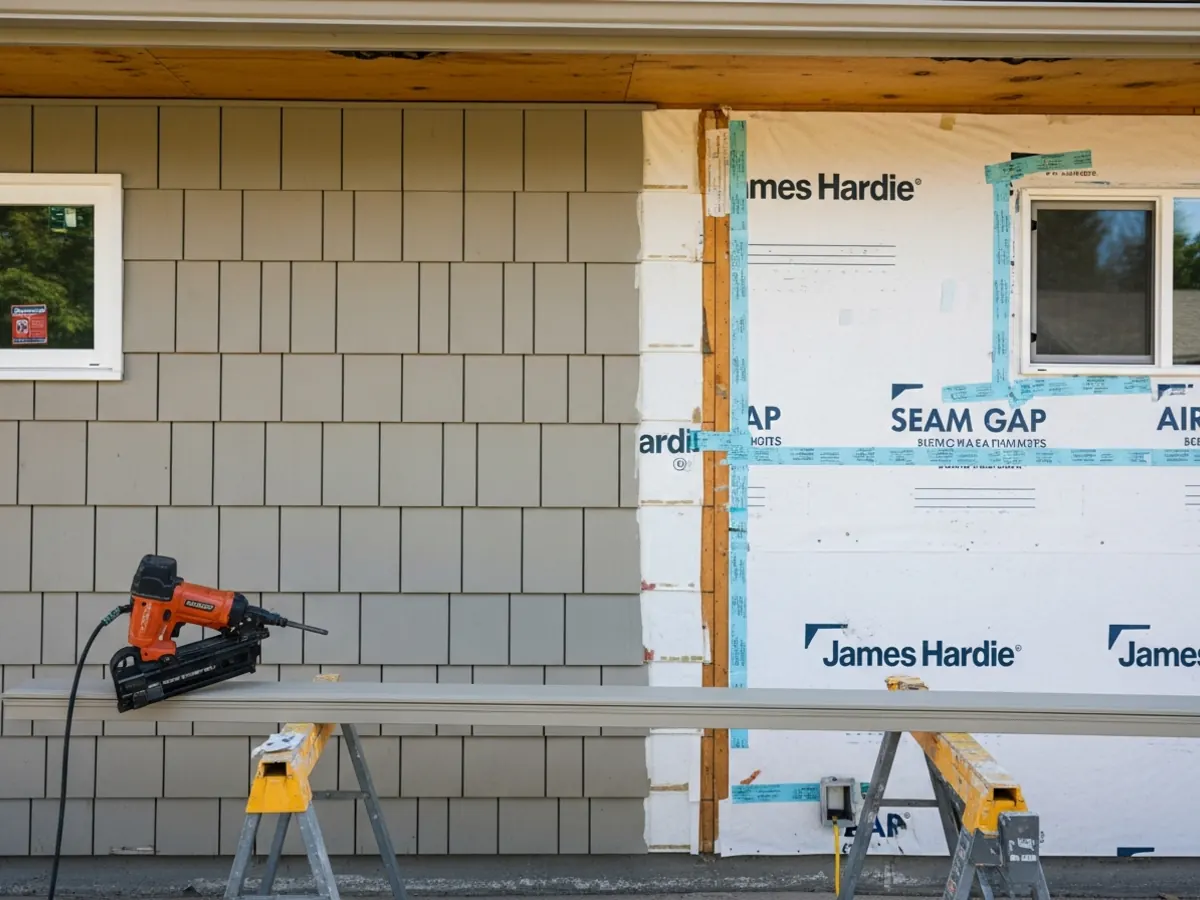
Standard scope for 1948–1965 Bench ranches with original 1×6 or 1×8 cedar lap siding at end of practical paint life. Remove original cedar carefully (EPA RRP lead-safe containment universal — cedar carries pre-1978 lead-painted exterior surfaces), comprehensive sheathing inspection and repair where moisture damage has occurred at south- and west-facing exposures or at the bottom course, install drainage-plane housewrap upgrade (Tyvek CommercialWrap or Henry Blueskin VP100), self-adhered flashing tape at every window and door opening, James Hardie HardiePlank HZ5 climate-zone lap siding at matched 7-inch reveal. Factory-primed and painted on-site with premium Benjamin Moore Aura Exterior or Sherwin-Williams Duration. Most common Bench siding scope by volume.
Target homes: 1948–1965 Vista, Curtis / Targee, Eastern Bench, and Roosevelt Market ranches with original cedar lap siding at end of life. Permit: building permit through City of Boise (no Historic Preservation overlay; confirm current turnaround with Boise PDS).
2. The Aluminum Siding Removal + Modern Replacement
Specific scope for Bench homes that received aluminum siding overlays in 1970s or 1980s budget refreshes. Remove aluminum carefully (recyclable scrap value offsets some labor cost), comprehensive sheathing and underlying-cedar inspection — moisture trapping under the aluminum often causes localized rot on the original cedar substrate that isn't visible until the aluminum is off, repair or replace original cedar substrate where rot is found, install new Hardie or LP SmartSide. Restores the home to a current 2026 read after 30–50 years of dated aluminum aesthetic. Owners often don't realize their home is aluminum-covered until we walk it.
Target homes: 1948–1985 Bench homes with aluminum siding from 1970s–1980s budget updates. Permit: building permit; EPA RRP lead-safe work practices for pre-1978 cedar substrate underneath.
3. The LP SmartSide Replacement (Value-Tier Alternative)
Replacement with LP SmartSide engineered wood at matched 7-inch reveal — value-tier alternative to Hardie fiber cement with LP's 5/50 limited warranty (5 years full, then 50 years prorated — not directly comparable to Hardie's 30-year non-prorated substrate warranty) and slightly lower material cost. Reads identical to Hardie from the curb. Faster install than fiber cement because the engineered wood is lighter. Appropriate for budget-conscious Bench scope where cost optimization is part of the brief.
Target homes: Bench homes wanting siding replacement at the value tier. Permit: building permit.
4. The Selective Elevation Replacement (Failed South / West Only)
Replace siding on specific elevations that have actually failed — typically south- and west-facing exposures where UV and thermal cycling have been hardest on the original cedar, and the bottom course on every elevation where grade-line moisture has accumulated. More complex installation than full re-side because new siding has to integrate at corners with existing-condition siding on adjacent elevations. Cost-effective phased approach for owners with mixed-condition siding or budget constraints.
Target homes: Bench homes with localized siding failure on south or west elevations only. Permit: City of Boise Permit 428 (Residential Roofing, Siding and Windows) — confirm with the Building Division whether partial-elevation repair triggers it.
5. The Mixed-Material Comprehensive Exterior Update
Comprehensive exterior update combining siding replacement with brick chimney repointing or refresh, trim repaint, sometimes coordinated with window replacement or full exterior painting for one cohesive 2026-aesthetic transformation. Highest visual-impact scope on the Bench stock — particularly effective on 1955-era Vista and Curtis / Targee ranches where the cedar, the brick chimney, the windows, and the trim are all reaching the same end-of-life replacement window concurrently.
Target homes: Bench homes wanting comprehensive exterior renovation, particularly homes prepping for sale or owners staying long-term who want the curb appeal step-up. Permit: building permit.
The Boise Bench is made up of distinct sub-neighborhoods, each with its own remodeling personality.
Vista
One of the most recognized sub-neighborhoods on the Boise Bench, centered around Vista Avenue between the Boise River and Overland Road. Post-war homes on uniform lots with mature street trees and good walkability to local commercial corridors. A heavy concentration of small ranch and minimal-traditional homes that respond well to galley-kitchen open-ups, primary-suite additions, and aesthetic modernization.
Central Bench (Curtis & Targee corridor)
The geographic core of the Bench, running along Curtis Road and Targee Street between I-84 and Overland. The City of Boise's Central Bench Neighborhood Plan records that the neighbourhood changed significantly during and after World War II, when agricultural land was subdivided into residential lots, and that new homes were built west of Orchard Street from the mid-1950s through the 1970s. Blueprint Boise designates the Central Bench primarily for compact-neighbourhood form — small lots, typically between 5,000 and 7,000 square feet, predominantly single-family, on an interconnected network of sidewalks and streets. Galley kitchen conversions are the dominant remodeling project type here.
Eastern Bench / Overland
The eastern edge of the Bench around Overland Road, with a mix of ranch and split-level homes. Lots tend to be slightly larger. Closer to mall-adjacent commercial corridors and major transit routes.
Western Bench / Roosevelt Market area
The western edge of the Bench near the Roosevelt Market and Capitol corridor. Some of the older Bench housing stock sits here, with steeper roof pitches and smaller footprints than the post-war ranches further east. Closer to downtown amenities and walkable.
Greenbelt-adjacent Bench
Bench properties along the elevated edges of the Boise River bluff with views down to the Greenbelt and the river. Frequently subject to view-preserving design considerations during exterior work — though without formal Historic District constraints.
Lower Bench (I-84 frontage)
The southern edge of the Bench close to I-84, on smaller lots and often with more traffic noise from the freeway. Common to combine kitchen, bathroom, and primary-suite remodels into a single comprehensive scope.
Most Boise siding projects run $8,500 to $32,000 — the band published on our Boise siding page. The ranges below run higher than that band because of the Bench's pre-1980 housing stock, where asbestos testing, lead-safe work practices and original-systems discovery are part of the base scope rather than an add-on. Pricing reflects three Bench realities: James Hardie HZ5 climate-zone material costs (the dominant product for Boise's freeze-thaw and high-UV environment), EPA RRP lead-safe labor practices universal on pre-1978 stock (essentially every Bench address), and the absence of any Historic Preservation or HOA overlay that keeps Bench siding permits on the standard City of Boise path rather than the District one.
Boise Bench siding installation ranges
Selective elevation replacement (1–2 specific elevations (typically south or west) replaced): $11,000–$24,000 / 2–4 weeks end to end
LP SmartSide value-tier replacement (Engineered wood at matched 7-inch reveal, faster install than fiber cement): $22,000–$38,000 / 3–6 weeks end to end
Aluminum siding removal and modern replacement (Remove 1970s–1980s aluminum overlay, repair underlying cedar substrate, install Hardie or LP SmartSide): $24,000–$48,000 / 4–7 weeks end to end
James Hardie HZ5 whole-house replacement (Comprehensive cedar-to-Hardie replacement on 1948–1965 mid-century ranch stock): $28,000–$45,000 / 4–7 weeks end to end
Mixed-material comprehensive exterior update (Siding + brick chimney refresh + trim + sometimes window coordination): $32,000–$52,000 / 4–8 weeks end to end
Pricing assumes Iron Crest's standard Bench scope: City of Boise building permit (no Historic Preservation overlay; confirm current turnaround with Boise PDS), no Historic Preservation review (Bench isn't within any designated Boise Historic District), no HOA submittal on most blocks, comprehensive siding removal with proper EPA RRP lead-safe containment on pre-1978 stock, drainage-plane weather-resistant barrier upgrade (Tyvek CommercialWrap or Henry Blueskin), self-adhered flashing tape at all openings, trim and corner board integration, painted-finish siding (Hardie's 30-year non-prorated substrate warranty, or LP's 5/50 — 5 years full, then 50 prorated), and our 3-year workmanship warranty. Pre-1980 asbestos pre-screen on substrate when warranted.
The City of Boise designates ten historic districts, and the Boise Bench is not one of them and does not sit inside one. There is no Historic Preservation Commission review for exterior modifications, so siding changes, window replacements, additions, and exterior colour changes don't trigger the Certificate of Appropriateness process that constrains North End and East End projects. That removes a review step from the pre-construction schedule on any Bench exterior scope; confirm current review timelines with Boise PDS for your specific project.
City of Boise standard permits still apply for any work involving electrical, plumbing, structural changes, or mechanical systems. A scope that includes new circuit additions, moving a gas line, or removing a load-bearing wall requires a building permit from City of Boise Planning and Development Services. Permit processing for Bench projects takes about two weeks for online plan review per Boise PDS, longer with structural drawings — without the historic-review overlay that North End projects carry. Building Division: (208) 608-7070. Planning & Zoning: (208) 608-7100.
Asbestos and lead paint remain serious considerations on the Bench, despite the absence of Historic District review. Pre-1980 Bench homes (which is most of the housing stock) commonly contain asbestos in floor tiles, joint compound, and sometimes pipe insulation. We test suspect pre-1980 materials and arrange AHERA-accredited abatement when asbestos is confirmed. Pre-1978 Bench homes contain lead paint. The EPA RRP rule requires lead-safe work practices for any renovation in lead-paint homes — including containment, specialized HEPA vacuuming, and proper disposal. Iron Crest follows EPA RRP lead-safe work practices and incorporates them into the standard scope on every pre-1980 Bench project.
Bench-specific permit consideration: setbacks. Blueprint Boise designates the Central Bench primarily for compact-neighbourhood form, with small lots typically between 5,000 and 7,000 square feet, so additions or detached structures must navigate side and rear setbacks carefully. Boise's residential zoning code sets no maximum lot coverage, so the binding constraint on a Bench addition is almost always the setback envelope rather than a coverage percentage. Zoning verification during initial design is critical to avoid late-stage redesigns.
Siding product and detail selection for Bench homes balances Boise's high-UV / freeze-thaw climate, modern subdivision-appropriate aesthetic that escapes the 1955-era cedar-and-brick signature, and the substrate-specific approach required when working over original cedar vs. aluminum-overlay vs. original aluminum substrates.
James Hardie HardiePlank HZ5 fiber cement — the Bench default
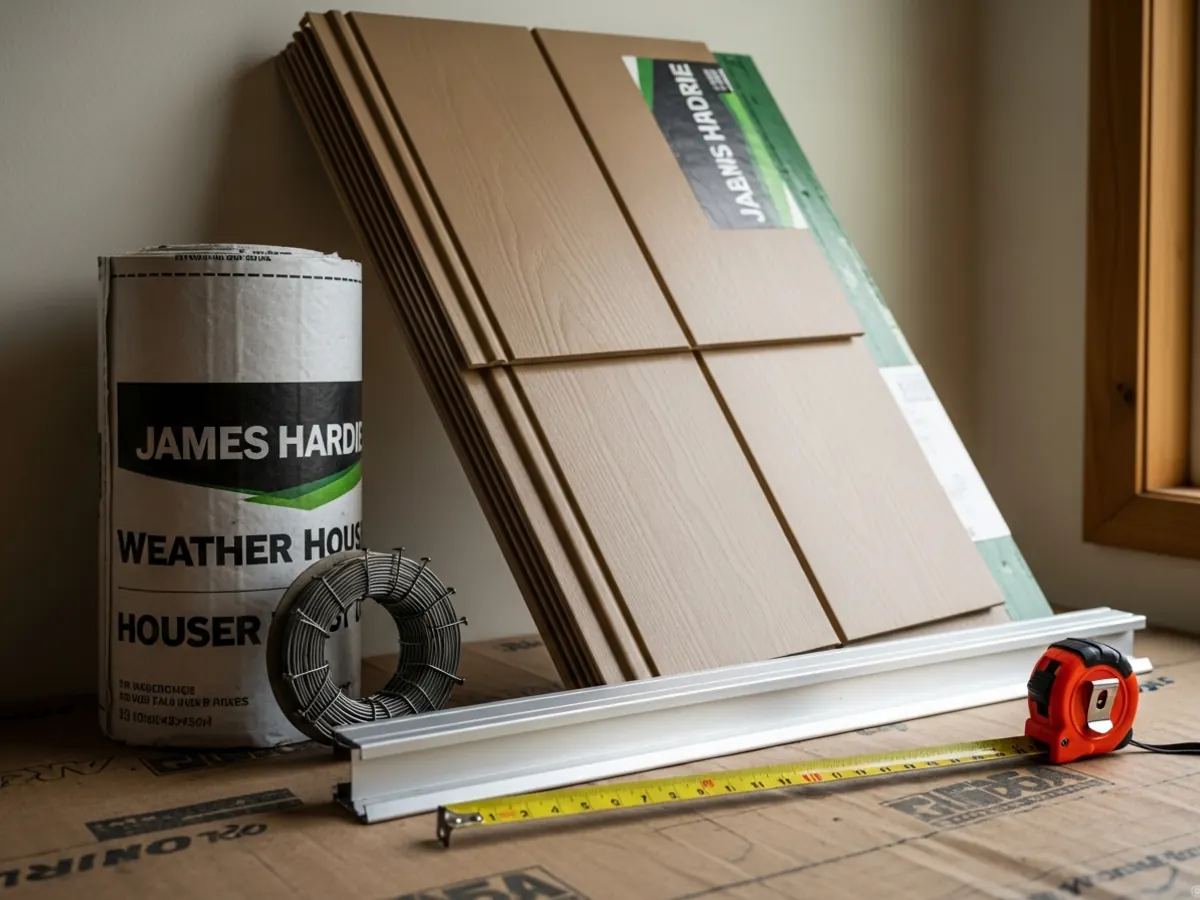
The dominant fiber cement siding in this market. Excellent moisture resistance, paint adhesion, fire resistance, dimensional stability across the roughly 87 freeze-thaw cycles a year (KBOI daily records 1996–2025 via the Iowa Environmental Mesonet; 30-year mean 87, range 56–108) Boise sees. 30-year material warranty. Lap (5-inch to 8-inch reveal, with 7-inch matching the dominant Bench cedar reveal), shingle, panel, board-and-batten formats. Cost: ~$2.50–$4.50 per square foot installed. HZ5 climate-zone product specification is non-negotiable in Boise — standard HardiePlank without HZ5 designation isn't rated for Boise's thermal cycling.
LP SmartSide engineered wood — value-tier alternative
Engineered wood siding with treated wood fiber and resin. Lighter than fiber cement, easier and faster to install (lower labor cost). LP's 5/50 limited warranty: 5 years full, then 50 years prorated — not directly comparable to Hardie's 30-year non-prorated substrate warranty. Slightly more wood-like aesthetic in person but reads identical to Hardie from the curb. Cost: ~$2.00–$4.00 per square foot installed. Appropriate value-tier alternative for budget-conscious Bench scope.
Trim and corner boards — match original Bench cedar profile or modernize
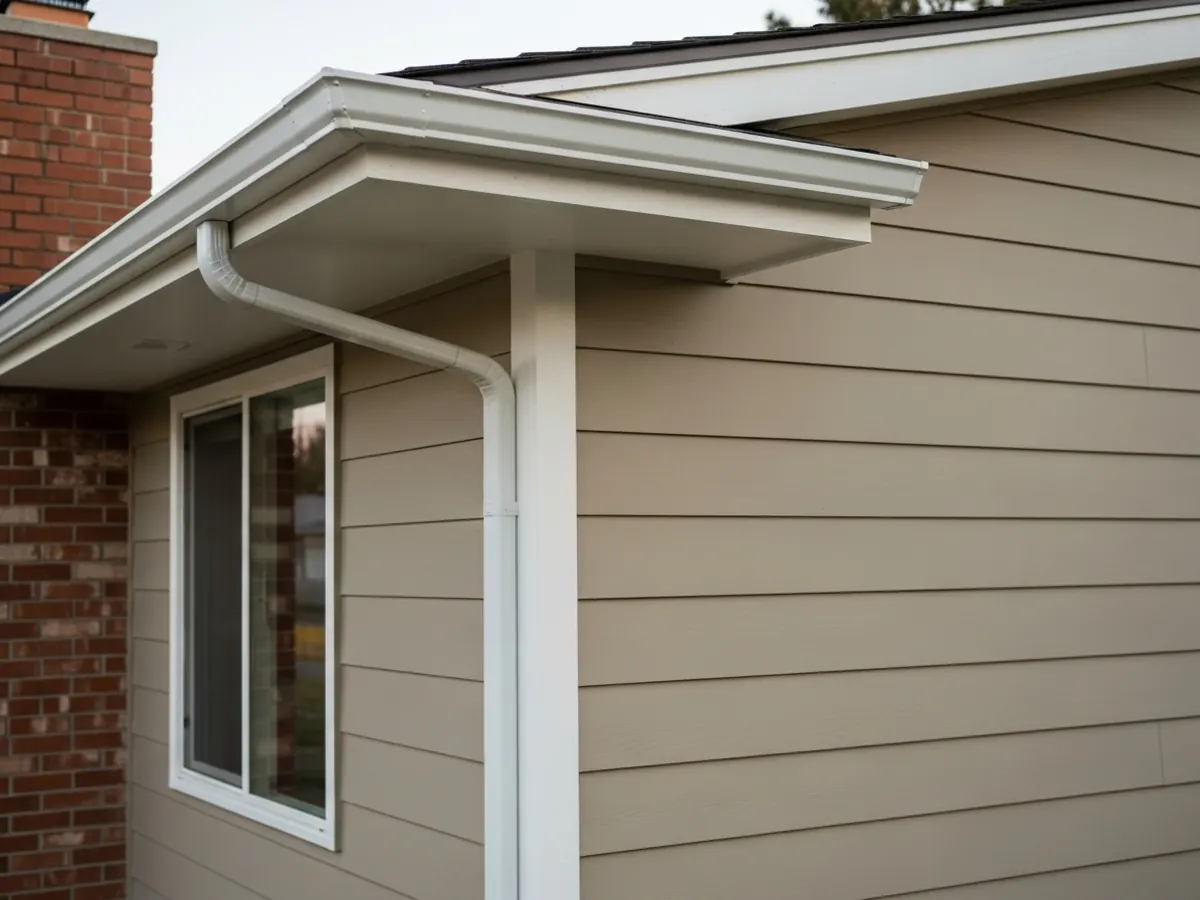
Modern simple trim profiles work in the Bench mid-century context — no period-correct dentil molding or ornate Craftsman detail required. Custom-milled fir trim or stock fiber cement trim painted to match siding color. PVC trim (low maintenance, dimensionally stable) is the increasingly common premium choice. Original Bench corner boards are typically 1×4 cedar; replacement in matching profile keeps the home reading as continuous-character mid-century rather than aggressively modernized.
Weather-resistant barrier — drainage plane upgrade worth the cost
Modern installations use Tyvek HomeWrap or DuPont equivalent as the minimum. The drainage-plane upgrade (Tyvek CommercialWrap, Henry Blueskin VP100, or VaproShield) at $300–$800 above base is worth the cost on every full re-side — provides positive drainage behind the siding and substantially improves moisture management on the south- and west-facing exposures that took the most weather damage on the original cedar.
Color and finish — escape the era-signature beige-and-brown
Hardie ColorPlus and LP pre-finished products offer factory finishes in limited modern color palettes. For Bench schemes (warm whites, deep charcoals, warm greys with bright accent doors) that aren't in the factory palette, on-site painting after installation with premium Benjamin Moore Aura Exterior or Sherwin-Williams Duration provides full color flexibility. Premium acrylic paint holds 12–15 years on factory-primed Hardie. Modern Bench palettes: deep charcoal (Iron Ore, Urbane Bronze), warm white (Simply White, Pure White), or warm greige (Edgecomb Gray, Repose Gray) with bright accent doors (Hale Navy, Sundried Tomato, matte black).
Insulation upgrade during siding replacement — strongly recommended on 1948–1985 Bench stock
Siding replacement is the only opportunity the home will ever offer for adding wall insulation from the exterior. Drill 2-inch holes in exterior sheathing, blow dense-pack cellulose into wall cavities, plug holes. Adds R-13+ to walls that often have R-7 or even R-0 (no insulation at all) on pre-1965 Bench stock. Cost: $1.00–$2.00 per square foot of wall area. It lowers the heating and cooling load and noticeably improves comfort at north-facing exterior walls; we do not publish a payback figure because the saving depends on your usage and rate schedule.
Brick chimney coordination
Original brick chimneys on 1955–1975 Bench homes are now 50–70 years old and frequently need mortar repointing before any exterior work touches the chimney. Tuckpointing: $400–$1,500 depending on chimney size. Some Bench owners paint brick to match modern body color (German-smear or limewash treatment for more contemporary look at $1,500–$4,500); others leave brick natural and let the new Hardie body provide the visual update.
Pre-construction inspection on Bench siding work surfaces a recurring set of conditions related to original cedar condition, aluminum-overlay moisture trapping, sheathing damage, and 50–70 year old brick chimneys. We pre-screen at the consultation walkthrough so the budget reflects them up front.
- •Sheathing damage from long-term moisture infiltration — universal on south- and west-facing exposures Original 1948–1965 Bench sheathing at south- and west-facing exposures and at the bottom course where it meets grade often has localized rot from decades of weather exposure and ice damming. Sheathing replacement: $1.50–$3.00 per square foot affected. Standard scope to inspect during siding removal — not a surprise discovery on Bench work.
- •Underlying cedar rot under 1970s–1980s aluminum overlay Aluminum siding overlays trap moisture against the original cedar substrate over decades. Removing the aluminum often reveals localized cedar rot that wasn't visible from outside. Original cedar repair or replacement: $400–$2,500 depending on extent. Common on the aluminum-removal scope.
- •Failed window flashing requiring supplemental flashing tape Original 1948–1965 window flashing on Bench homes was typically minimum-spec — sometimes felt paper, sometimes nothing at all between the rough opening and the original siding. Re-side is the right time to add self-adhered flashing tape at every window opening. $80–$200 per window incremental.
- •Insulation deficiency in exterior walls (pre-1985 minimum-spec or none) Many 1948–1985 Bench homes have R-7 to R-11 original wall insulation, and some pre-1955 stock has no wall insulation at all (just air space between the original cedar exterior and the lath-and-plaster interior). Re-side opens the wall cavity from the outside for the only time the home will ever offer. Dense-pack cellulose blow-in: $1.00–$2.00 per square foot of wall area.
- •EPA RRP for pre-1978 cedar substrate (universal on Bench) Pre-1978 painted cedar surfaces trigger EPA RRP lead-safe work practices for any disturbance during siding removal. Containment, HEPA collection, lead-safe disposal. Universal in the Bench housing stock — built into our standard pricing rather than added as a discovery surprise.
- •Pre-1980 asbestos in original siding products (uncommon but worth pre-screen) Some pre-1980 original Bench homes have asbestos-cement siding from the era (uncommon but real). Required pre-screen testing identifies. Licensed asbestos abatement when triggered: $4,000–$11,000.
- •Brick chimney mortar failure on 50–70 year old original chimneys Original brick chimneys on 1955–1975 Bench homes are at the age where mortar joints often need repointing before sealing or before exterior work touches adjacent siding. Tuckpointing: $400–$1,500.
- •Rotted framing at sill plates or studs Long-term water infiltration can damage framing at the bottom course where original siding has compromised flashing. Repair: $400–$2,500 depending on extent. Most common on north-facing and shaded elevations where moisture lingers.
- •Foundation water table or cap detail wear The detail at the foundation-to-siding transition sometimes shows 60–75 years of wear and needs replacement during re-side. Replacement: $400–$1,200 per side of the house.
Consultation and exterior assessment (Week 1)
On-site walkthrough of every elevation. Existing siding condition assessment with photographs documenting current state. Profile and color discussion. Identification of aluminum-overlay scope (often not visible until we walk it), brick-chimney repointing scope, selective-elevation-failure scope, insulation-upgrade opportunity. Idaho 811 utility mark-out request for any work that involves digging at the foundation.
Estimate and material ordering (Weeks 1–4)
Detailed line-item estimate. James Hardie or LP SmartSide ordered (typical 2–3 week lead time on production-color product; longer for special-order colors). Trim and corner board material delivery. No HOA submittal required (Bench has no HOA on most blocks). No HPC review (Bench isn't within a Historic District).
Permitting (Weeks 2–5)
Building permit application to City of Boise. No Historic Preservation overlay applies; confirm the current turnaround with Boise PDS.
Site setup and protection (Day 1 of work)
Plant and walkway protection. Lift or scaffolding setup for two-story scope. Material staging on driveway or street with right-of-way permit. Dumpster placement for old-siding disposal.
Demolition (Days 2–6)
Existing siding removal elevation by elevation. EPA RRP lead-safe containment throughout on pre-1978 cedar removal. Aluminum removal where present (recyclable scrap separated for value recovery). Careful preservation of any architectural details that are being reused.
Sheathing inspection and repair (Days 5–8)
Sheathing condition assessment, repair or replacement of damaged areas, framing repair if needed, addition of insulation if scope. Pre-screen for moisture damage at the bottom course and at south- and west-facing exposures where original siding may have had compromised flashing. Underlying cedar rot repair on aluminum-removal scope.
Weather barrier installation (Days 8–10)
Tyvek HomeWrap or drainage-plane upgrade (CommercialWrap, Blueskin VP100, VaproShield). Self-adhered flashing tape at all window and door openings, at all corners, at the bottom course. Proper drainage-plane detailing at penetrations.
Siding installation (Days 10–22)
New siding install course by course. Proper fastening per Hardie HZ5 or LP SmartSide specification, expansion gaps, integration with trim. Corner boards, water table, frieze board. Brick chimney repointing or refresh integrated when in scope.
Painting, detail, walkthrough (Days 22–30)
On-site painting of factory-primed siding with premium Benjamin Moore Aura Exterior or Sherwin-Williams Duration. Touch-up of trim. Final walkthrough with owner. 3-year Iron Crest workmanship warranty plus Hardie's 30-year non-prorated substrate warranty (or LP's 5/50) begin.
Siding replacement on Bench homes needs three things a generic siding contractor often doesn't bring: Hardie HZ5 climate-zone product installed to Hardie's specifications (the line Hardie designates for our climate zone; confirm current warranty terms on jameshardie.com), aluminum-removal expertise on the 1970s–1980s overlay subset with attention to trapped-moisture cedar damage underneath, and the discipline to inspect every square foot of sheathing during the open-wall window rather than treating it as a discovery surprise.
- City of Boise Planning & Development Services — Building, electrical, plumbing, and mechanical permits. Online portal and in-person plan check.
- Idaho DEQ Air Quality (Asbestos) — Testing and abatement guidance for pre-1980 homes via the Idaho Department of Environmental Quality.
- EPA Lead Renovation, Repair and Painting (RRP) Program — Required certification and work practices for renovation in pre-1978 lead-paint homes.
- Idaho Power — Rebates & Offers — Idaho Power's residential incentives: the Heating and Cooling Efficiency Program (heat pumps, central air conditioners, duct sealing, smart thermostats, heat pump water heaters, whole-house fans and similar equipment), the A/C Cool Credit, and the Shade Tree Project. Windows and insulation are not covered.
- Idaho DOPL — Contractor Search — Verify any contractor's RCE registration through the official Idaho DOPL license search.
Should I replace my original Bench cedar siding?
Depends on age and condition. Original 1×6 or 1×8 cedar at 60–75 years that's been maintained with regular paint cycles can hold another decade with comprehensive prep and premium repaint ($10K–$18K). Original cedar with widespread weather-checking, rot at the bottom course, or rot at south- and west-facing exposures warrants replacement ($28K–$45K for Hardie HZ5 whole-house). Once the prep-and-repaint quote starts to approach the replacement quote, replacement is usually the better spend. We assess at consultation.
What about my 1980s aluminum siding overlay?
Two paths. (1) Repaint the existing aluminum with aluminum-compatible primer (Sherwin-Williams Pro Industrial Pro-Cryl) and premium finish coats — cost-effective at $8,500–$16,000, doesn't address aging substrate or moisture trapping underneath. (2) Remove the aluminum and replace with Hardie or LP SmartSide — higher cost at $24,000–$48,000 but addresses any sheathing or underlying-cedar damage from moisture trapping, restores the home to a current 2026 read, carries a manufacturer substrate warranty rather than just a repaint refresh. The aluminum-removal scope is meaningfully more common on the Bench than people expect — owners often don't realize their home is aluminum-covered until we walk it.
What's the right siding product for a Bench mid-century ranch?
James Hardie HardiePlank HZ5 climate-zone fiber cement is the Bench default — HZ5 is the line Hardie designates for our climate zone. LP SmartSide engineered wood is the value-tier alternative with LP's 5/50 limited warranty (5 years full, then 50 years prorated — not directly comparable to Hardie's 30-year non-prorated substrate warranty) at modestly lower material cost. Both at matched 7-inch reveal to the original Bench cedar pattern. We discuss tradeoffs at the consultation.
How long does a full-house Bench siding replacement take?
4–7 weeks for a typical 1955-era Vista or Curtis / Targee ranch. Permit processing runs at standard City of Boise speed with no Historic Preservation overlay; confirm the current turnaround with Boise PDS. No HOA review required on most Bench blocks. Installation itself runs 1.5–3 weeks depending on home size and complexity. Material lead time is the variable that can push timeline longer if special-order colors are specified.
What about insulation while the siding is off?
Strongly recommended on every 1948–1985 Bench re-side. Many pre-1965 Bench homes have R-7 wall insulation or no insulation at all between the original cedar exterior and the lath-and-plaster interior. Re-side is the only opportunity the home will ever offer for adding wall insulation from the exterior. Drill 2-inch holes in exterior sheathing, blow dense-pack cellulose into wall cavities, plug holes. Adds R-13+ to walls. Cost: $1.00–$2.00 per square foot of wall area. It lowers the heating and cooling load and noticeably improves winter comfort on north-facing rooms; we do not publish a payback figure because the saving depends on your usage and rate schedule.
Will my siding work need HOA approval?
Most Bench blocks have no HOA at all — full color and profile flexibility. A small subset of newer infill subdivisions may have HOA constraints — we verify status during consultation. No Historic Preservation review applies anywhere on the Bench because the Bench isn't within any designated Boise Historic District.
What about the original brick chimney?
Original brick chimneys on 1955–1975 Bench homes are now 50–70 years old and frequently need mortar repointing before any exterior work touches the chimney surround. Tuckpointing: $400–$1,500 depending on chimney size. Some owners paint brick to match modern body color (German-smear or limewash for more contemporary look at $1,500–$4,500); others leave brick natural and let the new Hardie body provide the visual update.
Will siding replacement affect my Bench property value?
New siding removes the largest single deferred-maintenance item on a 1955-era Bench house, and the cedar stock on these streets is at the age where buyers screen for it. We do not publish a cost-recovery percentage for it. The figures that circulate are national survey averages rather than Ada County appraisal data, and we have none of our own to cite. Your agent or appraiser can tell you what comparable sales on your street are actually doing; we can tell you what the work costs and what it fixes.
Ready to start your Boise Bench siding installation project?
Free in-home consultation, honest contingency-based budgeting, and the experience Boise homes require. Iron Crest Remodel — Idaho RCE #6681702, EPA RRP lead-safe work practices, $2M general liability, 3-year workmanship warranty.
Get Your Free Estimate