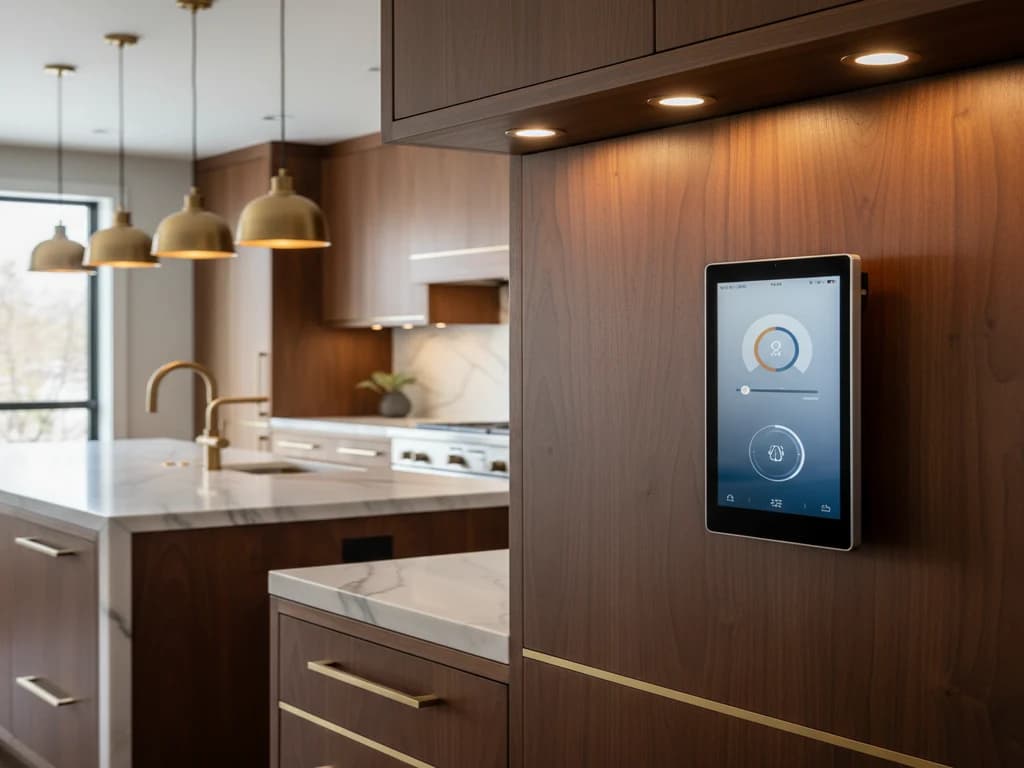
Why a Remodel Is the Perfect Time to Go Smart
If you are planning a remodel in Boise in 2026, you are sitting on a once-in-a-decade opportunity to wire your home for smart technology at a fraction of the retrofit cost. Walls are already open. Electricians are already on-site. Running low-voltage cable, installing dedicated circuits, and positioning smart switches is dramatically cheaper when the drywall is down than it is after your new paint is dry and your trim is caulked.
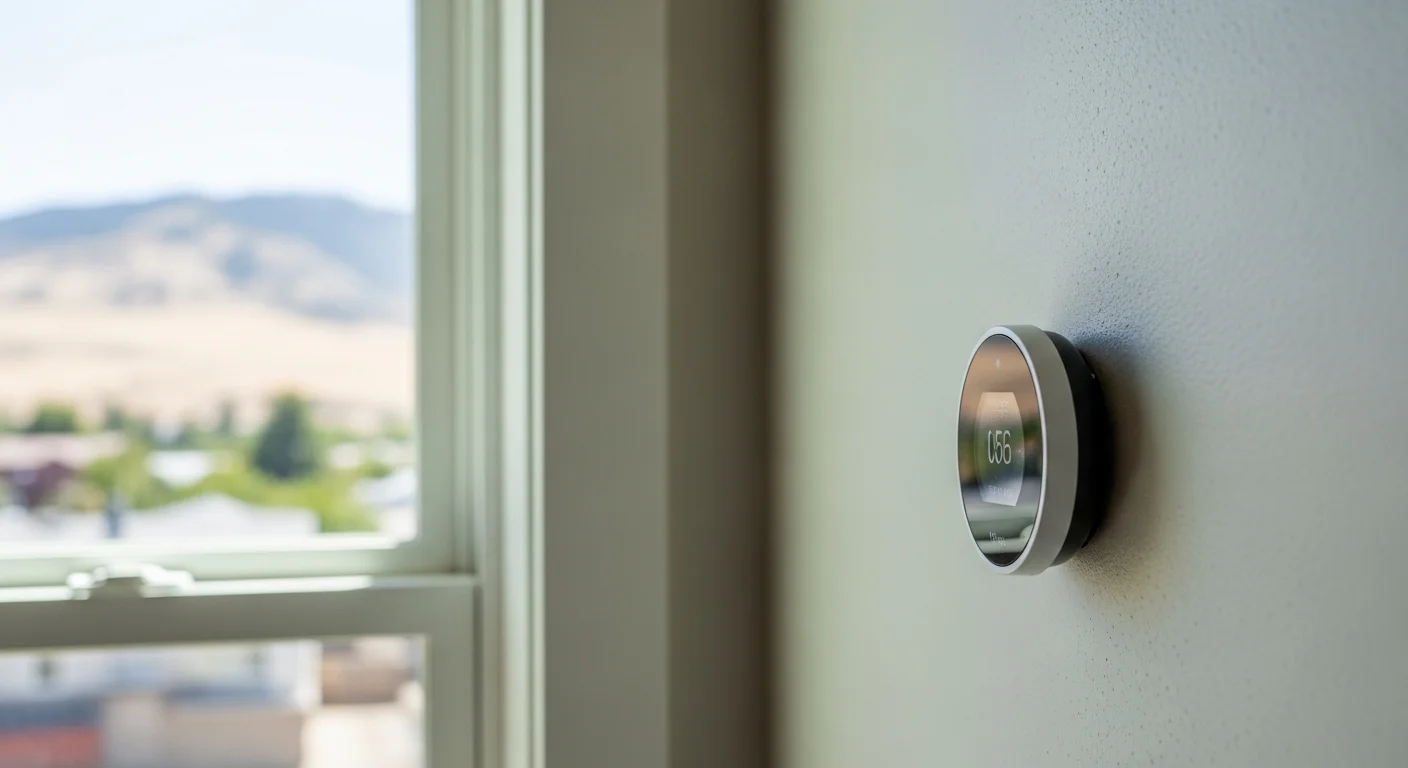
This applies across the range of Boise housing stock -- North End bungalows, Southeast Boise ranch homes, and newer Eagle subdivisions. Planning the smart home layer during the design phase costs substantially less than retrofitting the same systems after construction is complete, and the reason is simple: labor is the expensive part. When your contractor is already routing electrical, adding a conduit run for Ethernet or a 14/3 wire for a smart switch costs minutes, not hours. The per-run and per-switch figures further down this guide show the gap concretely.
The smart home market has also matured considerably. The days of buggy early-adopter gadgets that required a computer science degree to configure are over. In 2026, the major platforms -- Apple HomeKit, Google Home, and Amazon Alexa -- all support the Matter protocol, which means devices from different manufacturers finally talk to each other reliably. This cross-compatibility has removed the biggest historical barrier to smart home adoption.
For Boise homeowners specifically, smart technology addresses real regional needs: managing extreme temperature swings (from single digits in January to 100+ degrees in July), protecting homes during extended family vacations to McCall or Sun Valley, conserving water in our semi-arid climate, and monitoring properties during Idaho's increasingly active wildfire seasons. These are not luxury features -- they are practical investments that pay for themselves.
Whether you are undertaking a whole-home remodel, a kitchen renovation, or adding a backyard ADU, this guide covers the smart home systems worth integrating in 2026, what they cost in the Boise market, and how to wire for them during construction.
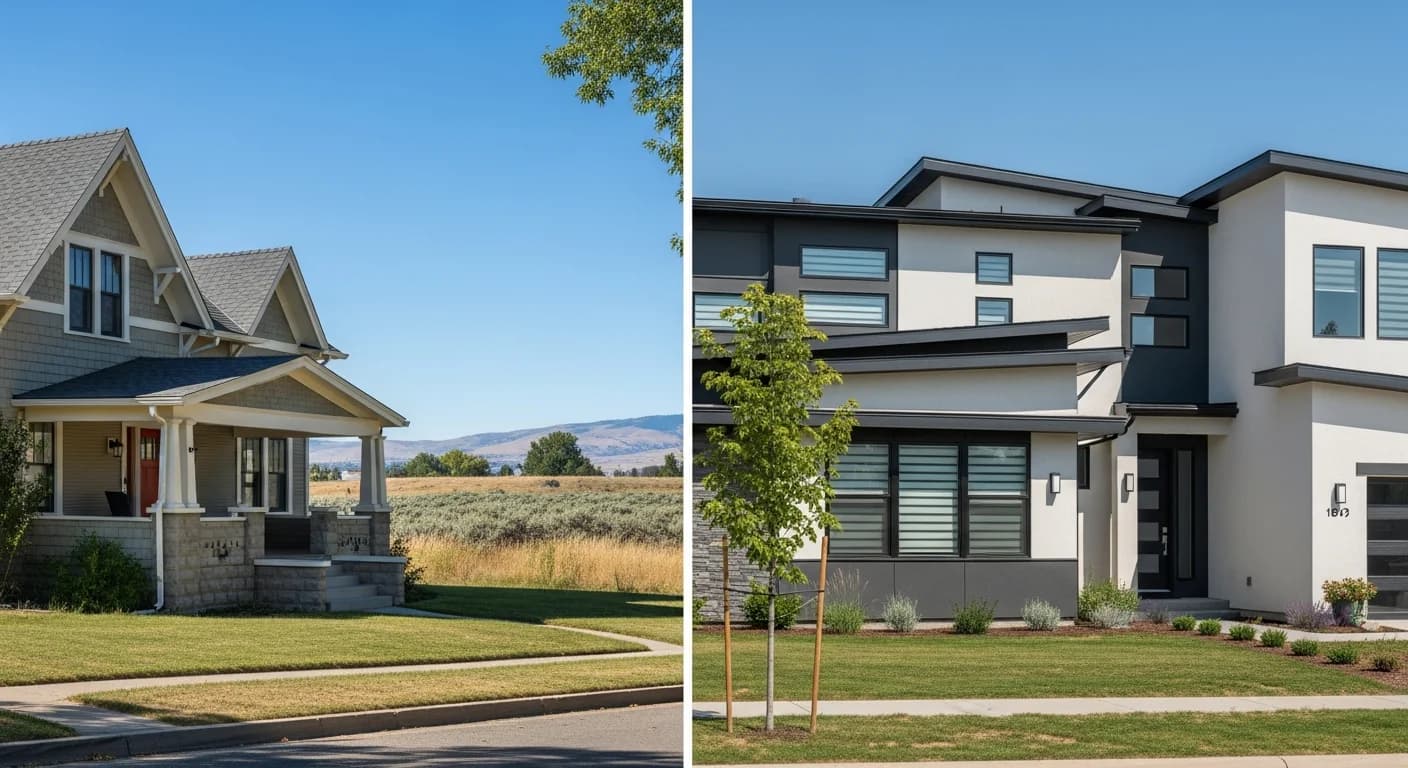
Smart Thermostats: The Foundation of Energy Savings
A smart thermostat is the smart home device that earns its keep fastest in a Boise home. Heating and cooling are the largest energy expense in most houses here -- the January lows and the July highs both push the equipment hard -- so anything that stops the system from conditioning an empty house pays back on every bill.
The two dominant options in 2026 are the Ecobee Smart Thermostat Premium and the Google Nest Learning Thermostat (4th generation). Both learn your schedule, detect occupancy, and adjust temperatures automatically. But they have meaningful differences for Boise homes:
Ecobee Smart Thermostat Premium ($250)
- Includes remote room sensors that measure temperature and occupancy in multiple rooms -- critical for Boise's older homes with uneven heating (the upstairs bedrooms in a 1960s Bench area split-level can be 8-10 degrees warmer than the main floor)
- Built-in air quality monitor that tracks indoor air quality -- particularly valuable during Boise's wildfire smoke season (typically August-September) when you need to know if your HVAC filtration is keeping up
- Works with Apple HomeKit, Google Home, and Alexa
- Built-in Spotify and voice assistant
Google Nest Learning Thermostat 4th Gen ($280)
- Superior machine learning that adapts to your schedule within one week
- Sleek design with a larger display that complements modern remodel aesthetics
- Tight integration with Google Home ecosystem
- Nest Renew feature optimizes energy use around cleaner grid periods -- relevant as Idaho Power expands its renewable energy mix
Smart thermostats are one of the measures eligible for a cash incentive under Idaho Power's Heating and Cooling Efficiency Program. Idaho Power does not publish the incentive amounts, so ask the utility what the thermostat is worth before you assume it covers a meaningful share of the cost -- the program pays one incentive per home, is first-come and first-served, and is not retroactive.
During a remodel, the installation cost is minimal -- typically $0-$100 in additional labor if your HVAC technician is already on-site for ductwork or furnace work. The C-wire (common wire) that many smart thermostats require is usually present in post-2000 Boise homes, but in older North End and Bench homes, running a new thermostat wire during a remodel costs just $75-$150 versus $200-$400 as a standalone retrofit.
How much a smart thermostat saves depends entirely on what it is replacing and how the household actually uses the house. Against a thermostat that was already programmed carefully and adjusted by hand, the gain is small. Against one left at a single setpoint year-round -- which is the common case -- the reduction in runtime is the whole point, and it shows up on the next bill rather than years out.
Smart Lighting Systems That Transform Your Home
Smart lighting has evolved far beyond screwing in a color-changing bulb. In 2026, the gold standard for Boise remodels is a whole-home smart lighting system built around intelligent switches and dimmers rather than smart bulbs -- and the clear market leader is Lutron Caseta and its professional-grade sibling, Lutron RadioRA 3.
Why smart switches over smart bulbs? Smart bulbs (Philips Hue, LIFX) require the physical switch to stay on at all times. The moment a family member flips the wall switch off, the smart bulb becomes unreachable. In a Boise family home where kids, guests, and house sitters use traditional switches by habit, this creates constant frustration. Smart switches solve this completely -- the switch itself is intelligent, and any standard LED bulb works normally.
Lutron Caseta ($55-$65 per switch) is our most-installed system across Boise remodels. Here is why:
- Uses its own reliable wireless protocol (Clear Connect) that does not compete with your Wi-Fi bandwidth
- Works with Apple HomeKit, Google Home, Alexa, and Sonos
- Pico remote controls mount anywhere as wireless auxiliary switches -- perfect for 3-way and 4-way circuits without running traveler wires
- Scene buttons let you set "Movie Night," "Cooking," or "Good Morning" lighting with one press
- Geofencing turns lights on when you arrive home and off when you leave
Lutron RadioRA 3 ($100-$150 per switch) is the step-up for luxury homes in Eagle, the Boise Foothills, and Harris Ranch. It adds:
- Built-in daylight sensors that adjust artificial light based on natural light levels -- useful in a climate with long, bright summer afternoons
- Ketra tunable white technology that shifts color temperature throughout the day (energizing cool white in the morning, warm relaxing tones at night)
- Integration with motorized shades (covered in the next section)
- Professional programming for complex scenes and schedules
During a remodel, the cost to install Lutron Caseta throughout a typical 2,000 sq ft Boise home (20-30 switches and dimmers) runs $2,500-$4,500 including the Smart Bridge hub, switches, Pico remotes, and installation labor. RadioRA 3 for the same home runs $6,000-$12,000 depending on the complexity of programming and whether tunable white fixtures are included.
The key installation advantage during a remodel: your electrician can run neutral wires to every switch box. Many pre-2000 Boise homes lack neutral wires in switch boxes, which limits smart switch options. Adding a neutral wire during a remodel costs almost nothing when walls are open, but $150-$300 per switch box as a retrofit. Planning ahead saves thousands across a whole-home installation.
Security Cameras, Doorbells, and Smart Locks
Home security is a top priority for Boise homeowners, and a remodel is the ideal time to install a comprehensive, hardwired security system that will not rely on batteries or spotty Wi-Fi signals.
Video Doorbells
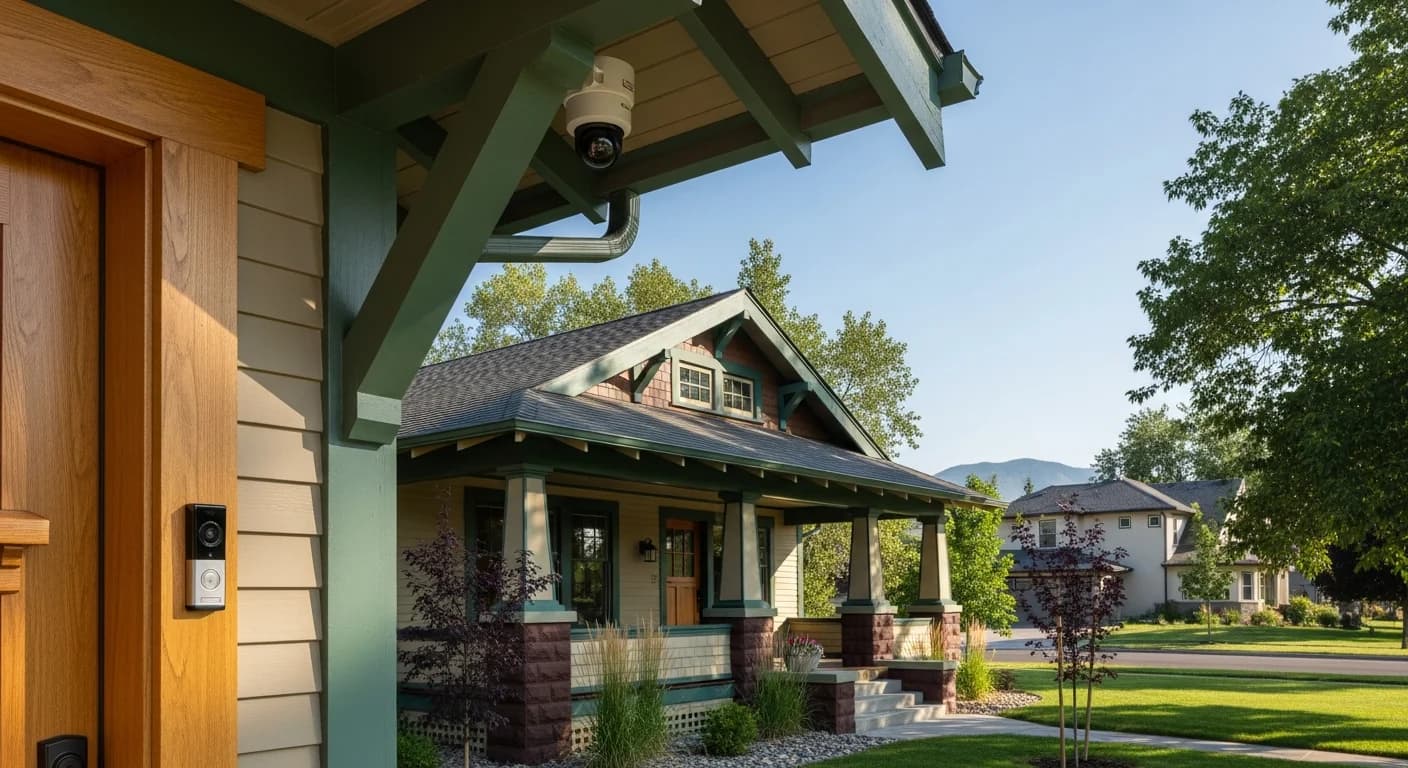
The Ring Video Doorbell Pro 2 ($250) and Google Nest Doorbell (wired, $180) are the two most popular options in Boise remodels. Both provide 24/7 recording, person detection, and package alerts. During a remodel, your electrician can run a dedicated 16-24V transformer and low-voltage wiring to the doorbell location for $50-$100 -- ensuring you never deal with battery charging or wireless connectivity issues at your front door.
For homes in neighborhoods like the North End, Warm Springs, and the Boise Bench where package theft is an increasing concern, a hardwired doorbell camera with local storage (not just cloud) provides reliable evidence and deterrence. Homeowners in Harris Ranch and Southeast Boise often add secondary cameras at side gates and garage entrances during a remodel.
Security Cameras
For exterior cameras, we recommend running Cat6 Ethernet cable to each camera location during the remodel. Power-over-Ethernet (PoE) cameras like the Reolink RLC-810A ($60) and UniFi G4 Pro ($300) deliver superior image quality and reliability compared to wireless alternatives. Running Ethernet through open walls costs $30-$75 per run; doing it after drywall is up costs $150-$300 per run.
Strategic camera placement for Boise homes:
- Front door and driveway -- captures all visitor and vehicle activity
- Backyard and fence line -- especially important for homes backing up to the Boise River Greenbelt or public pathways
- Side yard/gate -- the most common unmonitored entry point for burglaries
- Garage interior -- protects tools, vehicles, and the most common entry point for property crime in Idaho
Smart Locks
Smart locks eliminate the need for hidden keys and allow you to grant temporary access codes to contractors, house cleaners, dog walkers, and Airbnb guests. The most popular options in Boise remodels:
- Yale Assure Lock 2 with Matter ($250) -- works with all platforms, sleek keypad design, auto-lock
- Schlage Encode Plus ($300) -- Apple Home Key support (unlock with your iPhone or Apple Watch), heavy-duty construction rated for Idaho's temperature extremes
- August Wi-Fi Smart Lock ($230) -- retrofits over your existing deadbolt so you keep your current keys as backup
During a remodel, the main advantage is ensuring your door prep is correct. Smart locks require specific bore sizes and may need reinforced strike plates. Your carpenter can prep the door perfectly during construction rather than forcing a retrofit that may not fit cleanly. For homes with multi-point entry systems (common in newer Eagle and Meridian construction), confirming smart lock compatibility during the design phase prevents expensive surprises.
Motorized Shades for Boise's Intense Sun
Boise's July average high is 93.5°F (KBOI 30-year normal), and anyone who has lived through a July afternoon in a west-facing living room in the Bench or Southeast Boise knows that solar heat gain is a serious comfort and energy issue. Motorized window treatments are no longer a luxury -- they are a practical energy management tool that happens to look incredible.
The leading motorized shade systems for Boise remodels in 2026:
Lutron Serena Shades ($300-$600 per window)
- Integrates seamlessly with Lutron Caseta and RadioRA 3 lighting systems
- Battery-powered with 3-5 year battery life (rechargeable models available)
- Available in roller, cellular, and wood blind styles
- Automated schedules based on sunrise/sunset -- critical for Boise where summer days last until 9:30 PM and winter days end at 5:00 PM
Hunter Douglas PowerView ($400-$800 per window)
- Premium fabric options and the widest style range in the industry
- Duette cellular (honeycomb) shades trap a layer of still air at the glass, which is the construction the Department of Energy credits for the largest reductions in window heat loss -- worth specifying on the windows that feel coldest in January
- Scene automation and app control
IKEA FYRTUR/KADRILJ ($130-$180 per window)
- Budget-friendly option that works with Matter, HomeKit, Google Home, and Alexa
- Limited sizes and styles but excellent value for bedrooms and secondary rooms
The energy impact is real and the Department of Energy has put numbers on the shade itself rather than on the automation. Per DOE's Energy Saver guidance on window coverings, tightly installed cellular shades can reduce unwanted solar heat gain through a window by up to 60% in cooling season, and cut heat loss through that window by 40% or more in heating season -- roughly 10% off heating energy. What the motor adds is that the shades are actually closed at 3 PM on a July afternoon when nobody is home to close them, and open again on a sunny January morning to let the south-facing glass do free work.
During a remodel, the critical step is pre-wiring for hardwired motorized shades. While battery-powered options exist, hardwired shades ($50-$100 additional wiring per window during construction) eliminate battery maintenance entirely. Your electrician runs a low-voltage wire from a central power supply to each window header -- a 5-minute task when walls are open, a $200-$400 task per window when they are not. For a whole-home installation covering 15-25 windows, the wiring savings alone during a remodel can reach $3,000-$7,500.
Whole-Home Audio and Entertainment Integration
Whole-home audio has become one of the most requested smart features in Boise remodels, and the technology has become remarkably simple compared to the custom-wired systems of a decade ago. The dominant approach in 2026 combines architectural speakers (in-ceiling or in-wall) with wireless streaming platforms for a clean, wire-free aesthetic with professional sound quality.
Sonos Architectural by Sonos and Sonance is the most commonly requested system in Boise remodels. In-ceiling speakers ($350-$500 per pair) and in-wall speakers ($400-$600 per pair) connect to Sonos Amp units ($700 each, powering one zone/room) and stream from any music service. The speakers are paintable to match your ceiling and nearly invisible once installed.
Typical room-by-room audio planning for a Boise remodel:
- Kitchen: One pair of in-ceiling speakers above the island or prep area -- usually the zone that ends up getting the most hours
- Living room: In-wall speakers flanking the TV for a soundbar-free aesthetic, plus a Sonos Sub for bass
- Master bathroom: One pair of moisture-rated in-ceiling speakers for shower and bath listening
- Covered patio/deck: Outdoor-rated speakers (Sonance Landscape series) for entertaining -- essential for Boise's outdoor living season (May through October)
- Garage: A single in-ceiling speaker for podcasts and music during project work
The cost for a 4-5 zone whole-home audio system using Sonos Architectural typically runs $4,000-$8,000 during a remodel (speakers, amps, wiring, and installation). The same system retrofitted after construction would cost $7,000-$14,000 due to the difficulty of running speaker wire through finished walls and ceilings.
The critical remodel-phase task is running 16-gauge speaker wire from each speaker location back to a central equipment closet or media rack. This is a one-time infrastructure investment that supports upgrades for decades. Even if you cannot afford the full audio system today, running the wire while walls are open (at $30-$50 per run) means you can add speakers and amps incrementally over time without any construction disruption.
For outdoor audio in Boise -- which is especially valuable given the city's vibrant backyard entertaining culture in neighborhoods like Harris Ranch, the East End, and the Foothills -- ensure your contractor runs speaker wire and a weatherproof junction box to each outdoor speaker location during the remodel. Outdoor speakers have to survive a full Boise year -- January lows averaging 25.9°F and July highs averaging 93.5°F (KBOI 30-year normals), with the extremes on either side of that and heavy summer UV -- so specify speakers rated for outdoor use.
Smart Irrigation for Boise's Dry Climate
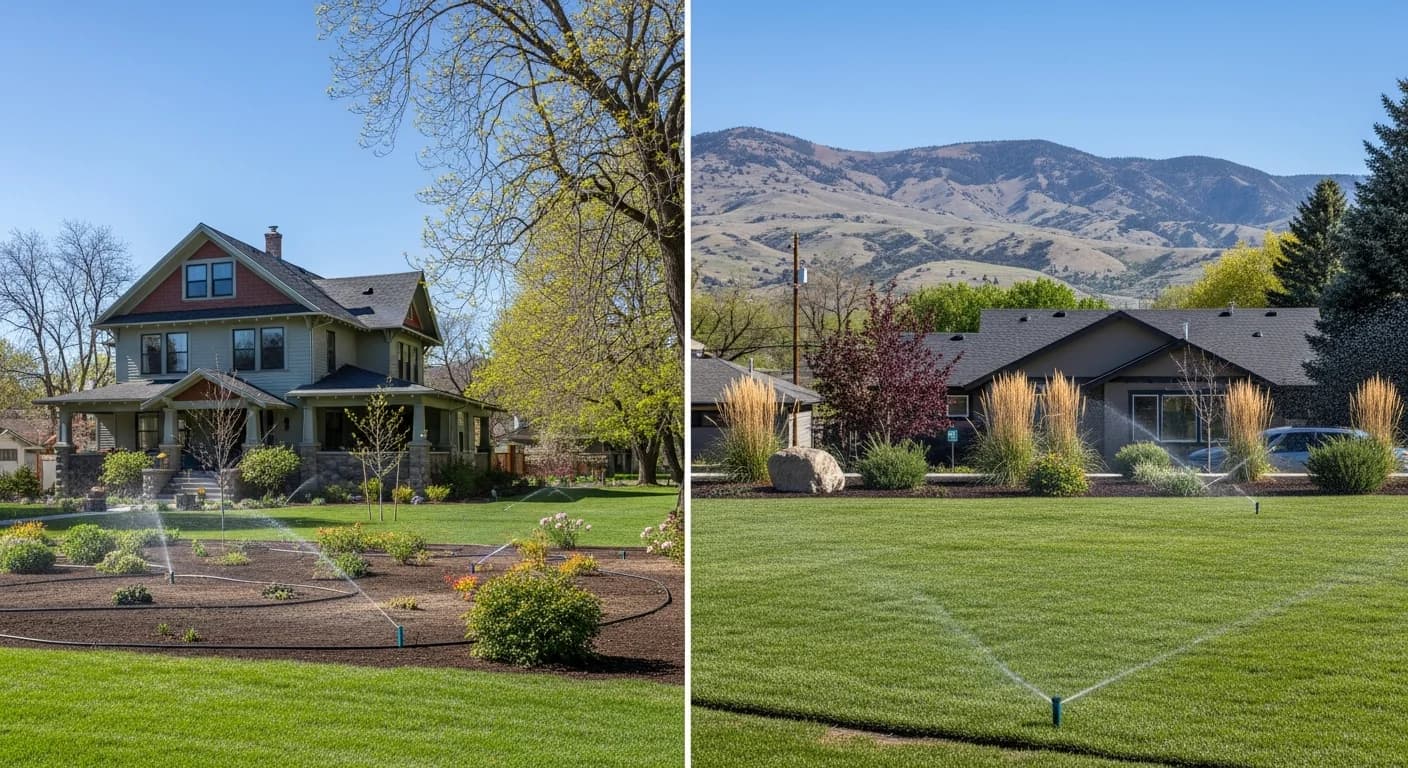
Boise sits in a semi-arid high desert, and the stretch from June through September is close to rainless in most years. Every Boise homeowner with a yard faces the same challenge: keeping landscaping alive without wasting water. Smart irrigation controllers are the answer, and a remodel that includes any exterior work is the ideal time to upgrade.
Rachio 3 Smart Sprinkler Controller ($230 for 16-zone) is one of the controllers we see most often on Treasure Valley remodels. It uses hyperlocal weather data -- pulled from weather stations around the Boise area -- to automatically adjust watering schedules based on temperature, wind, humidity, precipitation, and soil type. During the hottest stretches of July and August, Rachio increases watering. When an unexpected rain event occurs, it skips the cycle entirely.
The savings come from a specific behavior change rather than from the hardware: a weather-aware controller stops watering when it has rained, shortens cycles in a cool week, and lengthens them in a heat wave, none of which a fixed clock-based timer does. Outdoor irrigation is the bulk of a Treasure Valley household's summer water use, so the difference lands on the Veolia Water Idaho bill for the months it matters. Your own saving depends on how over-watered the yard was to begin with -- which, on most timers set once in April and forgotten, is considerably.
Hunter Hydrawise Pro-HC ($300 for 12-zone) is another strong option, particularly for larger properties in Eagle and Star with complex zone configurations. Its flow monitoring feature detects broken pipes and stuck valves -- a genuine concern in Boise where freeze-thaw cycles can damage underground irrigation lines over time.
During a remodel, the integration opportunities include:
- Upgrading valve wiring during any exterior trenching or foundation work -- old irrigation wire in pre-2005 Boise homes is often corroded or undersized
- Adding drip irrigation zones for new landscape beds installed as part of an exterior remodel or deck and patio project
- Installing rain and soil moisture sensors that provide ground-truth data to your smart controller beyond weather forecasts alone
- Connecting irrigation to your smart home platform so you can check system status alongside your security cameras and thermostat from a single app
For new ADU construction in Boise, smart irrigation should be part of the landscape plan from day one. A dedicated ADU irrigation zone on the main property's smart controller ensures the new structure's landscaping is watered independently, which matters if you are renting the ADU and want to maintain control over water usage and costs.
Watering rules in the Treasure Valley are set by your water provider and by your HOA, and they can change from season to season depending on conditions -- check both before you set a schedule. A smart controller earns its place here too: odd/even day and time-of-day rules can be enforced in the controller's configuration once, so compliance does not depend on anyone remembering.
Wiring and Infrastructure: Getting It Right During Construction
This is the section that separates a genuinely smart home from one with a collection of gadgets that barely work together. The wiring and network infrastructure you install during your remodel determines whether your smart home is fast, reliable, and expandable -- or frustrating and flaky.
Structured Wiring Panel
Every smart home needs a central hub where all low-voltage wiring converges. During a remodel, install a structured wiring panel (also called a media panel) in a utility closet, basement, or garage. This is where your router, network switch, PoE camera power supplies, and audio distribution equipment live. Cost: $200-$500 for the panel and installation, plus $500-$1,500 for a quality router and network switch.
Cat6 Ethernet to Every Room
Wi-Fi is great. Hardwired Ethernet is better. Run Cat6 cable to every room during your remodel -- even if you think you will never plug anything in. Future uses include: smart TVs (streaming is smoother on Ethernet), gaming consoles, home offices (mandatory for video conferencing), security cameras, and Wi-Fi access points. Cost: $30-$75 per run during a remodel versus $150-$300 per run as a retrofit.
For a typical 2,000 sq ft Boise home, plan for 15-25 Ethernet runs. Key locations:
- Behind every TV location (2 runs each -- one for the TV, one for a streaming device or game console)
- Every home office or desk location
- Ceiling locations in hallways and large rooms for Wi-Fi access points
- Exterior camera locations (4-6 runs minimum)
- Garage for workshop connectivity
- Kitchen island area for a countertop device
Wi-Fi Access Points
Consumer mesh routers (Eero, Google Wi-Fi) work well in small homes, but for a remodeled Boise home with smart devices in every room, ceiling-mounted Wi-Fi access points connected via Ethernet provide dramatically better performance. UniFi U6 Pro ($150 each) or TP-Link Omada EAP670 ($120 each) access points, wired to your central switch via Cat6, deliver consistent coverage without the dead spots that plague mesh systems in homes with thick interior walls -- common in Boise's older masonry and plaster-walled homes in the North End and Warm Springs neighborhoods.
Plan for one access point per 1,000-1,200 sq ft. A 2,500 sq ft home typically needs 2-3 access points. Pre-wire during the remodel by running Cat6 to a ceiling junction box in each access point location. Total cost for a 3-access-point system with a quality router: $600-$1,200 during a remodel.
Dedicated Electrical Circuits
Smart home equipment needs reliable power. During your remodel, have your electrician add:
- A dedicated 20A circuit to the structured wiring panel for networking equipment
- Switched outlets in each TV location for clean power management
- A whole-home surge protector at the electrical panel ($200-$400 installed). Smart switches, access points and controllers are all electronics sitting permanently on the branch circuits, and a single surge event takes out the lot of them at once
Integration Platforms: HomeKit vs Google Home vs Alexa
Choosing your smart home platform is one of the first decisions to make during your remodel planning because it influences which devices, switches, and interfaces you install. Here is an honest comparison of the three major platforms as they stand in 2026, with specific recommendations for Boise homeowners.
Apple HomeKit / Apple Home
- Best for: iPhone/iPad/Mac households who prioritize privacy, reliability, and a polished interface
- Strengths: End-to-end encryption, local processing (no cloud dependency), excellent automation reliability, Home Key support for smart locks, tight Siri integration, and clean visual interface
- Limitations: Smaller device ecosystem (though Matter has expanded this significantly), requires an Apple TV or HomePod as a home hub, no Android support
- Boise relevance: Works exceptionally well with Lutron Caseta, Ecobee, and Yale locks -- the core systems we recommend for Boise remodels
Google Home
- Best for: Households using Google services (Gmail, Calendar, Photos) who want the best voice assistant and Nest ecosystem integration
- Strengths: Superior natural language processing (Google Assistant understands complex commands better than Siri or Alexa), excellent Nest thermostat and camera integration, Chromecast/Google TV media integration, strong Matter support
- Limitations: Google's data collection practices concern privacy-focused users, interface has improved but is still less intuitive than Apple Home
- Boise relevance: The Nest ecosystem (thermostat + cameras + doorbell + speakers) is a cohesive and cost-effective package for budget-conscious Boise remodels
Amazon Alexa
- Best for: Households that want the widest device compatibility and the most affordable smart speakers
- Strengths: Largest device ecosystem, Echo speakers are inexpensive ($25-$100), strong smart home routines, good intercom functionality between rooms
- Limitations: Privacy concerns, ad-supported model, voice assistant quality has declined relative to Google in 2025-2026, Amazon's smart home strategy has shifted multiple times
- Boise relevance: The Echo Show in the kitchen and Alexa voice control for basic tasks remain popular in family-oriented Boise homes, but we see declining adoption for whole-home control
Our recommendation for Boise remodels: Choose the platform that matches your phone. If your household is all iPhones, build around Apple HomeKit. If you are an Android family, build around Google Home. If you have a mixed household, Google Home or a Matter-first approach offers the best cross-platform compatibility. The good news in 2026 is that Matter protocol support means most quality devices work with all three platforms, so you are not locked in as tightly as you were even two years ago.
Regardless of platform, we strongly recommend selecting a single primary platform and sticking with it. Homes that mix Alexa in the kitchen, Google in the bedroom, and Siri in the living room create confusion for every family member and make automation unreliable. Pick one. Commit. Your family will thank you.
Costs by System: What to Budget in Boise
Here is a comprehensive cost breakdown for smart home technology integration during a Boise remodel, at typical Treasure Valley pricing for 2025-2026. Prices include equipment and installation labor.
Tier 1: Essential Smart Home ($1,500-$3,500)
The minimum smart home package that makes a meaningful daily impact:
- Smart thermostat (Ecobee or Nest): $250-$350 installed
- Video doorbell (wired): $200-$350 installed
- Smart locks (front and garage entry): $500-$700 installed
- Smart lighting (10-15 key switches, Lutron Caseta): $800-$1,200 installed
- Smart irrigation controller: $250-$350 installed
- Network upgrade (quality router): $200-$400
Tier 2: Comprehensive Smart Home ($5,000-$12,000)
Full home coverage with automation and quality infrastructure:
- Everything in Tier 1 plus:
- Whole-home smart lighting (25-35 switches, Lutron Caseta): $2,500-$4,500 installed
- 4-6 hardwired security cameras with NVR: $1,200-$2,500 installed
- Motorized shades (10-15 key windows): $3,000-$6,000 installed
- Structured wiring panel + Cat6 runs (15-20): $1,500-$3,000
- Ceiling-mounted Wi-Fi access points (2-3): $500-$1,000 installed
- Whole-home surge protection: $200-$400 installed
Tier 3: Premium Smart Home ($15,000-$30,000+)
For luxury homes in Eagle, the Foothills, and high-end North Boise renovations:
- Everything in Tier 2 plus:
- Lutron RadioRA 3 with Ketra tunable white lighting: $8,000-$15,000
- Whole-home audio (Sonos Architectural, 5-7 zones): $5,000-$10,000 installed
- Motorized shades (all windows, hardwired): $8,000-$18,000 installed
- Home theater integration: $3,000-$8,000
- Touchscreen control panels (Lutron or Crestron): $2,000-$5,000
- Outdoor audio and landscape lighting control: $2,000-$5,000
The most important takeaway: infrastructure first, devices second. If your budget is limited, spend on wiring (Cat6, speaker wire, shade wiring, dedicated circuits) during the remodel and add smart devices incrementally over the following months and years. The wiring is the part that is expensive to add later. Devices can always be purchased, configured, and installed after the fact at minimal additional cost.
For a personalized smart home integration plan as part of your Boise remodel, request a free estimate. We will walk through your home, assess your existing infrastructure, and recommend the right tier and system choices for your household, budget, and technical comfort level.
How much does it cost to add smart home technology during a Boise remodel?
Smart home technology during a Boise remodel ranges from $1,500-$3,500 for essential features (smart thermostat, doorbell camera, smart locks, and key lighting switches) to $5,000-$12,000 for comprehensive whole-home coverage, and $15,000-$30,000+ for premium systems with motorized shades, whole-home audio, and professional lighting control. The biggest savings come from running wiring during construction when walls are open: a Cat6 run costs $30-$75 with the drywall down versus $150-$300 as a retrofit, and shade wiring $50-$100 per window versus $200-$400.
What smart home features save the most energy in Boise's climate?
In Boise's climate with extreme temperature swings, the highest-impact energy-saving smart features are a smart thermostat (it stops the system conditioning an empty house, which is where most of the waste is), automated window shades, a weather-aware irrigation controller, and lighting on occupancy sensors and schedules. The Department of Energy credits tightly installed cellular shades with cutting unwanted solar heat gain through a window by up to 60% in cooling season and window heat loss by 40% or more in heating season; automation is what ensures they are actually closed at 3 PM in July. Smart thermostats are also eligible for a cash incentive under Idaho Power's Heating and Cooling Efficiency Program, though the utility does not publish the amount.
Should I choose Apple HomeKit, Google Home, or Alexa for my Boise smart home?
Choose the platform that matches your household's phones. All-iPhone families should build around Apple HomeKit for its privacy, reliability, and polished interface. Android households work best with Google Home and the Nest ecosystem. Mixed households should consider Google Home or a Matter-first approach for cross-platform compatibility. The key recommendation is to pick one primary platform and commit to it throughout your home rather than mixing platforms in different rooms.
What wiring should I run during a remodel for smart home technology?
During a remodel, run Cat6 Ethernet cable to every room (for smart TVs, home offices, and Wi-Fi access points), 16-gauge speaker wire to planned audio locations, low-voltage wiring for motorized shades to each window header, neutral wires to all switch boxes for smart switches, and a dedicated 20A circuit to your structured wiring panel. Also pre-wire Cat6 to exterior camera locations and install a whole-home surge protector. Every one of these costs a fraction as much with the walls open: $30-$75 per Cat6 run against $150-$300 later, $50-$100 per shade against $200-$400, and next to nothing for a neutral wire against $150-$300 per switch box.
Do smart home features increase home value in Boise?
We are not going to put a percentage on it, because no sourced figure exists for the Boise market and the national numbers that circulate are survey opinion rather than sale data. What can be said honestly: the part of a smart home that is genuinely durable value is the infrastructure, not the devices. Cat6 to every room, neutral wires in every switch box, speaker wire and shade wiring in the walls, and a structured wiring panel are permanent improvements that any future owner can build on and that cannot be added cheaply later. The gadgets themselves date quickly and several of them will leave with you. Install smart technology because it makes the house better to live in; treat any resale effect as a bonus you did not pay for.
What is the best smart thermostat for Boise homes?
The Ecobee Smart Thermostat Premium ($250) is our top recommendation for most Boise homes because its remote room sensors address the uneven heating common in older homes (especially multi-level homes in the Bench and North End), and its built-in air quality monitor is valuable during Boise's wildfire smoke season. The Google Nest Learning Thermostat 4th Gen ($280) is an excellent alternative with superior machine learning and tighter Google Home integration. Smart thermostats are one of the measures Idaho Power's Heating and Cooling Efficiency Program covers; confirm the current incentive and eligible models with the utility before you buy.
How do motorized shades help with Boise's summer heat?
Boise's July average high is 93.5°F (KBOI 30-year normal), and a west-facing room takes the worst of that in the late afternoon. The Department of Energy's Energy Saver guidance credits tightly installed cellular shades with reducing unwanted solar heat gain through a window by up to 60% in cooling season, and with cutting heat loss through that window by 40% or more in heating season — roughly 10% off heating energy. Motorizing them is what makes those numbers real in practice: the shades close at the hottest part of the afternoon whether or not anyone is home, and open again on a sunny January morning so south-facing glass does free work.
Is it worth running Ethernet cable during a remodel or is Wi-Fi enough?
It is absolutely worth running Ethernet during a remodel. While Wi-Fi works for phones and tablets, hardwired Ethernet provides faster, more reliable connections for smart TVs, security cameras, home offices, and gaming. More importantly, ceiling-mounted Wi-Fi access points connected via Ethernet deliver far better wireless coverage than consumer mesh routers, especially in older Boise homes with thick plaster walls. Running Cat6 cable costs $30-$75 per run during construction versus $150-$300 per run as a retrofit -- so pre-wiring is a smart investment even for locations you might not use immediately.