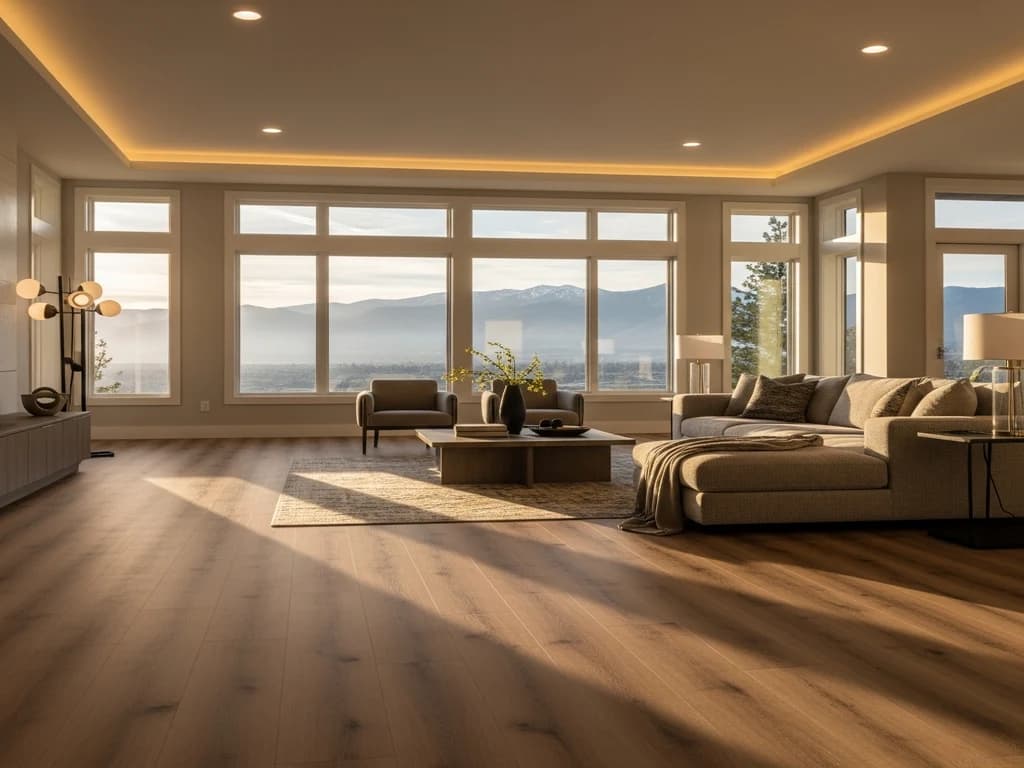
Why Boise Homeowners Want Open Floor Plans
Open floor plans have become the single most requested layout change in Boise home remodels, and for good reason. The way families in the Treasure Valley use their homes has fundamentally shifted over the past decade. Remote work, home-centered entertaining, and the desire for connected family spaces have all pushed homeowners toward removing walls and creating seamless transitions between kitchens, dining rooms, and living areas.
In neighborhoods like the North End, Morris Hill, and the Boise Bench, many homes were built between the 1940s and 1970s with compartmentalized floor plans. Separate rooms for cooking, eating, and socializing made sense in that era, but today these walls feel like barriers. Parents want to watch their kids in the living room while cooking dinner. Couples want to entertain guests without being isolated in a closed-off kitchen. Home office workers want the psychological benefit of spacious sightlines.
The data supports this preference. According to the National Association of Realtors, open floor plans consistently rank among the top three most-desired features for homebuyers across all age groups. In Boise's competitive real estate market, where median home prices have increased significantly since 2020, an open concept layout can add 3-5% to a home's resale value according to local appraisers.
But removing walls is not as simple as grabbing a sledgehammer. The process requires careful structural analysis, proper engineering, permits, and skilled execution. This guide covers everything Boise homeowners need to know before opening up their floor plan.

Load-Bearing vs Non-Load-Bearing Walls
The most critical question in any wall removal project is whether the wall is load-bearing or non-load-bearing. Getting this wrong is not just expensive — it is dangerous. A load-bearing wall carries the weight of the roof, upper floors, and structural components above it down to the foundation. Remove it without proper support, and you risk catastrophic structural failure.
Signs a wall may be load-bearing:
- It runs perpendicular to the floor joists (check from the attic or basement)
- It sits directly above a beam, post, or foundation wall in the basement or crawl space
- It is located near the center of the house
- It supports a second floor, attic, or roof rafters
- It is an exterior wall (nearly always load-bearing)
Signs a wall is likely non-load-bearing:
- It runs parallel to the floor joists above
- It does not have a corresponding support below it in the basement or crawl space
- It is a short partition wall that does not extend to the full width of the house
- Original blueprints (if available) label it as a partition
In typical Boise homes, especially the ranch-style homes built throughout Southeast Boise and West Boise in the 1960s and 1970s, the wall between the kitchen and living room is frequently load-bearing. These homes typically use a central bearing wall that spans the length of the house, supporting ceiling joists and sometimes the roof ridge. The wall between the living room and dining room, however, is often non-load-bearing and can be removed more easily.
Never make this determination yourself. Even experienced contractors bring in a licensed structural engineer to evaluate the wall before any demolition begins. The consequences of guessing wrong include sagging floors, cracked drywall throughout the house, door frames going out of square, and in worst cases, partial collapse. A structural assessment costs $300-$800 in the Boise area — a tiny investment compared to the cost of getting it wrong.
The Structural Engineering Process
Once you have decided to remove a wall, the structural engineering process follows a well-defined path. In Boise, this typically involves hiring a licensed professional engineer (PE) who specializes in residential structural work.
Step 1: Site Assessment
The engineer visits your home and examines the wall in question. They will look at the framing from the attic or crawl space, identify joist direction and span, check for existing headers, and evaluate the foundation below. In many Boise Bench and North End homes with basements, this means going downstairs to trace the load path from roof to foundation.
Step 2: Load Calculations
Using the International Building Code (IBC) and International Residential Code (IRC) — both adopted by the City of Boise — the engineer calculates the loads that the wall currently carries. This includes dead loads (weight of the structure itself), live loads (occupants, furniture), and in Idaho, snow loads. Boise's ground snow load is 25 pounds per square foot (psf), which significantly affects beam sizing, especially for homes in the foothills near Bogus Basin Road and Harrison Hollow where roofs may carry heavier snow accumulation.
Step 3: Beam Design
The engineer designs a replacement beam (called a header or carrying beam) that will carry the same loads the wall did. They specify the beam material (LVL, steel, glulam), size, bearing point locations, and connection details. They also design any new posts or columns needed to transfer loads to the foundation.
Step 4: Stamped Drawings
The engineer produces stamped structural drawings that your contractor will use during construction and that the City of Boise Planning and Development Services (PDS) will require for the building permit. These drawings are a legal document — the engineer is putting their professional license behind the design.
Expect to pay $500-$1,500 for residential structural engineering in the Boise area, depending on the complexity of the project. For a simple single-wall removal, $500-$800 is typical. For multiple walls or unusual conditions (like removing a wall that also contains plumbing or HVAC), expect the higher end.

Beam Sizing and Support Options
The beam that replaces a load-bearing wall is the structural backbone of your open floor plan. Understanding the options helps you make informed decisions about aesthetics, cost, and ceiling height.
LVL (Laminated Veneer Lumber)
LVL beams are the most common choice for residential wall removal in Boise. Made from thin layers of wood veneer bonded together, they are engineered for consistent strength and come in standard widths of 1-3/4" that can be doubled or tripled for greater capacity. A typical 16-foot span in a Boise ranch home might require a doubled or tripled 1-3/4" x 11-7/8" LVL. Cost for material alone: $200-$600 for most residential spans. LVL beams are typically wrapped in drywall or decorative wood to match your finish, since they are not attractive in their raw form.
Steel I-Beams
When the span is long (over 16 feet) or the loads are heavy (second floor above, high snow loads), steel is often the only practical option. A W8x18 or W10x22 steel beam can span distances that would require impossibly large wood members. Steel beams are more expensive ($800-$3,000 for material and installation) but allow for shallower beam depths, meaning you lose less ceiling height. In Boise homes with standard 8-foot ceilings, this matters enormously — every inch of beam depth comes directly out of your headroom.
Glulam (Glued Laminated Timber)
Glulam beams are an attractive option when the beam will remain exposed as a design feature. Made from dimensional lumber glued together in layers, they can be stained or left natural for a rustic-modern aesthetic that fits perfectly in Boise homes. They cost more than LVL but look dramatically better exposed. A 6-3/4" x 12" glulam can span significant distances and serve as a visual focal point in your new open layout. Cost: $400-$1,200 depending on species and span.
Post and Column Options
Most beams need support at their ends and sometimes at intermediate points. Options include:
- Hidden posts within remaining wall sections — The least visible option. A 6x6 or steel post column is concealed inside a short wall section or wrapped in drywall.
- Exposed decorative columns — Square or round columns that become a design element. Popular in Boise's East End and Warm Springs neighborhood Craftsman homes where column details complement the architectural style.
- Steel lally columns — Functional, minimal, industrial look. Often used in basements or modern-style homes.
The engineer's stamped drawings will specify exactly which beam and post configuration your specific project requires. Do not substitute materials or sizes without engineering approval — the math behind structural design does not accommodate improvisation.
Cost of Wall Removal in Boise
Wall removal costs in the Boise area vary significantly based on whether the wall is load-bearing, what is inside it, and how much finish work is needed afterward. Here is a realistic breakdown based on current Treasure Valley pricing:
Non-Load-Bearing Wall Removal: $1,500-$5,000
- Demolition and debris removal: $500-$1,000
- Electrical rerouting (outlets, switches): $300-$800
- Flooring patch where the wall sat: $500-$1,500
- Drywall repair and texture matching: $400-$1,200
- Painting: $200-$500
Load-Bearing Wall Removal: $5,000-$20,000
- Structural engineering: $500-$1,500
- Building permit (City of Boise): $200-$600
- Temporary shoring and supports during construction: $300-$800
- Beam and post materials (LVL or steel): $400-$3,000
- Beam installation labor: $1,500-$4,000
- Electrical/plumbing/HVAC rerouting: $500-$3,000
- Flooring transition and patching: $800-$2,500
- Drywall, texture, and paint: $600-$2,000
- Inspections: $100-$300
The biggest cost variables are what is inside the wall and how long the span is. A wall with plumbing drain lines, a furnace duct, or multiple electrical circuits will cost significantly more to remove because all of those systems need to be rerouted before the wall comes down. We have seen wall removal projects in Meridian and Eagle homes where the HVAC rerouting alone cost $2,500-$4,000 because the main trunk line ran through the wall being removed.
The span matters because longer beams cost more, require larger posts, and may require foundation modifications at the bearing points. A 10-foot span is straightforward. A 20-foot span across a great room might require a steel beam with engineered footings — a different level of project entirely.
For a detailed estimate specific to your home, request a free in-home consultation. We will assess the wall, identify potential complications, and provide a written quote within 48 hours.

Full Open Concept Remodel Costs
Many Boise homeowners do not stop at removing one wall. A full open concept remodel typically involves removing walls between the kitchen, dining room, and living room, and often includes updating the kitchen, refinishing floors, and upgrading lighting to suit the new layout. Here is what to budget for a comprehensive open concept transformation:
Budget Open Concept ($35,000-$55,000)
This tier covers wall removal (1-2 walls), beam installation, basic flooring repair to create a continuous surface, updated lighting, and fresh paint throughout the affected area. You are keeping existing cabinets and countertops but the space feels completely new.
Mid-Range Open Concept ($55,000-$80,000)
At this level, you are removing walls, adding a kitchen island (now visible from the living room, so it needs to look good), updating flooring throughout the main level, adding recessed lighting on dimmer circuits, and potentially upgrading the kitchen cabinetry and countertops since everything is now on display. This is the sweet spot for most Boise families.
Premium Open Concept ($80,000-$120,000+)
The full transformation: multiple wall removals, complete kitchen remodel with custom cabinetry, new flooring throughout, structural beams as design features (exposed glulam or steel), upgraded electrical and lighting plan, and architectural details like built-in shelving or a statement fireplace surround that anchors the new open space. Popular in North Boise, East Boise, and Eagle where home values justify the investment.
The return on investment for open concept remodels in Boise is strong. Local real estate agents consistently report that homes with open layouts sell faster and at higher prices than comparable homes with closed floor plans. The NAR Remodeling Impact Report supports this with national data showing that open concept kitchen/living remodels recover 75-85% of their cost at resale, with higher recovery rates in competitive markets like Boise.
Common Challenges in Boise Home Styles
Boise's housing stock presents specific challenges for open concept remodels. Understanding your home's style helps you anticipate issues before they become surprises.
Ranch Homes (1950s-1970s)
The most common candidate for wall removal in Boise. Ranch homes in neighborhoods like the Bench, Vista, Collister, and Garden City are typically single-story with a central load-bearing wall running the length of the house. The good news: roof structures are usually simple trusses or rafters, making load paths predictable. The challenge: these homes often have only 8-foot ceilings, and adding a beam reduces headroom. Using a flush-mounted steel beam instead of a deeper LVL can save precious inches. Also, HVAC ducts in ranch homes frequently run through interior walls via the attic — rerouting these adds cost.
Split-Level Homes (1960s-1980s)
Boise has a significant inventory of split-level homes, especially in Southeast Boise and Boise Bench areas. These are tricky for open concept work because the half-level changes create complex structural relationships. The wall between the upper living area and the lower family room often carries loads from the roof AND the upper floor. Removing it requires careful engineering, and the result may still include a step-down between spaces. The most successful split-level opens we have done combine wall removal with a kitchen remodel that wraps the new open space around the level change, turning the height difference into a design feature rather than an obstacle.
Two-Story Colonials and Traditionals (1980s-2000s)
Common in Eagle, Meridian, and Southeast Boise subdivisions. The wall between the kitchen and family room frequently carries the second-floor joists and sometimes a bathroom above. The structural solution is more involved — larger beams, engineered bearing points — and the cost is higher. However, these homes typically have 9-foot ceilings on the main level, giving you more room for the beam without sacrificing headroom.
Newer Construction (2005-Present)
Most homes built in the 2005-present era in Star, Kuna, and newer Meridian subdivisions already have some degree of open layout. Wall removal requests in these homes tend to focus on enlarging a pantry opening, widening a hallway, or opening a bonus room. The truss engineering in newer homes can be complex — never modify a roof truss without engineering approval, as they are engineered as a complete system.
Permits and Inspections for Wall Removal
Any structural modification to a home in Boise requires a building permit. This is non-negotiable. The City of Boise Planning and Development Services (PDS) handles permitting for homes within city limits. If your home is in unincorporated Ada County, permits go through Ada County Development Services.
What you need for a wall removal permit in Boise:
- Completed building permit application
- Stamped structural engineering drawings showing the beam design, post locations, and connection details
- A site plan or floor plan showing the existing and proposed layout
- Contractor information (Idaho RCE license number)
- Permit fee (typically $150-$500 depending on project scope)
The inspection process:
- Pre-construction inspection (sometimes required) — Verifies existing conditions match the engineering drawings
- Framing/structural inspection — The critical inspection. The building inspector verifies that the beam, posts, and connections match the stamped engineering plans before drywall covers everything up. This typically must happen within 24-48 hours of beam installation.
- Electrical inspection — Required if any electrical work was rerouted
- Final inspection — Verifies all work is complete and code-compliant
What happens if you skip the permit? We strongly advise against it. Unpermitted structural work in Boise creates serious problems: it voids your homeowner's insurance for structural claims, creates title issues when you sell, and can result in a retroactive permit requirement that costs significantly more than the original permit. Ada County assessors and title companies flag unpermitted work during sales, and Boise real estate agents are increasingly vigilant about asking for permit records. For more details, read our guide on Boise home remodel permits and inspections.
Permit processing time in Boise currently runs 2-4 weeks for residential structural projects. Plan this into your project timeline.
Before and After Layout Strategies
Successful open concept remodels do not just remove walls — they reimagine how the space flows. Here are the most effective layout strategies we use in Boise homes:
Strategy 1: The Kitchen Island Anchor
This is the most popular approach. Remove the wall between kitchen and living room and replace it with a large kitchen island positioned roughly where the wall was. The island provides visual separation between zones while maintaining full sightlines. It adds counter space, seating, and storage. In Boise ranch homes, a 7-8 foot island in this position transforms the entire home without any addition.
Strategy 2: The Half-Wall with Beam
For homeowners who want openness but still desire some zone definition, a half-wall (36-42 inches tall) with an exposed beam above provides the best of both worlds. The half-wall can incorporate bookshelves, display niches, or a bar-height countertop extension. This approach works especially well in split-level Boise homes where the half-wall can disguise the level change.
Strategy 3: The Column Line
When a long wall is removed, two or three decorative columns at beam support points create a visual rhythm that defines the space without blocking it. In Craftsman and Bungalow homes common in Boise's North End and Hyde Park areas, tapered columns on stone bases can reference the original architectural style while creating a thoroughly modern open layout.
Strategy 4: The Flush Ceiling
In homes with high enough ceilings (9 feet or more), a flush-mounted steel beam hidden above the ceiling line creates a completely seamless transition. From inside the room, it looks like the wall was never there. This is the most expensive approach but delivers the most dramatic result. It requires precise engineering to fit the beam within the ceiling/floor assembly.
Whichever strategy you choose, address the flooring transition early in planning. When a wall comes down, the flooring beneath it needs to match both sides. In many Boise homes, this means either patching with matching material (difficult with older hardwood) or refinishing the entire space with new flooring. Budget $2,000-$5,000 for flooring corrections in an open concept project, or more if you choose to install new flooring throughout the main level.
Design Tips for Open Concept Living
Removing walls is the structural half of the project. Designing the open space so it functions beautifully is the other half — and it is where many homeowners need the most guidance.
1. Define zones without walls. Use area rugs, furniture placement, lighting changes, and ceiling details (a tray ceiling over the dining area, for example) to create distinct zones within the open space. Each zone should have its own purpose: cooking, eating, lounging, working. Without some definition, open floor plans can feel like empty warehouses.
2. Control the sightlines. With walls gone, everything is visible from everywhere. Your kitchen countertops will be seen from the living room couch. Your TV will be visible from the dining table. Plan for this. Invest in kitchen organization (drawers instead of open shelving for daily items), keep countertops clear, and position the television so it does not dominate the dining view.
3. Upgrade your lighting plan. A single ceiling fixture per room does not work in open concept spaces. You need layered lighting: recessed cans for ambient light, pendants over the island and dining table for task lighting, and accent lights (under-cabinet, toe-kick) for atmosphere. Every lighting zone should be on its own dimmer circuit. Budget $2,000-$5,000 for a proper open concept lighting plan in a Boise home.
4. Address acoustics. This is the most overlooked aspect of open floor plans. With no walls to absorb sound, conversations carry, TV audio competes with kitchen noise, and the dishwasher becomes the soundtrack for the entire main floor. Mitigation strategies include: acoustic ceiling panels or textured ceilings, upholstered furniture that absorbs sound, area rugs on hard floors, and curtains on windows. Some Boise homeowners install a quiet dishwasher (under 44 dB) specifically because the kitchen is now part of the living space.
5. Pick a unified color palette. When three rooms become one, three different color schemes become chaotic. Choose a cohesive palette that flows through the entire space. In 2026 Boise, the most popular approach is a neutral base (warm white or greige walls) with color introduced through the kitchen cabinetry, a feature wall, or furnishings. The earthy tones trending in the Treasure Valley — sage greens, warm clays, dusty blues — work beautifully in open concept spaces because they reference the natural landscape visible through your windows.
6. Think about HVAC. Opening up walls changes airflow patterns. A room that was previously heated by its own vent may now share air with a much larger space. After wall removal, have your HVAC contractor evaluate whether duct modifications or an additional return are needed. In Boise's climate, where heating is the dominant concern for 5-6 months per year, proper airflow in an open plan is essential for comfort and energy efficiency.
Ready to explore an open concept remodel for your Boise home? Our open concept kitchen remodel guide goes deeper into kitchen-specific considerations, and you can schedule a free in-home consultation to discuss your specific layout and goals.

How much does it cost to remove a load-bearing wall in Boise?
Removing a load-bearing wall in Boise typically costs $5,000-$20,000. This includes structural engineering ($500-$1,500), building permits ($200-$600), beam and post materials ($400-$3,000), installation labor ($1,500-$4,000), and finish work including drywall, flooring patches, and paint ($1,500-$4,500). The total depends on wall length, what is inside the wall (plumbing, electrical, HVAC), and beam material choice.
Do I need a permit to remove a wall in Boise?
Yes, any structural wall removal in Boise requires a building permit from the City of Boise Planning and Development Services (PDS). Even non-load-bearing wall removal may require a permit if electrical or plumbing modifications are involved. Permit applications require stamped structural engineering drawings for load-bearing walls. Processing time is currently 2-4 weeks.
How do I know if a wall is load-bearing in my Boise home?
Signs of a load-bearing wall include: running perpendicular to floor joists, sitting above a beam or foundation wall in the basement, being located near the center of the house, or supporting a second floor or roof structure. However, you should never make this determination yourself. A licensed structural engineer ($300-$800 for assessment in Boise) should evaluate the wall before any work begins.
How long does an open concept remodel take in Boise?
A single wall removal with beam installation typically takes 1-2 weeks of construction time. A full open concept remodel involving multiple walls, kitchen updates, new flooring, and lighting takes 2-3 weeks of on-site construction. Add 2-4 weeks for permit processing before construction begins, and 6-12 weeks for material ordering if the project includes a kitchen remodel component.
Will removing a wall increase my Boise home's value?
Yes, open floor plan conversions typically add 3-5% to a Boise home's resale value, and NAR data shows 75-85% cost recovery at resale. Homes with open layouts sell faster in the Treasure Valley market. The strongest ROI comes from removing the wall between the kitchen and living room, as this is the most desired configuration among Boise homebuyers.
Can I remove a wall myself or do I need a contractor?
We strongly recommend using a licensed contractor for any wall removal. Load-bearing walls absolutely require professional engineering and construction. Even non-load-bearing walls often contain electrical wiring, plumbing, or HVAC ducts that require licensed tradespeople. In Idaho, structural work without proper permits and professional execution voids your homeowner's insurance and creates title problems when you sell.
What are the most common problems with open floor plan remodels?
The most common issues include: mismatched flooring where the wall was removed, noise transmission between areas (especially kitchen appliances heard in the living room), inadequate lighting for the new larger space, HVAC imbalance causing hot/cold spots, and insufficient zone definition making the space feel like one large featureless room. All of these can be addressed with proper planning.
Which Boise home styles work best for open concept remodels?
Ranch homes from the 1950s-1970s are the best candidates — they have simple structures, single-story load paths, and benefit enormously from opening up their compartmentalized layouts. Two-story homes from the 1980s-2000s also work well but cost more due to heavier loads from the second floor. Split-level homes are the most challenging due to complex level changes. Newer homes (2005+) often already have partially open layouts and may only need minor modifications.