Explore the most popular material options for Bathroom Remodeling in Boise, with pricing, durability, and style comparisons to help you choose.
Boise's climate and water chemistry create a specific performance environment for bathroom materials, and making the right material choices upfront prevents the premature failures, maintenance headaches, and costly repairs that come from applying generic national guidance to Idaho-specific conditions. **Tile:** Large-format porcelain tile (12x24 minimum, 24x48 for shower walls in premium applications) is the clear winner for Boise bathrooms on every metric that matters: durability, moisture resistance, low maintenance, and visual impact. Porcelain's near-zero porosity means Boise's hard water leaves deposits on the surface rather than penetrating it — which means cleaning is a surface task rather than a grout-and-stone-sealing regimen. For Boise's shower applications, rectified porcelain tiles with 1/16" grout joints give large-surface showers a seamless look that requires minimal grout maintenance. Natural stone — marble, travertine, limestone — is gorgeous but requires aggressive sealing on initial installation (at least two applications), annual resealing, and regular pH-neutral cleaning to resist the calcium and mineral deposits in Boise's water supply. Homeowners who love the look of marble should consider high-quality marble-look porcelain: visually indistinguishable from 3 feet away, zero maintenance, and half the installed cost. For shower floors, small-format mosaic tile (2x2 or 1x1) provides slip resistance through grout line density but creates maximum grout surface area for Boise's hard water to stain — specify epoxy grout or a penetrating sealer for any shower floor mosaic. A pebble-stone shower floor is beautiful but is the highest-maintenance surface you can install in a Boise bathroom with hard water. **Shower glass:** Frameless glass shower enclosures are the aesthetic standard in Boise bathroom remodels, but glass performance in hard water deserves serious consideration. Standard clear tempered glass in a Boise shower will show calcium spotting and water scale within weeks without daily squeegee use and weekly cleaning with a calcium remover. Two upgrades significantly reduce this maintenance burden. First, specify glass with a factory-applied hydrophobic coating — EasyClean (CRL), ForeverClean (Maax), or comparable products create a surface where water beads and rolls off rather than clinging and evaporating to leave deposits. The $200–$500 premium over standard glass is worthwhile in Boise's water conditions. Second, consider textured or rain-glass alternatives for panels that receive direct water spray — texture diffuses the visual impact of spotting and looks better between cleanings than clear glass. **Vanity countertops:** Quartz is the optimal vanity countertop material for Boise bathrooms for the same reasons it excels in kitchens: non-porous, maintenance-free, dimensionally stable across the humidity cycles Boise bathrooms experience. Cultured marble — the solid-surface material still installed in many Boise new builds — is adequate but prone to yellowing in direct sunlight (common in south-facing Boise bathrooms) and difficult to repair if chipped or stained. Natural marble is beautiful but requires sealing and careful maintenance in Boise's hard water environment. Quartz in a marble-look pattern offers the visual result with none of the upkeep. **Flooring:** Heated tile flooring is uniquely valuable in Boise because the city's winters produce genuinely cold floors — stepping onto an unheated tile floor on a 20°F January morning is a visceral misery that warm-climate homeowners have never experienced. Electric radiant heat mats installed under porcelain tile add $800–$2,500 to a bathroom remodel depending on room size and thermostat type, and they transform the daily experience of the space from October through April. LVP is an excellent non-tile option for bathroom flooring — it's warm underfoot, dimensionally stable, and its waterproof core handles the moisture loading a bathroom floor receives. It cannot be used in the shower itself but works well for the wet-zone perimeter and vanity area. **Ventilation:** Every Boise bathroom remodel should include an exhaust fan upgrade if the existing fan is more than 10 years old, inadequately sized (less than 80 CFM for a full bathroom), or — critically — ducted into the attic rather than through the exterior wall or roof. An attic-ducted bathroom fan is a code violation under the City of Boise's current adopted building code and a direct pathway for moisture to accumulate in the attic and cause structural damage. The correct installation terminates through an exterior wall cap or a proper through-roof vent with a functional damper. Upgrade to a 110 CFM or larger fan with a humidity sensor that runs automatically after showers — Broan's SmartSense and Panasonic's WhisperSense series are reliable options at $150–$350 that pay for themselves in moisture prevention. Combine this with a properly sealed vanity light fixture (air-sealed can lights are required under Boise's current energy code) and your bathroom becomes a net-zero moisture environment rather than a mold incubator.

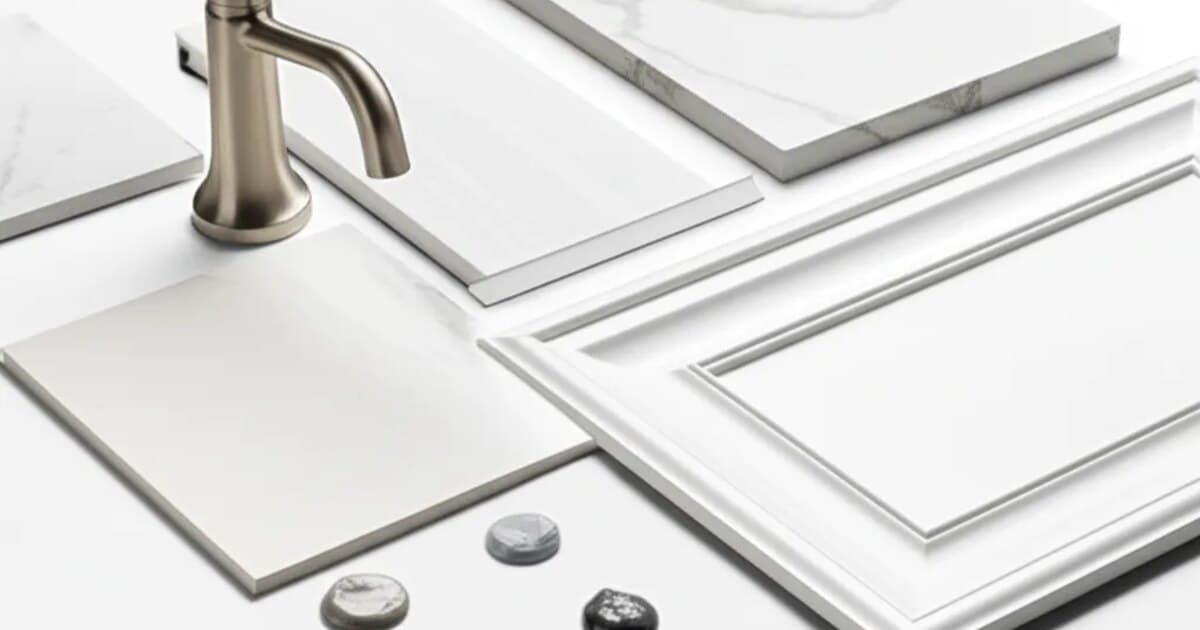
Choosing the right materials is one of the most important decisions in any bathroom remodel project. The materials you select affect the look, durability, maintenance requirements, and overall cost of the finished project. Here is a detailed look at the most popular material options for bathroom remodel in Boise and the Treasure Valley.
These are the most commonly used materials for bathroom remodel projects in Boise. Each has different characteristics that affect cost, durability, and style:

The most popular choice for bathroom floors and shower walls. Porcelain is dense, water-resistant, available in hundreds of styles including wood-look and stone-look patterns, and extremely durable in wet environments. Large-format porcelain tiles (12x24 and larger) create a modern, seamless look with fewer grout lines.
Best for: Shower walls, floors, accent features, and niches

A versatile and budget-friendly tile option for bathroom floors and backsplash areas. Ceramic is slightly softer than porcelain and available in a wide range of sizes, colors, and patterns. It works well for walls and dry-area floors.
Best for: Budget-conscious floor and wall applications

Natural stone delivers a premium, one-of-a-kind look. Marble is the classic choice for luxury bathrooms, travertine offers warmth and texture, and slate provides a rugged, natural feel. All natural stone requires sealing and ongoing maintenance.
Best for: Feature walls, shower surrounds, vanity tops, and floor accents

Engineered quartz is the top choice for bathroom vanity countertops. It is non-porous, stain-resistant, available in a wide range of colors and patterns, and does not require sealing. Quartz resists water spots and soap buildup better than natural stone.
Best for: Vanity countertops, shelving surfaces

For homeowners who want a grout-free, low-maintenance shower, solid surface panels provide a smooth, seamless wall system. Available in stone-look patterns, these panels install faster than tile and require minimal upkeep.
Best for: Low-maintenance showers, accessible bathrooms, budget-friendly updates

Boise has a semi-arid, four-season climate with hot, dry summers (90-105°F), cold winters (15-35°F), and low annual precipitation. This climate directly affects material choices, construction scheduling, and long-term durability of remodeling work.
Exterior materials must handle dramatic temperature swings. Windows need strong thermal performance. Interior comfort depends on insulation quality and HVAC sizing.
Wood materials can dry, shrink, and crack. Hardwood floors may develop gaps in winter. Bathroom ventilation is still critical because bathrooms create localized high-humidity environments.
Exterior tile, concrete, and masonry must handle freezing and thawing without cracking. Foundation work has specific frost-depth requirements in the Boise area.
Exterior paint, siding, and stain fade faster under constant UV. South-facing and west-facing surfaces require UV-resistant materials and more frequent maintenance.
Foundation and exterior work is best scheduled March through November. Interior remodeling can happen year-round. Winter concrete pours require special cold-weather precautions.
In Boise, the combination of dry summers, cold winters, and variable humidity levels means that material selection should prioritize durability and climate resistance. We recommend choosing materials rated for the temperature extremes and moisture conditions typical of Ada County.
Material availability affects both timeline and cost. Standard materials are typically available within 1-2 weeks from local suppliers in Boise. Custom or specialty materials may have lead times of 4-14 weeks. We recommend selecting materials early in the design phase to avoid schedule delays.
The specific type of bathroom remodel project affects the material choices significantly. Here are the most common project types in Boise:

Full renovation of the main bathroom including layout changes, double vanity installation, walk-in shower or freestanding tub, new tile, lighting, and ventilation upgrades. This is the most common high-value bathroom project.

Update a secondary bathroom with new fixtures, tile, vanity, and finishes. These projects focus on function and visual refresh without major layout changes.

Remove an existing bathtub and replace it with a walk-in shower, including new drain placement, waterproofing, tile or panel walls, glass enclosure, and updated fixtures.

Design and build a barrier-free bathroom with zero-threshold shower entry, grab bars, bench seating, anti-slip flooring, and wider doorways for wheelchair or mobility aid access.

Refresh a small half-bath with a new vanity, faucet, lighting, mirror, paint, and accent tile or wallcovering. A high-impact upgrade for a modest budget.
As Idaho's capital and largest city, Boise has a residential landscape that spans from early 1900s Craftsman bungalows in the North End to modern custom homes in the Southeast Boise foothills. The city's rapid growth over the past decade has increased property values substantially, making home remodeling an increasingly smart investment. Boise homeowners remodel for a mix of reasons: updating outdated finishes in 1980s and 1990s homes, expanding square footage for growing families, improving energy efficiency in older homes, and increasing property value in a competitive market. The city's four-season climate, with hot dry summers and cold winters, creates specific material and design considerations for both interior and exterior projects. Boise's building department is well-organized and responsive, but permit requirements are thorough — especially for structural work, plumbing changes, and ADU construction. The North End Historic District has additional design review requirements for exterior modifications.
Boise has over a century of residential construction, from 1900s Craftsman homes in the North End to 2020s new construction in West Boise and Southeast Boise. This diversity means remodeling contractors encounter a wide range of structural systems, plumbing types, electrical standards, and finish materials.
Craftsman bungalows, Tudor revivals, and foursquare homes with plaster walls, old-growth fir floors, knob-and-tube wiring (in some), galvanized plumbing, and brick or stone foundations. Remodeling these homes requires sensitivity to historic character while updating systems.
Post-war ranch homes and split-levels with hardwood floors, original tile bathrooms, copper plumbing, and 100-amp electrical panels. These homes often need kitchen and bathroom updates, electrical upgrades, and insulation improvements.
Subdivision homes with drywall, builder-grade cabinets, laminate countertops, carpet throughout, and basic builder fixtures. Most plumbing is copper or early PEX. These are the most common candidates for kitchen and bathroom remodels.
Modern construction with PEX plumbing, 200-amp panels, energy-efficient windows, and open floor plans. Remodeling in these homes typically focuses on upgrading builder-grade finishes rather than updating systems.
Boise has a semi-arid, four-season climate with hot, dry summers (90-105°F), cold winters (15-35°F), and low annual precipitation. This climate directly affects material choices, construction scheduling, and long-term durability of remodeling work.
Exterior materials must handle dramatic temperature swings. Windows need strong thermal performance. Interior comfort depends on insulation quality and HVAC sizing.
Wood materials can dry, shrink, and crack. Hardwood floors may develop gaps in winter. Bathroom ventilation is still critical because bathrooms create localized high-humidity environments.
Exterior tile, concrete, and masonry must handle freezing and thawing without cracking. Foundation work has specific frost-depth requirements in the Boise area.
Exterior paint, siding, and stain fade faster under constant UV. South-facing and west-facing surfaces require UV-resistant materials and more frequent maintenance.
Foundation and exterior work is best scheduled March through November. Interior remodeling can happen year-round. Winter concrete pours require special cold-weather precautions.
Permit authority: City of Boise Planning and Development Services
A typical full bathroom remodel takes 4 to 8 weeks from demolition to completion, depending on scope, material lead times, and inspection scheduling. A straightforward fixture and finish update with no layout changes may take 2 to 3 weeks. Projects involving plumbing relocation, custom tile work, or structural changes take longer.
Yes, most bathroom remodels that involve plumbing changes, electrical work, or structural modifications require permits in Ada County and Canyon County. A simple cosmetic update — paint, fixtures, and accessories — typically does not. We handle the permit application process and coordinate all required inspections.
Tile and labor are typically the largest line items, followed by the vanity/countertop combination and plumbing rough-in. If the project involves moving drain locations or expanding the footprint, plumbing and framing costs increase significantly.
Yes. Keeping plumbing fixtures in their current locations avoids the cost of rerouting drain and supply lines. Many homeowners save 15-25% by refreshing finishes, tile, and fixtures without changing the floor plan.
It depends on your household needs and resale considerations. Walk-in showers are more popular for primary bathrooms and aging-in-place planning. Having at least one bathtub in the home is generally recommended for families with young children and for resale value.
We use industry-standard waterproofing systems — either sheet membrane (like Schluter Kerdi), liquid-applied membrane, or foam panel systems — on all shower floors, walls, curbs, and niches. Proper waterproofing prevents leaks, mold, and structural damage behind tile.
Porcelain tile is the most popular and practical choice for bathroom floors. It is water-resistant, durable, available in many styles, and can mimic the look of wood or stone. We recommend a slight texture or matte finish for slip resistance in wet areas.
Yes. We provide a workmanship warranty covering installation quality and craftsmanship. Manufacturer warranties on fixtures, tile, and materials are separate and vary by product. We provide documentation for all warranty coverage at project completion.
Get expert guidance and a free estimate for your bathroom remodeling project in Boise, ID.
Get Your Free Estimate